DD
MM
YYYY

PAGES

DD
MM
YYYY

spot_img

PAGES

Home Blog Page 2731

Nvidia Expands AI Footprint in India With Key Partnerships

0

Nvidia, leader in AI chip processors, has expanded its global footprint to India after it announced a series of major partnerships with leading Indian companies to supply advanced AI processors.

The U.S. giant chip maker has proposed collaborating with India to Co-develop a custom AI chip, leveraging the country’s strong chip design talent. The custom AI chip would support Indian startups, businesses, and public sector initiatives as part of the government’s AI mission.

According to Nvidia CEO Jensen Huang, India has the potential to become an Al exporter on an international level. He underlined several reasons for his expectations including the country’s large population number, internet access at low costs, and Al infrastructure.

In his words, “India used to be a country that produced and exported software. India is going to be the country that will export Al.”

India has been focusing on Al models to tailor diverse languages that exist within different ethnicities of the country. The preference is mutual for startups as well as major corporations.

In line with India’s expansion, Nvidia also introduced Nemotron-4-Mini-Hindi 4B, a small language model designed for Hindi, India’s most widely spoken language. This model is available for companies running Nvidia hardware, with IT consultancy Tech Mahindra launching its own Hindi Al initiative, Project Indus 2.0, based on Nvidia’s technology.

These moves come as Nvidia seeks to tap into new markets amid a slowdown in the explosive growth experienced over the past 18 months. India, under Prime Minister Narendra Modi’s leadership, has been aggressively courting foreign tech companies to bolster its semiconductor industry and achieve self-sufficiency in manufacturing.

Here’s what Nvidia’s expansion to India means

Strategic Partnerships in India’s Tech Ecosystem:

Nvidia has forged partnerships with major Indian firms like Reliance Industries, Tata Communications, Yotta, and Tech Mahindra to build Al and computing infrastructure in the country.

These collaborations will help establish large-scale Al systems and data centers, positioning India as a significant hub for Al research and development.

By working with companies like Tata and Yotta, Nvidia is helping India scale up its computing power which is critical for Al research, cloud services, and other high-performance computing tasks.

Boost to India’s Al Capabilities and Developer Ecosystem

Nvidia’s move into India includes a commitment to training 500,000 developers to create and implement Al agents. Collaborating with Indian IT giants like Infosys, Wipro, and TCS, Nvidia aims to build a skilled Al workforce that can drive innovation across sectors such as finance, healthcare, and telecommunications.

This training initiative will help accelerate India’s adoption of Al technologies and create a strong developer ecosystem that can build Al solutions for global markets. Also, it will position India as an Al powerhouse, where companies, can develop Al models locally instead of relying entirely on imported solutions.

Development of Language Models Tailored to India

Nvidia launched Nemotron-4-Mini-Hindi 4B, a small language model designed specifically for Hindi, which is India’s most widely spoken language. This signifies Nvidia’s commitment to supporting Al in diverse languages, catering to India’s linguistic diversity.

The availability of a Hindi language model means that Al applications can better serve Indian users in their native language, improving user experience across platforms, including customer service, education, and healthcare.

Strengthening India’s Semiconductor and Al Infrastructure

Nvidia’s investment in Al infrastructure aligns with India’s goals to increase self-sufficiency in tech manufacturing and to develop its semiconductor industry. Also, Nvidia’s expansion promises a significant increase in India’s computing power, 20 times more computing” than just a year ago. This enhanced infrastructure is vital for Al research, data analytics, cloud computing, and training Al models.

Nvidia’s expansion into India marks a transformative moment for both the company and the country. For Nvidia, it offers an opportunity to tap into a rapidly growing market and support the country’s Al revolution.

For India, it accelerates the country’s ambitions to become a global Al hub, strengthens its digital and Al infrastructure, and positions it as a leader in the technology-driven future.

Using Secondary Data To Understand Nigeria’s Economic Activities

0

What is really wrong with some young people in Nigeria? Can they just focus on data and not tribe? This post on where things stand is bringing that thing I do not like. Any long-time visitor to this feed knows that regularly, I share where things stand, extrapolating from ship traffic on the harbour, number of parked commercial aircrafts, volume of traffic at international airports, etc, to model our economic activities.

Sure, I have never sent the outcome to any journal because it is not scientific but it helps us in our business. Simply, we discover patterns before most people know what is going on.

My students in Tekedia Institute  do appreciate how we help them understand things at a really simple level. Period, my feed is a classroom. This was a similar post in Jan 2018 and there are many others (sure, I do not share more detailed indicators here because those are proprietary as one still needs to buy garri, zobo and nkwobi).

Young People, to get value from my post, drop the tribal nonsense. Nigeria cannot thrive that way. You can learn from some of these methods.

Recall: when Nigeria closed the land borders, I was among the few  who said that would trigger a massive trade route distortion with potential weakening of many communities in Nigeria. The massive rise of kidnapping started after we closed land borders as micro-economies which have existed for decades were destroyed. Togo, which has less than 5% of Nigeria’s population, grew its port to become the busiest port in West Africa. In my data, I shared how that policy scored many own goals against Nigeria.

Nigerians Must Quadruple Efforts to Avert Economic Paralysis as Supply Chain Volume Drops

Nigeria Has “Disappointed The Black Race, Africa, And The World At Large,” – Obasanjo

0

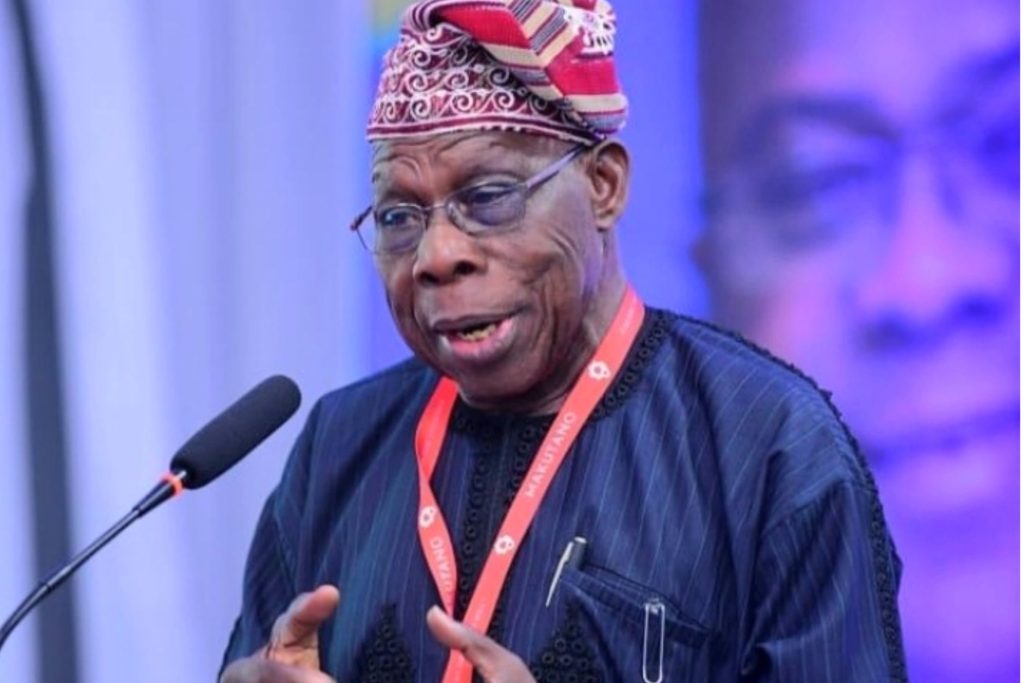
Former President Olusegun Obasanjo has expressed deep concern over the persistent disunity in Nigeria, attributing the lack of national cohesion to regionalism that has existed since before the country gained independence in 1960.

Speaking on Tuesday while receiving a 20-member delegation of the League of Northern Democrats, led by former Kano State governor Alhaji Ibrahim Shekarau, at his penthouse in the Olusegun Obasanjo Presidential Library, Abeokuta, the former president lamented the country’s missed opportunities for greatness.

Obasanjo pointed to the foundation laid at independence as a key factor in the country’s prolonged division. He explained that regionalism practiced before and shortly after independence fostered a situation where the country operated more like three distinct entities than a united nation.

“The truth is that at independence, Nigeria emerged with three leaders, and so it has been a situation of three countries in one ever since,” he said. This disunity, he argued, has undermined the country’s potential to achieve greatness, limiting its ability to live up to its early reputation as a “giant in the sun.”

Despite the discouraging state of affairs, Obasanjo expressed optimism about Nigeria’s future, provided the country could learn from its mistakes.

“I remain an incurable optimist about things turning around for good for the country, as long as we can look back as a country and correct the mistakes of the past,” he said.

He emphasized the need for the nation to move beyond regional loyalties and prioritize merit, capacity, and the ability to deliver on national objectives over considerations of ethnic or geographical origin.

Obasanjo critiqued the regional focus of the visiting group, urging them to adopt a more national outlook. While acknowledging the group’s identification as the League of Northern Democrats, he suggested a broader name change to the “National League of Democrats” to better reflect a commitment to national rather than regional interests.

“Where you come from should not be a problem,” Obasanjo said, adding, “Where I was born should not be the enemy of my ‘Nigerianess’. I will be increasing by being a Nigerian rather than being a member of the Republic of Oodua.”

He expressed pride in his Yoruba heritage but stressed that ethnic identity should not undermine one’s commitment to the nation. The priority, he said, should be getting “the best man for the job,” regardless of their place of origin. He called for an end to the divisive politics of regionalism, advocating instead for leadership that would focus on the national interest.

Disappointment on a Global Scale

The former president was candid in his assessment of Nigeria’s current state, noting that the country had failed not only itself but also the African continent and the global community.

“The African continent, the black race, and the entire world are looking up to us,” he remarked. “When we got our independence, what they were calling us was a giant in the sun, but is that the situation today?”

He lamented that Nigeria had “disappointed the black race, Africa, and the world at large,” and called for urgent action to reverse the country’s decline.

Obasanjo attributed the country’s woes to a disregard for the values of integrity, truth, and love, which he said have been “rubbished” over the years. Nevertheless, he expressed hope that it is not too late for Nigeria to “retrace our steps” and work towards a more unified and prosperous future. He emphasized the need for a collective effort to put past grievances aside and build a better nation.

In his interaction with the League of Northern Democrats, Obasanjo shared the group’s concerns about the poor state of affairs in Nigeria but emphasized that the country was not beyond redemption.

The 2023 Election: A Recent Example of Nigeria’s Ethnic Divisions

Obasanjo’s lamentation comes in the wake of the 2023 general elections, which exposed an unprecedented level of ethnic and religious bigotry within the country’s electoral process. His statements highlight a troubling reality: the persistence of ethnic politics, which many believe is one of the primary factors hindering Nigeria’s development.

Since gaining independence in 1960, the country has struggled with a political culture dominated by ethnic allegiances rather than merit-based leadership selection. This culture is believed to have resulted in the election of leaders who are chosen not for their competence or vision but for their ethnic or religious affiliations. As a result, Nigeria has often found itself governed by leaders who may not be the most capable, contributing to the country’s protracted socio-economic challenges.

The 2023 general election brought these issues into sharp focus. The level of ethnic and religious bigotry displayed during the election was unprecedented, with politicians and their supporters frequently appealing to ethnic sentiments to garner votes. Observers noted that this divisive strategy intensified long-standing animosities and overshadowed the pressing need for a national agenda that prioritizes economic development, security, and social justice.

The consequences of this political structure have been profound. Successive governments have been marred by allegations of favoritism and ethnic bias, resulting in policies that favor certain regions over others. This trend has persisted into modern times, with electoral contests often framed as battles between ethnic groups rather than debates about policies and programs that would benefit the entire nation.

The former president lamented that this practice has prevented Nigeria from reaching its full potential, leading to a situation where “the worst are usually chosen over the best” based on ethnicity.

Can Dogecoin (DOGE) Reach $1 or Should You Invest in Rexas Finance (RXS) While There is Still Time to Buy Cheap?

0

Known for its rollercoaster rides in bull cycles, Dogecoin (DOGE) is no different in 2024. Currently trading for roughly $0.11, Doge has dropped an amazing 81% from its all-time high of $0.74 recorded in May 2021. As we approach another bull rally, the question remains: should investors turn to other platforms like Rexas Finance (RXS), or will Dogecoin actually hit $1?

Dogecoin’s Difficulties in Hitting $1

The present price of Dogecoin would have to rise 800% to get to $1.  Reaching this milestone is challenging owing to its price fluctuating greatly in the past. To achieve such levels, DOGE would need a significant increase in investor demand, albeit this is questionable given how speculative the coin is.One major challenge is Dogecoin’s unlimited supply. Ten thousand new DOGE are created every minute, making up over 146 billion tokens in circulation overall. As a result, each token loses value as the quantity increases gradually. Unlike Bitcoin, which has a 21 million coin restriction, Dogecoin has an infinite supply, which makes it more difficult for the price to rise dramatically over time.Furthermore, there hasn’t been any major progress made toward the DOGE community’s hope that people like Elon Musk will encourage more usage of the technology, particularly for payments. Even with speculative backing, Dogecoin’s utility is limited when compared to more reliable ventures in the cryptocurrency space.

Dogecoin’s Cycles of Boom and Bust

Massive boom-and-bust cycles have always affected Dogecoin, with social media excitement driving price fluctuations rather than underlying principles. The coin saw a 144% increase this year, but it has reversed by more than 50%, indicating its volatility. These erratic fluctuations present chances for quick profits but also make it challenging for Dogecoin to develop a steady upward trend.Dogecoin may never reach $1 unless there is constant demand and use. Due to its speculative character, Dogecoin is a dangerous investment for long-term investors looking for stability and practical use. It raises the question of whether investors should go elsewhere.

Why Rexas Finance (RXS) is a Compelling Alternative

Unlike Dogecoin, Rexas Finance (RXS) is positioning itself as a real-world revolutionary and practical initiative. Currently, in the fourth presale stage, the RXS token offers a more appealing investment choice for anyone hoping to enter the RWA market. Focusing on tokenizing real-world assets (RWA), Rexas Finance provides a distributed platform for users to buy, sell, and fractionalize goods, including artwork, real estate, and commodities.Rexas Finance has already made great progress. It was able to get listed on CoinMarketCap, which makes it more visible to potential investors. Over 80 million tokens were sold during the fourth stage of the ongoing presale, which has raised $3.68 million thus far. The presale is drawing a lot of interest. This powerful momentum reflects people’s rising faith in the platform’s long-term prospects.

The Advanced Features of Rexas Finance

Rexas Finance provides more services than only asset tokenization. It features a vast ecosystem with resources like the Rexas Token Builder, which enables companies and individuals to tokenize assets without knowing how to write code. Furthermore, the Rexas Launchpad facilitates token sales for projects to raise money, which makes it simpler for business owners to obtain funding. Rexas Finance has an advantage over its competitors in the decentralized finance (DeFi) market thanks to these technologies, which offer a useful platform that is appealing to both institutional and retail investors.As more people use the platform, the value of the RXS token itself is anticipated to rise. Based on analyst projections, Rexas Finance has the potential to develop exponentially from its current presale price of $0.06 to $20. To entice early investors to join while the token is still priced cheaply, the project also holds a $1 million prize.

Comparing the Two: DOGE vs. RXS

Dogecoin’s long-term prospects are still uncertain, despite its historical performance producing enormous gains during speculative runs. It’s a risky investment due to the lack of a limitation on supply, its restricted real-world utility, and its reliance on social media hype. Rexas Finance, on the other hand, provides concrete use cases via asset tokenization and a strong tool ecosystem that can promote long-term expansion. Projects like Rexas Finance that provide practical solutions are likely to draw more interest and funding as the cryptocurrency market gets more competitive, making them a safer and more profitable choice for investors seeking long-term gains.

Conclusion

Even if Dogecoin might still present some opportunities for speculation, it doesn’t appear likely that it will hit $1 in the absence of strong and ongoing demand. Rexas Finance (RXS), on the other hand, provides a more smart investment option with practical application and an obvious growth trajectory. It could be the ideal moment to buy in RXS before its price spikes, as the presale is still going on, and the token is only trading at a small portion of its estimated worth.


For more information about Rexas Finance (RXS) visit the links below:

Website: https://rexas.com

Win $1 Million Giveaway: https://bit.ly/Rexas1M

Whitepaper: https://rexas.com/rexas-whitepaper.pdf

Twitter/X: https://x.com/rexasfinance

Telegram: https://t.me/rexasfinance

Evolution of Trading Bots in the Solana Ecosystem

0

The Solana blockchain has been making waves in the decentralized finance (DeFi) space, particularly with the advent of trading bots that have revolutionized the way users interact with decentralized exchanges (DEXs). A recent development in this arena is the rise of Solana-based trading bots that have managed to surpass Uniswap in terms of 24-hour trading fees, a significant milestone that highlights the growing influence of Solana in the crypto market.

Solana’s high throughput and low transaction costs have made it an attractive platform for developers to build sophisticated trading bots. These bots are designed to automate trading strategies, allowing users to take advantage of market inefficiencies and execute trades at lightning-fast speeds. The integration of these bots within popular messaging apps like Telegram has further enhanced their accessibility, leading to a surge in their adoption.

One such bot, BONKbot, has seen a remarkable increase in user base and trading volume, boasting over $5 billion in trades. This bot leverages Jupiter DEX, a Solana-based DEX aggregator, to find the best available prices across various DEXs, providing users with optimal trading opportunities. Another notable bot is Trojan on Solana, which has also seen impressive trading volumes and user engagement.

The success of these bots is not without challenges. One of the primary concerns is the risk of technical failures. Trading bots rely on complex algorithms and require a stable internet connection and hardware to function correctly. Any disruption in these areas, such as server crashes or software glitches, can lead to missed trades or unintended transactions, potentially resulting in significant financial losses.

Another risk is over-optimization, also known as curve-fitting. Traders may fine-tune their bots to perform exceptionally well on historical market data. However, this can lead to an inability to adapt to new or unexpected market conditions, which can be detrimental when the bot is applied to live markets.

Security risks are also a major concern. Trading bots often require access to your trading accounts via API keys, which, if compromised, can lead to unauthorized access and potential theft of funds. Ensuring robust security measures and regularly updating bot software is crucial to mitigate these risks.

Market volatility is another factor to consider. Cryptocurrency markets, in particular, are known for their high volatility. Bots that are not designed to handle sudden market shifts may execute trades that result in losses rather than profits.

Lastly, there is the risk of regulatory changes. The legal landscape of cryptocurrency trading is still evolving, and new regulations can impact the effectiveness and legality of trading bots. Staying informed about regulatory changes is essential to ensure compliance and avoid potential legal issues.

The competition among trading bots is fierce, with many seeking to offer unique features and incentives to attract users. Real-time token data, sniper options, and limit buy and sell orders are just a few of the functionalities that these bots provide to enhance the trading experience.

The impact of Solana trading bots on the DeFi landscape is undeniable. They have not only provided users with new tools to navigate the crypto markets but have also challenged established platforms like Uniswap. As the DeFi ecosystem continues to evolve, it will be interesting to observe how these bots adapt and what new innovations they will bring to the table.

The flipping of Uniswap in 24-hour fees by Solana trading bots marks a pivotal moment in the DeFi sector. It underscores the dynamic nature of the crypto market and the continuous search for more efficient and user-friendly trading solutions. As the technology behind these bots’ advances, we can expect to see further disruptions and advancements in the way we trade digital assets.