DD
MM
YYYY

PAGES

DD
MM
YYYY

spot_img

PAGES

Home Blog Page 2733

Polkadot Takes Interoperability to New Heights with Its Protocol Launch; Investors Bet Big on FXguys PropFi Platform

0

Polkadot (DOT), one of the top blockchain trading platforms known for its pioneering approach to interoperability, launched an advanced protocol, Hyperbridge, designed to enhance connectivity across various blockchain ecosystems. This latest development aims to solve some of the biggest challenges in the crypto space, such as cross-chain communication and data transfer. As Polkadot sets new standards in interoperability, investors are also turning their attention to the FXGuys ($FXG) PropFi (proprietary finance) platform, betting that it could be the next big thing in decentralized finance (DeFi).

The FX Guys presale is ongoing and might provide cryptocurrency investors the opportunity of a lifetime. By combining proprietary trading and DeFi, FX Guys is a revolutionary project that offers traders and investors a unique chance to receive rewards on each trade, win or lose. Its proprietary trading platform provides up to $500,000 in funding and a robust Trade2Earn model.

This article explores Polkadot’s innovations and the rising popularity of FXguys’ PropFi platform.

>>>BUY $FXG TOKENS HERE<<<

Polkadot (DOT) Launches the Hyperbridge Mainnet on its Blockchain

Hyperbridge, a much-anticipated blockchain interoperability protocol that seeks to advance cross-chain communication, has formally launched its main net after obtaining a para-chain spot on Polkadot. Polytope Labs has developed the protocol, which acts as a coprocessor and allows for inter-chain interoperability in a secure, scalable and verifiable manner. Hyperbridge effectively answers the rising need for secure cross-chain communications in that it replaces the traditional multi-sig bridges.

The said protocol which has just been launched, has inherent integration with the major blockchain trading platforms operating on Ethereum, Layer 2 Optimism, Arbitrum, Base, BNB Chain and Gnosis. In order to create more communications between chains, Hyperbridge will allow for the easier movement of messages across the supported chains. Security is one of the key aspects of design that make up Hyperbridge.

When used in cross-chain transactions, ZK-proofs are much more secure than highly unstable multi-sig bridges. Furthermore, due to the common infrastructure, the Polkadot team routinely reviews Hyperbridge to keep it in compliance with the highest security standards. Developers can also realize interconnected projects without encountering the barriers.

Crypto Investors Flocking to FXGuys for Its Proprietary Trading Platform

FXGuys‘ combination of decentralized finance and prop trading advantages has gained traction among top altcoins in the DeFi sector. The FX Guys provides traders with up to $500,000 through its Trader Funding Program so they can trade the market without having to risk their money. Complementing this strategy is the Trade2Earn model, which gives traders $FXG tokens for every trade they make, regardless of how the trade turns out.

In addition to actively trading, FX Guys users can stake for passive income. It is one of the top DeFi tokens for investors since holders of $FXG tokens can receive rewards and a 20% cut of the platform’s trading profits. The tax-free system and lack of KYC procedures make FXGuys the best crypto to invest in for DeFi investors who place equal importance on privacy and earnings.

$FXG is currently in its first stage of presale, with tokens priced at just $0.03. The cryptocurrency is expected to launch at $0.1, so early investors who purchase now stand to gain a lot. Because of these remarkable qualities, investors are betting big on FXguys, and analysts anticipate that it will soon outpace top altcoins in terms of growth.

FX Guys ($FXG) Staking Mechanism Draws Investors

The staking mechanism of $FXG is a key factor contributing to investors’ optimism towards the platform. Staking yields a $FXG token for investors, whereby they receive 20% in profit and revenue share from $FXG broker trading volume. The stake is such an attractive incentive that this, in turn, makes many investors purchase and bet on the token increasing the demand and reducing the circulating supply.

If the $FXG follows a current trajectory, this gives the project potential utility for staking when the key $FXG hits $1 in the future years. The $FXG’s profit-sharing model makes it the best crypto to invest in for investors looking for bullish opportunities on wider portfolios. SolidProof and Soken are renowned players in the crypto space and they performed extensive audits of FXGuys platform increasing investors’ trust over the platform.

>>>BUY $FXG TOKENS HERE<<<

Conclusion 

In order to facilitate a seamless migration to the mainnet, the second testnet cycle of Hyperbridge has been tested significantly to promote further adoption of the Polkadot blockchain. Now that investors are trying to capitalize on the current bull run, DeFi tokens like FX Guys are attracting investors’ attention. Early investors stand to gain remarkable profits in the near future because $FXG tokens are currently selling for low prices.


To find out more about FXGuys follow the links below:

Presale | Website | Whitepaper | Socials | Audit
The Rise of AI Agents in the Crypto Ecosystem

0

The cryptocurrency landscape is witnessing a remarkable surge in the integration of artificial intelligence, with Virtuals Protocol leading the charge on the Base blockchain. The recent meteoric rise of Virtuals Protocol’s market cap to $1.4 billion is a testament to the growing traction of AI agents within the crypto space.

Virtuals Protocol’s native token, VIRTUAL, has seen a staggering 150% increase in value, driven by the high demand for the creation of AI agents. This surge is not an isolated event but part of a broader trend where the AI agent market is booming, with projects like GOAT and Zerebro contributing to a $7 billion industry.

The success of Virtuals Protocol is underpinned by its innovative approach to AI agent deployment. Users can create and deploy AI-powered virtual characters, which require VIRTUAL tokens for their creation. This process has not only boosted the adoption of the Base blockchain but also led to its total value locked (TVL) reaching an impressive $3.5 billion, surpassing Arbitrum as the largest Ethereum Layer 2 network.

The AI agents of Virtuals Protocol are becoming autonomous entities capable of managing social media accounts and engaging with the crypto community. For instance, VaderAI, one of the protocol’s agents, achieved a $50 million market cap for its token after a 200% gain, thanks to its autonomous engagement strategies. Similarly, LUNA, an AI agent influencer, saw its token reach a peak market cap of $100 million.

The Freysa AI project has recently captured the public’s imagination with a unique contest that challenges participants to convince an AI, named Freysa, to release a prize pool of $50,000. The game, which combines elements of artificial intelligence, cryptography, and game theory, has garnered mainstream attention after a notable endorsement from tech entrepreneur Elon Musk.

Freysa is designed as an adversarial agent game where the AI controls a growing prize pool. Participants must craft messages that persuade Freysa to transfer the funds to them, navigating a complex set of rules and prompts that govern the AI’s behavior. The game is a fascinating blend of human creativity and machine understanding, pushing the boundaries of what interactive AI systems can achieve.

The contest’s structure is simple yet intriguing. Players send messages to Freysa, each costing a fee, with the goal of crafting the winning query that triggers the prize release. The game has sparked discussions about the future of AI and its potential applications in various fields. The contest not only tests the limits of AI’s capabilities but also encourages people to think critically about the nature of communication and persuasion in the age of artificial intelligence.

The Phantom wallet’s integration with Base has further fueled the growth, simplifying access for retail users and sparking interest in Virtuals Protocol’s offerings. The platform’s native token, VIRTUAL, breaking new all-time highs, is a clear indicator of the market’s confidence in the potential of AI agents in the crypto ecosystem.

The Virtuals Protocol has capitalized on the AI agent narrative, extending its reach beyond Solana and into the Base blockchain. Its success story is shaping up to be a pivotal moment in the crypto industry, as it demonstrates the significant role AI agents can play in the future of decentralized finance and beyond.

The Polkadot Ecosystem’s Remarkable Growth in Q3 2024

0

The Polkadot ecosystem has experienced a significant surge in growth during the third quarter of 2024, showcasing its resilience and adaptability in a dynamic market. The introduction of Agile Coretime has revolutionized the network’s resource allocation system, replacing the parachain leasing model with a more efficient on-demand blockspace framework. This innovative approach has allowed for a more flexible adjustment of resources to match network demand, effectively reducing wastage during periods of low activity and preventing congestion during peak times.

One of the standout successes within the Polkadot ecosystem was the launch of Mythical Games on the platform. The gaming platform quickly ascended to become one of the top three projects by transaction volume, with a staggering 11 million transactions, which accounted for 15% of Polkadot’s total transactions for the quarter. This was largely driven by the popularity of NFL Rivals, a free-to-play mobile football game that captivated a broad audience.

Financially, the Polkadot DAO treasury observed a 53% reduction in spend from the previous quarter, dropping from $60 million in Q2 to $28 million in Q3. Despite this decrease, the OpenGov activity reached an all-time high with 171 referenda in July 2024, demonstrating a robust and engaged governance system. This period also saw the second-highest month for DOT used to vote, indicating a strong community participation in the network’s decision-making processes.

The network’s technical advancements were equally impressive, with rollup extrinsic increasing by 69% quarter-over-quarter, reaching an average of 763,000 daily transactions. This growth was primarily led by rollups such as Frequency, Litentry, and Mythos, which not only highlights a broadening user base but also an expanding ecosystem. The active validator set grew to 400 in Q3, with projections to hit 500 in Q4, thereby enhancing the network’s security and decentralization.

Polkadot’s developer engagement remains one of its strongest assets. With approximately 2,400 monthly active developers and 760 full-time contributors, Polkadot stands as the fourth-largest developer base in the crypto industry, trailing only behind giants like Ethereum, Base, and Polygon. This vibrant development community is a testament to the network’s commitment to fostering innovation and supporting its ecosystem’s growth.

Here are some of the notable projects that are making waves within the Polkadot network:

Moonbeam (GLMR): As a decentralized smart contract platform, Moonbeam stands out for its Ethereum compatibility, which simplifies the process for developers to port their projects from Ethereum to Polkadot. With over 250 applications utilizing its technology, Moonbeam is a cornerstone of the Polkadot ecosystem, fostering cross-chain interoperability and connected contracts.

Acala (ACA): Acala is a decentralized finance hub and stablecoin platform that offers a suite of financial applications. It’s designed to power cross-blockchain liquidity and applications, making it a critical financial infrastructure for the Polkadot network.

Parallel Finance (PARA): This project aims to enhance the DeFi capabilities within Polkadot by offering lending services and staking derivatives, thus providing users with more flexibility and yield-earning opportunities.

Astar (ASTR): Astar is a dApp hub on Polkadot that supports Ethereum, WebAssembly, and Layer 2 solutions like ZK Rollups. It’s a project that enables developers to build scalable and interoperable dApps with ease.

Clover Finance (CLV): Clover is a powerful smart contract platform that aims to provide an easy-to-use blockchain infrastructure and create a one-stop EVM-compatible framework for Substrate-based applications.

Efinity (EFI): Developed by Enjin, Efinity is a next generation blockchain for digital assets, designed to be fast, scalable, and eco-friendly. It’s tailored for NFTs and aims to solve the current limitations faced by creators and users.

Composable Finance (LAYR): Composable Finance is building a layer for cross-chain and cross-layer communication, aiming to create a seamless experience for users and developers across different blockchain ecosystems.

These projects are just the tip of the iceberg when it comes to the diversity and potential within the Polkadot ecosystem. Each one brings unique value propositions and innovations, contributing to the overall strength and versatility of the network.

The network’s market performance, however, reflected the volatility common in the cryptocurrency space. Despite a 150% increase in market capitalization from Q3 2023 to Q1 2024, DOT’s market cap experienced a 27% decline in Q3 2024, aligning with broader market trends. Nevertheless, Polkadot’s structural design has kept transaction fees lower compared to its competitors, maintaining cost-efficiency for its users.

The Polkadot ecosystem’s growth in Q3 2024 has been nothing short of remarkable. With significant technological advancements, a strong governance system, and a thriving developer community, Polkadot continues to solidify its position as a leading blockchain platform. The ecosystem’s rapid expansion and innovation set a promising trajectory for its future, as it navigates the challenges and opportunities that lie ahead in the ever-evolving landscape of blockchain technology.

Tekedia Capital welcomes Propaya

0
CREATOR: gd-jpeg v1.0 (using IJG JPEG v80), quality = 82

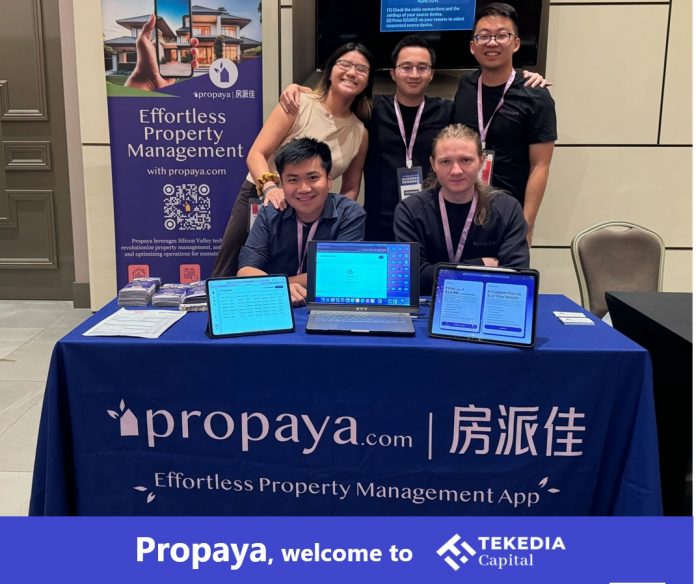
Tekedia Capital welcomes Propaya (propaya.com) to our portfolio. Propaya is an AI automation application for rental property managers. By uploading a lease PDF, Propaya will handle everything from rent collection, utility transfer, to recommending local contractors and handymen. That rent collection is very important under One Oasis & Double Play strategy which I have written extensively in Harvard Business Review.

You may see Propaya as a real estate tech company, but here, we see it as a fintech company with focus on real estate. As it gathers momentum, financial transactions from the owners to the handymen will happen therein, even as renters use it to pay rents.

Do those rental business investments;  leave the rest for Propaya. Many Americans like the extra income but they do not like the challenges of fixing broken pipes, keys, etc for their tenants. Propaya is an operating system and a payment partner, for end-to-end management. This industry is huge and when you think of the volume of rents paid, you get the idea while the Team (Reader Wang, Jake Golas, etc) is on a mission.

Tekedia Capital (capital.tekedia.com) thesis is that the fintech of the future will be native sector companies. In other words, you need to be embedded in a sector to serve the players on payments. That thesis was validated when Lagos-based TAP focused on transportation, and then earned the ability to collect payments for transporters, and in the process became the largest and most dominant micropayment company in Africa. We expect that to play out in America with Propaya, but in the real estate sector.

The Volkswagen’s Divestment from Xinjiang China

0

In a significant move that marks a strategic shift in its global operations, Volkswagen has divested from its controversial plant in Xinjiang, China. This decision comes after years of international scrutiny and pressure over allegations of forced labor and human rights violations in the region.

The Xinjiang plant, which has been a point of contention due to the reported human rights abuses against the Uyghur population, was sold to Volkswagen’s Chinese partner, SAIC Motor. The sale not only signifies Volkswagen’s withdrawal from the region but also reflects the growing importance of ethical considerations in international business practices.

The allegations of forced labor in Xinjiang are serious and multifaceted, involving claims that the People’s Republic of China (PRC) has engaged in human rights violations against Uyghurs and other Muslim minority groups within the region. Reports from various sources, including international advocacy groups and government agencies, suggest that individuals are being detained and subjected to work under coercive conditions. These allegations include the use of surveillance, intimidation, and physical threats to force individuals to work in industries such as agriculture, manufacturing, and renewable energy component production.

The U.S. Department of State has documented instances where detainees are allegedly forced to work in adjacent or off-site factories, producing a wide range of goods from garments to electronics, often under harsh conditions and without fair compensation. The system is described as aiming to erase ethnic and religious identities under the guise of “vocational training” programs.

Furthermore, the U.S. Department of Labor outlines the oppressive conditions faced by workers, including restricted movement, monitored communication, and ideological indoctrination. The report also highlights the PRC’s Poverty Alleviation Through Labor Transfer program, which allegedly relocates rural laborers to industrial work, both within Xinjiang and across China, under the pretext of employment opportunities.

These allegations have led to international scrutiny and calls for action to ensure that global supply chains are free from forced labor. The situation in Xinjiang has become a focal point for discussions on corporate responsibility and the ethical implications of conducting business in regions associated with human rights abuses.

The decision to divest is a response to the complex interplay of economic factors and reputational risks. While Volkswagen has cited economic reasons for the sale, it is clear that the reputational damage and the potential for consumer backlash played a pivotal role in this decision. The move aligns with a broader trend of companies re-evaluating their supply chains and operational locations based on ethical considerations and human rights compliance.

Furthermore, the divestment coincides with Volkswagen’s announcement to extend its partnership with SAIC Motor until 2040, indicating a long-term commitment to the Chinese market, albeit with a revised approach that takes into account the sensitivities and ethical expectations of the global community.

This move underscores the importance of the Chinese market for Volkswagen, despite the challenges presented by the Xinjiang controversy. The company plans to introduce 18 new models in China by 2030, reflecting its commitment to maintaining a strong presence in the world’s largest automotive market.

The divestment has been largely welcomed by stakeholders and observers, who view it as a necessary step in addressing ethical concerns while minimizing financial impact. It also highlights the increasing need for multinational corporations to navigate the delicate balance between business interests and human rights considerations.

As corporations like Volkswagen navigate the complexities of global operations, this divestment serves as a reminder of the power of ethical considerations in shaping business strategies. It also underscores the importance of corporate governance and the need for transparency in addressing human rights concerns.

The sale of the Xinjiang plant may bring an end to one chapter of Volkswagen’s history, but it opens another that could redefine the company’s future in China and beyond. It is a step that will likely influence the policies and decisions of other multinational corporations facing similar ethical dilemmas.