DD
MM
YYYY

PAGES

DD
MM
YYYY

spot_img

PAGES

Home Blog Page 274

China Reclaims Position as Germany’s Top Trading Partner as U.S. Tariffs Bite

0

China has overtaken the United States to become Germany’s largest trading partner once again, underscoring how renewed U.S. tariffs and shifting global supply dynamics are reshaping the economic relationship between Europe’s biggest economy and its top export markets.

Preliminary data from Germany’s statistics office showed that total trade between Germany and China reached €163.4 billion ($190.7 billion) from January to August 2025, narrowly surpassing €162.8 billion in trade with the United States. The figures, calculated by Reuters, reveal how rising protectionism under President Donald Trump’s second administration has reversed last year’s trend, when the U.S. temporarily displaced China after eight years of Chinese dominance in German trade.

The latest shift comes despite Berlin’s stated efforts to reduce its economic dependence on Beijing amid political frictions and concerns about unfair trade practices. The data, however, suggest that Germany’s diversification efforts have run into the hard realities of global demand and industrial interdependence.

Tariffs Take a Toll on German Exports

U.S. tariffs have played a central role in the latest reversal. German exports to the United States fell 7.4% in the first eight months of 2025 to €99.6 billion, a sharp decline that worsened as the year progressed. In August alone, exports to the U.S. dropped 23.5% year-on-year, signaling that the impact of trade barriers is accelerating.

“There is no question that U.S. tariff and trade policy is an important reason for the decline in sales,” said Dirk Jandura, president of the BGA foreign trade association.

Jandura explained that U.S. demand for Germany’s signature export products—automobiles, machinery, and chemical goods—has weakened significantly. These categories, long pillars of German industry, are among those hit hardest by new American tariffs targeting vehicles and industrial components.

The Trump administration’s latest trade measures, introduced earlier this year, were aimed at narrowing the U.S. trade deficit and protecting domestic manufacturers. But for Germany, which relies on the U.S. as its second-largest export destination, the measures have cut deep.

Carsten Brzeski, global head of macro at ING, said that the combination of tariffs and a stronger euro had dealt a double blow to German exporters.

“With the ongoing tariff threat and the stronger euro, German exports to the U.S. are unlikely to rebound any time soon,” he said.

Germany’s export-driven economy is particularly sensitive to global policy shifts. Automakers such as Volkswagen, BMW, and Mercedes-Benz have large production bases in the United States but still depend heavily on transatlantic trade flows. Machinery and equipment manufacturers—another key sector—also face headwinds as American companies source more domestically to avoid import penalties.

While exports to the United States fell, Germany’s trade relationship with China followed a more complex pattern. Exports to China dropped even more steeply than those to the U.S.—down 13.5% year-on-year to €54.7 billion in the first eight months of 2025. However, this was more than offset by a surge in imports from China, which rose 8.3% to €108.8 billion.

This import boom pushed the overall trade balance in China’s favor and reestablished Beijing as Berlin’s top trading partner, continuing a trend of structural dependence that German policymakers have struggled to unwind.

“The renewed import boom from China is worrying,” said Brzeski, noting that “data shows that these imports come at dumping prices.”

Economists have linked the surge in Chinese imports to aggressive pricing in key sectors such as electric vehicles, solar technology, and consumer electronics. These low-cost goods have gained significant market share in Europe, challenging local producers and raising fears of deindustrialization in Germany’s manufacturing heartland.

Brzeski warned that such trends “not only increased German dependence on China but could add to stress in key industries where China has become a major rival.”

The concerns echo similar warnings from European Union officials, who have launched investigations into alleged Chinese dumping practices in the electric vehicle market. The European Commission has accused Chinese automakers of benefiting from heavy state subsidies that allow them to undercut European competitors, a charge Beijing has denied.

For Germany, which remains the EU’s largest importer of Chinese goods, these developments present a policy dilemma. Berlin has been vocal about the need for “de-risking” from China—a term Chancellor Olaf Scholz’s government uses to describe reducing economic exposure without outright decoupling. Yet, as the new data show, German industry continues to rely heavily on Chinese components and intermediate goods.

Repercussions for Berlin

The return of China as Germany’s top trading partner points to how geopolitical and economic forces are pulling Berlin in opposing directions. On the one hand, the government has urged companies to diversify supply chains and reduce dependence on authoritarian regimes. On the other hand, the structural integration of the two economies—especially in automotive and machinery sectors—makes any sudden decoupling costly and complex.

The imbalance between imports and exports also raises questions about competitiveness. Germany’s exports to China have been declining amid slowing Chinese growth and increased local competition. Meanwhile, Chinese companies have deepened their footprint in Europe, expanding exports in high-value segments such as green energy and advanced manufacturing.

Economist Salomon Fiedler of Berenberg Bank said the shifts highlight Germany’s growing vulnerability to external shocks.

“In the absence of economic dynamism at home, some in Germany may now be troubled by any shifts on world markets,” he observed.

Fiedler’s remarks point to a broader malaise in the German economy, which has been stagnating under weak domestic investment, rising energy costs, and subdued consumer demand. The latest trade figures thus expose not just a change in trading partners but a structural imbalance that could constrain Germany’s growth for years.

A Shifting Global Trade Order

The developments also mirror a wider reordering of global trade ties in 2025. As Washington doubles down on tariffs and industrial policy, and Beijing continues to expand its export dominance, Europe finds itself navigating between two rival powers.

For Germany, once the undisputed export powerhouse of Europe, the growing trade friction with the United States and rising dependence on China represent a narrowing strategic corridor. The country’s export sector—long the engine of its prosperity—now faces mounting pressure to adapt to a multipolar world defined by protectionism, currency fluctuations, and technological rivalry.

Germany’s trade policy is expected to be a central issue in upcoming EU economic strategy discussions. Analysts say Berlin’s challenge will be to strike a balance between safeguarding its industrial base and aligning with broader Western efforts to limit reliance on Chinese supply chains.

As Brzeski warned, the data show that “the renewed import boom from China” could deepen Germany’s vulnerabilities if unchecked. At the same time, with U.S. tariffs showing no sign of easing, the country’s traditional export model appears to be under its greatest strain in years.

What began as a statistical shift in trade tables now reflects a deeper structural reality: Germany’s economic compass, long anchored between Washington and Beijing, is once again swinging toward China — even as the political winds in Berlin blow the other way.
Baidu Expands Global Self-Driving Push with PostBus Partnership in Switzerland

0

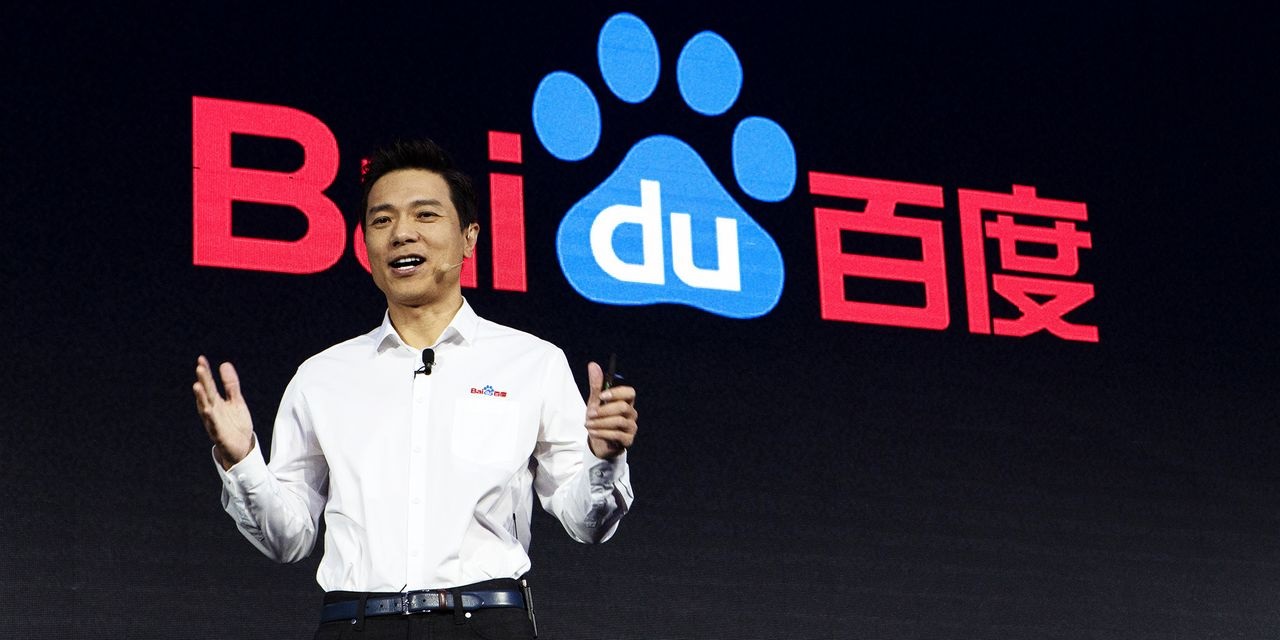
Baidu has announced a partnership with Switzerland’s PostBus, the public transport arm of Swiss Post, to launch its Apollo Go autonomous vehicle service in the European country, marking another major step in the Chinese technology company’s bid to expand its self-driving business across international markets.

Under the agreement, Baidu and PostBus will begin trial operations in December 2025, with full commercial service expected by early 2027, according to a joint statement on Wednesday. The program will deploy Baidu’s Apollo Go robotaxis in eastern Switzerland, operating routes that stretch across the cantons of St. Gallen, Appenzell Ausserrhoden, and Appenzell Innerrhoden.

The collaboration signals a strategic shift for Baidu as it moves to globalize its autonomous driving operations beyond China and the Middle East, leveraging partnerships with established Western transport operators to gain regulatory traction and local credibility.

A European Debut for Apollo Go

The partnership with PostBus marks Apollo Go’s first entry into continental Europe, expanding its current operations in Dubai, Abu Dhabi, and Hong Kong, where Baidu already runs a fleet of more than 1,000 fully driverless vehicles.

The European launch will see Baidu’s autonomous shuttles integrated into Switzerland’s regional mobility network, where PostBus has long served as a critical public transit link for remote and mountainous communities.

The companies said the goal is to combine Baidu’s AI-driven navigation and perception systems with PostBus’s deep operational experience in local transport logistics. If successful, the service could serve as a model for integrating autonomous driving technology into existing European public transport systems.

While Switzerland has a relatively open regulatory framework for autonomous testing compared to larger EU markets, Baidu’s move is still seen as a significant regulatory and technological milestone. The Swiss government has previously permitted pilot programs for self-driving delivery and shuttle services, making it a logical testbed for Baidu’s expansion.

The deal with PostBus follows Baidu’s recent string of alliances aimed at accelerating its global rollout of Apollo Go. In August 2025, Baidu struck a partnership with Lyft to deploy robotaxis across multiple European cities beginning next year. Earlier this year, it also signed a major agreement with Uber to integrate thousands of its autonomous vehicles into the Uber platform across several international markets.

Through these partnerships, Baidu appears to be adopting a collaborative model that contrasts sharply with the go-it-alone approach of U.S. competitors such as Waymo and Cruise, which have focused primarily on the American market.

Analysts believe Baidu’s decision to align with established mobility networks gives it an advantage in entering highly regulated markets. By piggybacking on local transport operators, Baidu gains access to existing fleets, infrastructure, and passenger networks while minimizing the regulatory burden typically associated with introducing autonomous systems from scratch.

From Search Engine to AI Powerhouse

Baidu, long recognized as China’s dominant search engine, has spent the last several years diversifying its business as advertising revenues slowed amid a weakening domestic economy. The company has poured billions into artificial intelligence, autonomous driving, and cloud computing, positioning these sectors as its future growth engines.

Apollo Go is now a central pillar of that transformation. The platform combines Baidu’s proprietary self-driving software stack, high-definition mapping, and vehicle-to-infrastructure communication technologies. The company says its systems are capable of Level 4 autonomy — meaning vehicles can operate without human intervention in most conditions.

Baidu’s autonomous division has achieved several firsts in China, including commercial driverless taxi services in Beijing, Wuhan, and Shenzhen, and it has received the country’s highest-level permits for fully driverless operations. However, growth within China has slowed as domestic rivals such as Pony.ai, WeRide, and AutoX expand their presence, while regulatory scrutiny on AI systems tightens.

The push into Europe and the Middle East, therefore, reflects both a strategic hedge and an effort to position Baidu as a global AI mobility brand rather than one confined to the Chinese market.

A Test Case for China’s Autonomous Ambitions

The Swiss rollout also underscores China’s growing ambitions in exporting AI-powered mobility technology. While Chinese automakers have made significant inroads into Europe’s electric vehicle market, Baidu’s move represents one of the first major attempts by a Chinese tech company to operate fully autonomous passenger services on European soil.

Baidu’s debut in Switzerland comes as its American counterparts — including Waymo, backed by Alphabet, and Cruise, owned by General Motors — continue to struggle with regulatory pushback and public safety concerns in the United States. Both companies have faced operational suspensions and investigations after a series of accidents in San Francisco and Phoenix, leading U.S. regulators to impose stricter oversight on autonomous vehicle deployments.

It is expected that success in Switzerland could help Baidu establish a bridgehead for expansion into larger EU markets, including Germany and France, where regulators remain cautious but are under pressure to modernize transportation infrastructure.

Switzerland’s emphasis on innovation and high public trust in technology could provide fertile ground for public acceptance of self-driving vehicles. However, questions remain about data governance, cybersecurity, and cross-border control of AI-driven mobility systems—sensitive issues in a continent increasingly wary of Chinese technology influence.

With operations now spanning 16 cities worldwide, Baidu’s Apollo Go network is emerging as one of the most geographically diverse autonomous fleets in the world. Its expansion strategy—anchored in partnerships with established transport and ride-hailing firms—suggests that Baidu aims to build a federated ecosystem of robotaxi networks that adapt to local conditions rather than imposing a single centralized model.

For PostBus, the partnership offers an opportunity to modernize its fleet and test cost-efficient automation technologies in regions where low population density makes traditional bus services expensive to maintain.

In a joint statement, both companies said they see a long-term opportunity to integrate autonomous vehicles into everyday mobility, combining safety, sustainability, and accessibility.

As global competition intensifies among AI transport pioneers, Baidu’s European entry sets the stage for what could become a defining chapter in the race to commercialize driverless mobility at scale.

Baidu’s partnership with PostBus gives the company something none of its major U.S. counterparts can yet claim — a commercial pathway for fully autonomous operations in Europe.

Polymarket Will Serve As Clearinghouse For DraftKings’s Railbird

0

DraftKings, a leading U.S. sports betting platform, has acquired Railbird Technologies—a CFTC-regulated designated contract market (DCM) specializing in event-based contracts—to expand into prediction markets.

As part of this move, blockchain-based prediction platform Polymarket will serve as the official clearinghouse for DraftKings’ new “DraftKings Predictions” mobile app, handling trade verification, collateral management, and settlement to ensure secure and fair operations.

This partnership was announced by Polymarket founder Shayne Coplan on October 22, 2025, shortly after the Railbird acquisition news broke. DraftKings purchased Railbird founded in 2021 and CFTC-approved as a DCM in June 2025 for an undisclosed amount one report speculates around $250M.

Railbird’s platform enables regulated event contracts on non-sports topics like finance, entertainment, and culture, with potential expansion to sports in states without existing sports betting (e.g., California, Texas).

Polymarket’s Role: Through its QC Clearing arm acquired from QCEX for $112M in June 2025, Polymarket will act as the backend intermediary, reducing counterparty risk and leveraging its expertise in decentralized prediction markets. This aligns with a recent CFTC no-action letter easing reporting requirements for event contracts.

DraftKings Predictions app is slated for release in the coming months, initially focusing on non-sports events to comply with regulations. CEO Jason Robins highlighted the combo of Railbird’s tech, DraftKings’ 28-state reach, and mobile expertise as a “win” for the $4B+ monthly prediction market sector.

Prediction markets like Polymarket and Kalshi have exploded in 2025, with October trading volumes already at $4.63B Kalshi leading at $2.87B. DraftKings’ entry pits it against these players while benefiting from Polymarket’s infrastructure.

Polymarket also inked a multi-year NHL licensing deal on the same day, signaling U.S. sports betting integration. This deal bridges traditional sports betting with crypto-native prediction markets, potentially accelerating mainstream adoption.

It could reshape competition, with DraftKings using its brand to capture non-crypto users, while Polymarket gains B2B revenue and regulatory credibility. However, concerns linger about blurring lines between gambling and finance, as noted by analysts. Shares of DraftKings rose ~2% post-announcement, though down 8% YTD.

DraftKings’ entry into prediction markets, leveraging Polymarket’s blockchain-based clearinghouse, bridges traditional sports betting with decentralized platforms. This could drive broader acceptance of prediction markets among non-crypto users, given DraftKings’ established brand and 28-state presence.

DraftKings becomes a direct competitor to platforms like Kalshi and Polymarket, which dominate with $4.63B in October 2025 trading volume. Its mobile expertise and regulatory compliance via Railbird’s DCM status may attract users seeking regulated alternatives, potentially pressuring standalone prediction platforms.

By serving as DraftKings’ clearinghouse, Polymarket secures a stable B2B revenue stream and enhances its regulatory credibility through QC Clearing’s CFTC alignment. This strengthens its position in the U.S. market, especially after its NHL licensing deal.

The blurring of gambling and financial speculation raises questions about consumer protection and market integrity. Analysts note potential risks of unchecked speculation in event contracts, which could invite stricter CFTC oversight.

The “DraftKings Predictions” app, focusing initially on non-sports events (e.g., finance, entertainment), could tap into states without sports betting, like California and Texas, expanding the $4B+ prediction market sector.

DraftKings’ stock rose ~2% after the announcement, reflecting optimism, though its 8% YTD decline suggests broader market challenges. X posts highlight excitement for innovative markets like crypto events, potentially boosting user engagement.

These dynamics suggest a transformative moment for prediction markets, balancing growth potential with regulatory and competitive hurdles.

Tesla’s Record Deliveries Fail to Lift Profit as Costs and Tariffs Erode Gains

0

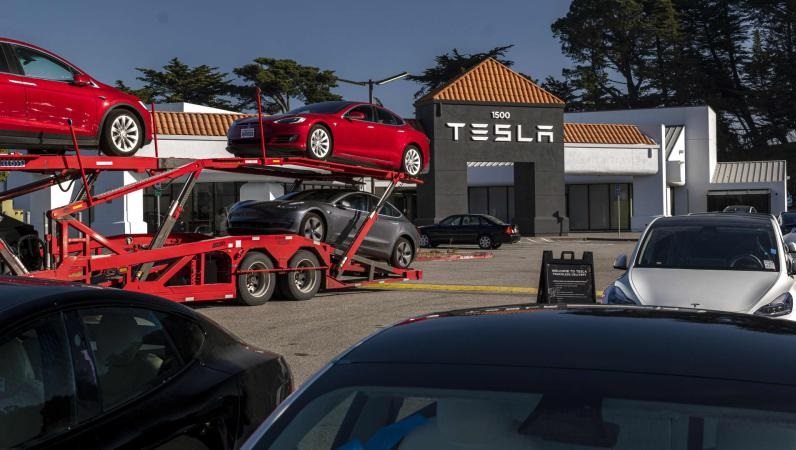
Tesla delivered a record 497,099 vehicles in the third quarter of 2025, marking its strongest sales performance in over a year. But the record-breaking quarter did not translate into higher earnings. Instead, the company’s net profit fell 37% year-on-year to $1.4 billion, underscoring how rising costs, tariffs, and internal restructuring have squeezed margins even amid robust demand.

According to a shareholder letter released Wednesday, Tesla generated $21.2 billion in automotive revenue, its highest in over a year, driven largely by a surge of U.S. customers rushing to take advantage of the expiring federal electric vehicle (EV) tax credit. Yet, despite this revenue boost, the company’s bottom line continued to weaken, exposing deeper structural pressures within the world’s most valuable automaker.

A Record Quarter Masking a Profit Slump

Tesla’s profit decline comes after what had been a difficult start to the year. Sales had dropped sharply in the first quarter, a downturn analysts partly linked to CEO Elon Musk’s political entanglements with the Trump administration, which alienated some customers and generated negative publicity.

The third-quarter rebound — driven by incentive-driven U.S. buyers — offered a temporary lift. But Tesla’s cost base expanded far faster than its revenue. The company reported a 50% increase in operating expenses (OpEx) compared with the same period in 2024, citing heavy investments in artificial intelligence (AI), research and development, and restructuring charges totaling nearly $240 million.

Tesla did not specify the nature of those restructuring costs, but sources familiar with the matter have tied them to the shutdown of the company’s Dojo supercomputer project, a six-year effort intended to strengthen Tesla’s neural network training capabilities.

The company’s letter also identified U.S. tariffs as a significant drag on profits, a development that highlights an unusual irony: Musk — who reportedly spent more than $300 million supporting Donald Trump’s return to the White House — is now contending with trade policies that have directly hurt Tesla’s business.

Tesla’s gross margins have steadily declined since 2022, when the company began aggressively cutting prices to defend its global market share against Chinese rivals like BYD and XPeng. Those price cuts helped stimulate demand, but at the expense of profitability.

The third-quarter data confirmed that trend. Despite the record shipment volume, Tesla’s operating margin fell to its lowest point in nearly four years, reflecting both pricing pressure and ballooning expenses. Analysts say the combination of tariffs on imported components, higher logistics costs, and AI infrastructure spending has created a profitability ceiling that Tesla has struggled to break through.

With the year-end approaching, Tesla now faces the daunting task of producing another record quarter — or better — to match its 2024 delivery totals. That goal looks increasingly challenging given softening demand in Europe and parts of Asia, where local competitors are offering cheaper EVs with comparable range and features.

A Strategic Shift Away from Cars

Musk, however, has spent much of the past two years trying to reframe Tesla’s narrative beyond carmaking. In shareholder briefings and public statements, he has urged investors to view Tesla as a technology and robotics company, not merely an automaker.

“We’re at a critical inflection point for Tesla and our strategy going forward as we bring AI into the real world,” Musk said on Wednesday’s earnings call.

Central to that vision is Musk’s push to create a global network of self-driving robotaxis — an initiative he believes could one day rival ride-hailing giants like Uber. Tesla is at the “beginning of scaling, quite massively, Full Self-Driving and Robotaxi, and fundamentally changing the nature of transport,” he said.

Tesla has also heavily promoted its humanoid robot, Optimus, which Musk has described as the company’s most important long-term product, even predicting it could eventually become “the best-selling product of all time.”

Yet, Wednesday’s shareholder letter offered little new information on either front. Progress on Tesla’s Full Self-Driving (FSD) software remains incremental, with regulators still reluctant to approve large-scale deployment in most jurisdictions. Meanwhile, Optimus remains in the prototype phase, and Tesla has not disclosed any commercial timelines or cost details.

For many investors, the lack of clarity raises questions about whether Tesla’s core automotive business, which remains its only consistent revenue engine, can sustain the company through its costly technological pivots.

Investor Tensions Over Musk’s $1 Trillion Pay Plan

The disappointing quarterly profit numbers land just weeks before Tesla’s annual shareholder meeting, where investors will vote on a $1 trillion stock compensation plan for Musk — a proposal that has already become one of the most contentious in corporate history.

The plan, if approved, would grant Musk one of the largest single payouts ever awarded to a corporate executive. Advisory firms Institutional Shareholder Services (ISS) and Glass Lewis have both urged shareholders to vote against the proposal, arguing that it is excessive and poorly aligned with recent performance.

Nonetheless, given Musk’s near-cult following among retail shareholders and the overwhelming support he has received in prior compensation votes, the proposal is widely expected to pass.

Tariffs, Politics, and Uncertain Growth

The trade friction between Washington and key trading partners is now adding another layer of complexity to Tesla’s outlook. The Trump administration’s new tariff regime on vehicle imports and electric components has driven up Tesla’s production costs in North America, particularly for models relying on parts sourced from Asia.

These tariffs also risk depressing overseas demand for U.S.-made vehicles at a time when Tesla is already battling slowing EV sales growth globally.

At the same time, Musk’s growing proximity to Washington has complicated the company’s public image. His political advocacy has drawn both loyalty and backlash, and some analysts believe it has contributed to brand polarization among U.S. consumers — particularly younger, urban buyers once core to Tesla’s growth.

However, Tesla remains profitable, but its once unstoppable momentum has slowed. The company that once promised 50% year-over-year growth is now struggling to defend margins and sustain investor confidence amid shifting politics, rising costs, and the enormous financial demands of its AI and robotics ambitions.

Even with record deliveries, Tesla’s third-quarter report shows that the company’s financial gravity is catching up. Musk’s bold vision of a robot-driven future may yet define Tesla’s long-term identity, but for now, the company’s profitability still depends on the very business Musk seems most eager to transcend — building and selling cars.

Kraken’s xStocks Has Surpassed $5B on cEX and DEX Trading Volumes

0

Kraken, a leading cryptocurrency exchange, announced that its tokenized equities platform—branded as xStocks—has surpassed $5 billion in combined centralized exchange (CEX) and decentralized exchange (DEX) trading volume since its launch in July 2025.

This rapid growth underscores the surging demand for real-world asset (RWA) tokenization, allowing non-U.S. users to trade digital representations of U.S. stocks and ETFs 24/7 on blockchain rails. Alongside this, Kraken reported that revenues from the xStocks product have doubled, reflecting sustained user engagement rather than one-off curiosity.

Kraken’s Q3 2025 financial update provides context for this achievement, showing explosive overall growth. xStocks platform has generated over $1 billion in on-chain transactions and attracted more than 37,000 unique holders.

It offers tokenized versions of 60 U.S. equities like Apple, Nvidia, Meta as SPL tokens on the Solana blockchain, backed 1:1 by real assets held in custody under European regulations. Users can trade via Kraken Pro or the consumer app, and tokens are composable for DeFi uses like lending.

Restricted to non-U.S. jurisdictions over 160 countries, with recent expansions to Europe. Integrations with platforms like Bybit, Phantom, OKX Wallet, and Telegram enhance liquidity and accessibility. Developed with Backed Finance, xStocks combines regulated token issuance with blockchain flexibility, addressing pain points like limited trading hours and high cross-border fees in traditional finance.

Kraken as an early leader in the RWA tokenization space, blending the $1 trillion crypto market with the $55 trillion global equities sector. Tokenized assets enable fractional ownership, instant settlements, and global access without intermediaries—potentially unlocking trillions in liquidity if U.S. regulations evolve to allow broader participation.

Kraken’s revenue doubling from xStocks signals real traction, driven by returning traders and institutional interest. The news has sparked buzz on X (formerly Twitter), with outlets like The Block amplifying the story and analysts highlighting its implications for DeFi-TradFi convergence.

However, challenges remain, including regulatory hurdles and market volatility that could affect tokenized holdings. Kraken’s momentum—bolstered by acquisitions like NinjaTrader and Small Exchange—suggests tokenized equities could become a core revenue driver. As RWAs are projected to hit $10 trillion on-chain by 2030, this is a pivotal step in redefining asset trading.

RWA tokenization involves converting physical or traditional financial assets into digital tokens on a blockchain. This process bridges traditional finance (TradFi) and decentralized finance (DeFi), offering several advantages:24/7 Trading and Accessibility Tokenized assets can be traded globally, anytime, unlike traditional markets with fixed hours. This suits investors across time zones.

Non-U.S. users, as seen with Kraken’s xStocks, can access U.S. equities without navigating complex cross-border regulations or intermediaries. Fractional Ownership Tokenization allows assets to be divided into smaller units, enabling fractional ownership.

For example, a $1,000 stock or a $1M property can be split into affordable tokens, democratizing investment for retail users. By enabling trading on blockchain platforms, tokenized assets unlock liquidity for traditionally illiquid markets. Kraken’s $5B trading volume for tokenized equities highlights this potential.

Tokens can be integrated into DeFi protocols for lending, borrowing, or collateral, further enhancing liquidity. Blockchain-based settlements are near-instantaneous, compared to T+2 or longer in traditional markets.

Eliminating intermediaries (brokers, clearinghouses) reduces fees, especially for cross-border trades. Blockchain’s immutable ledger ensures transparent ownership records, reducing fraud risks. Smart contracts automate processes like dividends or settlements, minimizing errors and costs.

Interoperability with DeFi Tokenized RWAs, like Kraken’s SPL tokens on Solana, can be used in DeFi ecosystems (e.g., lending on Aave, staking). This creates new revenue streams and use cases, blending TradFi stability with DeFi innovation.

Tokenization removes geographic barriers, allowing investors in over 160 countries as with Kraken’s xStocks to participate in markets previously restricted by regulation or infrastructure. Tokens can embed programmable features, like automated dividend payouts or governance rights, enhancing asset utility.

New financial products, like tokenized ETF baskets or hybrid securities, become feasible. Compliance with laws like the EU’s MiCA or U.S. securities rules is complex, limiting availability. Tokenized assets require trusted custodians to hold underlying assets, introducing counterparty risk.

Token values tied to real-world assets can fluctuate with market conditions. RWA tokenization, as demonstrated by Kraken’s $5B milestone, merges the $55T global equities market with the $1T crypto ecosystem. With projections of $10T in on-chain RWAs by 2030, benefits like liquidity, accessibility, and cost-efficiency could redefine how assets are owned and traded globally.