
DD
MM
YYYY

PAGES

DD
MM
YYYY

spot_img

PAGES

Home Blog Page 28

Swiss Watchdog Probes Google Over Android Search Choice As Europe’s Tech Crackdown Widens

0

Switzerland’s Competition Commission (COMCO) has launched a preliminary investigation into Google’s removal of a feature that allowed Android users to choose their preferred default search engine during device setup, adding to mounting regulatory pressure on Big Tech across Europe.

The watchdog said on Tuesday it is examining whether Google’s decision to disable the “Choice Screen” in Switzerland while keeping it available elsewhere in Europe could amount to anti-competitive conduct under the Swiss Cartel Act.

The investigation marks the latest challenge for Google, whose search, advertising, and Android businesses have been under almost continuous regulatory scrutiny across Europe for years as authorities intensify efforts to curb the market power of the world’s largest technology companies.

Google said it was aware of the investigation.

“We look forward to cooperating fully with the authority to address their questions,” a company spokesperson said.

The Choice Screen allows users setting up a new Android smartphone to select their preferred default search engine instead of automatically using Google Search. According to COMCO, Google has removed that option for users in Switzerland, even though it remains available across countries in the European Economic Area (EEA).

As a result, Swiss users are automatically assigned Google Search unless they manually change the setting later.

The Swiss regulator said this could significantly reduce the visibility of rival search engines at a critical stage of the user experience.

“In digital markets, default settings play a decisive role,” COMCO said, noting that removing the option could weaken competition not only among search engines but also among other digital service providers that depend on online discovery.

The regulator added that Google’s approach creates unequal treatment between Swiss consumers and users elsewhere in Europe, where regulators have required greater consumer choice.

The preliminary investigation will determine whether Google’s conduct constitutes an abuse of its market position under Swiss competition law.

According to web analytics firm Statcounter, Google controls roughly 82% of Switzerland’s online search market, reinforcing regulators’ concerns about the company’s influence over internet search.

Europe’s Scrutiny of Big Tech Continues to Intensify

The Swiss investigation shows that regulatory pressure on Google and other major technology companies has shown little sign of easing, even after years of antitrust cases, record fines, and sweeping new digital regulations across Europe.

Google has been at the center of European competition enforcement for more than a decade. The European Commission has imposed billions of euros in fines against the company over practices involving Android, online shopping services and digital advertising, while requiring changes to how its products operate within the bloc.

The Android Choice Screen itself emerged from one of those cases after European regulators concluded that Google had illegally leveraged Android’s dominance to reinforce the market position of its search engine and Chrome browser.

More recently, scrutiny has expanded beyond traditional antitrust investigations.

The European Union’s Digital Markets Act (DMA), which came into force last year, imposes strict obligations on designated “gatekeeper” platforms, requiring companies such as Google, Apple, Meta, Amazon, Microsoft and ByteDance to make their ecosystems more open to competitors and give users greater freedom over default services and pre-installed applications.

European regulators are also increasingly focusing on product design choices rather than simply pricing or acquisitions. Features such as default settings, app placement, browser selection, and interoperability have become central to competition enforcement because they can shape user behavior and entrench dominant platforms without consumers actively making those choices.

Google is far from alone in facing heightened oversight.

Apple continues to face multiple investigations over its App Store rules, browser policies and interoperability obligations under the DMA. Meta remains under scrutiny over its advertising practices, subscription models and data usage, while Microsoft, Amazon and TikTok owner ByteDance are also subject to ongoing investigations and compliance reviews across Europe.

Switzerland’s probe demonstrates that this tougher regulatory stance is spreading beyond the European Union itself. Although Switzerland is not an EU member, its competition authorities have increasingly aligned with broader European efforts to ensure digital markets remain contestable.

If COMCO finds evidence of anti-competitive behavior, Google could be required to restore the Choice Screen for Swiss Android users and potentially face further enforcement measures.

SoftBank’s Masayoshi Son Predicts $5tn Annual AI Investment by 2040, Dismisses Bubble Fears

0

SoftBank Group Chief Executive Masayoshi Son has delivered one of his boldest forecasts yet on the future of artificial intelligence, noting that global investment in AI infrastructure will reach an unprecedented $5 trillion annually by 2040.

He also dismissed concerns about an AI bubble as a fundamental misunderstanding of the technology’s transformative potential.

The projection underscores the extraordinary scale of spending that leading technology companies believe will be required to build the computing infrastructure needed for advanced AI systems. Global technology firms are already committing hundreds of billions of dollars to AI data centers, semiconductors, power generation and networking equipment, fueling one of the largest capital expenditure cycles in modern technology history.

Speaking at SoftBank’s annual corporate conference in Tokyo on Tuesday, Son said annual AI investment would eventually reach 800 trillion yen ($5 trillion), arguing that the spending would be economically justified by AI’s contribution to the global economy.

“Every year $5 trillion, or 800 trillion yen, you might think that’s a lie, but I am confident that’s what it will cost,” Son said.

He predicted that by 2040, artificial intelligence could account for around 20% of global gross domestic product, making an annual investment of $5 trillion relatively insignificant in comparison.

“The business model will be viable because by 2040, if AI revenue makes up 20% of global GDP, spending 800 trillion yen a year is a rounding error,” Son said.

Son did not explain how SoftBank arrived at either the $5 trillion investment estimate or the projection that AI could generate one-fifth of global economic output.

A Forecast That Dwarfs Today’s AI Spending

Son’s projection indicates just how aggressively some technology leaders expect AI infrastructure spending to expand over the next 15 years.

Today, the world’s largest technology companies, including Microsoft, Amazon, Alphabet, Meta, and OpenAI, are already spending hundreds of billions of dollars annually building AI infrastructure. Industry estimates suggest hyperscale AI capital expenditure is expected to exceed $600 billion in 2026, meaning Son’s forecast implies annual investment would increase more than eightfold by 2040.

The spending would encompass far more than semiconductors. It would include AI data centers, networking equipment, advanced memory chips, specialized processors, robotics, electricity generation, cooling infrastructure and next-generation communications networks.

Recent developments across the industry support the broader trend of rapidly rising AI infrastructure investment. Memory manufacturers, including SK Hynix and Samsung Electronics, have warned that demand continues to outpace supply, while companies such as TSMC are expanding advanced chip packaging capacity to meet orders from AI chip designers like Nvidia.

At the same time, governments are becoming increasingly involved in AI infrastructure planning. New York recently became the first U.S. state to impose a temporary moratorium on large new data centers because of concerns over electricity demand, water consumption and environmental impacts, highlighting that power availability is emerging as one of the industry’s biggest constraints.

Son Rejects AI Bubble Concerns

Son also forcefully dismissed growing concerns that AI investment resembles previous technology bubbles.

“Asking if AI is a bubble is absurd. I don’t think people who ask that question know what AI is about,” he said.

His remarks come as investors increasingly question whether technology companies can generate sufficient returns to justify their unprecedented AI spending.

Several factors have fueled that debate in recent months. Semiconductor stocks have experienced sharp volatility as investors reassess the pace of AI infrastructure expansion, while concerns have emerged that some hyperscale cloud providers could eventually moderate capital expenditure after years of aggressive investment.

Questions have also been raised about whether enterprises are adopting AI applications quickly enough to generate the revenue needed to support massive infrastructure investments.

Son, however, argued that AI represents a fundamental technological transformation rather than a speculative investment cycle.

SoftBank Doubles Down On OpenAI

The speech supports SoftBank’s strategic shift toward artificial intelligence over the past two years. After rebuilding its balance sheet following losses linked to the Vision Fund portfolio, SoftBank has embarked on one of the industry’s most aggressive AI investment strategies.

The company’s highest-conviction investment is OpenAI.

Son said SoftBank’s cumulative investment in the ChatGPT developer is expected to exceed $60 billion before the end of 2026, making it one of the largest financial backers of the AI company as OpenAI expands its enterprise products, AI agents and computing infrastructure.

Beyond OpenAI, SoftBank has committed capital to robotics companies and AI infrastructure while participating in financing large-scale data center development. The strategy mirrors Son’s long-standing investment philosophy of identifying technologies he believes will reshape entire industries, an approach that previously produced one of the most successful venture investments in history through SoftBank’s early backing of Alibaba.

However, Son’s track record has also included notable setbacks, including SoftBank’s investment in WeWork, whose collapse became one of the highest-profile failures of the Vision Fund era.

Power Becomes The Next AI Bottleneck

One of the most striking elements of Son’s forecast centered on electricity demand. He predicted AI data centers would require 3 terawatts of generating capacity by 2040, equivalent to roughly 1.8 times current global electricity consumption.

The estimate lends credence to the argument that energy is rapidly becoming one of the industry’s biggest challenges.

Data centers already account for a growing share of electricity demand worldwide, with some forecasts suggesting they could consume around 11% of U.S. electricity by the end of the decade. Utilities, regulators, and governments are increasingly warning that existing grids cannot support the pace of AI expansion without major investments in new generation and transmission infrastructure.

Son said natural gas would likely serve as the primary energy source during the early stages of AI expansion before nuclear fusion eventually becomes commercially viable.

“This will initially be powered primarily by gas before nuclear fusion becomes the main energy source,” he said.

Weighing In On Musk’s Space Power Vision

Son also addressed Elon Musk’s proposal to power AI infrastructure using space-based solar energy.

“Will we use solar power in space as Elon Musk says? Maybe we will use both, but if you ask me fusion on earth will be the cheaper, cleaner energy source,” he said.

The comments are notable because they acknowledge that technology leaders are increasingly exploring unconventional solutions to AI’s growing energy demands.

Musk has argued that future AI infrastructure may rely on orbital solar power and eventually space-based data centers, leveraging SpaceX’s launch capabilities and satellite network. The concept has gained greater attention as governments begin imposing restrictions on terrestrial data center construction due to electricity constraints.

While Son expressed greater confidence in terrestrial nuclear fusion, his willingness to discuss space-based energy highlights how seriously industry leaders now view AI’s long-term power requirements.

Vision of An AI-Driven Economy

Son concluded by outlining an ambitious vision for society in 2040, one in which autonomous AI agents become the dominant participants in the digital economy.

He predicted there would be 100 trillion AI agents capable of making independent decisions, carrying out tasks, and communicating autonomously with one another.

“We will go from a human-centric world to an agent-centric world,” Son said.

“The age when humans are the highest life form on earth will end. For better or for worse, it will happen and it can’t be stopped.”

The remarks align with a broader industry shift toward “agentic AI,” with companies including OpenAI, Anthropic, Google and Microsoft increasingly focusing on autonomous AI systems capable of completing complex tasks with minimal human oversight.

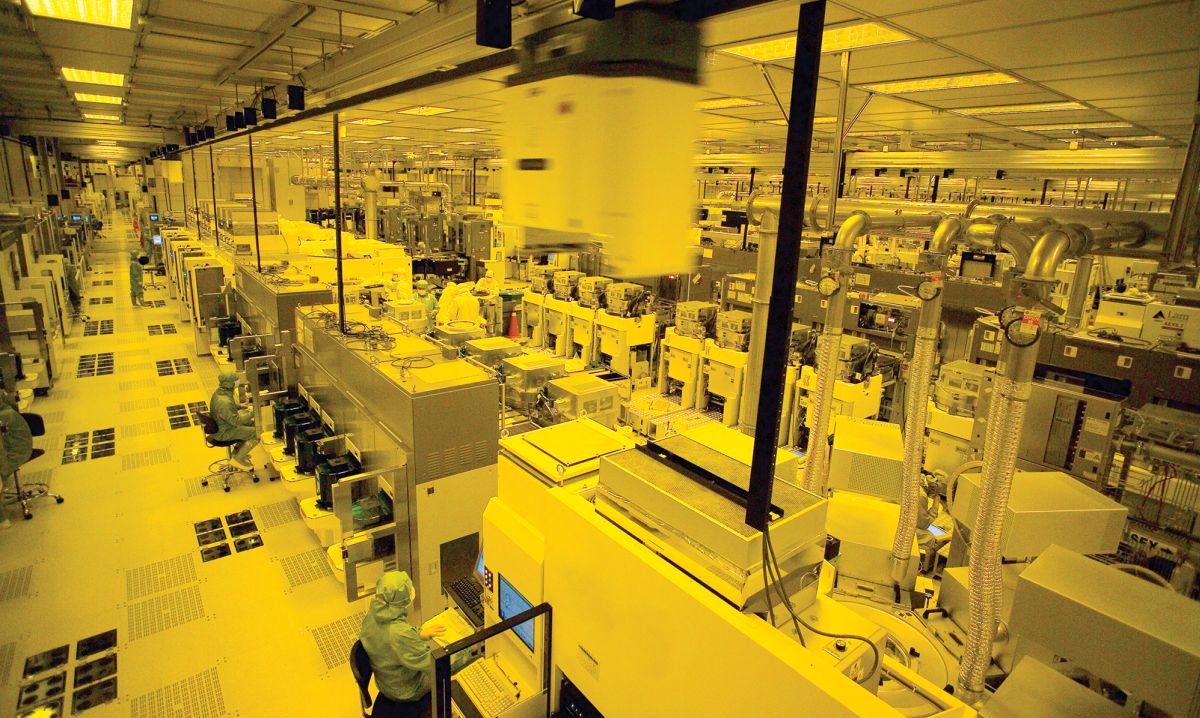
Taiwan’s Second-Largest Contract Chipmaker UMC Begins Mass Production of Silicon Photonics In Singapore

0

Taiwan’s United Microelectronics Corporation (UMC) has begun mass production of silicon photonics wafers at its manufacturing facility in Singapore, marking a significant step in the race to build the next generation of AI infrastructure as demand for faster and more energy-efficient data transmission accelerates.

The company, Taiwan’s second-largest contract chipmaker after TSMC, said Tuesday that the wafers are designed to meet surging demand for high-speed optical interconnects used in artificial intelligence clusters and hyperscale data centers, where the rapid movement of data has become as critical as computing power itself.

The milestone puts UMC in the position to participate in one of the semiconductor industry’s fastest-growing segments, as AI companies invest hundreds of billions of dollars in expanding data centers capable of training and running sophisticated models.

UMC said it worked with Singapore-based fabless semiconductor company SILITH Technology to move the silicon photonics platform from development to production in just 18 months, highlighting the industry’s urgency to commercialize technologies capable of addressing AI’s growing bandwidth bottlenecks.

The company also announced plans to make its proprietary 12-inch silicon photonics manufacturing platform available to customers by 2027, allowing chip designers to develop customized products using its fabrication process.

The announcement underlines how innovation in the semiconductor industry is increasingly focused not only on producing faster processors but also on improving how those processors communicate with one another.

As AI models continue to grow in size, traditional electrical connections between processors are becoming a major constraint on performance. Silicon photonics replaces conventional electrical signals with optical signals transmitted through light, enabling significantly faster data transfer while consuming less power and generating less heat.

The technology is becoming increasingly important for AI training clusters that can contain hundreds of thousands of GPUs operating simultaneously.

Without faster interconnect technologies, many of the performance gains delivered by next-generation AI chips risk being limited by the speed at which data can move between processors, storage systems and networking equipment.

That has made silicon photonics one of the semiconductor industry’s highest-priority technologies alongside advanced chip packaging and high-bandwidth memory.

Market researchers at Polaris Market Research estimate the global silicon photonics market will reach approximately $3.71 billion in 2026, supported by rapid growth in AI computing, cloud infrastructure, telecommunications and high-performance computing.

UMC’s investment also reinforces Singapore’s growing role as a strategic manufacturing base within the global semiconductor supply chain. The city-state has become an increasingly attractive location for advanced chip manufacturing thanks to its political stability, strong intellectual property protections, skilled workforce, and proximity to major Asian electronics supply chains.

The expansion comes as global semiconductor companies seek to diversify manufacturing footprints beyond traditional production centers amid rising geopolitical tensions and supply-chain disruptions.

Several major Taiwanese semiconductor firms have expanded operations in Singapore in recent years.

King Yuan Electronics has increased its presence in the country, while Vanguard International Semiconductor, backed by TSMC, recently partnered with Dutch chipmaker NXP Semiconductors to build a $7.8 billion wafer fabrication plant there.

The clustering of semiconductor manufacturers, suppliers, and design firms is gradually strengthening Singapore’s position as one of Asia’s most important chip production hubs outside Taiwan.

UMC’s manufacturing milestone comes as the company enjoys improving business conditions. Citi analysts recently upgraded their outlook for the second half of 2026, forecasting a 13% quarter-on-quarter increase in second-quarter revenue alongside a recovery in gross margins as semiconductor demand strengthens.

Recent operating results also point to improving momentum. UMC reported June revenue of NT$23.12 billion ($719.2 million), up 22.85% from a year earlier, while cumulative revenue for the first six months of the year increased 11.28%.

Despite the positive developments, UMC shares fell nearly 5% during Tuesday’s trading session in Taiwan before recovering part of the decline to close about 1.6% lower, suggesting investors may have been taking profits following recent gains or reacting to broader weakness across semiconductor stocks.

UMC’s latest investment shows that the AI boom is expanding opportunities well beyond companies that manufacture processors, with the race moving beyond chips to connectivity.

As hyperscalers, including Microsoft, Amazon, Meta and Google, continue investing heavily in AI infrastructure, demand is rising across the semiconductor ecosystem, from memory chips and advanced packaging to networking equipment and optical communications.

Analysts note that the industry’s next phase of growth will depend on technologies that allow vast numbers of AI processors to operate together efficiently. In that environment, silicon photonics is emerging as a foundational technology rather than a niche application, positioning manufacturers such as UMC to benefit from one of the fastest-growing areas of AI infrastructure.

The Intersection of Technology, Design, and Home Improvement in Today’s Market

0

The way people live at home has changed for good.

Amidst remote work skyrocketing, smart devices dominating living rooms and homeowners investing more money than ever into renovations… home life has changed drastically over the past 5 years. Enter the one room that combines all three of these trends-

The home office.

Home office cabinets embody the sweet spot where technology meets design and home improvement. They conceal the messy essentials (cords, printers, hard drives), showcase decorative favorites (books, plants, artwork), and subtly determine whether a workspace looks put together or not.

Let’s break down what’s happening in the market and why it matters.

In this guide:

  1. Why Home Improvement Is Booming Right Now
  1. How Technology Is Reshaping The Modern Home
  1. Where Design Meets Function (Home Office Cabinets)
  1. Smart Choices For Homeowners Today

Why Home Improvement Is Booming Right Now

Home improvement spending is huge. And it’s still growing.

According to the latest estimates from Harvard, homeowners are expected to spend $509 billion in 2025 on remodeling. That’s a lot of money heading toward kitchens, baths, and…. home offices.

Why the surge? A few reasons:

  • Homeowners aren’t moving. When mortgage rates are high, moving costs a lot of money. So people renovate what they own.
  • Home equity is at record highs. That equity fuels renovation budgets.

Remote work created unforeseen demands.

Extra bedrooms turned into offices. Basement spaces turned into studios. Every room has been assigned a purpose.

Empower says that nearly two-thirds of US homeowners plan on spending $20,000 or more on home renovations. There’s gonna be a lot of remodel juice going toward every room in the house.

And here’s where it gets interesting.

Much of that spending is going towards features like built-in storage. Custom cabinetry. Multi-functional spaces. Upgrades that help a home operate more efficiently and look great too. Home office cabinets built to store laptops, files, printers and anything else you need to be productive these days. Office cabinets that often take design cues from the same craftsmanship as high quality kitchen cabinets… because why shouldn’t a workspace feel just as handmade as the kitchen?

How Technology Is Reshaping The Modern Home

Technology used to live in one room. The TV room. Maybe the study.

Now it’s everywhere.

The worldwide smart home market reached $162.8 billion in 2025. Expected to grow over 100% in the coming years. Think voice assistants, smart thermostats, video doorbells, connected light bulbs, security cameras… the works. All further ingraining themselves into daily life.

A few numbers worth knowing-

  • Approximately 22% of households in the U.S. have larger smart devices such as refrigerators or washing machines
  • Forecasts show the North American smart home market by itself will continue to rise steeply through 2030
  • Over 30 billion connected devices will be estimated to be installed in residences worldwide

So what does this mean for design?

Technology should be integrated into the home, not added on as an afterthought. Nobody wants a gorgeous office destroyed by wires and blinking modems. Nobody wants a stylish kitchen with a smart home device on the counter next to the coffee maker.

That’s why smart storage matters more than ever.

Today’s top home renovations build for technology integration upfront. Drawered charging stations. Behind-the-panel cable management channels. Router, printer, and gaming system storage in properly sized cabinetry.

Where Design Meets Function

Here’s the shift most homeowners are noticing-

Rooms have become multi-purpose. Dining rooms are also studies. Guest bedrooms are also offices. Living rooms are also home gyms.

That translates into working smarter through design. Every square foot should justify its existence. And nothing does multi-task like beautiful cabinetry.

Home office cabinets are a great example. They can:

  • Hide a full workstation behind closed doors when the day ends
  • Store paperwork, tech, and supplies in one clean unit
  • Match the rest of the home’s design language for a seamless look
  • Add serious resale value to the property

The stereotypical old office-at-home used to be a metal filing cabinet shoved into an unused corner. Good riddance.

Homeowners today desire elegance. They want things to look planned and flow together. They want their office to feel enjoyable to work in for long hours. Custom home office cabinets are the answer. They allow built-in style and storage for every device and paperwork.

Smart Choices For Homeowners Today

So how should homeowners think about all this?

With approximately 22% of the US workforce working remotely – that’s about 32.6 million Americans – the home office will stick around. So will the smart home explosion. And the remodel boom.

Those homes that will best hold their value over the next decade will be the ones that gracefully integrate all three trends.

A few things to keep in mind:

  • Embrace technology, don’t hide from it. Choose furniture and cabinetry that can accommodate cables, chargers and technology devices.
  • Spend where it matters. Flat pack cabinets look cheap right out of the box AND ten years down the road. Invest in solid cabinetry — materials, hardware, crisp lines — and it’ll pay off.
  • Consider resale value. A home office with legitimate storage as part of the design will help sell a house. A spare bedroom with a folding table will not.
  • Coordinate with existing decor. Cabinets should look like they belong with the rest of the home, rather than being something thrown together at the last minute.

The trend is clear.

Homeowners who design homes for the way people live today — dynamic, connected, work-from-home lives — are maximizing enjoyment in their homes. Those who don’t plan for it are stuck with spaces that are fighting them.

Bringing It All Together

Technology, design, and home improvement used to sit in separate lanes. Not anymore.

They’re starting to bleed into each other these days, and home office cabinets are some of the biggest proof you’ll find of that crossover. Home office cabinets address a design issue (making a space look beautiful), a tech issue (helping wrangle all the wires and gadgets of the day-to-day) and a home improvement issue (increasing a home’s actual value).

The marketplace expands. Connected devices proliferate. More people are using their home as an office, studio, gym and family hub than ever before.

There’s one important reason smart designers plan for aging homeowners: Homes built for life’s inevitable changes are more livable … and appreciate better.

That’s the kind of upgrade worth making today.


Samsung Rejects Report It Is Exploring U.S. ADR Listing After SK Hynix’s Record Nasdaq Debut

0

Samsung Electronics on Tuesday denied a report that it is exploring a U.S. listing through American Depositary Receipts (ADRs), pushing back against speculation that South Korea’s largest company could follow rival SK Hynix into American capital markets after the latter’s record-breaking Nasdaq debut.

“Samsung Electronics is not reviewing the possibility of issuing American Depositary Receipts,” a Samsung spokesperson said in a statement.

The response came after Bloomberg News reported that Samsung had held preliminary discussions with investment banks about a possible ADR offering, citing people familiar with the matter. The report added that the talks remained at an early stage and might not ultimately lead to a listing.

Bloomberg also reported that Samsung had previously evaluated a U.S. ADR program before abandoning the idea, but that SK Hynix’s successful U.S. offering had renewed internal discussions.

Samsung’s denial removes, at least for now, the prospect of another blockbuster U.S. listing from one of Asia’s largest technology companies. However, the speculation itself highlights how dramatically investor demand for AI-related semiconductor companies has reshaped global capital markets.

Only days ago, SK Hynix completed the largest-ever U.S. listing by a foreign company, raising approximately $26.5 billion after pricing its ADRs at $149 apiece. The shares surged in their Wall Street debut, reflecting strong demand from investors eager to gain exposure to the AI infrastructure boom.

The landmark transaction demonstrated that U.S. investors are willing to assign premium valuations to companies positioned at the center of artificial intelligence supply chains, particularly those supplying memory chips used in Nvidia’s AI accelerators.

That has inevitably fueled speculation over whether Samsung, the world’s largest memory-chip manufacturer, could eventually pursue a similar route.

Although Samsung rejected the report, analysts say SK Hynix’s successful listing has established a new benchmark for Asian semiconductor companies considering broader access to U.S. investors.

Unlike a traditional initial public offering, Samsung does not need to raise capital to finance expansion. The company generates substantial cash flow and already has access to global debt and equity markets.

Instead, a U.S. ADR program would primarily be about increasing accessibility.

American investors currently must purchase Samsung shares through South Korea’s stock exchange or international trading platforms. ADRs would allow Samsung shares to trade in U.S. markets during American trading hours, potentially broadening ownership among pension funds, retail investors and exchange-traded funds that primarily invest in U.S.-listed securities.

Greater accessibility often improves liquidity and can contribute to higher valuations by expanding the potential investor base. For technology companies competing for global capital, visibility in U.S. markets carries strategic importance as AI becomes one of the world’s most closely followed investment themes.

The AI Race Extends Beyond Chips to Capital Markets

The speculation also exposes how competition between Samsung and SK Hynix is expanding beyond semiconductor manufacturing. Both companies are investing hundreds of billions of dollars to expand AI memory production, accelerate fabrication capacity and secure long-term supply agreements with hyperscale cloud providers.

At the same time, they are competing for investor attention.

SK Hynix has become one of the biggest beneficiaries of the AI infrastructure boom after emerging as Nvidia’s leading supplier of high-bandwidth memory (HBM), a critical component that enables AI processors to handle enormous volumes of data.

Samsung, while remaining the world’s largest producer of memory chips overall, has been working aggressively to narrow that gap. The company recently announced plans to bring forward operations at its first Yongin semiconductor fabrication plant by one to two years, underscoring how rapidly chipmakers are expanding capacity to meet AI-driven demand.

It is also developing its own AI accelerator chips, investing heavily in advanced packaging technologies, and expanding manufacturing capacity in the United States.

The report also reveals a new shift emerging in the semiconductor industry. As the center of AI investment shifts toward the United States, many global chipmakers are seeking deeper engagement with American investors. The U.S. has become the world’s largest source of capital for AI infrastructure, with hyperscalers including Microsoft, Meta, Amazon, Alphabet and OpenAI-backed partners expected to spend hundreds of billions of dollars on data centers, chips and networking equipment over the coming years.

That spending has transformed semiconductor stocks into some of the market’s most sought-after investments.

Companies with direct exposure to AI hardware are now looking beyond their domestic exchanges to attract global investors, improve trading liquidity and align themselves with the world’s fastest-growing technology ecosystem.