DD
MM
YYYY

PAGES

DD
MM
YYYY

spot_img

PAGES

Home Blog Page 2802

[Updated] FTX Receives U.S. Bankruptcy Court Confirmation of its Plan of Reorganization

0

Update: FTX Trading Ltd. (d.b.a. FTX.com) and its affiliated debtors (“FTX” or the “Debtors”) today announced that the United States Bankruptcy Court for the District of Delaware (the “Bankruptcy Court” or the “Court”) has confirmed FTX’s Plan of Reorganization (the “Plan”), less than two years after its historic bankruptcy filing.

Under the terms of the Plan, 98% of the creditors of FTX by number will receive approximately 119% of the amount of their allowed claims within 60 days after the effective date of the Plan, subject to know-your-customer and other distribution requirements. FTX projects that the total value of property collected, converted to cash and available for distribution will be between $14.7 billion and $16.5 billion. This amount includes assets under the control of the chapter 11 Debtors as well as assets under the control of the Joint Official Liquidators of FTX Digital Markets, Ltd. (Bahamas), the Administrators of FTX Australia, the United States Department of Justice and dozens of private parties that have cooperated in the recovery efforts. The Debtors will separately announce in due course the Plan’s effective date and estimated first distribution date.

John J. Ray III, Chief Executive Officer and Chief Restructuring Officer of FTX, said: “The Court’s confirmation of our Plan is a significant milestone on our pathway to distributing cash to customers and creditors. Today’s achievement is only possible because of the experience and tireless work of the team of professionals supporting this case, who have recovered billions of dollars by rebuilding FTX’s books from the ground up and from there marshaling assets from around the globe. It also reflects the strong collaboration we have had with governments and agencies from around the world that share our goal of mitigating the wrongdoings of the FTX insiders.”

Mr. Ray added: “Looking ahead, we are poised to return 100% of bankruptcy claim amounts plus interest for non-governmental creditors through what will be the largest and most complex bankruptcy estate asset distribution in history. The estate is working to finalize arrangements to make distributions to creditors across more than 200 jurisdictions around the world. In preparation for this process, we are finalizing agreements to retain specialized agents to assist us in getting recoveries to customers around the world as safely and expeditiously as possible. I want to thank all customers and creditors of FTX for their patience throughout this process.”

  • Original below

The FTX bankruptcy case has been a focal point in the cryptocurrency world, highlighting the volatility and risks inherent in the market. Today marks a significant moment in the ongoing saga as the confirmation hearing on creditor fund distribution is set to occur. This hearing is a critical step in determining how the funds will be allocated among the creditors who were affected by the collapse of the exchange.

The anticipation surrounding the hearing is palpable, as it will set the precedent for how such cases may be handled in the future. The outcome is particularly important for the crypto community, as it will influence the market’s stability and investor confidence moving forward.

The hearing follows a series of events that have unfolded since FTX’s bankruptcy filing. There have been widespread discussions and debates on the best approach to reimburse the creditors, with the bankruptcy estate proposing a plan that has gained overwhelming support from the creditors. However, the plan has faced opposition, particularly regarding the form of reimbursement—whether it should be in cash or in-kind assets like cryptocurrency.

The U.S. Securities and Exchange Commission (SEC) has also played a role in the proceedings, indicating that it may challenge any transactions of distributions involving crypto assets. This adds another layer of complexity to the hearing, as the legal and regulatory frameworks for cryptocurrency are still evolving.

The FTX creditor fund distribution plan has been a subject of intense debate, with various stakeholders presenting arguments for and against the proposed strategy. The plan promises a high recovery rate of 118% of claims in cash for most creditors. It aims to provide swift compensation, with 98% of creditors receiving their funds back in cash within 60 days of court approval.

A significant majority of creditors, about 94%, have voted in favor of the reorganization plan, indicating strong support from those affected. Some creditors have expressed a preference for compensation with in-kind assets rather than cash, arguing that this could potentially avoid a taxable event.

Creditors are concerned about being excluded from the market recovery, as they have missed out on the opportunity to profit from the run-up in crypto prices while their funds were tied up. The U.S. Securities and Exchange Commission may pose challenges, especially regarding the use of stablecoins for repayments, adding a layer of complexity to the plan’s execution.

The confirmation hearing is set to address these arguments, and the outcome will have significant implications for the creditors and the broader cryptocurrency market. The court’s decision will be closely watched as it will set a precedent for future bankruptcy cases involving digital assets.

The market has responded to these developments, with the FTX Token experiencing a significant spike in value amid the looming bankruptcy distributions. This reaction underscores the interconnectedness of legal proceedings and market dynamics in the crypto space.

As the hearing unfolds, stakeholders from across the industry will be watching closely. The decisions made by Judge John T. Dorsey of the United States Bankruptcy Court for the District of Delaware will not only affect the immediate distribution of funds but also set a benchmark for future bankruptcy cases involving cryptocurrencies.

The FTX confirmation hearing is more than just a legal procedure; it is a testament to the growing pains of a burgeoning industry. It serves as a reminder of the need for robust legal frameworks and clear regulatory guidelines to protect investors and maintain market integrity.

The cryptocurrency market is still in its infancy, and the FTX case is a pivotal moment in its maturation. The outcome of today’s hearing will likely resonate for years to come, influencing the policies, practices, and perceptions of this innovative yet unpredictable sector.

BlockDAG Shatters Previous Records as Whales Pour $10M in 72 Hours to its Presale! BNB’s Price Falls & Solana Eyes Rebound

0

The crypto market has been on a rollercoaster ride lately, with some coins struggling while others surging ahead. BNB is struggling under increasing bearish pressure, with recent technical indicators pointing to potential further declines. Meanwhile, Solana has taken a hit but some experts think it could have a strong rebound by the end of 2024.

On the other side of the crypto coin, BlockDAG is stealing the spotlight with an impressive $10 million raised in just 72 hours thanks to crypto whales! With its presale moving fast, raising over $90 million, BlockDAG has become a project to watch. As the hype builds, BlockDAG could be setting itself up as the next big player in the crypto space.

BNB Price Struggles

BNB’s price is facing increasing bearish pressure, having dropped 8.72% in the past week and showing signs of more potential losses. With key technical indicators like the ADX and Ichimoku Cloud pointing to a strong downtrend, the coin risks a further 12% decline if it fails to hold the critical support level at $527.

The ADX reading of 40.88 signals intensified bearish momentum, while the Ichimoku Cloud showed weakening support, reinforcing the likelihood of continued losses. If the price breaks below $527, it could fall to $471, but a rebound might allow BNB to challenge resistance levels at $562 and $598.

Could Solana See a Potential Rebound in 2024?

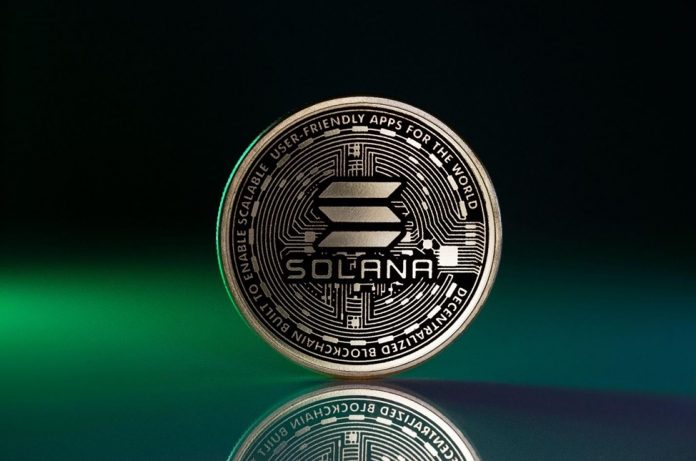
Solana has taken a 9% hit, dropping to $134 per token. Despite this, some analysts predict a strong rebound, potentially reaching $330 by the end of 2024. This is thanks to Solana’s strengths like low transaction fees and efficient processing.

With transaction costs nearly 900 times lower than Ethereum, Solana continues to draw interest, especially for stablecoin transactions. Recent interest rate cuts by the Federal Reserve have also created a favorable environment for riskier assets like crypto. With stablecoins becoming more popular as a safe and stable option during uncertain economic times, analysts think Solana could see some solid growth through the rest of 2024.

BlockDAG Raises $10M in 72 Hours—Presale Now At $90M!

BlockDAG has quickly become a top-performing crypto, pulling in a staggering $10 million in just 72 hours during its presale, thanks to massive whale activity. The buzz comes hot on the heels of BlockDAG’s Testnet launch, which has been earning rave reviews for its exceptional scalability and user-friendly design.

Industry insiders have highlighted the Testnet’s ability to handle a massive number of transactions with impressive speed, a key factor that’s setting BlockDAG apart from its competitors.

This overwhelmingly positive feedback has the presale moving at lightning speed with BlockDAG presale crossing the incredible $90 million mark. With over 13.8 billion coins sold and new traders rushing in, existing holders are seeing their assets gain value with every batch that closes.

Each coin is priced at $0.0206 in the current batch 24, giving early holders a 1960% increase in returns since batch 1. Each step in the presale pushes the coin’s price higher, creating a frenzy among traders to grab their share before the price hikes even more.

With the hype building and excitement around the tech, BlockDAG is shaping up to be one of the top-performing cryptos right now. It’s clear that this project is on track for major success, and with $10 million secured in record time, BlockDAG is proving it’s a force to be reckoned with. Traders and crypto enthusiasts alike are watching closely, and it looks like BlockDAG is just getting started.

Key Highlights: Top Performing Cryptos

It’s been a week of ups and downs in the crypto world. BNB faces ongoing bearish momentum and critical support tests, whereas Solana might see a significant rebound, driven by its technological advantages and favorable market conditions. But BlockDAG is the real deal right now, breaking records with its presale and attracting tons of attention.

With growing whale activity and innovative tech, it’s clear that BlockDAG is positioning itself as a major force in the crypto world. Earning $10 million in 72 hours has given BlockDAG a massive boost. For those looking for a crypto project with high growth potential, BlockDAG is definitely worth considering.

Discover More About BlockDAG:

Website: https://blockdag.network

Presale: https://purchase.blockdag.network

Telegram: https://t.me/blockDAGnetworkOfficial

Discord: https://discord.gg/Q7BxghMVyu

Kaspersky Lab in Russia to Launch Smartphones Based on KasperskyOS

0

Kaspersky Lab, the renowned cybersecurity firm, has been making headlines with its development of KasperskyOS, a proprietary operating system designed for mobile devices. This move marks a significant shift in the cybersecurity landscape, as Kaspersky Lab ventures into the realm of mobile hardware, leveraging its expertise to enhance security in the increasingly vulnerable mobile sector.

KasperskyOS is built on the principles of microkernel architecture, which is fundamentally different from the monolithic kernels used by popular operating systems like Linux and Android. This design choice is intentional, aiming to provide a compact and more secure kernel that can withstand the myriads of cyber threats prevalent today. The OS is described as ‘Cyber Immune,’ which means it is inherently secure against a vast majority of cyberattacks, a feature that is becoming increasingly crucial as mobile devices become integral to both personal and professional spheres.

The development of KasperskyOS for Mobile is not just about creating another player in the mobile OS market but is focused on addressing the need for secure mobile devices in industries with high cybersecurity requirements. From energy to industrial production, the potential applications of a secure mobile OS are vast and critical. Kaspersky Lab’s approach is to provide a secure-by-design platform that can serve as a foundation for creating Cyber Immune professional mobile devices.

Here are the key features that define KasperskyOS:

Cyber Immunity: At the core of KasperskyOS is the Cyber Immune approach, which means the system is inherently secure and can perform its critical functions even in hostile environments without the need for additional security features.

Microkernel Architecture: The microkernel is a central architectural component that guarantees the reliability of the operating system. It ensures process isolation and the application of security monitor solutions, which is crucial for maintaining a secure system.

Security: KasperskyOS is designed to block all unauthorized activities, providing a robust defense against a wide range of cyber threats.

Reliability: The OS guarantees the execution of critical functions in all situations, ensuring that essential processes remain operational regardless of the circumstances.

Flexibility: KasperskyOS allows for solution configuration to meet specific requirements, offering adaptability to various industry needs.

Transparency: The system enables strict control and easy auditing of processes, which is vital for maintaining integrity and trust in the security of IT infrastructures.

Interestingly, Kaspersky Lab does not intend to manufacture smartphones or tablets but is collaborating with global and local technology partners to provide the hardware for these devices. This strategy allows Kaspersky Lab to focus on what it does best—security, while leveraging the manufacturing capabilities of established hardware providers.

The testing phase for KasperskyOS for Mobile has been rigorous, with successful trials conducted in specialized laboratories. These tests ensure that the OS meets the stringent standards required for professional use, including compliance with 3GPP cellular communication standards and the ability to perform basic functions such as data transmission, calls, and SMS messaging across all modern network technologies used in Russia.

While the exact dates for the market release of devices running KasperskyOS for Mobile are not yet announced, the successful completion of testing phases and ongoing negotiations with technical partners suggest that these devices could soon be a reality. The entry of KasperskyOS-equipped smartphones into the market could herald a new era of mobile security, providing users with a robust alternative in an environment where cybersecurity is no longer a luxury but a necessity.

As the world becomes more interconnected and reliant on mobile technology, the importance of cybersecurity cannot be overstated. Kaspersky Lab’s foray into the mobile OS market with KasperskyOS for Mobile represents a proactive step towards a future where mobile security is embedded at the core of device architecture. It’s a development that could potentially reshape the mobile landscape, offering a secure haven in a digital ecosystem fraught with vulnerabilities.

NNPCL Ends Exclusive Purchase Agreement with Dangote Refinery – Report

0

The Nigerian National Petroleum Company Limited (NNPCL) is ending its exclusive purchase agreement with Dangote Refinery, a move that opens the market for other petroleum marketers to directly buy petrol from the refinery, Premium Times has reported, citing sources.

This is coming as the Nigerian government’s arrangement to sell crude oil to Dangote Refinery in naira, which is expected to reduce the cost of petroleum products, kicks off.

This significant shift signals a change from NNPC’s earlier role as the sole off-taker of Dangote Refinery’s products and aligns with current market practices for deregulated products, where refineries sell on a willing buyer, willing seller basis.

This development follows a statement by Devakumar Edwin, vice president at Dangote Industries Limited, who, in September, announced that Dangote Refinery had commenced processing petrol and that NNPC would buy its products exclusively. However, NNPC has since clarified that the refinery, like any other domestic refinery, could sell its products to any marketer under the deregulated system. Despite this, NNPC initially began loading petrol from the refinery exclusively in mid-September, leaving independent marketers out of the equation.

Tensions around this exclusive arrangement escalated, leading to a motion in the House of Representatives on September 26. The motion, introduced by Oboku Oforji (PDP, Bayelsa), called for the federal government to mandate NNPC and Dangote Refinery to allow independent marketers access to lift petrol directly from the refinery.

Oforji argued that excluding independent marketers threatened competition in the sector and warned that such practices could lead some marketers to resort to importing products to stay competitive, which could further complicate Nigeria’s fuel supply dynamics.

The House also urged Dangote Refinery to establish depots or partner with other entities to build tank farms across Nigeria’s geo-political zones to improve public access to petroleum products. Oforji’s motion sharply criticized NNPC’s monopoly, which he described as “tantamount to greed” and pointed to NNPC’s poor track record in managing Nigeria’s refineries and crude resources over the years.

Following pressure from lawmakers and stakeholders, sources close to the matter revealed to Premium Times that NNPC is now set to relinquish its role as the sole off-taker, allowing other marketers to purchase petrol from Dangote Refinery at market prices. This change is expected to promote competition, which could stabilize fuel supply chains and lead to more competitive pricing for consumers.

However, the decision by the NNPC to end its exclusive purchase arrangement with Dangote Refinery is believed to be not just a simple shift in market dynamics. It is also seen as a highlight of the unstable relationship between the two entities. Their relationship has been fraught with issues ranging from crude oil supply challenges, pricing disagreements for refined products, and even allegations of sabotage.

Crude Oil Supply Challenges

One of the primary points of tension between NNPCL and Dangote Refinery has been the supply of crude oil, which is the lifeblood of any refinery. The 650,000 barrels per day Dangote Refinery, which is expected to meet a significant portion of Nigeria’s fuel demand, requires a steady and adequate supply of crude oil from the NNPCL as part of the obligation of its 20% stake in the refinery.

However, in July, Dangote disclosed that due to NNPC’s failure to fulfill its financial obligations, its stake in the refinery has been reduced from the initially agreed 20% to a mere 7.2%.

The NNPCL’s inability to supply crude oil forced Dangote Refinery to source the product from outside Nigeria.

Another point of contention has been the pricing of refined petroleum products. Under the exclusive off-take arrangement, NNPCL had substantial control over how much it paid for the refined products from Dangote Refinery. With NNPCL as the sole buyer, there is little for a free market, creating a bottleneck for competitive pricing.

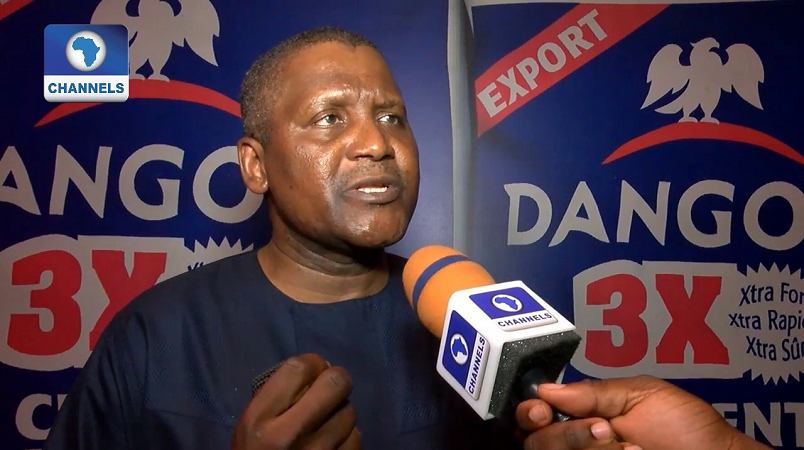
Beyond the issues of supply and pricing, there have also been allegations of attempts to sabotage the refinery by players within the industry. When Dangote Refinery initially began processing petrol, there were reports suggesting that certain actions by the Nigerian Midstream and Downstream Petroleum Regulatory Authority (NMDPRA) and NNPCL were undermining the refinery’s operations. This led to public exchanges between representatives of the entities, and Aliko Dangote accusing the others of deliberately sabotaging the refinery to sustain the petroleum import market.

In light of these tensions, NNPCL’s decision to withdraw from its exclusive off-take agreement could be seen as an attempt to ease the strained relationship and promote a more competitive and transparent market structure. Opening the market for independent marketers to directly purchase from Dangote Refinery may reduce allegations of monopoly, which have been a recurring criticism against NNPCL.

For independent marketers, the ability to directly negotiate with Dangote Refinery presents an opportunity to break free from the stranglehold of NNPCL and major marketers, whose dominance has often been seen as anti-competitive. These marketers, many of whom had been excluded from earlier deals, are now in a better position to enter the market on more favorable terms.

It remains to be seen how quickly these changes will impact the market and whether independent marketers will be able to secure favorable terms to purchase from the Dangote Refinery. Nonetheless, the move marks a pivotal moment in Nigeria’s downstream sector as this new turn is expected to liberalize the market.

BlockDAG’s $10M Surge in 3 Days—Is XRP Losing Hold? ChainLink Teams Up with Taurus for the Future of Tokenization

0

As the crypto market continues to evolve, major developments are catching the attention of investors. XRP’s price has been shaken following the SEC’s decision to appeal the Ripple case, while ChainLink is moving forward with its plans for institutional tokenization.

Meanwhile, BlockDAG is surging ahead, raising $10 million in just 3 days as its presale moves swiftly toward a $600M target.

XRP Lawsuit Appeal Creates Uncertainty

The XRP lawsuit has taken another unexpected turn. After a ruling that secondary XRP sales were not considered securities, the U.S. Securities and Exchange Commission (SEC) has appealed, sending ripples through the market.

Following this news, XRP dropped 10.85% to $0.52 in the past week, a significant blow to Ripple’s momentum. While Ripple’s legal team remains confident that the appeal won’t affect XRP’s long-term standing, investors are understandably on edge as they navigate this period of uncertainty.

ChainLink and Taurus Partner to Enhance Liquidity

ChainLink is continuing its push into the world of institutional tokenization through a partnership with Taurus. By leveraging ChainLink’s Cross-Chain Interoperability Protocol (CCIP), this collaboration aims to enhance liquidity for real-world tokenized assets. Taurus will also integrate ChainLink’s Data Feeds to provide greater transparency and security in the process.

Despite the strategic importance of this partnership, market response has been cautious. Analysts suggest that adoption of tokenized assets remains slow, and ChainLink’s price has seen little movement since the announcement.

BlockDAG’s $10M Presale Surge: Could 20,000x ROI Be Possible?

In contrast to the more cautious moves around XRP and ChainLink, BlockDAG has been making headlines with its rapid presale growth. In just one day, the presale surged by $10 million, driven by large-scale holdings from crypto whales. This brings its total presale funds to over $90 million, pushing the project closer to its $600 million goal.

The technology behind BlockDAG has been widely praised for its scalability and user-friendly testnet, drawing strong interest from the crypto community. Many XRP investors, frustrated by the prolonged legal battles, have started shifting their attention to BlockDAG’s presale, seeing greater potential for returns.

Experts are already predicting that BlockDAG could reach $20 per coin by 2027, with early adopters possibly seeing returns as high as 20,000x. With the current price of BDAG at $0.0206 in Batch 24, early adopters have already witnessed a 1960% gain since the presale’s initial price of $0.001.

As BlockDAG closes in on its presale target, the opportunity for exponential returns grows stronger. With more than 13.8 billion BDAG coins sold, the current batch is nearing its end, which is expected to trigger a price increase. Those looking to enter now have a limited window before the next surge.

Wrapping Up: Key Cryptos to Watch

XRP’s ongoing legal struggles continue to rattle the market, leaving investors cautious as the SEC appeal progresses. Meanwhile, ChainLink’s promising partnership with Taurus faces slow adoption challenges.

However, BlockDAG stands out, with a $10M surge in 3 days drawing significant attention. With over 13.8 billion BDAG coins sold and the $600M presale target within reach, early backers have already seen strong returns. As the project moves forward, BlockDAG’s innovative technology and whale-driven momentum make it one of the most promising cryptos to watch for significant future gains.


Join BlockDAG – Act Now Before Prices Increase:

Presale: https://purchase.blockdag.network

Website: https://blockdag.network

Telegram: https://t.me/blockDAGnetwork

Discord: https://discord.gg/Q7BxghMVyu