DD
MM
YYYY

PAGES

DD
MM
YYYY

spot_img

PAGES

Home Blog Page 2822

OpenAI Closes $6.6bn Funding Round At $157bn Valuation

0

OpenAI has solidified its standing as a behemoth in the tech world, closing a colossal $6.6 billion funding round, and propelling its valuation to an eye-popping $157 billion. Though the specifics of the investors weren’t all revealed, sources with inside knowledge have confirmed that Thrive Capital took the lead, with tech heavyweights like Microsoft, Nvidia, and SoftBank among the big names contributing.

The numbers are staggering, but this funding round is more than just a financial milestone—it underlines OpenAI’s leadership in the artificial intelligence landscape. What started in late 2022 as a public fascination with ChatGPT has now transformed into a broader revolution in AI, ushering in untold investment and interest in AI infrastructure and innovation.

In just two years, OpenAI has skyrocketed from a promising startup to an industry titan, pioneering developments that are shaping the future of work, creativity, education, and even healthcare.

In a blog post following the announcement, OpenAI emphasized that this latest influx of capital will be used to “double down” on its leadership in frontier AI research, boost computing power, and push forward with tools designed to solve complex problems.

Microsoft, a long-time ally in OpenAI’s ascent, expressed optimism about the continued partnership. The software giant, which has made multi-billion-dollar investments into OpenAI over the years, sees the collaboration as a pivotal piece in its Azure cloud strategy.

“We look forward to continuing our partnership with OpenAI,” a Microsoft spokesperson told CNBC in a statement.

Behind the headline-grabbing numbers, OpenAI’s internal dynamics tell a more complex story. Revenue has surged at a breakneck pace, with a reported 1,700% increase since early 2023, according to the New York Times. In September alone, OpenAI generated $300 million, and it’s on track to bring in $3.7 billion by the end of the year.

The company is forecasting an even more astounding $11.6 billion in sales for 2025. But with rapid growth comes heavy spending. Insiders estimate that despite its revenue explosion, OpenAI will lose about $5 billion this year, primarily due to the cost of acquiring Nvidia’s high-powered GPUs, essential for running its large language models.

However, the company’s ascent has been nothing short of remarkable. Earlier this year, OpenAI’s valuation was reported at $80 billion, jumping from $29 billion earlier in 2023. The soaring valuation mirrors the global demand for AI solutions. From business applications to AI-generated media, OpenAI’s influence is everywhere. Its ChatGPT product alone has captured the attention of 250 million active users each week. More impressively, it now has 11 million paying subscribers through ChatGPT Plus, and over 1 million businesses are shelling out for its premium services.

However, rapid expansion hasn’t come without its challenges. In recent weeks, the company has seen key leadership departures, signaling potential growing pains. Chief Technology Officer Mira Murati, who briefly held the reins as interim CEO, announced her exit after six and a half years. In a matter of days, two more high-profile figures—research chief Bob McGrew and VP Barret Zoph—followed her out the door.

For many, these exits raised concerns about the future of OpenAI’s leadership. However, CEO Sam Altman, while addressing these concerns at Italian Tech Week, tried to calm any fears, framing the changes as part of a natural evolution.

“I think this will be hopefully a great transition for everyone involved, and I hope OpenAI will be stronger for it, as we are for all of our transitions,” Altman said.

The timing of these departures, coinciding with talks about a potential restructuring of the company, raised eyebrows, though Altman was quick to dispel any rumors linking the two events.

There are also whispers of more significant structural changes within OpenAI. Sources revealed to CNBC that the company’s board is considering a move to shift OpenAI toward a more traditional for-profit model, leaving the non-profit arm as a separate entity. This shift could allow for greater flexibility and financial incentives, though no official decision has been made.

Altman also addressed the speculation about his compensation, firmly denying reports of plans for him to receive a “giant equity stake,” calling the rumors “just not true.”

Despite the internal changes and mounting pressure, OpenAI’s path forward looks set on growth. The company’s list of investors from this latest round reads like a who’s who of tech’s biggest players—Khosla Ventures, Altimeter Capital, Fidelity, MGX, and Tiger Global, to name just a few.

These strategic partnerships hint at a broadening of OpenAI’s horizons, expanding its influence beyond AI and into a wider spectrum of tech innovation.

However, OpenAI is reportedly seeking a commitment beyond just capital. Reuters reported, citing sources that the company also wanted investors to refrain from funding five companies they perceive as close competitors.

BlockDAG’s Big Offer – 50% Bonus to Celebrate Testnet & $78.5M Presale Success — STX Price Rises While Toncoin Stays Steady

0

The crypto market is buzzing with developments that promise a dynamic shift. The  STX price has been climbing, breaking past former lows and establishing new support levels.

Meanwhile, Toncoin consolidates its presence, stabilising within the crypto sphere. It’s becoming a backbone for decentralised applications, quietly strengthening its position.

On the thrilling front, BlockDAG is now the talk of the town with its presale topping a massive $78.5 million, marking the largest in crypto history, and the successful launch of its testnet. To celebrate these significant achievements, BlockDAG offers a limited-time 50% bonus using BDAG50, creating an unmissable buzz around what many see as the emerging crypto to buy.

STX Price Trends and Market Movements

The STX price has recently shown signs of a strong comeback, breaking above its prior lows. It climbed to $3.8460 before it fell, creating a new low on the chart. The momentum carried the STX price through this pattern’s upper boundary, indicating a robust upward trajectory.

After this breakout, the STX price found new ground, transforming previous resistance into solid support. This move emphasised the strength of the current market trend. Technical indicators, including the daily EMAs, have formed a golden cross, suggesting that the buyers are gaining control. The MACD and RSI also point towards a bullish outlook for the STX price, hinting at continued upward movement soon.

Toncoin’s Market Dynamics: A Study of Stability

Recently, Toncoin consolidates its position in the market, reflecting a phase of stability rather than rapid growth. This crypto, initially linked with Telegram, now thrives as a community-driven project. It focuses on fast, secure transactions and supports decentralised applications (dApps), making it a significant player in decentralised finance (DeFi).

As Toncoin consolidates further, experts observe increased activity from large investors, or “whales,” suggesting confidence in its long-term prospects. Although the price stands at $5.57, indicating a mature phase, the consolidation could lead to potential upward movements once this phase concludes. This trend offers insight without promoting investment, highlighting the current state of Toncoin in the evolving crypto landscape.

BlockDAG’s 50% Bonus with Code BDAG50 Expires Soon

In the current crypto market, the buzz is all about BlockDAG right now. This hybrid coin has quickly become a hot topic for two reasons: its record-breaking presale, with an impressive $78.5 million already secured, and the successful launch of testnet. These achievements make BlockDAG a standout choice for emerging crypto to buy.

BlockDAG isn’t just about big numbers; it’s also about giving back to its community. As a token of appreciation, they are offering a whopping 50% limited-time bonus on purchases made with the promo code BDAG50. This limited-time offer is only available until October 14th, so time is of the essence for those looking to increase their holdings significantly.

The impact of this generous bonus is clear. A staggering 13.2 billion BDAG coins have already been snapped up by eager traders. As each presale batch sells out, the next one sees a slight price increase. Right now, Batch 23 is nearly finished, priced at $0.0192 per coin. With the upcoming batch, prices are expected to climb even higher, suggesting potential long-term gains for early backers. Since launching from Batch 1 at just $0.001 per coin, the price has soared to $0.0192, reflecting an astounding 1820% ROI, indicating incredible potential for those who got in early.

The rush to buy BDAG coins is a smart move for anyone looking to dive into a promising opportunity. With each batch selling faster than the last, acting now could mean securing a spot in what could be the next big name in crypto.

Wrapping Up

As we survey the current crypto market, STX price shows promising strength, and Toncoin continues to consolidate, signalling a maturing market. However, turning our gaze towards the horizon, buying a top presale coin like BDAG emerges as a smart move. With BlockDAG raising a massive $78.5 million and batches selling rapidly amid price surges, it stands out as the emerging crypto to buy. Its substantial presale figures and enticing bonuses hint at a potentially explosive post-launch phase, making it a fascinating focal point in the dynamic crypto market.

Discover More About BlockDAG:

Website: https://blockdag.network

Presale: https://purchase.blockdag.network

Telegram: https://t.me/blockDAGnetworkOfficial

Discord: https://discord.gg/Q7BxghMVyu


BlockDAG’s Second Mega $1M Giveaway is Out! Will It Stand Against Ethereum Price Gains and Bittensor’s Rally?

0

The crypto market is thriving with growth, with Ethereum climbing to around $2,600, sparking excitement among investors. Bittensor (TAO) is also gaining attention as its value increases. In these upswings, BlockDAG is making headlines by offering exciting opportunities that are hard to miss.

It has rolled out its second $1 million giveaway for buyers and holders. By holding just $100 in BDAG, crypto enthusiasts can enter the giveaway and increase their chances by completing tasks and inviting friends. This has caused a big jump in demand, pushing presale numbers to an impressive $78.5 million.

Ethereum Price Gains: What’s Ahead?

Ethereum has recently enjoyed a strong price increase, surging over 15% to hit around $2,600. This Ethereum price gain primarily came from smaller investors, as larger holders have scaled back their positions. It’s clear that the enthusiasm of everyday traders is driving the Ethereum price gain.

After a significant influx mid-month, the Ethereum price gain continued to climb, reaching highs of $2,685—a level not seen in over a month. This rise goes hand in hand with big economic changes. For example, the U.S. Federal Reserve cut rates recently. This shows that larger economic trends are also pushing the Ethereum price gain.

Bittensor’s TAO Price Makes Steady Gains

The recent Bittensor (TAO) price rally has led to an impressive 20% increase, pushing its value up to $537.55. This jump coincides with a surge in trading volume—up over 122% to $363 million—highlighting growing investor interest and a stronger market presence.

Despite this strong performance, the price of Bittensor (TAO) is currently consolidating between $540 and $560. Over the past week, the Bittensor (TAO) price has achieved a remarkable gain of 73.16%, with its current price standing at $555.

Buyers Hope to Win Big with BlockDAG’s $1M Giveaway!

BlockDAG is a step ahead of its competitors with an amazing $1 million giveaway, giving 50 lucky winners a share of the prize pool. This giveaway has stirred huge excitement among crypto enthusiasts, increasing the demand for BDAG coins and pushing its presale to a whopping $78.5 million—and it’s still rising!

Participants must hold at least $100 in BDAG coins to join the giveaway. They can then engage in various tasks to increase their chances of winning fantastic prizes. Additionally, each friend they refer earns them extra entries. The more tasks they complete, the better their odds of winning.

This giveaway presents a great opportunity to maximize the returns with minimal effort. Remember, time is ticking, as this giveaway won’t last forever. The giveaway is not only a great opportunity for current BlockDAG holders, but it is also a great chance for new buyers.

With the coin price at just $0.0192, now is an affordable entry point for new buyers. But as the demand for BDAG coins grows, the price could increase at any minute. The BDAG coin also holds potential for huge returns, as early buyers have already seen returns of 1820% since.

Summing Up!

While Ethereum is gaining traction as investor confidence grows and Bittensor (TAO) experiences steady upward momentum, BlockDAG leads with its massive $1 million giveaway. By holding just $100 BDAG coins, participants can join and increase their winning chances by completing tasks and inviting friends.


This giveaway has fueled huge interest, positioning BlockDAG as one of the best long-term crypto opportunities. That said, the crypto market is always changing, so stay informed and make the most of it!

Discover More About BlockDAG:

Website: https://blockdag.network

Presale: https://purchase.blockdag.network

Telegram: https://t.me/blockDAGnetworkOfficial

Discord: https://discord.gg/Q7BxghMVyu


Bitcoin Price Drops 3.6% Amid Escalating Middle East Conflict

0

The price of Bitcoin has reportedly dropped by 3.6% in the last 24 hours, trading at $61,687 as of 03:37 a.m. EST, with trading volume surging 40%.

The decline in the crypto asset comes after Iran launched an unprecedented attack against Israel, firing a barrage of missiles at the country in the latest escalation amid weeks of soaring violence and tensions in the Middle East.

In response to Iran’s attack, Israeli Prime Minister Benjamin Netanyahu has vowed retaliation, heightening tensions in the region. Netanyahu warned that Tehran would “pay a price” after firing around 200 ballistic missiles at Israel.

While Bitcoin is often seen as a decentralized asset, it is not immune to broader global events that influence investor sentiment. The conflict between Israel and Iran has undoubtedly contributed to the decline in the price of the crypto asset as rising tensions have spurred investors to be risk-averse, which has seen a significant amount of them selling off their assets.

Due to the conflict, Bitcoin and the US S&P 500 index fell 3.98% and 0.84%, respectively,as investors flew towards safe-haven assets like Gold, which rose more than 1% on the day.

Bitcoin’s price drop triggered a wave of liquidations across the crypto market, resulting in over $500 million in total liquidations and more than $140 million specifically in BTC, according to data from CoinGlass.

Expressing concern amid the ongoing conflict and its impact on the price of Bitcoin, a crypto trader on X, @btcycle007 wrote,

I’m a bull. But this conflict is a strong cup of coffee. The involvement of other countries in the war, and the escalation of the war are from today a very real part of the long-term conflict between Israel and Iran. It is now impossible to predict the price movement of Bitcoin. The base is too strong and CK has no chance here. Within 48 hours we will roughly see the development of the conflict and also the movement of the market. I’ve been predicting a weak October on the market for two weeks now, but this could be a game changer.”

Bitcoin which resumed its upward trajectory in September 2024, has seen its Price Currently in a bearish trend, trading at $60,904 as of the time of writing this report. The crypto asset had however been on a bullish trend throughout September, rising from a $53,700 support level to reach $66,500. Despite September historically being a weak month for the cryptocurrency market, Bitcoin was up more than 10% this year and is on track to achieve the second-best September in the past 13 years

Institutional demand is reported to have played a significant role in Bitcoin’s rally last month, with major asset managers like BlackRock and Fidelity Investments recording significant increases in their holdings following the rate cuts. Spot Bitcoin ETFs saw inflows of $365 million this week, the highest in over two months, indicating a sustained appetite from investors seeking exposure to the digital asset.

Notably, the demand for Bitcoin ETFs has surged as investors seek alternatives to traditional assets amidst economic uncertainty. Many institutions are positioning themselves ahead of potential Federal Reserve interest rate cuts expected later this year. 

Port Harcourt Refinery: NNPCL Fails To Keep Petroleum Production Deadline for the Sixth Time

0

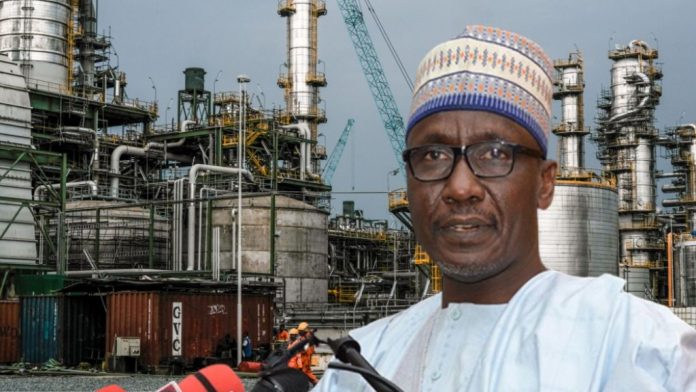
The Nigerian National Petroleum Company Limited (NNPCL) has once again failed to meet its self-imposed deadline to begin fuel production at the Port Harcourt refinery, despite multiple previous promises from both the company and the Federal Ministry of Petroleum Resources.

This marks the sixth postponement of operations at the refinery, originally scheduled to commence in August 2024. The missed deadline has further fueled public frustration, with Nigerians now calling for the dismissal of the NNPCL’s Group Chief Executive Officer, Mele Kyari, over his repeated failure to deliver on these promises.

Umar Ajiya, NNPCL’s Chief Financial Officer, had assured the public in August that the Port Harcourt refinery would start producing petroleum products by September, with supplies ready for testing before distribution to the domestic market. However, as September passed without any activity, no update was provided from the NNPCL, deepening the sense of distrust among Nigerians.

In the wake of this latest failure, contractor Maire Tecnimont SpA, which is overseeing the rehabilitation of the refinery, has indicated that it will provide an update by or before October 2, 2024. This commitment came through a law firm, Olajide Oyewole LLP, in response to inquiries by Senior Advocate of Nigeria (SAN) Femi Falana, who had sought details on the rehabilitation project’s timeline, The Punch reported.

The firm stated that Maire Tecnimont SpA is considering Falana’s letters, dated September 17 and 24, regarding the project and would respond accordingly.

Since the project began, promises from NNPCL about the refinery’s completion have consistently fallen. The 210,000-barrels-per-day Port Harcourt refinery, which has been in operation since 1965 but has become moribund over the years, was expected to achieve mechanical completion by December 2023. NNPCL had previously stated that the facility would start refining 60,000 barrels of crude oil per day shortly thereafter. But those deadlines, like many before them, have passed without progress, leaving Nigerians increasingly skeptical.

This latest delay is particularly embarrassing for NNPCL, as its CEO Mele Kyari has repeatedly assured the public that Nigeria was on track to become a net exporter of petroleum products by the end of 2024.

In mid-2023, Kyari confidently told the Senate that the Port Harcourt refinery would begin production in early August and that the country would finally reduce its reliance on fuel imports.

“I can confirm to you, Mr. Chairman, that by the end of the year, this country will be a net exporter of petroleum products,” Kyari declared in a Senate hearing.

However, as the months have gone by, these statements have proven hollow, leading to calls for his resignation.

Social media platforms have been abuzz with criticism, with many citizens accusing Kyari of overseeing a failing institution that has been unable to revive the country’s refineries. There is growing sentiment that a leadership change at the NNPCL is necessary if Nigeria is ever to achieve its refining goals.

Nigerians’ frustrations have also revived discussions about the long-standing proposal to privatize the country’s refineries, a move that has been championed by former Vice President Atiku Abubakar. Atiku has been a vocal critic of the government’s approach to managing state-owned refineries, arguing that continuous spending on their rehabilitation has drained public funds with little to show for it.

In March 2021, the government secured a $1.5 billion loan to rehabilitate the Port Harcourt refinery, a move that Atiku strongly criticized at the time, calling it wasteful. The Peoples Democratic Party’s presidential candidate has consistently advocated for the sale of the nation’s refineries to private investors, stating that only privatization can bring in the necessary expertise and efficiency to get these facilities running.

“We should not continue wasting billions of dollars on refineries that have become bottomless pits,” Atiku said during his presidential campaign, stressing that selling the refineries would allow the government to focus on other critical areas of the economy.

The former Vice President has also pointed out that Nigeria has already spent over $4 billion in a bid to rehabilitate its refineries over the years, with little success. Aliko Dangote, the billionaire industrialist and owner of the upcoming Dangote Refinery, has echoed similar sentiments, stating that the government’s refinery rehabilitation efforts have been costly and ineffective. In a public address, Dangote revealed that despite the government’s efforts, Nigeria still relies heavily on imported fuel, costing the country up to N2 trillion every month.

Many have argued that by continuing to pour money into state-owned refineries, the government is not only mismanaging public funds but also depriving the economy of critical investment that could be directed toward other areas like education, healthcare, and infrastructure. Proponents of privatization believe that selling the refineries to private investors would not only save the government money but also enable the private sector to efficiently manage the facilities, ensuring that they operate profitably and reliably.

Despite these calls for privatization, the government under both former President Muhammadu Buhari and incumbent President Bola Tinubu has remained reluctant to fully divest from the refineries. This reluctance has only deepened the frustration of many Nigerians, who feel that the government’s unwillingness to sell off these underperforming assets is a major roadblock to the country’s economic progress.

The broader economic implications of the refinery delays are also significant. Nigeria, one of the world’s largest producers of crude oil, has been paradoxically dependent on imported fuel for decades due to its lack of refining capacity. This reliance on imports has contributed to high fuel prices, fuel scarcity, and a costly fuel subsidy regime that further burdens the government’s budget. Many citizens believe that privatizing the refineries would not only save the government billions in rehabilitation costs but also reduce the country’s reliance on foreign fuel.

The ongoing delays at the Port Harcourt refinery highlight the broader structural challenges facing the country’s oil and gas industry. However, with the Dangote Refinery set to begin full operations soon, there is hope that it will alleviate some of the pressure on the country’s refining capacity.