DD
MM
YYYY

PAGES

DD
MM
YYYY

spot_img

PAGES

Home Blog Page 2827

Top 5 Cryptocurrencies You Need to Watch as We Head Into 2025

0

As the crypto market enters the fourth quarter, there’s palpable excitement and a flurry of activity among traders. Everyone’s looking ahead, trying to gauge which cryptocurrencies might lead the charge into 2025. With both new contenders and established giants making moves, the landscape is rife with potential.

This period is a critical one for traders, whose choices now could set the stage for their standing in the next few years. With the right selections, 2025 could be a watershed year marked by notable gains. Let’s dive into some of the cryptocurrencies that are currently making waves in the market.

1. BlockDAG (BDAG): Pioneering with DAG Technology at an Accessible Price

Unlike traditional blockchains that operate on linear models, BlockDAG introduces a novel approach with its Directed Acyclic Graph (DAG) technology. This setup allows multiple blocks to connect simultaneously, significantly enhancing transaction speed and efficiency.

The recently unveiled Testnet offers a glimpse into BlockDAG’s capabilities, complete with a Blockchain Explorer and MetaMask integration for an interactive user experience. This architecture not only scales up transaction capacity but also maintains brisk speeds without sacrificing security.

BlockDAG has already seen substantial traction, amassing over $92 million in its presale phase. With the price per coin currently at a modest $0.0206 in batch 24, those getting on board now are entering at a potentially pivotal moment. Analysts are buzzing about the prospects, with some suggesting the value could skyrocket, presenting a tantalizing scenario for both newcomers and crypto veterans.

As traders and enthusiasts look to position themselves advantageously for 2025, the discussion around these cryptocurrencies is heating up. Whether you’re drawn to the innovation of BlockDAG, the robustness of Avalanche, the steady growth of Cardano, or the unique offerings of Polkadot, the coming months are crucial for making informed decisions that could lead to substantial rewards.

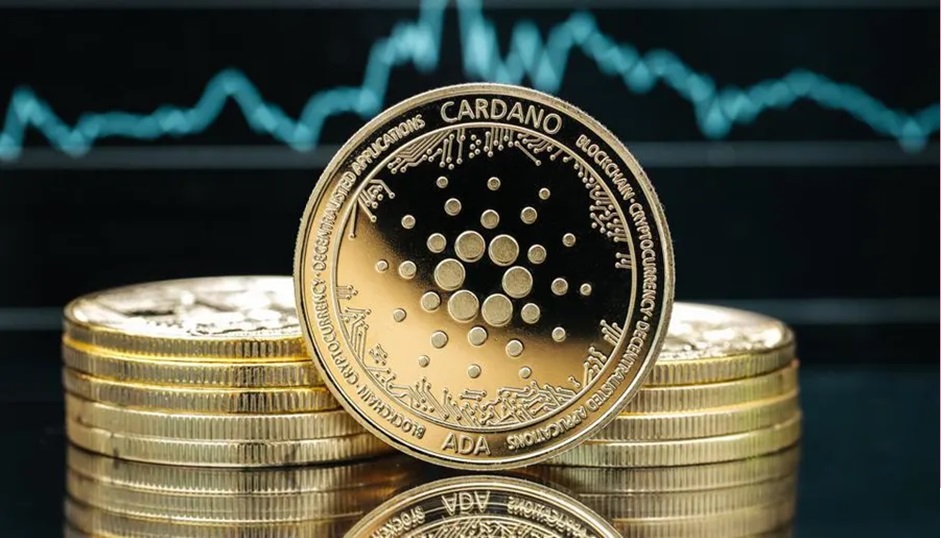
2. Cardano (ADA): Championing Eco-Friendly Scalability

Cardano has carved out a niche for itself as a sustainable, scalable blockchain platform. With its Ouroboros proof-of-stake mechanism, it offers a green alternative that stands in stark contrast to more energy-intensive blockchain technologies. The platform is not just about being eco-friendly; it’s built for speed and efficiency with a dual-layer architecture that supports smart contracts and decentralized applications.

The ADA token, central to the Cardano ecosystem, facilitates low-cost transactions, staking, and acts as a store of value. Capable of handling up to a million transactions per second, Cardano is a beacon for developers looking for robust scalability. Despite recent fluctuations in its price, ADA is gaining a reputation for stability and growth potential, with more and more traders recognizing its long-term prospects.

3. Avalanche (AVAX): Poised for a Significant Leap?

Avalanche is making its presence felt in 2024 with its cutting-edge Layer-1 blockchain technology. Known for its eco-friendly credentials, Avalanche supports up to 4,500 transactions per second, all at low fees. Its hybrid consensus model not only promises speed but also ensures rapid transaction finality, making it a swift and efficient choice for users.

Avalanche goes a step further with its Subnets feature, which gives users the flexibility to create customizable blockchain segments. This innovative feature is a big draw for developers. The AVAX token underpins this ecosystem, used for paying transaction fees and securing the network through staking, anchoring Avalanche’s utility and versatility.

4. Polkadot (DOT): Redefining Blockchain Efficiency

Polkadot stands out with its unique protocol that enables different blockchains, such as Ethereum and Bitcoin, to interact seamlessly without any intermediaries. Since its launch in 2020, Polkadot has utilized a system of parachains to enhance transaction speed and efficiency beyond conventional networks.

The DOT token is integral to the platform, allowing holders to participate in governance and staking. Polkadot’s framework facilitates the seamless sharing of data and value between blockchains, positioning it as a pivotal force in the future of decentralized technologies and a hub for innovation, especially as the community pushes toward enhanced interoperability among platforms.
Takeaway

As the crypto landscape continues to evolve, traders have a plethora of choices. Looking ahead to 2025, several key cryptocurrencies are lining up to potentially reshape the blockchain ecosystem. Veterans like Cardano, Avalanche, and Polkadot bring reliable technology and exciting prospects.

Meanwhile, BlockDAG is quickly gaining traction with its DAG technology applied in practical, real-world scenarios. The launch of its Testnet has opened doors for developers to explore its features firsthand. With a successful presale that has already attracted over $92 million, and coins priced at just $0.0206, BlockDAG is capturing the imagination of the community, promising both innovation and appealing rewards as we head into 2025.
Hottest 5 Cryptocurrencies for Sustained Profits – Highlighting BlockDAG, Solana, Cardano, Polkadot & Polygon

0

Have you ever felt as though everyone around you is finding success in the cryptocurrency market while you’re still deciding whether to get involved? Stories of impressive returns are common, but it’s natural to wonder if the window of opportunity has closed.

Rest assured, it’s not too late. The cryptocurrency realm continues to brim with potential, presenting numerous top-tier options for exploration.

For those well-versed in the market or just beginning their journey, this guide aims to pinpoint the most promising options for enduring progress. Let’s delve into the best five cryptocurrencies to consider.

1. BlockDAG: A New Era of Blockchain Scalability

BlockDAG sets itself apart with its innovative blockchain architecture that integrates the Directed Acyclic Graph (DAG) with the Proof-of-Work (PoW) consensus mechanism. This structure not only enhances scalability but also ensures decentralization, surpassing traditional blockchain frameworks.

This allows BlockDAG to accommodate a larger volume of transactions without compromising security, making it an ideal platform for developers and users seeking a reliable and long-term network.

The initial success of BlockDAG’s presale is remarkable, with over $92 million raised through the sale of more than 13.9 billion BDAG coins. With a current price of $0.0206, BDAG coins have experienced a significant appreciation, soaring 1960% since their initial pricing at $0.001.

The ongoing 50% bonus on BDAG coin acquisitions until October 14, using the code BDAG50, heightens the anticipation. With over 140,000 unique holders already participating and millions being raised rapidly, BlockDAG is poised to spearhead the next surge in the cryptocurrency market.

2. Solana: Spearheading High-Speed Blockchain Technology

Solana has emerged as a high-performance blockchain, renowned for its rapid transaction capabilities. It processes thousands of transactions per second at minimal costs, positioning itself as a formidable competitor to Ethereum. The Solana ecosystem, which supports a growing range of decentralized applications (dApps) and NFTs, thrives due to its ability to manage increasing developer demand efficiently. Its low transaction fees and high-speed processing attract developers who aim to expand their projects smoothly. As the network continues to expand, the SOL token is expected to see significant value appreciation.

3. Cardano: A Pioneering, Research-Driven Blockchain

Cardano is characterized by its commitment to a research-based approach in blockchain development, focusing on sustainability, security, and scalability—all established through peer-reviewed research and academic diligence. The recent integration of smart contract functionality has enabled developers to launch decentralized applications that offer efficiency superior to Ethereum’s.

The dedication to academic rigor has built a strong and committed user base for Cardano. With the ecosystem’s continued growth, the ADA token is well-positioned for significant recognition and utility.

4. Polkadot: Enhancing Cross-Chain Collaboration

Polkadot addresses the challenge of blockchain interoperability, enabling different chains to interact seamlessly. Its parachain technology permits independent blockchain operations while leveraging Polkadot’s robust security and scalability features. This innovative approach has positioned Polkadot as the preferred platform for developers who prioritize flexibility and interoperability without compromising security.

With an expanding array of parachains tailored for specific purposes, Polkadot is ideally suited for a variety of applications. As the demand for cross-chain collaboration intensifies, Polkadot’s role in the crypto ecosystem is expected to grow increasingly vital.

5. Polygon: Advancing Ethereum with Layer-2 Innovations

Polygon stands out as a layer-2 scaling solution that boosts Ethereum’s capabilities by enabling quicker and more economical transactions. By processing activities off the Ethereum main chain and settling them afterward, Polygon mitigates the high fees and delays often linked with Ethereum. This efficiency makes it an appealing platform for developers eager to create decentralized applications without the overhead and congestion of the main Ethereum network.

Polygon’s seamless integration with Ethereum, coupled with its enhanced efficiency, has made it a favored choice among DeFi projects and NFT platforms.

Overview of the Most Promising Cryptocurrencies for Future Growth

In the pursuit of progressive advancements, BlockDAG leads with unmatched blockchain technology and robust initial growth. While Solana, Cardano, Polkadot, and Polygon each offer unique benefits, BlockDAG’s exceptional scalability, user-friendly smart contracts, and initial momentum position it as a top contender for those looking to enhance their engagements in the cryptocurrency space. With a 50% bonus available until October 14, BlockDAG presents a remarkable opportunity for forward-thinking participation in the cryptocurrency market.

Nigerian Aviation Minister Says Botched Nigerian Air Deal Would Have Benefited Only Ethiopia, Analysts Disagree

0

Nigeria’s Aviation Minister, Festus Keyamo, recently stirred debate over his decision to suspend the Nigeria Air project, revealing that the deal with Ethiopian Airlines would have obligated Nigeria to pay Ethiopia approximately $112 million over a three-year period.

The payments were intended to cover the use of Ethiopian Airlines’ surplus aircraft, which were offered as part of the airline’s 49% equity stake in Nigeria Air. This revelation has reignited discussions about the viability of the now-shelved national carrier project, and it has prompted deeper questions about Nigeria’s approach to foreign partnerships in strategic sectors.

Keyamo made these disclosures during an interview on the Political Paradigm program on Channels Television. He expressed concerns about the unfavorable terms of the agreement, which he argued would have allowed Ethiopian Airlines to dominate the new national carrier without bringing significant value to the table.

“For those aircraft, their equity contribution was supposed to be providing their excess fleet to Nigeria Air. However, it is not an investment as we are paying for them. We are going to pay about $112 million over a period of three years to Addis Ababa. What are they bringing to the table? We are paying them, so what is the investment here?” Keyamo questioned during the interview.

The minister’s decision to suspend the project was fueled by his concerns that the benefits of the partnership would flow predominantly back to Addis Ababa, with Ethiopia reaping profits while Nigeria shouldered significant financial risks. According to Keyamo, the structure of the deal favored Ethiopian Airlines at the expense of Nigeria.

He also refuted claims that stopping the project resulted in a loss of Foreign Direct Investment (FDI), arguing that it was not true FDI if Nigeria was the one footing the bill for much of the operational costs.

“People are saying we lost FDI. But is it FDI when we are the ones paying for their planes? What kind of investment is that?” Keyamo argued.

This reasoning, however, has sparked a broader conversation about Nigeria’s foreign investments and partnerships.

Backstory: The Birth of Nigeria Air

The Nigeria Air project was one of the hallmark initiatives of former President Muhammadu Buhari’s administration. It was designed to breathe life into the aviation sector by reviving the defunct Nigeria Airways. Announced with much fanfare on July 18, 2018, the project was meant to showcase Nigeria’s ambition to reclaim a strong presence in regional and international aviation.

However, just two months after the launch, the project was abruptly suspended due to concerns over its feasibility, cost, and lack of proper groundwork. The initial costs were estimated at $8.8 million, while the take-off costs for the entire airline project were pegged at $300 million. Despite the suspension, the Federal Government revived the plan in 2022, and Ethiopian Airlines won the bid to manage the airline with a significant 49% equity stake.

This partnership was seen as a pragmatic move to leverage Ethiopian Airlines’ vast experience and expansive African network. However, questions soon arose about the terms of the agreement, especially when it became clear that Ethiopia would hold the majority stake, leaving Nigeria with just 5%, while SAHCO (Skyway Aviation Handling Company) held 15% and other investors controlled 31%.

The controversy deepened in May 2023, when the House of Representatives labeled the entire project fraudulent, casting doubt on the transparency of the bid process and leading to the project’s suspension.

Was Keyamo’s Decision Short-Sighted?

While Keyamo’s decision to withdraw from the deal has garnered praise from some quarters, industry experts and stakeholders are now raising concerns about whether it was the right move. They argue that Keyamo’s decision to focus on the financial returns that Ethiopia would have reaped from the deal may overlook the broader benefits Nigeria could have gained from the arrangement.

Critics point out that similar partnerships in other strategic sectors have seen foreign countries or corporations derive substantial financial gains, and yet Nigeria has reaped long-term benefits from the collaborations. For instance, Nigerian Liquefied Natural Gas (NLNG), which is not wholly-owned by Nigeria, was cited.

Aviation industry insiders contend that Keyamo’s argument—focusing on the $112 million Ethiopia would gain over three years—might be short-sighted in a globalized world where cross-border partnerships are the norm.

Comparisons have also been drawn to similar aviation partnerships in other countries. For instance, Kenya Airways, which has struggled with profitability for years, entered a strategic partnership with Air France-KLM in 1995. While the partnership has seen Air France-KLM gain significant influence in Kenya’s aviation sector, it has also helped Kenya Airways maintain operations and grow its route network across Africa, Europe, and the Middle East.

Likewise, RwandaAir has forged key partnerships with Qatar Airways, a relationship that has strengthened the airline’s international reach and allowed it to expand its fleet with more modern aircraft. While Qatar Airways holds a financial interest in RwandaAir’s growth, the collaboration has benefited Rwanda by making its capital, Kigali, a growing hub for aviation on the continent.

These examples suggest that Keyamo’s focus on the short-term financial benefits to Ethiopia might ignore the potential long-term benefits Nigeria could have reaped from the partnership. Critics argue that even if Ethiopian Airlines would have made significant financial gains, Nigeria Air could have become a gateway for more robust aviation growth, increasing Nigeria’s global reach and creating jobs in a sector that badly needs revitalization.

However, in his interview, Keyamo explained that the agreement would have allowed Ethiopian Airlines to control key aspects of Nigeria Air’s management, including the positions of Chief Executive Officer (CEO) and Chief Financial Officer (CFO). This, combined with the ceding of critical Bilateral Air Service Agreement (BASA) rights, would have, in Keyamo’s view, compromised Nigeria’s sovereignty in the aviation sector.

“By allowing Ethiopian Airlines to dominate Nigeria Air, we were effectively handing over our BASA rights, which represent a key aspect of our aviation sovereignty,” he stressed.

Keyamo also highlighted the risk that the deal’s provisions, such as tax exemptions and indemnity clauses for Ethiopian Airlines, would have left Nigeria vulnerable to financial liabilities. Under these terms, any financial setbacks during Nigeria Air’s operations could have shifted the burden onto the Nigerian government, further deepening the nation’s fiscal challenges.

While Keyamo has framed the withdrawal from the Nigeria Air deal as an essential safeguard for Nigeria’s financial and aviation sovereignty, Ethiopian Airlines has expressed disappointment over the project’s collapse.

In August 2024, Ethiopian Airlines CEO Mesfin Tasew Bekele attributed the failure of the project to political interference and resistance from Nigerian domestic airlines. Bekele said that the project was politicized, making it difficult to push forward, despite Ethiopian Airlines’ commitment to supporting the venture.

U.S. Marshalls Service to sell $4.4B of Bitcoin seized from Silk Road

0

In a landmark decision, the Supreme Court has authorized the U.S. Marshals Service to proceed with the sale of $4.4 billion worth of Bitcoin, previously seized from the notorious Silk Road marketplace. This ruling represents one of the most significant legal and financial actions in the history of digital assets, potentially setting a precedent for how seized assets, particularly cryptocurrencies, are handled by government authorities.

The Silk Road, an online black-market platform, was shut down by the FBI in 2013, and its founder, Ross Ulbricht, was sentenced to life imprisonment. The Bitcoins in question were confiscated as part of the crackdown on the illicit marketplace, which was known for facilitating the sale of illegal drugs and other contraband.

The decision to sell the seized Bitcoin follows a lengthy legal battle, with various claims to the assets, including one from Battle Born Investments. The company argued that they had acquired rights to the Bitcoin through a bankruptcy estate connected to Silk Road. However, their appeal was ultimately rejected, paving the way for the government to auction off the cryptocurrency.

The upcoming sale of $4.4 billion worth of Bitcoin, seized from the Silk Road marketplace by the U.S. Marshals Service, has sparked widespread speculation about its potential impact on the cryptocurrency’s price. Historical precedents suggest that large-scale liquidations by significant holders, often referred to as ‘whales,’ can lead to fluctuations in market price due to the sudden increase in supply and potential selling pressure.

Market analysts are divided on the outcome of this sale. Some believe that the introduction of a large volume of Bitcoin into the market could lead to a temporary dip in prices due to the increased supply outweighing current demand. Others argue that the market has matured enough to absorb such sales without significant disruption, pointing to the increasing institutional interest and adoption of cryptocurrencies.

Furthermore, the political context surrounding this sale, particularly with the U.S. presidential election on the horizon, adds another layer of complexity. The decisions made by the current administration regarding the handling of these assets could have long-term implications for the market and regulatory landscape.

The implications of this sale are far-reaching. Not only does it highlight the evolving nature of asset forfeiture in the age of cryptocurrency, but it also raises questions about market impact. The introduction of such a substantial amount of Bitcoin into the market could have significant effects on its valuation and volatility.

Moreover, the political landscape is also being influenced by this development. Former President Donald Trump, speaking at a cryptocurrency conference, expressed intentions to create a “strategic Bitcoin stockpile” if re-elected, suggesting a shift in how governments perceive and manage digital assets.

As the U.S. Marshals Service prepares for what could be one of the largest Bitcoin auctions in history, the crypto community and financial markets are watching closely. The outcome of this sale, and the precedent it sets, will likely influence policy and regulatory approaches to cryptocurrency for years to come.

The sale of the Silk Road Bitcoin is not just a financial transaction; it’s a pivotal moment in the ongoing dialogue between the burgeoning world of cryptocurrency and established governmental and legal systems. It underscores the need for clear regulations and frameworks to manage digital assets, which continue to challenge traditional notions of property and value.

Trending 5 Cryptocurrencies for Long-Term Rewards – Featuring BlockDAG, Solana, Cardano, Polkadot & Polygon

0

Ever find yourself marveling at the tales of lucrative returns in the cryptocurrency world, wondering if you’ve missed your moment? Such stories can make it seem like the gold rush might be over.

However, rest easy—the cryptocurrency landscape remains vibrant with opportunities. There’s a rich vein of digital currencies still ripe for exploration, and this guide is your map to finding them.

Whether you are well-acquainted with the crypto markets or just beginning your journey, the following insights will illuminate some of the most promising cryptocurrencies to consider for future growth. Let’s delve into the trending five cryptocurrencies to watch.

1. BlockDAG: Revolutionizing Blockchain Scalability

BlockDAG is at the forefront of blockchain innovation with its advanced architecture, utilizing a Directed Acyclic Graph (DAG) structure alongside a Proof-of-Work (PoW) consensus mechanism. This unique combination not only enhances scalability but also ensures decentralization, surpassing traditional blockchain frameworks.

This technological prowess enables BlockDAG to handle an increased volume of transactions without compromising security, making it an attractive option for developers and users seeking a robust, reliable network for long-term utility.

The impressive presale figures for BlockDAG cannot be ignored—over $92 million was raised through the sale of more than 13.9 billion BDAG coins. With the current price at $0.0206, the value of BDAG coins has skyrocketed by 1960% since their initial offering.

The excitement continues with a 50% bonus on BDAG purchases available until October 14, using the code BDAG50. With over 140,000 unique holders and significant capital raised swiftly, BlockDAG is poised to lead the charge in the upcoming crypto surge.

2. Solana: Elevating Blockchain Performance

Renowned for its extraordinary transaction speeds, Solana has established itself as a high-performance blockchain capable of processing thousands of transactions per second at minimal fees. This capability makes it a formidable alternative to Ethereum.

As Solana’s ecosystem of decentralized applications (dApps) and NFTs continues to expand, it consistently meets the growing demands of developers who wish to enhance their projects without encountering bottlenecks. The network’s ongoing development and its ability to execute transactions swiftly are positioning Solana’s SOL token for significant appreciation in value.

3. Cardano: A Commitment to Research-Driven Blockchain Excellence

Cardano embodies a methodical, research-oriented approach to blockchain innovation, prioritizing sustainability, security, and scalability. These core attributes have been meticulously developed through peer-reviewed research and stringent academic evaluations. The recent activation of smart contract capabilities has empowered developers to launch decentralized applications that operate more efficiently than those on Ethereum, signaling a new era of blockchain utility.

The project’s dedication to academic rigor continues to resonate with a growing community, cultivating a foundation for the ADA token to become increasingly integral to the blockchain landscape.

4. Polkadot: Mastering Cross-Chain Communication

Polkadot addresses the critical challenge of blockchain interoperability, enabling disparate chains to interact seamlessly. Its innovative parachain technology allows individual blockchains to operate autonomously while still benefiting from Polkadot’s overarching security and scalability. This dual advantage has positioned Polkadot as the platform of choice for developers seeking both flexibility and robust interoperability.

As the network of parachains grows, each tailored to specific needs, Polkadot is poised to play an ever-more essential role in fostering cross-chain collaborations within the broader crypto ecosystem.

5. Polygon: Revolutionizing Ethereum’s Scalability

Polygon serves as a cutting-edge layer-2 scaling solution that significantly enhances Ethereum’s functionality by facilitating faster and more cost-effective transactions. By processing activities of the main Ethereum chain and finalizing them subsequently, Polygon effectively reduces the notorious gas fees and delays associated with Ethereum. This optimization makes Polygon a prime environment for developers to deploy decentralized applications without the typical overhead.

Polygon’s seamless integration with Ethereum, combined with its improved transaction efficiency, has swiftly made it a preferred platform for a variety of DeFi projects and NFT endeavors.

Overview of Leading Cryptocurrencies for Future Consideration

In the landscape of blockchain technology, BlockDAG is paving the way with unmatched technological advancements and a robust initial growth phase. While Solana, Cardano, Polkadot, and Polygon each present unique advantages, BlockDAG stands out with its scalable infrastructure, user-friendly smart contracts, and strong initial momentum.

These attributes establish BlockDAG as a top contender for those looking to explore the dynamic capabilities of the crypto world. With a significant promotional offer available until October 14, BlockDAG presents a unique opportunity for forward-thinking engagement in the cryptocurrency arena.