DD
MM
YYYY

PAGES

DD
MM
YYYY

spot_img

PAGES

Home Blog Page 2829

Q4 2024 Crypto Market Outlook: Chainlink and Solana Prices Struggle as BlockDAG’s Mining Sales Hit Record Highs!

0

Cryptocurrency markets are a realm where fortunes can shift overnight, but amid the flux, certain projects like BlockDAG distinguish themselves. While established coins such as Chainlink (LINK) and Solana (SOL) continue navigating market challenges and competition, BlockDAG (BDAG) has carved out a promising niche.

With a presale that has notably raised $77.5 million and the successful sale of over 12,450 high-efficiency X-Series Miners, BlockDAG’s approach not only captures market attention but also indicates a robust and growing buyer confidence, potentially setting new benchmarks for success in the blockchain sector.

Ethereum vs. Solana: The Battle Heats Up

Solana (SOL) is at a crucial juncture. While the launch of the Solana Seeker mobile phone has sparked optimism, pushing SOL upward, its performance against Ethereum (ETH) paints a bleaker picture.

Moreover, ETH’s strength is currently formidable, priced around $2,662, posing resistance to SOL’s growth. The SOL/ETH trading dynamics reflect this struggle, with a notable downtrend and recent support levels broken, suggesting a bearish outlook.

Despite this, SOL’s USDT pairing indicates potential for recovery, showcased by a double-bottom pattern aiming for a $165 target. This bullish scenario could propel SOL to around $200, offering a 35% increase if market conditions remain favorable.

However, derivative traders are also showing interest, with a significant imbalance in long versus short positions on Solana, hinting at underlying bullish sentiment and a potential rally toward $160.

Chainlink’s Peak Price

Chainlink (LINK) functions as a decentralized oracle on the Ethereum blockchain, bridging the gap between blockchains and real-world data. This enables smart contracts to access external information, crucial for industries like decentralized finance, gaming, and insurance. Utilizing LINK tokens, users pay network operators and provide collateral for smart contracts.

Furthermore, Chainlink has achieved a five-year return of 518.82% and an overall return of 7110%. Currently, the price of LINK stands at $11.29, with a 3.68% increase in the last day. Its market capitalization is $6.86 billion, with a trading volume of $284.51 million over the past 24 hours.

Despite previous highs of $52.99, Chainlink leads in the Oracle sector and is set for future growth due to its open-source nature and the rising demand for decentralized data.

BlockDAG: 12,450 Miners Sold in Record Time!

BlockDAG (BDAG) is blazing trails in the cryptocurrency world, capturing the attention of the market with its stellar presale achievements and the booming sales of its X-Series Miners. With over $77.5 million raised across 23 batches, selling over 13.2 billion BDAG coins to more than 140,000 unique holders, the project has witnessed an extraordinary 1820% surge in valuation, underscoring a robust buyer appetite and bullish market sentiment.

Additionally, the X-Series Miners have carved out their success story, with over 12,450 units sold, ringing up $5 million in revenue. These miners, including the high-performing X10 and X100 models, are engineered for peak efficiency, balancing high power with manageable costs—a selling point that has resonated well within the mining community.

The dual success of BlockDAG presale and mining rigs\ sales showcases the project’s dynamic market presence and its knack for seizing the crypto zeitgeist. As BlockDAG continues to innovate and expand, it solidifies its position as a significant player in the industry, attracting both seasoned buyers and new entrants eager to tap into its potential. The journey of BlockDAG is one to watch, as it redefines the benchmarks of success in the crypto landscape.

Final Say

BlockDAG stands out with its impressive presale achievements and robust miner sales. Unlike other coins that often see fluctuating fortunes, BlockDAG has steadily built a foundation of trust and interest among investors, highlighted by its substantial presale figures and enthusiastic adoption of its X-Series Miners.

This forward momentum not only underscores the project’s current success but also signals its potential to play a significant role in the broader blockchain arena, drawing both seasoned investors and newcomers eager for a share in its envisioned future.


Join BlockDAG Presale Now:

Website: https://blockdag.network

Presale: https://purchase.blockdag.network

Telegram: https://t.me/blockDAGnetworkOfficial

Discord: https://discord.gg/Q7BxghMVyu

Tekedia Capital Portfolio Startup, IApp, Wins Startup of the Year (Fintech) Ibadan, Nigeria

0

Hello Ibadan, thank you for honouring Opeyemi Adekunle and the 1App nation. Tekedia Capital is honoured to have backed the Team. On Oct 7, we will unveil 15 new startups covering 4 continents for the next class of Tekedia Capital portfolio companies. We’re moving deeper into AI where we can compound productivity gains and advance communities.

From the world’s first AI-insurance infrastructure company to modern computing systems for AI systems, we have got a great startup class. I also thank Amazon for a special partnership it has proposed for Tekedia Capital; just finished an amazing call with them.

Our goal remains clear: to use entrepreneurial capitalism to fix market frictions and advance shared prosperity. Congratulations 1App – more wins ahead; we wrote your first cheque and today, Ibadan is honouring you. Continue to serve and connect with the Aba boys who just opened a big tent in Ibadan – yes, the brilliant Shoptreo team.

Job Market as AI, Robotics Adoption Scales

0

Just recently, OpenAI gave us reason to wonder what the limits of Artificial intelligence could be when it announced the release of its newest model, OpenAI o1. This innovation is said to be equipped with unprecedented reasoning abilities in the fields of science and programming. There was also the news of the Generative Cinema with Sora, and then also that of the customization on the GPT Store.

And with this new wave of innovations, I think we all now have cause to wonder if AI has limits, or perhaps we are just being slow to discover all of its capabilities.

This new AI model, OpenAI o1, pauses before responding and can solve complex tasks, particularly in the fields of science, technology, engineering, and mathematics (STEM), using a “chain of thoughts” reasoning like a human would.OpenAI also says that the model has excelled in high-level tests, beating the GPT-4.0 in doctoral-level scientific subjects in biology, chemistry, and physics.

The tweet announcing this new model stated; “We’re releasing a preview of OpenAI o1—a new series of AI models designed to spend more time thinking before they respond. These models can reason through complex tasks and solve harder problems than previous models in science, coding, and math.”

The company described this AI as the ‘champion of code’ having reached the 89th percentile in Codeforces programming contests. It also excels in mathematics, correctly solving 83% of problems during an International Mathematical Olympiad test, compared to 13% for GPT-4.0.

Shocked? Just hold on for a little more information.

The new model has upped the game on cybersecurity, too, with a security test score of 84 out of 100 in resistance to “jailbreaking” attempts, compared to 22 for GPT-4.0. This is the result of a new training effort that makes it better able to adhere to security and alignment rules even in complex situations. And here’s one more. It is about 80% cheaper than the full version with OpenAI 0.1-mini, a cost-efficient reasoning model that excels at STEM, especially math and coding.

I think we can all agree that OpenAI did their homework on this one, but I am almost as sure that they have something bigger planned for the near future. But let’s begin to think about these innovations and the implications for the industry.

First off, I like the enhanced cybersecurity feature because, as I have always said, we need to ensure that we secure the data that people share with businesses online. As the news already stated, this feature strengthens OpenAI collaborations with AI institutions in the USA and the UK.

In terms of how these models will work well within the programming and coding space, we will have to see about that. I understand from the news that the OpenAI 0.1-mini coded a video game from a prompt, even though the company said it is optimized to improve the daily lives of developers by automating complex processes.

There is the question of whether it would reduce the need to hire actual human engineers. As this AI is said to have advanced coding capabilities, some pundits have already noted that its ability to pass OpenAI’s research engineer hiring interview for coding might be the final nail in the coffin for coding engineers.

While I understand the concern, I don’t see that it would work without getting the right input and prompts from someone who knows his onion in the trade. No doubt, the AI is capable of advanced reasoning, code generation, and debugging, but it still needs humans to play their part. What I think might happen – if this model is all they say it is – is that a company might just hire one or two coding engineers instead of having a team of twelve.

So, it is more likely to be like a productivity enhancer. Coding engineers would still be needed, after all, I do believe that even the AI models are being built by engineers. However, this is the season to focus on becoming exceptional because if you can only do as much coding as can be done by an AI model, you may soon be out of a job.

Starlink Hikes Prices in Nigeria, Subscription Costs Jump by 97%, Cites Inflation

0

Elon Musk-owned internet service provider Starlink has increased the price of its monthly subscription fee in Nigeria by 97%, from N38,000 to N75,000.

Additionally, the cost of the Starlink hardware kit for new users has surged by 34%, rising from N440,000 to N590,000, as the company blames “excessive inflation” as the reason for the price increase.

In a message sent to customers, the company wrote,

“Due to excessive levels of inflation, the Starlink monthly service price will increase from current rates to the respective rates below:

  • Standard (Residential): N75,000
  • Mobile – Regional (Roam Unlimited): N167,000
  • Mobile – Global (Global Roam): N717,000

As a current customer, your monthly service price will increase in 1 month, beginning 31 October 2024. For new customers, the price increase is effective immediately.”

Starlink increase in prices of its hardware and its subscription is coming despite Nigeria’s headline inflation rate easing to 32.15% in August 2024 down from the 33.40% recorded in July 2024. This represented the second consecutive monthly slowdown in inflation after easing in the previous month.

However, on a year-on-year basis, the August 2024 inflation rate was 6.35 percentage points higher than the 25.80% rate recorded in August 2023, indicating a significant increase over the past year.

While Starlink has previously adjusted its hardware prices both up and down in Nigeria, this marks the second time the company has increased its subscription fees. Despite these higher prices compared to local ISPs, Starlink has gained significant traction in Nigeria since its entry in January 2023. As of September 2023, just 8 months after its launch, the satellite internet amassed 11,207 active subscribers in Nigeria, making it the fourth largest ISP in the country.

Starlink has made rapid strides, becoming a transformative force in the country’s telecom sector. Its satellite service has proven particularly attractive to customers in regions with poor internet connectivity. By Q4 2023, Starlink had become the third-largest ISP in Nigeria with 23,897 customers, surpassing many long-established local ISPs.

Industry experts have commended the significant investment of Elon Musk’s Starlink in Nigeria, insisting that such investment in Nigeria’s telecommunications infrastructure, demonstrates the company’s unwavering commitment to Africa.

Additionally, Starlink’s exclusive shop-in-shop collaboration with Nigeria’s composite e-commerce platform, Konga, and some other retail outlets further amplified its presence in the country and provided customers with convenient access to Starlink’s kits and accessories.

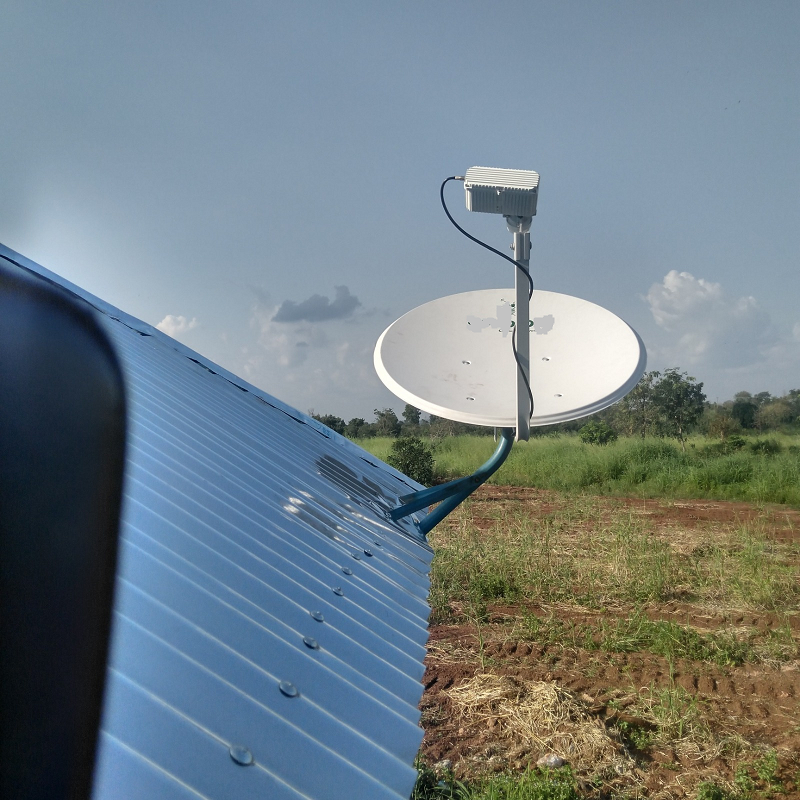
As Starlink continues to grow its presence, the cost increases may prompt existing and potential customers to reconsider their options, though its unique advantages in under-served areas, coupled with a high internet speed, remain a key selling point.

How Artificial Intelligence is Shaping Tomorrow’s World

0

In the span of just a few decades, artificial intelligence (AI) has evolved from a futuristic concept found only in science fiction to a transformative force shaping nearly every aspect of modern life. What once seemed like the imaginative dreams of technologists has now become an integral part of our daily routines, business strategies, and even healthcare practices. From the voice-activated assistants that guide us through our day to the complex algorithms driving global markets, AI is increasingly embedded in the fabric of society. Yet, as this technology continues to advance at a rapid pace, it prompts important questions about the future: How will AI reshape our world in the coming years? What challenges and opportunities lie ahead? This exploration into the future of AI seeks to uncover the profound ways in which artificial intelligence is poised to redefine the boundaries of human capability and societal progress.

AI in Industry: Transforming Business and Economy

Artificial intelligence is revolutionizing industries across the globe, acting as a catalyst for unprecedented changes in business and the economy. One of the most significant transformations is the integration of AI into automation processes, which is redefining how industries operate and reshaping the workforce. By automating routine tasks and optimizing complex operations, AI is enabling companies to increase efficiency and reduce costs. This shift is particularly evident in sectors such as manufacturing and logistics, where AI-powered robots and systems are streamlining production lines and supply chains.

Moreover, AI is becoming an invaluable tool for decision-making and data analysis. Businesses are leveraging AI to gain deeper insights into consumer behavior, market trends, and operational efficiency. This data-driven approach allows companies to make more informed decisions, resulting in better outcomes and a competitive edge in the market. For instance, AI’s ability to analyze vast amounts of data quickly and accurately has revolutionized the finance industry, where it is used to predict market fluctuations, assess risk, and even automate trading.

As AI continues to integrate into various industries, it is also intersecting with emerging technologies, creating new opportunities for innovation. In the realm of digital finance, for example, AI is being used to enhance the user experience in areas like online transactions and customer service. This is particularly relevant in spaces like the Crypto casino industry, where AI algorithms can be employed to ensure fairness, detect fraudulent activities, and provide personalized gaming experiences.

In summary, AI is not just transforming individual businesses; it is reshaping entire industries and the global economy. As companies continue to adopt AI technologies, they are not only improving their operations but also setting the stage for future innovations that will further revolutionize the business landscape.

AI in Daily Life: Enhancing Everyday Experiences

Artificial intelligence is rapidly becoming an essential part of our everyday lives, enhancing the way we interact with technology and each other. From the moment we wake up, AI is there, seamlessly integrated into our routines, whether it’s through the smart home devices that adjust our thermostats or the virtual assistants that manage our schedules. These AI-driven technologies are designed to make life more convenient, efficient, and personalized, adapting to our preferences and anticipating our needs.

One of the most profound impacts of AI in daily life is seen in the realm of healthcare. AI is revolutionizing the way we approach medical care, enabling early detection of diseases, personalized treatment plans, and even virtual consultations with doctors. Through advanced data analysis and machine learning, AI can analyze patient information in real time, providing doctors with critical insights that can lead to more accurate diagnoses and better patient outcomes. This level of personalized care is setting new standards for the healthcare industry, making high-quality medical services more accessible to people around the world.

In addition to healthcare, AI is also transforming entertainment and leisure activities. AI-powered algorithms are now used to curate our media consumption, recommending movies, music, and books that align with our tastes. In the world of online gaming, AI is enhancing user experiences by creating more immersive and interactive environments. For instance, in a Solana crypto casino, AI can be used to ensure fairness in games, provide personalized recommendations, and even optimize gaming strategies, all while maintaining a seamless and secure platform for users.

As AI continues to evolve, it will undoubtedly introduce even more innovations that will further integrate into our daily lives. From simplifying mundane tasks to enhancing our overall quality of life, AI is proving to be a powerful tool that is shaping the future of how we live, work, and play.

Ethical Considerations and Challenges

As artificial intelligence becomes increasingly woven into the fabric of our daily lives, it brings with it a host of ethical considerations and challenges that must be addressed to ensure its responsible deployment. One of the primary concerns is the potential for bias within AI algorithms. Since AI systems often learn from historical data, they can inadvertently perpetuate existing biases if the data used for training is flawed or skewed. This can lead to unfair treatment and reinforce societal inequalities, making it crucial to develop AI systems with fairness and inclusivity at their core.

Privacy and security are also significant issues in the AI landscape. The vast amounts of data required for AI systems to function effectively raise concerns about how personal information is collected, stored, and used. Ensuring that AI applications, such as those found in a monero casino, handle data with the highest levels of security and transparency is essential for protecting user privacy and maintaining trust. As AI technologies evolve, so too must the measures to safeguard against data breaches and misuse.

Another critical challenge is the need for clear regulatory frameworks to govern the development and deployment of AI. Without appropriate regulations, there is a risk that AI could be used in ways that are harmful or unethical. Governments, organizations, and industry leaders must work together to create and enforce standards that promote ethical AI practices while encouraging innovation.

Finally, the question of accountability arises. As AI systems become more autonomous, determining who is responsible for their actions—especially when things go wrong—can be complex. Establishing clear guidelines for accountability will be crucial for addressing potential issues and ensuring that AI technologies contribute positively to society.

In navigating these ethical challenges, it is imperative that developers, policymakers, and users work collaboratively to create AI systems that are not only advanced and efficient but also ethical and equitable. Balancing innovation with responsibility will be key to harnessing the full potential of AI while safeguarding against its risks.

The Future of AI: Predictions and Possibilities

The future of artificial intelligence promises to be a landscape of transformative advancements and unprecedented possibilities. As AI technology continues to evolve at a rapid pace, it is poised to revolutionize numerous aspects of our world, shaping the way we live, work, and interact with each other. Here’s a glimpse into some of the most compelling predictions and possibilities for the future of AI.

AI and Human Collaboration

One of the most exciting prospects for the future of AI is the deepening of human-AI collaboration. Rather than replacing human jobs, AI is expected to augment human capabilities, enabling us to tackle complex problems and innovate in ways previously unimaginable. This collaboration could manifest in various fields, from healthcare, where AI-assisted diagnostics and personalized treatment plans improve patient outcomes, to creative industries, where AI tools help artists and writers push the boundaries of their craft. The synergy between human creativity and AI’s analytical power could lead to groundbreaking advancements and a new era of innovation.

AI in Emerging Technologies

As AI technology advances, its integration with emerging technologies such as quantum computing and biotechnology could unlock new frontiers. Quantum computing, with its immense processing power, could enhance AI’s ability to solve complex problems and perform advanced simulations. This combination might accelerate discoveries in fields like drug development and climate modeling. Additionally, AI’s role in biotechnology could revolutionize personalized medicine, allowing for precise genetic modifications and tailored treatments based on an individual’s unique genetic makeup.

Ethical AI and Governance

The future of AI also involves a focus on ethical considerations and governance. As AI systems become more autonomous and influential, the need for robust ethical frameworks and regulatory standards will be crucial. Efforts to ensure fairness, transparency, and accountability in AI systems will likely gain prominence, with governments and organizations working together to create guidelines that address potential risks and biases. Developing ethical AI will be essential for ensuring that these technologies benefit society as a whole and do not exacerbate existing inequalities or create new challenges.

AI and Everyday Life

In everyday life, AI is expected to continue enhancing convenience and efficiency. From smart home systems that seamlessly manage our living environments to advanced personal assistants that understand and anticipate our needs, AI will become increasingly embedded in our daily routines. Innovations such as autonomous vehicles could transform transportation, making travel safer and more efficient. Furthermore, AI-driven platforms will likely offer more personalized experiences in entertainment, education, and even social interactions, tailoring content and services to individual preferences and needs.

The Role of AI in Addressing Global Challenges

Finally, AI holds the potential to play a significant role in addressing some of the world’s most pressing challenges. From combating climate change through advanced environmental monitoring and resource management to improving disaster response with predictive analytics, AI could be a powerful tool in global efforts to create a more sustainable and resilient world. The ability of AI to analyze vast amounts of data and generate actionable insights could drive solutions to problems that have long seemed intractable.

The future of AI is rich with possibilities, offering both opportunities and challenges. As we move forward, it will be crucial to balance innovation with ethical considerations, ensuring that AI’s benefits are realized while mitigating potential risks. The path ahead promises a dynamic interplay between technology and humanity, shaping a world where AI contributes positively to our collective progress and well-being.