DD
MM
YYYY

PAGES

DD
MM
YYYY

spot_img

PAGES

Home Blog Page 283

Top 28 in Sight? BlockDAG’s $430M Funding, 3.5M+ Miners, and Live Tools Fuel Its Push Toward the $600M Mark

0

The 2025 market for new Layer-1 launches is tougher than ever, where visibility, infrastructure, and real traction define early success. While projects like Aptos and Sui entered with heavy VC funding and bold goals, many lacked true usability at launch.

Others, such as Kaspa, grew gradually through proof-of-work validation and strong community support. Now, BlockDAG (BDAG) joins the race through action, not promises. Having raised over $430 million toward its $600 million goal, deployed over 3.5 million mobile miners, shipped more than 20,000 hardware miners, and partnered with BWT Alpine Formula 1® Team, BlockDAG arrives fully functional. This makes it one of the top crypto projects to watch as it targets a position among the Top 30 by market cap.

The Competitive Scene for Layer-1 Chains

Past trends show that Layer-1 projects with strong fundamentals and working systems tend to secure early mid-tier rankings. Aptos, for example, launched near Rank 30 thanks to major backing and developer excitement, even with limited public traction.

Sui gained visibility with parallel processing but fluctuated between Ranks 60–40 based on volume. Kaspa, on the other hand, advanced steadily with real hashrate growth and low inflation.

These examples highlight that most projects rely on one strength: network size, utility, or verified tokenomics, but few manage all three. BlockDAG enters as a rare case that checks all boxes: full infrastructure, tested performance, and live ecosystem tools. Its foundation could help it secure a Top 30 position faster than most new Layer-1s and establish itself among the top crypto projects right from launch.

What Gives BlockDAG the Edge Over Other Newcomers

BlockDAG’s defining strength lies in miner participation. With over 3.5 million X1 mobile miners and 20,000 hardware miners already shipped, the network is live and expanding. Unlike many others still selling validators or testing systems, BlockDAG has a working setup, using the Stratum Protocol for real-time miner synchronization, a feature common only among advanced PoW chains.

Its hybrid DAG and Proof-of-Work design enhances scalability and decentralization, with full EVM and WASM compatibility allowing developers to create both Ethereum-compatible and high-performance dApps. Combined with Smart Account functionality (EIP-4337) and the removal of outdated UTXO models, BlockDAG offers a seamless environment for apps, staking, and onboarding.

Having raised over $430 million, sold more than 27 billion BDAG coins, and grown to over 312,000 holders, BlockDAG shows measurable momentum. Batch 31 is now active with BDAG priced at $0.0015, while early participants have already seen gains of 2,940% since Batch 1.

Furthermore, a milestone AMA is coming as BlockDAG partners with Binance on October 24 at 3 PM UTC. The session will spotlight critical roadmap updates, insider perspectives, and what’s next in the journey toward Keynote 4 and GENESIS DAY. BDAG remains priced at $0.0015 in Batch 31, giving buyers a final chance to use code “TGE” before the dashboard upgrade and price climb.

Alongside that, the BlockDAG Explorer and analytics tools provide live tracking of validators, transaction activity, and account abstraction, features that place BlockDAG’s transparency and readiness on par with long-standing networks. With its combination of working tools, global community, and continuous delivery, BlockDAG’s trajectory makes it one of the top crypto projects shaping the next wave of Layer-1 innovation.

Why Rank #28 Seems Achievable for BlockDAG

The basis for BlockDAG’s Rank #28 projection comes from its capital strength, supply structure, and ecosystem progress. With over $430 million raised in its presale, BlockDAG could reach a post-launch valuation between $1.2 billion and $2 billion, depending on how much supply circulates and the vesting rate. According to CoinMarketCap data, that range would position BlockDAG just below chains like Arbitrum and Mantle but ahead of developing Layer-1s such as Aleph Zero or Conflux.

This estimate is further reinforced by BlockDAG’s confirmed brand partnerships, especially its collaboration with the BWT Alpine Formula 1® Team, which has expanded its visibility beyond crypto circles. Public activations in cities like Singapore and Austin show that BlockDAG is building awareness through real events instead of relying on online hype.

Developer interest is also growing. During the testnet phase, several tools have already been created for staking dashboards, multi-chain bridges, and NFT minting systems. The project’s transparency is supported by verified tokenomics documents, audited multi-sig wallets, and ongoing coordination with Tier-1 and Tier-2 exchanges for post-launch listings.

When compared to the early conditions of Aptos, ICP, or SUI, BlockDAG holds a stronger advantage. It is launching with real users, running tools, and active miners, showing why it deserves a place among the top crypto projects of 2025.

Why BlockDAG Appears Built for Lasting Growth

BlockDAG isn’t entering the market without a foundation. With its layered system, wide user base, working mining hardware, and verified capital, it has all the signs of a network designed for long-term credibility.

Many smaller projects with limited user adoption have reached the Top 30 temporarily. However, BlockDAG’s transparent ecosystem, live metrics, and brand-level partnerships make its Rank #28 goal not only reasonable but supported by clear evidence. Its proven network readiness gives it a structure that few new Layer-1s have matched at launch, reinforcing its place among the top crypto projects to monitor closely.
As other Layer-1 platforms struggle to scale post-launch, BlockDAG’s approach stands out. By releasing its core tools, miners, and user functions before launch, it flips the usual order of development. This early delivery model could set a new example for how future projects aim for sustainable ranking growth.

What’s Next on the Road for BlockDAG

The coming 90 days are crucial for BlockDAG’s next phase. The spotlight is now on upcoming centralized exchange listings, staking module deployment, and expanded developer onboarding. If the project maintains transparency, keeps rolling out ecosystem updates, and activates its partnerships with clear traction, its Rank #28 target might only be the beginning.

For anyone following top crypto projects that combine working tools with real scalability, BlockDAG stands out as a practical case study. Its early launch success could signal a shift in the market, where projects built on real technology and measurable delivery finally surpass those based only on speculation.

Presale: https://purchase.blockdag.network

Website: https://blockdag.network

Telegram: https://t.me/blockDAGnetworkOfficial

Discord: https://discord.gg/Q7BxghMVyu
BlockDAG Set for a Top 32 CoinMarketCap Debut? Analysts Reveal Why It Could Happen Sooner Than Expected

0

As BlockDAG approaches its TGE, experts predict it could debut near #32 on CoinMarketCap. Having raised over $430 million in presale funding, sold more than 27 billion BDAG coins, and drawn 3.5 million daily users to its X1 app, the project is gathering serious attention in the top trending crypto space.

This analysis looks at how verified audits, seasoned leadership, and early user adoption give BlockDAG (BDAG) a clear edge for a strong post-launch ranking among the Top 50 cryptocurrencies.

By comparing its pre-launch strength with Layer-1 projects like Stellar and Algorand, it becomes clear why BlockDAG’s fundamentals indicate potential to reach a market cap close to theirs after launch.

Strong Pre-Launch Metrics Build a Powerful Base

BlockDAG’s presale success has been remarkable, raising over $430 million so far. The current Batch 31 price is $0.0304 per coin, with early supporters already seeing a 2940% rise since Batch 1. Over 27 billion BDAG coins have been sold, confirming steady market confidence and ongoing demand. The limited-time price of $0.0015 has only intensified the buzz, driving its reputation as a top trending crypto before launch.

However, beyond its numbers, the true strength lies in its massive user network. With 3.5 million daily users on the X1 mobile mining app, BlockDAG enters the market with an active and engaged ecosystem. Most new blockchain projects begin from zero, but BlockDAG’s users and miners will instantly fuel network activity from day one.

When matched against the debut data of other Layer-1 networks, BlockDAG clearly stands out for readiness. Stellar and Algorand both had strong beginnings, yet lacked the blend of active hardware miners, mobile engagement, and user participation that BlockDAG already has.

For instance, Algorand’s initial user base was limited, and Stellar’s early growth relied on partnerships rather than on-chain activity. In contrast, BlockDAG’s pre-existing community and mining structure provide immediate traction and scalability, setting it apart in the top trending crypto landscape and supporting the view that it could enter CoinMarketCap’s Top 32 sooner than expected.

Trusted Leadership and Verified Audits Strengthen BlockDAG’s Position

Analysts linking BlockDAG’s possible Top 32 debut to its early success point first to its leadership and security validation. Antony Turner, the CEO of BlockDAG, brings extensive blockchain experience that positions the project for consistent growth. His open governance style and consistent visibility build confidence across the community and the broader market. Turner’s proven record in previous blockchain ventures reinforces the project’s credibility, helping it stand out as a top trending crypto.

In addition, BlockDAG has cleared comprehensive CertiK and Halborn audits, confirming that it operates with strong security measures. This level of transparency is vital in maintaining confidence across the crypto landscape, especially in a market that values accountability. Verified audits show that the network takes risk management seriously, a quality that sets it apart from many newer projects.

A major AMA is on the horizon as BlockDAG teams up with Binance this October 24 at 3 PM UTC. Expect exclusive insights into roadmap progress, fresh announcements, and critical updates leading into Keynote 4 and GENESIS DAY. Buyers still have access to BDAG at $0.0015 in Batch 31, with code “TGE” available to enhance returns before the upgrade.

Projects that meet such high audit standards often attract stronger attention, as participants tend to favor verifiable safety and clear development practices. In a space where trust and security define long-term value, BlockDAG’s transparent audit record and visible leadership offer reassurance of technical reliability and responsible management, solidifying its place among the top trending crypto projects right now.

Analysts Predict BlockDAG Could Rival Leading Layer-1 Valuations

As discussions grow around BlockDAG’s projected post-launch rank near #32, analysts are backing their predictions with data on scalability and tokenomics. The project’s 15,000 TPS capability, hybrid DAG + Proof-of-Work model, and dual compatibility with EVM and WASM make it a strong contender among Layer-1 ecosystems. These qualities place BlockDAG in direct comparison with networks like Stellar and Algorand in terms of performance and adoption potential.

Considering the launch valuations of top-performing Layer-1 chains, BlockDAG’s presale achievements and user activity suggest that it could quickly reach a multi-billion market cap range. With a structure that supports staking and sustainable liquidity, the project’s tokenomics give it a foundation for stable long-term value. Analysts expect network staking to enhance liquidity, creating steady pricing after launch.

When benchmarked against other Layer-1 networks, BlockDAG’s prospects align closely with Stellar’s $1 billion debut and Algorand’s $1.5 billion launch cap. The combination of 3.5 million users, accessible developer tools, and growing institutional confidence places BlockDAG on a similar trajectory. Its pre-launch metrics and expanding visibility underline why analysts see it as a top trending crypto entering 2025 with major momentum.

Transparency and Growth Potential Shape Market Confidence

Analysts also highlight that BlockDAG’s commitment to transparency plays a major role in its projected success. With verified audits, public leadership engagement, and a robust technical foundation, BlockDAG is seen as a reliable network that can attract strong participation. Unlike many newer blockchains that struggle with visibility and governance, BlockDAG maintains an open approach that builds trust among users and market watchers alike.

Its combination of widespread pre-launch adoption, certified security, and scalable performance makes it appealing to those seeking credible blockchain projects capable of consistent growth. Analysts see this transparency and readiness as key to helping BlockDAG maintain its position and avoid the high volatility often seen with new market entrants.

Final Takeaway

Based on current data and forecasts, BlockDAG appears ready for a solid post-launch debut, with a CoinMarketCap ranking around #32 seen as achievable. With over $430 million raised in presale, more than 27 billion BDAG coins sold, and a daily user base of 3.5 million, the project has built strong momentum.

Its verified audits, high-speed network design, and staking model create a solid base for value stability. Combining these elements with early user activity and cross-platform development tools positions BlockDAG to compete with major Layer-1 networks such as Stellar and Algorand.

If performance aligns with market projections, BlockDAG could secure its place among the Top 50 cryptocurrencies, with a Top 32 debut marking only the start of its climb. Its steady growth and technical strength reinforce why analysts are calling it one of the top trending crypto names to watch closely.

Presale: https://purchase.blockdag.network

Website: https://blockdag.network

Telegram: https://t.me/blockDAGnetworkOfficial

Discord: https://discord.gg/Q7BxghMVyu

Russia’s Ministry of Finance and Central Bank Legalize Cryptocurrency for International Trade

0

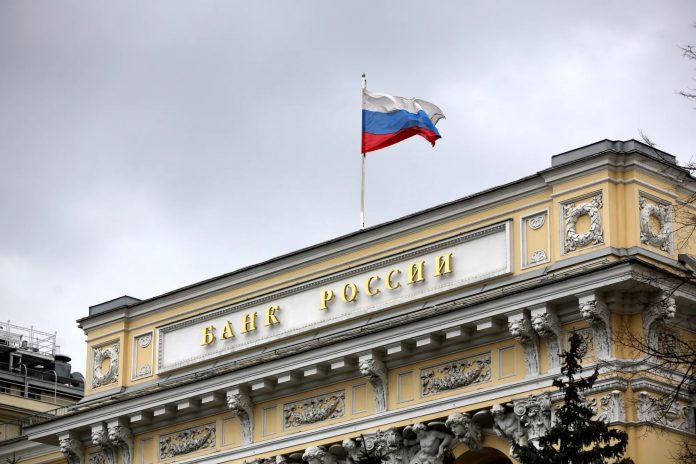
Russia’s Finance Minister Anton Siluanov announced that the Ministry of Finance and the Central Bank of Russia (CBR) have reached an agreement to legalize and regulate the use of cryptocurrencies specifically for foreign trade settlements.

This formalizes an experimental legal regime (ELR) piloted since September 2025, allowing Russian businesses to use digital assets for cross-border payments while maintaining strict domestic restrictions.

Limited to international transactions only. Cryptocurrencies cannot be used for domestic payments, preserving the ruble’s role in the local economy. Driven by Western sanctions post-2022 Ukraine invasion, which disconnected major Russian banks from SWIFT, causing payment delays and an 8% drop in imports in Q2 2024.

Crypto provides a borderless alternative for trade with partners like China, India, and sanctioned-friendly nations, particularly in energy and commodities.

Transactions will be overseen by Rosfinmonitoring Russia’s financial intelligence unit to ensure compliance and prevent illicit use. A state-managed crypto exchange for qualified investors is planned, emphasizing oversight to “restore order” in the sector.

Builds on 2024 laws effective September for cross-border use; first payments expected before end-2024, with full implementation now accelerated. Russia’s crypto stance has evolved rapidly:Pre-2022: Crypto banned as tender; mining and domestic use restricted.

Consensus formed between Ministry and CBR for limited cross-border pilots amid sanctions. Laws passed allowing international crypto settlements and mining effective September/November, but with bans on local payments.

Formal legalization announced, reflecting over 20 million Russian crypto holders and 2.5 trillion rubles ($30 billion) in assets. This shift positions crypto as a sanctions-evasion tool, similar to approaches by Iran and Venezuela, but under heavy state control to avoid financial instability.

Boosts trade liquidity, reduces reliance on USD/EUR, and could integrate Russia into global crypto networks. Bitcoin and Ethereum may see increased demand for settlements. Risks further Western sanctions on Russia’s crypto ecosystem; domestic ban limits broader adoption.

Early reports note positive sentiment in crypto circles, with discussions on X highlighting it as a “historic” move for global trade. This policy, building on experimental pilots from September 2024, allows Russian businesses to use BTC and other digital assets for cross-border payments, primarily to evade Western sanctions imposed since the 2022 Ukraine invasion.

While the immediate market reaction was muted—BTC traded sideways around $108,000–$108,500 on October 22—the longer-term implications could drive sustained upward pressure on BTC’s price through increased adoption, demand, and geopolitical validation.

These effects stem from Russia’s position as a top BTC mining nation producing ~10-15% of global hashrate and its $2 trillion+ economy, which could channel significant institutional flows into BTC.

The announcement coincided with broader market volatility, including U.S. tariff discussions and $800M in crypto liquidations, diluting its isolated effect. BTC saw minimal volatility: BTC closed at ~$108,262 on October 22, up 0.2% from the prior day, with intraday highs of $108,800 brief spike post-announcement and lows of $107,900.

Trading volume rose 12% to $45B, but this was partly attribution to global ETF inflows rather than Russia-specific news. However, no sharp rally occurred due to concurrent bearish factors like Elon Musk’s mixed signals on BTC as a “gold replacement.”

Increased Russian OTC trades via platforms like the upcoming state-managed exchange could add $500M–$1B in weekly BTC volume, stabilizing prices but capping downside. Analysts note potential 2-5% upside if first trades (e.g., with China/India) settle publicly by late October.

Overall, short-term impact: Neutral to mildly positive (+1-3% potential), as the news reinforces existing pilots without new capital inflows yet. As implementation ramps up, expect BTC demand to grow from Russia’s $30B crypto holdings 2.5 trillion rubles and mining output 20,000 BTC annually.

This could mirror El Salvador’s 2021 adoption, which boosted BTC liquidity by 5-10% regionally. Russia aims to settle 10-20% of its $500B annual exports (e.g., oil to India) in BTC, creating recurring buy pressure. Early deals already used ~$12B in crypto in H1 2025; scaling could add $50B+ annually, per Finance Minister Siluanov.

Locally mined BTC exempt from domestic bans will directly enter trade flows, reducing sell pressure from miners and tightening supply. Moscow Exchange’s push for retail BTC trading 37M users, $14T market cap and eased bank restrictions could unlock $5-10B in inflows, similar to Hong Kong’s 2023 spot ETF launch.

Western sanctions on Russian crypto entities could trigger 5-10% dips if escalated, as seen in 2022’s 20% BTC drop post-invasion. Bullish (+10-20%), driven by functional demand over speculation. This positions BTC as a “neutral reserve asset” in BRICS+ trade (Russia, China, India, etc., representing 40% of global population), accelerating dedollarization and challenging USD dominance in commodities.

Like Iran’s BTC use, Russia’s model could inspire Venezuela/Brazil, adding $100B+ in emerging-market BTC demand. Putin has called BTC “legal property for reserves,” hinting at a national strategic reserve.

By 2027, BTC could hit $150,000–$200,000 if BRICS adoption scales, per models from Bitcoin Magazine. Historical parallels: China’s 2019 mining ban caused a 30% BTC surge via redistribution; Russia’s embrace could double that via demand.

Energy bans in 10 Russian regions Jan 2025–2031 might cut mining by 20%, increasing volatility. Broader crypto winters or U.S. policy shifts (e.g., stricter IRS rules) could offset gains. Strongly bullish (+50-100%), cementing BTC’s role in multipolar finance.

In essence, while short-term noise tempers the rally, this policy substantiates BTC’s utility as a sanctions-proof asset, fostering organic demand that could propel prices higher.

Building a Diversified Crypto Portfolio for Long-Term Gains

0

Do you want to create wealth with cryptocurrency and not have to lose sleep at night over market volatility?

The cryptocurrency market can be extremely harsh. Bitcoin might be skyrocketing one day, and then it crashes down 20% on another day. If all your capital is riding on one cryptocurrency, you’re not going to have any peace of mind.

The issue is:

Crypto investors tend to invest everything in one or two tokens and then hope for the best. When the market crashes, they panic and wish to sell. If the market rallies, then they regret not purchasing earlier.

Instead, there’s a far better method:

Diversifying your cryptocurrency portfolio allows you to have exposure to the upside while also safeguarding your gains from the downside. Intelligent crypto trading requires that you spread your risk across multiple assets.

I’ll explain to you precisely how to build a portfolio that can survive the storms and make long-term gains.

Let’s get started!

Your roadmap:

  • Why Crypto Diversification Actually Matters
  • Figuring out Your Risk Profile
  • The Core-Satellite Portfolio Strategy
  • Choosing Crypto Assets To Include In Your Portfolio
  • Rebalancing Your Portfolio

Why Crypto Diversification Actually Matters

Crypto diversification isn’t just some abstract investment strategy term…

It’s your insurance policy against getting wiped out.

The fact of the matter is that when you’re trading cryptocurrency, you need to be conscious of the fact that different coins can move differently. Bitcoin’s correlation to the S&P 500 is about 0.38 which implies it doesn’t always move with traditional markets.

This is the reason why this is important:

If you’re just holding one token, you’re basically gambling. One poor tweet by Elon Musk, one security breach, one regulatory announcement and your whole portfolio can plummet. This is particularly the case when you are sending or receiving funds to or from different crypto exchanges or with larger trades. That’s why professional traders have used secure escrow services to provide fast, easy and, most importantly, protected trading infrastructure – such as ???? ?????? (Biscro Tether Escrow) which provides traders a safeguarded trading environment for USDT and cryptocurrency exchanges, ensuring secure and reliable transactions.

But when you have your investments spread across multiple assets? Well, it smoothens out the volatility of your portfolio. One coin drops 30% while another one jumps up by 40%. The overall outcome? Your portfolio stays intact, while at the same time capturing some upside.

Not a bad way to do things, right?

The statistics clearly support this. 59% of institutional investors are expected to allocate more than 5% of their asset management towards crypto in 2025 – and you can bet that these pros understand the importance of diversification.

Figuring out Your Risk Profile

Prior to diving in and investing your funds into different cryptocurrencies…

You need to first have a basic understanding of the kind of risk you’re willing to take.

Do you have it in you to stomach your portfolio crashing down by 50%? Would you sell off in a panic at the bottom? Or would you hold and even purchase more of the dip?

Your answers to these questions will determine your cryptocurrency trading strategy. If you are more risk-averse, you are more likely to be leaning towards Bitcoin and Ethereum. If you can handle a little bit more volatility for higher potential returns, then you’re more likely to also consider smaller altcoins.

Here’s a simple framework that you can use:

  • Conservative: 70% major coins, 25% mid-caps, 5% small-caps
  • Moderate: 50% major coins, 35% mid-caps, 15% small-caps
  • Aggressive: 30% major coins, 40% mid-caps, 30% small-caps

The thing is that you need to be honest with yourself about how much risk you’re willing to take.

The Core-Satellite Portfolio Strategy

This is my personal favourite strategy for setting up a crypto portfolio…

This is how it works:

Your “core” holdings are the ones that make up the majority portion of your portfolio – typically 60-70%. These are the blue-chip cryptocurrencies that have historically performed well over multiple market cycles. Bitcoin and Ethereum clearly dominate this segment.

You can think of your core as being the anchor. It offers a sense of stability and gives you a consistent return over a period of time.

You then have your “satellite” holdings, which make up the remaining 30-40%. This is where you can start taking calculated risks. You can experiment with DeFi tokens, Layer 2 tokens, memes and up-and-coming narratives.

The satellite portion of the portfolio does two things:

It allows you to have some exposure to all the potential crazy, exponential growth and at the same time, it keeps your portfolio interesting without putting your entire investment at risk.

Some investors even go to a third bucket known as “speculation” which would typically range between 5-10% of your portfolio where they make high-risk bets. But I wouldn’t bet the farm on these tokens.

Choosing Crypto Assets To Include In Your Portfolio

Okay… so now we get to the interesting part…

Deciding what goes into your portfolio.

First, start with the foundations:

Bitcoin needs to be your largest holding in your portfolio. It is the most liquid, most recognized and most widely accepted cryptocurrency. Ethereum comes a close second as it is the backbone of DeFi and blockchain-based innovation.

These two should make up 50-70% of your portfolio, depending on how much risk you’re willing to take.

You then start adding some variety:

Layer 1 blockchains such as Solana will give you exposure to alternative smart contract platforms. DeFi protocols such as Aave can help you benefit from the decentralized finance boom.

Layer 2 solutions such as Arbitrum can help scale Ethereum and will be adopted in the future.

You also need to account for stablecoins:

Holding 5-10% of your portfolio in stablecoins gives you some dry powder in your pocket. When the market crashes, you will have some capital available to buy the dip.

Exposure to tokenized real-world assets and some infrastructure plays such as Chainlink also provides for some useful diversification.

Rebalancing Your Portfolio

Building your portfolio is only step one…

Maintaining your portfolio is where the real work begins.

Over time, winners become the winners and the losers become losers. All of a sudden, your well-diversified portfolio now has 80% Bitcoin because it rallied while the rest of the market underperformed. Your risk has increased without you even noticing.

This is where rebalancing your portfolio becomes important.

Set a schedule (quarterly or annually should be fine). Go through your holdings and readjust them back to their target allocations. If Bitcoin increased from 40% to 60% of your portfolio, you would sell some and reallocate it to the other holdings.

I know what you are thinking… “Why on earth would I sell my winners?”

You are selling them because you are now locking in your gains while at the same time maintaining your risk profile. You are following a disciplined strategy and it is a strategy that works.

Some people even prefer to rebalance based on thresholds. If any holding in their portfolio increases or decreases by more than 10% from their target, they will rebalance. You just have to pick a method that works for you and stick to it.

Volatility in cryptocurrencies has decreased from an average of 70% during 2020-22 to less than 50% after 2023. But it is still 4x more volatile than the stock market. Regular rebalancing of your portfolio will help you navigate this volatility without you making emotional decisions.

Final Thoughts

Building a well-diversified cryptocurrency portfolio is not difficult…

It just requires some discipline.

Start with a solid foundation with Bitcoin and Ethereum. Add some carefully selected altcoins that solve genuine problems. Hold some stablecoins in your pocket for opportunities. Rebalance regularly to keep your portfolio at your target allocations.

The aim is not to be greedy and pick the next 1000x cryptocurrency. The aim is to steadily grow your wealth over the years while managing your downside risk. A well-diversified portfolio captures the winners while limiting your exposure to the losers.

The cryptocurrency market rewards those who are patient and punishes those who are greedy. Build your portfolio with a lot of thought, follow your strategy and tune out the noise.

Now is the time to take action. Look at your current portfolio. Are you well-diversified or are you overexposed? Make the necessary adjustments to protect your wealth in this cryptocurrency market.

DraftKings Acquires Railbird Technologies to Enter Prediction Markets

0

DraftKings Inc. (NASDAQ: DKNG) announced the acquisition of Railbird Technologies Inc. and its wholly owned subsidiary, Railbird Exchange, LLC, for an undisclosed sum.

This move positions DraftKings to expand beyond traditional sports betting and fantasy sports into the growing prediction markets sector, where users can trade event-based contracts on outcomes like elections, weather events, or economic indicators.

Railbird, a Commodity Futures Trading Commission (CFTC)-licensed exchange specializing in event contracts, brings proprietary technology and a skilled team to DraftKings. This enables “advantaged economics and long-term product differentiation,” according to the company.

CEO Jason Robins highlighted the opportunity: “We are excited about the additional opportunity that prediction markets could represent for our business… [It] positions us to win in this incremental space.”

DraftKings plans to roll out “DraftKings Predictions,” a mobile platform connecting to multiple exchanges for a broad range of markets, in the coming months.

It will initially focus on non-sports betting states like California and Texas to comply with regulations. The acquisition comes amid competitive pressure from platforms like Kalshi and FanDuel’s partnership with CME Group.

Prediction markets, regulated federally by the CFTC, allow operations in states where sports betting is restricted, potentially broadening DraftKings’ reach. Railbird CEO Miles Saffran called it a “transformational moment,” praising DraftKings’ scale and industry leadership.

DraftKings’ stock surged over 4% in after-hours trading on October 21, reflecting investor optimism about diversification. The company, with a $16.7 billion market cap and 25.8% revenue growth over the past year, sees this as complementary to its core offerings rather than cannibalistic.

This acquisition underscores the blurring lines between sports betting and broader prediction markets, potentially reshaping how consumers engage with real-world events.

Prediction markets are platforms where participants trade contracts whose payouts depend on the outcome of future events, such as elections, economic indicators, or weather events. They function like financial markets but focus on forecasting real-world outcomes rather than traditional assets.

Each contract represents a specific outcome (e.g., “Will Candidate X win the election?”). Contracts are typically priced between $0 and $1, where the price reflects the market’s perceived probability of the outcome. For example, a contract priced at $0.75 implies a 75% chance of that outcome occurring.

Participants buy or sell contracts based on their beliefs. If you think an outcome is more likely than the current price suggests, you buy; if less likely, you sell. Profits or losses depend on the outcome and the price at which you traded.

When the event resolves, contracts for the correct outcome pay $1, while incorrect ones pay $0. For example, if you buy a contract at $0.60 and the outcome happens, you earn $0.40 per contract ($1 – $0.60).

Prices aggregate the collective knowledge and beliefs of participants, often producing accurate predictions. Studies, like those from the University of Iowa’s Tippie College, show prediction markets can outperform polls in election forecasting due to real-time updates and incentivized participation.

Participants have financial stakes, encouraging them to research and trade based on informed judgments rather than mere opinions. In the U.S., prediction markets like Railbird operate under the Commodity Futures Trading Commission (CFTC), ensuring compliance with federal laws. This allows them to function in states where sports betting may be restricted.

Examples of Events: Political outcomes (e.g., “Who will win the 2028 U.S. presidential election?”). Economic indicators (e.g., “Will inflation exceed 3% next quarter?”). Cultural events (e.g., “Will Movie X gross over $100 million?”). Weather or other natural phenomena (e.g., “Will it rain in New York this weekend?”).


Markets often outperform expert forecasts by leveraging diverse inputs. Platforms like DraftKings’ upcoming “DraftKings Predictions” aim to make trading user-friendly, especially on mobile. Combines speculation with real-world events, appealing to those interested in finance, politics, or analytics.

Prices can be swayed by sentiment or manipulation if liquidity is low. Strict oversight can limit market scope or accessibility. New users may find trading mechanics daunting without clear guidance.

With DraftKings’ acquisition of Railbird, they’re entering this space to offer contracts on diverse events, initially targeting non-sports betting states like California and Texas. Their platform will connect to multiple exchanges, broadening the range of markets available to users.