DD
MM
YYYY

PAGES

DD
MM
YYYY

spot_img

PAGES

Home Blog Page 2833

FTX Faces Backlash Over Last-Minute Changes to Payout Plans, Allocating 10-25% Crypto Assets to Victims

0

Collapsed cryptocurrency exchanged FTX, has made controversial last-minute adjustments to its payout plans, setting aside only 10-25% of crypto assets for victims, as seen in a court document.

According to FTX creditor activist Sunil Kavuri, the calculations will be based on the prices of assets at the time of FTX’s bankruptcy filing. For instance, Bitcoin was priced around $16,000 during the collapse, compared to its current value of $65,000.

Adding to it, $230M from the forfeited funds will go to a “Preferred Shareholder Remission Fund,” compensating FTX’s preferred shareholders. This fund will benefit equity holders rather than crypto holders, sparking concerns among those expecting a more equitable recovery.

However, this decision to allocate such an amount to shareholders, has sparked outrage among customers and crypto enthusiasts, with some branding the move as “criminal”.

The revised payout plan has led to widespread dissatisfaction among FTX creditors, many of whom have taken to social media to voice their anger. Some customers have reported severe mental distress, as they grapple with the loss of their life savings. The backlash on the crypto exchange underscores the deepening mistrust in its handling of the bankruptcy and its impact on creditors and customers.

It is understood that FTX and Alameda Research were ordered to repay $12.7B to victims after revelations of misusing customer funds for personal investments and political donations. Recall that in May 2024, bankruptcy lawyers representing customers impacted by the dramatic crash of FTX noted that the vast majority of victims will receive their money back plus interest.

Fast forward to August 2024, FTX and its affiliate Alameda Research agreed to the $12.7 billion repayment order as part of a settlement with the Commodity Futures Trading Commission (CFC). The order required FTX to repay all customer funds, with interest, before the CFC could collect any payments. However, FTX is still liable for $8.7 billion in restitution and $4 billion in disgorgement. Typically, in Chapter 11 bankruptcy proceedings, shareholders are reimbursed last after creditors.

However, the revised FTX agreement appears to prioritize shareholders, transferring additional funds to them. Kavuri expressed that creditors would receive their reimbursements based on the petition date, when crypto prices were significantly lower than today, exacerbating their losses.

This move comes six months after FTX co-founder and former CEO Sam Bankman-Fried (SBF) was found guilty on seven counts related to fraud, conspiracy, and money laundering, with some $8 billion of customers’ funds going missing.

After filing for bankruptcy in late 2022, SBF stood down and U.S. attorney John J. Ray Ill was brought in as CEO and “chief restructuring officer,” charged with overseeing FX’s reorganization. Shortly after taking over, Ray said in testimony that despite some of the audits that had been done previously at FTX, he didn’t “trust a single piece of paper in this organization.”

In the months that followed, Ray and his team set about tracking the missing funds, with some $8 billion placed in real estate, political donations, and VC investments including a $500 million investment in Al company Anthropic.

United Bank for Africa (UBA) Issues The Highest Interim Dividend of N2 Per Share in H1 2024

0

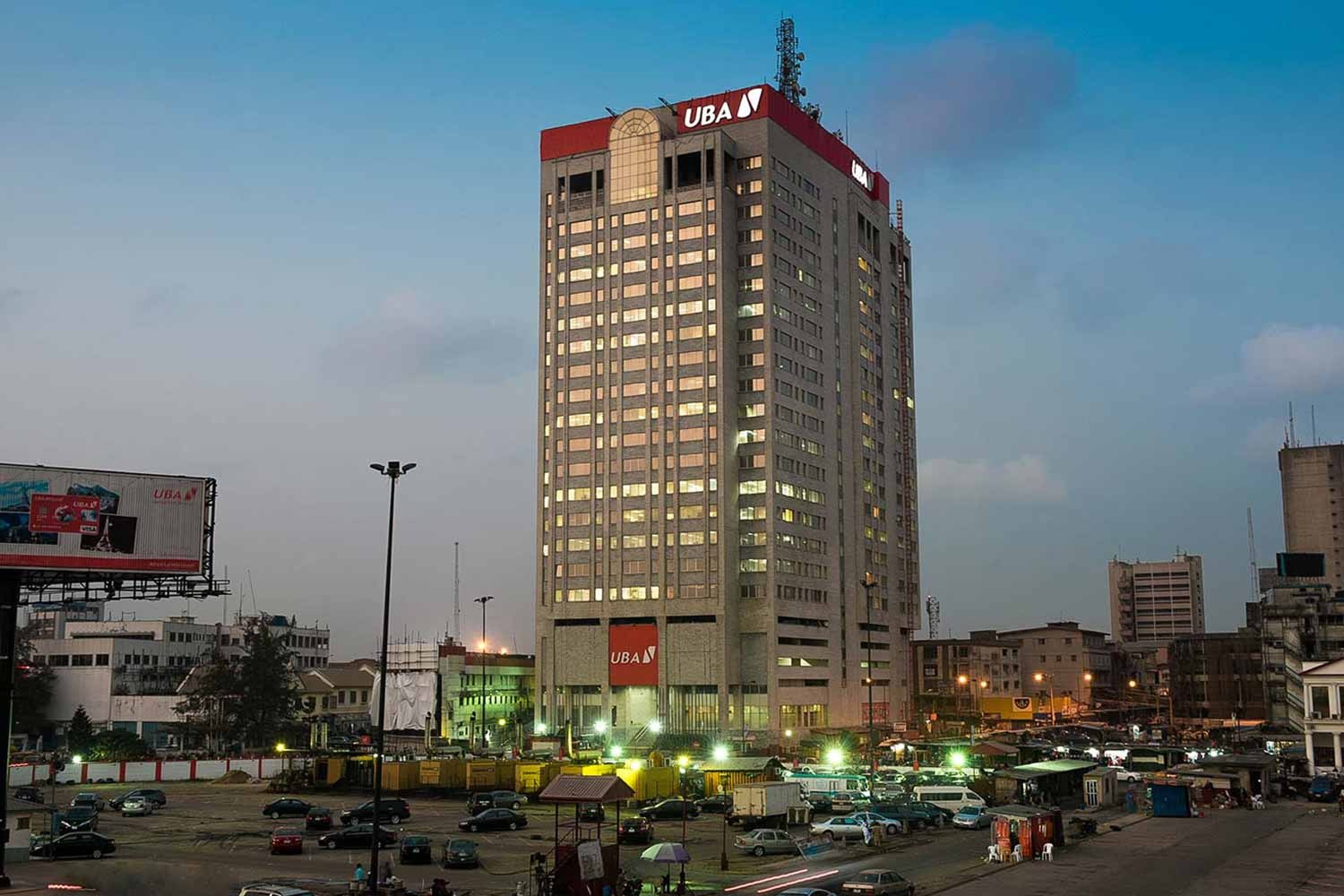
United Bank for Africa (UBA) made waves on Monday by announcing an unprecedented interim dividend payout of N2 per share, setting a new benchmark in Nigeria’s banking sector for 2024.

This milestone represents the highest interim dividend issued by a Nigerian bank in the first half of 2024 and is seen as a reflection of the bank’s stellar financial performance. The announcement instantly bolstered investor confidence, driving UBA’s share price up by 9.99% to close at N28.30 on the Nigerian Exchange (NGX), positioning it at the top of the gainers’ chart.

UBA’s interim dividend payout of N2 per share represents a total disbursement of N68.4 billion to shareholders. This is notable not only for the sheer size of the dividend but also because it highlights the bank’s commitment to rewarding shareholders amidst challenging economic conditions.

The dividend payout ratio of 21.6% is the highest among Nigerian banks, far exceeding that of competitors such as Guaranty Trust (GT) Bank, Access Bank, and Zenith Bank, which declared interim dividend payout ratios of 3.3%, 5.7%, and 5.4%, respectively.

The significant dividend payout reflects UBA’s strong liquidity position, especially as it comes at a time when the Central Bank of Nigeria (CBN) has introduced new recapitalization guidelines that exclude retained earnings from share capital calculations. UBA’s ability to distribute a large portion of its earnings signals that the bank is well-capitalized and confident in its financial standing.

UBA’s Financial Performance

According to UBA’s half-year (H1) 2024 financial results, the bank reported pre-tax profits of N401.5 billion, nearly matching the N403.6 billion reported for the same period in 2023. This robust performance was driven by core business fundamentals, primarily a remarkable increase in net interest income.

UBA’s net interest income after impairments surged to N614.4 billion in H1 2024, a 395% increase from the N124.1 billion reported in the same period last year. Unlike in 2023, when the bank’s profitability was largely influenced by forex gains, this year’s profits are primarily attributed to its core banking operations, particularly its interest income, fees, and commissions. This shift highlights UBA’s operational strength and its ability to generate sustainable revenue streams from traditional banking activities.

The bank’s impressive half-year performance underscores its focus on high-quality earnings, setting it apart from other financial institutions that rely more heavily on non-operational gains, such as foreign exchange windfalls. The strategic emphasis on interest income has reassured investors that the bank’s profitability is sustainable and not merely a result of volatile market conditions.

Boosting Investor Confidence and Stock Performance

UBA’s announcement of the record-breaking dividend had an immediate and dramatic effect on its share price. The stock soared by 9.99%, closing at N28.30 per share, a significant gain that placed it at the top of the NGX gainers’ chart. This sharp uptick reflects heightened investor confidence, driven by the bank’s commitment to rewarding its shareholders, and its solid financial performance in a tough economic climate.

UBA’s share price has surged by 68.4% over the past year, making it one of the top-performing banking stocks on the NGX. This year-to-date (YTD) gain of 10.3% underscores the bank’s ability to generate consistent value for its investors, even as other sectors and financial institutions grapple with economic uncertainties.

Strategic Capital Allocation In Recapitalization Time

UBA’s large dividend payout is particularly noteworthy given the ongoing bank recapitalization efforts in Nigeria. The CBN’s recapitalization guidelines, which exclude retained earnings from share capital calculations, have prompted banks to be more strategic in their capital allocations. In this context, UBA’s decision to distribute a substantial portion of its earnings signals confidence in its liquidity position and the sustainability of its profit-generating capabilities.

Analysts view the N68.4 billion dividend as a clear indication that UBA’s profits are well-supported by cash flows, rather than relying on retained earnings. This stands in contrast to some other Nigerian banks, which often post impressive profits but deliver relatively modest dividend payouts due to liquidity constraints. By prioritizing shareholder returns, UBA has positioned itself as a leader in capital efficiency and shareholder value.

The surge in UBA’s share price on Monday is expected to have a ripple effect across the banking sector, potentially prompting other banks to reassess their dividend policies in an effort to remain competitive.

With the dividend payout set for October 22, 2024, shareholders registered by October 14, 2024, stand to benefit from the bank’s strong performance. Analysts predict that UBA’s stock momentum, driven by strong investor confidence and the bank’s clear commitment to delivering shareholder value, will continue in the near term.

Surge in Market Activity Fuels Excitement: PEPE Soars 30%, DOGE Sets New Highs, and DTX Exchange Hits $3.3M Presale Milestone

0

There is renewed vigor in the crypto market as a surge in market activity has led to an altcoin price rally. For instance, PEPE has risen by 30% in the past week. Also Dogecoin (DOGE) has soared to a new monthly price high of $0.130.

That is not all. The ongoing presale project, DTX Exchange, has raised over $3.3 million in funding. Its next target is $5 million. Also, analysts forecast the price of its native token, DTX, will rise by 200% in the next few weeks.

Pepe (PEPE) Price Rallies 30%, See Next Targets

Pepe (PEPE), the frog-themed memecoin joined the rest of the cryptocurrency market in an uptrend recently. Data from CoinMarketCap shows the value of PEPE rose by over 30% on the weekly chart and 42.6% on the monthly time frame. Going forward, analysts are very optimistic about the Pepe price movement.

They believe the value of the memecoin might skyrocket to new levels in the next few weeks. ZackGold told his followers the next target for the Pepe coin is the resistance at $0.0000125. According to the analyst, surpassing this mark will determine the coin’s price movement in the month of October.

Meanwhile, the sentiment surrounding Pepe crypto is currently bullish. It is trading above the 50-SMA ($0.000008105) and 200-SMA ($0.000008628), signaling more push from bulls. Also, the VWMA (10) and Hull Moving Average (9) are showing buy signals.

Dogecoin (DOGE) Soars To New Monthly Highs

Dogecoin (DOGE) is also among the memecoins that rallied recently. The value of the cryptocurrency soared to a monthly peak of $0.1308. The last time the Dogecoin price reached this mark was in July. Presently, the Dogecoin crypto price is consolidating between $0.09 and $0.13 on the monthly timeframe. Its market cap has also been around the $13-$19 billion range.

This rally comes after a whale allegedly bought over $1.4 billion DOGE, catching the attention of Dogecoin (DOGE) creator Shibetoshi Nakamoto. Going forward, market analysts have high hopes for the Dogecoin token. The coin is trading between the 50-SMA ($?0.104753) and 200-SMA ($?0.124232) as bears and bulls battle for dominance. With Dogecoin’s (DOGE) 14-day RSI in the overbought region, we might see a little price retracement before the cryptocurrency continues its upward surge.

DTX Exchange (DTX) Raises $3.3 Million, Aims For $5M

DTX Exchange is making waves in the market right now, raising more than $3.3 million. Analysts are very optimistic about the DeFi project and believe its unique approach will attract users to its platform. DTX combines the advantages of decentralized (DEX) and centralized exchanges (CEX), and therefore, it wants to provide users with a safe and rich feature trading platform.

This is not just another crypto exchange platform; it is the next generation of trading technology embodied in the DTX Exchange. Leveraging on the idea of diversification, the exchange offers trading of cryptocurrencies, forex, indices, equities, and CFDs. This means DTX will be bringing the $714.7 trillion OTC derivatives market to the crypto space. The aim is to give users the best trading experience.

DTX is a good platform for anyone interested in enjoying low trading fees, access to advanced trading tools, fast trades, and other benefits. At the moment, the DTX token is priced at $0.06, and it is projected to rise by 10x in the next few months. Such potential gain makes DTX a good crypto to buy.

The Future of Pepe (PEPE), Dogecoin (DOGE), and DTX Exchange

Pepe (PEPE), Dogecoin (DOGE), and DTX Exchange are the top crypto coins that have benefited from the recent rise in market activity. Analysts forecast their value could increase in the coming weeks if the uptrend remains. They are also looking forward to the launch of DTX Exchange’s hybrid trading platform.

Learn more:

Buy Presale

Visit DTX Website

Join The DTX Community

As Texas Stock Exchange (TXSE) Prepares to Launch

0

The Texas Stock Exchange (TXSE) is making bold moves to position itself as a formidable challenger to the long-established financial platforms in New York, such as the New York Stock Exchange (NYSE) and Nasdaq. In a significant step toward its anticipated launch next year, the exchange announced on Monday the formation of its board of directors, drawing experienced industry leaders from both regulatory and corporate backgrounds.

This development is part of TXSE’s larger ambition to create a national stock exchange that could potentially disrupt the decades-old dominance of Wall Street.

TXSE first gained attention in June 2024 when it announced plans to officially register with the U.S. Securities and Exchange Commission (SEC), a requirement for national stock exchanges in the U.S.

Key Backers and Financial Muscle

The exchange has already secured backing from two of the most influential names in finance: BlackRock, the world’s largest asset manager, and Citadel Securities, a global market-making firm that has become a powerhouse in the world of trading.

The combined weight of these backers, along with TXSE’s initial funding of around $120 million, provides the platform with a strong financial foundation to compete with the likes of NYSE, which is a division of Intercontinental Exchange (ICE), and Nasdaq.

A Powerhouse Board

Heading TXSE’s newly formed board is Rick Perry, former governor of Texas and U.S. energy secretary. Perry’s involvement adds political clout and experience navigating high-level regulatory environments, both of which could prove advantageous as the exchange seeks approval from the SEC and other regulatory bodies.

Perry is joined by several high-profile figures, including Rick Roberts, a former SEC commissioner, who brings a deep understanding of the regulatory landscape and how the SEC functions—a critical asset for a new stock exchange looking to break into the highly regulated U.S. financial markets. Alex Bussandri, the global head of strategy at Citadel Securities, also takes a seat on the board, adding strategic depth from one of the world’s most advanced trading firms.

Seasoned Leadership Team

To further bolster its credentials, TXSE has drawn top talent from other major exchanges and trading platforms. Notably, Cam Smith, who has been appointed global head of trading and co-president of the exchange, has a wealth of experience in electronic and automated trading systems. Smith previously served as president of Quantlab, a firm known for its cutting-edge, algorithm-driven proprietary trading. His role at TXSE will be central to shaping the exchange’s technological infrastructure, which is expected to focus heavily on speed, efficiency, and innovation, key aspects of modern-day trading.

Another pivotal figure in TXSE’s leadership team is Jeff Brown, who is serving as general counsel and chief regulatory officer. Brown is no stranger to high-stakes regulatory environments, having previously worked as acting general counsel at Charles Schwab, one of the largest brokerage firms in the U.S. His role will be crucial in steering the exchange through its SEC registration process and ensuring full compliance with U.S. securities laws. Brown’s experience also provides TXSE with a regulatory safeguard, which will help the platform gain the trust of investors and traders.

The Need for Competition in U.S. Stock Exchanges

The introduction of the Texas Stock Exchange could mark a significant moment in the evolution of the U.S. financial markets, which have historically been dominated by the NYSE and Nasdaq. While these two platforms have set the standard for trading equities for decades, critics have argued that the U.S. stock exchange landscape could benefit from greater competition, especially given the consolidation of trading power in a few hands.

TXSE’s attempt to rival these behemoths comes at a time when market participants are increasingly seeking alternative platforms that can offer lower trading fees, faster execution times, and more transparency. NYSE and Nasdaq have faced criticism in recent years over issues such as high listing fees, complex market structures, and what some market participants view as a lack of innovation.

The Texas Stock Exchange could capitalize on these market inefficiencies by offering a fresh, streamlined alternative that is more agile and responsive to the needs of modern traders. The involvement of Citadel Securities, a leader in market-making and electronic trading, suggests that TXSE will heavily emphasize cutting-edge technology and algorithm-driven trading—a crucial factor in attracting both institutional and retail investors.

A Texas Identity in the Financial World

While NYSE and Nasdaq have long been synonymous with Wall Street, TXSE’s emergence underscores a broader trend of decentralization in the U.S. financial markets. Texas, with its business-friendly policies, low taxes, and rapidly growing tech sector, has become an increasingly attractive location for major corporations, particularly in finance and technology.

The state’s appeal was made evident during the COVID-19 pandemic when companies like Oracle, Tesla, and HP relocated their headquarters from California to Texas. The world’s richest man Elon Musk has also made the State the headquarters of some of his companies, including X, which he recently moved from San Francisco.

Rick Perry’s presence on the board highlights Texas’ potential to become not just a national but a global financial hub. Perry, a longtime advocate of Texas as a business-friendly environment, will likely leverage his extensive network and political influence to promote TXSE as a major player on the world stage.

The Market Comes with Challenges

While TXSE’s ambitions are lofty, it faces significant hurdles. The U.S. stock exchange market is highly competitive and deeply entrenched, with NYSE and Nasdaq enjoying the advantage of decades of trust, liquidity, and infrastructure. Building the same level of trust and attracting major companies to list on TXSE will require time, effort, and an aggressive marketing strategy.

Moreover, the exchange will need to navigate a complex regulatory landscape. While TXSE is backed by experienced figures like Rick Roberts and Jeff Brown, its application to the SEC will undergo intense scrutiny. The SEC will want to ensure that the new exchange adheres to stringent market rules, offers investor protections, and has the necessary financial and technological resources to function without disrupting the market.

There is also the challenge of attracting both companies and traders to the platform. NYSE and Nasdaq offer liquidity and a broad investor base that new exchanges struggle to match. However, TXSE’s strategic partnerships and its emphasis on advanced trading technology could help it stand out as a more nimble alternative, particularly for tech-driven companies and investors.

Nigeria Should Do This To Fix State-Level Elections

1

Nigeria is wasting time asking states to organize elections. I have never supported that thesis because in the next 30 years, Nigeria will likely not mature to the level where governors could be trusted to organize free and fair elections for local government chairmanships. That is also the reason why I am not in support of state police since if you do that, the state police will become an extension of the governor’s political infrastructure.

I had written: I am not in full support of State Police as our democracy is still immature to allow some governors to have full control of the Police. If that should happen, forget any opposition at the state level. Rather, I support Regional Police, like Southeast Police Force, under the control of the 5 governors with quarterly rotating chairmanship.”


Extending that thesis, I call the National Assembly to update the constitution so that we can have a Southeast Independent Electoral Commission (SEIEC), Southwest Independent Electoral Commission (SWIEC), etc if we do think INEC cannot handle these state-level elections. For each of these state-level commissions, no governor will have the exclusive control and apparatus to run the show. But if we ignore this position, we will be wasting time thinking that state capitals can be different from local government headquarters!

Anambra State just returned APGA to all local governments in the state. In Imo State, APC cleared the chairmanship positions in all local governments. Across the nation, the governor’s party runs the tables. You may say it does not matter but remember: the absence of evidence is not an evidence of absence. Simply, these results are not typical when you remember that every state has opposition strongholds, so when one party wins 100%, you will understand that a special apparatus is at work.

But putting these systems at geopolitical level, you dilute the influence of state governors. Of course, you may ask: why not ask the INEC to run this show? A better question except that INEC seems to bill like expatriates, and most regions will like local rates!