DD
MM
YYYY

PAGES

DD
MM
YYYY

spot_img

PAGES

Home Blog Page 2841

The OpenAI’s Apple Problem

1

How can a $3.5 trillion company invest in a $150 billion nascent one? I am not sure if it is about money and appreciation of capital. In other words, the acceleration of say $1 billion to become $10 billion in a 10x gain, cannot be the core reason. Simply, any investment Apple is making on OpenAI cannot be seen from the angle of making direct gain on the investment. 

With dilution, a $1 billion investment in OpenAI for a 10x return will mean that OpenAI has to be valued in the range of $2 trillion. Of course, that is not going to happen overnight. And that is why Apple’s investment is not about beating the investment alpha.

This explains why Apple’s reverse on investment in OpenAI is a big issue for the AI company: “Apple has decided to withdraw from negotiations to participate in OpenAI’s anticipated $6.5 billion funding round, escalating concerns about the AI company’s internal stability. According to the Wall Street Journal, Apple stepped back from the talks just days before the round is expected to close, despite the iPhone maker’s initial strong interest in joining the round just a month ago.”

What is going on? I posit three things:

-Apple is rattled by the leadership changes in OpenAI that it does not think the company can sustain its generative AI product leadership to stay with it for the long-term.

-Apple wants to put that money and build something internally (with some strategic acqui-hires) while maintaining a peripheral partnership with OpenAI just like other companies.

-Apple, unable to unveil the highly heralded AI component in iPhone, may not like what it is seeing from OpenAI, and has decided to wait a little more  on this AI game. It waited for the Apple Watch and later won. Traditionally, it is very great at studying, copying and then winning. 

For Apple to invest in OpenAI, it is not about a direct investment calculus. Rather, it is how putting that money will make it possible for Apple products to get preferential access to tools and products that will improve them. Where Apple is not sure those things will happen, it is going to push the brake and reevaluate. OpenAI has not made me use Microsoft Bing. While I acknowledge the efforts of Copilot, you need awareness to get the best from it. Simply, AI, while valuable, remains marginal on why we use some products.

If OpenAI is making Apple that uncomfortable, count it that it has a big problem, since Apple will give it data and customers it cannot win in a decade in 24 hours.

Comment on LinkedIn Feed

Comment 1: If I understand correctly, Apple may be conducting a cost-benefit analysis to compare the net advantages of investing in OpenAI against those of funding their own projects. The latter part of this analysis piques my curiosity, prompting me to consider what the value of control might signify for Apple.

I value the mention of leadership changes at OpenAI. As I understand it, a company’s value originates from its culture, which in turn stems from its leadership—it all starts at the top. Your comment leads me to believe that perhaps a well-developed culture, especially among leadership, is significant for Apple too.

My Response: Absolutely,  Apple could be looking at the culture and by extension the leadership. The exit of the CTO after the Chief Scientist had left should be a significant factor for a company as big as Apple. Fairchild Semiconductor pioneered the modern semiconductor industry but lost to Intel over a similar scenario. Sure, Sam is not Shockley.

Comment 2: Apple could have built a better search engine (or attempted), but instead pays Google $20B per year to license theirs.

How much is a next-gen Siri worth when the AI training costs are $1B+? Or $10B?

What if the ChatGPT app on iPhone becomes so dominant, that Siri can never catch up?

My Response: The comparison is not there. On Google Search, all that Apple has to do is to sign a document and provide a bank account to receive $20B yearly. That $20B is largely pure profit since there is really no work than putting a default URL on Safari.  Should Apple go ahead to battle Google, in the world Bing has failed, I am not sure Apple has any chance of making $20b in profit yearly. So, for Apple, this is free money and why bother since the best is paying, meaning that it is going to be assured going forward? The $20B is about 36% of what Google makes via Apple Safari.

But here, Apple is paying for OpenAI not to have a space in the OpenAI ecosystem to make money as Google does. In other words, unlike Google which makes tons of money and pays Apple 36% as commission, Apple is sending money to OpenAI for the tools so that it can go and make money by itself, even though that same OpenAI can use that money and build tools which can compete with whatever Apple has in iPhone.

You can see the comparison with the Apple/Google Search deal does not apply here. Google pays Apple commission for “lead generation”. Apple is paying OpenAI to license a tool and then do all it can to monetize it. That poses a risk for Apple.
Apple Withdraws From OpenAI’s $6.5bn Funding Round, Escalating Concerns About AI Firm’s Stability

0

Apple has decided to withdraw from negotiations to participate in OpenAI’s anticipated $6.5 billion funding round, escalating concerns about the AI company’s internal stability.

According to the Wall Street Journal, Apple stepped back from the talks just days before the round is expected to close, despite the iPhone maker’s initial strong interest in joining the round just a month ago.

This development coincides with a period of turbulence within OpenAI, as the company faces a wave of high-profile executive departures that have amplified fears of deeper internal issues. Key executives, some of whom played pivotal roles in OpenAI’s rapid rise, have exited the company recently, stirring speculation about potential leadership conflicts or strategic disagreements that could be affecting the company’s trajectory. The timing of Apple’s withdrawal, juxtaposed with these internal changes, has added to concerns about OpenAI’s stability.

The funding round, which still sees participation from other heavyweights like Microsoft and Nvidia, is set to raise $6.5 billion through convertible debt, potentially valuing OpenAI at $150 billion. Microsoft, which has already invested $13 billion in OpenAI, is expected to contribute another $1 billion.

It is being speculated that OpenAI’s leadership turmoil and the loss of crucial talent could be indicative of broader issues within the company, possibly stemming from disagreements over strategic direction or the pressure of maintaining rapid growth amid rising competition in the AI space.

These internal challenges come at a time when the company is under the spotlight, not just for its technological advancements, but also for the profound impact its innovations have had on the broader tech landscape. The company’s flagship product, ChatGPT, has set the pace in the AI arms race since its launch in late 2022, prompting an influx of investment from firms eager to capitalize on the booming AI sector.

OpenAI’s ongoing fundraising effort, if completed, would not only cement its position as one of the world’s most valuable private companies but also place it at the forefront of AI development, with a valuation potentially hitting $150 billion. However, the success of this valuation hinges on a complicated restructuring plan aimed at removing control from its non-profit board and eliminating caps on investment returns. This restructuring is crucial to attract and retain investor confidence, but the process is fraught with regulatory and governance hurdles, and no specific timeline has been provided for its completion.

Thrive Capital, a repeat investor that led OpenAI’s previous funding round, is contributing $1.2 billion through a mix of its own funds and a special-purpose vehicle designed to bring in smaller investors. Other notable participants include Khosla Ventures, Microsoft, and Nvidia, all of whom remain committed to backing OpenAI.

Revenue projections for OpenAI are ambitious, with expectations soaring to $11.6 billion in 2024 from an estimated $3.7 billion this year. However, the company is also projected to incur significant losses of up to $5 billion in 2024, largely driven by immense spending on computing power and infrastructure to support its rapidly expanding services.

ChatGPT, OpenAI’s primary revenue engine, is projected to bring in $2.7 billion this year, up from $700 million in 2023, fueled by approximately 10 million paying users who subscribe to the chatbot service at $20 per month. This rapid revenue growth far exceeds CEO Sam Altman’s earlier projection of $1 billion in 2024, highlighting the company’s accelerating commercial success even as it navigates internal challenges.

However, the exits of key personnel and Apple’s retreat from the funding round have cast a shadow over OpenAI’s otherwise impressive financial projections. The perception of internal upheaval and Apple’s sudden decision to withdraw raises questions about whether OpenAI can sustain its momentum and leadership in the fiercely competitive AI market.

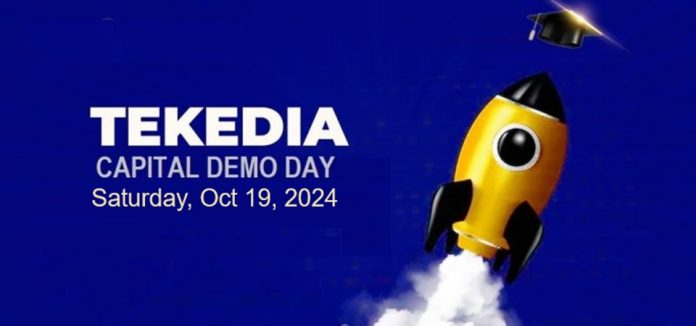
Tekedia Capital Demo Day Is Sat, Oct 19; Join and Co-invest in Startups of the Future

0

Good People, you’re all invited to Tekedia Capital Demo Day. We hope to support another class of great startups. Tekedia Capital has incubated startups which ended up joining YCombinator, Techstars, Seedstars, etc, besides raising follow-up capital with exits.

  • Event: Tekedia Capital Demo Day
  • Date: Saturday, Oct 19, 2024
  • Time: 4pm – 6pm WAT
  • Venue: Zoom (member only)
  • Learn more and join our community here 

We welcome the world as we present more than a dozen companies, representing Nigeria, India, USA, UK, and Southeast Asia region. Our members co-invest in companies of the future.

About Tekedia Capital

Tekedia Capital offers a specialty investment vehicle (or investment syndicate) which makes it possible for citizens, groups and organizations to co-invest in innovative startups and young companies around the world. Capital from these investing entities is pooled together and then invested in a specific company or companies.

Membership Fee of $1,000 for 4 Investment Cycles

Pay for your 4-cycle membership fee. The fee provides access to 4 investment cycles of Tekedia Capital deal flow. We typically do 2-3 cycles per year (i.e. 12 months). After payment, our team will give you access to the deal flow board.

(If after 4 cycles, you can decide not to renew. Yet, you will continue to receive updates on your prior investments. But we will not provide access to new startup deal flows.)

A payment of $1,000 (or Naira equivalent ) is required to join. Learn more and join our community here 

Solana (SOL) vs. Rexas Finance (RXS): Which Is the Best Ethereum (ETH) Rival for Big Profits by 2025?

0

Because of Ethereum’s past achievements, a lot of investors are seeking other alternatives with big profits by 2025. The speed and scalability of Solana (SOL) are something to be aimed at. It is however predicted that in the year 2025, Rexas Finance (RXS) technology and potential pricing might even surpass that of Solana. Intending to provide significant market upside for investors, Rexas Finance (RXS) has been on the rise with a presale price of less than $0.10. Although a bit older, Solana still has a growing menace slowly building from Rexas Finance (RXS) and other projects. Analyzing these projects in terms of potential return on investment until 2025 helps in determining which of the two options is easier to implement.

Solana (SOL): A Pioneer in Speed and Scalability

Solana is frequently credited for its high scalability, as well as fast and cheap transaction times. Through its proof-of-history consensus, it executes thousands of transactions each second, thus attracting many important DeFi and NFT projects, thereby becoming a performance and solution to Ethereum’s shortcomings. In 2021, Solana managed to reach its highest price of $260 and it is now expected that by 2025 the price will exceed $500 as per analyst estimates.. Even with its growing economy of NFT and DeFi markets, the currency of Solana has had its issues including failing networks and complaints about its decentralization.

Rexas Finance (RXS): A Prominent Emerging Force in DeFi

Rexas Finance (RXS) is getting noticed with its new approach to DeFi and tokenization. In still its early stages, the presale which is under $0.10 provides an interesting opportunity for the advantage of early investors to make money before the coin’s receptions are well spread and its values are high. The analysts are forecasting that Rexas Finance (RXS) may rise by around 2,500% in the next six months given its low entry price and high enhancement opportunities. Its capability to draw big investors, including whales from Shiba Inu (SHIB) only enhances its credibility and chances of making even more money.

Profit Potential by 2025: Who Will Come Out on Top?

There is good return potential in both Solana (SOL) and Rexas Finance (RXS) for investors looking for huge returns when the next bull market comes. Still, because Rexas Finance (RXS) is in early development and has a low presale price, it is more favourable for exponential growth hence profit margin could be higher. Since Solana is already well-established in the market, its price is higher thus limiting it to quasi-explosive appreciation. On the other hand, Rexas Finance (RXS) currently in the presale stage priced at less than $0.10 has a 100% profit only by hitting its forecasted $0.20 listing. By 2025, Solana’s potential remains bullish, especially with the improved availability of its blockchain for NFT projects which has the prospects of reaching $500. Nevertheless, the scope of Rexas Finance (RXS) in investing in the real estate tokenization model could be appealing to the investors because of the room for growth that still lies ahead, and therefore popularity gains may exceed that of Solana. 

Final Verdict: Rexas Finance Has More Room to Grow

Among the projects that can rival Ethereum, which will be the best project by 2025, believes that Rexas Finance (RXS) will be the more productive project among the investors wishing to make a profit. Low initial presale cost and their ability to grow more than any other at market price makes Solana’s growth potential not as comparable today. Solana’s position as one of the leaders in blockchain technology will probably not change soon, especially concerning NFT and DeFi businesses. Nevertheless, what is clear is that the very reason why Rexas Finance (RXS) may be the most optimal challenger to Ethereum is because of its neoteric approach to real estate tokenization, which allows for a 2,500% increase.

Conclusion

In terms of long-term gain, Solana (SOL) presents itself as a good choice but on the other hand, Rexas Finance (RXS) is an investment opportunity that stands out due to its potential risk-reward opportunities. Rexas Finance (RXS) has the possibility of changing the way the DeFi paradigm operates and therefore one can make significant returns for those who act early on the project costs Perspective by 2025 so invest in Rexas Finance (RXS) now.


For more information about Rexas Finance (RXS) visit the links below:

Website: https://rexas.com

Win $1 Million Giveaway: https://bit.ly/Rexas1M

Whitepaper: https://rexas.com/rexas-whitepaper.pdf

Twitter/X: https://x.com/rexasfinance

Telegram: https://t.me/rexasfinanc