DD
MM
YYYY

PAGES

DD
MM
YYYY

spot_img

PAGES

Home Blog Page 2870

Top 3 Cryptos for the Bull Run: Dogecoin to Reach $1, Shiba Inu to Hit $0.0001, and Rexas Finance (RXS) to Climb Over $10 from $0.04 today

0

As the crypto market gears up for a bullish phase, three cryptocurrencies are capturing significant attention: Dogecoin (DOGE), Shiba Inu (SHIB), and Rexas Finance (RXS). Dogecoin with its backing of a loyal and large community is set to cross the $1 mark. Shiba Inu with the help of an expanding ecosystem plans to achieve a $0.0001. At the same time, Rexas Finance (RXS) seems quite promising with the potential to increase more than 10000% up to $ 10 because of the increasing demand for financial services and investments. These cryptos are expected to give high returns and hence are recommended for the next bull market. 

Rexas Finance (RXS)

The token of Rexas Finance, RXS, may increase by more than 10,000% to $10 as the platform offers the possibility to tokenize real-world assets under the RWA protocol, including real estate, precious metals, etc. At the time of writing, the coin is priced at $0.04 and has attracted the attention of investors because it has made asset tokenization relatively easy for most of the users through the platform. Comparisons are made between RXS and early-stage Solana, and its ability to grow at a fast rate because of its low-cost transactions and partnerships. Other features such as the Rexas Token Builder available within the platform also add to the platform’s strength by allowing users to create tokens without the need to code. Also, the increase in the adoption of asset tokenization in the financial sector puts RXS in a strategic place to benefit from a massive unexplored market. These technological advancements and strategic moves in the market provide a positive sentiment that RXS will have a path toward the $10 mark.

Dogecoin (DOGE)

Dogecoin (DOGE) is on the path to attaining $1 under robust community backing, celebrity adoption, and a growing use case. As of now, DOGE is priced at $0. 15 with a market capitalization of over $20 billion; it has the support of popular personalities such as Elon Musk who has referred to it as ‘the people’s crypto’ which has led to a massive pump-and-dump frenzy. Moreover, the adoption of this digital currency by big firms like AMC Theatres and the Dallas Mavericks and the incorporation of this digital currency into payment processors like BitPay increases the usability of the coin. From the technical aspect, there are signs of bullish formation which means that there may be breakouts due to the momentum of the market and the sentiment of the investors. These together with the constant innovations aimed at enhancing the transaction speed and cutting the charges provide a solid ground for Dogecoin to possibly hit the $1 mark in the course of the expected bull run. 

Shiba Inu (SHIB)

It is forecasted that Shiba Inu (SHIB) will rise to $0. 0001 because of the appearance of a great number of applications and services, as well as because of correct planning. As of the time of writing this article, SHIB is equivalent to $0. 000013 and has proved that it has the capability of operating and even growing. Shibarium is a Layer-2 blockchain solution that will improve the transaction speed and low fees, therefore, the appeal of SHIB.  Also, the development of the Shiba Inu metaverse and the Shiboshi NFTs has given more utility to the token and more attention and traffic. Fundamentally, the charts are bullish, and SHIB has continued to defend the key short-term moving averages, including the 20-day and 50-day EMAs. These factors coupled with the increasing investors’ interest and market trends make it possible for SHIB to hit the $0. 0001 target.

Conclusion

When the crypto market begins the bullish cycle, Dogecoin (DOGE), Shiba Inu (SHIB), and Rexas Finance (RXS) could be the best choices to make massive profits. Despite the relative infancy of this cryptocurrency, Dogecoin and its solid community and endorsements will get to the $1 mark. Shiba Inu, with the help of the constantly growing ecosystem and further advancements, is targeting $0. 0001. However, Rexas Finance (RXS) seems to be relatively unique by its capacity to skyrocket more than 10,000% up to $10 with the help of the innovative Real-World Asset (RWA) tokenization solution and increasing demand among investors. These cryptocurrencies are expected to give good returns in the future and therefore they are ideal for the next bull market.


For more information about Rexas Finance (RXS) visit the links below:

Website: https://rexas.com

Whitepaper: https://rexas.com/rexas-whitepaper.pdf

Twitter/X: https://x.com/rexasfinance

Telegram: https://t.me/rexasfinance

Qualcomm Moves to Acquire Intel, Pushing Its Shares Up

0

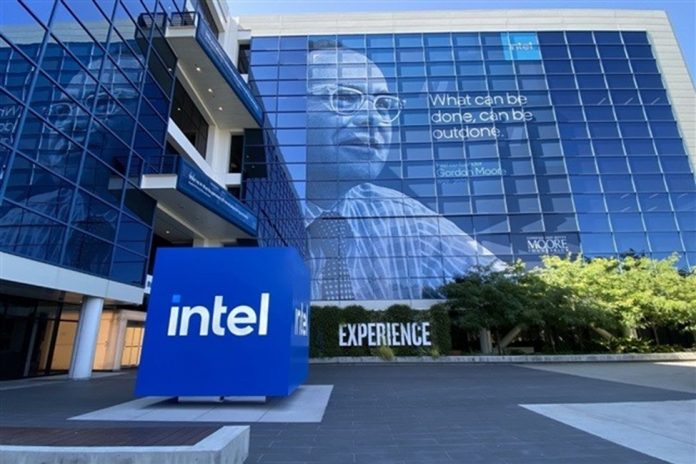
Qualcomm recently made a move toward acquiring struggling chipmaker Intel, sources cited by CNBC confirmed, marking a potential mega-deal in the technology industry.

This news, initially reported by the Wall Street Journal, caused Intel’s shares to jump by 3%, while Qualcomm’s stock fell by a similar margin. If this deal were to materialize, it could become one of the largest technology mergers in history, given Intel’s current market capitalization of over $90 billion.

However, it’s unclear whether Intel has engaged in discussions with Qualcomm or what terms were proposed, as the details remain confidential, according to a source familiar with the situation.

Intel’s Decline and Qualcomm’s Interest

Intel, once the world’s largest chipmaker, has faced a prolonged downturn that worsened in 2024. After reporting disappointing earnings in August, Intel’s stock took its largest one-day drop in over 50 years. For the year, Intel shares are down 53%, with investors questioning the company’s expensive plans to manufacture and design its own chips.

Intel’s ongoing struggles may have prompted Qualcomm’s approach. Although both companies compete in markets like PC and laptop chips, Qualcomm operates differently from Intel. Unlike Intel, Qualcomm doesn’t manufacture its own chips, relying instead on third-party manufacturers like Taiwan Semiconductor Manufacturing Company (TSMC) and Samsung.

Intel’s financial difficulties also come amid its costly foundry business project, which CEO Patrick Gelsinger reiterated in a memo following a board meeting. The project could cost $100 billion over the next five years as Intel aims to build its own chip manufacturing capacity. The company is also exploring outside investment to support this ambitious endeavor, further reflecting its need for external funding.

The Missed AI Opportunity

Another blow to Intel has been its absence from the artificial intelligence (AI) boom that has captured the attention of Wall Street. While AI programs, including OpenAI’s ChatGPT, rely on Nvidia’s graphics processing units (GPUs), Intel’s central processors (CPUs) have struggled to capture a share of this rapidly growing market. Nvidia currently dominates the AI chip market, holding over 80%, a position analysts say Intel has missed out on.

Qualcomm, while not as large as Intel, reported $35.8 billion in sales for fiscal year 2023, compared to Intel’s $54.2 billion. This potential merger could bring synergies between Qualcomm’s efficient, design-focused model and Intel’s manufacturing expertise, though integrating these companies would be no small feat.

However, any potential deal between Qualcomm and Intel would likely face significant regulatory scrutiny, especially given past failures in major semiconductor mergers. Both companies do business in China, and previous acquisition attempts have been blocked by Chinese antitrust authorities. Intel’s attempt to acquire Tower Semiconductor and Qualcomm’s bid to acquire NXP Semiconductor were both thwarted due to regulatory pushback.

On a broader scale, government intervention has derailed other large chip-related mergers. In 2017, Broadcom’s $100 billion bid for Qualcomm was blocked by the Trump administration on national security grounds, as Broadcom was then headquartered in Singapore. Additionally, Nvidia’s attempt to acquire Arm for $40 billion in 2021 faced antitrust lawsuits from the U.S. Federal Trade Commission (FTC) and opposition from European and Asian regulators, ultimately leading to the deal being scrapped in 2022.

Potential Complications

The merger of Qualcomm and Intel would likely face complex challenges. Apart from antitrust issues, both companies’ significant exposure to the Chinese market could attract scrutiny from multiple governments. The broader trend in the semiconductor industry has seen governments around the world tighten their control over chip manufacturing and technology transfers, as evidenced by the U.S. government’s restrictions on chip exports to China and Europe’s focus on maintaining technological independence.

A potential Qualcomm-Intel deal would therefore require approval from regulators across several major markets, including the U.S., China, and Europe. The geopolitical ramifications, given ongoing trade tensions between the U.S. and China, would likely add another layer of difficulty to the deal.

Qualcomm has initiated acquisition talks with chipmaking competitor Intel, but an agreement is “far from certain,” The Wall Street Journal reported, citing anonymous sources. With a market value of $93.2 billion, an Intel takeover would be one of the largest tech pacts ever, and the deal would almost certainly draw antitrust scrutiny. Qualcomm’s overture comes at a turbulent time for Intel, which has embarked on turnaround initiatives, including cutting 15% of its workforce. Earlier this week, Intel announced it would create an AI chip for Amazon and spin off its foundry business.

Coca-Cola $1bn Investment Pledge: Nigerian Government Responds to Allegations of Recycled Propaganda

0

The presidency has addressed concerns raised about Coca-Cola’s recent announcement to invest $1 billion in Nigeria over the next five years, responding to criticism from Nigerians who viewed the pledge as recycled propaganda.

Following the announcement on Thursday, critics pointed out that the company had previously announced a similar investment plan in 2021.

Responding to the backlash, the presidency explained that the initial pledge was delayed due to challenging economic conditions but has now been renewed under improved circumstances.

Bayo Onanuga, the Special Adviser to the President on Information and Strategy, issued a statement on Thursday addressing the criticism and clarifying the timeline of Coca-Cola’s investment plans. He acknowledged that the $1 billion investment was indeed announced in 2021 but explained that the company was forced to halt the execution of this commitment due to unfavorable business conditions, including the imposition of excise taxes.

“Naysayers and doubters scorned the $1 billion fresh investment pledge in Nigeria made by the company’s global leadership to President Bola Tinubu today in Abuja, saying the company made a similar promise in 2021. Yes, the company made a similar promise three years ago. But it couldn’t fulfil it because of the challenging business environment prevailing in Nigeria then,” Onanuga stated.

He went on to explain that the company’s ability to follow through on its investment pledges depends largely on the economic environment in which it operates.

“As the company’s spokesperson said, while the company made the commitment in 2021, it was also hit by excise taxes,” he said.

The special adviser further explained that the renewed investment commitment is based on the stable and predictable environment fostered by the Tinubu government’s economic stabilization plan. Onanuga reassured Nigerians that the improved conditions have rekindled Coca-Cola’s confidence in Nigeria as a promising market for future investments.

“Our investment pledges are always predicated on a predictable and stable environment. The $1 billion pledge has now been renewed based on the stable environment, which has been promised through the Tinubu government economic stabilization plan,” he explained.

Coca-Cola’s Commitment and Past Investments in Nigeria

While addressing the criticisms, the presidency also highlighted that Coca-Cola and its local partner, the Nigeria Bottling Company, have already invested $1.5 billion in Nigeria over the last decade. This significant capital was channeled toward the expansion of production capacity, supply chain improvements, and logistics.

“The Coca-Cola Company and its local partner, Nigeria Bottling Company, have already invested $1.5 billion in Nigeria over the space of 10 years,” Onanuga noted in his statement.

This figure reflects Coca-Cola’s long-term engagement in the Nigerian market, despite the challenges posed by economic instability and taxation policies. The company’s decision to invest an additional $1 billion over the next five years underscores its confidence in the country’s potential for growth.

Background of The Initial $1 Billion Pledge in 2021

In 2021, Coca-Cola announced its intention to invest $1 billion in Nigeria over a period of five years as part of its strategy to expand its presence in Africa’s most populous nation. However, soon after the announcement, the business environment in Nigeria took a turn for the worse. The country grappled with foreign exchange shortages, rising inflation, and additional excise taxes that negatively affected both local and foreign businesses.

The introduction of new excise duties on beverages added significant cost pressures on companies like Coca-Cola, leading them to reassess their investment plans. Coca-Cola is said to be unable to fully implement its $1 billion investment plan as a result of these new fiscal challenges.

However, according to the presidency, with the recent economic reforms introduced by President Tinubu’s administration, including efforts to stabilize the naira, ease foreign exchange constraints, and attract foreign direct investments (FDI), Coca-Cola has regained confidence in the Nigerian market. This has led to the reaffirmation of its investment plan during the recent visit of Zoran Bogdanovic, the Chief Executive Officer of Coca-Cola Hellenic Bottling Company, to President Tinubu.

During the meeting with President Tinubu, Bogdanovic expressed Coca-Cola’s optimism about Nigeria’s economic future and its long-term commitment to the country. He assured the president of the company’s determination to execute the investment plan over the next five years, provided the business environment remains stable and predictable. According to Bogdanovic, Coca-Cola believes that Nigeria has tremendous potential for growth, and the company is willing to work closely with the government to unlock this potential.

“I am very pleased to announce that, with a predictable and enabling environment in place, we plan to invest an additional $1 billion over the next five years. We believe Nigeria’s potential is tremendous, and we are committed to working with the government to realize this potential,” Bogdanovic stated during his visit to the President.

However, this pledge is coming weeks after Coca-Cola came at odds with the Nigerian regulatory watchdog, the Federal Competition and Consumer Protection Commission (FCCPC), over allegations of misleading trade descriptions and unfair marketing tactics. The FCCPC accused Coca-Cola Nigeria Ltd and its bottling subsidiary, NBC, of misleading consumers by promoting the “Original Taste, Less Sugar” variant as having the same formulation as the original Coca-Cola.

The FCCPC further warned that the company’s alleged abuse of market dominance would be subject to penalties under the Federal Competition and Consumer Protection Act (FCCPA) and the Administrative Penalties Regulation 2020 (APR), with regulatory action expected in the future.

Against this backdrop, many believe that Coca-Cola’s attempt to reintroduce the $1 billion pledge is a clever attempt to curry favor from the government and quell the ongoing probe of its operations in the country.

#1 Cause of Fintech Collapse in Nigeria Right Now

1

More fintech startups in Nigeria fail due to “cyberattack & KYC/identity theft” related issues than any other problem. Our data shows that when those attacks happen, most times, the companies die over time, unable to recover from the paralysis. If you google and check recent closures, and ask questions, someone will tell you how some criminals have broken into a startup’s system, took money or distorted the company’s state of equilibrium.

Why this problem? Many people see embedded finance or finance-related APIs as marginal solutions without knowing that once you offer such solutions, you have provided vectors through which people could be hacked, if not protected. In other words, if you offer banking as a service where customers can get bank accounts via your portal, you have provided a path for them to be hacked, if you do not harden the access points. 

Indeed, in your fintech portal, your bank account is linked. A bad actor can initiate withdrawal from that account, and using the same fintech platform move the funds to another account.  Of course, many customers do not know that once they link a  bank account to the platforms, especially ones with “withdrawing” rights, they have extended withdrawing access to their bank accounts. But unfortunately, the portal where that is happening has no decent security protocol.

(Let me use PayPal to explain. Your PayPal account is linked to your bank account. From your PayPal account, you can initiate a deposit from your bank account into your Paypal wallet. If someone has access to your PayPal, that person also has access to your bank account!)

If you check some banks in Nigeria (one issue was reported today), their main bank websites and apps rarely have security failures, but their “fintech” subsidiaries do fail due to hacks. Why? While the Central Bank of Nigeria (CBN)’s security guidelines and regulations are adhered to on the core websites and apps, the fintech subsidiaries are not fully handled in the same way. So, some banks keep losing money due to such failures.

What can you do? One of Tekedia Capital startups wanted to build a fintech component as a marginal feature in its core business. We told the team to freeze the idea, encouraging them to continue to work with their banks’ partners, making it clear that a fintech-focused team should be in place before any voyage into that space.

Yes, that fintech marginal feature should be seen as a core product with every element of security thought-through before customers are allowed to use them.  Do not just get access, embed APIs and expose customers to be burnt without a team with responsibility to ensure that you (not in the finance space) have provided basic security features.

Indeed, embedding a protected and secure product in a porous portal creates vulnerabilities for your business and your customers. And that means you must ensure you are also protected, and secure, before you ask customers to use the solution.

Latin American Fintech Company PayRetailers, Expands Operation Into Nigeria, 7 Other African Countries

0

PayRetailers, a Latin American Fintech company that makes online payments simple for specialized customers globally, has expanded its footprint into Nigeria, and seven other African countries.

The latest expansion includes Burkina Faso, Cameroon, Kenya, Ivory Coast, Ghana, Senegal, and South Africa, which comes after its recent launch in Rwanda, Zambia, Uganda and Tanzania three months ago. This latest expansion will see PayRetailers now covering twelve (12) countries across the African continent.

The Latin America payment processor expansion brings access to major local payment methods which include MPESA, Airtel, and MTN, providing a user-friendly, scalable solution for businesses looking to grow their regional presence.

Commenting on the company’s expansion of footprint across the African continent, Global Head of Sales at PayRetailers Jonathan Vintner said,

“Expanding into eight new markets marks a significant milestone for PayRetailers as we continue our mission to bring tailored payment solutions to diverse regions. Africa is a vibrant and varied continent, with payment preferences that differ from region to region. For example, our launch in Kenya enables merchants to access M-Pesa, the country’s leading mobile money provider, while in South Africa, we’re offering a blend of card and cash solutions to meet local demands. All of this is seamlessly integrated into our existing API, allowing merchants to access the top payment methods across Latin America and now Africa through a single connection with more countries on the horizon”.

PayRetailers expansion, further solidifies its ability to unlock new growth opportunities for customers, giving them easy access to additional emerging markets. For existing clients, this process requires zero integration efforts, as it is all handled via the same API.

With many populations across Africa being underbaked, the fintech accelerates financial inclusion across the region by supporting businesses with their growth journey. PayRetailers understands that each industry has unique demands, therefore, it tailors its payment solutions to meet the specific needs of businesses across various sectors. By partnering with some of the world’s leading brands, the company is helping them achieve their goals and expand their global reach.

Also, the fintech offers businesses a streamlined, efficient approach to cross-border payments. It helps to simplify the complexities of international transactions, helping companies reduce operational expenses while empowering them to thrive in emerging markets. Whether they are looking to expand into new regions or strengthen their local presence, PayRetailers provides the tools and support to ensure success.

Notably, its in-depth understanding of alternative payment methods and regional market trends enables it to offer customized payment solutions that align with the preferences of local consumers. This specialized knowledge allows online merchants to tap into the full potential of diverse markets, boosting sales and optimizing operational costs.

By delivering a seamless, scalable payment experience, PayRetailers empowers businesses to grow and succeed in some of the world’s fastest-growing economies. The company’s innovative approach allows firms to expand their operations while maintaining a strong local presence, ensuring long-term growth and sustainability in the global marketplace.