DD
MM
YYYY

PAGES

DD
MM
YYYY

spot_img

PAGES

Home Blog Page 29

Iran Proposal to Use Yuan for Oil Settlement is Big Blow on Petrodollar System

0

A senior Iranian official told CNN that Tehran is considering allowing a limited number of oil tankers to pass through the Strait of Hormuz — but only on the condition that the oil cargo is traded/settled/paid for in Chinese yuan rather than US dollars.

This comes amid an ongoing regional conflict involving US-Israel-Iran tensions that has disrupted shipping through the strait, with Iran previously vowing to keep it closed and oil prices spiking above $100/barrel in response.

The Strait of Hormuz remains one of the world’s most critical energy chokepoints: roughly 20–21% of global seaborne oil trade and a significant portion of LNG passes through this narrow waterway between Iran and Oman. Any conditional access tied to currency could symbolically — and potentially practically — chip away at the dollar’s dominance in oil pricing.

The modern petrodollar arrangement traces to 1973–1974 agreements, particularly between the US and Saudi Arabia under King Faisal, where OPEC members led by Saudi agreed to price oil exports in US dollars and invest surpluses in US Treasuries, in exchange for security guarantees and arms. This created artificial global demand for dollars, helping sustain the USD as the world’s primary reserve currency even after the end of the Bretton Woods gold standard.

No single country can unilaterally “end” the petrodollar overnight — the system’s inertia comes from deep liquidity in dollar markets, vast USD-denominated debt, and institutional preference. However, moves like this Iranian proposal add to ongoing de-dollarization trends:

-Russia and Iran already sell much of their oil to China in yuan (or rubles/yuan blends) to evade sanctions. China has pushed yuan-denominated oil futures on the Shanghai International Energy Exchange since 2018 and built payment infrastructure (CIPS) as an alternative to SWIFT.

Broader BRICS discussions have explored non-dollar energy trade. If Iran’s conditional Hormuz policy were implemented and gained traction (even partially), it could redirect some structural dollar demand toward yuan, especially for shipments heading to China (which already buys the vast majority of Iran’s sanctioned oil exports). Analysts note this would likely lead to a more fragmented oil market with parallel pricing systems rather than a full, rapid replacement of the dollar.

In short: This isn’t a global yuan takeover announcement, but it’s a provocative geopolitical signal from Iran — leveraging control over the chokepoint to accelerate de-dollarization efforts while deepening ties with China amid war and sanctions. The proposal highlights how energy, currency, and military power remain deeply intertwined.

Yuan-denominated oil futures refer primarily to the crude oil futures contract (ticker: SC) traded on the Shanghai International Energy Exchange (INE), a subsidiary of the Shanghai Futures Exchange. Launched on March 26, 2018, this is China’s flagship effort to create an internationally accessible, RMB (yuan)-priced benchmark for crude oil, often called the “petroyuan” in geopolitical discussions. Traded and settled in Chinese yuan (RMB) per barrel (tax-exclusive quotation).

1,000 barrels per lot. Physical delivery of medium-sour crude oil reflecting Asia’s import mix; delivery warehouses in China, e.g., bonded zones for foreign participants. Open to international investors since launch (no QFII/RQFII restrictions for foreigners), with English-language support on INE’s site.

To establish an Asian/China-centric price benchmark, hedge domestic demand (China is the world’s largest oil importer), and promote yuan internationalization in energy trade. The contract remains active and liquid: Front-month contracts like SC2605 trading around 789.5 yuan/barrel, with daily volumes in the tens of thousands of lots.

Annual turnover has been massive in recent years — e.g., by late 2024, single-counted annual volume hit over 126 million lots with RMB 31+ trillion turnover. Global comparisons place it as the third-largest crude oil futures market behind Brent (ICE) and WTI (NYMEX/CME), with average daily volumes often in the 200,000–300,000 contract range (roughly 2–3 million barrels equivalent per day in front-month activity).

Liquidity has grown steadily since launch, boosted by physical deliveries, storage expansions, and participation from foreign traders though domestic Chinese entities still dominate ~80–90% of volume. This futures market underpins China’s push for yuan-based oil pricing and settlements:

It provides infrastructure for non-dollar trades, especially with sanctioned producers like Russia and Iran who already route much of their China-bound oil in yuan or yuan blends to bypass SWIFT/dollar restrictions. Iran’s reported proposal to conditionally allow limited tanker passage through the Strait of Hormuz only if oil is traded/settled in yuan directly ties into this.

It leverages the INE platform and China’s CIPS payment system to redirect flows away from dollar-denominated markets, especially for China-bound cargoes; China buys most of Iran’s exports anyway. China is expanding yuan pricing to other energies; plans for LNG futures on Shanghai Futures Exchange, potentially launching soon after early 2026 discussions.

This builds on INE crude oil’s success as the first major internationalized yuan futures product. While the INE contract hasn’t displaced Brent or WTI as the global pricing anchor due to dollar liquidity, established contracts, and institutional inertia, it has carved out a meaningful role in Asia-Pacific pricing, hedging, and de-dollarization efforts — particularly amid sanctions, geopolitical tensions, and China’s massive import needs.

If Iran’s Hormuz yuan condition gains traction, it could accelerate yuan futures usage for marginal barrels in high-risk routes.

US Department of Justice to Retry Roman Storm for Operating Unlicensed Money-transmitting Operation

0

The U.S. Department of Justice (DOJ) has recently moved to retry Roman Storm, co-founder and developer of the Tornado Cash cryptocurrency mixer.

This follows his August 2025 trial in the Southern District of New York (SDNY), where a jury convicted him on one count—conspiracy to operate an unlicensed money-transmitting business—but deadlocked (failed to reach a unanimous verdict) on two more serious charges: conspiracy to commit money laundering and conspiracy to violate U.S. sanctions.

Prosecutors filed a motion around March 9-10, 2026, requesting a retrial on those two counts, with a proposed start date in October 2026 potentially October 5 or 12. The retrial is expected to last about three weeks. Storm remains free on bail while also seeking a judgment of acquittal on the convicted count, with arguments scheduled for April 2026.

Storm has publicly criticized the decision, noting the significant personal and financial toll of another trial and arguing that a jury already couldn’t unanimously agree on the more severe allegations. This comes amid shifting U.S. regulatory tones on crypto privacy tools, including a recent Treasury Department acknowledgment that mixers can serve legitimate purposes, which some see as contrasting with the DOJ’s persistence here.

If convicted on the remaining counts, Storm could face up to 40 years in prison.Separately, the DOJ is investigating whether Iran used Binance to evade U.S. sanctions. Reports from March 11, 2026 primarily via The Wall Street Journal indicate the probe focuses on transactions allegedly routing over $1 billion through Binance to networks linked to Iran-backed groups, including Yemen’s Houthi militants and entities tied to the IRGC.

It’s unclear if Binance itself is a direct target or if the focus is on users/customers facilitating the flows. This follows earlier internal flags at Binance and comes after the exchange’s 2023 $4.3 billion settlement with U.S. authorities over sanctions violations and other issues including a guilty plea and ongoing oversight. In response to the WSJ reporting, Binance filed a defamation lawsuit against the newspaper on the same day the probe details emerged.

These developments highlight ongoing U.S. scrutiny of crypto platforms and tools in the context of money laundering, sanctions evasion, and national security concerns.

Meanwhile, the ongoing DOJ investigation into Iran’s alleged use of Binance to evade sanctions adds another layer of scrutiny to major crypto platforms. He faces renewed legal pressure and potential severe consequences. If convicted on the retrial counts, he could receive up to 40 years in federal prison (20 years each for money laundering conspiracy and sanctions violations), plus substantial fines.

Storm has described the retrial as personally and financially devastating, with his defense already raising millions including Ethereum Foundation support for legal costs. He remains free on bail, with arguments on his motion for acquittal on the existing conviction (unlicensed money-transmitting business, max ~5 years) set for April 2026. The retrial is slated for October 2026 and could last ~3 weeks.

This case tests the boundaries of developer liability for open-source code misused by others. A conviction could chill innovation in privacy-focused protocols, deterring developers due to fears of criminal exposure even without direct intent or facilitation of crime. It might accelerate capital flight from such tools, with exchanges and custodians imposing stricter compliance filters.

Conversely, an acquittal or another hung jury could affirm that building neutral privacy software isn’t inherently criminal, boosting demand for decentralized privacy solutions amid growing blockchain transparency concerns. The mixed original verdict already highlights uncertainty, potentially making prosecutors more cautious in similar cases lacking strong evidence of intent.

The push for retrial contrasts with recent softer signals from U.S. authorities. The Treasury Department’s March 2026 report to Congress acknowledged that mixers can serve legitimate purposes.

The DOJ has also signaled via memos against “regulation by prosecution” for end-user actions. This apparent tension fuels debates over U.S. crypto policy consistency, potentially influencing future enforcement priorities and encouraging advocacy for clearer rules on privacy tech.

Tornado Cash usage dropped sharply (85% post-2022 OFAC sanctions), but the case keeps privacy tools in the spotlight. Illicit crypto flows remain high overall ($158B in 2025 estimates), so outcomes could shift how privacy protocols are perceived and regulated globally.

The exchange faces renewed U.S. regulatory heat despite its 2023 $4.3B settlement including guilty pleas on sanctions/AML violations and ongoing compliance monitoring. The probe examines whether over $1 billion routed through Binance to networks tied to Iran-backed groups. It’s unclear if Binance itself is targeted or if the focus is solely on users/customers.

Binance denies direct sanctioned transactions, claims it uncovered and acted on suspicious patterns with law enforcement, and has sued the WSJ for defamation over related reporting. Potential outcomes include new fines, enhanced monitoring, operational restrictions, or even charges against executives if systemic failures are found—further pressuring its global dominance.

National security and sanctions enforcement: This underscores crypto’s role in evading traditional sanctions, especially for state actors like Iran funding proxies. It amplifies U.S. efforts to disrupt terror financing via digital assets, with congressional oversight demanding accountability. Broader implications include tighter global scrutiny of exchanges handling high-risk jurisdictions.

Heightened probes reinforce compliance burdens on centralized platforms, potentially driving users toward decentralized alternatives (though those face their own risks, as seen in Tornado Cash). It highlights persistent challenges in balancing innovation with anti-illicit finance goals, possibly spurring more regulatory tools or international coordination.

These cases together illustrate ongoing U.S. tensions between cracking down on crypto-enabled crime/sanctions evasion and adapting to legitimate uses of privacy tech. Outcomes in both could set precedents for years.

China’s Hua Hong Moves Into 7nm Chipmaking With Huawei Support, Marking New Step in Beijing’s Semiconductor Self-Reliance Drive

0

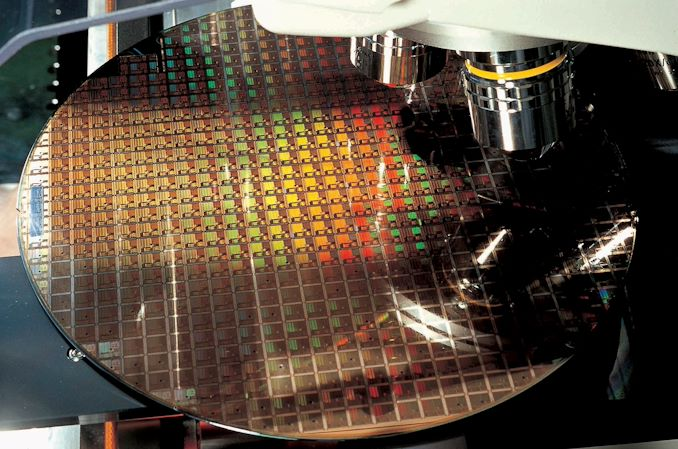
Hua Hong Group has developed advanced chip manufacturing technology capable of producing processors at the 7-nanometre level, according to people familiar with the matter who spoke to Reuters.

The development marks an important step in China’s effort to build a domestic semiconductor ecosystem capable of supporting artificial intelligence and high-performance computing.

The technology is being developed by the group’s contract chipmaking arm, Huali Microelectronics, which is preparing a 7-nanometre (nm) manufacturing process at its facility in Shanghai, the sources said.

If the technology is successfully deployed at scale, Hua Hong would become the second Chinese semiconductor manufacturer capable of producing chips at the 7-nm node, joining Semiconductor Manufacturing International Corporation, or SMIC, the country’s largest contract chipmaker.

The development signals steady progress in Beijing’s attempt to build advanced semiconductor capabilities at home after years of U.S. export restrictions targeting China’s access to cutting-edge chip technologies.

The ability to manufacture chips at 7 nm represents a key technological threshold for modern computing systems. Chips produced at this node are widely used in artificial intelligence accelerators, advanced mobile processors, data center hardware, and high-performance computing systems.

Although global leaders have moved to even smaller manufacturing processes such as 5-nm and 3-nm, the 7-nm node remains highly relevant for AI workloads and advanced computing applications.

Achieving this capability domestically is strategically significant for China because it reduces dependence on overseas semiconductor foundries and strengthens the country’s ability to support its rapidly expanding AI industry.

People familiar with the project said Huawei Technologies has been working with Hua Hong on developing the 7-nm manufacturing technology. The collaboration underlines Huawei’s central role in China’s semiconductor self-sufficiency push after the company was cut off from many Western chip suppliers and manufacturing partners due to U.S. sanctions.

Huawei has since invested heavily in rebuilding a domestic semiconductor supply chain, partnering with chip designers, fabrication plants, and equipment manufacturers across China. Such collaborations have become increasingly important as Beijing attempts to build an integrated technology ecosystem capable of designing, manufacturing, and deploying advanced processors without relying heavily on foreign technology.

Test Production And Early Industry Adoption

Research and development work on the 7-nm process began last year at Hua Hong Fab 6, the company’s most advanced semiconductor plant located in Shanghai. Sources said the facility is expected to start with relatively modest output, producing a few thousand silicon wafers per month by the end of the year, with capacity expected to scale gradually as manufacturing processes are refined.

Chinese graphics processor developer Biren Technology has reportedly already used the new production line for a tape-out — the stage where a chip design is finalized and turned into a physical prototype before mass manufacturing.

The development is particularly significant for Biren, which lost access to overseas manufacturing services after being placed on a U.S. trade blacklist in 2023. That move forced the company to stop using fabrication services from Taiwan Semiconductor Manufacturing Company, the world’s largest contract chipmaker.

Access to domestic manufacturing capacity, therefore, provides Chinese chip designers with an alternative path to bring advanced processors to market.

The domestic equipment ecosystem is emerging, underpinning progress among China’s semiconductor equipment makers.

Sources said Hua Hong’s work on the 7-nm process involved support from domestic suppliers, including SiCarrier, a Huawei-backed semiconductor equipment company. SiCarrier reportedly tested its manufacturing equipment at a facility in Shenzhen last year as part of efforts to develop indigenous tools for advanced chip production.

The rise of domestic equipment manufacturers is a critical element of China’s semiconductor strategy, as export restrictions have limited access to some of the most advanced machinery used in chip fabrication.

The Challenge of Technology Constraints

China’s semiconductor industry continues to face major technological hurdles despite these advances. The most sophisticated lithography systems required for the world’s most advanced chips are produced by ASML in the Netherlands. These extreme ultraviolet (EUV) machines enable chipmakers to produce processors at cutting-edge nodes such as 5-nm and 3-nm.

Chinese companies do not currently have access to EUV technology due to export controls.

Instead, Chinese foundries have relied on older deep ultraviolet lithography equipment to produce advanced chips using complex multi-patterning techniques. While technically feasible, this method can significantly reduce production efficiency and chip yields.

Analysts have said SMIC has used such techniques to produce 7-nm chips, although yields — the proportion of usable chips produced from each wafer — remain relatively low. However, it remains unclear how Hua Hong achieved its 7-nm capability, what equipment was used, or how efficient the process will be at scale.

Financial Backing And Industrial Consolidation

The push into advanced chip manufacturing is backed by significant investment. In December, Hua Hong Semiconductor announced plans to acquire a controlling stake in Huali Microelectronics and raise 7.56 billion yuan ($1.10 billion) to support research, development, and technological upgrades at the foundry.

The move is part of a broader effort by Chinese semiconductor companies to consolidate resources and accelerate progress toward advanced manufacturing capabilities.

The Hua Hong Group currently operates seven semiconductor fabrication plants. Fab 6 — where the new 7-nm technology is being developed — is its most advanced facility and currently produces logic chips at the 22-nm and 28-nm nodes. Another plant, Fab 5, focuses on mature technologies between 40-nm and 55-nm, which are widely used in automotive electronics, industrial systems, and consumer devices.

Investors reacted strongly to the report of Hua Hong’s technological progress, highlighting its importance. Shares in Hua Hong Semiconductor surged about 12% following the news, reflecting optimism that China’s semiconductor industry may be closing part of the gap with global leaders.

The progress is also another example of how China’s chip sector has continued to advance despite restrictions imposed by the United States. Although Washington has eased some export controls in recent months — allowing companies such as Nvidia to sell certain AI chips to Chinese customers — Beijing has continued encouraging domestic companies to adopt homegrown semiconductor technologies.

Despite the breakthrough, China’s semiconductor industry still faces a long path to matching global leaders. Companies such as TSMC and Samsung produce chips at far smaller process nodes and at vastly larger volumes, supported by decades of technological experience and access to the world’s most advanced equipment.

However, the emergence of a second Chinese manufacturer capable of producing 7-nm chips suggests that China’s semiconductor ecosystem is gradually strengthening.

For Beijing, the strategic goal is not necessarily to surpass global leaders immediately, but to ensure that critical technologies — particularly those needed for artificial intelligence, telecommunications, and national security — can be produced domestically if geopolitical tensions disrupt global supply chains.

The Petrodollar Arrangement Helped Cement the US Dollar as World Dominant Reserve Currency

0

The petrodollar arrangement—dating back to the 1970s—helped cement the US dollar as the world’s dominant reserve currency by ensuring oil is priced and traded primarily in dollars, creating perpetual global demand for USD and allowing the US “exorbitant privilege” of running large deficits.

The Bretton Woods system (1944) and subsequent post-WWII order, including the dollar’s role, were explicitly designed to foster a unified, stable international monetary and trade framework—preventing the competitive devaluations, trade wars, and currency fragmentation that contributed to the Great Depression and geopolitical instability in the interwar period.

The claim is that aggressive use of dollar-based sanctions; freezing reserves, restricting SWIFT access and military interventions—intended to preserve US-led order and dollar hegemony—are instead accelerating fragmentation: Countries like Russia, Iran, and increasingly others bypass dollar systems via alternatives; China’s CIPS payment network, yuan-settled oil deals, gold stockpiling, local-currency trade among BRICS+ nations.

This creates parallel financial channels: yuan-denominated oil for some often at discounts, dollar-based for others at premiums due to war/sanction risks. Central banks diversify reserves away from dollars; share down from ~70%+ in the early 2000s to under 60% recently, favoring gold and other assets less vulnerable to US seizure.

Sanctions “weaponization” erodes trust in the dollar as a neutral, reliable custodian—pushing neutral or adversarial states toward de-risking and multipolar alternatives. Evidence from recent analyses supports acceleration since 2022 (Russia-Ukraine war sanctions) and into 2025–2026: Russia’s pivot to yuan/ruble trade with China ~90% non-dollar.

BRICS+ experiments with local-currency settlements and gold-backed mechanisms. Emerging bifurcated oil markets tied to currency and alliances. Gradual reserve shifts, though the dollar remains dominant ~58–60% of reserves due to network effects, deep US markets, and lack of a single viable rival.

The irony highlighted is real: tools meant to reinforce dollar primacy (sanctions, military pressure to secure energy routes) incentivize circumvention, building parallel systems and hastening a more fragmented global financial order. Whether this leads to outright “end” of dollar dominance or just a slower erosion toward multipolarity remains debated—many sources note the dollar’s entrenched advantages persist, but trust erosion and geopolitical blowback are mounting headwinds.

BRICS currency initiatives, as of mid-March 2026, focus primarily on de-dollarization and building alternatives to the US dollar-dominated global financial system, rather than launching a single, unified “BRICS currency” in the traditional sense like a shared fiat money replacing national ones.

Discussions about a common currency have persisted for years, but practical efforts emphasize interoperable payment systems, local/national currency trade, and digital infrastructure to reduce reliance on the dollar and SWIFT. A full-fledged common currency remains a “distant dream” according to analyses.

Challenges include differing economic structures among members, sovereignty concerns, and lack of macroeconomic convergence. Proposals for a gold-backed or commodity-anchored unit sometimes called “The Unit,” with ~40% gold and 60% basket of BRICS currencies have been tested or prototyped in pilots, but not fully rolled out as a global alternative.

The most concrete progress centers on linking central bank digital currencies (CBDCs) for cross-border trade, tourism, and settlements. India’s Reserve Bank of India (RBI) proposed in January 2026 connecting national CBDCs via interoperable infrastructure. This “BRICS CBDC Bridge” or similar system builds on platforms like China’s mBridge which has processed billions in digital yuan-settled transactions. India, hosting the 2026 BRICS Summit later this year, is pushing this as a key agenda item to enable seamless, non-dollar payments.

Efforts include developing “BRICS Pay” or a blockchain-based and cross-border payment rail capable of high-volume transactions up to 20,000 per second in some reports. This aims to settle trade directly in national currencies or a digital clearing unit, bypassing dollar-based systems. Incremental steps involve expanding local-currency trade and exploring commodity-backed digital units.

Increased bilateral and local currency settlements. Diversification away from dollar reserves (global share dipped slightly in recent years). Experiments with gold/commodity backing for stability. Integration with existing systems like China’s CIPS. These build on 2025 summits and respond to sanctions/geopolitical pressures.

India has distanced itself from aggressive anti-dollar moves to maintain ties with the US (e.g., trade deals, oil purchase halts from certain sources). China pushes yuan dominance in some trades, creating friction. Pilots and tests are underway, with potential operational steps or announcements at the 2026 India-hosted summit.

Full implementation could stretch to 2026-2027 or beyond for broader adoption. While accelerating fragmentation, the dollar retains dominance ~56-60% of reserves due to network effects, liquidity, and lack of a single rival. However, trust erosion and parallel systems; yuan for oil in sanctioned contexts like Iran-China deals are mounting headwinds.

Recent X discussions reflect polarized views—some claim India “killed” a BRICS currency for US alignment, others note China/Russia dynamics favor yuan push—but official progress remains pragmatic and incremental, centered on digital bridges rather than a revolutionary new currency.

Nvidia Unveils Computing Platforms for Orbital Data Centers as AI Race Extends into Space

0

Nvidia on Monday unveiled a new generation of computing platforms designed for orbital data centers, marking a significant step toward deploying artificial intelligence infrastructure in space as demand for computing power continues to surge.

The announcement came during the company’s GTC 2026 conference, where CEO Jensen Huang described space-based computing as the next frontier for AI systems that increasingly require massive processing capacity close to where data is generated.

“Space computing, the final frontier, has arrived,” Huang said during the event. “As we deploy satellite constellations and explore deeper into space, intelligence must live wherever data is generated.”

The move marks a major shift as the AI industry explores unconventional solutions to meet the soaring demand for computing resources driven by generative AI, robotics, and autonomous systems.

A New Computing Platform Built For Space

At the center of the announcement is Nvidia’s Vera Rubin Space-1 Module, a computing platform designed specifically for use in satellites and orbital infrastructure. The module integrates Nvidia’s IGX Thor and Jetson Orin processors and is engineered to operate in size-, weight-, and power-constrained environments, conditions that are critical for space missions where hardware must be compact, energy-efficient, and resilient.

According to the company, the platform will support space missions being developed by several industry partners, including Axiom Space, Starcloud, and Planet Labs. These systems are expected to enable satellites to process data directly in orbit, reducing the need to transmit massive volumes of raw data back to Earth before analysis.

Such an approach could transform how Earth observation, communications, and deep-space exploration missions operate. Traditionally, satellites have collected data and transmitted it back to ground-based data centers for processing.

Nvidia’s approach aims to bring AI computing closer to the data source, allowing satellites to analyze information in real time. This capability could allow satellites to filter and process imagery, track weather systems, monitor infrastructure, or detect anomalies without waiting for instructions from Earth.

For example, Earth-observation satellites could use onboard AI to identify natural disasters, track deforestation, or analyze agricultural activity instantly, dramatically reducing response times. The development also aligns with a broader trend in computing known as edge AI, where processing occurs near the point where data is generated rather than in distant centralized servers.

The Engineering Challenges

Although the technology is promising, significant engineering hurdles remain before orbital data centers become widespread. One of the most difficult challenges is cooling high-performance computing systems in the vacuum of space.

“In space, there’s no convection, there’s just radiation,” Huang said during his keynote address.

“And so we have to figure out how to cool these systems out in space, but we’ve got lots of great engineers working on it.”

Cooling is a major issue because traditional data centers rely on air or liquid circulation to remove heat generated by processors. In space, heat must instead be dissipated through radiation, requiring new thermal designs and materials.

The Search For Power Beyond Earth

The push toward space-based computing is partly driven by the rapidly escalating energy demands of artificial intelligence. The construction of massive AI data centers on Earth has already been linked to rising electricity consumption and strain on power grids in several regions.

By contrast, satellites and orbital facilities could potentially harness virtually unlimited solar energy without the land and infrastructure constraints faced by terrestrial data centers. Technology companies are increasingly studying whether space could provide a long-term solution to the energy demands of large-scale computing.

In November, Google announced Project Suncatcher, an initiative exploring the feasibility of deploying computing infrastructure powered by solar energy in orbit.

The concept is also gaining traction among companies involved in space launch and satellite infrastructure. Last month, Elon Musk’s AI startup xAI was acquired by SpaceX in a deal valued at $1.25 trillion, a move widely interpreted as part of a strategy to build AI-powered computing systems in orbit.

SpaceX is one of Nvidia’s largest customers for AI chips, supplying hardware used to train and operate advanced AI models. Earlier this year, SpaceX also asked the Federal Communications Commission for approval to launch as many as one million satellites intended to support orbital AI infrastructure.

With generative AI models becoming larger and more computationally demanding, traditional data centers on Earth may struggle to keep pace with the scale of future workloads. Against this backdrop, space has become an alternative. But Space-based computing remains an ambitious concept with significant technical and regulatory challenges.