DD
MM
YYYY

PAGES

DD
MM
YYYY

spot_img

PAGES

Home Blog Page 2901

Nigeria Introduces New Routing Directive For PoS Transactions to Enhance Monitoring And Efficiency

0

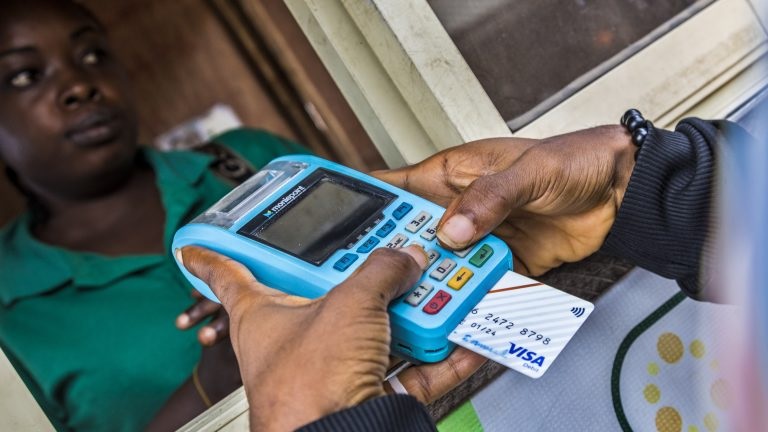
The Central Bank of Nigeria (CBN) has issued a new directive, that mandates Payment Service Providers (PSPs) to route all Point of Sale (PoS) transactions through certified Payment Terminal Service Aggregators (PTSAs) within 30 days.

This regulation announced on September 11, 2024, via a circular signed by Oladimeji Yisa Taiwo, on behalf of the CBN’s payments system management department, aims to enhance the security and oversight of electronic payments by only allowing authorized entities to process PoS transactions across the country.

Part of the circular reads,

“To achieve the objective of tracking electronic transactions in Nigeria, the Central Bank of Nigeria, in August 2011, granted a Payment Terminal Service Aggregator license to Nigeria Interbank Settlement System Plc. In furtherance of the above, the CBN hereby directs acquirers to route all transactions from PoS terminals at merchant and agent locations, whether physical or electronic.

“PoS terminals, through any CBN-licensed Payment Terminal Service Aggregator. PTSAs are required to send Po transactions to only processors certified by the relevant Payment Scheme, nominated by the Acquirer, and licensed by the CBN”.

The directive follows CBN’s recent diversification of the Payment Terminal Service Aggregator (PTSA) structure, previously managed by a single aggregator. It mandates that all PoS transactions, whether conducted at physical merchant locations or electronically, must be routed through any CBN-licensed PTSA. The aim is to decentralize PoS transaction routing, enhance transparency, and reduce reliance on a single aggregator.

Key Provisions of The Directive

1. Mandatory Routing of PoS Transactions: Acquirers must now route all transactions from Pos terminals, both physical and electronic, through any of the CBN-licensed Payment Terminal Service Aggregators (PTSAs). This ensures that all transaction data is captured and monitored by authorized entities.

2. Certification of Processors: PTAs are required to send Po transactions only to processors certified by relevant payment schemes. These processors must be nominated by the acquirer and licensed by the CBN to guarantee secure and transparent payment processing.

3. Flexibility for Acquirers: Acquirers have the autonomy to select their preferred processors and PTA, providing them with greater flexibility in managing their transaction processes. This allows for tailored solutions that meet their specific needs while adhering to regulatory requirements.

4. Device Configuration: Payment Terminal Service Providers (PTSPs) are instructed to ensure that their PoS devices and applications are correctly configured. This compliance measure guarantees that all transactions are routed through licensed PTAs as directed by the acquirers.

5. Monthly Reporting Requirements; PTSPs and PTSAs are mandated to submit detailed monthly reports to the CBN. PTSPs must report the number of merchants and agents they manage, as well as the services used to route transactions. PTSAs, in turn, must submit data on all processed transactions. These reports are to be sent to the CBN’s Director of Payments System Management Department within seven days after the end of each month.

6. Compliance Notification: PSPs are given a 30-day window to align their operations with the new requirements. Both PTSPs and PTSAs must notify the CBN in writing of their compliance within this period, confirming that they have regularized their operations as per the directive.

This new directive is coming Following the expiration of the deadline for PoS operators to register with the Corporate Affairs Commission (CAC).

Chipper Cash Secures Broker-Dealer License in Ghana, Expanding Investment Services

0

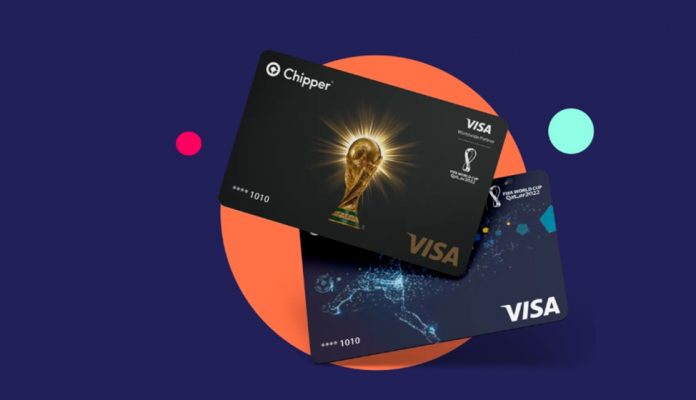
Chipper Cash, a cross-border payment platform, has been granted a broker-dealer licence by Ghana’s Securities and Exchange Commission (SEC).

This license grants Chipper Cash the legal authority to provide brokerage services, allowing both individual and institutional clients to engage in the buying and selling of securities directly through the platform.

Speaking on the license, Dion Jon Taylor Samson, Chief Executive Officer of Chipper Cash Ghana said,

“It is very important for every entity that enters a market to adhere to the rules and regulations set by the regulatory bodies. While it can be time-consuming and sometimes frustrating, it ensures longevity in the business and protects both the company and its customers. We are excited to bring innovations in the financial market into the digital payment space.”

Additionally, users of the Chipper Cash app will soon be able to benefit from personalized investment advice powered by Al and gain access to Initial Public Offerings (IPOs), opening opportunities to invest in companies as they go public. The introduction of fractional investments is another key feature on the horizon, allowing users to invest smaller amounts in high-priced stocks or ETFs, further democratizing access to the stock market.

Founded in 2018 by Ham Serunjogi from Uganda and Maijid Moujaled from Ghana, the Chipper Cash platform enables free instant cross-border mobile money transfers in Africa as easy as sending a text message. The fintech has been steadily expanding its portfolio of global licenses, now holding 55 worldwide, including in the US. Recall that the fintech recently resumed its US operations after transitioning to a new banking partner, enabling seamless money transfers from the US to African markets like Ghana, Nigeria, and Uganda.

In May this year, the company unveiled a new payment links feature for easy hassle-free transactions. The payment Links offer a simple, hassle-free way to request payments. With just a few clicks, users can create a custom payment link for any amount and share it with anyone, anywhere in the world. When the recipient clicks the link, they’ll be taken to a secure, Chipper-hosted page where they can complete the payment with ease. The feature is designed to make sending and receiving payments more seamless, whether for personal or business transactions.

Chipper’s mission has always been to provide seamless, accessible financial solutions that empower its customers across Africa and beyond. With its new broker-dealer license in Ghana, the fintech continues to solidify its position as a leading fintech in Africa, offering innovative financial solutions that bridge the gap between traditional finance and digital payments.

Property Rights And Titling Land in Nigeria – From Invention Society Era to Innovation Society Era

0

In my book which received IGI Global “Book of the Year” award in 2010 (link on IGI Global here https://www.igi-global.com/newsroom/archive/igi-global-announces-winner-2010/712/ ), and upon which I received an invitation from Harvard Business Review, I dropped some lines: no country can develop without property rights. 

In other words, if you lack property rights, you will not advance as a nation. I tracked 2,000 years of GDP of some nations and posited that property rights (including IP rights) are a condition precedent to transmute from an invention society era to an innovation society era. Simply, there is no shortcut.

Amazingly, Nigeria gets the memo: “In a much-needed move, the Ministry of Housing and Urban Development has joined forces with the World Bank to tackle Nigeria’s land registration woes, aiming to bring order to a chaotic system where over 90% of land remains untitled…The Ministry signed a landmark agreement with the World Bank to register all land parcels within the next five years, digitize the country’s land records, and formalize transactions to bring the system in line with global standards.” 

If you title those lands, you make them available in the balance sheets of banks/financial institutions, and that means you have created “capital” out of them, making them possible for people to trade (credits, loans, etc) on them. A very commendable policy

Expert Picks Showing 100X In Q4: Dog WifHat (WIF), Floki (FLOKI), Pepe (PEPE) & Yeti Ouro (YETIO)

0

Meme coins have attracted quite a lot of attention in the world of cryptocurrencies because of the high profits they may bring. This report delves into the ongoing prices, pricing trends, and investment potential of four notable meme coins: Some of the prominent dollars previously invested in meme tokens are Dog Wif Hat (WIF), Floki (FLOKI), and Pepe (PEPE) Yeti Ouro (YETIO). Thus, it is evident that each coin has something to offer investors; Yeti Ouro (YETIO) is the best investment option that can yield a 100x profit.

1.  Dog WifHat (WIF)

WIF currently has a price of  $1.52, which witnessed minor intraday volatility of 1.02%. However, the coin has displayed some instability, and according to recent news, it could reduce by 12% if it does not hold the current support level. However, there are positive outlooks, with analysts expecting WIF to hit $10 by 2025 based on influential changes and huge partnerships.

In the foreclosing-run forecast of WIF, market experts anticipate it will be $7 by 2025 and $40 by 2030. But from a long-term perspective, absurdity seems more dominant as prices remain below the average, indicating a potential price correction. The investor must balance volatility returns in the long run.

2.  Floki (FLOKI)

Floki is an example of a meme coin that attracted investors and achieved massive success in the market through its user-organized activities and constant project releases. The price analysis of FLOKI has indicated that it has been very volatile, and the price spiked within the last 10.10% in the past 30 days. The coin experienced 13 green days out of the 30 days, equivalent to only 43% of a positive trend in the daily performance. Looking at the recent situation and having the Fear & Greed Index at 31 Fear, there are still positive long-term outlooks for FLOKI.

DWF Labs has revealed its intentions to acquire $12 million of FLOKI tokens directly from the market and the Floki treasury. Such a strategic investment is believed to strengthen the coin’s market position and make it more liquid.

Such long-term predictions as FLOKI are more favorable. Predictors predict that the following option can increase the price by 228.66% by the 12th of October 2024 to $0.00041. It is further expected that by 2025, the average cost will likely be between $0.0003189681 and $0.000379962. Shortly, business analysts believe it is possible that FLOKI could hit a maximum value of $0.00249975 by 2030.

3.    Pepe (PEPE)

At the time of writing, the price of Pepe (PEPE) is $0.000009977. The coin is currently in 24th place according to market capitalization on CoinMarketCap and has demonstrated the ability to touch resistance levels of $0.00001096 and $0.00002590.

Another advantage of PEPE is the possibility of developing it, as some experts foresee that PEPE could pump 100x in 2025. However, the favorable outlook for the value of the coin fundamentals shall win the day with market forces and investors’ sentiments. Like other meme coins, PEPE has specific highs and lows because its fluctuating prices offer equal opportunities and drawbacks for investors.

4.   Yeti Ouro (YETIO): The Rising star

Yeti Ouro, or YETIO, is still in its presale stage and is sold at $0.012. It can be seen that this early stage of pricing allows investors to enter into the

This early pricing stage allows active investment unity among the four analyzed coins. With such fundamentals, analysts believe that YETIO can grow up to 100 times and thus be the perfect investment for people willing to risk high-return investments. The  coin will be available for presale at the cost of $0.012, which is currently extremely low, which implies that it has a potential for a high increase in price, which will make it an attractive asset for those who want to invest in the next altcoin that will experience a dramatic price growth.

Conclusion

Although Dog Wif Hat (WIF), Floki (FLOKI), as well as Pepe (PEPE) are all offering investment opportunities, Yeti Ouro (YETIO) is undoubtedly the best investment opportunity for anyone willing to make more than ten times his investment. It was previously going for a presale price of $0.012 and the potential for 100X returns, making YETIO an attractive investment opportunity in the growing meme coin space. It is critical to evaluate the unsustainability of cryptocurrency fluctuation while simultaneously stressing the excellent chance of further YETIO growth.


Join the Yeti Ouro Community:

European Central Bank Cuts Interest Rates by 0.25 Percentage Points

0

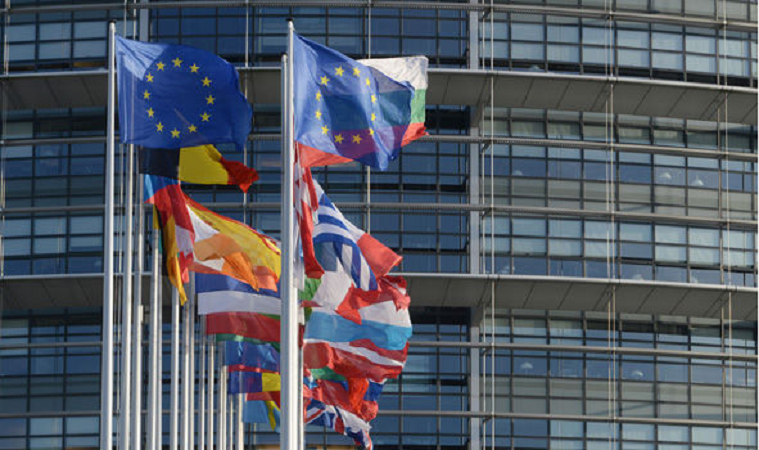
The European Central Bank’s (ECB) recent decision to cut interest rates by 0.25 percentage points marks a significant move in its monetary policy, reflecting a strategic response to the current economic climate. This reduction, the second of its kind this year, aims to stimulate economic growth by making borrowing more affordable for businesses and consumers.

The ECB’s rate cut comes at a time when inflation rates have been falling, aligning closer to the central bank’s target of 2%. The decrease from a peak of 10.6% in October 2022 to 2.2% in August 2024 indicates a substantial easing of price pressures, allowing the ECB to shift its focus towards bolstering economic growth and stability.

Analysts are divided on the future trajectory of the ECB’s interest rate policy. Some anticipate a pause in rate adjustments until December, while others speculate on the possibility of further cuts before the year’s end. The decision-making process is influenced by various factors, including wage pressures, inflation data, and oil prices.

Here are some potential effects of this monetary policy action:

Stimulated Borrowing and Investment: Lower interest rates make borrowing cheaper, which can encourage businesses and consumers to take out loans for investment and spending, potentially stimulating economic growth.

Increased Consumer Spending: With cheaper borrowing costs, consumers may be more inclined to make large purchases, such as homes and cars, which can drive economic activity.

Currency Depreciation: A rate cut can lead to a depreciation of the euro, as lower interest rates may reduce foreign investment in Eurozone assets, potentially boosting exports due to more competitive pricing.

Pressure on Banks’ Profit Margins: Banks may face challenges in maintaining their profit margins, as the gap between what they earn from lending and what they pay on deposits can narrow in a low-interest-rate environment.

Inflationary Pressures: While the current rate cut is a response to low inflation, there is always a risk that sustained low rates could lead to higher inflation in the future if the economy overheats.

Impact on Savings: The rate cut could discourage savings, as the returns on savings accounts and other low-risk investments decrease, which might lead to a search for higher-yielding, and potentially riskier, investments.

The ECB’s cautious approach to rate cuts is informed by the need to balance growth stimulation with the control of inflation. Despite the current reduction, experts do not foresee a rapid return to the ultra-low interest rates that characterized the pre-pandemic period. Instead, they predict a gradual easing, with the possibility of only one more rate cut this year.

As the ECB navigates the complexities of the post-pandemic recovery and the aftermath of geopolitical tensions, its policies will continue to be closely monitored. The central bank’s actions not only impact the Eurozone but also set a precedent for other central banks, including the Federal Reserve, which is expected to commence its own rate-cutting cycle.

The ECB’s recent rate cut underscores the delicate balance central banks must maintain in fostering economic growth while ensuring inflation remains in check. With the next ECB meeting scheduled for October 17, all eyes will be on the bank’s governing council as it deliberates the path forward in an ever-evolving economic landscape.