
DD
MM
YYYY

PAGES

DD
MM
YYYY

spot_img

PAGES

Home Blog Page 2903

Nigerian Foreign Reserves Record $2.35bn Monthly Inflow For The Past Seven Months – Edun

0

Minister of Finance and Coordinating Minister of the Economy, Wale Edun, has announced that Nigeria’s Central Bank foreign reserves have seen a significant net inflow of $2.35 billion monthly over the past seven months of 2024.

This development, according to Edun, has contributed to greater stability in the naira and the country’s foreign exchange market, reflecting the government’s ongoing efforts to stabilize the economy amid challenging global conditions.

Speaking at the Access Bank annual corporate forum 2024 in Lagos, the minister highlighted that the continuous inflow has boosted the country’s gross reserves and alleviated concerns about currency volatility, a critical issue following the multiple exchange rate system in the past. Edun highlighted the positive outcomes of these changes.

“We have relative currency stability. And of course, the all-important margin of the rates. We’ve seen a gradual elimination of multiple exchange rates,” he said.

Foreign Reserve Growth

The increase in foreign reserves is seen as a major contributor to the enhanced liquidity in the country’s foreign exchange market. The Central Bank of Nigeria (CBN) reports that the foreign reserves surged to a historical $34.66 billion by June 2024, reflecting investor confidence and an inflow of foreign portfolio investments spurred by rising interest rates and naira devaluation. These factors incentivize investors to see Nigeria as a favorable market for returns, bolstering the reserve base.

Furthermore, remittance inflows also recorded significant growth, surging by 130% to $553 million as of July 2024, according to the CBN. This increase signals a substantial inflow of foreign currency into the country, strengthening the stability of the naira and providing a cushion against potential external shocks.

Increase in Government Revenue

Edun also pointed out the fiscal side of the government’s strategy, focusing on increasing revenue generation. He stressed that government revenues are growing but acknowledged that Nigeria’s tax-to-GDP ratio, at just 10%, remains one of the lowest globally. The country’s revenue-to-GDP ratio is around 15%, a figure the government aims to improve through targeted fiscal reforms and infrastructure investments.

However, the minister clarified that the government does not intend to compete with the private sector for revenue but rather focuses on essential social and infrastructural investments that will spur long-term growth.

“The key to government revenue is not so much that government has revenue to compete with the private sector. It’s the fundamentals, the social and the key infrastructure spending. The social safety net spending,” Edun explained.

Oil Production and Export Diversification

In a bid to shore up fiscal revenues, Edun reiterated the government’s commitment to ramp up crude oil production. Nigeria is on track to hit its 2 million barrels per day (bpd) oil production target by the end of 2024, a significant achievement given the numerous disruptions that have plagued the sector in recent years, including theft and infrastructural decay.

Beyond oil, Edun emphasized the need for export diversification, particularly in the service sector. With Nigeria’s young and relatively skilled population, there is a growing potential for the country to become a major exporter of services. This focus on diversification, he said, aims to reduce the country’s dependence on oil revenues and create a more resilient economy capable of weathering global economic shifts.

The recent improvements in Nigeria’s foreign reserves and the push for greater export diversification come at a critical time when the government is striving to stabilize the economy and address structural challenges. While high inflation, unemployment, and fiscal deficits remain pressing concerns for Nigeria, Edun expressed conviction that the current upward trajectory in reserves and remittances could provide a buffer as the government works on long-term reforms.

However, these positive indicators have had to contend with many economic-stymieing challenges. For instance, the multiple exchange rate system, though gradually being phased out, had distorted the foreign exchange market for years, creating arbitrage opportunities that hurt the broader economy.

Economists have emphasized that the role of foreign investors and international partnerships will be key as Nigeria aims to consolidate these gains. They note that ensuring the continued inflow of capital through sound policies and economic stability will be crucial for sustaining the upward momentum in the country’s reserves and currency strength.
RCO Finance’s (RCOF) Ethereum Token Presale Crosses $2 Million Raise as Investors Eye 1,000x Returns

0

Ethereum Presale Token RCO Finance (RCOF) has smashed through the $2 million milestone, representing the amount of money the presale has raised.

This development comes as investors look to RCOF for a 1,000X return, having incurred notable losses from the recent market declines. Whether RCOF can pull off a feat that considerable remains to be seen.

Let’s find out what’s behind RCOF’s $2 million success and if it can achieve a 1,000X growth.

RCO Finance’s AI Tool Attracts Attention To Presale

One of the core factors behind RCO Finance’s presale success is the interest market players have demonstrated in accessing its AI tool. This AI tool, a robo-advisor, is a program to assist traders in making trade decisions.

The robo-advisor uses its analytic ability to determine the suitability of an asset for investment by investigating trends, patterns, sentiments, and indicators.

This tool analyzes every asset an investor shows interest in and provides insight into their investment prowess via prediction. It improves investors’ investment decisions for more gains.

It may also draft personalized strategies to help investors achieve their desired results and, by extension, their financial goals.

RCO Finance’s robo-advisor functions like a human advisor: analytic, intelligent, and efficient. However, the former is cheaper, enabling users to save more money and retrieve a massive return over a given period. Given the capabilities of the robo-advisor, Crypto traders are swarming to RCO Finance, trying to grab a spot and gain access to this intelligent tool for free.

Ethereum Presale Token Draws Attention To Trading Platform

Another reason RCO Finance has been gaining traction is because of its flexible trading platform. The exchange enables investors to trade as many assets as they desire from a list comprising over 120,000 digital assets. These assets, existing within over 12,500 classes, will allow investors to access multiple sections of the financial market and maximize gains from portfolio diversification.

Given its integration into DeFi, RCO Finance allows users to stake their assets for up to 86% APY and earn rewards subsequently. Users can also firm yields, borrow and lend liquidity at low interest rates.

The platform will issue a debit card to every user to facilitate transactions with local banks so that investors can spend their profits in real time.

RCO Finance is heavily secure, thanks to its incorporation of Fireblocks’ security resources to protect users’ assets and SolidProof’s audit of its smart contracts for smooth transactions.

By adopting a KYC-free approach, RCO Finance is committed to protecting users’ privacy and establishing a decentralized trading environment.

Its user-friendly interface ensures that newbies can easily access and navigate the platform, further increasing its attraction to potential users.

RCOF’s Presale Promises Unprecedented Gains, Attracts Users

Also, RCOF’s presale has driven significant interest in RCO Finance as investors seek to take advantage of its profit potential, which remains attainable despite the ups and downs of the markets.

The presale promises up to 30X returns for investors who join at its earliest stage. However, when the presale ends, investors in Stage 2 can pick up a 16X ROI.

Currently, RCOF is trading at $0.0343, and it is gearing up to step into Stage 3 at $0.0558 in the next few days.

Entering Stage 3 will see the token’s price increase by 63%. When the price hits $0.6, investors will sit on a 1,600% gain to make a 16X profit at the final stage.

Hence, with a $10,000 investment in RCOF, investors can realize $160,000 at the end of the token’s presale. Its impressive presale performance suggests that RCOF will peak at significant price levels, making it an ideal crypto to invest in for gains.

Moreover, investors will receive quarterly dividends, tier-based rewards, airdrop rewards, voting privileges, and the opportunity to acquire RCOF at a 50% discount, provided they purchase the token now!

As investors aim to achieve a 1,000X return on investment, the robo-advisor and the presale will give them a head start to reaching this target with RCO Finance.

For more information about the RCO Finance Presale:

Visit RCO Finance Presale

Join The RCO Finance Community

Yahaya Bello And Nigeria [videos]

2

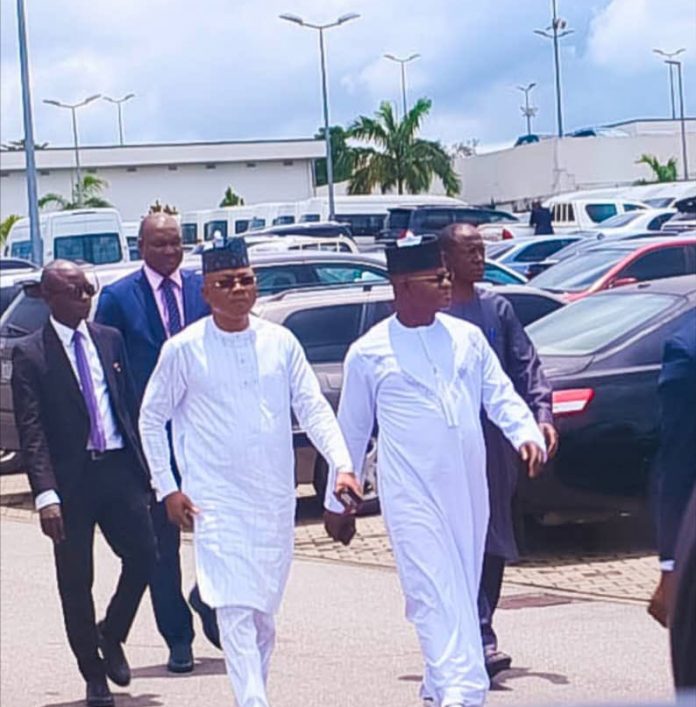
What a nation and Yahaya Bello. The video on what happened when EFCC wanted to arrest him explains that Nigeria has more work ahead. Even Trump did what he had to do when they wanted him. Even Biden allowed the FBI to search his properties for the classified documents.

But here, an ex-Governor is playing a Nollywood script, and everyone thinks it is a natural sequence for a nation. Yet, EFCC may need to improve its processes; it was said that the guy came to EFCC but EFCC ignored him, and later, EFCC went to arrest him.


U.S. Fed Cut Interest Rate By 0.5%, Increasing Pressure on Nigeria’s Central Bank to Adjust Rates

0

The U.S. Federal Reserve made a bold move on Wednesday by cutting interest rates by 0.5%, a decision that has set the stage for what many analysts predict will be a sustained period of monetary easing.

With this significant reduction, the Federal Reserve aims to stabilize inflation while addressing concerns about the U.S. job market. However, the move, which signals a more aggressive approach to lowering borrowing costs, is expected to impact decisions in other central banks around the world, including the Central Bank of Nigeria (CBN).

In a statement from the Federal Open Market Committee (FOMC), the Federal Reserve expressed increased confidence that inflation is moving steadily towards its 2% target. The central bank sees risks related to both inflation and employment as more balanced than before, signaling that its current approach may continue to adapt depending on these metrics.

However, the decision was not without internal debate. Governor Michelle Bowman, known for her more cautious stance on monetary policy, voiced her preference for a smaller cut of 0.25%, diverging from the majority on the committee. Despite this, the committee projected that additional cuts are expected through the end of 2024 and beyond, with a further 0.5% reduction anticipated by year’s end, another 1% cut expected in 2025, and a final 0.5% drop by 2026.

“This action underscores our increasing confidence that, with proper adjustments to our policy, the labour market can remain robust while inflation steadily declines toward our 2% target,” Fed Chair Jerome Powell said.

These adjustments aim to achieve a long-term federal funds rate of between 2.75% and 3.00%, slightly higher than previous projections, reflecting the bank’s updated economic outlook.

Implications for Nigeria

As Nigeria’s inflation rate shows signs of easing after two consecutive months of decline, there is growing pressure on the CBN to follow the global trend and adjust its interest rates to stimulate economic growth. While the Federal Reserve’s decision is rooted in U.S. economic conditions, economists believe that its broader implications could offer Nigeria a chance to recalibrate its monetary policy to spur investments and stabilize the naira amid growing economic challenges.

Nigeria’s Monetary Policy Committee (MPC) will be meeting next week, where the central bank is expected to discuss possible interest rate adjustments.

With global borrowing costs expected to fall, Nigeria risks becoming less attractive to investors if it does not adjust its rates accordingly. Lowering the Monetary Policy Rate (MPR) could encourage borrowing, promote investment, and spur consumer spending.

However, the CBN faces a delicate balancing act. Experts believe that while lower rates could boost growth, they also risk reigniting inflation, especially given Nigeria’s vulnerability to imported inflation. The rise in the cost of imported goods, driven by currency depreciation, has already contributed to the country’s high inflation levels.

With the Federal Reserve’s latest move, economists note that the CBN may consider lowering its own borrowing costs to stay competitive, especially since global interest rates are key factors in foreign investment decisions.

The following have been noted as potential benefits of lower interest rates:

U.S. Rate Cuts Could Boost Nigeria’s Foreign Investments and Stabilize Naira

Additionally, economists believe that the U.S. interest rate cut presents an opportunity for Nigeria to attract foreign portfolio investments (FPIs). Historically, lower global rates push investors to seek higher returns in emerging markets like Nigeria. By adjusting its own rates, the Central Bank of Nigeria (CBN) could create a favorable environment for foreign investors, boosting liquidity across sectors and driving stock market performance.

Increased foreign investments would also provide companies with the capital to expand and help stabilize the naira through improved foreign exchange inflows—crucial as Nigeria faces declining oil revenues and volatile crude prices.

Stabilizing the Naira

The U.S. rate cut could relieve pressure on the naira. As the dollar weakens, the exchange rate could stabilize, reducing the cost of imports and easing inflation. A more stable naira would enhance Nigeria’s foreign reserves, giving the CBN more flexibility in managing monetary policy and reducing further currency depreciation.

Impact on Oil Demand and Growth

Nigeria’s oil-dependent economy may see a boost as lower interest rates in major economies stimulate global demand for crude oil. Increased oil sales could improve foreign exchange earnings and positively impact Nigeria’s GDP.

Nigeria Threatens to Jail Employers Paying Below N70,000 Minimum Wage, But It Could Compound Unemployment Crisis

0

The Federal Government of Nigeria has issued a firm warning to private sector recruitment agencies, emphasizing the need to adhere to the newly established N70,000 minimum wage.

The government stressed that failure to comply with this mandate would not be tolerated, underscoring that the new wage structure is essential to address the harsh economic realities faced by workers in Nigeria.

Speaking at the 13th Annual General Meeting of the Employers Association for Private Employment Agencies of Nigeria in Ikeja, Lagos, the Permanent Secretary of the Federal Ministry of Labour and Employment, Alhaji Ismaila Abubakar, reiterated that the N70,000 minimum wage applies to both government and private sector employees.

Represented by the Director of Employment and Wages, John Nyamali, Abubakar clarified that paying workers less than the minimum wage constitutes a crime punishable by law.

According to Abubakar, “The minimum wage is now a law, and as a result, it is a punishable crime for any employer to pay less than N70,000 to any of its workers.”

He added that the private employment agencies should ensure that the new wage floor is included in any employment contract they secure. Abubakar was clear that after all deductions, no worker should receive less than N70,000 as take-home pay, warning that non-compliance could result in severe legal penalties.

The Federal Government’s commitment to enforcing the new wage structure comes amid growing concerns over the rising cost of living in Nigeria, spurred by high inflation and the removal of fuel subsidies earlier this year. President Bola Tinubu had promised to implement the wage increase by May 1, aiming to alleviate the financial burden on the country’s workforce.

Concerns and Ambiguities

While the Federal Government’s intentions are clear, certain ambiguities surrounding the implementation of the new minimum wage persist. The President of the Employers Association for Private Employment Agencies of Nigeria, Dr. Olufemi Ogunlowo, has called for clarification on whether the N70,000 wage is based on net or gross income, urging the government and the Nigeria Labour Congress (NLC) to resolve this uncertainty. Ogunlowo’s remarks highlight the need for a more comprehensive explanation of the wage laws, as employers seek clarity to ensure compliance.

Government officials have yet to provide a definitive answer on whether the wage is calculated before or after deductions such as taxes and pension contributions. This lack of clarity is believed to have led some employers to delay full implementation as they wait for more detailed guidelines.

The Troubling Unemployment Reality on the Ground

While the government pushes for strict adherence to the N70,000 minimum wage, the reality on the ground paints a more complex picture. With median incomes in Nigeria reportedly hovering around N300,000 per year (below N30,000 per month), many workers earn far less than the newly prescribed minimum. The government’s push to punish employers who fall short of this target has raised eyebrows, with critics describing the move as “draconian”—especially as the government itself has yet to fully implement the new wage.

As of now, only a handful of states have committed to paying the N70,000 minimum wage, with many still grappling with funding challenges. For most Nigerian workers, particularly those in the informal sector surviving on low salaries, the wage increase remains a distant promise in a rapidly deteriorating economy.

Potential Implications for the Nigerian Labor Market

While the intent behind the new minimum wage is to support workers, there are growing concerns about its potential to further disrupt Nigeria’s already fragile employment market. With the unemployment rate exceeding 33%, many argue that forcing private employers to meet the wage increase could inadvertently lead to layoffs, particularly in the informal sector, where many businesses operate on thin profit margins.

Employers in industries such as retail, hospitality, and manufacturing have expressed worries that the new wage law if enforced without proper economic adjustments, could push businesses to cut their workforce to remain viable.

The International Labor Organization (ILO) has previously warned that wage policies not carefully tailored to the realities of developing economies could backfire, resulting in higher unemployment rates and increased poverty levels.

Against this backdrop, labor experts argue that the government must balance wage enforcement with support mechanisms that encourage business growth. They note that the risk of over-regulating an already strained private sector could hinder job creation and further aggravate the unemployment crisis.