DD
MM
YYYY

PAGES

DD
MM
YYYY

spot_img

PAGES

Home Blog Page 292

ZCash Drops 18% in Q4, POL Gains 7%, While BlockDAG’s Presale Crosses $425M with 27B Coins Sold Ahead of Genesis Day

0

ZCash price prediction appears bleak, with the coin down nearly 18% this quarter. Polygon has managed a modest 7% gain supported by increased on-chain payment activity, yet both assets show signs of weakening momentum.

ZCash lacks near-term catalysts to reinvigorate growth, while Polygon’s staking rewards remain flat and fail to encourage wider participation. These limitations highlight the challenges traditional altcoins face in sustaining buyer interest.

Offering a more tangible model is BlockDAG (BDAG), combining presale rewards with immediate user incentives. Over $425 million has been raised, more than 27 billion coins sold, and ROI has reached 2940% from Batch 1 to Batch 31. The TGE code further enhances early engagement ahead of Genesis Day on November 26. 

POL Faces Adoption Gains: Reward Structures Remain Flat

Polygon’s price surge has shown resilience against market volatility, benefiting from higher transaction throughput and increased usage in gaming and enterprise payments. This 7% surge highlights the network’s growing adoption and strengthens its presence in key sectors. Strong partnerships and ongoing scalability updates indicate that Polygon is focusing on long-term utility.
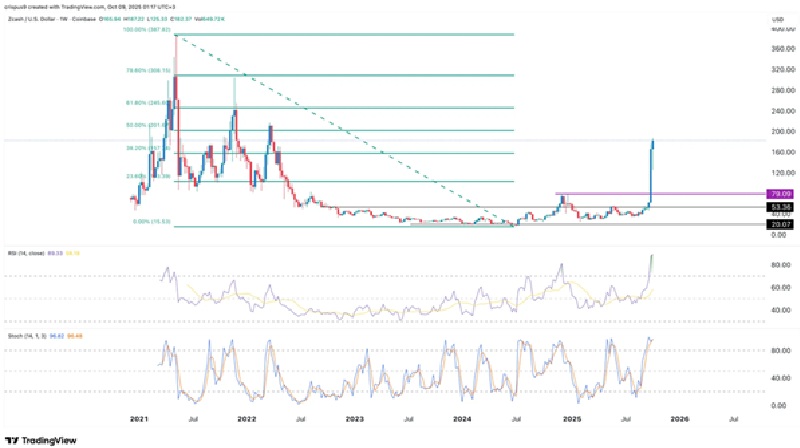
Despite these developments, staking rewards have remained flat, and no new incentive mechanisms have been introduced. The static reward system may limit broader participation and reduce the appeal for long-term holders. Without changes, upside potential could remain constrained even as payment volumes grow.

ZCash Confronts Weak Momentum Amidst Market Pressure

ZCash has seen its recent price action reflect declining buyer confidence. Once valued for privacy and anonymity, it now faces challenges in maintaining relevance as regulatory scrutiny and competition increase. Speculative momentum has become the primary driver, leaving the coin vulnerable to further declines.

Overall, ZCash’s technology remains strong, but the lack of new utility or exchange developments has slowed growth. Decreasing liquidity on major platforms adds pressure on holders. Without structural catalysts or enhanced rewards, ZCash risks testing lower price levels, potentially falling below $20 if the current trend continues.

BlockDAG Combines Measurable Rewards with Real-World Momentum

While ZCash and Polygon face challenges from stagnant incentives and buyer uncertainty, BlockDAG has structured its presale around clear, reward-driven fundamentals. The Leaderboard TGE system ranks participants by total purchase volume between October 7 and November 26, determining the timing of their coin airdrops at launch. Higher ranks result in faster payouts, merging transparency with tangible benefits and encouraging active participation throughout the presale period.

The presale numbers demonstrate this traction. Over $425 million has been raised with more than 27 billion BDAG coins sold. Since Batch 1, the project has delivered a 2940% ROI, signaling unprecedented engagement. Batch 31 currently trades at $0.0304 per coin, while a limited-time opportunity to secure BDAG at $0.0015 has fueled rapid adoption. Over 3 million mobile miners are already contributing to network activity, and real hardware is deployed to support ongoing operations, giving the ecosystem a sense of measurable progress.

BlockDAG’s global presence is reinforced by its Formula 1® partnership with BWT Alpine, which spans events in Singapore and Austin. This collaboration brings visibility and legitimacy rarely seen in presale projects, helping the network reach audiences far beyond typical crypto communities.

In addition, Keynote 4, “The Launch Note,” outlines the roadmap to Genesis Day, ensuring participants can track the journey from presale to live operations. By combining structured incentives, tangible milestones, and real-world partnerships, BlockDAG contrasts sharply with speculative projects like ZCash and incremental updates like Polygon, presenting a presale built on verifiable engagement and practical utility.

Quick Breakdown

The contrast between ZCash, Polygon, and BlockDAG highlights a shift in buyer priorities, emphasizing tangible functionality over speculative forecasts. ZCash’s technical challenges and Polygon’s flat incentive model illustrate projects that have slowed despite solid foundations. BlockDAG has taken a different path by pairing presale performance with measurable rewards, building both community engagement and buyer confidence.

With over $425 million raised, more than 27 billion coins sold, and the TGE code reshaping early participation, BlockDAG sets a new standard for presale credibility. As Genesis Day nears, the focus is on systems that deliver transparency, real traction, and structured benefits rather than mere price speculation.

Presale: https://purchase.blockdag.network

Website: https://blockdag.network

Telegram: https://t.me/blockDAGnetworkOfficial

Discord: https://discord.gg/Q7BxghMVyu
How BlockDAG’s Genesis Day Rewards Early Ranks With Bigger Profits and Faster Growth!

0

Timing often defines success in crypto, and BlockDAG (BDAG) is redefining this principle through a unique rank-based airdrop model that makes every second count. Unlike standard launches where everyone gains access simultaneously, this system prioritizes users by rank, rewarding early and dedicated participants with faster coin access and higher visibility.

Each rank determines how soon holders can trade, sell, or access coins, ranging from immediate release to 24-hour waits. With Genesis Day confirmed for November 26 and the “TGE” code live, this event is not just a presale but a strategic race for early access, prime liquidity, and profit positioning in one of crypto’s most anticipated launches.

Access Times Determined by Rank Placement

BlockDAG’s rank-based airdrop connects directly to total purchases made before November 26 using the code “TGE.” This ranking mechanism transforms the presale into a competitive structure where timing and commitment matter.

Top-ranked users (1–300) receive coins instantly on launch. Ranks 301–600 unlock after 30 minutes, 601–1000 after one hour, 1001–1500 after two hours, 1501–2000 after four hours, and 2001–5000 after six hours. Those ranked beyond 5000 experience a 24-hour delay.

Early participants thus gain not only price advantages but also exclusive market entry ahead of lower ranks. By the time the 24-hour group accesses their holdings, the top ranks could already be setting price trends and capitalizing on early liquidity opportunities. This clear and structured approach stands apart from most projects that issue random or simultaneous airdrops, which often trigger volatility and sell-offs.

The Power of the “TGE” Code for Competitive Advantage

The “TGE” code functions as more than a discount; it’s the main access key to this ranking ecosystem. All coins acquired using this code before Genesis Day count toward a buyer’s rank, applying to all earlier purchases as well.

This means long-term holders benefit equally, as their full balance aligns with their final rank status. Moreover, BDAG is now available at just $0.0015 per coin, a remarkable advantage compared to Batch 31’s official price of $0.0304.

Buyers from previous batches who expand their holdings through the code can leap higher on the leaderboard, showing that consistent participation matters as much as timing. This structure rewards ongoing engagement before the clock runs out. For BlockDAG, it drives steady presale momentum and visibility.

For users, every extra purchase means not only more coins but also improved ranking and earlier trading access. The crypto presale has already exceeded $425 million, 27 billion coins sold, a clear signal that participants are acting fast.

BlockDAG’s Infrastructure Is Fully Operational

BlockDAG is beyond the concept stage; its key infrastructure is already in motion. The Awakening Testnet is running live, handling actual transactions, and preparing validators for mainnet deployment.

Publicly accessible tools such as the blockchain explorer and Dashboard V4 allow users to view mining activity, wallet balances, and transaction data in real time. Over 20,000 X-Series miners have been sold globally, and production has scaled to 2,000 new units per week to meet demand as shipping underway.

This shows tangible progress as the project heads toward its November 26 activation. The “TGE” code provides participants with the edge they need to stay ahead. With more than 312,000 holders and over 3.5 million mobile miners engaging daily via the X1 app, competition for top ranks grows stronger by the day.

Genesis Day marks the cutoff. Late buyers risk delayed access and losing early market opportunities. Those aiming for immediate trading benefits or quick BDAG deployment must act before the final phase concludes.

Final Say

With the Genesis countdown ticking, each BlockDAG participant faces a pivotal choice. Will they join the elite group gaining instant token release on launch, or wait hours, perhaps a full day, behind the leaders?

This event isn’t about guessing future prices; it’s about taking a position now. The “TGE” code remains active, the leaderboard updates every transaction, and final rank standings on November 26 will decide market readiness.

At $0.0015, BDAG offers one of the last entry points before the batch price of $0.0304 dominates, allowing smart participants to gain ahead of Genesis Day. Once this window closes, the open market decides the pace. Time is running out. Use the code, secure your spot, and lead the next major crypto launch.

Presale: https://purchase.blockdag.network

Website: https://blockdag.network

Telegram: https://t.me/blockDAGnetworkOfficial

Discord: https://discord.gg/Q7BxghMVyu
Best Crypto Coins to Buy Right Now: BlockDAG Blazes Past Ethereum, Cardano, & Chainlink With $425M+ Presale Surge

0

Crypto markets are picking up steam in Q4 2025, and everyone is asking the same burning question: What’s the best crypto to buy right now? While Ethereum (ETH), Cardano (ADA), and Chainlink (LINK) still hold their ground, one project is racing ahead of the pack: BlockDAG (BDAG).

With over $425 million raised in presale funding, a rock-bottom price of $0.0015 in batch 31, and more than 3.5 million users mining through the X1 app, BlockDAG is turning heads across the industry. Backed by real traction, high-profile partnerships, and scalable tech, it’s more than just hype. As the countdown to Genesis Day on November 26 intensifies, BDAG is emerging as the best crypto coin to buy before the next major breakout.

1. BlockDAG: The $425M+ Presale That’s Reshaping Crypto

BlockDAG (BDAG) isn’t relying on speculation; it’s fueled by real user action. Raising over $425 million in its presale, with a limited-time $0.0015 coin price in batch 31, BDAG is breaking records. Over 3.5 million X1 users are actively mining, and more than 20,000 mining devices have already been distributed, making this not just a presale, but a working network in real time.

What makes BlockDAG different is its hybrid architecture combining DAG and Proof-of-Work. This allows multiple transactions to run at once, solving speed and scale limitations faced by older blockchains. The live Testnet, support from over 4,500 developers, and more than 300 active decentralized apps show that this is already a functioning environment.

CertiK and Halborn audits have confirmed its security, while a major partnership with the BWT Alpine Formula 1® Team has catapulted the project into global newsfeeds. With Genesis Day coming fast, those using the “TGE” code are gaining ranked access and early rewards. Every day of delay means missing out on what many now consider the best crypto to buy before the next major bull run begins.

2. Ethereum: Still a Market Titan, But Playing It Safe

Ethereum (ETH) continues to be a cornerstone in the crypto space and a frequent mention when people ask about the best crypto to buy. It’s currently holding strong near $4,165, bouncing back from recent dips. Large-scale interest from institutional players like BlackRock has kept demand healthy.

Ethereum’s thriving DeFi sector and massive staking network ensure ongoing developer activity. Upcoming updates following the Dencun upgrade aim to boost performance and reduce fees even further. Still, some experts feel Ethereum’s big-growth days may be behind it, with current prices moving in step with macroeconomic trends.

ETH needs to stay above $4,000 to remain on a bullish path, with a key breakout range between $4,200 and $4,300. For those looking for stability, Ethereum remains a dependable option. But compared to BlockDAG’s rapid rise, it may not offer the same level of explosive upside.

3. Cardano: Quiet Strength Building Beneath the Surface

Cardano (ADA) is currently trading close to $0.72 and is beginning to show signs of breaking out after a long period of sideways action. Its smart contract layer, Plutus, now powers over 24,000 scripts, showing steady developer use. There are also new scalability upgrades in the works that could push Cardano’s performance higher.

ADA is eyeing $0.80 as the next major resistance, but that move depends on a noticeable increase in trading volume. For many in the crypto community, Cardano remains one of the best crypto coins to buy thanks to its academically rigorous foundation. However, it’s also being challenged by newer networks that are faster and more adaptable.

Even so, Cardano continues to attract users who prefer a long-term, research-backed approach to blockchain development. It might not move fast, but its slow and steady strategy still holds appeal.

4. Chainlink: Quietly Powering Web3’s Data Highway

Chainlink (LINK) has climbed back to around $19.60 after sliding to $13 earlier in the year. Its growing dominance in the oracle space is clear, with its Cross-Chain Interoperability Protocol (CCIP) now connecting more than 60 different blockchains. This level of integration cements Chainlink as one of the best crypto coins to buy if you’re looking to benefit from the infrastructure side of Web3.

Although a recent large token unlock caused some price swings, institutional activity hasn’t slowed. If LINK stays above $18.50, analysts believe it could target the $20.80 level in the short term. As real-world assets begin to move on-chain, Chainlink’s role as a data provider becomes even more critical to the space.

LINK isn’t just riding trends; it’s becoming essential to how decentralized systems interact with real-world information. Its current price zone may be one of the last entry points before further growth kicks in.

Which Is the Best Crypto to Buy Right Now?

While Ethereum, Cardano, and Chainlink remain strong contenders, BlockDAG is capturing all the momentum. With more than $425 million raised, over 27 billion coins sold, and a limited-time $0.0015 price in batch 31, it’s clear why BDAG is quickly becoming the best crypto to buy right now.

The network is already live, backed by 3.5 million X1 users, 20,000+ miners, and over 300 dApps. Audits by CertiK and Halborn, plus global partnerships like the BWT Alpine Formula 1® Team, give it even more credibility. Genesis Day is fast approaching, and the “TGE” code gives early participants ranked access and exclusive rewards. This may be the last real chance to join BlockDAG before it enters the spotlight as crypto’s next breakout success.

Built on Math Not Marketing: Zero Knowledge Proof Whitelist Opening Soon

0

The crypto space is littered with projects that promise safety but end in collapse. Each year, billions vanish through exploits hiding in poorly written or unchecked code. “Audits” have become little more than marketing badges, offering confidence without genuine protection. The result? Users are left exposed while trust in the entire system erodes.

Zero Knowledge Proof (ZKP) takes a completely different path. Instead of trusting auditors, it trusts mathematics. Using formal verification, it mathematically proves every smart contract’s correctness before deployment, leaving no space for guesswork or hidden flaws. The whitelist opening soon offers early presale access to a network engineered for true certainty,a system built on logic, not luck.

Formal Verification: Security That Can Be Proven, Not Promised

Most blockchains depend on code reviews and manual audits that leave room for human error. Bugs hide, exploits sneak through, and the result is lost funds and lost confidence. Zero Knowledge Proof (ZKP) takes a completely different route by applying formal verification, a rigorous process where every piece of code is translated into mathematical logic and verified against precise conditions.

This isn’t theoretical,it’s measurable, provable, and enforceable. It means that before a single contract goes live, its behavior has been tested not by humans but by mathematical certainty.

  • Mathematically guaranteed correctness: Every line of code is verified against defined outcomes.
  • Reduced exploit surface: There’s no “unknown behavior” left for attackers to exploit.
  • Future-proof protection: It’s designed to handle security not just today, but even against upcoming quantum threats.

For builders and developers, this framework is the difference between hoping your code works and knowing it will. The whitelist offers presale access to this next-level standard,a system designed for certainty in an uncertain industry.

Beyond Audits: Why Most Networks Fail Where ZKP Stands Firm

Traditional audits rely on human reviewers, time limits, and selective testing. Projects that boast of being “audited” still fall to attacks because an audit doesn’t guarantee mathematical accuracy,it only signals that someone looked. Zero Knowledge Proof (ZKP) replaces this fragile safety net with verified logic.

Formal verification ensures that even under extreme conditions, the code behaves as intended. It’s not about checking boxes,it’s about locking down vulnerabilities before they exist. The system’s dual proof mechanisms, zk-SNARKs and zk-STARKs, allow verifications that are both fast and transparent.

Here’s what makes the difference:

  • zk-SNARKs: Short, efficient proofs ideal for validating financial transactions.
  • zk-STARKs: Scalable, transparent proofs resistant to quantum attacks.
  • Recursive proofs: Each verification validates another, creating layers of security.

Zero Knowledge Proof (ZKP) isn’t asking users to trust developers,it’s asking them to trust mathematics. The whitelist gives presale access to a network that has nothing to hide and everything to prove.

A Fortress Built on Privacy and Performance

Security without usability is useless. Zero Knowledge Proof (ZKP) is engineered to provide both, creating a fortress that’s fast, private, and scalable. Every transaction, interaction, and application operates within a cryptographic envelope that shields sensitive data while maintaining verifiability.

The privacy layer integrates features that make it flexible and compliant:

  • Confidential transactions: Amounts and addresses stay hidden but verifiable.
  • Selective disclosure: Users can reveal specific information only when required.
  • Shielded smart contracts: DApps run private logic without exposing internal processes.

This means privacy doesn’t come at the cost of performance. With zk-Rollups, recursive proofs, and parallel computation, Zero Knowledge Proof (ZKP) supports tens of thousands of transactions per second,making it one of the few networks that can scale privacy. The whitelist provides presale access to an ecosystem where security and speed finally coexist.

The Architecture of Assurance

Underneath the surface, Zero Knowledge Proof (ZKP) runs on a modular Layer 1 architecture that makes it both robust and adaptable. Its structure is designed for long-term evolution without disruptive forks.

Key elements include:

  • Account-based model: Simplifies zk-verifications while maintaining smart contract flexibility.
  • Modular upgrades: Privacy, scaling, and core protocol layers can evolve independently.
  • Developer SDKs: Lower the entry barrier for creating private, secure DApps.

This approach creates a future-proof foundation for developers and enterprises alike. Whether for DeFi, healthcare, or identity management, Zero Knowledge Proof (ZKP) gives them the building blocks to create systems where privacy, performance, and compliance meet in one space. The whitelist’s presale access is the entry point into that ecosystem,a network where every rule, every function, and every transaction has been mathematically tested before it touches the chain.

Core Reflection

The crypto world doesn’t need new slogans,it needs systems that can prove what they promise. Zero Knowledge Proof (ZKP) delivers exactly that. With formal verification, zk-proof technology, and post-quantum security built into its foundation, it redefines what genuine safety means on-chain. This isn’t about hype or marketing,it’s about mathematics and trust by design. While other networks depend on luck, Zero Knowledge Proof (ZKP) proves every action through logic that can’t be faked. The whitelist opening soon offers early presale access to a blockchain created for certainty, not speculation,a network where security isn’t an optional layer but the core of its very code.

Nvidia’s China Market Share Crashes to Zero as U.S. Export Controls Tighten

1

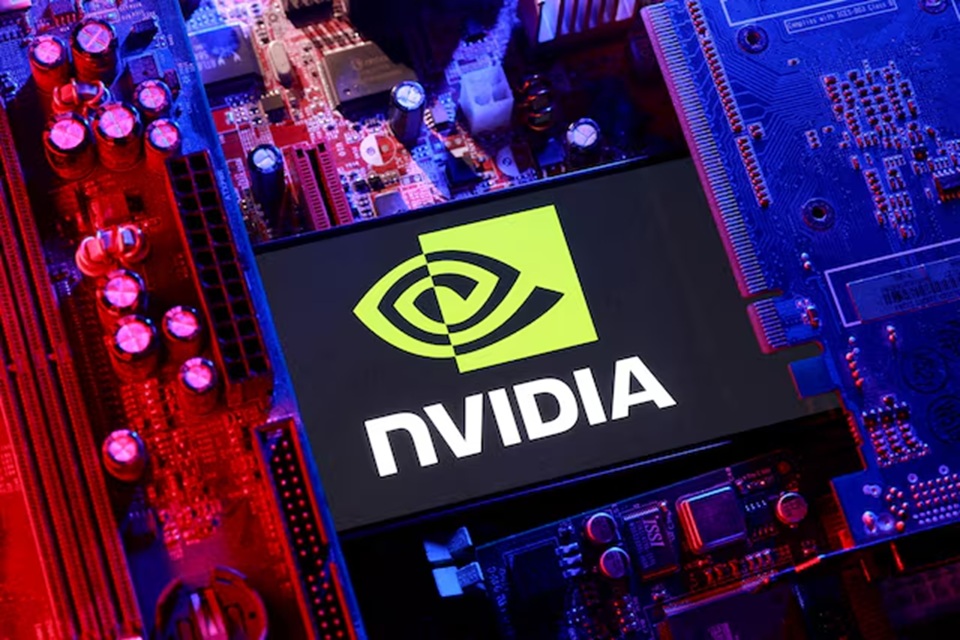
Nvidia’s once-dominant hold on China’s advanced AI accelerator market has collapsed entirely, with Chief Executive Officer Jensen Huang confirming that the company’s share has plunged from about 95 percent to zero.

Huang made the disclosure during a live interview at the Future of Global Markets 2025 event hosted by Citadel Securities in New York on October 6, describing the loss as an unintended consequence of U.S. export controls.

“At the moment, we are 100% out of China,” Huang said. “We went from 95% market share to 0%.”

The remarks, which were later published in full by Citadel Securities on YouTube, mark the first time Nvidia has publicly quantified the impact of the restrictions. Though Huang did not reference specific products, his comments were clearly directed at Nvidia’s data center GPU business — the backbone of global AI infrastructure and one of the fastest-growing segments of the company’s portfolio.

A Collapse Driven by U.S. Policy

Since Washington began tightening export controls on high-end semiconductors in October 2022, Nvidia has faced repeated disruptions to its product line in China. The company’s China-optimized A800 and H800 chips, designed to comply with earlier restrictions, were later rendered ineligible under expanded rules introduced in 2023. Nvidia’s most recent offering, the H20 GPU, also encountered licensing complications that prevented large-scale sales.

On July 31, China’s Cyberspace Administration summoned Nvidia executives for a closed-door meeting, demanding an explanation over concerns that the H20 chips could contain hidden hardware mechanisms enabling remote shutdown or unauthorized access—so-called “backdoors” that bypass normal security protocols. Such vulnerabilities, if proven, could theoretically allow foreign actors to disrupt AI systems or siphon sensitive data without detection.

In September, the Financial Times reported that the CAC directed companies, including ByteDance, parent of TikTok, and e-commerce giant Alibaba, to terminate their testing and orders of Nvidia chips, including RTX Pro 6000D. The order also covered existing purchases, effectively forcing cancellations.

The cumulative effect has been a near-total halt to shipments of advanced AI accelerators to the Chinese market — a market that, according to Nvidia’s own disclosures, accounted for 20 to 25 percent of its data center revenue before the sanctions. That segment alone generated more than $41 billion in the company’s latest financial year, representing a 56 percent year-on-year increase.

“I can’t imagine any policymaker thinking that’s a good idea — that whatever policy we implemented caused America to lose one of the largest markets in the world to 0%,” Huang said, criticizing the policy outcome rather than the intent.

Strategic Blow to Both Sides

The export controls were designed to prevent China from accessing chips that could accelerate the development of advanced military AI systems. However, the policy’s collateral effects are increasingly visible: Nvidia, the world’s most valuable semiconductor company, has effectively been locked out of one of its largest markets, while Chinese companies have been forced to accelerate their domestic chip development programs.

“In all of our forecasts… we’re assuming 0% for China,” Huang said. “If anything happens in China… it will be a bonus.”

That stark admission points to how deeply the restrictions have reshaped Nvidia’s business strategy. The company has now shifted its focus entirely toward North America, Europe, and the Middle East, where demand for AI infrastructure remains exceptionally strong.

Meanwhile, Chinese hyperscalers and AI research labs — including Baidu, Alibaba, Tencent, and ByteDance — have been investing heavily in indigenous silicon efforts. Domestic chipmakers like Huawei’s HiSilicon and startups backed by Beijing’s state investment arms have gained new momentum, attempting to fill the performance gap left by Nvidia’s absence.

Fragmentation in the AI Supply Chain

The rupture has exposed how fragile the global AI hardware ecosystem has become. Huang himself has repeatedly warned that sweeping export restrictions could “spur the development of competitive substitutes” and create parallel technological spheres — one dominated by the U.S. and its allies, and another centered around China’s domestic innovation drive.

That fragmentation is now unfolding rapidly. China’s AI industry has turned to alternative architectures such as Huawei’s Ascend processors and cloud platforms built on local chips, while simultaneously scaling software optimization to squeeze more performance from limited hardware.

Although U.S. policymakers argue that the curbs are essential for national security, industry analysts caution that the restrictions risk eroding American companies’ long-term leverage in global technology markets. Nvidia’s forced retreat provides an early case study of that effect.

A Market Written Off — For Now

While Huang said he still hopes that Nvidia can eventually resume business in China, the company’s near-term outlook leaves no room for optimism.

The development caps a two-year struggle for Nvidia to navigate the geopolitical crossfire between Washington and Beijing. What began as a temporary workaround strategy through products like the A800 has now become a complete disengagement.

For now, the company’s record profits from surging global demand for AI chips have softened the blow. But the broader implications: the world’s top AI chipmaker being locked out of the world’s second-largest economy, while China, once its biggest growth market, races to build a rival ecosystem of its own, remains profound.