
DD
MM
YYYY

PAGES

DD
MM
YYYY

spot_img

PAGES

Home Blog Page 2921

The Impact of 5G on Digital Transformation

0

The advent of 5G technology is poised to be one of the most transformative shifts in the digital landscape. With its promise of lightning-fast data speeds, ultra-low latency, and the ability to connect a massive number of devices simultaneously, 5G is not just an upgrade from previous generations of mobile networks—it is the foundation for a new era of digital transformation. This transformation goes far beyond improved connectivity; it is about reshaping industries, redefining business models, and enabling new technologies that were previously out of reach. From the integration of Internet of Things (IoT) devices to artificial intelligence-driven automation, 5G is the critical enabler that will unlock unprecedented opportunities for innovation. However, as with any major technological leap, the path forward is not without its challenges. In this article, we will explore how 5G is driving digital transformation, the opportunities it presents, and the obstacles that must be overcome to fully realize its potential.

Key Opportunities Brought by 5G in Digital Transformation

The rollout of 5G technology is ushering in a new wave of opportunities that are transforming industries across the globe. With its unprecedented speed, reliability, and ability to handle vast amounts of data, 5G is set to redefine how businesses and societies function in the digital age. One of the most significant advantages of 5G is its role in enhancing connectivity. Unlike its predecessors, 5G enables real-time data exchange, which is crucial for industries relying on IoT devices, artificial intelligence (AI), and machine learning. From smart cities to autonomous vehicles, the ability to process and respond to data in milliseconds is driving innovation like never before.

Another key opportunity brought by 5G is the revolution of business models across various sectors. Companies are leveraging 5G’s power to create new products and services, driving the growth of sectors such as telemedicine, advanced manufacturing, and immersive entertainment. For instance, the gaming industry is poised to benefit immensely from 5G, as faster and more stable connections enhance online gaming experiences. This development not only boosts traditional gaming platforms but also opens new avenues for cloud gaming and mobile-based applications like Jili games, where players can enjoy a seamless experience with minimal latency.

Moreover, 5G is playing a vital role in the workplace by improving remote work and digital collaboration. As more businesses adopt hybrid work models, 5G ensures that virtual meetings, cloud file sharing, and real-time collaboration tools function smoothly, regardless of location. This technological evolution is helping companies maintain productivity while staying flexible in a rapidly changing world.

5G is a game-changer that is not only driving digital transformation but also unlocking new opportunities across various sectors, from IoT and AI integration to enhanced gaming and remote work solutions. The industries that adapt to this new era of connectivity will be better positioned to thrive in the future.

Challenges of Implementing 5G in Digital Transformation

While 5G offers immense potential for driving digital transformation, its implementation comes with significant challenges that cannot be overlooked. One of the foremost hurdles is the high cost of infrastructure. Deploying 5G networks requires a massive investment in new hardware, such as towers, base stations, and fiber-optic cables, all of which must be scaled to cover urban and rural areas alike. For businesses and governments, balancing these costs while ensuring widespread coverage remains a complex and costly undertaking.

Another pressing challenge is the issue of security and privacy. As 5G facilitates the connection of billions of devices, from smart homes to autonomous vehicles, the risk of cyberattacks increases exponentially. Ensuring that data transmitted over 5G networks remains secure is crucial, particularly in industries like healthcare and finance, where sensitive information is constantly exchanged. Strengthening cybersecurity protocols and creating robust safeguards will be necessary to mitigate the risks associated with increased connectivity.

Regulatory hurdles also pose a challenge. The global rollout of 5G is subject to varying regulations across different countries, which can delay the deployment process. Spectrum allocation, licensing issues, and geopolitical concerns all contribute to the complexity of 5G implementation. Navigating these regulatory landscapes will require collaboration between governments, telecommunications companies, and industry leaders to ensure a smooth and equitable distribution of 5G technology.

Moreover, there are technological compatibility issues that businesses must contend with. Many existing devices and systems are not yet fully compatible with 5G, requiring costly upgrades or replacements. This challenge is particularly significant for industries that rely on legacy systems, as integrating 5G could disrupt operations or require significant time and resources to achieve full functionality. For example, in the gaming industry, while 5G opens up new possibilities, ensuring that users can benefit from enhanced features, such as game cashback offers or ultra-low latency, requires careful integration of the technology across platforms.

While 5G holds the potential to revolutionize digital transformation, its implementation presents a number of challenges, including infrastructure costs, security risks, regulatory barriers, and technological compatibility. Addressing these challenges will be key to unlocking the full benefits of 5G and ensuring that industries and consumers alike can take advantage of this groundbreaking technology.

Real-World Examples of 5G-Driven Digital Transformation

The introduction of 5G technology is reshaping industries in ways previously unimaginable. From healthcare to manufacturing, real-world examples of 5G-driven digital transformation demonstrate the immense potential of this next-generation network. One of the most significant areas of transformation is in healthcare, where 5G is enabling advancements such as remote surgeries and real-time health monitoring. In rural or underserved areas, where access to top-tier medical care has traditionally been limited, 5G allows healthcare providers to perform life-saving procedures from miles away, offering patients better access to expert care.

Another transformative application of 5G can be found in smart cities. Urban planners are leveraging the technology to improve traffic management, energy consumption, and public safety. With 5G, connected devices can communicate seamlessly, optimizing everything from street lighting to waste management in real-time. This increased efficiency not only saves costs but also enhances the quality of life for city residents.

In the manufacturing sector, 5G has played a pivotal role in the rise of Industry 4.0, where smart factories rely on interconnected machinery and automation. 5G’s low latency and high-speed capabilities allow factories to function with greater precision and minimal downtime. Sensors and robotics, powered by 5G, now collaborate to streamline operations and improve productivity, reducing human error and optimizing workflows.

The entertainment industry has also experienced a revolution thanks to 5G, especially in the gaming sector. With the rise of mobile and cloud gaming, 5G’s low latency allows players to experience seamless gameplay, even in the most demanding titles. Not only has it expanded access to real-time gaming across devices, but it has also encouraged more diverse participation in industries traditionally dominated by men. For instance, the inclusion of women in Poker has grown significantly, with faster, more stable connections creating inclusive gaming environments that break down traditional barriers and encourage broader participation in global competitions.

These case studies illustrate the far-reaching effects of 5G-driven digital transformation, from enhancing healthcare accessibility to optimizing industrial operations and breaking down societal barriers in gaming and beyond. As 5G continues to roll out globally, more industries will be transformed, unlocking new possibilities for innovation and inclusivity.

The Future of 5G in Digital Transformation

As 5G continues to roll out globally, its influence on digital transformation is set to accelerate dramatically in the coming years. The next wave of innovation will go beyond the faster speeds and lower latency that define 5G today, pushing the boundaries of what is possible in technology and business. The future of 5G is not just about connectivity—it is about creating a fully integrated digital ecosystem where industries, governments, and individuals can collaborate in ways that were once unimaginable.

One of the most exciting prospects of 5G is its role in advancing the Internet of Things (IoT). With 5G’s capacity to connect billions of devices, smart cities, homes, and industries will experience unprecedented growth in automation and data-driven decision-making. From autonomous vehicles to smart energy grids, 5G will serve as the backbone of a hyper-connected world where systems can communicate and react in real-time. This transformation will create new levels of efficiency and innovation, particularly in areas such as urban planning, environmental management, and public safety.

In healthcare, the future of 5G will continue to push the boundaries of telemedicine and remote patient monitoring. As the technology becomes more widely available, real-time diagnostics, virtual consultations, and even remote surgeries will become routine, transforming healthcare delivery. Additionally, wearable devices and health sensors connected via 5G will enable continuous patient monitoring, giving healthcare providers the ability to track and manage chronic conditions more effectively.

The impact of 5G on industries such as manufacturing and logistics will also be profound. The ability to control and monitor machines in real-time will fuel the growth of smart factories, where automation and robotics drive efficiency. Logistics and supply chains will benefit from enhanced tracking and data exchange, optimizing global commerce and reducing bottlenecks. With 5G, businesses will be able to operate with greater agility, responding to changes in demand and supply with unprecedented speed.

Looking forward, 5G will also play a key role in the expansion of immersive technologies like augmented reality (AR) and virtual reality (VR). These technologies, once considered niche, will find widespread application in fields ranging from entertainment to education and training. The low-latency nature of 5G will allow for real-time, fully immersive experiences, enhancing everything from virtual learning environments to AR-guided manufacturing processes.

The future of 5G in digital transformation is bright and full of possibilities. Its ability to connect, automate, and enhance various aspects of life and business will redefine how we live and work. As 5G networks continue to expand, the technology will fuel a new era of innovation, driving industries to rethink their strategies and embrace a truly digital future. The world is on the cusp of a revolution, and 5G will be at the heart of it.

Nigeria Confirms Imminent Construction of $3.5bn Bakassi Deep Seaport

0

The Infrastructure Concession Regulatory Commission (ICRC) has confirmed that construction of the $3.5 billion Bakassi Deep Seaport will soon commence, marking a major milestone for Nigeria’s maritime and economic infrastructure.

This announcement, made by Dr. Jobson Ewalefoh, Director-General of the ICRC, came during a high-level stakeholders’ meeting where a formal endorsement of the project was signed.

This development represents a major win for the country’s economic strategy, particularly for enhancing port capacity along Nigeria’s often-neglected eastern corridor.

Dr. Ewalefoh, one of the project’s key facilitators, lauded the progress made and emphasized the importance of the port in advancing Nigeria’s maritime infrastructure. He underscored the commitment of Cross River State’s Governor, Bassey Otu’s administration, and the support from the Nigerian Ports Authority (NPA) and the Nigerian Shippers’ Council in making the project a reality.

“Our focus has been on making the process more efficient while maintaining rigorous benchmarks,” Ewalefoh said. “With the commitment we’ve seen from Governor Otu and the support of key stakeholders such as the Ministry of Marine and Blue Economy, the Nigerian Shippers’ Council, and other involved parties, we are confident that the Bakassi Deep Seaport will be completed within record time.”

The seaport is also being championed as a solution to the perennial congestion plaguing Lagos ports. Once completed, the Bakassi Deep Seaport is expected to not only serve Cross River State but the entire nation, positioning itself as a key asset for international trade, especially within West Africa.

“The Bakassi Deep Seaport will not only serve the people of Cross River but will stand as a key asset for the entire country, reinforcing Nigeria’s position as a gateway to regional trade and economic growth,” Ewalefoh added.

The project, a public-private partnership (PPP) initiative, comes amid increased calls for Nigeria to develop alternative seaports, particularly in the South-South and Southeastern regions, which handle a fraction of the nation’s shipping traffic. The Bakassi Deep Seaport is positioned to change that dynamic by opening up new trade routes and alleviating the pressure on Nigeria’s major ports, which have long struggled with congestion and inefficiency.

The Nigerian port activities are largely dependent on the Lagos port system, which handles the bulk of the country’s imports and exports.

The announcement of Afreximbank’s involvement is viewed as a vote of confidence in Nigeria’s infrastructure push, particularly for a project that promises to transform trade logistics along West Africa’s seaboard.

The eastern corridor, including states like Cross River and Rivers, has long been overlooked in terms of major port infrastructure investment. However, with projects like Bakassi, there are expectations that the region can become a critical hub for maritime trade, particularly for agricultural exports and industrial goods.

The Bakassi Deep Seaport is expected to open up vital export opportunities for Nigeria’s agricultural produce, particularly for products coming from the North and other parts of the country, with the potential to extend its reach to neighboring African countries. This development will likely strengthen Nigeria’s agricultural export value chain, boosting revenue for the government and providing critical support for local farmers.

Ewalefoh noted Otu’s role in pushing the project forward, likening him to an athlete in the final lap of a relay. He expressed confidence that the governor’s leadership would see the project through to successful completion.

“You have the resources and the team to ensure the timely delivery of this critical infrastructure,” Ewalefoh stated, acknowledging the state’s focus on creating an enabling environment for the project’s success.

He further highlighted that this aligns with President Bola Tinubu’s broader push for international investments in Nigeria, noting that “just as President Tinubu has encouraged international investors to bring their capital to Nigeria, your administration is creating an enabling environment for this landmark project.”

The meeting that led to the endorsement of the Bakassi project by key stakeholders, including the Nigerian Ports Authority and the Nigerian Shippers’ Council, is the culmination of months of intense negotiations and planning. With Afreximbank on board, stakeholders are optimistic that the Bakassi Deep Seaport will soon become a reality, transforming Nigeria’s maritime economy and solidifying its status as a leading player in West African trade.

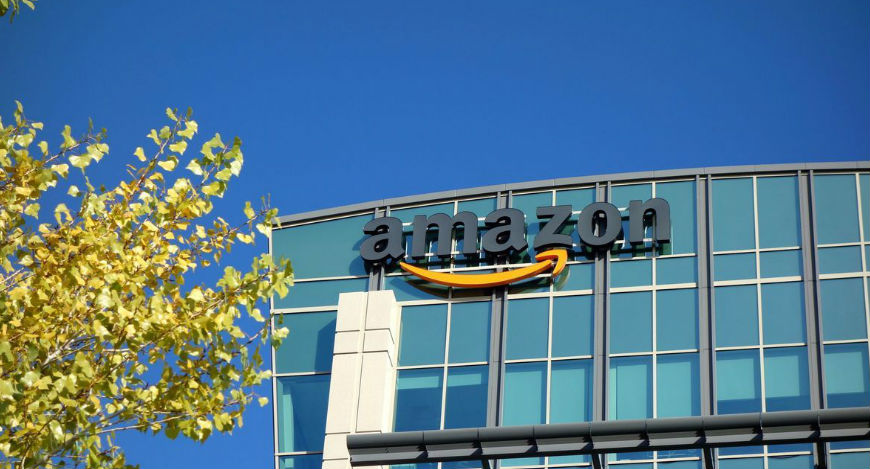
Amazon CEO Andy Jassy Pushes For Full Return to Office by 2025, Restricts Remote Work

0
Amazon has been investing in India

Amazon CEO Andy Jassy has announced plans for a full return to the office starting in early 2025. For the past 15 months, employees have been required to work in the office three days a week.

However, in a new memo released, employees will be expected to be in the office five days a week, with remote work allowed only in exceptional cases.

In the memo, Jassy noted that Amazon’s culture has been key to the company’s success over the past 29 years. But maintaining that culture requires ongoing effort, especially as it continues to grow. He further noted that the advantages of employees being together in the office are significant. From his observation, it’s easier for teammates to learn, model, practice, and which strengthens the company’s culture.

Part of the Memo reads,

“Hey, team. I wanted to send a note on a couple of changes we’re making to further strengthen our culture and teams. First, for perspective, I feel good about the progress we’re making together. Stores, AWS, and Advertising continue to grow on very large bases, Prime Video continues to expand, and new investment areas like GenAl, Kuiper, Healthcare, and several others are evolving nicely. And at the same time we’re growing and inventing, we’re also continuing to make progress on our cost structure and operating margins, which isn’t easy to do. Overall, I like the direction in which we’re heading and appreciate the hard work and ingenuity of our teams globally. We want to operate like the world’s largest startup.

“That means having a passion for constantly inventing for customers, strong urgency (for most big opportunities, it’s a race!), high ownership, fast decision-making, scrappiness and frugality, deeply connected collaboration you need to be joined at the hip with your teammates when inventing and solving hard problems), and a shared commitment to each other. To address the second issue of being better set up to invent, collaborate, and be connected enough to each other and our culture to deliver the absolute best for customers and the business, we’ve decided that we’re going to return to being in the office the way we were before the onset of COVID.

“When we look back over the last five years, we continue to believe that the advantages of being together in the office are significant. I’ve previously explained these benefits (February 2023 post), but in summary, we’ve observed that it’s easier for our teammates to learn, model, practice, and strengthen our culture; collaborating, brainstorming, and inventing are simpler and more effective; teaching and learning from one another are more seamless; and teams tend to be better connected. If anything, the last 15 months we’ve been back in the office at least three days a week has strengthened our conviction about the benefits”.

Aside from Amazon mandating the full return of employees, another key change the company is making is Flattening its organizational structure. The company is reducing the number of managers by increasing the ratio of individual contributors to managers by 15% by the end of Q1 2025. This according to the CEO will streamline decision-making, reduce bureaucracy, and drive faster, more effective customer solutions. Amazon in August 2024 announced financial results for its second quarter ended June 30, 2024. Net sales increased 10% to $148.0 billion in the second quarter, compared with $134.4 billion in second quarter 2023.

U.S. Moves to Ban Chinese Vehicles Over National Security Concerns

0

The U.S. Commerce Department is set to introduce a major policy shift aimed at banning Chinese software and hardware from connected and autonomous vehicles on American roads, citing national security concerns.

This move, to be announced on Monday, is expected to fuel tensions between the U.S. and China, with many experts anticipating swift retaliation from Beijing.

The Biden administration has expressed serious concerns about the potential for Chinese companies to collect sensitive data from vehicles in the U.S., including information on drivers and critical infrastructure. Moreover, officials have warned about the possibility of foreign manipulation of vehicles connected to the internet, which could compromise national security.

Commerce Secretary Gina Raimondo previously addressed the risks associated with allowing Chinese technology in U.S. cars. In May, she stated, “You can imagine the most catastrophic outcome theoretically if you had a couple million cars on the road and the software were disabled.”

This comment underlines the administration’s growing unease over the role of Chinese companies in critical U.S. infrastructure, and the potential threats that come with it.

Escalation of U.S.-China Tensions

The proposed restrictions, which would target both software and hardware, represent a significant escalation in the U.S.’s ongoing restrictions on Chinese vehicles, software, and components. If the ban is implemented, the sale or import of vehicles using Chinese communications technology or autonomous driving systems will be prohibited.

Reuters reported, citing two sources familiar with the matter, that the ban would begin with software in the 2027 model year and extend to hardware by 2029 or the 2030 model year. The new rules would affect vehicles with key communications features like Bluetooth, satellite, and wireless systems, as well as autonomous vehicles that can operate without a driver.

Although relatively few Chinese-made light-duty vehicles are currently imported into the U.S., the proposed rule would mark a major blow to Chinese automakers looking to expand into the U.S. market. Furthermore, it would set the stage for an inevitable response from Beijing. China has historically responded forcefully to trade restrictions, and this move would likely be seen as an aggressive attempt to curtail its ambitions in the global automotive and technology sectors.

China’s Likely Response

Experts are warning of a potential retaliatory response from Beijing. Chinese officials have not yet publicly commented on the looming ban, but the country has previously accused the U.S. of economic bullying and unfair trade practices. In response to earlier U.S. tariffs and technology bans, China imposed its own restrictions and launched investigations into U.S. companies. The escalating trade war has strained relations between the two superpowers and affected industries across the globe.

China has invested heavily in its automotive and technology sectors, particularly electric vehicles (EVs) and autonomous driving technologies. For years, the Chinese government has poured resources into building its EV industry, positioning itself as a key player in the global market. However, the U.S. restrictions, including a 100% tariff on Chinese electric vehicles and related components announced last week, have severely hampered China’s ability to compete in the U.S. market.

Biden’s National Security Concerns

President Joe Biden has made clear his administration’s stance on the national security risks posed by Chinese vehicles. In February, Biden ordered an investigation into the security risks posed by Chinese vehicle imports with connected-car technology.

“China’s policies could flood our market with its vehicles, posing risks to our national security,” Biden stated. “I’m not going to let that happen on my watch.”

In addition to cars connected to the internet, the president’s concerns also extend to the vast amount of data generated by vehicles on U.S. roads. As more cars become “connected,” they increasingly resemble smartphones on wheels, constantly transmitting data to manufacturers, navigation systems, and other devices. This data is seen as a treasure trove for companies—and potentially for foreign governments—with national security implications if it falls into the wrong hands.

Global Repercussions

As the rivalry between the two superpowers intensifies, the automotive and technology industries could find themselves at the heart of a new battleground.

A trade group representing major automakers, including General Motors, Toyota, Volkswagen, and Hyundai, has already raised concerns about the practical difficulties involved in transitioning away from Chinese software and hardware.

“These systems undergo extensive pre-production engineering, testing, and validation processes and, in general, cannot be easily swapped with systems or components from a different supplier,” the group stated.

This transition is expected to cause significant disruptions in vehicle production timelines, potentially leading to delays and increased costs.

But the ban is not only about China. According to the sources cited by Reuters, the prohibitions would also extend to other U.S. adversaries, including Russia. This broader scope suggests that the U.S. is positioning itself to defend against any foreign threats that could infiltrate its connected infrastructure via automotive technology.

30-Day Public Comment Period

The Commerce Department plans to offer a 30-day public comment period before finalizing the new rules. While the move has been in the works for months, the White House officially signed off on the proposal last Thursday. The rule is part of a broader effort to secure the supply chain for connected vehicles in the U.S., and it reflects the administration’s push to safeguard critical infrastructure from foreign interference.

Potential Fallout in China

The impending U.S. ban on Chinese automotive technology could deal a significant blow to Chinese automakers, particularly those looking to expand their reach in global markets. For years, Chinese automakers have been eyeing the U.S. as a key growth market, with companies like Nio, Xpeng, and BYD developing cutting-edge electric vehicles and autonomous driving technologies.

China’s tech sector is also likely to be affected. Chinese companies like Huawei and Baidu have invested heavily in developing communications and autonomous driving systems for vehicles. A ban on their technologies in the U.S. could cripple their ability to compete globally and push China to redouble its efforts to find alternative markets or partners.

A Technological Cold War

The tension between the U.S. and China has been steadily building for years, and the proposed restrictions on Chinese automotive technology mark yet another front in what many are calling a “technological cold war.” Both nations are racing to dominate the next wave of innovations, from electric vehicles and renewable energy to artificial intelligence and 5G networks.

This latest move signals that the U.S. is not willing to let China gain ground in a sector as critical as connected and autonomous vehicles. But the broader implications of this ban could extend far beyond the auto industry, as the geopolitical and economic rift between the two superpowers continues to widen.

INEC Declares APC’s Monday Okpebholo Winner of Edo Governorship Election

0

The Independent National Electoral Commission (INEC) on Sunday declared Senator Monday Okpebholo of the All Progressives Congress (APC) the winner of the closely contested Edo State governorship election held on Saturday, September 21, 2024.

The APC candidate garnered a total of 291,667 votes, defeating his nearest rival, Asue Ighodalo of the Peoples Democratic Party (PDP), who polled 247,274 votes. Labour Party’s candidate, Olumide Akpata, finished a distant third, securing only 22,763 votes.

Okpebholo was declared after he secured wins in 11 out of Edo’s 18 local government areas. Ighodalo, the PDP candidate, managed to claim the remaining seven local governments. Meanwhile, Akpata of the Labour Party, a former Nigerian Bar Association President, lost in all local government areas, including his home base, Oredo.

According to INEC, Okpebholo’s decisive victories were recorded in key local governments such as Esan West, Owan West, Akoko Edo, Egor, Esan Central, Ovia South West, Orhionmwon, Owan East, Etsako East, Oredo, and Etsako West. On the other hand, Ighodalo managed to take Ovia North East, Ovia South West, Uhunmwode, Igueben, Esan North East, and Esan South East.

In Igueben, a stronghold for Ighodalo, the PDP secured 8,470 votes, significantly outpacing APC’s 5,907. But Okpebholo made up for it with major wins in local government areas such as Akoko Edo, where he racked up an impressive 34,847 votes compared to Ighodalo’s 15,865.

The Labour Party candidate, Akpata, who initially had been seen as a potential wildcard in the race, struggled to make an impact across the state. His strongest performance came in Oredo, where he polled 5,389 votes, but it was far from enough to challenge the two frontrunners.

Allegations of Rigging

However, the election was mired in controversy, with accusations of electoral malpractice and rigging in favor of the ruling All Progressives Congress (APC).

Ighodalo voiced strong discontent with the election’s proceedings, describing the exercise as riddled with irregularities. At a press conference organized by the Edo PDP National Campaign Council, Ighodalo expressed concerns over INEC’s handling of the process, citing alleged manipulations and discrepancies. One of the key issues raised by him was in the Ikpoba/Okha Ologbo area, where accredited voter numbers were recorded as zero, despite results being announced in those units.

One of the most glaring instances that have fueled these accusations involved a viral result sheet from Osholo Primary School Polling Unit, Weppa, in Etsako East Local Government Area, presided by Josephine Obazuwa. According to the result sheet, the APC was recorded as having garnered 352 votes in the polling unit, but only 213 voters were accredited to cast their ballots.

The evidence of inflated vote counts has ignited outrage among opposition parties, civil society groups, and voters, who are now questioning the integrity of the entire election. The incident has added to a growing list of similar complaints from past elections, where the APC has been accused of using its incumbency advantage to manipulate the outcome. Critics argue that this latest controversy is yet another example of the ruling party’s alleged interference in democratic processes, as seen in other states where it has secured victory under questionable circumstances.

Observers and political analysts have also raised alarms over the recurring pattern of alleged rigging by the APC. In several elections held since the party came to power in 2015, there have been accusations of vote tampering, voter suppression, and the manipulation of election results to favor the ruling party.

The Osholo Primary School incident is not an isolated case. During the collation of results, the PDP and its supporters cited several polling units where votes cast exceeded the number of accredited voters. In the build-up to the election, concerns about potential electoral malpractice were already rife, and the release of such irregular results seems to have confirmed those fears for many.

Governor Ahmadu Fintiri of Adamawa State, who led the PDP campaign, also supported these claims, noting that the integrity of the election had been compromised in certain polling units. Both Fintiri and Ighodalo warned that the election could set a dangerous precedent for Nigerian democracy if left unaddressed, potentially marking it as one of the most problematic elections in the country’s history.

The concerns about the Edo governorship election reflect a broader fear that Nigeria’s democracy is becoming increasingly vulnerable to electoral fraud, with the APC allegedly employing sophisticated tactics to maintain its grip on power.

Meanwhile, the APC’s Okpebholo, celebrated his victory, thanking Edo State voters for their support. He acknowledged the close contest but remained confident that the electoral process was fair and transparent.

However, the allegations from the PDP have cast a shadow over the results, raising the possibility of legal challenges in the coming days. While Okpebholo and the APC move forward with plans for governance, the PDP and Ighodalo are expected to contest the results.

The result has once again, beamed the spotlight on INEC and its handling of elections in the country, where the courts eventually decide the winners.