
DD
MM
YYYY

PAGES

DD
MM
YYYY

spot_img

PAGES

Home Blog Page 2923

Fuel Crisis Forces Nigerians to Explore Alternative Transport Options

1

Citizens in Nigeria have voiced a range of opinions regarding the ongoing fuel crisis and the anticipated impact of the Dangote Refinery. Many Nigerians report significant disruptions to their daily lives and businesses due to fuel scarcity. The high cost and unavailability of fuel have led to increased transportation costs, which in turn affect the prices of goods and services across the board. This situation has created economic hardship for many, as individuals struggle to afford transportation to job opportunities. Consequently, job seekers find themselves unable to reach potential employers, worsening their financial conditions.

While some citizens view the Dangote Refinery as a potential solution to Nigeria’s fuel issues, believing it could reduce reliance on imported fuel and stabilize prices, others express skepticism about its effectiveness. Concerns persist that the refinery may not produce fuel efficiently or that its benefits may primarily serve elite interests rather than the general populace. There are strong calls for the government to reconsider policies such as fuel subsidies, which many believe should be reinstated to alleviate current hardships. Citizens urge for measures that directly address the rising costs of living linked to fuel prices.

Additionally, suggestions include rehabilitating existing refineries and improving transportation infrastructure, such as railways, to lower logistics costs and enhance supply chains for essential goods. Personal experiences further illustrate these challenges; business owners report that increased fuel prices are squeezing their profit margins, forcing them to raise prices for consumers, which ultimately reduces customer demand. Many individuals express frustration over the lack of tangible benefits from the Dangote Refinery so far, highlighting that despite its potential, everyday life remains challenging due to high fuel costs.

Specifically, the key issues surrounding the fuel crisis in Nigeria include frequent fuel price hikes, supply shortages, and the ongoing impact of subsidy removal. The crisis affects daily life, with citizens struggling to afford fuel for transportation and businesses. It also leads to inflation, worsens economic hardships, and increases transportation costs. Poor infrastructure, refining capacity issues, and dependency on imports further exacerbate the situation. The government’s efforts to deregulate the sector and manage fuel subsidies remain central to the ongoing debates

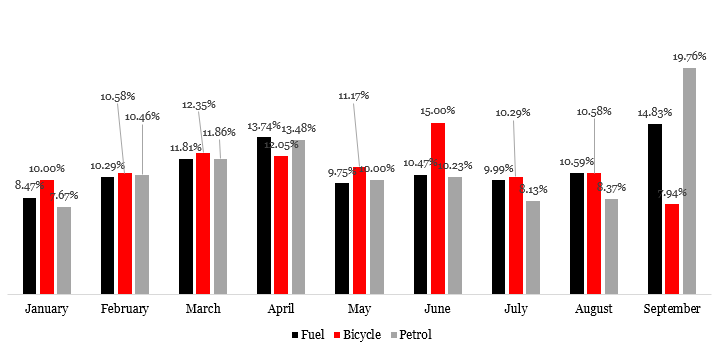
Exhibit 1: Citizens’ interest in energy and bicycle as an alternative means of transportation
Fuel crisis
Source: Google Trends, 2024; Infoprations Analysis, 2024

Meanwhile, the situation has indicated that people and businesses are struggling to manage their mobility, our analyst notes that the fuel crisis may also spur innovation and entrepreneurship in the transportation sector, as businesses and individuals seek to develop new solutions to the challenges posed by the crisis. This could include the development of electric vehicles, improved public transportation systems, or the promotion of alternative modes of transportation like bicycles.

From our observational analysis, it’s evident that people are adopting various mobility strategies to cope with the rising cost of fuel. These include carpooling with neighbors or colleagues, limiting travel to essential trips, and optimizing routes to economize movement. Our analysis of public interest in fuel (n=1651), bicycles (n=340), and petrol (n=430) since January 2024 revealed notable spikes. These trends reflect the ongoing search for practical solutions and growing concern about transportation costs amid Nigeria’s fuel crisis.

The search interest for both “Fuel” and “Petrol” shows an overall upward trend from January to September 2024. The interest in “Fuel” peaks in September at 14.83%, while “Petrol” reaches its highest point in September at 19.76%. This suggests that as the fuel crisis persists, Nigerians are increasingly searching for information related to fuel and petrol, likely due to concerns about availability and pricing.

The search interest for “Bicycle” exhibits a more fluctuating pattern compared to “Fuel” and “Petrol”. It starts at 10% in January, peaks in June at 15%, and then declines to 7.94% in September. This suggests that while bicycles may have been seen as an alternative mode of transportation during the initial stages of the fuel crisis, the interest has not maintained a consistent upward trend.

The rising search interest in “Fuel” and “Petrol” coupled with the fluctuating interest in “Bicycle” implies that Nigerians are actively seeking alternative modes of transportation to cope with the fuel crisis. However, the inconsistent interest in bicycles suggests that they may not be a universally viable solution.

The New Intel’s Promising Strategy With A Seperate, Independent Foundry Unit

0

Intel will possibly spin off the foundry business into an independent company: “In a move to reinvigorate its competitive edge in the chip market, Intel on Monday announced a significant restructuring plan, which saw its shares surge by 8% in extended trading. The tech giant is set to transform its foundry business into an independent unit with its own board, with the potential to raise outside capital.”

Yet, that new company will still have to deal with two things: (1) it has to provide something new TSMC, an industry-leading contracting fab company, does not have, and (2) it needs to win Nvidia, Qualcomm, AMD and other fabless chip makers as customers.

But if you look at the big picture, this particular Intel’s decision is the right call. Why? TSMC is the premier semiconductor foundry which has most of the top fabless chip companies as customers, and Intel in its current format may not be seen as a great destination for these companies, since Intel is also a design company. Indeed, you should not expect AMD and Nvidia to ship designs to Intel to fab for them, making the core essence of the current form of Intel questionable.

But with the foundry business separated, that company can fight on its own, unconstrained by being associated with a potential competitor with its potential customers. CEO Pat Gelsinger made the right call. I expect Intel to evolve, as it focuses on designs, and with that, it will return to greatness. May the best WIN.

Intel Announces Plan to Turn Foundry Business Into A Subsidiary, Allowing for Fund Raising From Outside

Intel Announces Plan to Turn Foundry Business Into A Subsidiary, Allowing for Fund Raising From Outside

0
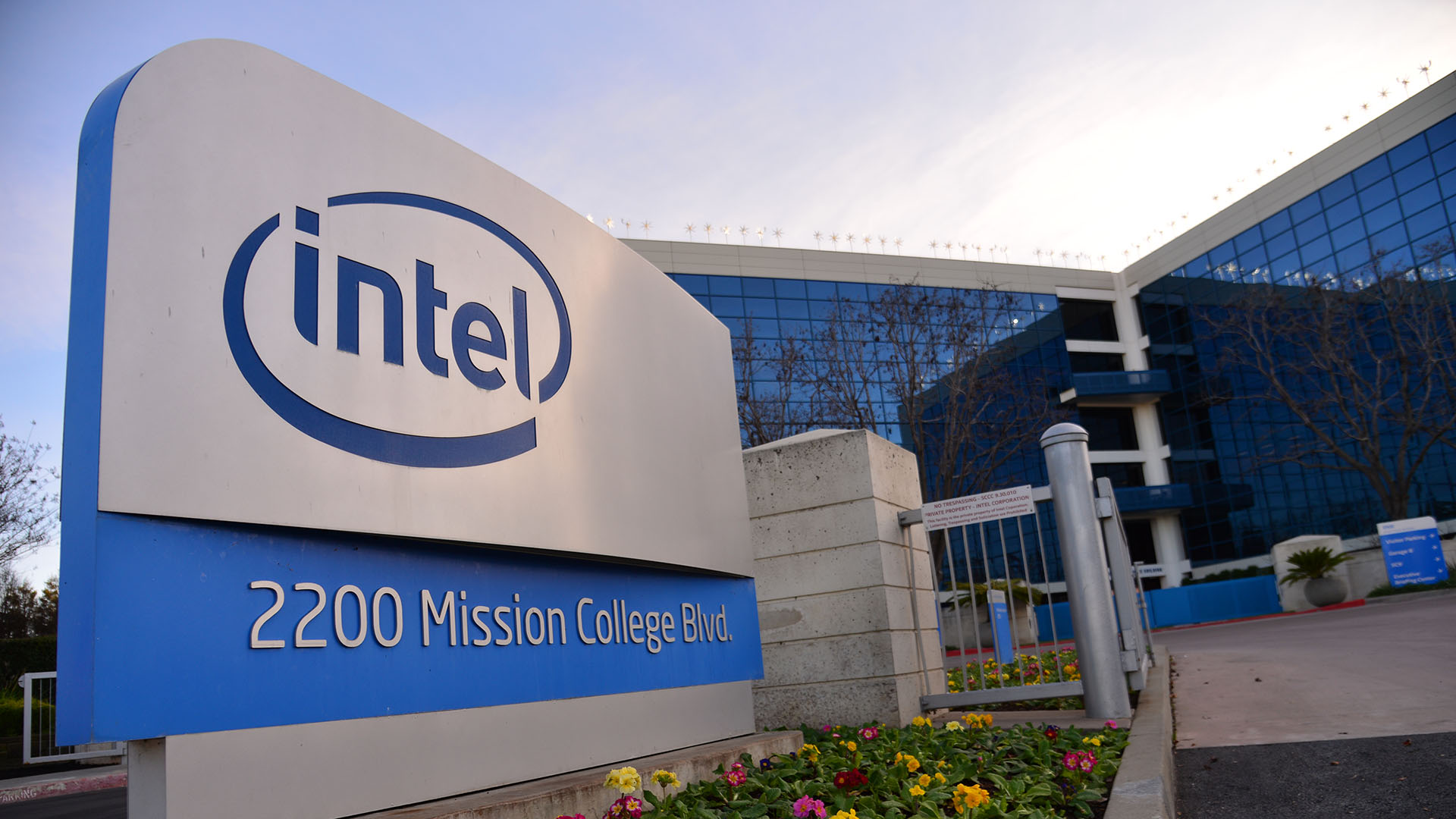
The Robert Noyce Building in Santa Clara, California, is the world headquarters for Intel Corporation. This photo is from Jan. 23, 2019. (Credit: Walden Kirsch/Intel Corporation)

In a move to reinvigorate its competitive edge in the chip market, Intel on Monday announced a significant restructuring plan, which saw its shares surge by 8% in extended trading. The tech giant is set to transform its foundry business into an independent unit with its own board, with the potential to raise outside capital.

This shift is part of CEO Pat Gelsinger’s broader strategy to turn around Intel’s performance, which has faltered amid increased competition and market share losses.

Intel’s foundry division, a critical part of its operations responsible for manufacturing chips for other customers, has been a financial burden. The company has poured around $25 billion into the business over the last two years, and despite the investment, it has dragged down Intel’s profitability.

In a memo to employees, Gelsinger explained that this restructuring would allow the foundry business to explore “independent sources of funding.” Additionally, Intel plans to sell off part of its stake in Altera, a company it acquired in 2015 to boost its position in the programmable chip market.

This move comes after Intel’s board met recently to evaluate the company’s future direction, with discussions reportedly including a potential spin-off of the foundry unit. If spun off into a separate publicly traded company, the foundry business would likely have more operational freedom and financial flexibility.

According to an unnamed source who spoke to CNBC, Intel has been actively considering this path, which would allow it to streamline its corporate structure and simplify the process of separating the unit from the rest of the company.

A Company in Crisis

Intel’s struggles have been significant, with its stock plummeting nearly 60% over the past year. The company has been steadily losing market share in its core businesses, including personal computers (PCs) and data centers, while Nvidia has dominated the growing market for AI-focused chips.

In August, Intel reported a particularly disappointing quarter, triggering its sharpest stock sell-off in five decades. In response to this, Intel initiated a $10 billion cost-reduction plan that includes laying off more than 15% of its workforce. Gelsinger noted that the layoffs are already halfway completed.

Beyond the layoffs, Intel is also hitting pause on several international projects. The company announced it would delay its fabrication plans in Poland and Germany by roughly two years, citing expected market demand. Plans for its Malaysian factory are also being scaled back. However, Intel’s U.S.-based manufacturing projects will proceed without interruption.

Boost from the CHIPS Act

In a timely boost to its domestic operations, Intel secured up to $3 billion in funding from the Biden administration’s CHIPS and Science Act. This initiative is part of the U.S. government’s push to reduce reliance on foreign semiconductor production, especially given the increasing geopolitical risks surrounding Taiwan, home to Taiwan Semiconductor Manufacturing (TSMC), the world’s largest contract chipmaker.

The funds are earmarked for Intel’s “Secure Enclave” program, a project tied to the Department of Defense. U.S. Commerce Secretary Gina Raimondo has been actively engaging with Intel’s leadership, and Gelsinger has reportedly expressed concerns about the U.S. semiconductor industry’s dependence on TSMC. The U.S. government’s support reflects a growing focus on bolstering domestic chip production as a matter of national security.

Expanding AI Ambitions with Amazon

Further cementing its plans for the future, Intel revealed a new deal with Amazon Web Services (AWS), one of its key customers. The agreement will see Intel produce custom chips for AWS, specifically targeting the rapidly expanding market for artificial intelligence (AI) workloads. This collaboration will also extend their long-standing partnership, as Amazon has used Intel chips for its AWS servers for years.

Under the deal, AWS will purchase custom Xeon processors from Intel, and the two companies will work on AI chips, potentially giving Intel a much-needed foothold in the increasingly competitive AI server chip market. While Intel has several products designed for AI, including the Gaudi 3, Nvidia has taken a commanding lead in this space, and Intel is under pressure to catch up.

Interestingly, Amazon has been developing its own AI chips for over five years, including one called Trainium, underscoring the competition Intel faces even within its own partnerships. Microsoft and Google are also heavily invested in custom chips to run AI, attempting to offer cheaper alternatives to Nvidia’s general-purpose GPUs.

Intel plans to carry out its most advanced manufacturing, including the AWS AI chips, at its plant in Ohio, which is still under construction. This facility, part of Intel’s massive investment in U.S. semiconductor manufacturing, is expected to play a pivotal role in the company’s future.

Gelsinger’s Bold Vision

Gelsinger is determined to change Intel’s trajectory and silence the growing chorus of critics. In his memo, he acknowledged the challenges ahead: “All eyes will remain on us,” Gelsinger said. “We need to fight for every inch and execute better than ever before. Because that’s the only way to quiet our critics and deliver the results we know we’re capable of achieving.”

Intel’s restructuring and the potential spin-off of its foundry business represent a strategic pivot at a critical time. By shedding its reliance on integrated operations and seeking outside investment, Intel could unlock new financial opportunities and refocus on its core strengths.

However, the road to recovery is a steep one. Its once-unshakeable grip on the global semiconductor industry has been loosened, leaving a void that Nvidia has eagerly filled. Now, the company aims to prove to investors and the industry that it can once again be a big player, by attempting to carve out a fresh path—through spinning off its foundry business.

The restructuring, layoffs, and cost cuts are just the beginning. Analysts believe that for Intel to truly rebound, it must execute flawlessly on its ambitious goals, from manufacturing advanced AI chips to scaling up U.S. production facilities.

Renewed Bullishness for Bitcoin and Gold Shows Strong Correlations

0

The recent rally in gold prices has sparked a renewed interest in the correlation between the precious metal and Bitcoin. Historically, both assets have been viewed as hedges against inflation and economic uncertainty, often moving in tandem during market fluctuations. However, the relationship between gold and Bitcoin is complex and multifaceted, influenced by a variety of factors ranging from investor sentiment to geopolitical events.

As of late, the correlation between gold and Bitcoin has shown a strong positive relationship, with a correlation coefficient of 0.87. This suggests that as gold prices increase, Bitcoin also tends to rise, and vice versa. The correlation is not perfect, but it is significant enough to warrant attention from investors and market analysts.

The recent surge in gold prices to over $2,100 per ounce has coincided with a resurgence in Bitcoin’s value, approaching its all-time high of nearly $69,000. This parallel rise has led some to speculate that the two assets may be experiencing a simultaneous boost from current market conditions, which include a relatively stable U.S. Dollar Index and receding inflation pressures.

One of the key developments influencing Bitcoin’s price is the launch of spot Bitcoin ETFs, which have attracted retail investors and led to substantial inflows into the cryptocurrency market. Meanwhile, gold’s strength is partly attributed to significant purchases by central banks, notably from Turkey, China, and India, as reported by the World Gold Council.

The geopolitical landscape also plays a crucial role in the dynamics between gold and Bitcoin. Tensions such as the Russia-Ukraine war and other global conflicts contribute to a general sense of uncertainty, which can drive investors towards these assets as safe havens.

Here are some of the key differences between them:

Nature: Gold is a physical commodity with a history of use as currency and store of value for thousands of years. Bitcoin is a digital asset, created in 2009, that operates on a decentralized network of computers. Gold is a tangible asset that you can hold in your hand, whereas Bitcoin is intangible and exists only in the digital realm.

Supply: Gold has a relatively finite supply, but new sources can still be mined. Bitcoin’s supply is capped at 21 million coins, with a predictable issuance schedule. Storing gold requires physical space and security measures. Bitcoin is stored digitally, in wallets, and requires cryptographic keys for access.

Market Maturity: Gold has been traded and recognized as a store of value for centuries. Bitcoin, being just over a decade old, is considered a newer market with higher volatility. Gold is a regulated asset with a well-established legal framework. Bitcoin’s regulatory environment is still developing and varies significantly across jurisdictions.

Usage: Gold has industrial applications and is widely used in jewelry. Bitcoin’s primary use is as a form of digital currency or investment. Bitcoin is known for its high price volatility compared to gold, which is generally seen as a more stable investment.

Performance during Market Stress: Historically, gold has performed well during economic downturns as a safe-haven asset. Bitcoin’s performance in such conditions is less predictable and has varied.

Accessibility: Gold can be bought in various forms like coins, bars, or jewelry. Bitcoin can be purchased on cryptocurrency exchanges and requires some technical knowledge for transactions.

Understanding these differences is crucial for investors considering diversifying their portfolio with either of these assets. Each has its own risks and benefits, and the choice between them should align with an investor’s strategy and risk tolerance.

Looking ahead, there are potential challenges that could affect the trajectory of both gold and Bitcoin. The Federal Reserve’s monetary policy and the timing of the next rate cut could impact gold, while Bitcoin faces its own set of challenges, including an impending halving event in April, which historically has led to increased volatility and interest in the cryptocurrency.

In conclusion, while the recent rally in gold prices may hint at renewed bullishness for Bitcoin, investors should remain cautious. The correlation between the two assets, while strong, is subject to change due to a myriad of factors. As the market continues to evolve, it will be important for investors to stay informed and consider the broader economic and geopolitical context when making investment decisions.

AI Will Impact Nearly 100m Jobs in US and Mexico in One Year – Study

0

Artificial intelligence (AI) is no longer a distant concept reserved for science fiction—it’s here, and its impact on the global job market is already being felt.

The latest data from the Inter-American Development Bank (IDB) suggests that AI will soon reshape employment on a massive scale, with millions of jobs in the United States and Mexico alone affected in the coming years. In just one year, 43 million jobs in the U.S. and 16 million in Mexico will undergo significant changes due to AI’s integration. This shift will only accelerate, with projections showing that within a decade, 70 million U.S. jobs and 26 million in Mexico will be impacted.

Though these numbers are staggering, they don’t necessarily equate to mass unemployment. What they do signal is a fundamental transformation of the job landscape, with many occupations being reshaped or redefined.

“AI is changing the rules, and we need to be prepared. These figures highlight the opportunity to rethink our approach to work, education, and skills training,” Eric Parrado, chief economist at the IDB, said.

The Index That Sounds the Alarm

At the heart of this revelation is the AI-generated Index of Occupational Exposure, a tool created by the IDB to measure AI’s potential influence across more than 750 professions. By analyzing large datasets, this index forecasts the extent to which AI could alter job tasks and occupations in the short, medium, and long term. Unlike traditional surveys that are often costly and time-consuming, the index provides a real-time, comprehensive view of how AI could reshape industries.

Globally, AI is expected to affect 980 million jobs within a year—roughly 28% of the world’s workforce. By the five-year mark, this figure will rise to nearly 38%, and in 10 years, 44% of jobs will feel AI’s impact. This scale of disruption is reminiscent of the Industrial Revolution of the 19th century, though it’s happening at a much faster pace.

“This is not a slow burn—it’s happening exponentially,” Parrado explains. “The speed of this technological revolution demands that we act now, both in policy and practice, to mitigate potential negative consequences.”

Opportunity or Crisis?

While the numbers might evoke a sense of looming crisis, Parrado and his colleagues at the IDB remain optimistic. History shows that technological advancements often lead to job realignments rather than outright losses. Parrado believes AI will enhance productivity and create new types of employment.

“We’ve seen significant technological shifts in the past, and they didn’t result in a long-term reduction in employment. Instead, they led to new kinds of jobs,” he notes.

But the path to a brighter future is not guaranteed. Without proper preparation, AI could worsen existing inequalities, particularly for vulnerable groups like women and low-income workers. Women, especially in the U.S. and Mexico, are expected to bear the brunt of AI’s impact. Due to the types of jobs they often occupy—administrative, office, and service roles—40% of women in the U.S. and Mexico will face job changes or task automation, compared to 38% of men.

The disparity doesn’t stop there. Workers with less formal education and those earning lower wages are also at greater risk. In the U.S., it’s lower-income individuals who will feel the pinch most acutely, while in Mexico, both working-class and middle-class jobs are vulnerable. AI’s arrival could deepen global inequality, making swift action to protect these populations even more critical.

A Roadmap for Survival

In response to this seismic shift, the IDB is urging governments and businesses to take proactive steps. Parrado and his co-authors stress the importance of education and retraining, particularly in areas that AI can’t easily replace. These include critical thinking, creativity, and emotional intelligence—skills that will remain indispensable in an AI-driven future.

“The fact is, we need to rethink how we educate our workforce,” says Parrado.

He argues for a significant investment in education, from re-skilling programs for current workers to the integration of AI-related subjects into school curriculums.

“This is the new normal. AI is here to stay, and the faster we adapt, the better we’ll be positioned to thrive,” he said.

In addition to education, the study advocates for improved social safety nets, such as expanded unemployment insurance and direct subsidies for workers transitioning to new roles. These measures would help soften the immediate impact of job displacement, giving workers the time and resources needed to retool their skills. There is also a call for policies that promote ethical AI development and support small businesses as they navigate these uncharted waters.

Who’s Safe, and Who’s Not

The index provides a detailed breakdown of which jobs are most vulnerable to AI—and which are more likely to survive the coming storm. Roles like telephone operators, telemarketers, credit evaluators, and machine operators are among the most at-risk, with automation already making significant inroads into these sectors. In some cases, such as that of telephone operators, 92% of positions are expected to be affected by AI within the year.

By contrast, jobs that rely heavily on human judgment, creativity, or physical prowess—like firefighters, athletes, and teachers—are likely to remain relatively safe. Interestingly, the index shows that even within the medical field, AI’s impact varies. For example, radiologists may find their roles increasingly automated, while psychologists and surgeons are less likely to be replaced.

The Clock is Ticking

The IDB’s findings are clear: AI is poised to radically transform the global workforce, and the time to act is now. The study noted governments, businesses, and educational institutions must come together to ensure that workers are prepared for the changes ahead. Without swift intervention, it added, AI could deepen the divides between high and low-income earners, men and women, and workers across different educational backgrounds.

“We have a narrow window to make the right decisions,” Parrado warns. “If we fail to invest in our workforce, the consequences could be devastating. But if we get it right, AI could become a tool for progress, driving productivity and creating new opportunities for all.”