DD
MM
YYYY

PAGES

DD
MM
YYYY

spot_img

PAGES

Home Blog Page 2949

Taiwan’s Regulator Allows Professional Investors to Buy Bitcoin ETFs

0

Taiwan’s Financial Supervisory Commission (FSC) has recently made a significant move in the world of cryptocurrency by allowing professional investors to buy into foreign crypto Exchange-Traded Funds (ETFs). This decision marks a progressive step for Taiwan, positioning it as a forward-thinking player in the global financial landscape.

The FSC’s decision opens up new avenues for professional investors, providing them with the opportunity to diversify their portfolios by including digital assets. This is not a decision that has been made lightly; it comes with a set of stringent measures to ensure that only those with the necessary expertise and understanding of the risks involved can participate.

Investing in crypto ETFs is known for its high-risk factor due to the volatility of digital assets. The FSC has addressed this by implementing a suitability system for investors, which includes thorough checks on their knowledge and experience in virtual asset investments. Moreover, securities firms are required to obtain board approval and ensure that non-institutional clients sign a risk disclosure statement before engaging in transactions.

This policy change by the FSC is not just about embracing the new age of digital assets but also about enhancing the offerings of local brokerage firms. By allowing sub-brokerage services to deal with foreign virtual asset ETFs, Taiwan is aiming to boost its competitiveness in the financial market.

Bitcoin ETFs have emerged as a revolutionary financial product, offering investors a bridge between the traditional investment world and the burgeoning realm of cryptocurrencies. Here are some of the key advantages of investing in Bitcoin ETFs:

Bitcoin ETFs simplify the investment process by allowing investors to buy shares through conventional brokerage accounts, bypassing the complexities of crypto exchanges. Operating within regulated financial systems, Bitcoin ETFs offer enhanced investor protection compared to direct cryptocurrency investments.

Bitcoin ETFs introduce a new asset class to investors’ portfolios, providing an opportunity to diversify and potentially reduce overall investment risk. ETFs generally offer high liquidity, making it easier for investors to enter and exit positions compared to direct holdings of Bitcoin.

Certain Bitcoin ETFs, especially those regulated by entities like the SEC, may offer tax benefits that are not typically available with direct cryptocurrency investments. Investors do not need to worry about the security of their digital assets, as the custody is handled by the ETF provider, reducing the risk of loss due to hacking or misplaced private keys.

Bitcoin ETFs contribute to the broader acceptance of Bitcoin by providing a regulated and familiar investment vehicle for the mainstream market. ETFs can be a more affordable option for investors looking to gain exposure to Bitcoin, especially when considering the costs associated with buying and securely storing cryptocurrencies directly.

The move by Taiwan’s FSC is reflective of a global trend where financial regulators are beginning to recognize the potential of digital assets. Similar policies have been adopted in other financial hubs such as Hong Kong and Singapore, which have also opened their doors to professional investors interested in digital asset ETFs.

The FSC’s initiative is a calculated approach to innovation, balancing the potential growth opportunities presented by digital assets with the need for investor protection and market stability. It’s a development that could potentially lead to more widespread acceptance and integration of cryptocurrencies into mainstream investment strategies.

As the world watches Taiwan take this bold step, it raises questions about the future of digital assets and their role in the global economy. Will other nations follow suit? How will this affect the cryptocurrency market? Only time will tell, but for now, Taiwan is setting the stage for a new era of investment possibilities.

AI in Business at Tekedia Institute 

0
{Hamlet by Shakespeare}
Lord Polonius: “What do you read, my lord?”
Hamlet: “Words, words, words”.
 
{AI era}
Business: what technology do I need to improve my operational competitiveness?
Tekedia Mini-MBA: AI, AI, AI
 
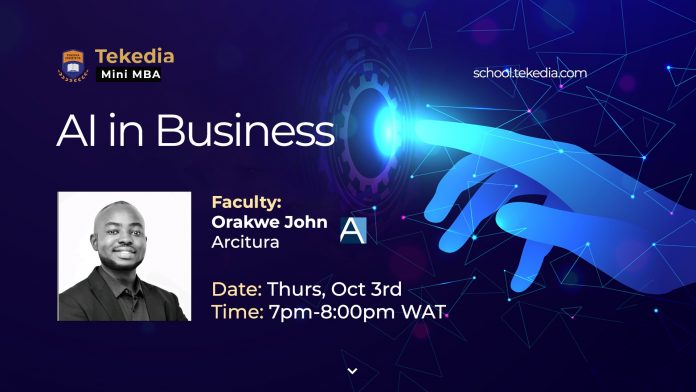
Join us today as we discuss AI in Business at Tekedia Institute 


Influx Technologies and Akash Network to Launch DePIN and Web3 Advocacy Group

0

In a significant move for the decentralized technology sector, InFlux Technologies, also known as Flux, has joined forces with Akash Network to launch a dedicated DePIN and Web3 Advocacy Group. This initiative marks a pivotal moment in the evolution of decentralized technologies and their integration into mainstream regulatory frameworks.

Flux, a global leader in decentralized cloud computing services, brings to the table its extensive expertise in cloud infrastructure and artificial intelligence. The company has been at the forefront of providing scalable and cost-effective decentralized cloud solutions, catering to a wide range of needs from developers to enterprises. Their commitment to innovation has positioned them as a significant player in the Web3 and DePIN landscape.

Akash Network, often referred to as the “Airbnb for data centers,” complements Flux’s offerings by providing a decentralized marketplace for computing resources. Their reputation as a global leader in decentralized computing services is well-earned, thanks to their secured marketplace powered by independent providers.

The collaboration between these two tech giants aims to address the need for regulatory clarity and foster government commitment to the development of the decentralized technology sector. By establishing the DePIN and Web3 Advocacy Group, Flux and Akash Network are taking a proactive stance in shaping the future of regulation in this rapidly evolving space.

The advocacy group’s mission is multifaceted, focusing on promoting education, industry awareness, and active engagement with government agencies, lawmakers, and regulators. The goal is to create regulatory frameworks that protect consumers while nurturing the transformative potential of decentralized technologies. This balance is crucial for ensuring that innovation is not stifled by overly restrictive regulations, which could hinder the growth and integrity of the Web3 and DePIN ecosystems.

Daniel Keller, CEO and Co-founder of InFlux Technologies, emphasizes the importance of collaboration in this endeavor, stating, “In an era where innovation races ahead of regulation, it’s imperative that we create frameworks that both protect consumers and nurture the transformative potential of decentralized technologies. The future of Web3 and DePIN depends on our ability to collaborate, educate, and advocate for a regulatory environment that fosters growth while safeguarding the integrity of the ecosystem.”

The advocacy group also aims to propose regulatory frameworks that reflect the unique nature of the Web3/DePIN sector, with a focus on promoting innovation, compliance, and consumer interests. This approach is expected to set a template for cross-industry growth, not only within the blockchain sector but also in associated technologies in the future.

Greg Osuri, Founder of Akash Network, highlights the significance of DePINs in attracting mainstream users to crypto, stating, “DePINs attract mainstream users to crypto by improving inefficient large-scale industries, ensuring crypto’s ongoing importance. This sector is in its infancy and needs to be regulated accordingly.”

The partnership between InFlux Technologies and Akash Network represents a strategic alignment of vision and expertise, positioning them to lend their voices to the U.S. regulation question from an industry experience vantage point. Their combined efforts in building the DePIN and Web3 Advocacy Group are a testament to their commitment to promoting regulatory synergy in the blockchain sector and advocating for the interests of all stakeholders involved.

Michael Dell Offloads $1.2B in Dell Stock

0

Michael Dell, the founder and CEO of Dell Technologies, has recently made headlines by selling a significant portion of his Dell stock, amounting to $1.2 billion. This move has sparked various speculations and discussions among investors, analysts, and the tech community.

The sale, which involved offloading 10 million shares of Class C Common Stock at an average price of $122.4 per share, was executed directly by Dell, reducing his holdings in the company to 16,912,241 shares. This transaction follows a series of sales by Dell in September, which cumulatively amounted to over $2.3 billion worth of shares.

The timing of these sales is noteworthy, as it comes on the heels of Dell Technologies’ inclusion in the S&P 500 Index and amidst the company’s recent surge in stock price. Year to date, Dell’s stock has experienced a significant increase of 58.50%. Moreover, Michael Dell’s interest in Bitcoin and his retweet of a message from Bitcoin advocate Michael Saylor have fueled rumors about potential investments in cryptocurrencies following these stock sales.

Dell has been vocal about the rapid advancement of generative artificial intelligence, drawing parallels between its swift rise and the early days of the internet. His comparison suggests that AI adoption is occurring at a pace much faster than previous technological waves. This perspective aligns with the company’s strategic focus on AI expansion, which may be influencing Dell’s decision-making regarding his stock holdings.

The performance of Dell Technologies’ stock price is influenced by a combination of factors that investors and analysts closely monitor. Here are some of the key drivers:

AI Server Demand: There is an increasing demand for AI servers, especially from tier 2 cloud providers, AI CSPs, and a range of enterprise and sovereign customers. This demand is expected to grow, which could positively impact Dell’s revenue streams.

PC Refresh Cycle: An industry-wide PC refresh cycle is anticipated, driven by the aging PC installed base and the scheduled end-of-life for Windows 10 in October 2025. With a significant portion of the installed base likely needing upgrades to meet the requirements for Windows 11, Dell could see increased demand for its products.

Financial Health and Strategic Position: Key executives at Dell Technologies have provided insights into the company’s financial health and strategic position during meetings with analysts. A strong financial position and a clear strategic direction can instill confidence in investors.

Market Sentiment: Corporate insider activity, such as the recent sale of shares by Michael Dell, can influence market sentiment. While insider selling can sometimes signal caution, it can also be due to personal financial planning or diversification of assets.

Valuation Metrics: Dell’s price-to-earnings ratio, price-to-free-cash-flow ratio, and enterprise-value-to-EBITDA ratio are metrics that investors use to gauge whether the stock is undervalued or overvalued compared to its peers.

Economic and Industry Trends: Broader economic trends and industry-specific developments, such as advancements in technology and shifts in consumer behavior, can also drive stock prices.

Earnings Reports: Quarterly and annual earnings reports provide a snapshot of the company’s performance and future guidance, which can significantly affect the stock price.

These factors, among others, contribute to the dynamic nature of stock prices and highlight the complexity of the financial markets. Investors should consider these elements in the context of their investment strategy and risk tolerance.

The tech mogul’s actions have raised questions about insider confidence and the future potential of Dell Technologies. Insider trading, especially when it involves significant figures like the CEO, can signal caution about a company’s prospects. However, insiders might also sell shares for various reasons, including personal financial planning or diversification of assets.

Analysts and investors are closely monitoring these developments, as they could indicate shifts in strategy or insights into the company’s future direction. The market’s response to these transactions will be telling, as Dell Technologies continues to navigate the ever-evolving tech landscape.

The Concept of Smart Glasses and the Future of Connectivity

0

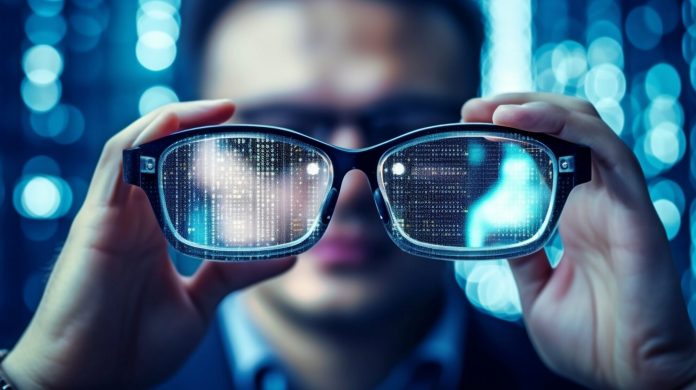
In a world where technology is rapidly advancing, the concept of smart glasses replacing phones is not as far-fetched as it might have seemed a decade ago. Mark Zuckerberg, the CEO of Meta, has been a strong advocate for augmented reality (AR) and its potential to revolutionize how we interact with the digital world. His prediction that smart glasses will replace phones by 2030 is a bold statement that reflects his vision for the future of connectivity.

Smart glasses, a marvel of modern technology, are rapidly evolving from niche gadgets to versatile tools with a myriad of applications across various industries. These wearable devices, which seamlessly blend the digital and physical realms, are not just a testament to human ingenuity but also a gateway to numerous possibilities that can enhance our daily lives.

At the recent Meta Connect 2024 event, Zuckerberg showcased the Orion prototype, a pair of AR glasses that represent the culmination of Meta’s efforts in this field. These glasses are designed to project digital information onto the real world, allowing users to interact with holographic images and virtual environments seamlessly. The Orion glasses are touted as “the most advanced glasses the world has ever seen,” a testament to the strides Meta is making towards making AR technology mainstream.

The potential of smart glasses extends beyond mere convenience. Zuckerberg has discussed the possibility of these devices enabling people to “teleport” to other locations virtually, reducing the need for physical travel and potentially combating climate change. This aligns with the broader vision of the metaverse, where digital and physical realities merge to create new forms of interaction and experience.

Let’s delve into some of the potential applications of smart glasses that are transforming the way we interact with the world around us.

Healthcare Revolution

In the healthcare sector, smart glasses are proving to be a game-changer. They offer medical professionals the ability to access patient data hands-free, allowing them to focus on the task at hand without interruption. Surgeons can use AR overlays for enhanced precision during operations, while medical training can be revolutionized with 3D anatomical models and simulations, providing an immersive learning experience for medical students.

Enhancing Manufacturing Efficiency

The manufacturing industry is harnessing the power of smart glasses to streamline operations. Workers equipped with AR-enabled glasses can receive real-time instructions and guidance, reducing errors and improving productivity. For instance, complex assembly tasks can be simplified with step-by-step visual aids, and maintenance personnel can perform remote troubleshooting with experts guiding them through the process.

Revolutionizing Retail and Warehousing

In retail and warehousing, smart glasses are introducing new efficiencies in inventory management and customer service. Vision picking, where warehouse workers are guided to items via visual cues, is increasing accuracy and speed in fulfilling orders. In retail spaces, sales associates can provide a more personalized shopping experience by accessing information about products and stock availability instantly.

Education and Training

Smart glasses hold immense potential in education, offering a hands-on learning experience that can transcend traditional classroom boundaries. They can bring historical events to life, provide interactive language learning, and even simulate scientific experiments, making education more engaging and effective.

Construction and Field Services

In construction and field services, smart glasses can provide workers with architectural plans and schematics overlaid onto the real-world environment. This can help in accurate measurements, identifying potential issues before they arise, and ensuring that construction projects adhere to design specifications.

Fitness and Personal Training

For fitness enthusiasts, smart glasses can act as personal trainers, displaying workout metrics, providing real-time feedback, and even offering encouragement. They can enhance outdoor activities like cycling or running by showing routes, speed, and heart rate without the need to look away from the path ahead.

Entertainment and Gaming

The entertainment and gaming industries are also embracing smart glasses. They can create immersive gaming experiences that blend the virtual and real worlds, provide subtitles and translations in theaters, or serve as virtual guides in museums, enriching the visitor experience.

Accessibility for Disabilities

Smart glasses can significantly improve the quality of life for individuals with disabilities. For those with low vision, smart glasses can magnify text and images, while for individuals with autism, they can provide social cues and assist in communication.

From enhancing professional tasks to enriching personal experiences, smart glasses are set to redefine our interaction with technology and the world. As we look to the future, it’s clear that smart glasses will play a pivotal role in shaping our digital landscape and everyday lives.

The development of smart glasses like Orion is not without its challenges. The technology must be refined to ensure comfort, ease of use, and accessibility. Moreover, there are privacy concerns that need to be addressed, as these devices could potentially record and share personal experiences on an unprecedented scale.

Despite these challenges, the trajectory of technological innovation suggests that smart glasses could indeed become a staple in our daily lives, much like smartphones did in the early 21st century. If Zuckerberg’s prediction holds true, we may be on the cusp of a new era where our digital and physical worlds are more intertwined than ever before.

As we look towards 2030, it’s clear that the landscape of personal technology is set to undergo a significant transformation. Smart glasses represent just one aspect of this change, but they embody the spirit of innovation that drives the industry forward. Whether or not they will completely replace phones remains to be seen, but the possibilities they present are undeniably exciting.