DD
MM
YYYY

PAGES

DD
MM
YYYY

spot_img

PAGES

Home Blog Page 2970

The Chinese Continue to Collect Over Failed Ogun State Deal – Confiscates Nigerian Jet in Canada

1

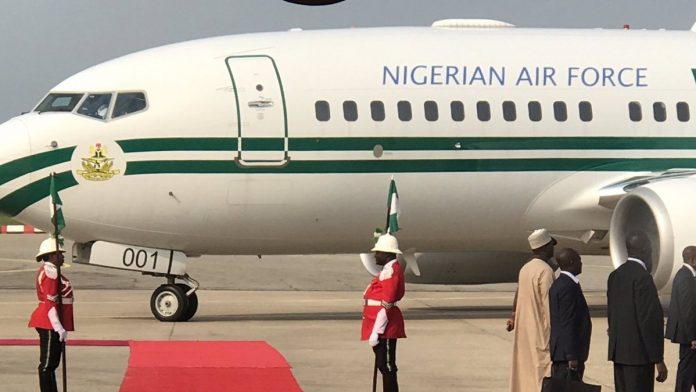
The Chinese continue to collect: “The escalating legal confrontation between Nigeria and Zhongshan Fucheng Industrial Investment Ltd, a Chinese firm, has turned a new leaf, as Zhongshan confiscates another luxury jet owned by Nigeria in Canada. This move is part of a broader campaign by Zhongshan to recover assets as compensation for an unresolved arbitration award.”

This paralysis is coming from Ogun State but nobody knows Ogun or any state outside Nigeria. If the Nigerian government signed a sovereign guarantee on the transactions, Nigeria should step forward, and take over all elements of this arbitration from Ogun State.

Simply, no one cares about what Ogun State is saying now. What matters now is how Nigeria will get itself out of this maze. If you look carefully, it was not only the Chinese company that was affected (yes, Nigerian companies could have been harmed also). However, the difference here is that it was only the Chinese firm which might have received a sovereign guarantee from Nigeria.

It is a lesson for Nigerian leaders: you do not just abandon projects recklessly. Sure, I am not passing any judgment on this particular case; I am simply saying we need to do better. In Imo State a few years ago, a new governor came and froze a real estate project started by his predecessor, with no feeling that ordinary citizens took loans to invest in that project. In Kano, a governor bulldozed a fully developed project. They did those things and got away, but here, we are learning how it could look when the victims are not Nigerians and Nigerian companies.

Chinese Firm, Zhongshan Fucheng, Seizes Another Nigeria’s Jet in Canada

Crypto Fundings Account for nearly half of U.S. Election Donations

0

In the grand theater of U.S. Elections, where democracy dances with dollars, a new player has entered the stage with a bang – or should we say, a Bitcoin? Yes, folks, crypto companies are now the nouveau riche of political donations, accounting for nearly half of the corporate contributions. It’s a financial fiesta, and everyone’s invited.

Let’s set the scene: It’s 2024, and the U.S. is buzzing with election fever slated for November. The usual suspects – big oil, pharma, and tech giants – are there, but wait, who’s that throwing around money like it’s going out of style? Ah, the crypto companies, with their digital wallets bursting at the seams, have decided that politics is the next frontier to conquer.

Coinbase and Ripple, not content with just disrupting the financial world, are now splashing cash in the political pond. They’ve contributed a whopping $119 million to the election cause. That’s right, million with an ‘M’. They’re backing candidates who can say ‘blockchain’ three times fast and have ‘HODL’ tattooed on their hearts.

But what does this mean for the average voter? Well, if you thought deciphering cryptocurrency was hard, try unraveling the web of political donations. It’s like trying to understand the plot of a Christopher Nolan movie after missing the first half-hour. You know it’s important, but you’re not quite sure why everyone’s running around so frantically.

The Fairshake PAC, a major recipient of these digital dollars, has seen more money than a Bitcoin miner during a bull run. With $107.9 million from crypto, they’re shaping election outcomes like a potter shapes clay – if the potter was wearing a VR headset and trading NFTs on the side.

Now, some might say that this influx of crypto cash is a concern for democracy. But let’s be real – in the land of the free, where freedom includes the right to spend your money as you, please, who are we to judge? After all, isn’t the American Dream all about making it big and then using that bigness to influence… well, everything?

With crypto companies pouring millions into political campaigns, we’re seeing a shift in the power dynamics of election financing. Imagine a world where campaign rallies are replaced with virtual reality meetups and debates are settled with a competitive round of “Who Can Explain Blockchain Better?”

Then there’s the regulatory tango. Politicians who once couldn’t tell a Bitcoin from a Beanie Baby are now singing praises of the blockchain, hoping to secure a slice of that sweet, sweet crypto pie. It’s like watching your grandpa suddenly become a TikTok sensation – unexpected but oddly captivating.

And let’s not forget the voters. With the crypto industry’s influence, we might just see campaign promises like “A Dogecoin in every digital wallet”. The political landscape is changing, and it’s got more ups and downs than the price of Bitcoin on a rollercoaster ride.

So, as we gear up for the 2024 elections, let’s raise our glasses (or our mining rigs) to the crypto companies. They’ve gone from being the outsiders to potentially deciding who gets to sit in the Oval Office. And who knows? Maybe the next campaign slogan we’ll hear will be “Make America Mine Again!”

Remember, politics, just like in crypto, volatility is the only constant. So, strap in, keep your private keys private, and enjoy the ride. It’s going to be a wild one.

Nigerian Government to Kick Off 90,000km Fiber-optic Cable Project Across the Country

0

The Nigerian Federal Government is embarking on a transformative digital infrastructure project aimed at deploying 90,000 kilometers of fiber-optic cable across the country. This ambitious initiative, set to begin within the next six months, is designed to significantly enhance Nigeria’s national connectivity backbone by increasing the current network from 35,000 kilometers to a robust 125,000 kilometers.

The Minister of Communications, Innovation, and Digital Economy, Dr. Bosun Tijani, announced the Federal Government’s plan, highlighting the progress made under his leadership over the past year.

The deployment of the fiber-optic network is expected to start between now and February 2025.

Through the project, the government aims to improve internet connectivity by expanding the country’s digital infrastructure, ensuring more Nigerians have access to reliable and affordable internet services, and ultimately stimulating economic growth.

However, this expansion represents more than a move to improve telecom services. Many believe it represents a strategic move to make the Nigerian market more competitive especially as international tech giants like SpaceX’s Starlink expand their presence in the country.

The global tech company SpaceX, through its satellite internet service, Starlink, is rapidly expanding its footprint in Nigeria by establishing ground stations across the country. Starlink’s entry into the Nigerian market has introduced a new level of competition, particularly for local internet service providers (ISPs), who now face the challenge of competing with Starlink’s high-speed, low-latency internet offerings.

Funding and Partnership Model

To finance this large-scale project, the Nigerian government is working with international funding partners, including the World Bank. Dr. Tijani revealed that the Federal Executive Council (FEC) has approved a Special Purpose Vehicle (SPV) to manage the project’s delivery. This SPV, modeled after successful Public-Private Partnerships (PPPs) like the Nigeria Inter-Bank Settlement System (NIBSS) and Nigeria LNG Limited (NLNG), is expected to help in securing the necessary funds and ensuring the effective deployment of the fiber-optic network.

“The Federal Executive Council (FEC) FEC has approved the SPV that will deliver on this project, and our development funding partners are currently finalizing the SPV structure to ensure the aggregation of funding required for the effective deployment of the fiber-optic network.

“Our target is for this deployment to start within the next six months,” Dr. Tijani stated, noting that the project is critical for creating a more vibrant digital ecosystem.

“By connecting more communities across the country, we will ensure that many more of our citizens can connect to the benefits of the digital economy,” he added.

Impact on the Nigerian Internet Market

The deployment of the fiber-optic network is particularly necessary for the survival of local ISPs, which have served as Nigeria’s economy’s backbone, especially in the face of increasing pressure from Starlink’s aggressive expansion.

Starlink’s satellite internet service, known for its high speed and global reach, has already started making inroads into underserved and remote areas of Nigeria. While Starlink’s presence is a boon for consumers, offering them more choices and better service, it presents a formidable challenge for local ISPs who rely on ground-based infrastructure.

Local ISPs need large-scale fiber-optic infrastructure to remain competitive in this new landscape. Without such infrastructure, they may struggle to offer the same level of service as Starlink, potentially leading to a loss of market share. Thus, many believe that the government’s fiber-optic deployment plan, therefore, is not just about improving national connectivity but also about empowering local ISPs to compete effectively against global giants.

Economic and Social Benefits

The project is also expected to have far-reaching economic and social benefits. The government aims to raise internet penetration to over 70% and reduce the cost of internet access by more than 60% by increasing the country’s fiber-optic coverage. This would bring more than half of the 33 million Nigerians currently without internet access into the digital economy, fostering greater inclusion and participation.

Moreover, the project is projected to contribute up to 1.5% growth in GDP per capita, potentially raising Nigeria’s GDP from $472.6 billion in 2022 to approximately $502 billion within the next four years. By connecting more communities, especially in rural and underserved areas, the project will unlock new economic opportunities, drive innovation, and improve the quality of life for millions of Nigerians.

The Challenge of Right of Way

Despite the potential benefits, the project faces significant challenges, particularly concerning the issue of Right of Way (RoW). RoW regulations, which differ across Nigeria’s 36 states, have historically slowed down infrastructure development due to high costs and bureaucratic delays imposed by state governments.

Telecom industry experts have said that for the fiber-optic deployment to succeed, the Federal Government will need to secure the cooperation of state governments and streamline RoW processes. They warned that without addressing these challenges, the project could face significant delays, undermining its potential impact.

Chinese Firm, Zhongshan Fucheng, Seizes Another Nigeria’s Jet in Canada

0

The escalating legal confrontation between Nigeria and Zhongshan Fucheng Industrial Investment Ltd, a Chinese firm, has turned a new leaf, as Zhongshan confiscates another luxury jet owned by Nigeria in Canada. This move is part of a broader campaign by Zhongshan to recover assets as compensation for an unresolved arbitration award.

The dispute, which stems from a failed investment deal, has seen Nigeria’s assets being seized across multiple countries, with the potential for further losses looming on the horizon.

Background of the Dispute

The conflict between Nigeria and Zhongshan Fucheng Industrial Investment Ltd originates from a botched free trade zone contract in Ogun State. The Chinese company had entered into an agreement with the Nigerian government to develop the Ogun-Guangdong Free Trade Zone, a project that promised significant economic benefits for both parties.

However, the deal soured over time, with both sides accusing each other of contractual breaches.

Zhongshan, feeling aggrieved by what it perceived as Nigeria’s failure to honor its commitments, took the matter to international arbitration. The arbitration panel ruled in favor of Zhongshan, awarding the company over $70 million in damages. But Nigeria has consistently contested the outcome, claiming no wrongdoing and challenging the enforcement of the arbitration award in courts across various jurisdictions.

Seizure of Nigerian Assets

Zhongshan’s efforts to recover its awarded compensation have led to a series of legal actions resulting in the seizure of Nigerian assets across the globe. These seizures have been strategically executed in countries where Nigeria holds valuable properties or interests, allowing Zhongshan to recoup its losses in lieu of the unpaid arbitration award.

United Kingdom: Zhongshan successfully seized guest houses belonging to the Nigerian government. These properties, used primarily for diplomatic purposes, were among the first to be confiscated as part of the enforcement of the arbitration award.

France: In a similar vein, assets related to Nigeria’s diplomatic missions in France were targeted. Nigerian presidential aircraft were seized, including the newly purchased jet which was later released by the firm as a sign of “goodwill.”

Canada: The most recent and high-profile seizure involved the luxury jet, a Bombardier 6000 type BD-700-1A10, which was once owned by former Nigerian oil minister Dan Etete. The jet, which was purchased for $57 million from the proceeds of the controversial OPL 245 oil field sale, had been under Nigeria’s custody since 2016. However, following a court ruling in March 2024, Zhongshan took control of the aircraft, marking a significant victory in its asset recovery campaign.

The aircraft, with tail number M-MYNA and serial number 9471, was part of the luxurious assets amassed by Dan Etete during his tenure as oil minister. After Nigeria seized the jet from Etete in Dubai, it was flown to Canada in 2020, where it remained under Nigerian control until Zhongshan’s recent legal victory.

Judge David Collier of the Superior Court of Quebec ruled against Nigeria, dismissing the country’s sovereign immunity claims and rejecting its argument that it could not respond to the lawsuit due to the general elections. Nigeria in its defense, told the court that it was unable to respond to the suit early enough due to its 2023 general elections.

The judge’s decision paved the way for Zhongshan to take possession of the jet, further eroding Nigeria’s international assets.

Potential Future Seizures

Zhongshan Fucheng Industrial Investment Ltd has made it clear that it will continue to pursue Nigeria’s assets until the full amount of the arbitration award is recovered. With over $70 million still outstanding, the Chinese firm is expected to target additional Nigerian properties and assets in other countries.

There are credible reports that Zhongshan is eyeing Nigerian assets in Belgium and the United States, where the country maintains valuable properties, including diplomatic buildings, bank accounts, and potentially more aircraft. The legal framework in these countries, particularly concerning international arbitration awards, could allow Zhongshan to successfully execute further seizures.

Yellow Card Partners Fireblocks to Revolutionize Cross-Border Transactions in Africa

0

Yellow Card, a Pan-African fintech company company that focuses on cryptocurrency transactions and financial services, has partnered with digital asset infrastructure provider Fireblocks, to enhance cross-border transactions for businesses and individuals across Africa.

With this partnership, Yellow Card is leveraging Fireblocks technology to overcome challenges faced by global corporate treasuries when entering African markets. By utilizing Fireblocks’ Wallets-as-a-Service (WaaS) platform, Yellow Card can efficiently create, manage, and secure up to 14 million multi-party computation (MPC) wallets. This ensures that customers assets are protected at scale, providing a secure and effective on-chain solution that facilitates seamless access to the African financial landscape.

Commenting on the partnership CEO and Co-founder of Yellow Card Chris Maurice said,

“We are excited to work with Fireblocks to enable real-world use cases for stablecoins, solving the complex challenges of international and pan-African transactions. Together, we enhance how businesses around the world manage their treasury, make payments and drive innovation across Africa”.

Also speaking on the partnership, Ran Goldi, SVP payments and Network at Fireblocks said,

Africa, like the rest of the world, is witnessing a significant transition from traditional payment systems to alternative digital payments, driven by emerging technologies. With $100 billion in remittances flowing into the continent, the shift is clear. However, the challenge of high costs in cross-border transactions remains, particularly for low-value payments, which often incur hefty fees. We are thrilled to partner with Yellow Card to provide our direct custody Wallets-as-a-Service (WaaS) solution, enabling them to securely manage their customers’ digital assets at scale.”

Fireblocks is an enterprise-grade platform delivering a secure infrastructure for moving, storing, and issuing digital assets. The platform enables exchanges, custodians, banks, trading desks, and hedge funds to securely scale digital asset operations through patent-pending SGX & MPC technology.

Also, it is committed to serving clients through partnering with the most sophisticated and innovative teams. From industry-leading technology providers to the newest innovators/advances in DeFi, Fireblocks is actively seeking partners that will empower more companies to build and scale their digital asset businesses. The company has partnered with great companies such as coincover, Chainalysis, Azure, AAVE, EIGER, Kiln and Temenos, amongst others.

Together, with Yellow Card, both companies will tackle the complex challenges faced by multinational corporate treasuries such as regulatory compliance, currency volatility, and inefficient legacy banking systems.

Notably, this strategic partnership, marks a pivotal moment for both companies as they pave the way for more streamlined and secure financial operations across Africa. With a shared vision of innovation and excellence, Yellow Card and Fireblocks have a common goal of transforming cross-border transactions by introducing new benefits to businesses and the economy through innovation and excellence.