DD
MM
YYYY

PAGES

DD
MM
YYYY

spot_img

PAGES

Home Blog Page 2971

BOLT Ride-hailing Requests In Nigeria and South Africa Expose Design Flaws

0

The ongoing rivalry between Nigerians and South Africans has evolved into a high-tech conflict, with the latest chapter unfolding on social media and within the ride-hailing industry. This new skirmish, involving coordinated actions by individuals in both countries to disrupt ride-hailing services, particularly Bolt, has exposed the flaw of inter-country ride-hailing requests.

The latest twist in the Nigeria-South Africa rivalry emerged on X (formerly Twitter), where reports surfaced that South Africans were intentionally ordering and then canceling rides in Nigeria through Bolt.

These actions were reportedly aimed at frustrating Nigerian drivers and inflicting financial harm. A viral video allegedly shows a South African man mocking a Nigerian Bolt driver, Kotoro-Ola, after canceling a ride, exemplifying the malicious intent behind these actions. Numerous screenshots shared online show similar instances, where South Africans placed ride requests in Nigeria with the sole purpose of canceling them to cause stress and economic loss to the drivers.

Nigerians Counterattack

Nigerians, not to be outdone, responded by launching a coordinated campaign to disrupt Bolt services in South African cities like Cape Town and Johannesburg. This retaliatory action led to a significant surge in ride requests, causing a shortage of available rides and driving up prices, leaving many South Africans stranded.

A widely circulated video on X depicted over 40 Bolt drivers converging on a single street in Johannesburg, all responding to what turned out to be a coordinated hoax by Nigerians, further exacerbating the chaos. This eventually forced many drivers to turn off their apps.

Rivalry Intensified by Miss South Africa Controversy

The ride-hailing skirmish comes on the heels of another contentious issue between the two nations—the withdrawal of Chidimma Adetshina, who is of Nigerian descent, from the Miss South Africa pageant. South African-born Miss Adetshina, a 23-year-old law student living in Soweto, withdrew from the competition amid a storm of criticism regarding her nationality.

The situation escalated when South Africa’s Home Affairs Department began investigating claims that Miss Adetshina’s mother might have committed “identity theft” to secure South African citizenship. Faced with growing hostility and concerns for her safety, Adetshina chose to withdraw from the pageant, citing the need to protect herself and her family.

Bolt’s Response to the Crisis

In response to the unfolding chaos, Bolt swiftly implemented several measures to prevent further misuse of its platform. The company released a statement acknowledging the recent incidents and outlining the steps it has taken to safeguard its operations.

“Bolt is aware of the recent fake ride requests between individuals in Nigeria and South Africa. We’ve swiftly implemented measures to resolve the issue, including restricting inter-country ride requests, and have blocked those responsible from the Bolt app,” the company stated.

Bolt’s actions, including suspending accounts and restricting inter-country ride requests, have had an immediate impact on its operations.

The Flaw in Inter-Country Ride Requests

While this incident highlights the effects of unemployment, as both Nigeria and South Africa have 33.3% and 32.9% unemployment rates respectively, it points to the flaw in inter-country ride requests.

The ease with which individuals in South Africa were able to disrupt Bolt services in Nigeria, and vice versa, points to a potential vulnerability in the ride-hailing platform’s design. Many have noted that Bolt’s technology did not adequately anticipate or prevent such abuse, leaving the platform open to manipulation by those with malicious intent. Inter-country ride requests, while convenient for users who travel internationally, can be exploited to create chaos across borders, as this incident has demonstrated.

Against this backdrop, the Bolt episode is seen as more than just a story of petty rivalry, with many pointing to it as a reflection of the broader challenges that come with operating in a hyper-connected world.

Critics argue that the ability of users in one country to impact the availability and pricing of rides in another suggests a need for more robust safeguards within the platform’s architecture.

1Win App Review: Bonuses, Benefits, Types of Games and Bets

0

Designed specifically for Nigerian punters, the 1Win app offers unrivalled betting opportunities by putting the user experience at the centre of the experience. With a user-friendly interface that allows for seamless navigation, accessing the vast array of sports markets is made easy. In addition, constant updates and enhancements ensure optimal functionality, making the 1win app a trusted companion for every bettor. Experience the convenience and excitement of mobile betting today: simply download the 1win app, install it and start betting.

What Does the 1Win App Offer?

For Nigerian punters seeking a seamless and reliable betting experience, the 1Win app is a promising choice. With an intuitive interface and easy navigation, users get quick access to a huge range of betting features. The app’s multilingual support further enhances accessibility by providing clarity of understanding and navigation. Notably, Nigerian punters can take advantage of a wide range of secure in-app banking services, facilitating transactions right from their mobile device. The app’s commitment to security ensures fast and secure payments, building user confidence. In essence, the 1Win app epitomises convenience, accessibility and reliability, fully replicating the functionality of its official website.

System Requirements of the Application

For optimal performance and smooth betting on the 1Win apk platform, it is important that your device meets the specified system requirements. The 1Win betting app works effectively on devices running Android version 5.0 or higher and iOS version 12 or higher. With at least 32MB of free memory and 1GB+ of RAM, as well as a processor clocked at least 1.4GHz, your device will be able to easily handle the requirements of the 1Win app.

Importantly, compatibility is ensured with a wide range of modern Android devices such as:

  • Samsung Galaxy models from 2018
  • Nokia and Oppo devices from 2019
  • Xiaomi smartphones from 2019 onwards.

Similarly, iOS users can seamlessly use 1Win on a variety of Apple devices, including but not limited to:

  • iPhone X, Xs, Xs Max
  • iPhone XR
  • iPhone 8, 8 Plus
  • iPhone 11
  • iPhone SE models (SE, SE2, SE3)
  • iPhone 12 lineup (12, 12 Pro, 12 mini, 12 Pro Max)
  • iPad Pro (11, 12) models
  • iPad Air (3, 4) models
  • iPhone 13 series
  • iPhone 14 series

Bonus Programme of the Application

The 1Win app welcomes new players to Nigeria by offering them a registration package with a solid 500% bonus on their first four deposits. This offer, available immediately after downloading the app, is designed to enhance the player experience right from the start. The bonus is divided into four tiers, with each deposit giving a different percentage boost:

  • 200% bonus on first deposit,
  • 150% bonus on second deposit,
  • 100% bonus on your third deposit,
  • 50% bonus on the fourth deposit.

The maximum bonus amount is NGN 685,000. In addition, the Express Bonus feature offers up to 15% extra interest on winning accumulative bets with five or more events, each with odds of 1.3 or higher. The Cashback feature offers compensation of 30 per cent on losses incurred on slots in the previous week. With these attractive bonuses, the 1Win app provides Nigerian players with a favourable gaming experience.

Sports Betting in the 1Win App

1Win download now and dive into a world of diverse betting opportunities with the 1Win app. Offering over 35 sports and esports including football, baseball, handball, handball, wrestling and Welsh football, the platform provides a convenient betting experience no matter where you are. Whether you are an experienced player or a beginner, the 1Win app provides a convenient and accessible experience for punters from Nigeria.

Casino Games at 1Win

Within the 1Win betting app, the casino section is a robust offering with over 11,000 different online games from nearly 150 reputable providers. These include industry giants such as Evolution Gaming, Pragmatic Play and Red Tiger Gaming. Players can choose from 20 different categories, from bonus and jackpot games to fast games and slots, providing a dynamic and exciting gaming experience for all enthusiasts.

Mobile Version of the 1Win Website

For players who prefer an alternative to the 1Win app or face restrictions in accessing it, the mobile version will be a great solution. Built on HTML5 technology, it works easily in modern browsers, offering users a similar experience to the app. With this version, users can place live bets and enjoy live streaming services, providing seamless access to betting offers on the go.

Main Advantages of the 1Win App

Appreciate the many benefits of the 1Win bet app:

  • User-friendly interface: Enjoy a user-friendly interface designed to make it easy to create an account, make deposits and play for real money.
  • Sleek Design: Enjoy a visually pleasing design in a dark theme, mirroring the sophistication of the desktop site and providing a seamless transition between platforms.
  • Efficient navigation: Quickly navigate between sections thanks to the app’s intuitive layout, making it easy to play on the go.
  • Unlimited Access: Get access to all betting and gambling opportunities at your convenience and wherever you want to have uninterrupted fun.
  • Generous bonuses: Get tempting no-deposit bonuses after installing the app and enable push notifications.

In conclusion, 1Win Nigeria is a solid choice for Nigerian bettors looking for a seamless and intuitive betting experience. With a user-friendly interface and a variety of betting options, 1Win offers convenience and excitement in equal measure.

Oando Plc Completes $783 Million Acquisition of Nigerian Agip Oil Company

0

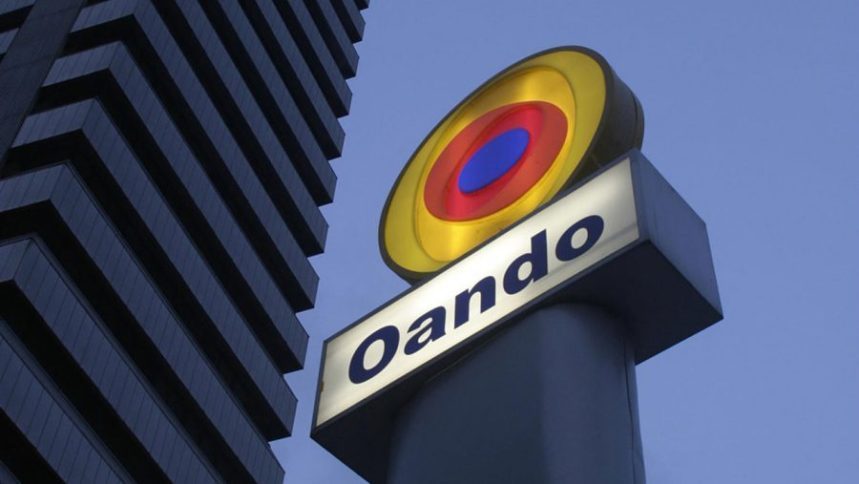
Oando Plc, a leading energy company in Nigeria, has successfully completed the acquisition of Nigerian Agip Oil Company (NAOC), a subsidiary of Italy’s oil giant Eni. This landmark transaction, valued at $783 million, marks a significant milestone in Oando’s strategic expansion and the ongoing trend of international oil companies divesting from offshore operations in Nigeria.

Oando, which is publicly traded on both the Lagos and Johannesburg stock exchanges, announced the completion of the deal on Thursday, nearly eleven months after the initial agreement was struck. The acquisition aligns with Oando’s long-term strategy to scale up its upstream operations and strengthen its foothold in the Nigerian oil and gas sector.

The transaction increases Oando’s stakes in Oil Mining Leases (OMLs) 60, 61, 62, and 63 from 20% to 40%, significantly enhancing its production and asset base. In a regulatory filing, Oando highlighted that the deal includes “forty discovered oil and gas fields, of which twenty-four are currently producing,” as well as approximately forty identified prospects and leads.

The assets also encompass twelve production stations, 1,490 kilometers of pipelines, three gas-processing plants, the Brass River Oil Terminal, and the Kwale-Okpai phases 1 & 2 power plants, with a combined nameplate capacity of 960MW.

Oando’s CEO, Wale Tinubu, expressed optimism about the acquisition’s impact on the company’s operations and the broader Nigerian energy sector.

“It is a win for Oando and every indigenous energy player, as we take our destiny in our hands and play a pivotal role in this next phase of the nation’s upstream evolution,” Tinubu stated. “With our assumption of the role of operator, our immediate focus is on optimizing the assets’ immense potential, advancing production, and contributing to our strategic objectives.”

Impact of The Deal on Reserves and Cash Flow

This acquisition is expected to double Oando’s total reserves, with the company’s reserves jumping by 98% from 505.6 million barrels of oil equivalent (MMboe) to over 1 billion barrels of oil equivalent (Bnboe). The transaction is immediately cash-generative, and Oando anticipates a substantial boost to its cash flows as a result.

The acquisition also places Oando in a stronger position within the Nigerian energy sector, particularly as the company assumes the role of operator for the newly acquired assets. This operational control will enable Oando to optimize production processes and leverage the full potential of the assets, further enhancing its market position.

Oando’s acquisition of NAOC is part of a broader trend of international oil companies (IOCs) exiting offshore and shallow-water operations in Nigeria. These IOCs are increasingly focused on onshore activities, driven by challenges such as oil theft, pipeline vandalism, and security concerns that have adversely affected production.

In recent years, several major players have either completed or are in the process of completing similar divestitures. For instance, Norway’s Equinor and China’s Addax have entered agreements to sell their offshore assets, while Shell has reached a deal to divest its local subsidiary to a consortium of indigenous firms. ExxonMobil is also advancing a transaction to sell its shallow-water oil assets to Seplat, a deal valued at approximately $1.3 billion.

Eni, in a statement on its website, confirmed that the deal with Oando excludes its 5% participating interest in the Shell Production Development Company Joint Venture (SPDC JV). The Italian firm reiterated its commitment to Nigeria, stating that it will continue to operate in the country through investments in deep-water projects and Nigeria LNG, while also exploring new opportunities in the agri-feedstock sector.

Oando has experienced a remarkable 314% increase in its stock price since the beginning of the year, making it the second-best-performing stock on the Nigerian market. The completion of the NAOC acquisition is expected to strengthen Oando’s market position further and contribute to its long-term growth trajectory.

This acquisition is not only a significant milestone for Oando but also a reflection of the evolving dynamics within the Nigerian oil and gas industry, where indigenous companies are increasingly taking on larger roles in the sector.

OVH Acquisition: Atiku Accuses Tinubu of Using NNPCL to Hijack Oil Deals for His Family

0

Since President Bola Tinubu took office, the Nigerian National Petroleum Company Limited (NNPCL) has found itself at the center of intense scrutiny and controversy. Allegations of corruption, nepotism, and the misuse of state assets have been leveled against the company, with critics arguing that it is being used as a vehicle to execute questionable oil deals that primarily benefit the president’s family and inner circle.

The most prominent critic of the NNPCL’s recent activities is former Vice President Atiku Abubakar. In a scathing statement titled “Nigeria is rapidly transforming into a government of Tinubu, by Tinubu, and for Tinubu,” signed by his press secretary Paul Ibe, Atiku accused President Tinubu of tightening his grip on Nigerian assets through the NNPCL.

He asserted that Tinubu is replicating the model he used in Lagos, where companies like Alpha Beta and Primero allegedly acted as proxies to funnel revenue to him and his family, now at the federal level.

Atiku expressed deep concern about the direction in which the NNPCL is being steered, particularly regarding its recent dealings and leadership appointments. He claimed that even after Tinubu leaves office, the president’s entrenched influence will make it nearly impossible to dismantle these power structures.

The Controversial OVH Acquisition

Central to Atiku’s criticisms is the NNPCL’s controversial acquisition of OVH Energy, a company in which Oando, led by Wale Tinubu, owns 49%. The deal, which saw NNPCL’s retail arm merge with OVH, has been shrouded in controversy, with details such as the purchase price and the terms of the acquisition remaining undisclosed. This lack of transparency has fueled widespread suspicion and speculation about the true motives behind the transaction.

Atiku described the deal as a “criminal hijack” of the NNPCL by corporate cabals close to President Tinubu. He was particularly critical of the fact that OVH, a company previously under the control of NNPCL, has now effectively taken over NNPCL’s retail operations.

He argued that this transaction defies economic logic and represents a clear abuse of office by President Tinubu, who has positioned himself as the Minister of Petroleum, further centralizing control over the oil sector.

“In October 2022, just five months before the elections, the NNPC Retail controversially announced it had acquired OVH and all its filling stations. NNPCL already had about 550 filling stations across the country but claimed it was enhancing its capacity by acquiring OVH, which had only 94 stations and 100 others leased,” Atiku noted.

“The NNPC did not disclose the purchase price of OVH or the terms of the acquisition. A Freedom of Information request by Premium Times was also rejected by the NNPC, which claimed to be a private company despite still being government-owned.”

He also highlighted the appointment of Pius Akinyelure, a long-time ally of Tinubu, as the Chairman of NNPCL, alongside the retention of Mele Kyari as the Group Managing Director, despite widespread criticism of his leadership.

“Following this dubious deal, Mele Kyari was controversially retained as NNPC GMD despite his incompetence. Tinubu then appointed his former boss at Mobil, turned ally, Pius Akinyelure, as NNPC Chairman, while he himself took on the role of Minister of Petroleum,” he said.

Atiku suggested that these appointments were made not on the basis of merit, but to ensure that the NNPCL remains under the tight control of Tinubu’s loyalists.

“In a move that defies economic logic, OVH, previously owned by NNPC Retail, has now acquired NNPC Retail. This absurd situation means that Wale Tinubu’s Oando now owns 49% of NNPC Retail. Moreover, Nigeria paid Wale Tinubu a significant sum to facilitate the Tinubu family’s acquisition of the national oil company. This represents a clear case of illogical business transactions and abuse of office by President Tinubu, who has prevented NNPC from becoming a public liability company as stipulated by the PIA,” he said.

NNPCL’s Defense

In response to these serious allegations, the NNPCL has strongly denied any wrongdoing. The company issued a detailed statement titled “OVH Acquisition: The Facts, by NNPC Ltd,” which sought to clarify the circumstances surrounding the OVH deal and refute Atiku’s claims.

The NNPCL asserted that it is a commercially-focused and profit-driven entity, managed by professionals who are committed to adding value to the nation. The company said that its investment decisions are made based on commercial viability and national interest, not political considerations.

“At the time NNPC Ltd. acquired OVH in 2022, Oando (in which Mr. Wale Tinubu has equity interest) had fully divested its equity in OVH to the other partners – Vitol and Helios. Oando actually began its divestment in 2016, with Vitol and Helios coming in as equity partners, leading to the change of name from Oando to OVH. In 2019, Oando fully divested its equity interest in OVH resulting in Vitol and Helios holding 50% equity interests, respectively,” the statement clarified.

NNPCL also addressed concerns about its recent leadership appointments, defending the retention of Mele Kyari as GMD and the appointment of Pius Akinyelure as Chairman. The company pointed to its strong financial performance as evidence of sound management, noting that it reported a profit after tax of N3.3 trillion in its 2023 Audited Financial Statement.

“NNPC Ltd. as a commercial entity is devoid of political interest and shall continue to conduct its business full of commitment to national interest and value creation for the benefit of all stakeholders. NNPC Ltd. shall resist any attempt to draw its Board and Management into partisan politics,” the statement concluded.

Where the concerns lie

The controversy surrounding the NNPCL and its operations under President Tinubu is not an isolated incident. It is part of a broader pattern of concerns about governance, transparency, and the concentration of power in Nigeria’s oil sector. Since taking office, Tinubu has faced persistent accusations of leveraging state resources to solidify his power and reward loyalists, particularly in the oil sector, with the NNPCL playing a central role in this strategy.

These allegations have significant implications for Nigeria’s economy and its oil sector in particular. The NNPCL’s role in the country’s financial stability and its ability to attract foreign investment are both at risk if perceptions of corruption continue to grow. Moreover, the concentration of power within the NNPCL raises serious concerns about the potential for abuse and the erosion of accountability in Nigeria’s most critical economic sector.

NNPC Responds

OVH Acquisition: The Facts, by NNPC Ltd.

PRESS RELEASE

The attention of NNPC Ltd has been drawn to a press release signed by Mr. Paul Ibe, a Media Adviser to the former Vice President, Alhaji Atiku Abubakar. 

In the statement, the former Vice President was quoted to have lamented “the criminal hijack of the NNPC by corporate cabals around the current President”.

He was also quoted to have listed the retention of Mr. Mele Kyari as the Group Chief Executive Officer of NNPC Ltd as a compensation for the alleged acquisition of NNPC Retail Ltd by OVH in which he claimed Mr Wale Tinubu held 49% stake. 

He further alleged that the NNPC Retail Ltd—OVH acquisition deal was part of a grand scheme by President Bola Ahmed Tinubu to integrate his personal business interests into Nigeria’s public enterprises at the federal level. 

NNPC Ltd wishes to set the records straight with the following facts:

1. We are a commercially-focused and profit-driven company managed by professionals who are committed to adding value to the nation.

2. Investment decisions by NNPC Ltd Management are strictly determined on the basis of commercial viability and national interest.

3. At the time NNPC Ltd acquired OVH in 2022, Oando (in which Mr. Wale Tinubu has equity interest), had fully divested its equity in OVH to the two other partners – Vitol and Helios. Oando actually began its divestment in 2016, with Vitol and Helios coming in as equity partners, leading to the change of name from Oando to OVH. In 2019, Oando fully divested its equity interest in OVH resulting in Vitol and Helios holding 50% equity interests respectively.

4.Upon acquisition of OVH by NNPC Ltd, both NNPC Retail Ltd and OVH effectively became subsidiaries of NNPC Ltd. However, based on professional advice and sound commercial considerations, NNPC Ltd opted to merge NNPC Retail Limited into OVH, and thereafter retain NNPC Retail Limited as the company name post-merger.

5. The first step of merging NNPC Retail Ltd into OVH has been completed and the post-merger renaming as NNPC Retail Ltd is ongoing.

6. Contrary to the false alarm raised, neither Wale Tinubu nor the President has any interest in the OVH acquisition.

7. As a businessman, the former Vice President should know that effectiveness in business leadership is best measured by balance sheets and bottom lines rather than pedestrian considerations. 

8. The management of NNPC Ltd, under the leadership of Mr. Mele Kyari, has done very well in growing the company’s fortunes as shown in the 2023 Audited Financial Statement (AFS), where it reported N3.3 trillion as profit after tax.

9. NNPC Ltd as a commercial entity is devoid of political interest and shall continue to conduct its business full of commitment to national interest and value creation for the benefit of all stakeholders. NNPC Ltd shall resist any attempt to draw its Board and Management into partisan politics. 


Olufemi O. Soneye
Chief Corporate Communications Officer
NNPC Ltd.
Abuja.

22 August, 2024

Elon Musk’s Grok Picks XRP, RCOF, and ADA as Tokens More Likely to Rally 60% in Coming Weeks

0

Amid the crypto market rebound, Elon Musk’s Grok has unveiled new price targets for Ripple (XRP), Cardano (ADA), and RCO Finance (RCOF). According to the AI Chatbot, these three top projects will see their tokens rise 60% in the coming weeks. 

The big question is, which cryptocurrencies will see the most significant gains? Let’s explore the growth potential of XRP, ADA, and RCOF.

XRP Price Prediction: Elon Musk’s Grok Forecasts Bullish September for Ripple’s Coin

Elon Musk’s Grok has forecast a positive outlook for Ripple’s XRP token in the coming weeks, even amid ongoing market volatility. The AI’s analysis suggests that XRP could become a leading cryptocurrency, outperforming others in the coming year.

Recent legal developments have influenced the crypto market. XRP’s price has climbed in the past few days, hitting a high of $0.5307. CoinMarketcap data also shows an increase in trading volume during this period.

This surge in trading volume reflects growing investor confidence in XRP. Hence, Elon Musk’s Grok predicts that Ripple’s XRP could rise to $0.834 if the trend continues. This amounts to an approximately 60% surge for investors in the coming weeks.

Elon Musk’s Grok Remains Bullish on ADA Ahead of Q4

Grok suggests recent developments in the Cardano ecosystem could boost ADA’s price. CoinMarketCap data shows that ADA hit a weekly high of $0.462 last week.

What are Elon Musk’s Grok price predictions for Cardano? According to Grok, ADA could reach $1 if the crypto market experiences steady growth.

During a strong market run, ADA might climb to $2 in a more optimistic scenario. Grok also notes that increased usage and integration of Cardano’s technology could further enhance its value.

In a highly bullish scenario, ADA could soar to $5 or higher by 2024, driven by widespread adoption, significant market momentum, and overall positive sentiment in the broader cryptocurrency market.

RCO Finance Brings a Trading Revolution to Crypto

RCO Finance is a DeFi trading platform that enables users to swap their crypto assets for real-world investment options like stocks and bonds. This platform attracts intelligent money whales looking to diversify their portfolios and increase profits, positioning RCOF as a potentially perfect investment vehicle.

Unlike other DeFi trading platforms, RCO Finance offers numerous opportunities to increase wealth. One standout feature is the asset swap, which allows users to exchange cryptocurrencies like Solana and BONK for real-world assets without converting them to fiat currency.

Additionally, RCOF holders can access decentralized derivatives trading, including options, swaps, and futures.

The platform also includes an Automated Market Making (AMM) option, which allows users to earn passive rewards by providing liquidity to trading pairs. The liquidity pool feature enables users to earn rewards and supports key decentralized exchange (DEX) functions.

Moreover, RCOF’s AI robo advisor helps users enhance their portfolio health while making profitable trades. The advisor uses Machine learning to study the markets, time profitable trades, and execute them with no human intervention required. 

Furthermore, RCO Finance is a platform committed to transparency and trust, as evidenced by its completed smart contract audit. The audit was carried out by the reputable web3 audit firm SolidProof to ensure that users’ funds are safe and secure.

Grok Advises Blockchain ICO Investors: RCOF is The Dark Horse of the Space!

RCO Finance is the future of DeFi, offering exciting features such as the ability to purchase traditional assets directly with cryptocurrency, AI-driven trading tools, and impressive growth potential. These innovations position RCOF as a leader in the decentralized finance space.

With strong tokenomics, RCOF stands out as a formidable contender against XRP and ADA.

Currently, in Stage 2 of its presale, RCOF is priced at $0.0344 per token. Notably, the presale has seen significant success, with over 17 million tokens sold, and is nearing Stage 3. 

With the potential to offer 5,000% returns upon launch, RCOF presents a highly profitable investment opportunity for traders.

For more information about the RCO Finance Presale:

Visit RCO Finance Presale

Join The RCO Finance Community