DD
MM
YYYY

PAGES

DD
MM
YYYY

spot_img

PAGES

Home Blog Page 2977

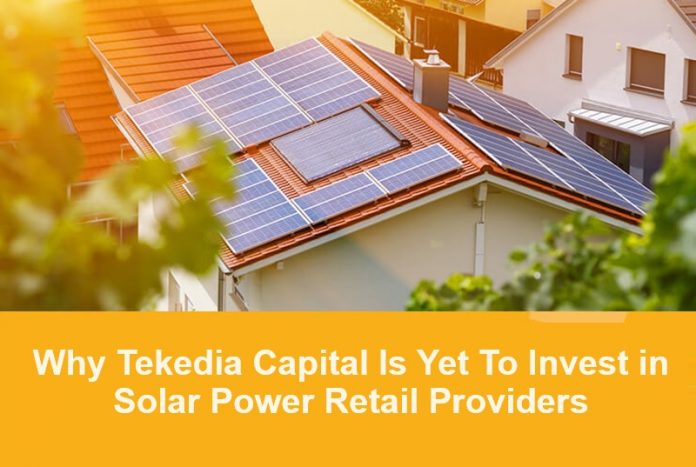
Why Tekedia Capital Is Yet To Invest in Solar Power Retail Providers

0

Question: “We have noted that Tekedia Capital has not invested in any renewable energy solar company especially in Nigeria. Can you explain why?”

Our response: We understand that energy is a big  opportunity in Africa. However, the solar-based model with retail customers is not something we are open to explore at this time. This is not because of the usual challenges of manufacturing and selling hardware systems. Our real concern is that some of the major investors in these markets are actually international oil companies. (The largest investors in this sector are funds related to or connected with major oil companies, where the oil majors are not investing directly.)

We posit that these oil firms are not necessarily investing in  these companies for direct financial profits, rather, they are investing to have companies they can use for carbon credit transfers. In other words, if you flare gas in the core operation, you can also zero that out, via carbon credits, from a solar-based energy provider you invested in. That model is cheaper than going to Tesla, forest reserves, etc to buy carbon credits. 

Consequently, for Tekedia Capital, it is going to be challenging to fund firms with capacity to beat that oil company-supported solar energy provider, as generating carbon credits is more important for the firm, than making direct financial gains. That is why we have avoided this sector because the competitor could be structured to be loss-making, even as it ramps up carbon credits to funnel to its major backers. 

Of course, there are investors who do not care. But for us, we look at the terminal enterprise value and how this vector could affect our support system to make that investment worthwhile. Some investors do have those capabilities; we do not, and that is why we are not investing in the sector today.

As always, feel free to check what we fund here https://capital.tekedia.com/startups/ . Of course, we welcome new members as the next investment cycle will open in Oct 2024, and we have great companies coming https://capital.tekedia.com/course/fee/

The Amazing Big Heart of ECOWAS On the Mali, Niger and Burkina Faso Matter

0

This is the best way to understand the magic in Niger, Mali and Burkina Faso: ‘These guys want the butter, the money of the butter, the milk and a kiss from the dairy woman. Recently, I was at the Dakar airport [Senegal] with a flight coming from Niamey [Niger Republic]. One Senegalese  immigration officer laughed at a Nigerien passenger: “You guys left ECOWAS but your passports are still ECOWAS passports, and we don’t request a visa for you to enter Senegal.”’ – Olivier Malinur commenting on this piece.

Good People, that explains everything. So, Niger, Mali and Burkina Faso are still using ECOWAS passports, even after exiting ECOWAS. This explains why nothing has affected their trades since they can travel and move around ECOWAS without any restriction.  Possibly, the Port of Lome – West Africa’’s busiest port – is still moving the cargoes for the 3 countries within the ECOWAS commerce treaty and tariff system.

I truly admire the maturity ECOWAS has shown here and I apologize for my ignorance. Until this morning, my assumption was that Mali, Burkina Faso, and Niger exited ECOWAS and dropped all ECOWAS rights, including the use of ECOWAS passports. So, my welfare model was that to travel into the ECOWAS region, visas would be required from their citizens. But here, ECOWAS just allowed them, and has continued to beg their leaders to return to ECOWAS. That is showing a big brother heart, and that is indeed commendable from ECOWAS. And I hope ECOWAS does not cancel those passports; this is a family issue!

Mali, Niger and Burkina Faso: if you are still relying on ECOWAS passports, think over these issues again. Understand that if ECOWAS cancels those passports, you can imperil trade routes which have evolved over centuries, and that could be devastating. [A case: getting a Nigerian visa is not easy!]  The fact that ECOWAS still allows you guys to enjoy these benefits despite the attitudes shown by the trio is something you must consider on this matter.

The Illusion of Single Currency and the Traps in Mali, Niger and Burkina Faso

Tekedia Mid-Week Cryptocurrency and Blockchain Digest

0

Memes on Tron Blockchain Making Waves

In the whimsical world of cryptocurrency, where the value of a digital asset can be as volatile as a cat on a hot tin roof, the Tron blockchain has unleashed a new player in the meme coin arena. Enter SunPump, the latest meme coin deployer that’s making more waves than a surfer at a blockchain beach party. With a staggering $1.1 million in revenue within its first 11 days, SunPump is pumping up the jam and the market with its meme-tastic tokens.

While Solana’s meme coins are experiencing a dip, akin to a polar bear plunge in the Arctic, Tron’s SunPump has emerged like a phoenix from the ashes of internet jokes, bringing with it a frenzy of activity and a fresh surge in TRX price. It’s like watching a financial rollercoaster, only the dips are filled with digital doggos and the peaks are paved with pixelated puns.

The SunPump platform experienced such a traffic jam, it temporarily shut down, probably to catch its breath from all the laughing at its own success. But fear not, for it was back online faster than you can say “to the moon!” This meme coin mania isn’t just a flash in the pan; it’s a full-blown meme fiesta, and everyone’s invited to the party.

The Chicago Board Options Exchange (CBOE) has withdrawn its application for a Solana exchange-traded fund (ETF) amid concerns from the U.S. Securities and Exchange Commission (SEC) regarding the classification of Solana (SOL) as a security. This move reflects the ongoing debate and regulatory scrutiny surrounding the status of cryptocurrencies within the financial markets.

The SEC’s apprehension stems from the broader question of whether certain cryptocurrencies, like Solana, meet the criteria of a security under U.S. law. The implications of such a classification are significant, as it would subject Solana and similar digital assets to a different set of regulations and compliance requirements, potentially altering the landscape for investors and issuers alike.

Despite the setback, some issuers remain optimistic. For instance, VanEck has indicated that their plans for a Solana ETF are still active, suggesting a belief that Solana should be classified as a commodity, akin to Bitcoin and Ethereum. This perspective is supported by legal opinions and the progress Solana has made in terms of decentralization, with the top 100 holders now controlling a smaller percentage of the supply compared to the previous year.

The SEC’s stance on Solana is part of a larger conversation about the regulatory framework for cryptocurrencies. In contrast to Solana, other cryptocurrencies like Bitcoin and Ethereum have already seen the approval of ETFs, highlighting the nuanced approach the SEC is taking with different digital assets.

The outcome of this regulatory discourse will be pivotal for the future of cryptocurrency ETFs and could set a precedent for how other digital assets are treated by regulatory bodies. As the situation evolves, stakeholders within the crypto space are closely monitoring the SEC’s decisions and their potential impact on the market.

Nigeria’s Securities and Exchange Commission (SEC) is rolling out the red carpet for digital currencies with a plan to issue licenses to crypto issuers amid growing adoption. It’s like the SEC is saying, “Welcome to the party, Bitcoin. Bring your altcoin friends!”

This isn’t just a small step for Nigerian crypto enthusiasts; it’s a giant leap for crypto kind in the country. The SEC is not just opening the door; they’re installing a revolving one with neon lights! With the naira doing the limbo (how low can it go?), the SEC’s move is a balancing act between regulation and innovation.

And get this: Nigeria’s SEC isn’t stopping there. They’re also planning to introduce a bill to tax crypto because, let’s face it, even virtual money isn’t immune to the taxman’s reach. It’s like playing a game of Monopoly where the “Go to Jail” card is replaced with “Pay Your Crypto Taxes” – no get-out-of-jail-free cards here, folks.

So, what does this mean for the average Joe and Jane in Nigeria? Well, it’s time to dust off those digital wallets and get ready for a more regulated, but hopefully less wild, wild west of crypto. And for the SEC, it’s about keeping up with the times and making sure that the crypto train doesn’t pass them by.

Binance Will $DOG and More!

Meet $DOGS, the latest meme coin that’s about to take its first walkies on the prestigious Binance exchange and a whole kennel of other trading platforms. So, what’s the bark all about? $DOGS is not just another digital pooch in the park. Inspired by Spotty, the mascot of a popular social media platform, this coin is all about spreading joy and building a community – much like a dog park, but with less slobber and more blockchain.

The listing date? Mark your calendars for August 26th, which – in a tail-wagging coincidence – aligns with International Dog Day. It’s like throwing a bone and hitting two trees with one throw… or something like that.

Before $DOGS struts its stuff on Binance, it’s already sniffing around on 15 other exchanges. That’s right, from OrangeX to KUCOIN, this pup is making sure it leaves its mark everywhere it goes.

A lawsuit involving former professional basketball player Shaquille O’Neal and his promotion of the Astrals NFT project has been allowed to proceed by a Miami federal court judge. This decision marks a significant moment in the scrutiny of celebrity endorsements in the NFT space.

The case hinges on the allegation that O’Neal was a “seller” of the Astrals NFTs, a claim that the court has found sufficient grounds to explore further. The plaintiffs argue that the NFTs are unregistered securities, which O’Neal promoted, potentially misleading investors. The court, however, dismissed claims that O’Neal had control over the project, focusing instead on his role in promotion.

This lawsuit underscores the complexities of NFTs as potential securities and the responsibilities of public figures who endorse them. With the court setting a precedent for how such cases might be handled, the outcome of this lawsuit could have far-reaching implications for the NFT market and celebrity endorsements.

As the legal proceedings continue, the crypto and legal communities will be watching closely to see how the definitions of “securities” and “sellers” will be interpreted within the context of NFTs. This case could serve as a cautionary tale for celebrities and influencers, highlighting the importance of understanding the products they endorse and the legal ramifications of their promotional activities.

Secret Favorite of Tron and Solana Whales Revealed: A New Shining Presale Star

0

In the crypto market, it is important to pick projects with potential before they are well-known. Because of this, Tron (TRX) and Solana (SOL) whales are becoming more interested in a new presale sensation—DTX Exchange (DTX). This project, now in Stage 2 of its presale, has already given early buyers a 100% return and is seen as the next 60x crypto in 2024.

Despite Justin Sun’s bold statements about TRX’s growth potential and SOL’s impressive price movement, whales focus more on this rookie. Let’s dive into why that is.

Tron (TRX): Millions of New Users Coming Soon

Tron (TRX) has been making waves in the crypto market recently. Its founder, Justin Sun, announced that he has spoken to many meme community leaders about the Tron meme ecosystem. He also said that millions of new users are interested in this community and will soon join it.

When it comes to the Tron crypto value movement, it has jumped over 95% on the one-year chart. Plus, the technical signals for TRX also show some positive signs. The average price of TRX has been increasing recently as it continues sitting above its 50-day exponential moving average while the oscillators are in the buy zone.

Analysts remain confident in its growth thanks to this good Tron news and signals. Nevertheless, many whales seek another project to bring bigger returns.

Solana (SOL): Going To Wake Up Soon

Solana (SOL) is another powerful force in the crypto arena. CoinMarketCap statistics show that in the past 12 months, the Solana price surged over 570%. Crypto analyst TraderSZ also made a bullish forecast for this coin. In his X article, TraderSZ claims that SOL will wake up again soon and reach $0.065 as its invalidations are clear.

But the technical signals for the Solana crypto paint a different picture. The price of Solana has been going down on average recently, as it is now sitting below its 50-day exponential moving average. Plus, the oscillators are in the neutral zone for SOL—not a good sign for many whales.

Although some experts foresee a rise to $158 in Q3 of 2024, this Solana price prediction has done little to excite many whales.

DTX Exchange (DTX): On Pace To Reach $2M

While Tron and Solana are experiencing ups and downs, DTX Exchange (DTX) is stunning with its ongoing presale performance. It has already raised over $1.4M and is forecasted to hit $2M before August 2024 ends. Thanks to this performance, big-time YouTubers like Crypto Chino say that DTX Exchange could become a fan-favorite trading platform.

DTX Exchange is unlike traditional platforms because it offers more than 120,000 asset types, such as CFDs, commodities, and cryptos. What differentiates it from other exchanges is that it uses a hybrid trading model, where people can trade anonymously at a 1000x leverage ratio without needing to complete KYC checks.

The DTX utility token will power this platform. Holding it also brings many advantages, like lower trading fees and better analytics tools. DTX is now worth just $0.04 since it is in Stage 2 of its presale. But this price will jump to $0.06 after Stage 3 goes live. Also, experts predict another 60x surge after a Tier-1 CEX listing happens in Q3 of 2024.

What Makes DTX Exchange a Favorite Among Tron and Solana Whales?

DTX Exchange is beginning to shine as a bright star among Tron and Solana whales. They gravitate to it because of its smaller market cap and ties to many trillion-dollar financial markets. These factors give DTX the upper hand over these crypto coins since it needs less new money for its price to rise, all while remaining more stable in volatile markets.

Learn more:

Buy Presale

Visit DTX Website

Join The DTX Community


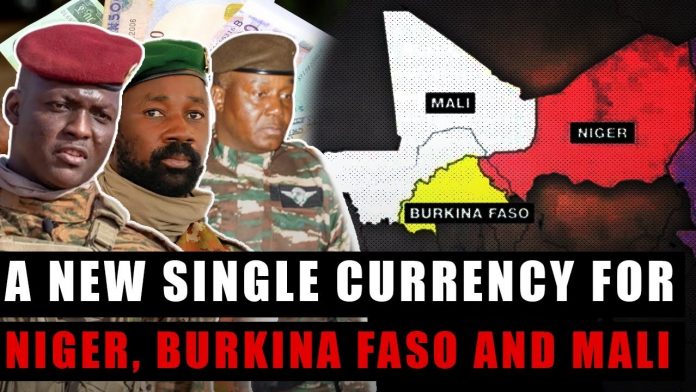
The Illusion of Single Currency and the Traps in Mali, Niger and Burkina Faso

36

There is something very unusual happening in Africa, and that is what Mali, Niger and Burkina Faso are doing. These are largely landlocked countries which posits that they have inherent geographical disadvantages in international trade. But since they disconnected from ECOWAS, pockets of uncommon visions have emerged.

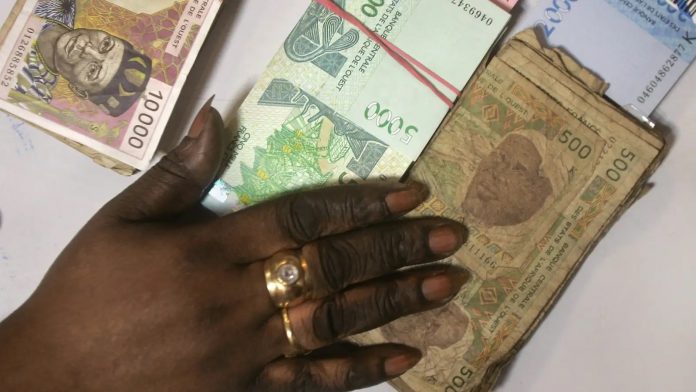
For everything done, I am concerned about the plan for them to have a currency union with their own currency. As I write, the 3 countries remain members of the West African Economic and Monetary Union (Uemoa), a currency union, behind the CFA franc, which is issued by the Central Bank of West African States (BCEAO).

My secondary school Commerce teacher, Mr Udeagu Jr, explained that BCEAO does deposit foreign reserves in Banque de France and the French nation is the guarantor of the CFA franc. But today, the issue is that the trio wants to create their own currency. Good People – they have done many things including a rumoured turning down an IMF loan, but this new currency will not be an easy one.

I have written extensively in the African Union working papers on the perils of currency union within heterogeneous economic structures. A supranational bank serving these three countries could be in real troubles, and that could trigger welfare losses in the countries. The relative economic stability they have right now must not be compromised with a haphazard pursuit of economic purity, which here, is absolute disconnection from France. 

Personally, I am not a big fan of a single currency because it will not remove the rascality of spending politicians in Africa. And when you lose autonomy on the national central bank to use macroeconomic tools to deal with some economic challenges, many bad things could happen. So, instead of pursuing a single currency, the trio and other African nations must work to build trade infrastructures like roads, railways, seaports, etc. 

My position is that building infrastructures and using tech to eliminate currency friction, across borders, should be prioritized.

Indeed, in Nigeria, we use the Naira but without the rail networks, the level of trade between Maiduguri and Aba has gone down. And the one between Ovim (my village in Abia State) and Enugu has collapsed. The old Ovim Railway Station served more than nine local governments, linking communities to opportunities. We continue to use Naira but with no railway system, trade has faded, destroying rural-urban linkages.

So, it goes beyond having the same currency. Jumia does not deliver packages to Ovim, even though Ovim uses the same currency as Lagos. The issue is this: the currency of commerce and the operating system of trade – supply chain – is limited in Nigeria. That is the currency we need to have in Africa and stop the illusion that because I can pay you with the same currency, all core problems will disappear.

Yes, the trio can develop their markets via infrastructure linkages and leave the currency alone, for now. The risk of a currency mess is huge.