DD
MM
YYYY

PAGES

DD
MM
YYYY

spot_img

PAGES

Home Blog Page 2978

U.S. Democratic party releases their Platform with no mention of Cryptocurrency

0

In a surprising move that has sparked discussions across various sectors, the U.S. Democratic Party has released its official platform for the upcoming 2024 elections with no mention of cryptocurrency. This decision comes despite the growing prominence of digital assets in the global economy and the increasing interest from the public and investors alike.

The absence of cryptocurrency in the Democratic platform is notable, especially considering the previous hints from Vice President Kamala Harris’s campaign that suggested a potential pivot from the Biden administration’s stringent policies on digital assets. The lack of acknowledgment in the platform has left many wondering about the party’s stance and future regulatory approaches to this burgeoning industry.

The Democratic Party’s silence on cryptocurrency could be interpreted in several ways. It might signal a cautious approach to an industry that is still volatile and evolving. Alternatively, it could reflect internal disagreements within the party, as some members advocate for more supportive measures while others, like Senator Elizabeth Warren, call for stricter regulations.

The decision to exclude cryptocurrency from the platform contrasts sharply with the Republican Party’s stance, which has embraced Bitcoin and other digital assets as a central part of their agenda. The Republicans have criticized the Democrats for what they describe as an “unlawful and un-American crypto crackdown” and have pledged to oppose the creation of a Central Bank Digital Currency (CBDC), protect the right to mine Bitcoin, and ensure Americans can self-custody their digital assets while maintaining financial privacy.

The Republican Party’s stance on cryptocurrency for the 2024 election cycle is clear and assertive, reflecting a significant shift towards embracing digital assets. The party pledges to defend the right to mine Bitcoin, signaling support for the cryptocurrency mining industry. A commitment to ensure that Americans have the right to self-custody their digital assets, emphasizing personal control over these assets without intermediary institutions.

The platform includes promises to maintain financial privacy for Americans, particularly from government surveillance, aligning with the broader Republican values of individual liberty and limited government oversight. The Republicans express opposition to the creation of a Central Bank Digital Currency (CBDC), which they view as a potential overreach by the federal government into the financial lives of citizens.

As the 2024 election approaches, the Democratic Party’s stance—or lack thereof—on cryptocurrency may become a significant factor for voters, particularly the estimated 50 million Bitcoin and crypto holders in the country. The party’s platform, which touches on various issues from corporate greed to education and foreign policy, has notably sidestepped the topic of digital assets, which could have implications for the U.S.’s position in the global financial technology race.

The crypto community’s reaction to the Democrats’ platform has been mixed. Some express disappointment, while others remain hopeful that the party may still adjust its position before the November elections. The final vote on the platform is expected to pass as written, but the possibility of last-minute changes remains a topic of speculation.

As the political landscape continues to evolve, the role of cryptocurrency in party platforms will likely become an increasingly important issue. The Democratic Party’s current omission of crypto from their agenda raises questions about the future of digital assets in the U.S. and the potential impact on innovation, regulation, and the broader economy.

NNPCL Announces Repayment of $625m of $1.036bn Borrowed to Finance its Stake in Dangote Refinery

0

The Nigerian National Petroleum Company Limited (NNPCL) has made significant progress in repaying a $1.036 billion loan it secured in September 2021 to finance the acquisition of a stake in the Dangote Petroleum Refinery and Petrochemicals Free Zone Enterprise (DPRP FZE).

As of December 31, 2023, NNPCL has repaid $625 million of the principal amount, leaving an outstanding balance of $424 million. This repayment is documented in the NNPCL’s financial statement for the year ending December 31, 2023, under the section titled “Financing of Investment in Dangote Refinery.”

Details of the Loan and Repayment

The $1.036 billion loan was secured through a forward sale agreement with Lekki Refinery Funding Limited, with an interest rate set at 3-month LIBOR plus 6.125%. Under the terms of the agreement, NNPCL committed to supplying 35,000 barrels of crude oil per day as part of the repayment plan. The financial statement reveals that as of December 31, 2023, NNPCL had repaid $625 million, with $424 million still outstanding.

“In September 2021, NNPC entered into a forward sale agreement with Lekki Refinery Funding Limited to supply 35,000 barrels of crude oil per day for the settlement of the $1.036 billion (N426.2 billion) funding received for the financing of investment in Dangote Refinery.

“The interest rate for the facility is 3-month LIBOR plus 6.125%. As of 31st December 2023, NNPC limited has paid $625 million principal, while $424 million (N324 billion) is still outstanding,” the financial statement partly said.

Initially, the loan was used to finance the acquisition of a 20% stake in the Dangote Refinery, a deal expected to cost $2.76 billion. However, NNPCL’s stake in the refinery has since been reduced to 7.25%, a significant decrease from the originally intended 20%. This reduction occurred after NNPCL failed to pay the balance of its share, which was due in June 2023. The management of this investment, originally handled by NNPC Greenfield Limited, a special-purpose vehicle wholly owned by NNPCL, was transferred to NNPC Downstream Investment Service (NDIS) following the company’s restructuring under the Petroleum Industry Act (PIA).

Allegations of Financial Recklessness

NNPCL’s financial dealings, including the acquisition of the Dangote Refinery stake, have not been without controversy. The company has been mired in allegations of financial recklessness, with critics pointing to a pattern of taking on substantial and, in some cases, questionable loans. The NNPCL is currently seeking to borrow an additional $2 billion, even as it is reportedly owing about $6.8 billion to international traders.

Against this backdrop, NNPCL has reportedly not remitted any funds to the federation account since January 2024, a situation it attributed to what it describes as a “subsidy shortfall/FX differential.”

NNPCL has informed President Bola Tinubu that due to the burden of subsidy payments, it is currently unable to pay taxes and royalties into the federation account, as required by sections 64(c) of the Petroleum Industry Act (PIA). This section obligates NNPCL to remit 70% of sales from crude oil to the federation account, keep 20% as retained earnings, and allocate 10% to the frontier basin exploration fund.

However, the company has recently declared a record-breaking net profit of N3.297 trillion for the 2023 fiscal year. This profit marks a significant increase of N749 billion, or 28%, from the N2.548 trillion profit reported for 2022. Despite this robust financial performance, the lack of remittances has sparked concerns about the company’s financial transparency and its adherence to statutory obligations.

What This Means for NNPCL and Nigeria

The NNPCL’s financial challenges, coupled with its inability to remit funds to the federation account, highlight the precarious state of Nigeria’s oil sector. Energy experts have noted that the company’s decision to reduce its stake in the Dangote Refinery, while financially necessary, may have long-term implications for its strategic position in the industry.

They further noted that while the NNPCL has made strides in repaying its loan for the Dangote Refinery stake, the broader context of financial mismanagement, mounting debt, and non-remittance to the federation account paints a troubling picture.

Nigerian Govt. Finally Admits The Purchase of A New Presidential Jet

0

President Bola Tinubu’s recent departure to France aboard a newly acquired presidential jet has ignited a firestorm of controversy and criticism, following weeks of speculations that the Federal Government has quietly purchased the aircraft.

The jet’s purchase, which reportedly cost over $100 million, was intended to remain a closely guarded secret due to fears of public backlash, especially given Nigeria’s current economic difficulties. However, the plan was unexpectedly exposed following a French court’s order to seize three Nigerian aircraft over a contract dispute with a Chinese company.

The acquisition of the Airbus A330 was intended to replace the aging Boeing B737-700 (BBJ) in Nigeria’s presidential fleet. Sources within the government have revealed that the administration was acutely aware of the potential fallout from such a high-profile purchase during a time of significant economic hardship for the majority of Nigerians.

The decision to keep the purchase secret was driven by concerns that the revelation would spark public outrage, particularly as the government faces criticism for its handling of the economy and its recent disputes with labor unions over minimum wage increases.

However, the plan to keep the purchase under wrap was inadvertently exposed when a French court ordered the seizure of three Nigerian aircraft in connection with a contract dispute involving a Chinese company. The court’s decision brought the acquisition of the new presidential jet into the spotlight, forcing the government to publicly acknowledge the purchase.

Presidential spokesperson Bayo Onanuga defended the acquisition, claiming that the new jet would save Nigeria millions of dollars in maintenance and fuel costs. Onanuga emphasized that the aircraft was purchased “far below market value,” and that it was necessary to ensure the safety and efficiency of the presidential fleet.

“The new plane, bought far below the market price, saves Nigeria huge maintenance and fuel costs, running into millions of dollars yearly,” Onanuga said in a statement confirming the purchase.

The Airbus A330, which has already assumed the role of Nigeria’s Air Force One, is now registered as 5N-NGA. According to Onanuga, the new jet is equipped with state-of-the-art avionics, a customized interior, and an advanced communications system, providing enhanced safety and operational efficiency for the nation’s leaders.

Jet Purchase Not In The Budget

The secrecy surrounding the jet’s purchase extended to Nigeria’s legislative bodies. Several lawmakers have stated that they were unaware of the acquisition, as it was neither discussed nor approved during plenary sessions. This lack of transparency has only added fuel to the public’s frustration, with many questioning the government’s commitment to accountability.

A member of the House of Representatives, who spoke to Daily Trust on condition of anonymity, revealed that the purchase was not included in either the main budget or the supplementary budget presented to the National Assembly.

“We’ve not seen anything in the main budget or the supplementary budget about the purchase of a new presidential aircraft,” the lawmaker said. “So, we cannot say anything. I won’t have any comments until I see the details.”

Another source within the Senate confirmed that the matter was never tabled for discussion, further highlighting the administration’s efforts to keep the purchase under wraps.

Public Outcry and Calls for Transparency

The exposure of the secretive jet purchase has led to widespread criticism from various quarters, including opposition figures and civil society organizations. Many Nigerians have expressed outrage over the government’s decision to prioritize the acquisition of a luxury aircraft while the country grapples with severe economic challenges and workers struggle to make ends meet.

Peter Obi, a former presidential candidate of the Labour Party, was among those who called for greater transparency, urging the government to disclose the full details of the purchase.

“Now that the Presidential Jet has arrived. From all indications, despite all the denials, and back and forth over the newly acquired Presidential aircraft, the jet is now here thanks to the French court that helped Nigerians to get the information,” Obi said.

“Now that the Jet is here, Nigerian taxpayers whose money was used to purchase it need to be privy to how much it cost, how old the aircraft is, and how long it’s been in operation.”

Obi’s statement reflects a broader sentiment among Nigerians who are demanding to know the true cost of the aircraft, especially in light of the economic hardships facing the nation.

The decision to acquire a new presidential jet has been seen by many as an indication that the government is out of touch with the struggles of ordinary Nigerians. They argue that the funds used to purchase the aircraft could have been better spent on addressing pressing social and economic issues, such as improving public services or providing relief to those hardest hit by the economic downturn.

Expert Reveal 3 Must-Have Coins For Q4: XRP, Toncoin and Intel Markets

0

Crypto experts are often looked to for valuable insights. Just like in any financial system, information is crucial to making it, prompting the rise of “WAGMI” in crypto. Three altcoins have been handpicked by a top expert as must-haves in the year’s final quarter, namely Ripple (XRP), Toncoin (TON) and Intel Markets (INTL).

Their performances in quarter three have been remarkable. XRP’s regulatory uncertainty has been cleared following the court’s final ruling, while TON made its debut on Binance. Meanwhile, INTL, an up-and-coming altcoin, boasts substantial growth prospects after its launch.

Intel Markets (INTL): Anticipated 30x Upswing Post-Launch

There are only a few projects that have integrated AI into crypto trading and Intel Markets (INTL) is one. It stands at the crossroads between two of the world’s biggest and most disruptive innovations, making it a top pick ahead of L1 tokens like XRP and Toncoin.

The AI-powered smart exchange platform is on a mission to transform the $36.5 billion global crypto trading market. Some of its key advantages include advanced trading tools and features (profitable bots, copy trading and multichannel analysis). Further, its tokenomics, capped at 2 billion INTL tokens, with 70% going to presale, is another key attraction.

With an estimated launch price of $0.11, the current price of $0.009 in stage 1 of the ICO leaves plenty of room for growth. It is no surprise that investors have been scooping it up, positioning themselves ahead of what will be a bullish ride. Meanwhile, a 30x upswing is projected after its launch later this year, making it one of the year’s biggest breakout stars.

Ripple (XRP): Eyes on $1

Ripple (XRP), one of the leading altcoins, is next on the list. It plays a key role as a payment-based cryptocurrency, facilitating cross-border transactions. This solid fundamental is one layer of its appeal and explains growing interest and demand.

Despite the market being a sea of red, the XRP coin defied bearish trends and overwhelming selling pressure. This can be linked to the final ruling in the SEC case, with Judge Analisa Torres imposing a $125 million fine, as against the regulator’s $2 billion claim.

With no regulatory uncertainty holding it back, the expert’s XRP price prediction suggests a rally past $1 in quarter four. At the current XRP price of $0.6—a 7% upswing on the weekly timeframe—it is one of the best coins to invest in.

Toncoin (TON): Tipped for an Upswing Past $10

Toncoin (TON), another Layer-1 token, rounds off this list. It is also one of the biggest winners this month, making its market debut on Binance, the world’s largest centralized crypto exchange. The altcoin was recently added to Binance Simple Earn, allowing users to earn a special APR for a limited time.

Earlier this week, it hit $7, propelled by the buzz around its listing on the world’s largest crypto exchange. This is believed to be the tip of the iceberg, as analysts are optimistic about the Toncoin price exploding this year.

A bullish Toncoin price prediction hints at an upswing past $10 before the curtain closes on the year. Given its remarkable performance of late—a 10% jump on the weekly timeframe—it is no doubt a must-have coin in quarter four.

Conclusion

The three altcoins not to miss out on this year are none other than XRP, Toncoin and IntelMarkets. The first recently ended its long-drawn legal battle with the SEC and TON just got listed on Binance. Meanwhile, INTL is set to transform the crypto trading landscape with AI and advanced trading tools, setting it up for adoption.


Discover More About Intel Markets:

Presale: https://intelmarketspresale.com/

Buy Presale: https://buy.intelmarketspresale.com/

Telegram: https://t.me/IntelMarketsOfficial

Twitter: https://x.com/intel_markets

Analyzing the Impact of Political Events on Cryptocurrency Markets, as Yen Strengthens

0

The cryptocurrency market is a complex ecosystem influenced by a myriad of factors ranging from global economic trends to technological advancements. One of the most intriguing aspects of this market is its response to political events and figures. A recent analysis has shown that, contrary to popular belief, the election chances of political figures such as Donald Trump are not the dominant drivers of Bitcoin’s (BTC) price movements.

The total supply of Bitcoin is capped at 21 million, with the rate of new Bitcoin creation halving approximately every four years. This limited supply can lead to increased demand, and consequently, higher prices. Investor sentiment plays a crucial role in the price of Bitcoin. Positive news can lead to increased buying pressure, while negative news can result in selling and price drops.

Announcements of regulatory changes can have significant impacts on Bitcoin’s price. For example, when a country announces a ban on cryptocurrencies, it can lead to a drop in price. Developments such as improvements in blockchain technology or the creation of more efficient transaction methods can positively influence Bitcoin’s price.

This revelation comes amidst a backdrop of speculation and predictions that often tie BTC price fluctuations to the political climate, particularly in the United States. Market data, however, suggests a weak correlation between election odds and BTC prices. This indicates that while political events can have an impact, they are just one of many elements that influence the cryptocurrency market.

Macroeconomic factors, including inflation rates and economic growth, can affect investor behavior and influence the cryptocurrency market. Bitcoin’s liquidity, or the ease with which it can be bought and sold, can also impact its price. Higher liquidity tends to stabilize prices, while lower liquidity can lead to price volatility. The emergence of new cryptocurrencies or changes in the popularity of existing ones can shift investor focus and funds, impacting Bitcoin’s price.

The lack of a definitive correlation between Trump’s election odds and BTC price changes points to the presence of other significant factors at play. These include U.S. monetary policy expectations, supply overhangs, and market sentiment driven by a variety of global events. For instance, aggressive selling by certain state actors or fears of supply deluge from defunct exchanges have been reported to overshadow any potential impact from changes in political odds.

Moreover, experts like Jon Najarian have suggested that Trump’s election chances could drive BTC’s price to a specific target, highlighting the role of political climate as a factor that could influence the market. However, such predictions are speculative and do not reflect the multifaceted nature of cryptocurrency valuation.

It is essential for investors and observers to recognize the complexity of the factors that drive the cryptocurrency market. While political developments can capture headlines and stir discussions, they are intertwined with a broader set of influences that collectively shape market dynamics. As the cryptocurrency market continues to mature, understanding these nuances becomes increasingly important for making informed decisions.

While political events and figures can have an impact on the cryptocurrency market, they are not the sole or dominant drivers of price movements. A comprehensive analysis of market data reveals a more intricate picture where multiple factors contribute to the volatility and trends observed in the cryptocurrency space. As such, stakeholders should approach the market with a holistic view, considering all possible influences to navigate the ever-evolving landscape of cryptocurrency investment.

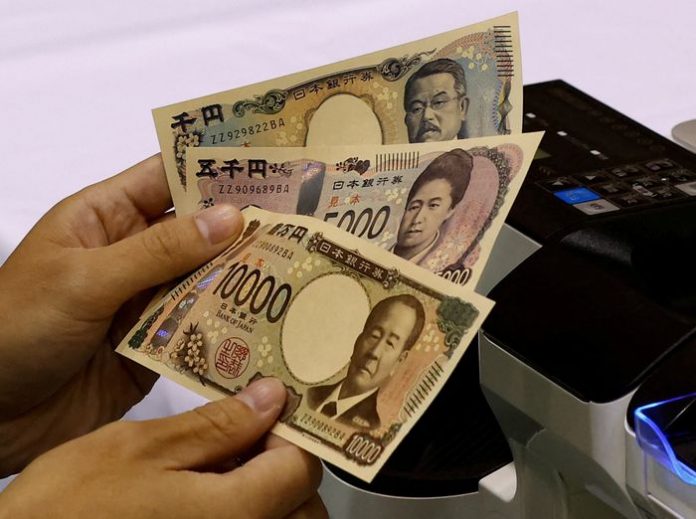
The Japanese Yen is Strengthening after Trembling Start in August

In recent weeks, the Japanese Yen has shown a remarkable resurgence, strengthening against major currencies and drawing the attention of financial markets worldwide. This trend marks a significant shift from the currency’s previous position, where it had reached a 38-year low against the U.S. dollar earlier in the year.

The Bank of Japan’s (BOJ) decisive action to raise interest rates to around 0.25% from its previous range of 0% to 0.1% has been a pivotal factor in this turnaround. This move, the first of its kind since 2008, was a response to the yen’s sustained pressure and a step away from the BOJ’s long-standing policy of negative interest rates initiated in March. The intervention by Japanese authorities, with a substantial $36.8 billion spent to support the yen, underscores the government’s commitment to stabilizing the currency and countering excessively volatile currency moves.

The yen’s strengthening has had a ripple effect across various markets. For instance, the carry trade unwinds in early August, where the yen outperformed, triggered a significant impact on risk assets, including cryptocurrencies. Bitcoin traders, in particular, have been advised to keep a close eye on the yen’s performance, as its strength can influence the broader financial markets, including the volatile cryptocurrency market.

A stronger Yen makes Japanese goods more expensive abroad, potentially reducing export competitiveness. This can lead to a decrease in export volumes, impacting companies that rely heavily on foreign sales. Conversely, a stronger currency reduces the cost of imports, leading to cheaper raw materials and goods from abroad. This can benefit consumers and businesses that rely on imported products.

With cheaper imports, inflationary pressures can decrease. This is particularly relevant for Japan, which has struggled with deflationary pressures for decades. The Yen is often seen as a safe-haven currency. Its strengthening can reflect a risk-off sentiment in global markets, where investors seek stability in uncertain times.

Moreover, the yen’s rally has not only been observed against the U.S. dollar but also against other fiat currencies such as the Australian dollar, the euro, and the British pound, showcasing its newfound vitality. This shift has prompted analysts to suggest a greater willingness among traders to buy yen at weaker levels, potentially skewing the market towards a strengthening bias.

The implications of the yen’s resurgence are far-reaching. It affects global stock markets, influences trade balances, and impacts multinational corporations with exposure to currency fluctuations. Additionally, it serves as a barometer for investor sentiment towards risk, often referred to as an “anti-risk” currency during times of market uncertainty.

Japanese companies with significant overseas earnings may see those earnings decrease in value when repatriated, potentially affecting their bottom line. The Bank of Japan may face challenges in maintaining its monetary policy objectives, especially if the Yen’s strength contradicts efforts to stimulate economic growth. A stronger Yen can have ripple effects on global trade, especially in Asia, where currencies are often closely linked to the Yen’s movements.

As the financial world watches the yen’s performance, questions arise about the sustainability of this trend and its long-term impact on Japan’s economy and global financial stability. Will the yen continue to strengthen, or is this merely a temporary correction in a more complex economic landscape? Only time will tell, but for now, the yen’s comeback is a noteworthy event in the world of finance.