DD
MM
YYYY

PAGES

DD
MM
YYYY

spot_img

PAGES

Home Blog Page 2989

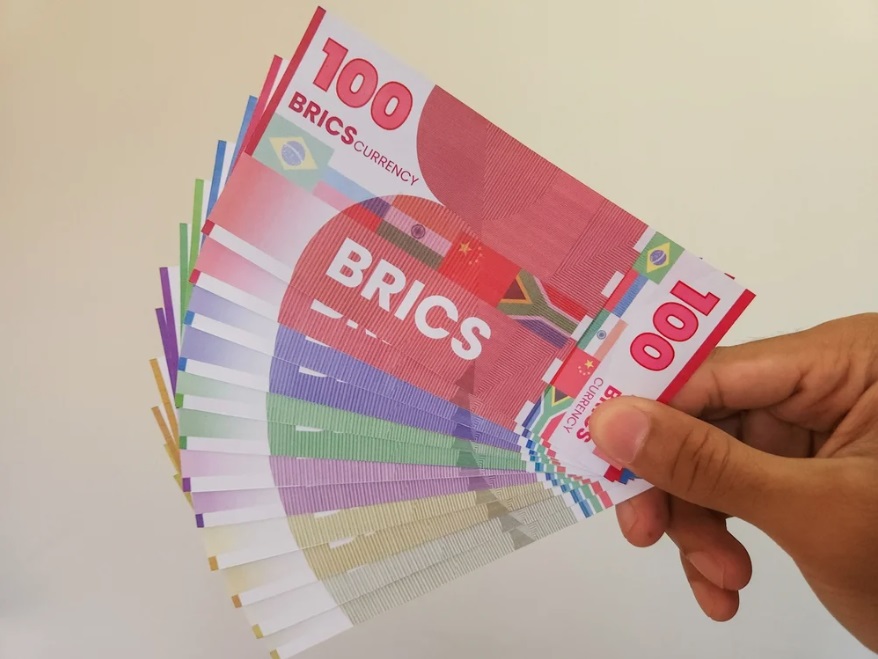
Turkey Submits Application Requesting to join BRICS

0

In a significant geopolitical development, Turkey has officially submitted an application to join the BRICS group, signaling a potential shift in the global economic landscape. This move by Turkey, a NATO member, underscores the nation’s desire to diversify its international alliances and economic partnerships.

BRICS, an acronym for Brazil, Russia, India, China, and South Africa, represents a coalition of emerging economies known for their significant influence on world trade and economic trends. The inclusion of Turkey, a country that bridges Europe and Asia, could further enhance the group’s global impact.

Turkey’s application comes at a time when the country is expressing growing frustration with the European Union, particularly over the stalled progress in its membership talks. Joining BRICS could provide Turkey with alternative avenues for trade, investment, and diplomatic engagement, aligning with its broader strategy to expand its global influence.

Turkey’s application to join the BRICS group, while a significant move in terms of global economic partnerships, raises questions about its implications for the country’s longstanding relationship with NATO. As a member of NATO since 1952, Turkey’s strategic alliances have predominantly aligned with Western interests. However, the recent application to BRICS suggests a pivot towards diversifying its international relations and economic dependencies.

This move could be seen as part of Turkey’s broader strategy to assert a more independent foreign policy stance. It reflects a desire to engage with a wider array of global players, potentially balancing its Western alliances with new partnerships in the East. The application to BRICS, which includes nations that have at times been at odds with NATO policies, may be interpreted as a signal of Turkey’s willingness to explore alternatives to its traditional Western-centric foreign policy approach.

The impact on Turkey’s relations with NATO could be multifaceted. On one hand, it may introduce complexities in diplomatic relations, given the differing stances on various international issues among BRICS nations and NATO members. On the other hand, Turkey’s potential new role within BRICS could also serve as a bridge, fostering dialogue and cooperation between the two groups.

It is important to note that BRICS is primarily an economic alliance, and Turkey’s membership would not necessarily translate into a security alliance that conflicts with NATO’s objectives. Nonetheless, Turkey’s engagement with BRICS could necessitate a delicate balancing act to maintain its commitments to NATO while pursuing new economic partnerships.

Turkey’s application to join BRICS is a strategic move that could reshape its international relations. While it may present challenges, it also offers opportunities for Turkey to expand its global influence and economic ties. The full impact on its relations with NATO will depend on the outcomes of the BRICS application process and the subsequent diplomatic negotiations.

The decision to apply for BRICS membership also reflects Turkey’s ambition to play a more prominent role in the Global South’s quest for a fairer world order and the reform of international institutions. This aligns with the founding principles of BRICS, which advocate for a more equitable global governance system.

Turkey’s bid is reportedly welcomed by current BRICS members, especially Russia and China, which could see this expansion as a means to bolster the group’s position as a counterweight to Western economic institutions. However, the application process is expected to be thorough, with discussions and evaluations by existing members.

The potential expansion of BRICS to include Turkey could have far-reaching implications for international relations and economic dynamics. It remains to be seen how this development will unfold and what it will mean for the future of global economic cooperation. As the world watches closely, Turkey’s strategic move to join BRICS may mark a new chapter in the narrative of emerging economies shaping the 21st century’s economic order.

African Startup Funding Slows Dramatically in August, But Q3 Remains Strong Due to July Surge

0

In a recent report by Africa: The Big Deal, African startup funding dipped in the month of August after record-breaking funding in July, which emerged as a landmark month for startup fundraising across Africa, which saw an impressive $443 million raised.

In July, a total of 47 ventures secured at least $100,000 in funding, making July the second-best month of the year in terms of the number of deals closed, trailing only behind May, which saw 40 grant announcements from major players like DEG, CHub, and iHub. Among these, 16 ventures managed to raise over $1 million, consistent with the monthly average during the first half of the year.

The surge in fundraising activity was heavily influenced by two major deals that dominated the headlines in July which include global leader in solar energy solutions d.light, which secured a massive $176 million securitization facility, and leading Egyptian fintech company MNT-Halan which raised $157.5 million.

The impressive performance observed last month had raised expectations, but the unexpected decline materialized in August, with start-ups on the continent raising only $56 million in funding. This marked a dramatic drop from the amount raised in July, a decline of nearly eightfold and a stark contrast to the $234 million recorded in August 2023, making August 2024 the second-slowest month in four years, following June 2024, which saw just $42 million in funding.

The bulk of the funding in August 2024 was secured as equity, accounting for 87% of the total, with debt representing 9%, and grants making up the remaining 4%. A total of 27 start-ups announced funding rounds in August, a figure significantly below the monthly average of 40+ over the past year.

The three largest deals of the month were Dutch DFI FMO’s $10 million investment in Ghanaian fintech Fido as part of its Series B round, a $9 million investment in South Africa’s Solarise Africa (Energy sector), and Nigerian fintech Waza, which emerged from stealth mode with $8 million in funding, consisting of $3 million in seed funding and $5 million in debt.

No exits were recorded during the month, and overall funding activity for 2024 continues to lag behind recent years, with a 40% year-over-year decline compared to 2023. However, there is a silver debt representing 9%, and grants making up the remaining 4%.

However, despite the August slowdown, the ecosystem’s robust performance in July has ensured that the total funding raised in Q3 2024 (with one month still to go) has already surpassed the totals for Q1 and Q2.

While August’s funding decline presents a challenge, the resilience and potential of Africa’s start-up ecosystem remain evident, as the region continues to attract significant investment despite periodic fluctuations in funding activity.

Energy Federalism and Reshaping of Nigeria’s Regional Comparative Advantages

0

The next few days will be exceedingly consequential for Nigeria. First, Dangote Refinery will produce petrol, creating a new era for the nation. And Dangote Refinery will buy crude oil in Naira from the Nigerian people. Those two elements will disintermediate the use of US dollars in the Nigerian economy. I posit that 40% of “I need US dollars” will disappear as a result of these playbooks.

In short, I was to put my near-term positioning of Naira to be about N1,000/$ by Dec 2024. Unfortunately, I am unable to do that, because Dangote Refinery will not sell to INDEPENDENT operators of filling stations; the Nigerian government will be the sole buyer. That is a vector which must be compensated in the design.

With that structure, the promising optimal equilibrium shifts. Why do we need the government inserted in the process? Ideally, the more players you disintermediate, the better the pricing efficiency since every layer adds cost in the value chain. I call on the government to change its mind on this: allow Dangote to sell to the independent players, and supervise them, to ensure everyone plays by the rules.

Good People, Nigeria is attaining Energy Federalism (not fiscal federalism) and the implications are massive. In an upcoming speech titled “Energy Federalism and Reshaping of Nigeria’s Regional Comparative Advantages”,  I will explain how muting the Petroleum Equalisation Funds (PEF) and Petroleum Products Pricing Regulatory Agency (PPPRA) will reshape regions in Nigeria.

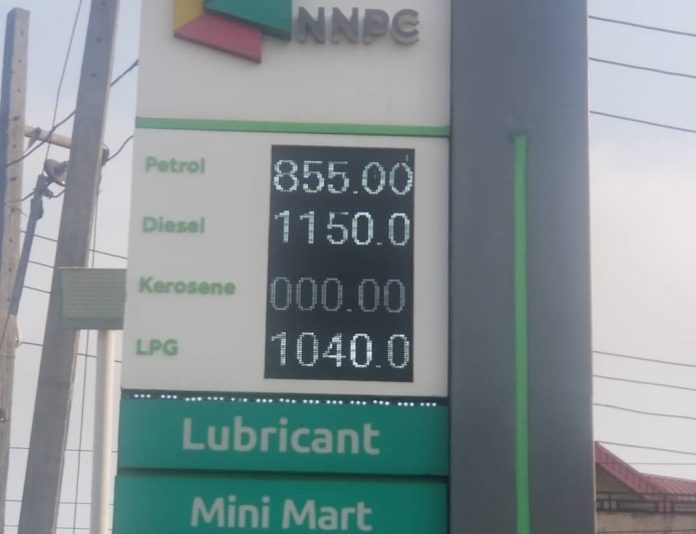
In the past, prices of petrol were uniform because governments paid to equalize prices across all parts of Nigeria. As this new era opens, that may not be the case:  Tarabans may pay N1,000/litre when Lagosians are paying N850/litre on petrol. Across all indicators, OA Lawal’s lecture on the  location & localization of industries  in O’Level Economics will be shaped in Northern Nigeria by access to competitive energy.

So, the government has a huge decision here and that is why they want to take the call from Dangote: “Nigerian Government to Decide Price of Dangote Petrol – Dangote”. If the government allows things to fly, you have energy federalism, and that would be a massive decoupling in an asymmetric way, regionally.

Nigerian Government to Decide Price of Dangote Petrol – Dangote

Nigerian Government to Decide Price of Dangote Petrol – Dangote

0

Africa’s richest man, Aliko Dangote, on Tuesday confirmed that Premium Motor Spirit (PMS), commonly known as petrol, from his $20 billion Lagos-based refinery is ready for distribution, marking a significant development that promises to reshape Nigeria’s petroleum industry.

According to Dangote, the fuel could reach filling stations across the country within the next 48 hours, contingent on the operations of the Nigerian National Petroleum Company Limited (NNPCL).

However, Dangote’s announcement, made during a video interview by Channels Television, has sparked widespread anticipation, as he refused to put a price on the product.

The introduction of petrol from Dangote’s refinery comes at a critical juncture for Nigeria. Since President Bola Tinubu declared an end to the petrol subsidy in May last year, the price of petrol has surged by over 400%, skyrocketing from N189 per liter to over N900. This drastic price increase has exacerbated inflation, putting additional strain on Nigerians already grappling with economic challenges.

Dangote’s refinery is widely seen as a potential game-changer, offering a local solution to the country’s fuel supply issues. However, when asked about the pricing of the new petrol, Dangote revealed that it would be determined by the Federal Executive Council, led by President Tinubu.

“It is an arrangement which is designed and approved by the federal executive council led by President Tinubu.

“As soon as it is finalized, once we finish with NNPCL, which can be today, can be tomorrow we are ready to roll into the market,” Dangote said.

Government’s Stance on Pricing

The announcement also comes amid swirling rumors that the Federal Government had directed NNPCL to increase petrol prices to N1,000 per liter. These claims were swiftly debunked by Sen. Heineken Lokpobiri, the Minister of State for Petroleum Resources (Oil), who labeled the rumors as “baseless, malicious, and a deliberate attempt to incite public discontent.”

In a statement released by his Special Adviser on Media and Communication, Nnemaka Okafor, Lokpobiri stressed that the government had issued no such directive and emphasized that NNPCL operates as an independent entity under the Companies and Allied Matters Act (CAMA). He further clarified that the Ministry of Petroleum Resources does not interfere in NNPCL’s internal decisions, including pricing matters, urging the public to dismiss the rumors and rely only on verified information from official channels.

Current Market Realities

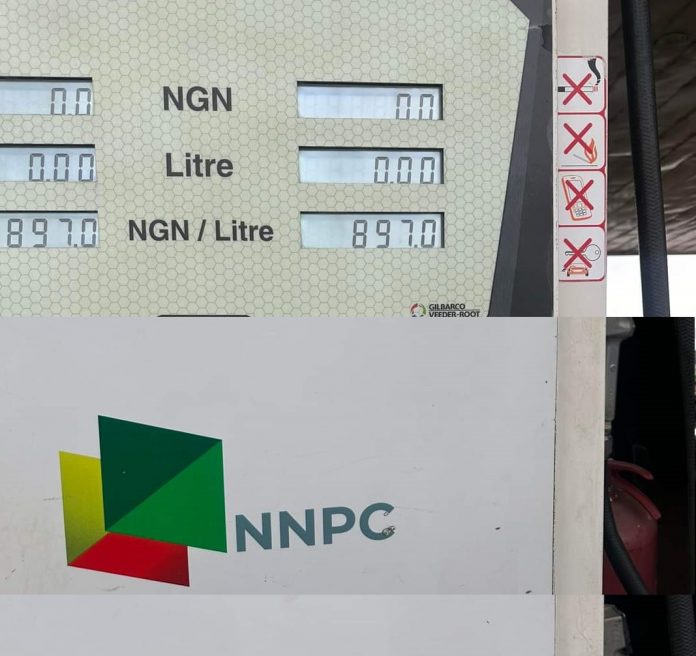
However, petrol prices remain high across the country. As of Tuesday, NNPCL retail stations had adjusted their pump prices to N897 per liter, up from N617. Independent marketers are selling petrol at rates ranging between N930 and N1,000 per liter, reflecting the ongoing volatility in the market.

This has buoyed speculation that the price of fuel from Dangote Refinery will be around N1,000 per liter.

A Milestone for Quality Assurance

On a more optimistic note, Dangote has declared today “a celebration day” for Nigerians, assuring the public that the petrol produced at his refinery will be of the highest quality, comparable to any in the world.

“You will not be having an engine issue, which a lot of us were having. It won’t happen at all. The quality here will match that of anywhere in the world; US, America, we will make sure nobody will beat us in terms of quality,” he said, offering a glimmer of hope to motorists and consumers weary of substandard fuel.

While this development is seen as a significant step in addressing the ongoing fuel crisis in Nigeria, the potential pricing of Dangote’s petrol remains a point of concern for many Nigerians, particularly as petrol stations across the country increase their pump prices to around N1,000 per liter. The question of pricing remains a significant concern, especially in light of the economic hardships already faced by the population.

Although the arrival of Dangote’s petrol could provide much-needed relief in terms of fuel availability and quality, the ultimate impact will depend on the final pricing decision by the Federal Executive Council and how it aligns with the economic realities facing the nation.

The Trump’s Interest of US Presidency Over the $Billions in Truth Social

0

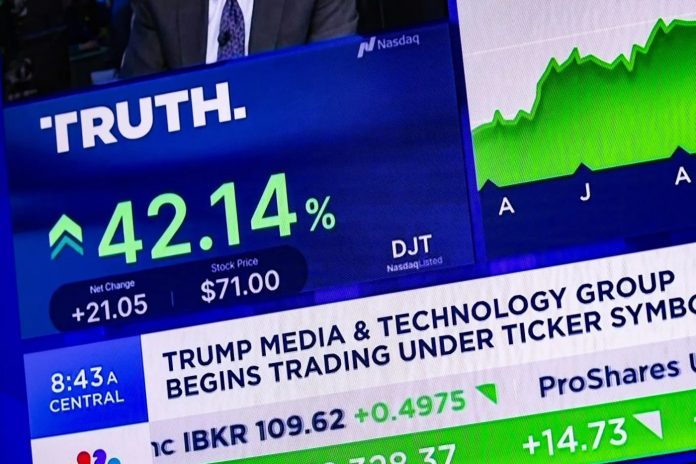
Trump, the majority shareholder of the company, saw his net worth fall nearly 4%—or $163 million—to $3.9 billion on Tuesday, making him the 851st wealthiest person as of 4:30 p.m. EDT. Trump Media and Technology Group, which uses the ticker DJT, closed at $18.08 on Tuesday, marking a 68.82% fall from when the company debuted on the Nasdaq exchange in late March after merging with a special-purpose acquisition company. Tuesday’s price surpassed Friday’s previous record low ($19.50) since DJT began trading as its own entity. Trump Media wasn’t alone in struggling Tuesday: All three U.S. stock indexes saw their worst day since Aug. 5 and other social media companies suffered, too, with Reddit falling 4% and Snap falling 5%  – Forbes

I praised him when in the process of responding after being de-platformed across many social media ecosystems, he made $billions and created millionaires in the process, via Truth Social. But that was before a tough election battle, against a totally emergent opponent, who came from the flanks, catching him unprepared. The Trump universe was built to defeat Biden,  but Kamala is the opponent today!

So between those $billions and winning in November the US Presidency, Trump has made a call: anything it will take to return to White House, the benjamins can wait. Yes, Trump returned to X (Twitter), rattling his media company investors. And they have responded, and the numbers do not look great: “Trump Media, the parent company of Truth Social and a significant holding for former President Donald Trump, has seen its share price decline, marking a notable low since it began public trading.”

Why did Trump make this call? Twitter is the political village square for all nations. No other platform comes close, and not being there is costing him votes. While Truth Social is there, you do not win elections by speaking only to your “tribe”; you find ways to reach across the aisles. Trump is hoping that by coming to Twitter, he could energize the political citizens there.

Remember: in politics, it is the permanent interest that matters. The stock value can wait as there is an election that has to be won. Good People, it is what it is. Of course, if he wins, Elon Musk can acquire Truth Social, saving the investors.