DD
MM
YYYY

PAGES

DD
MM
YYYY

spot_img

PAGES

Home Blog Page 3

The Government’s Bitcoin Wallet Stirs the Market Again

0

Markets are often moved by numbers, but sometimes they are moved by whispers. A wallet address can become a headline, a transaction can become a rumor, and a few dozen Bitcoin can cast a shadow far larger than their actual value.

That is the atmosphere surrounding the latest movement from a wallet associated with seized FTX and Alameda Research funds held by the US government. According to Lookonchain data, the wallet moved another 24.41 Bitcoin, worth approximately $1.92 million.

In the enormous ocean of the cryptocurrency market, the transaction is little more than a ripple. Bitcoin trades billions of dollars every day, making a $1.92 million transfer relatively modest. Yet markets rarely measure information only by size. Sometimes, they measure it by symbolism.

The movement immediately revives an uncomfortable question for Bitcoin bulls: Is the US government preparing to sell again? That question matters because government-linked Bitcoin wallets have become psychological landmarks in the digital-asset market.

Traders watch them not simply because of the coins they contain, but because their movements can signal potential future supply entering an already sensitive market. When such wallets become active, even without confirmation of a sale, speculation can move faster than facts.

The distinction is crucial. A transfer does not automatically mean a sale. Bitcoin can be moved between government-controlled addresses, custodial wallets, or other destinations for administrative and security reasons.

Without evidence that the coins have been deposited at an exchange or sold through another channel, it would be premature to conclude that the government is dumping Bitcoin into the market. But markets are creatures of anticipation.

They do not always wait for the door to open before imagining what might be behind it. The timing makes the transfer particularly interesting.

Investors are already navigating a nervous macroeconomic landscape ahead of the Jackson Hole symposium, where Federal Reserve Chair is expected to command enormous attention.

Inflation, interest rates, liquidity and the future direction of monetary policy remain powerful forces shaping risk appetite. Bitcoin, despite its growing institutional presence, remains deeply sensitive to that environment.

When investors fear tighter liquidity, speculative assets can stumble. When expectations shift toward easier financial conditions, capital can return quickly. Against that backdrop, a government wallet moving Bitcoin becomes another thread woven into an already complicated market narrative.

The psychological effect may prove larger than the financial one. Twenty-four Bitcoin cannot overwhelm Bitcoin’s global liquidity. But the thought of government-held coins returning to the market can encourage traders to become defensive, particularly after periods of strong price appreciation.

Crypto markets have always possessed this strange duality: enormous liquidity and extraordinary sensitivity. A whale moves, a government wallet stirs, a headline flashes across social media—and suddenly traders begin searching the horizon for a storm.

For bulls, the important point is therefore not the $1.92 million itself. It is whether the transaction represents routine wallet management or the beginning of a broader distribution process. Until that becomes clearer, declaring another government sale would be speculation.

Bitcoin has survived Mt. Gox distributions, corporate liquidations, government seizures and countless waves of fear before. Its market is far deeper today than it was in its early years.

Still, markets have memories. And sometimes, all it takes is a wallet waking from silence to remind investors that beneath the charts, another story is always moving.

Gold Holds Above $4,600 as Inflation, Yields and the Dollar Test Bullion’s August Rally

0

Gold stood firm above $4,600 an ounce on Thursday, reclaiming some of the ground it lost in the previous session as investors weighed a hotter-than-expected inflation reading against the metal’s remarkable August advance.

Bullion rose as much as 0.7%, showing that despite pressure from a stronger dollar and rising Treasury yields, the appetite for gold remains powerful.

The previous session had delivered a reminder that even the brightest rally can briefly meet a cloud.

Stronger inflation data pushed the dollar higher and lifted Treasury yields, increasing the opportunity cost of holding a non-yielding asset such as gold. The move was enough to bring an end to gold’s five-day winning streak, but it failed to extinguish the broader momentum that has carried bullion through the month.

Gold is still up roughly 14% in August, placing the precious metal on course for its strongest monthly performance in more than two decades and its best August since 1999.

That scale of appreciation transforms the market from a simple story of price gains into something more profound: a reflection of investors searching for certainty in an increasingly uncertain financial landscape.

For centuries, gold has carried a peculiar reputation. It does not pay interest, produce earnings or expand its supply according to corporate ambition. Yet when confidence becomes fragile.

Investors often return to it. Gold becomes less a commodity than a mirror, reflecting anxiety about inflation, currencies, government finances, geopolitical tensions and the future purchasing power of money.

That dynamic is particularly important now. The hotter inflation reading has complicated expectations around monetary policy, because persistent price pressures can encourage central banks to keep interest rates higher for longer.

Higher yields can weigh on gold, while a stronger dollar can make bullion more expensive for international buyers. Both forces represent headwinds.

But gold’s resilience suggests that investors are looking beyond the immediate movement in rates and currencies.

The metal’s ability to remain above $4,600 after such a powerful run indicates that demand has not disappeared simply because yields have moved higher. The market is therefore caught between two competing currents.

On one side stands inflation, pulling yields and the dollar upward and challenging gold’s valuation. On the other stands the deeper desire for protection, drawing capital toward an asset that has survived countless economic storms.

August has made that tension visible. Gold’s ascent has been more than a technical rally; it has carried the rhythm of a market searching for shelter. Each new record has added another verse to a story written over centuries—a story in which gold shines brightest when confidence begins to flicker.

Whether the rally can continue will depend heavily on inflation, interest-rate expectations, the dollar and investor demand. Yet Thursday’s recovery offers an important signal: gold may have stumbled, but it has not surrendered.

Above $4,600, the metal continues to move like an old river through a changing financial landscape—sometimes pushed back by stronger currents, but always finding its way forward.

With August approaching its close, gold is not merely having a strong month. It is reminding markets why, when uncertainty rises, investors still listen for the quiet sound of the oldest safe haven.

Marvell Shares Slide as AI Expectations Outrun Strong Earnings and $18bn Revenue Outlook

0

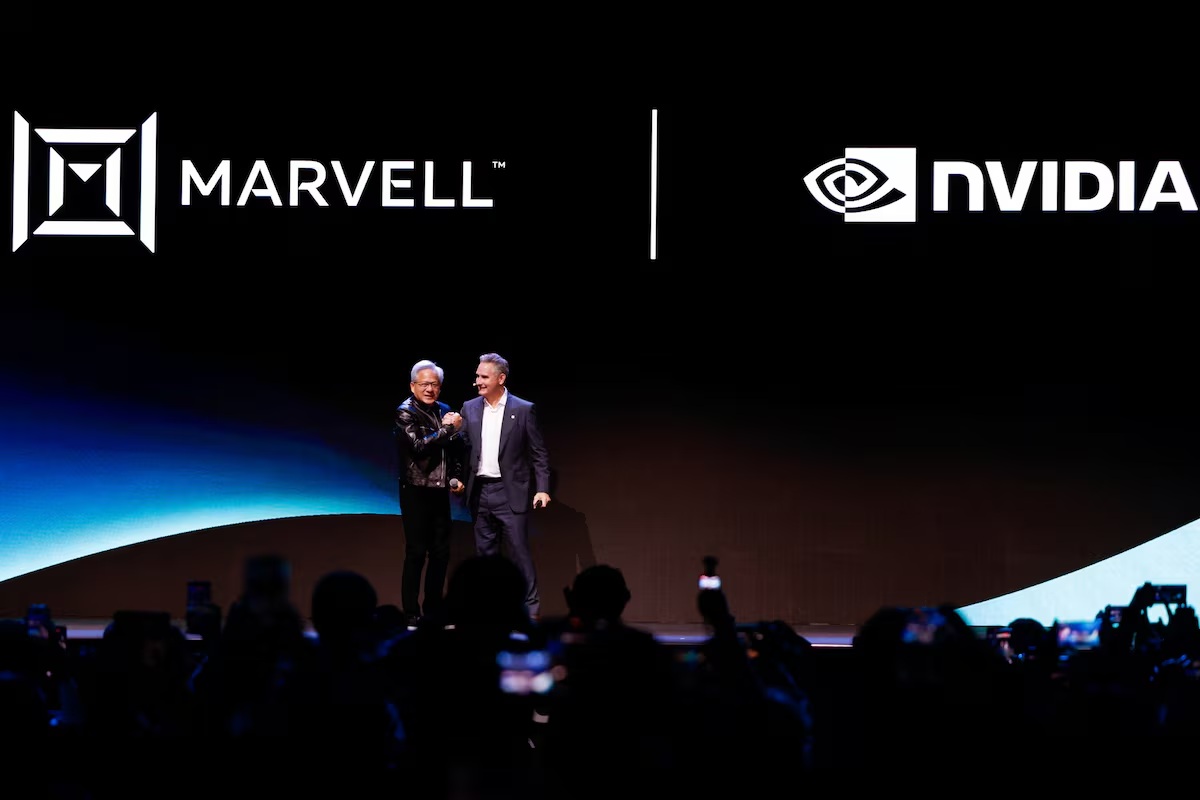
Marvell Technology shares fell about 8% in premarket trading on Friday even after the chipmaker delivered stronger-than-expected second-quarter results and raised its long-term revenue outlook, highlighting how demanding investor expectations have become across the AI semiconductor industry.

The reaction was less a verdict on Marvell’s current business than a warning about the burden of expectations embedded in its share price. Marvell has gained roughly 184% this year, making it one of the major beneficiaries of the surge in spending on AI data centers. With the stock already pricing in rapid expansion, investors were looking for evidence that the company’s recently announced relationship with Google would translate into substantial revenue sooner than management currently expects.

Marvell reported fiscal second-quarter revenue of $2.74 billion, up 37% from a year earlier and above its previous guidance and Wall Street expectations. Adjusted earnings were 94 cents a share, also slightly ahead of estimates. Data center revenue, the engine of the company’s AI expansion, rose 46% to about $2.17 billion.

Chief Executive Matt Murphy said demand remained exceptionally strong.

“AI-related bookings remain exceptionally robust, and we expect our revenue growth to accelerate further through the remainder of fiscal 2027,” Murphy said.

Marvell also raised its fiscal 2027 revenue forecast to about $12 billion from $11.5 billion and lifted its fiscal 2028 target to roughly $18 billion from $16.5 billion. The latter implies approximately 50% growth and would represent a major expansion from the company’s $8.2 billion of revenue in fiscal 2026.

Yet the upgraded outlook was not enough to satisfy investors.

The key issue is timing. Marvell’s partnership with Google had generated expectations for a powerful new source of custom AI-chip revenue, but the latest disclosures indicate that the most significant contribution from that relationship is likely to come later, with material gains expected from fiscal 2029 onward. That pushed back some of the revenue opportunity investors had been assigning to the deal and helped trigger the sell-off.

The Google relationship gives Marvell exposure to the competitive market for custom accelerators and other chips designed specifically for hyperscalers. Google can purchase up to 58.97 million Marvell shares at $206.58 each under a warrant arrangement tied to the collaboration. The potential value of the equity component is about $12.2 billion.

But the agreement should not be interpreted as an immediate $12.2 billion revenue opportunity. The warrant is tied to the broader commercial relationship, while the underlying chip programmes require development, deployment and scaling over several years. That distinction appears to have become central to the market’s reaction.

Marvell’s current numbers nevertheless show that the underlying AI infrastructure cycle remains powerful. Data-center revenue of roughly $2.17 billion accounted for close to 80% of quarterly sales, making the segment increasingly central to the company’s financial profile.

The company’s custom silicon business has become an important part of its growth plan. Hyperscalers are now developing chips tailored to their own workloads as they seek greater control over performance, power consumption and cost. Marvell is positioned to benefit from that shift by designing and supplying chips for large cloud customers rather than relying solely on standardized processors.

That opportunity also creates a significant risk: concentration.

Marvell must continue winning major programmes from hyperscalers to sustain the growth rates now reflected in its valuation. Goldman Sachs has pointed to uncertainty over Marvell’s ability to add new custom-chip customers, while noting that the stock trades at a premium to peers. The bank described the latest results as an “incremental positive” but maintained a neutral view.

The valuation issue is difficult to ignore. Marvell’s shares have risen about 184% in 2026, and the company has become one of the market’s prominent beneficiaries of the AI infrastructure boom. At that level, a conventional earnings beat is no longer necessarily sufficient to drive the stock higher. Investors are demanding evidence of future growth that exceeds what has already been priced into the shares.

That helps explain why the company’s results produced such a counterintuitive reaction. Operationally, Marvell is accelerating. Its data-center business is growing rapidly, AI bookings remain strong, and management is raising its long-term revenue targets. But the stock market is judging the company against a much higher hurdle.

The contrast is increasingly visible across the AI semiconductor sector. The first phase of the AI rally rewarded companies simply for demonstrating exposure to surging data-center spending. The next phase is placing greater emphasis on the timing, durability, and returns of that spending.

For Marvell, it is no longer a question about whether AI demand exists; the latest results provide strong evidence that it does. The more consequential question is whether the company’s custom-chip pipeline can expand rapidly enough, across enough customers, to justify a valuation that already assumes years of exceptional growth.

The company is expected to provide additional details at its investor day in October, when investors will have a closer look at its custom silicon strategy and longer-term growth opportunities.

Bitcoin, Nvidia and the Changing Shape of the Market

0

Bitcoin has returned to the center of the global macro conversation, climbing toward $81,000 as investors position themselves around one of the defining moments of the week: Kevin Warsh’s first keynote at Jackson Hole.

Across equities, artificial intelligence, gold, and monetary markets, capital is moving in ways that suggest investors are reassessing Bitcoin’s role. The approach to $81,000 carries significance beyond a psychological milestone.

Bitcoin’s advance has been supported by renewed institutional interest, improving liquidity expectations, and demand for scarce assets. Earlier in August, Bitcoin pushed above $80,000 as a weaker dollar and concerns about currency debasement strengthened demand for digital and physical stores of value.

Reuters reported that Bitcoin’s August advance had reached 28% by August 25, its strongest monthly performance since November 2024.

Yet the market’s attention is now fixed on the Federal Reserve. Warsh’s Jackson Hole appearance represents a defining test because monetary policy remains one of Bitcoin’s most powerful external forces.

Investors are listening for clues about inflation, interest rates, financial conditions, and the Fed’s willingness to tolerate stronger asset prices. His remarks could reinforce risk appetite or remind markets that tighter policy remains possible.

That tension becomes clearer across US equities today. The S&P 500’s total market capitalization has crossed $70 trillion, illustrating the scale of American financial assets. At the heart of that expansion stands Nvidia, whose artificial-intelligence boom has turned the chipmaker into a market-moving force.

Following its latest results, Nvidia added roughly $442 billion in market value in a single session, one of the largest one-day gains ever recorded by a company. Its surge helped propel technology stocks and reinforced enormous expectations surrounding AI.

That strength, tells only half the story. Bitcoin is increasingly behaving less like another high-beta technology asset and more like an independent macro instrument. Its 90-day correlation with the Nasdaq 100 has fallen from above 60% to roughly 33%, according to recent research.

At the same time, Bitcoin’s correlation with gold has climbed above 50%. The shift suggests the market is changing how it values Bitcoin.

For years, Bitcoin was treated as a speculative extension of technology stocks: when liquidity expanded, both rose; when yields climbed, both suffered.

Now, the relationship is becoming more complicated. Bitcoin’s growing alignment with gold points toward the return of the so-called debasement trade, where investors seek scarce assets as protection against fiscal pressure, rising debt, inflation risks, and potential currency erosion.

Bitcoin has not become gold, and correlation does not prove causation. Still, the direction is meaningful. A 33% Nasdaq correlation alongside a gold correlation above 50% suggests Bitcoin may be developing a different identity within portfolios.

The $81,000 Bitcoin market, the $70 trillion S&P 500, and Nvidia’s extraordinary gain therefore form one larger story. Markets are rewarding technological growth while simultaneously searching for monetary protection. Bitcoin sits between those worlds, increasingly capable of responding to both liquidity and scarcity.

As Jackson Hole takes center stage, investors are watching to see which force wins. If Warsh emphasizes restraint, Bitcoin may face renewed pressure from yields and the dollar. If markets hear a softer message, the path toward higher prices could remain open.

Either way, Bitcoin’s changing correlations suggest that its next chapter may be written not merely as a technology trade, but as part of the debate over money, scarcity, and stability.

Beyond the Model: Why Infrastructure Discipline Will Decide the Next Phase of Enterprise AI – An Interview With Quali CEO Lior Koriat

0

In the race to operationalize artificial intelligence at scale, enterprises are discovering that model performance alone is no longer the decisive factor. As organizations commit to multi-year investments in expensive GPU capacity and complex hybrid environments, a quieter but more consequential challenge has emerged: how to govern that infrastructure with the same discipline once reserved for financial systems and production software.

Lior Koriat has spent nearly two decades confronting versions of this problem. As CEO of Quali since 2011, he has guided the company from its early engineering roots into a global provider of Environment as a Service platforms designed to give platform and DevOps teams governed, self-service access to cloud and hybrid infrastructure.

Quali’s Torque platform delivers catalog-based environments with built-in policy enforcement, cost attribution, lifecycle management, and real-time visibility—capabilities that have taken on new urgency as AI workloads introduce autonomous agents, rapidly shifting GPU demand, and environments that too often outlive their purpose.

Before leading Quali, Koriat founded Intellitech Engineering, a systems company serving defense and civilian customers, and later mentored startups through Google Launchpad Accelerator and UC Berkeley’s Sutardja Center for Entrepreneurship & Technology. That background in complex, high-stakes systems informs his view that the next phase of enterprise AI will be defined less by the raw power of models and more by an organization’s ability to treat infrastructure as a governed resource rather than an unlimited pool.

In this interview with Tekedia’s Samuel Nwite, Koriat examines the operational realities of AI infrastructure: the growing risk of poorly allocated capacity, the limits of traditional automation when agents begin provisioning resources, the requirements of true sovereignty, and the practical steps organizations can take to improve utilization without simply buying more hardware.

The discussion offers a clear-eyed assessment of what separates companies that scale AI effectively from those that accumulate cost and complexity in equal measure.

  1. You’ve said the next phase of enterprise AI will be defined as much by infrastructure discipline as by model capability. When companies are locking themselves into years of expensive compute capacity, where do you see the biggest blind spots today—organizations that simply don’t have enough infrastructure, or those sitting on large, poorly allocated pools with almost no visibility into who’s actually consuming it?

The bigger problem is increasingly allocation rather than availability. Companies are making significant investments in GPU capacity, but having the hardware does not mean you are using it efficiently. You need visibility into who requested an environment, what workload it supports, how long it is supposed to run, and whether those resources are still being used. Without that context, organizations can continue adding capacity while existing infrastructure sits idle or remains attached to workloads that have already finished. The discipline has to come before the next purchase.

2. Quali has long focused on turning infrastructure into a governed, self-service resource rather than an unlimited pool. Looking at the current AI boom, how much of the waste you’re seeing stems from treating GPU and compute capacity the way companies once treated cloud spend five years ago- easy to provision, hard to track, and even harder to shut down?

There is a strong parallel with the early cloud era. Self-service made infrastructure easier to consume, but organizations learned later that easy provisioning without lifecycle management creates waste very quickly. AI infrastructure raises the stakes because GPU resources are significantly more expensive and the supporting stack is more complex. The goal should still be self-service, but every environment needs an owner, a purpose, a policy, and a defined lifecycle from the moment it is created.

3. You argue that AI infrastructure has to become a governed enterprise resource. In practical terms, what does “governed” look like day-to-day when autonomous agents are the ones requesting environments, spinning up GPUs, and tearing things down? Who ultimately owns the policy, and how do you prevent the control plane from becoming another bottleneck?

Governance has to be embedded in the workflow rather than added as another approval step. An agent can request an environment, but the control plane should understand what it is requesting, what resources it is allowed to consume, which configuration and security policies apply, and when those resources should be retired. The organization defines those policies, and automation enforces them consistently. If every request still requires a person to inspect and approve it manually, we have simply moved the bottleneck rather than solved it.

4. Many organizations are still measuring AI success by how fast they can stand up new environments. You seem to be saying that speed without lifecycle discipline is the real risk. What metrics should boards and CIOs actually be watching right now if they want to know whether their AI infrastructure is under control or quietly bleeding money?

Deployment time matters, but it only measures the beginning of the lifecycle. I would also look at GPU utilization, how long unused environments remain active, how frequently environments drift from their approved configuration, and how much infrastructure exists without a clear owner or workload attached to it. Another useful measure is whether the organization can accurately describe what is running across its environments at any given time. If that requires days of manual investigation, there is an operational visibility problem regardless of how quickly those environments were originally deployed.

5. You’ve described environments that sit idle between training runs or remain attached long after the work is finished. When an organization discovers it has millions of dollars in underutilized GPU capacity, what’s the first operational change that typically delivers the biggest immediate improvement without buying more hardware?

Start by attaching lifecycle information to the infrastructure that already exists, rather than waiting for a broader governance rollout. Once an environment carries an owner and an expected end date, teams can immediately see which capacity is tied to active work and which was provisioned for something that already concluded. That single step tends to surface real savings faster than any new tooling, because it turns a hardware problem into a visibility problem you can actually act on.

6. Sovereign AI conversations often focus on where the model and data live. You suggest infrastructure governance is becoming equally important. How do you respond to a government or regulated enterprise that believes owning the hardware and keeping data on-prem is enough to claim sovereignty when agents can still act across systems without deterministic policy enforcement?

Physical control is only one part of sovereignty. An organization can own the servers and keep the data inside its own facilities, but it still needs control over how infrastructure is provisioned, configured, changed, and accessed. That becomes more important as agents begin taking operational actions because the agent itself is not deterministic. The policies around what it can provision and the boundaries within which it can operate therefore need to be deterministic and consistently enforced.

7. Traditional automation executes static scripts. An intelligent control plane, as you describe it, understands intent, ownership, cost, and policy. Walk me through a concrete example of how that shift changes the outcome when an AI agent requests a large GPU cluster for a short-lived experiment versus a long-running production workload.

The infrastructure may look identical at the provisioning stage, which is exactly the risk. Picture two requests for the same eight GPUs. One is a short experiment that needs that capacity for six hours and should expire automatically once the job finishes. The other is a production workload that needs those same eight GPUs indefinitely, along with dedicated networking and storage, security controls, monitoring, and a change policy that follows enterprise standards rather than a timer. A traditional script would provision both requests the same way because they look the same on paper. An intelligent control plane reads the intent behind the request and provisions each one differently from the start. The objective is to automate the right environment for the workload, not simply automate whatever infrastructure was requested.

8. Platform engineering teams spent the last decade removing friction for developers. Now they’re being asked to enforce cost controls, policy, and auditability across far more expensive and dynamic infrastructure. Are we asking these teams to do two jobs that are fundamentally in tension, or is there a way to design the control plane so speed and governance reinforce each other?

They only become competing objectives when governance depends on manual intervention. If approved architectures, security requirements, cost controls, and lifecycle policies are built into reusable workflows, developers can get infrastructure faster because they are no longer waiting for multiple teams to configure each component separately. The platform team defines the operating boundaries once and makes them repeatable. That is how governance becomes an enabler of self-service rather than an approval layer sitting in front of it.

9. Zero-touch operations have been a long-standing goal. You say we’re closer than most people realize, but governance—not automation—is the limiting factor. What specific capabilities still need to mature before a large enterprise can safely allow agents to provision, optimize, and retire AI environments with minimal human intervention?

We already know how to automate many of the individual actions. The harder problem is giving automation enough context to know whether an action should happen. That requires visibility into ownership, dependencies, policy, cost, current state, and the lifecycle of the environment. It also requires continuous validation because an environment that was compliant when it was deployed can drift over time. Zero-touch operations become practical when those controls are part of the operating model rather than dependent on someone reviewing the environment afterward.

10. Looking five years ahead, hybrid AI environments—public cloud, private cloud, on-prem, and edge—will almost certainly be the default. What’s the single hardest unsolved problem in creating one consistent operational standard across those environments, and how close is the industry to solving it?

The hardest problem is consistency. Every environment has different APIs, provisioning models, security controls, and operational tooling, while the enterprise still needs one way to define what an approved workload looks like. Replacing all of those tools with one technology is neither realistic nor necessary. The industry needs a control layer that can use the tools organizations already have while applying consistent policy and lifecycle management across them. We are making meaningful progress there, but most enterprises still operate these environments as separate domains today.

11. You’ve watched companies generate Infrastructure-as-Code and environments at a pace that was unthinkable a few years ago, only to lose track of what they created. If you could redesign one common enterprise practice around AI infrastructure provisioning from scratch, what would you change first, and why?

I would stop treating provisioning as the end of the automation process. Infrastructure as Code is very good at describing what an environment should look like when it is created, but the environment continues changing after deployment. Ownership changes, dependencies evolve, configurations drift, and workloads eventually end. I would design the process around the full lifecycle from the beginning, including deployment, continuous validation, modification, utilization, and retirement.

12. Ultimately, you believe the organizations that succeed will treat AI infrastructure as an operational capability rather than a collection of technologies. What early signals tell you that a company is on that path—and what red flags tell you it’s still treating infrastructure as an unlimited pool that expands every time a new workload appears?

A stronger signal than deployment speed is whether teams default to reusing validated infrastructure patterns instead of rebuilding the same stack for every new project, because that habit only forms once governance is built into the workflow rather than treated as a separate control. The clearer warning sign is the opposite: several teams independently solving the same provisioning problem, each with its own approach to ownership and cleanup. That kind of duplication is usually the first evidence that infrastructure is accumulating rather than being managed, long before it shows up as a cost problem.