DD
MM
YYYY

PAGES

DD
MM
YYYY

spot_img

PAGES

Home Blog Page 3

Starmer’s Exit Throws Britain Into Political Uncertainty as Markets Brace for Labour Leadership Battle

0

British Prime Minister Keir Starmer on Monday announced he would step down as Labour leader and prime minister, capping a turbulent period that saw his government move from commanding political authority after a landslide election victory to confronting internal rebellion, weakening public support, and mounting economic anxieties.

The resignation opens a new chapter in British politics and injects fresh uncertainty into financial markets already grappling with elevated borrowing costs, stubborn inflation, and concerns over the future direction of government spending.

Standing outside 10 Downing Street, a visibly emotional Starmer said entering government had been “the proudest moment of my life,” pointing to efforts to restore Britain’s international standing, attract investment, and strengthen workers’ rights.

However, he acknowledged that confidence within his own party had eroded.

“I have heard the answer from my parliamentary party. I accept that answer with good grace. I will resign as leader of the Labour Party,” Starmer said.

His departure comes less than two years after leading Labour to one of the largest parliamentary majorities in modern British history in the 2024 general election, a victory that many analysts believed would usher in a prolonged period of political stability after years of Conservative rule.

Instead, Labour’s dominance unraveled rapidly.

The immediate trigger was a wave of dissatisfaction following heavy losses in local elections in May, combined with increasingly vocal criticism from Labour lawmakers over economic policy, welfare reforms, and broader questions about leadership.

Compounding the pressure was the emergence of Andy Burnham as a powerful alternative voice within Labour. Burnham’s decisive victory in a special election on June 18 transformed him into a serious contender for the party leadership and potentially the next occupant of Downing Street. His success intensified speculation that Labour MPs were preparing for a post-Starmer future.

Financial markets responded cautiously to the news.

Sterling slipped 0.19% against the dollar to $1.3207, reflecting concerns about political uncertainty rather than panic. Meanwhile, the yield on Britain’s benchmark 10-year government bonds, known as gilts, remained broadly unchanged at 4.8452%, suggesting investors are taking a wait-and-see approach until the contours of the leadership race become clearer.

Yet beneath the surface, the resignation has reignited a debate about Britain’s economic direction. Under Starmer, the government pursued a strategy centered on fiscal discipline, international engagement, and economic credibility. His administration secured new trade agreements, sought closer cooperation with allies, and attempted to rebuild investor confidence after years of political instability.

Economist Kallum Pickering of Peel Hunt noted that Britain achieved approximately 1.5% real GDP growth under Starmer and succeeded in reopening itself to global investment and trade.

However, those gains failed to shield the government from growing frustration over living standards. Britain continues to face some of the highest borrowing costs among G7 economies, while inflation has remained persistently elevated compared with many of its peers. Households have continued to grapple with expensive mortgages, higher food prices, and weak wage growth after inflation.

“The market now has to price in what a Burnham premiership looks like,” Pickering told CNBC shortly after the resignation announcement.

That question is now central to investor thinking.

Burnham has spent recent months attempting to reassure financial markets after earlier comments suggesting Britain had become “in hock to the bond markets,” remarks that alarmed investors concerned about fiscal discipline. Although he has since moderated his tone, markets remain sensitive to any indication that a future Labour leadership could embrace significantly higher spending at a time when Britain’s public finances remain stretched.

The fiscal challenge confronting Starmer’s successor is substantial. Public debt remains elevated, borrowing costs are high, and demands on government spending continue to rise across healthcare, defense, welfare, housing, and infrastructure.

Additionally, Britain faces sluggish productivity growth and an economy still struggling to generate the kind of expansion needed to sustainably improve living standards.

Internal Labour tensions reflected those pressures.

Starmer and Finance Minister Rachel Reeves increasingly faced resistance from within the party over spending decisions and welfare reforms. The controversial appointment of Peter Mandelson as ambassador to the United States also generated friction among Labour members, while opponents argued that the government had become disconnected from voters who expected faster improvements in public services and household finances.

Public sentiment deteriorated accordingly.

An Ipsos poll published on Friday found that 52% of Britons believed Starmer should step down as prime minister, up five percentage points from May. Only 35% believed he should remain in office. Those numbers underscored how dramatically public perceptions had shifted since Labour’s sweeping electoral triumph.

For investors, the significance of Starmer’s departure extends beyond politics. The leadership transition comes as global markets are already confronting multiple risks, including geopolitical tensions, volatile energy prices, uncertainty over central bank policy, and slowing growth across several major economies.

Against that backdrop, market participants will closely scrutinize the leadership contest for clues about future tax policy, public spending plans, regulatory priorities, and the government’s relationship with financial markets.

The reaction in bond markets may ultimately prove more important than movements in sterling. Investors remain highly sensitive to any signal that future governments could weaken fiscal discipline, particularly after episodes of market turmoil in recent years demonstrated how quickly confidence can deteriorate when borrowing plans appear unsustainable.

Labour’s leadership contest is now expected to become a referendum on the party’s future direction.

Some members believe that Starmer moved Labour too close to the political center and failed to deliver sufficient economic change. Others fear that a shift toward more aggressive spending policies could undermine market confidence and damage Britain’s financial credibility. The backdrop is expected to make the outcome of the leadership race a spectacle, with spectators including not only Labour members but also investors, businesses, and international partners.

For now, Starmer will remain in office until a successor is chosen. Yet his resignation marks the end of a political project that began with ambitions of restoring stability after years of Conservative rule.

The immediate reaction in financial markets may have been calm, but the bigger test is expected when Labour chooses its next leader and reveals how it intends to address Britain’s persistent economic challenges. The market’s attention is no longer focused on what Starmer achieved. It is now focused on what his successor might do differently.

Alphabet vs Nvidia: The Shift from Compute to Monetization

0

The rapid narrowing of the capitalization gap between Alphabet and Nvidia is becoming one of the most significant signals of the current transformation of the technology sector. Alphabet’s approach to the $4.7 trillion mark against the backdrop of Nvidia’s slowing growth indicates a shift in investor focus from computing power providers to companies capable of integrating artificial intelligence infrastructure into scalable commercial services. If the current dynamics persist, Alphabet may regain its status as the world’s most valuable company for the first time in a decade, reflecting not just a market rally, but a broader change in the logic of evaluating the AI ecosystem — a shift clearly visible on the stock screener.

The key driver of this revaluation is Google Cloud, which is showing accelerated growth and is increasingly perceived by the market as a primary channel for AI monetization. Unlike Nvidia, whose model remains tied to hardware solutions, Alphabet is building a broader architecture combining cloud services, proprietary TPU accelerators, and applied AI tools. Thus, the company is gradually shifting the center of value creation from hardware toward the infrastructure platform layer, where margins and revenue sustainability are potentially higher.

The agreement with Anthropic only reinforces this dynamic. A contract worth up to $200 billion for the supply of computing power and TPU chips forms a significant part of Google Cloud’s future order pipeline and effectively secures long-term demand for its infrastructure. The provision of up to 5 GW of capacity and additional investments in the partner’s equity demonstrate the transition to a model in which major AI developers become anchor clients of cloud providers. At the same time, Anthropic’s multi-cloud strategy — involving resources from Amazon, CoreWeave, and Nvidia — highlights how competition is shifting from individual products to broader ecosystems and access to computing capacity.

Against this backdrop, Nvidia’s performance looks more sensitive to fluctuations in expectations surrounding end-market AI demand. The decline in Nvidia stock price following signals of slowing user growth among key customers, including OpenAI, demonstrates the company’s dependence on the investment cycles of its partners. Unlike Alphabet, which interacts directly with enterprise customers through its cloud business, Nvidia remains at an earlier stage of the value chain, where the effects of end demand emerge with a lag but often in a more volatile form.

An additional dimension of this transformation is the growing involvement of governments in AI regulation. Microsoft, Google, and xAI’s agreements with the U.S. government to provide early access to new models for security assessment effectively formalize state oversight of the industry’s development. For Alphabet, this means not only increased regulatory obligations, but also the potential strengthening of its position as one of the key technology providers for the public sector. At the same time, such mechanisms may slow down the commercial deployment of solutions and extend investment payback periods, especially in segments related to advanced models.

Collectively, the current situation reflects a broader shift in the structure of the AI market. While the early phase of the AI cycle concentrated most of the economic gains among hardware manufacturers, they are now gradually being redistributed toward companies that control infrastructure platforms and access to end demand. Alphabet, through the combination of its cloud business, proprietary chips, and partnerships with AI developers, is in a position to capture a significant share of that value.

Thus, the convergence in capitalization between Alphabet and Nvidia goes beyond competition between the two companies and becomes an indicator of the transition to a new phase of the AI cycle. In this phase, the key valuation factor is not the sheer volume of computing power being delivered, but the ability to convert it into sustainable commercial services and long-term cash flows. Ultimately, this balance between infrastructure, demand, and monetization will determine whether Alphabet will establish itself as the market leader or whether the current revaluation will turn out to be only a temporary response to the peak of the investment cycle.

Why Nvidia GPUs Are the Backbone of Modern Artificial Intelligence Systems

0

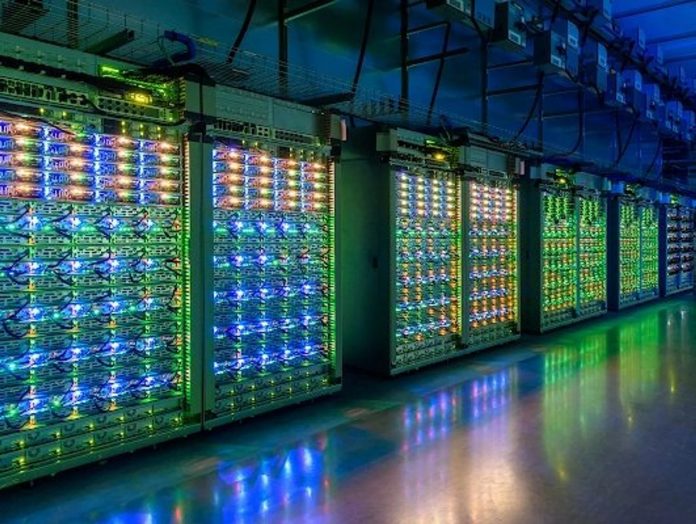
Modern artificial intelligence has outgrown the tidy abstractions of software and entered the realm of heavy industry, where computation is no longer measured in servers but in fleets of specialized accelerators.

At the center of this transformation sit hundreds of thousands of graphics processing units produced by Nvidia Corporation, whose architectures have become the de facto substrate of modern machine learning.

These GPUs are not isolated components but tightly orchestrated clusters spanning entire campuses, stitched together by high-bandwidth interconnects and purpose-built networking fabrics.

The scale of these deployments has redefined computational economics, shifting AI training from academic exercise into industrial logistics. A single frontier model may require tens of thousands of GPUs operating in parallel, consuming megawatts of power and generating heat densities that rival small cities.

The orchestration layer must constantly balance throughput, memory bandwidth, and failure tolerance across distributed systems that behave less like computers and more like digital power plants.

This shift forces organizations to treat computation as a constrained physical resource, where silicon availability and energy procurement become strategic bottlenecks rather than secondary concerns. Behind every large-scale AI cluster lies an equally large problem of electricity supply.

Hundreds of thousands of accelerators translate into gigawatt-scale demand profiles, forcing data center operators to secure long-term contracts with utilities and increasingly to consider dedicated nuclear power plants as stable baseload solutions.

Unlike intermittent renewables, nuclear generation offers consistent output and predictable capacity factors, aligning with the non-stop training cycles of frontier AI models.

This convergence of computation and energy infrastructure marks a return to industrial-scale planning reminiscent of mid-20th-century electrification projects. The capital intensity of these arrangements also reshapes geopolitical competition, as nations vie not only for chips but for grid capacity itself.

Yet electricity is only half of the equation. The thermal load produced by dense GPU clusters demands equally sophisticated cooling systems. Modern data centers rely on advanced liquid cooling loops, evaporative heat rejection, and carefully managed water consumption strategies to prevent hardware throttling and catastrophic overheating.

In many regions, water usage has become a point of contention between technology firms and local communities, especially where drought risk intersects with industrial expansion. The engineering challenge is no longer simply about maximizing compute density but about balancing energy efficiency with environmental constraints at planetary scale.

The result is a new infrastructural paradigm in which artificial intelligence is inseparable from the physical systems that sustain it. Data centers now resemble hybrid installations combining semiconductor manufacturing logic with utilities engineering and industrial heat management.

As demand continues to accelerate, the limiting factors of progress are increasingly not algorithmic but material: silicon, electrons, and water. Understanding this convergence is essential to grasping the true scale of modern artificial intelligence systems and the infrastructure civilization must build to sustain them.

This trajectory implies that future AI development will be constrained as much by energy policy and physical engineering as by software innovation. Investment decisions will increasingly resemble those of utilities, with long amortization horizons and infrastructure lock-in effects.

The race for artificial intelligence leadership is also a race to secure the planet’s most fundamental resources for computation at scale. This fusion of compute and infrastructure redefines intelligence as an industrial system embedded in the material world rather than a purely digital abstraction alone governed by physical limits and systemic dependencies at scale.

Microsoft Partners with Chevron, Turns to Natural Gas to Power AI Ambitions in Major Shift From Clean-Energy Narrative

0
chevron oil tanker
chevron oil tanker

Microsoft is deepening its commitment to artificial intelligence infrastructure with plans to source electricity from a massive new 2.67-gigawatt natural gas power plant in West Texas, a move that highlights the growing tension between Big Tech’s AI expansion and its climate commitments.

The project, known as Project Kilby, will be developed through a partnership between Microsoft and Chevron under a 20-year power purchase agreement that will provide dedicated electricity for Microsoft’s AI and cloud data center operations.

Chevron described the facility as being “among the largest co-located natural gas power and data center developments in the U.S.,” underscoring the scale of the energy demands now being created by the artificial intelligence boom.

A shift taking place across the technology industry has seen companies race to secure reliable electricity supplies for increasingly power-hungry AI workloads. While technology giants have spent years championing renewable energy and carbon-reduction targets, the explosive growth of AI is forcing many firms to confront a difficult reality: current clean-energy infrastructure often cannot provide the consistent, around-the-clock power that advanced AI systems require.

Project Kilby will rely primarily on two large turbines supplied by GE Vernova, while additional generation capacity will come from Solar Turbines, a subsidiary of Caterpillar.

The choice of natural gas rings loud because Microsoft has positioned itself as one of the world’s most aggressive corporate advocates of sustainability. The company has pledged to become carbon negative by 2030 and has invested heavily in renewable energy projects, carbon removal technologies, and environmental initiatives.

Artificial intelligence data centers consume significantly more electricity than traditional cloud computing facilities. Training and operating advanced AI models requires thousands of specialized chips running continuously, creating enormous power demands that can rival those of major industrial facilities.

Industry analysts view access to electricity as one of the most important competitive advantages in the AI race. Technology companies are no longer competing solely for chips and talent; they are also competing for energy. That dynamic has triggered a surge in partnerships between technology firms and energy providers. Across the United States, utilities, oil and gas companies, nuclear developers, and renewable energy producers are all seeking to capitalize on growing demand from AI operators.

For Microsoft, the attraction of a dedicated power source is straightforward. Unlike wind and solar generation, natural gas plants can provide stable baseload power regardless of weather conditions. That reliability is valuable for AI data centers, where interruptions can disrupt critical computing operations and reduce utilization of expensive hardware.

The arrangement tilts toward co-located power generation, where energy facilities are built specifically to serve nearby data centers rather than relying entirely on regional electricity grids. Such projects can reduce transmission constraints and provide greater certainty for both power suppliers and technology companies.

However, the environmental implications are substantial.

According to the Environmental Integrity Project, Project Kilby could emit more than 13 million tons of carbon dioxide, alongside approximately 3,200 tons of conventional air pollutants and 278,000 pounds of hazardous air pollutants over its operating life.

Those figures are likely to intensify scrutiny of the environmental cost of AI development. The industry has increasingly faced questions about whether sustainability goals remain achievable as AI deployment accelerates. Data centers already account for a growing share of global electricity consumption, and forecasts suggest power demand from AI could increase dramatically over the next decade.

Microsoft’s decision may signal a broader reassessment taking place within the technology sector. While renewable energy remains a long-term objective, companies now appear willing to prioritize energy security and computing capacity in the near term.

The move also highlights the changing fortunes of the natural gas industry. For years, many investors expected technology companies to become major drivers of renewable energy adoption. Instead, AI has created a new source of demand for gas-fired generation, extending the relevance of fossil fuels even as clean-energy investments continue to grow.

As companies including OpenAI, Anthropic, Google, Meta, and Amazon expand AI infrastructure, the pressure on energy systems is expected to intensify. Utilities and energy producers are increasingly taking a position as essential partners in the next phase of the AI economy.

Project Kilby, therefore, represents more than a power agreement. It is largely seen as an illustration of a new reality emerging in the technology sector: the race to dominate artificial intelligence is becoming inseparable from the race to secure electricity.

SK Hynix Surpasses Samsung to Become South Korea’s Most Valuable Company

0

In one of the most dramatic corporate turnarounds in South Korea’s modern business history, SK Hynix has overtaken long-dominant Samsung Electronics to become the country’s most valuable listed company, a milestone powered almost entirely by its commanding position in the specialized memory chips fueling the artificial intelligence boom.

This comes weeks after the chipmaker hit $1 trillion market valuation.

Shares of SK Hynix closed up 5.6% on Monday, lifting its market capitalization to 2,080.4 trillion won ($1.35 trillion). Samsung’s stock eased 0.14%, leaving it with a market value of 2,066.7 trillion won, excluding preferred shares. Including those shares, Samsung’s total valuation stood at 2,246.4 trillion won, but the symbolic shift at the top of the leaderboard marks a profound change in the fortunes of two companies that have defined South Korea’s technological prowess for decades.

The reversal is all the more remarkable given SK Hynix’s brush with collapse just two decades ago. In 2002, then-Hynix Semiconductor was crippled by debt from an aggressive expansion and nearly sold to Micron in a deal that ultimately fell through. The company spent nearly a decade under creditor control, its shares plunging as low as 135 won in 2003 and earning it the derisive label of a “penny stock.”

Today, SK Hynix stands as the world’s most valuable memory chipmaker and a central player in the AI supply chain. Its dominance in high-bandwidth memory (HBM) chips, specialized, vertically stacked components that deliver faster performance and lower power consumption for AI processors, has transformed it from a commodity producer into an indispensable partner for the likes of Nvidia and Google.

“The emergence of customized AI memory fundamentally changed the industry’s economics and allowed SK Hynix to establish itself as the market leader,” said Kim Sunwoo, a senior analyst at Meritz Securities.

By 2025, SK Hynix had captured 61% of the global HBM market, far ahead of Samsung’s 17% and Micron’s 21%. Unlike conventional DRAM, HBM chips are tightly integrated with AI accelerators, creating high barriers to entry and giving leading suppliers significant pricing power and profitability.

A Deliberate Bet on the Future During Industry Downturns

SK Hynix’s success traces back to a strategic decision to keep investing heavily in HBM technology even during the severe memory downturn of 2023, when the company posted a record annual operating loss of 7.73 trillion won. That bet paid off spectacularly as the AI frenzy took hold. In 2024, SK Hynix reported an operating profit of 23.5 trillion won, a record at the time, and its shares have skyrocketed more than 340% this year alone.

SK Group Chairman Chey Tae-won, who faced internal opposition when the conglomerate acquired Hynix years ago, reflected on the vision in a book published in January.

“What I really wanted to accomplish when we acquired Hynix was to transform it from a commodity memory producer into a mainstream semiconductor company whose products are indispensable. In the past, it did not matter whether memory came from Hynix, Samsung or Micron. They were interchangeable commodity products. HBM is different. If SK Hynix’s HBM is replaced with another product, the AI system may not function properly. What used to be a peripheral component has become a core component,” he said.

This focus has allowed SK Hynix to thrive in an industry where AI has fundamentally altered the economics. While Samsung maintains a broader portfolio that includes logic chips, smartphones, and consumer electronics, SK Hynix’s narrower but deeper specialization in memory has proven highly advantageous in the current cycle.

Analysts now see Samsung’s long-held position as the world’s largest DRAM producer coming under increasing threat. Bank of America estimates SK Hynix’s monthly DRAM output will reach about 589,000 wafers this year, compared with Samsung’s roughly 691,000. However, SK Hynix is projected to expand DRAM production by 38% between 2025 and 2028, versus just 17.5% growth at its rival. That would narrow the production gap to less than 10% by 2028 from around 23% this year — a significant achievement given Samsung’s larger manufacturing base.

“Previously, the difference in manufacturing scale meant there was simply no way for rivals to close the profitability gap with Samsung,” Kim said.

SK Hynix’s ascent highlights how the global AI surge is reshaping not just individual companies but entire national economies. South Korea, already heavily dependent on semiconductors for its export performance, now has two firms at the absolute pinnacle of the industry, both riding the wave of hyperscaler spending from Microsoft, Google, Meta, and others.

The development also comes as SK Hynix prepares for a U.S. listing on Nasdaq, a move expected to broaden its investor base and further elevate its global profile. The timing could hardly be better, as investor appetite for AI-related plays remains robust despite periodic market volatility tied to geopolitical events like the Iran conflict.

For Samsung, industry analysts believe the shift serves as a reminder of the need to adapt. While the company remains a technology behemoth with unmatched manufacturing scale and diversification, its memory business faces intensifying competition in the most profitable segments of the AI era. Samsung has responded by accelerating its own HBM development, but SK Hynix’s early lead and focused execution have given it a clear edge in the current cycle.