DD
MM
YYYY

PAGES

DD
MM
YYYY

spot_img

PAGES

Home Blog Page 3

Zuckerberg Urges U.S. To Out-Innovate China Instead Of Banning AI Models

0

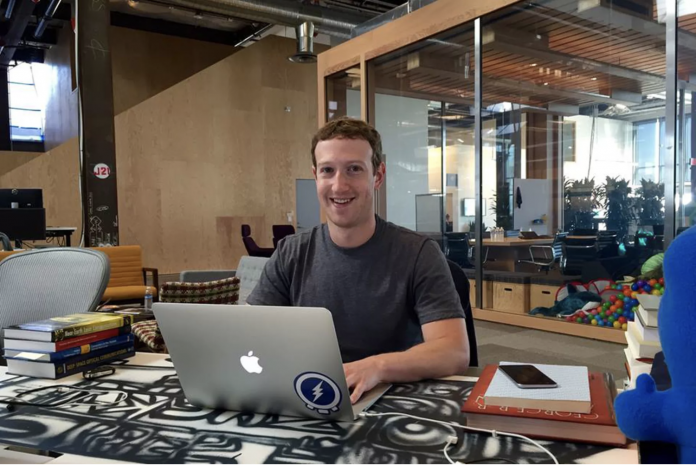
Meta CEO Mark Zuckerberg has cautioned against restricting access to Chinese artificial intelligence models, noting that the United States will preserve its leadership in AI by accelerating domestic innovation rather than relying on bans.

The warning comes as the Trump administration considers sanctions and trade restrictions against Chinese developers over alleged intellectual property theft.

In an interview with the Financial Times published Tuesday, Zuckerberg said prohibiting cutting-edge Chinese AI models would not be “an effective solution,” contending that U.S. policymakers should instead focus on removing structural obstacles that limit American competitiveness.

Rather than attempting to slow China’s progress through restrictions, Zuckerberg said U.S. companies should “systematically” identify bottlenecks and roadblocks that hinder their ability to build better and more capable AI systems.

His remarks stand in contrast to an increasingly hawkish stance in Washington, where policymakers are shifting from restricting China’s access to advanced AI chips toward potentially targeting the AI models themselves. If pursued, such measures would represent another significant escalation in the technology rivalry between the world’s two largest economies.

The debate has intensified following the emergence of Beijing-based Moonshot AI’s Kimi K3 model, whose coding and reasoning capabilities have surprised many in Silicon Valley and fueled questions over how quickly Chinese AI companies are closing the gap with American frontier labs.

Senior U.S. officials have alleged that Moonshot may have relied on large-scale “model distillation” to reproduce the capabilities of advanced American AI systems. Model distillation is a common machine-learning technique in which a smaller model learns from the outputs of a larger one. While it is widely used across the industry, U.S. officials argue there is a clear distinction between legitimate optimization and industrial-scale extraction of proprietary model capabilities that amounts to intellectual property theft.

Moonshot has denied the allegations, maintaining that Kimi K3’s performance improvements resulted from original architectural innovations and independent research.

The accusations come as the Trump administration broadens its AI strategy beyond export controls on semiconductors. Treasury Secretary Scott Bessent recently warned that Chinese companies found to have stolen U.S. AI technology could face financial sanctions or placement on the Commerce Department’s Entity List, a powerful trade blacklist that cuts off access to American chips, software, cloud services and other critical technologies.

The administration has also expanded restrictions on Chinese technology more broadly. On Tuesday, it announced new bans targeting imports of Chinese-made robots and power inverters, citing national security concerns and the need to strengthen America’s domestic AI infrastructure and advanced manufacturing base.

Together, the measures illustrate how Washington’s AI policy is evolving. Earlier efforts focused primarily on limiting China’s access to advanced computing hardware, including Nvidia’s high-end AI processors and semiconductor manufacturing equipment. Policymakers are now signaling that software and frontier AI models themselves could become targets of national security enforcement.

Zuckerberg’s position upholds Meta’s long-standing belief that openness, rather than restriction, is essential to maintaining U.S. leadership in artificial intelligence. The company has invested heavily in open-weight AI through its Llama family of models, arguing that broader access accelerates innovation, strengthens the developer ecosystem and prevents AI capabilities from becoming concentrated among a small number of companies.

His comments also expose a growing divide within the American AI industry over how best to respond to China’s rapid advances. Companies such as Anthropic and OpenAI have repeatedly warned about foreign actors allegedly attempting to extract or copy their models, calling for stronger protections against intellectual property theft and tighter controls on access to frontier systems.

Others, including Meta and several open-source advocates, note that excessive restrictions could ultimately weaken the U.S. AI ecosystem by slowing research collaboration, limiting developer access and reducing competitive pressure that drives innovation.

The discussion comes as Chinese AI firms continue to gain momentum. Alongside Moonshot AI, companies such as DeepSeek and Z.ai have introduced increasingly capable and lower-cost models that are challenging the pricing strategies and business models of leading U.S. developers. Their rapid progress has intensified debate over whether China’s advances stem primarily from original research, the benefits of open-source collaboration, or unauthorized use of proprietary American technology.

For investors and policymakers, the stakes extend well beyond the AI industry. Analysts have noted that the outcome of the dispute could influence global technology supply chains, cross-border investment, export policy and the competitive landscape for companies building the next generation of AI systems.

Okomu Oil H1 Pre-Tax Profit Falls 12% As Weaker Sales, Rising Costs Weigh On Earnings

0

Okomu Oil Palm Plc reported a 12.03% decline in pre-tax profit for the first half of 2026 as weaker domestic and export sales, higher production costs, and increased operating expenses weighed on profitability, even as the company strengthened its balance sheet with higher cash reserves and a return to a positive working capital position.

According to the company’s unaudited financial statements filed with the Nigerian Exchange (NGX) on Tuesday, pre-tax profit fell to N58.99 billion for the six months ended June 30, 2026, from N67.05 billion in the corresponding period of 2025.

Profit after tax declined even more sharply, dropping 16.42% year-on-year to N39.73 billion, while earnings per share fell to N41.65 from N49.83 a year earlier.

The weaker half-year performance reflects slower revenue growth alongside mounting production and operating costs, squeezing margins despite the company’s continued strong profitability.

Quarterly Performance Weakens

The slowdown became more evident during the second quarter. Pre-tax profit fell to N24.89 billion, representing a 27.00% decline from the derived first-quarter profit of N34.10 billion and a 28.58% drop from N34.85 billion recorded in the second quarter of 2025.

Second-quarter revenue also weakened, falling 7.52% year-on-year to N66.33 billion from N71.72 billion, suggesting softer demand and pricing pressures during the period.

Half-year revenue declined 3.50% to N125.29 billion from N129.83 billion in the same period last year.

Domestic sales remained the company’s largest revenue source, accounting for 90.37% of total turnover. However, local sales declined 3.19% to N113.22 billion, highlighting weaker demand in the domestic market.

Export revenue also fell 6.38% to N12.06 billion, contributing 9.63% of total revenue.

The quarterly breakdown showed a mixed picture.

While local sales declined 11.73% to N58.43 billion during the second quarter, export sales surged 42.98% to N7.90 billion, partially offsetting the weakness in the domestic market.

The improvement in exports suggests stronger international demand or higher shipment volumes toward the end of the reporting period, though it was insufficient to compensate for softer local sales.

Rising Costs Compress Margins

Profitability came under additional pressure from higher production costs. Despite lower revenue, cost of sales increased 3.84% year-on-year to N44.56 billion.

Oil palm production costs rose 1.66% to N37.61 billion, while rubber production costs climbed 17.51% to N6.95 billion, reflecting persistent inflationary pressures and higher operating expenses across the agricultural sector.

As a result, gross profit declined 7.13% to N80.73 billion from N86.93 billion.

Gross profit margin also narrowed to 64.44%, compared with 66.95% in the corresponding period of 2025, indicating that the company generated less profit from each naira of revenue.

Operating expenses added to the earnings pressure.

Net operating expenses increased 12.23% to N20.79 billion, leading operating profit to decline 12.37% to N59.94 billion from N68.40 billion.

Exchange Loss Lifts Finance Costs

Finance costs rose 8.85% to N1.57 billion, largely due to an exchange loss of N1.18 billion.

However, the impact was partly offset by stronger finance income. Interest income from fixed deposits and other cash balances increased significantly, with finance income rising to N622.47 million from N97.87 million in the first half of 2025, reflecting improved returns on the company’s growing cash holdings.

After accounting for finance costs and taxation of N19.26 billion, profit after tax settled at N39.73 billion.

Balance Sheet Strengthens

Despite weaker earnings, Okomu Oil’s financial position improved during the period.

Total assets increased 20.06% to N166.71 billion as of June 30, 2026, from N138.85 billion at the end of December 2025.

Cash and cash equivalents rose 65.34% to N21.40 billion, strengthening the company’s liquidity position.

Inventories nearly doubled to N36.61 billion from N18.32 billion, while trade receivables increased to N7.19 billion.

One of the most notable improvements was in working capital.

The company moved from a net current liability position of N2.49 billion at the end of 2025 to a net current asset position of N19.09 billion by the end of June, reflecting stronger short-term liquidity.

Meanwhile, long-term borrowings declined to N3.91 billion, although lease liabilities remained relatively high at N18.28 billion.

Market Performance

Despite the softer earnings, investors have continued to reward the stock this year.

Shares of Okomu Oil closed at N1,418.00 on Tuesday, July 28, 2026, compared with N1,095.00 at the beginning of the year, representing a 29.5% year-to-date gain.

The share price performance suggests investors remain optimistic about the company’s long-term fundamentals, supported by its strong cash generation, improving liquidity and dominant position in Nigeria’s palm oil industry. The optimism appears to overwhelm near-term profitability, which faces pressure from weaker sales, rising production costs and foreign exchange-related expenses.

Sam Altman Says People Still Want Human Leaders, Argues AI Cannot Replace Accountability

0

OpenAI Chief Executive Officer Sam Altman says he no longer believes artificial intelligence should replace corporate leaders, noting that people ultimately want humans, not AI systems, to make major decisions and be held accountable for them.

Speaking on the “Invest Like The Best” podcast, published Tuesday, Altman said the role of a chief executive extends beyond making decisions, requiring trust, responsibility and public accountability that AI cannot provide.

“I think for my job, for example, I think the world wants to know about the person that’s going to be responsible for the decisions of a company, and who they’re going to hold accountable if they make bad ones, and they don’t really want an AI CEO,” Altman said.

His comments represent a notable shift from remarks he made last November on the “Conversations with Tyler” podcast, when he suggested OpenAI should aspire to become the first major company led by an AI.

“Shame on me if OpenAI is not the first big company run by an AI CEO,” Altman said at the time.

The latest comments indicate that Altman’s thinking has evolved as AI adoption has accelerated. Rather than expecting AI to replace people in leadership positions, he now believes human judgment and accountability remain essential qualities that technology cannot easily replicate.

Altman said one reason AI has not transformed the economy as dramatically or as quickly as he once anticipated is that people continue to prefer interacting with other people.

“People have a great degree of trust and enjoyment in working with other people,” he said.

“And you can go hire an AI consultant right now, or talk to an AI sales rep right now, or hire an AI engineer or whatever somehow most people seem to still really prefer interacting with a human.”

Altman added that he shares that preference.

“I definitely would much rather engage with a person than engage with an AI for almost everything,” he said.

This suggests that while AI systems are becoming increasingly capable, social trust, empathy and human relationships remain significant barriers to fully replacing people in many professional roles.

Altman pointed to creative work as another example where human involvement continues to matter, even as generative AI produces increasingly sophisticated images, writing and other content.

“There’s the joke about at this point, the signature on a piece of art is most of the value, but the truth of it is you want to know about the person behind it,” he said.

“You read a novel, you want to know about the person behind it.”

The remarks come as debate intensifies over AI-generated content across creative industries, including publishing, social media and visual arts, where questions about authenticity, originality and authorship have become increasingly prominent.

Altman also acknowledged that his outlook on AI’s impact on employment has become more measured.

Earlier in the development of generative AI, he warned that the technology could eliminate “entire classes” of jobs, particularly entry-level positions. More recently, however, he said he was “delighted to be wrong” about the technology’s short-term impact on employment, noting that widespread displacement has not occurred as quickly as he expected.

His latest comments reinforce that shift, suggesting that demand for human interaction has slowed AI’s disruption of the labor market. Even as AI models continue improving, Altman believes there remains a distinctly human capability that machines have yet to master.

While many industry leaders describe that advantage as “taste,” Altman suggested the concept is broader and more difficult to define.

“The world may need a new kind of word for the kind of judgment that people are very good at, that AIs seem to really deeply struggle with,” he said.

His current stance lends credence to an emerging consensus among some AI executives that the technology is more likely to augment human decision-making than fully replace it in areas requiring trust, accountability, creativity and nuanced judgment. While AI continues to narrow the gap in technical capabilities, Altman now believes those uniquely human qualities may remain among the most durable competitive advantages in an AI-driven economy.

4 Next Big Cryptos: XRP, Worldcoin, Hyperliquid & BlockDAG Set to Lead the Next Bull Rally

0

A fresh phase seems to be forming in crypto markets as funds move strongly into a few selected assets. Many traders are trying to spot the next big cryptos early, before wider demand pushes prices higher. While the overall market shows mixed signals between pauses and selective rises, certain projects stand out due to strong usage, buyback plans, and clear chart setups.

Spotting solid structure at an early stage often makes the difference between big gains and missed chances. Coins supported by strong inflows, system upgrades, and positive chart patterns are building steady pressure. Below are four digital assets that are shaping up for strong upward moves.

1. BlockDAG Gains Attention with $0.00000019 Entry Window

BlockDAG moves into a leading position among the next big cryptos after reaching another key stage. Claims for Batches 1–6 and official staking are set to go fully LIVE within 48 hours, giving holders a chance to claim, stake, and grow their holdings as the system expands.

To mark this step, BDAG coins are still open at a very low price of $0.00000019 for the next 48 hours only. At the same time, Live Swap is running at 22% below the CoinMarketCap rate, offering a short window for users to increase their coin share before time runs out.

Alongside this progress, BlockDAG (BDAG) keeps building its wider setup with upcoming launches such as the Casino & Sportsbook, Tier 1 Exchange listings, BlockDAG Exchange, and Super App.

By combining fast network growth, near-term staking rewards, and reduced entry pricing, BlockDAG gives early users a clear way to grow holdings and plan for long-term benefits.

2. XRP Shows Signs of Build-Up and Pattern Strength

Among the next big cryptos, XRP is showing recovery signals after falling 38% this year and 68% over the last 12 months. Data shows that accumulation is increasing, which often comes before a price rise.

Spot XRP ETFs brought in $5.6 million in one day, lifting monthly inflows to $12.43 million. This marks four straight months of positive inflows, reaching more than $325 million this year while other assets saw outflows.

Chart signals also point to a stable base. After dropping to $1 in June, the price moved up to $1.1345 while forming an inverted head-and-shoulders pattern. It has crossed above the 25-day average, and PPO lines show a positive crossover. If key resistance levels break, XRP could move toward $1.2898, with larger targets near $2, suggesting about 77% upside.

3. Worldcoin Builds Strength Before Possible OpenAI Boost

Worldcoin (WLD) is gaining attention as one of the next big cryptos after dropping nearly 50% from its June peak. The project holds strong drivers, including Grayscale’s filing for a spot WLD ETF, which could bring deeper demand if approved.

WLD is closely tied to OpenAI, both linked to Sam Altman. Market watchers expect added attention and possible value growth ahead of OpenAI’s public listing. Technical charts show a double-bottom pattern with rising RSI and PPO signals, pointing to a possible move back toward the $0.70 resistance level.

4. Hyperliquid Forms Bullish Pattern with Rising Volume

Hyperliquid (HYPE) is shaping up as one of the next big cryptos, forming a bullish pennant pattern that often signals continued upward movement. This setup includes a sharp rise followed by a tight triangle shape. After testing the lower level, the price looks ready for a bounce that may push HYPE to new highs near $76.77.

Backing this pattern are strong platform numbers. Trading volume has crossed $190 billion in the last 30 days. In addition, the rollout of HIP-4 helps the platform aim for a strong position in the fast-growing prediction market sector.

Key Insights

The search for next big cryptos brings focus to four projects with strong upward setups. While XRP, Worldcoin, and Hyperliquid show strong data and clear chart signals, BlockDAG stands out due to its short-term timing advantage.

The launch of claims for Batches 1–6 and staking within 48 hours, along with the low entry price of $0.00000019 for the same period, creates a limited-time situation.

Taking action before this short window closes allows users to secure higher allocations, get ready for staking rewards, and prepare as the BlockDAG system grows. With upcoming features like Casino & Sportsbook, Tier 1 Exchange listings, BlockDAG Exchange, and Super App, the platform is preparing ahead of the next major price move.

Best Crypto to Buy: BlockDAG, Ondo, Cardano, and TRON Lead Market Focus!

0

Capital flows across decentralized networks are shifting rapidly as traders pivot from purely speculative assets toward projects delivering functional utility, real-world yield, and robust execution. Across current market discussions, participants are closely evaluating BlockDAG, Ondo, Cardano, and TRON to identify the best crypto to buy in this shifting landscape.

Rather than relying on simple price momentum, today’s market activity rewards ecosystems with clear payout mechanics, expanding real-world asset integration, high-volume transactional pipelines, and reliable layer-1 infrastructure. Explore this article to examine how these four distinct projects are positioning themselves and where the strongest opportunities lie in the current cycle.

1. BlockDAG Drives Value Ahead of Claims Launch!

Few names in the current market compare to BlockDAG when discussions turn toward the best crypto to buy. A time-sensitive milestone announcement allows holders to secure BDAG at a limited-time price of $0.00000019 for the next 48 hours, alongside an active Live Swap running at 22% below the CoinMarketCap price.

The timeline sweetens the deal even further. In 48 hours, claims for Batches 1–6 will go fully live alongside the launch of native staking. This immediate access to claiming and staking rewards gives participants a direct path to grow their holdings and stake for passive yields as the ecosystem expands.

A live Casino & Sportsbook built on the BlockDAG network continues to anchor utility, while the project rolls out upcoming Tier 1 Exchange listings, the native BlockDAG Exchange, and an all-in-one Super App. This kind of functioning ecosystem, layered on top of immediate claiming and staking mechanisms, gives the project a foundation that few emerging tokens can currently match.

Between the limited 48-hour entry price, the imminent batch claims, active staking rewards, and an ecosystem expanding toward Tier 1 exchange access, BlockDAG (BDAG) continues to stand out as one of the strongest options available today. As the 48-hour countdown progresses, enthusiasm around this token keeps building, with expectations for continued growth remaining decidedly bullish.

2. Ondo Expands Real-World Asset Tokenization Efforts

Ondo (ONDO) is the governance token of Ondo Finance, a DeFi platform focused on bringing real-world assets onto blockchain networks. The project offers products linked to traditional finance, including tokenized Treasury exposure and yield-focused solutions.

Ondo has gained attention as interest in real-world asset tokenization grows, though the token price has also moved with wider market conditions. Among discussions about the best crypto to buy, ONDO is often considered because of its connection to financial products rather than short-term trends.

The platform has expanded its services across multiple networks and continues to work with financial partners. Future progress will depend on adoption, market demand, and how quickly tokenized assets become part of regular financial activity.

3. Cardano Faces Risks Amid Upgrade Plans

Cardano (ADA) is a Layer 1 blockchain built around proof-of-stake technology, research-based development, and long-term network planning. It supports smart contracts, staking, decentralized applications, and governance features. Cardano remains a large cryptocurrency project with strong liquidity, although ADA has faced price pressure during recent market changes.

When investors discuss the best crypto to buy, ADA is often included because of its established network and ongoing development plans. The project continues to work on upgrades aimed at improving performance, security, and usability.

Recent concerns around a third-party wallet issue affected sentiment, but the problem was linked to the wallet layer rather than the Cardano blockchain itself. Future growth will depend on adoption and successful upgrades.

4. TRON Maintains Stablecoin Transaction Growth Focus

TRON (TRX) is a Layer 1 blockchain designed for fast transactions, low fees, and smart contract support. It uses its own virtual machine and allows developers familiar with Ethereum tools to build applications more easily. TRON has become widely used for USDT transfers because of its speed and lower transaction costs, especially for cross-border payments.

In conversations about the best crypto to buy, TRX is often mentioned due to its strong transaction activity and network usage. However, the project also faces challenges, including regulatory attention connected to stablecoin activity.

TRON’s future performance may depend on continued demand for digital payments and how global rules affect stablecoin networks. The blockchain remains focused on practical transaction use rather than only speculation.

Final Thoughts

Blockchain protocols are increasingly measured by tangible adoption metrics, real-world utility, and structured economic incentives. While Ondo, Cardano, and TRON offer distinct strengths across real-world asset tokenization, research-driven Layer 1 scalability, and global stablecoin liquidity, their long-term trajectories remain closely tied to broader market cycles and gradual network adoption.

By contrast, BlockDAG establishes an immediate advantage through concrete incentives, upcoming Tier 1 exchange listings, and a rapidly growing ecosystem spanning a Casino & Sportsbook, BlockDAG Exchange, and Super App. Featuring a limited-time entry price of $0.00000019, a 22% Live Swap discount, and claims and staking going live in 48 hours, BlockDAG positions itself firmly as the best crypto to buy right now.