

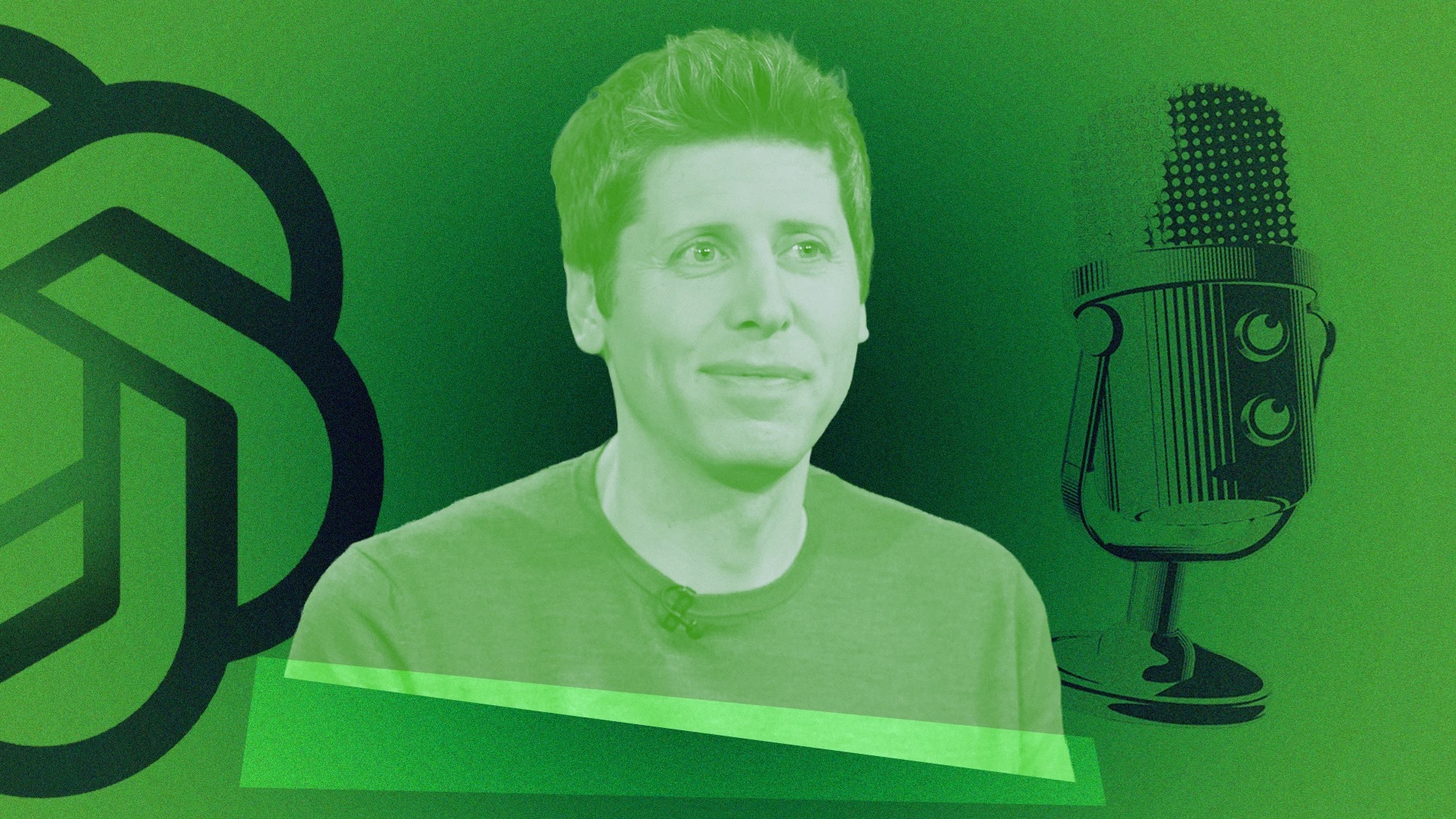
OpenAI Chief Executive Officer Sam Altman says he no longer believes artificial intelligence should replace corporate leaders, noting that people ultimately want humans, not AI systems, to make major decisions and be held accountable for them.
Speaking on the “Invest Like The Best” podcast, published Tuesday, Altman said the role of a chief executive extends beyond making decisions, requiring trust, responsibility and public accountability that AI cannot provide.
“I think for my job, for example, I think the world wants to know about the person that’s going to be responsible for the decisions of a company, and who they’re going to hold accountable if they make bad ones, and they don’t really want an AI CEO,” Altman said.
Register for the next Tekedia Mini-MBA.
Register for Tekedia AI in Business Masterclass.
Join Tekedia Capital Syndicate and co-invest in great global startups.
His comments represent a notable shift from remarks he made last November on the “Conversations with Tyler” podcast, when he suggested OpenAI should aspire to become the first major company led by an AI.
“Shame on me if OpenAI is not the first big company run by an AI CEO,” Altman said at the time.
The latest comments indicate that Altman’s thinking has evolved as AI adoption has accelerated. Rather than expecting AI to replace people in leadership positions, he now believes human judgment and accountability remain essential qualities that technology cannot easily replicate.

Altman said one reason AI has not transformed the economy as dramatically or as quickly as he once anticipated is that people continue to prefer interacting with other people.
“People have a great degree of trust and enjoyment in working with other people,” he said.
“And you can go hire an AI consultant right now, or talk to an AI sales rep right now, or hire an AI engineer or whatever somehow most people seem to still really prefer interacting with a human.”

Altman added that he shares that preference.
“I definitely would much rather engage with a person than engage with an AI for almost everything,” he said.
This suggests that while AI systems are becoming increasingly capable, social trust, empathy and human relationships remain significant barriers to fully replacing people in many professional roles.
Altman pointed to creative work as another example where human involvement continues to matter, even as generative AI produces increasingly sophisticated images, writing and other content.
“There’s the joke about at this point, the signature on a piece of art is most of the value, but the truth of it is you want to know about the person behind it,” he said.
“You read a novel, you want to know about the person behind it.”
The remarks come as debate intensifies over AI-generated content across creative industries, including publishing, social media and visual arts, where questions about authenticity, originality and authorship have become increasingly prominent.
Altman also acknowledged that his outlook on AI’s impact on employment has become more measured.
Earlier in the development of generative AI, he warned that the technology could eliminate “entire classes” of jobs, particularly entry-level positions. More recently, however, he said he was “delighted to be wrong” about the technology’s short-term impact on employment, noting that widespread displacement has not occurred as quickly as he expected.
His latest comments reinforce that shift, suggesting that demand for human interaction has slowed AI’s disruption of the labor market. Even as AI models continue improving, Altman believes there remains a distinctly human capability that machines have yet to master.
While many industry leaders describe that advantage as “taste,” Altman suggested the concept is broader and more difficult to define.
“The world may need a new kind of word for the kind of judgment that people are very good at, that AIs seem to really deeply struggle with,” he said.
His current stance lends credence to an emerging consensus among some AI executives that the technology is more likely to augment human decision-making than fully replace it in areas requiring trust, accountability, creativity and nuanced judgment. While AI continues to narrow the gap in technical capabilities, Altman now believes those uniquely human qualities may remain among the most durable competitive advantages in an AI-driven economy.