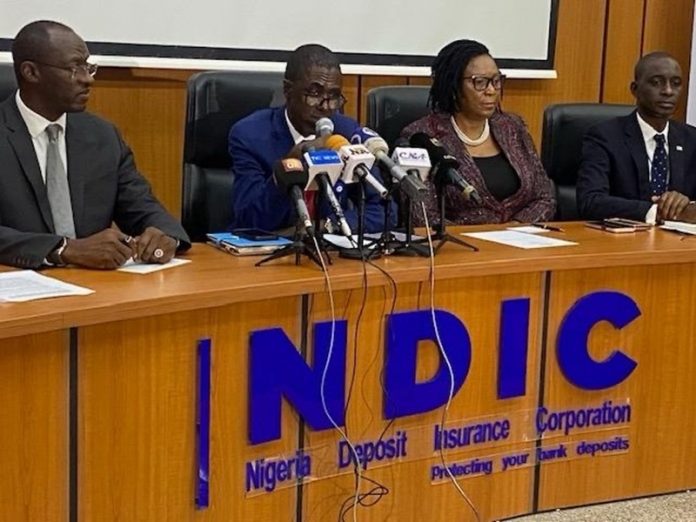
The Nigeria Deposit Insurance Corporation (NDIC) has formally commenced the liquidation of ASO Savings and Loans Plc, and Union Homes Savings and Loans Plc, setting in motion the payment of insured deposits to thousands of customers following the withdrawal of the banks’ operating licenses by the Central Bank of Nigeria (CBN).
In a public notice issued on Tuesday, December 16, the NDIC disclosed that the CBN revoked the licenses of the two mortgage banks on December 11, 2025, citing regulatory breaches. The NDIC was subsequently appointed as liquidator under Section 12(2) of the Banks and Other Financial Institutions Act (BOFIA) 2020, activating the statutory process for winding down the institutions and compensating depositors.
The move represents another decisive regulatory intervention by Nigeria’s financial authorities, aimed at protecting depositors, enforcing compliance, and sustaining confidence in the financial system amid persistent stress in parts of the non-bank financial sector.
Automatic payment of insured deposits begins
The NDIC confirmed that it has commenced liquidation proceedings in line with Sections 55(1) and (2) of the NDIC Act 2023 and has begun verifying and paying insured deposits to customers of the failed lenders.
Under Nigeria’s deposit insurance framework, each depositor is entitled to a maximum insured payout of N2 million per institution. The NDIC said payments would be made automatically, using depositors’ Bank Verification Numbers (BVN) to identify alternative bank accounts into which funds will be credited.
“Depositors will be paid their insured deposits up to the maximum amount of N2,000,000 per depositor,” the Corporation said, stressing that affected customers are not required to open new accounts or engage intermediaries for the process.
This automated approach, the NDIC noted, is designed to speed up payouts and reduce the hardship typically associated with bank failures.
Treatment of balances above the insured limit
For depositors whose balances exceed N2 million, the NDIC clarified that only the insured portion will be paid immediately. Any remaining balances will be treated as uninsured deposits and settled later as liquidation dividends.
These subsequent payments will depend on how much the NDIC is able to recover through the sale of the banks’ assets and the recovery of outstanding loans owed to the defunct institutions.
To maximize recoveries, the Corporation said it will aggressively pursue delinquent borrowers and commence the disposal of physical and financial assets belonging to ASO Savings and Union Homes. The timing and size of liquidation dividends will therefore hinge on the success of these recovery efforts.
The NDIC has opened both online and physical channels for depositors and creditors to submit claims and verify their details.
Depositors can submit claims online through the NDIC’s claims portal or appear physically at the nearest branches of the closed banks between December 16 and December 30, 2025. Those opting for physical verification are required to present proof of account ownership, a valid means of identification, their BVN, and details of an alternative bank account.
Creditors of the two institutions have also been invited to submit claims within the same window. However, the NDIC emphasized that creditors will only be considered for payment after all insured and uninsured depositors have been fully settled, in accordance with statutory liquidation priorities.
Payments to staff, shareholders, and other residual claimants will come much later and only if sufficient funds remain after depositors and creditors have been paid.
Regulatory reassurance amid sector scrutiny
In its notice, the NDIC sought to reassure the banking public that the liquidation does not signal a broader systemic problem within Nigeria’s financial sector.
“Banks whose licenses have not been revoked remain safe and sound,” the Corporation said, urging Nigerians to continue their banking activities without fear.
The NDIC added that the action demonstrates its mandate to protect depositors’ funds and uphold confidence in the financial system, even when that requires closing institutions that can no longer meet regulatory standards.
The liquidation comes against a complex backdrop, particularly for ASO Savings and Loans, which had only recently returned to the market’s spotlight.
The Nigerian Exchange (NGX) had lifted a long-standing suspension on trading in ASO Savings’ shares after the company addressed years of post-listing compliance failures, especially its inability to file audited financial statements. When trading resumed, the stock rallied sharply from around 50 kobo per share to above N1.00 in less than a week, making it one of the market’s top performers for two consecutive weeks.
However, the reprieve was short-lived. Trading in the stock was suspended again a few weeks later to allow the company to conclude an ongoing share reconstruction exercise. That process was still underway when the CBN revoked the bank’s license, effectively ending its operations as a regulated mortgage lender.
Union Homes Savings and Loans followed a similar compliance trajectory. With a market capitalization of about N2.95 billion, the company persistently defaulted on post-listing requirements, prompting the NGX to eventually delist its shares after repeated efforts to secure compliance failed.
The collapse of the two institutions is believed to be the consequence of prolonged governance, capital, and reporting weaknesses. The focus now shifts to how quickly the NDIC can complete payouts and asset recoveries in a process that could stretch over several years.
However, the immediate commencement of insured depositor payments provides some relief, reinforcing the role of deposit insurance as a critical safety net in Nigeria’s financial architecture.