DD
MM
YYYY

PAGES

DD
MM
YYYY

spot_img

PAGES

Home Blog Page 3

U.S. Sanctions Crypto Exchange Shelbit Over Alleged $4bn Iran Sanctions-Evasion Network

0

The United States on Friday sanctioned Dubai-based cryptocurrency exchange Shelbit, alleging that the unlicensed platform processed millions of dollars in digital assets for Iran’s Islamic Revolutionary Guard Corps and other entities linked to the Iranian state.

The Treasury Department’s action follows a Reuters investigation published July 31 that identified Shelbit as a central hub in an alleged $4 billion Iranian sanctions-evasion network. The investigation found that the exchange processed cryptocurrency transactions on behalf of Iran’s central bank, a major illegal online gambling operation, and crypto addresses that the Israeli government has linked to the IRGC.

Washington also sanctioned Siavash Kayvanpour, the Iranian expatriate who founded Shelbit, accusing him of providing material support to the IRGC and Nobitex, Iran’s largest cryptocurrency exchange.

The Treasury Department sanctioned Nobitex on June 2, also following a Reuters investigation, accusing the exchange of helping the Iranian government circumvent Western sanctions.

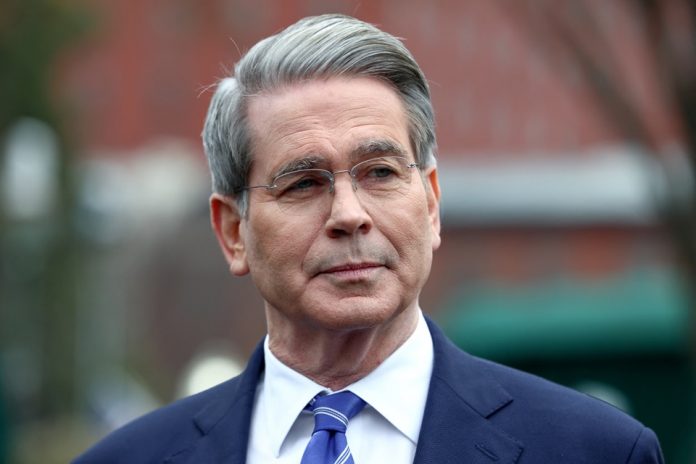
“Treasury will hunt down and dismantle the illicit financial networks that keep the regime afloat,” U.S. Treasury Secretary Scott Bessent said in a statement.

The latest measures broaden Washington’s campaign against Iran’s use of cryptocurrency to access the international financial system, particularly as sanctions and restrictions on conventional banking channels push Iranian entities toward alternative payment networks.

The Treasury also sanctioned Aban Tether, an Iran-based cryptocurrency exchange, on Friday. The department said Aban Tether processed millions of dollars in transactions for sanctioned Iranian entities, including Nobitex.

Shelbit’s role is particularly notable because its website had been offline for months, preventing customers from conducting transactions, while the platform continued processing cryptocurrency transfers. The exchange remained active during the U.S.-Israeli war against Iran, according to the Reuters investigation.

The website was reactivated the day after the investigation was published.

Shelbit denied the allegations in a statement posted on its website on August 1, saying it “categorically rejects any suggestion” that it knowingly participated in money laundering, terrorist financing, illegal gambling, sanctions evasion or activity on behalf of sanctioned military or government organizations.

The company also said it had ceased operations in January 2026. Shelbit and Kayvanpour did not immediately respond to requests for comment.

Crypto Network Extended Beyond Iran

The Treasury’s allegations point to a network in which cryptocurrency moved through several different types of activity, making it harder for authorities to identify the ultimate beneficiaries of transactions.

According to the Reuters investigation, tens of millions of dollars that passed through Shelbit were traced to what was suspected to be an Iranian Bitcoin mining operation. Mining generates newly created cryptocurrency and can provide a source of digital assets that can subsequently enter the financial system.

Millions of dollars more were linked to an illegal online gambling network operated by two prominent Iranian social media influencers, Reuters reported.

The Treasury Department highlighted the gambling operation in its announcement, saying the Iranian government’s willingness to allow it to operate demonstrated what it described as the regime’s “hypocrisy and corruption.”

The allegations illustrate how cryptocurrency can create financial links between otherwise separate activities. Digital assets generated through mining, payments associated with online gambling and transfers involving sanctioned entities can move across exchanges and wallets, potentially obscuring the origin and destination of funds.

For U.S. authorities, that makes crypto exchanges an important enforcement target as they seek to restrict Iran’s ability to move money internationally.

The U.S. sanctions came shortly after Dubai’s Virtual Assets Regulatory Authority, or VARA, issued a notice accusing Shelbit of violating money-laundering and terrorism-financing laws.

VARA said on July 24 that the concerns identified in its investigation went beyond consumer protection and involved cross-border transactions that could affect the integrity of the UAE’s financial system.

“The exposure identified by VARA extends beyond consumer protection to more egregious cross-border transactions with the propension to impact the integrity of the UAE financial system,” the regulator said.

The timing adds another layer to the case. Shelbit was operating in Dubai’s digital-asset ecosystem while facing scrutiny from both U.S. authorities and the UAE’s virtual-asset regulator, highlighting the growing regulatory pressure on crypto platforms that serve customers or counterparties connected to sanctioned jurisdictions.

The sanctions also demonstrate the increasing importance of blockchain investigations to U.S. financial enforcement. Unlike traditional bank transfers, cryptocurrency transactions are recorded on public blockchains, allowing investigators to trace wallet activity even when the identity of the individuals controlling those wallets is not immediately known.

That visibility does not eliminate the use of intermediaries, exchanges or other obfuscation techniques, but it can give authorities a transaction trail that connects apparently unrelated wallets and businesses.

The case involving Shelbit, Nobitex and Aban Tether shows how Washington is increasingly targeting the infrastructure through which sanctioned Iranian entities can convert, transfer and access digital assets, rather than focusing only on the final recipients of the funds. The broader test for U.S. sanctions enforcement will be whether shutting down or designating individual exchanges can disrupt the networks or simply push Iranian users toward new platforms and less regulated jurisdictions.

Trump Unveils $3bn U.S. Critical-Minerals Push As Washington Moves To Cut China Dependence

0

Government funding targets battery materials, rare earths and strategic metals as the U.S. seeks to rebuild domestic mining, processing and defense supply chains

U.S. President Donald Trump on Friday announced roughly $3 billion in new federal support for critical-minerals and battery projects, accelerating his administration’s effort to expand domestic production of materials considered essential to national security, advanced manufacturing and the defense industry.

“We’re reclaiming America’s rightful place as the minerals superpower of the world,” Trump told more than 200 mining executives, educators, investors and politicians at a roundtable at the State Department.

The package includes billions of dollars in loans and other federal support for companies developing battery materials, rare earths and strategic metals. The administration is seeking to address what it sees as a major vulnerability in the U.S. industrial base: heavy dependence on China and other foreign suppliers for minerals needed to manufacture weapons, electric vehicles, batteries, electronics and other advanced technologies.

Among the largest commitments is a $1.4 billion conditional loan from the U.S. Department of Defense’s Office of Strategic Capital to Sila Nanotechnologies, a company developing lithium-ion battery materials.

The Office of Strategic Capital also extended a $400 million conditional loan to Australian-listed Sunrise Energy Metals, which is developing scandium resources, and a $150 million conditional loan to magnet developer Niron Magnetics.

The U.S. Export-Import Bank will provide another $58 million in loans to Westwater Resources, Global Advanced Metals and 5E Advanced Materials.

“Critical minerals are the raw materials of American strength that power everything from advanced weaponry to automobiles, and we want these essential products to be mined, refined and made right here in the USA,” Trump said.

The commitments show how Washington is increasingly treating mineral supply chains as a strategic-security issue rather than simply a commercial or environmental concern.

The push has gained additional importance following the five-month-long war with Iran, which has placed pressure on U.S. stocks of precision-guided weapons and air-defense interceptors.

U.S. forces have used large numbers of missiles and interceptors during the conflict, while defense officials and lawmakers have warned that replenishing some inventories could take years because of existing production constraints. The Trump administration has disputed reports of significant shortages.

The Pentagon considers minerals such as rare earths, tungsten, germanium and scandium essential to the production of precision-guided missiles, fighter aircraft, armored vehicles, infrared sensors and other advanced military systems.

That creates a direct link between mineral policy and U.S. defense readiness. Washington cannot rapidly expand weapons production if the raw materials required for those systems remain dependent on supply chains that can be disrupted by geopolitical tensions.

The administration’s strategy therefore extends beyond increasing mine output. It is also seeking to establish domestic refining, processing and manufacturing capacity so that minerals extracted in the United States or obtained from allied countries can be converted into components needed by defense and industrial companies.

Interior Secretary Doug Burgum, Secretary of State Marco Rubio, Commerce Secretary Howard Lutnick and National Security Council official David Copley attended the roundtable, underscoring the cross-government nature of the initiative.

China Remains The Central Supply-Chain Concern

At the heart of the strategy is China’s dominant position across much of the global critical-minerals supply chain.

China has spent decades investing in mining, processing and refining capacity, giving it a commanding position in several minerals and materials used in advanced manufacturing. The U.S. administration argues that Washington’s dependence on those supply chains creates an economic and national-security vulnerability.

Since returning to office, Trump has launched a $12 billion strategic-minerals stockpile, backed equity investments in companies developing U.S. mines and processing facilities, and moved to restrict defense contractors’ reliance on Chinese supplies.

The latest funding package represents a further shift toward government-supported industrial policy. Rather than relying solely on private capital to establish mines and processing facilities that can take years to become profitable, Washington is using loans, grants, government procurement and strategic stockpiling to reduce the financial risks faced by producers.

The challenge is that mineral projects typically require substantial upfront capital, lengthy permitting processes and years of development before commercial production. Some projects can also face technical difficulties and volatile commodity prices.

That makes government financing potentially important in determining whether U.S. projects can reach production at a scale capable of challenging established overseas supply chains.

The inclusion of Sila Nanotechnologies also highlights the connection between critical minerals and the broader battery supply chain.

Sila develops materials used in lithium-ion batteries, linking the federal initiative to Washington’s efforts to establish domestic capacity for energy storage and advanced manufacturing.

The U.S. battery industry has expanded rapidly, but many parts of the supply chain remain dependent on imported minerals, processed materials and components. Building domestic capacity in upstream materials could therefore reduce exposure to supply disruptions while supporting manufacturers further down the value chain.

The policy also has implications beyond electric vehicles. Advanced batteries are important for military systems, drones, data centers, grid storage and other technologies requiring high energy density.

Mining Education Becomes Part of The Strategy

The administration is also attempting to address a less visible constraint on domestic mining: a shortage of skilled workers.

The Department of Energy hosted representatives from all 14 accredited U.S. mining schools on Friday and announced $100 million in grants to strengthen educational programmes.

The department has set a goal of doubling the number of mining-related graduates from U.S. universities within two years.

“We need to work on some systemic changes to how we as a nation want to offer our brightest students an opportunity to participate in this industry,” Assistant Energy Secretary Audrey Robertson said.

The Pentagon separately said it would provide $80 million for projects at three U.S. mining schools.

The emphasis on universities underpins the administration’s view that rebuilding the mineral industry requires more than opening mines. Engineers, geologists, metallurgists and other specialists will be needed to develop mines, improve extraction technologies, operate processing plants and build new domestic supply chains.

U.S. officials have cited China’s extensive network of mining universities as one factor behind its strength in global mineral production.

The roundtable brought together executives from companies developing lithium, rare earths, scandium and other strategic materials.

Tom Albanese, chairman of deep-sea mining company American Ocean Minerals, presented Trump with a gold replica of a nodule that the company hopes to extract from the Pacific seabed. Trump last year said he could bypass the United Nations-backed International Seabed Authority and issue international seabed mining licenses.

Jim Litinsky, CEO of rare earths producer MP Materials, which receives financial support from the Pentagon, presented Trump with magnets manufactured at the company’s Texas facility for General Motors.

Other participants included executives from Lithium Americas, which is developing what it describes as the largest U.S. lithium mine; NioCorp, which is developing a scandium project intended to supply defense contractor Lockheed Martin; and Energy Fuels, which received a $725 million conditional loan from the Office of Strategic Capital in June.

The presence of both mining companies and defense-linked manufacturers illustrates the administration’s attempt to connect mineral extraction directly with end users.

Washington Bets On Government-Backed Supply Chains

The broader strategy marks a significant expansion of the U.S. government’s role in the critical-minerals industry.

For years, China was able to build an advantage through sustained investment across mining, processing and manufacturing. The Trump administration is now attempting to replicate part of that model through federal financing, strategic stockpiles, defense procurement and support for domestic projects.

The immediate objective is not simply to increase the amount of minerals mined in the United States. The more consequential goal is to build complete supply chains, from extraction and refining to component manufacturing, so that critical industries are less vulnerable to geopolitical pressure.

That effort could become more important as Washington’s competition with Beijing expands from semiconductors and artificial intelligence into batteries, defense technology, electric vehicles and energy infrastructure.

Hormuz Toll Proposal Runs Into U.S. Sanctions, Insurance Barriers

0

A proposal under discussion between Iran and Oman to introduce a system that would give Tehran a role in controlling and potentially charging ships transiting the Strait of Hormuz faces significant legal, sanctions, and insurance obstacles, according to four industry sources familiar with the matter cited by Reuters.

The proposal has emerged as one of the most contentious issues in negotiations aimed at ending the conflict in Iran, with control of the strategic waterway at the center of discussions over how commercial shipping would resume.

Before the U.S.-Israeli airstrikes at the end of February triggered the war in Iran, the Strait of Hormuz was a critical international shipping route through which roughly one-fifth of global oil supplies and other essential commodities moved. The waterway operated without transit fees and was open to commercial vessels.

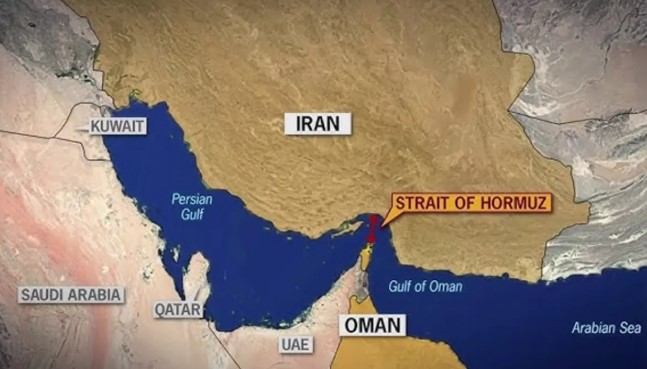
Under the latest proposal, Iran would be able to intervene when necessary in relation to inbound vessels, while outbound ships would use a route between Iranian and Omani waters. Vessels leaving the Gulf would notify Iran and obtain clearance through Oman, according to a senior Iranian official cited by Reuters.

The proposed arrangement, however, could prove difficult for international shipping companies to use because of existing U.S. sanctions and insurance restrictions.

Iran has reportedly sought fees equivalent to between 5% and 7% of the value of cargoes transported through the strait, while Oman has discussed charges of about 3%. The United States, meanwhile, wants vessels to transit without paying any fees.

The proposed charges have raised concerns among international shipping organizations that the arrangement could effectively turn the waterway into a toll route.

“The ability of merchant ships to navigate international waterways ‘safely, predictably and without unnecessary impediment is fundamental to resilient supply chains, economic stability and energy security,'” the world’s leading shipping associations said in an open letter to the UN’s shipping agency.

The organizations described compulsory transit or service charges as “a toll in all but name”, warning that such a system could establish a precedent that undermines the international legal framework governing straits used for navigation.

The Strait of Hormuz operates under a two-way traffic separation scheme adopted by the International Maritime Organization in 1968 with the agreement of countries in the region. The system established designated shipping corridors through Iranian and Omani waters.

The IMO’s governing council said in July that countries bordering the strait should guarantee the “non-discriminatory and unimpeded right of transit passage of all ships” and that passage should remain free of tolls and charges.

The Challenges of Insurance and U.S. Sanctions

Beyond the question of international maritime law, the proposed fees create a more immediate problem for shipping companies: U.S. sanctions compliance.

Washington has sanctioned the Persian Gulf Strait Authority, an Iranian body established in May to operate the waterway. The U.S. Treasury has also prohibited U.S. persons from receiving services from the Iranian government associated with a “guarantee of safe passage”.

That means companies could face sanctions exposure if payments are made to Iranian authorities in exchange for transit or protection, the industry sources said.

The consequences could extend beyond the companies making the payments. Any transaction that breaches U.S. sanctions could potentially expose participants to asset freezes or other enforcement measures, making the cost of complying with the proposed system considerably higher than the fee itself.

Insurance rules add another layer of uncertainty.

In late July, the Lloyd’s Market Association introduced wording for war-risk insurance policies that would terminate coverage for a vessel if it paid a transit fee, toll or other charge to pass through the Strait of Hormuz.

“Under the clause, insurers have no liability to indemnify any such payment and, where such a payment has been made, are discharged from obligations in respect of the relevant vessel,” the LMA said.

The provision is particularly significant because vessels operating through a conflict zone generally require additional war-risk insurance to cover potential damage during transit.

That leaves shipping companies caught between competing requirements. Paying Iran or another authority could expose them to U.S. sanctions and cause them to lose insurance protection, while refusing to pay could prevent them from securing permission to transit under the proposed system.

One insurance industry source described the situation as a “catch 22”.

The dispute therefore goes beyond the question of how much ships would pay to cross Hormuz. It raises fundamental questions about who has authority to regulate commercial traffic through one of the world’s most strategically important waterways and whether any new system can operate within international maritime law, U.S. sanctions regimes and the insurance framework used by global shipping.

For oil markets, the implications are potentially significant. The Strait of Hormuz has historically carried a substantial share of global crude and petroleum-product flows, meaning prolonged restrictions, higher transit costs or uncertainty over access could increase freight, insurance and energy costs even if physical oil production resumes.

A workable agreement would therefore need to address not only Iran’s demand for a role in controlling traffic, but also the status of transit fees, sanctions exposure, insurance coverage and the internationally recognized right of passage.

Until those issues are resolved, analysts believe that a formal reopening of the waterway may not automatically translate into a return to normal commercial shipping.

OpenAI’s AI Speaker, Reportedly Has A $400 Price Tag

0

Donut-shaped hardware being developed with Jony Ive’s LoveFrom is expected to combine a premium design with an always-available AI experience

OpenAI’s reported device, expected to enter the consumer hardware market with a new artificial intelligence designed to bring ChatGPT into users’ homes, now has a price tag.

The company’s first major hardware product, reportedly taking a distinctive donut-shaped form, is potentially costing as much as $400.

The device, which has previously been described as an AI-powered smart speaker and the “physical manifestation” of ChatGPT, is being developed in partnership with LoveFrom, the design studio founded by former Apple design chief Jony Ive.

According to Bloomberg, the device will be donut-shaped, a design intended to make it easier for users to carry around their homes and place in different locations, including on a bedside table or kitchen counter.

The product is expected to be made from high-quality metal and have a premium appearance. It will also reportedly contain moving parts, although details about what those components will do remain unclear. The reported design marks a significant departure from the conventional smart-speaker format, where devices typically remain stationary and rely on microphones, speakers and physical or touch controls.

OpenAI’s approach appears aimed at creating a device that is less like a traditional speaker and more like a dedicated physical interface for an AI assistant.

The product could also carry a substantially higher price than mainstream smart speakers.

The reported price range of $300 to $400 would place the device well above many existing smart-home speakers. Amazon’s smart speakers, for example, generally sell at considerably lower prices, with its lineup ranging from entry-level devices costing around $40 to higher-end models priced at roughly $240.

That pricing could become one of OpenAI’s biggest challenges as it attempts to establish a new hardware category around generative AI.

Smart speakers have historically been difficult businesses, with manufacturers often using them to strengthen broader ecosystems rather than generate significant hardware margins. Amazon, Google and Apple have used smart speakers and related devices to connect consumers to their respective software, advertising, commerce and subscription ecosystems.

OpenAI does not have an equivalent hardware ecosystem, which means the company would be asking consumers to pay a premium primarily for access to an AI experience.

That could make the success of the device heavily dependent on whether users see enough value in having ChatGPT available continuously in their physical environment rather than accessing the service through smartphones, computers and existing voice-enabled devices.

The proposed product could nevertheless give OpenAI a way to deepen its relationship with consumers.

Instead of requiring users to open an application and initiate a conversation, a dedicated device could provide an always-available interface for asking questions, managing information, controlling compatible devices and potentially performing tasks through AI agents.

The reported portability of the device could be particularly important to that strategy. Users could move it from the bedroom to the kitchen or another part of the house, potentially positioning it as a persistent AI companion rather than a conventional smart speaker tied to a single location.

The partnership with LoveFrom adds another dimension to OpenAI’s hardware ambitions.

Ive became one of the technology industry’s most influential designers during his years at Apple, where he played a central role in the development of products including the iMac, iPod, iPhone and iPad.

His involvement gives OpenAI access to a design philosophy centered on industrial design and user experience at a time when AI companies are seeking ways to move beyond conventional screens and keyboards.

OpenAI is reportedly targeting a 2027 launch, although the company has not publicly confirmed the final design, specifications, price or release date.

The hardware push also comes with significant legal and commercial challenges.

Apple has sued OpenAI, accusing the company of misappropriating trade secrets. OpenAI has denied wrongdoing. The dispute adds another complication to the AI company’s efforts to establish itself in a hardware market historically dominated by companies with extensive manufacturing, distribution and consumer-product expertise.

OpenAI’s hardware strategy also points to a broader shift in the AI industry toward dedicated devices. As generative AI becomes more capable of understanding voice, images and context and of taking actions on behalf of users, technology companies are exploring interfaces that could reduce reliance on traditional applications.

The potential opportunity is substantial, but so are the risks. A $300-to-$400 device would need to offer capabilities sufficiently different from those available through smartphones and existing smart speakers to persuade consumers to purchase another device.

OpenAI would also need to demonstrate that its AI can operate reliably in a home environment, where privacy, accidental activation, latency and the accuracy of responses become more consequential than they are in a conventional chatbot.

Analysts note that if OpenAI succeeds, the device could become an important step toward making AI a persistent part of consumers’ physical environments.

For now, the donut-shaped device remains largely a reported project rather than a confirmed commercial product, leaving its final design, capabilities, pricing and launch timetable subject to change.

China’s Exports Beat Forecasts as AI Boom, High-Tech Demand Cushion Slowing Economy

0

China’s exports grew faster than expected in July, extending a powerful run of external demand that is helping offset weak domestic consumption and giving the world’s second-largest economy an important source of growth amid persistent trade and geopolitical tensions.

Exports rose 23.9% in U.S. dollar terms from a year earlier, official customs data showed on Friday, exceeding the 22.2% increase expected by economists in a Reuters poll. Growth nevertheless slowed from June’s 27% surge, which was China’s strongest export expansion since October 2021.

Imports also expanded sharply, rising 27.5% year on year, just below the 27.9% forecast. The increase followed June’s 36% jump, the fastest growth in five years.

The figures point to continued strength in China’s manufacturing and technology sectors, even as domestic demand remains comparatively weak. A global investment boom in artificial intelligence infrastructure has become an increasingly important source of demand for Chinese-made components and industrial equipment.

China’s integrated circuit exports by value nearly doubled in the first seven months of the year from the same period in 2025, according to official data compiled by Wind Information. Chip exports alone jumped 117% in July from a year earlier.

That surge highlights a broader change in the composition of China’s export machine. Mechanical and electrical products accounted for more than 60% of total exports during the first seven months of the year, according to the customs authority. Electric vehicles, lithium batteries and wind-power equipment were among the products supporting shipments, while exports of 3D printers and industrial robots also recorded strong growth.

The data suggest that China is increasingly relying on higher-value manufactured goods and technology-related products to sustain export growth. That shift is important for Beijing as the property sector remains weak and household spending has failed to provide the same momentum as China’s industrial sector.

Tariffs Have Yet To Derail Exports

China’s trade performance has also been supported by exporters bringing forward shipments to the United States ahead of higher tariffs.

Shipments to the U.S. increased about 17% in July from a year earlier, accelerating from roughly 14% growth in June, according to Wind data. Imports from the U.S. rose 15%.

Washington imposed a new 12.5% levy on Chinese products in late July, replacing a temporary 10% tariff that had expired. The timing has encouraged some Chinese exporters to accelerate deliveries before higher trade barriers take effect.

The July increase in shipments therefore does not necessarily indicate that Chinese exports to the U.S. will maintain the same pace in coming months. Front-loading can pull future demand forward, creating a stronger near-term trade reading while potentially weakening subsequent shipments.

China’s exports to the European Union rose 16% year on year in July, while imports from the bloc declined 1%. The divergence could further complicate Beijing’s trade relationship with Europe, particularly as European policymakers continue to push China to address its large trade surplus.

China recorded a trade surplus of $112.5 billion in July, above the roughly $107 billion expected by economists, although the surplus narrowed from $125.6 billion in June.

Trade Surplus Exposes Domestic Weakness

China’s continued dependence on exports is becoming increasingly significant because domestic demand remains subdued. The country’s economy expanded 4.3% in the second quarter, its weakest quarterly growth since the fourth quarter of 2022. Retail sales increased just 1% in June after contracting 0.6% in May, while consumer inflation eased to 1% from 1.2%.

The contrast between strong exports and weak household demand underscores the imbalance that policymakers have struggled to address.

China’s trade surplus exceeded $1 trillion last year, drawing increasing criticism from the United States, the European Union and other trading partners. They have urged Beijing to shift its economic model toward stronger household consumption rather than relying so heavily on manufacturing investment and exports.

Zhiwei Zhang, president and chief economist at Pinpoint Asset Management, expects China’s export engine to remain strong through the third quarter.

“I expect intense negotiations between China and the major trading partners in the coming months on what can be done to make trade more balanced,” Zhang said, ahead of an expected U.S.-China summit in September and an EU-China meeting on economic relations in October.

Those discussions could become more consequential if China’s export growth remains concentrated in industries where domestic manufacturers are rapidly expanding global market share.

AI Boom Provides A New Export Engine

One of the most important developments in the July data is the strength of China’s technology-related exports. The rapid increase in chip shipments comes as global technology companies continue to spend heavily on data centers, AI computing infrastructure and related equipment. While U.S. restrictions limit China’s access to some advanced semiconductor technologies, Chinese manufacturers remain deeply integrated into broader technology supply chains.

The strength of exports of batteries, electric vehicles, industrial robots and renewable-energy equipment also underpins Beijing’s growing reliance on industries that it has spent years developing through industrial policy, subsidies and massive domestic investment.

That creates both an opportunity and a new source of tension.

China’s ability to export large volumes of sophisticated manufactured goods can support growth, employment and industrial utilization at home. But the same export surge risks prompting additional trade restrictions as governments in the U.S. and Europe seek to protect domestic manufacturers.

Beijing reaffirmed support for the economy at a policy-setting meeting in late July, signaling faster fiscal implementation and timely monetary adjustments. However, authorities stopped short of announcing major measures specifically aimed at boosting household consumption.

That leaves China’s economy heavily dependent on manufacturing and external demand at a time when trade relations are becoming more politically sensitive.

The July figures therefore present a mixed picture. China’s export sector remains remarkably resilient, powered by chips, electric vehicles, batteries, machinery and other technology-intensive goods. But the persistence of weak domestic consumption means that the country’s record trade surplus is also evidence of an unresolved economic imbalance.