DD
MM
YYYY

PAGES

DD
MM
YYYY

spot_img

PAGES

Home Blog Page 3

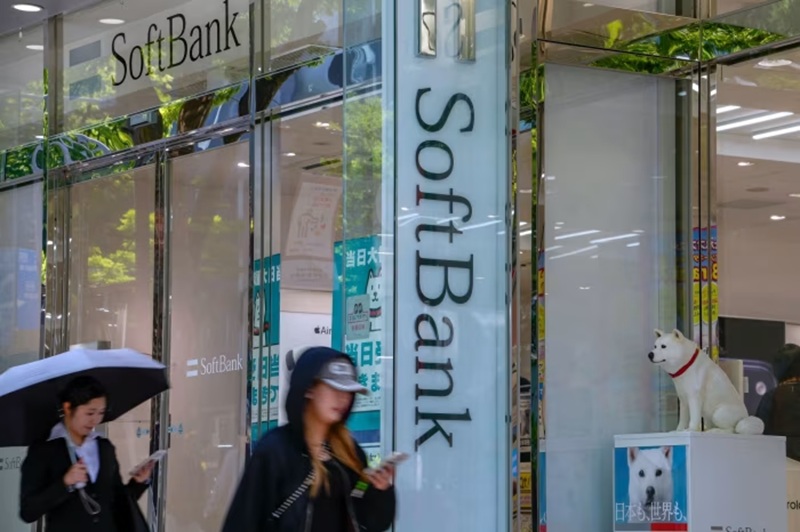
Nvidia in Talks to Invest Up to $3bn in SoftBank’s SB Energy AI Data Center Development

0

Nvidia is in talks to invest as much as $3 billion in SB Energy, a subsidiary of SoftBank that is developing a major data center campus in Ohio for OpenAI, as the companies seek to assemble the financing needed for a massive expansion of artificial intelligence infrastructure, The Information reported on Saturday.

The proposed investment is part of broader discussions involving Nvidia, OpenAI and SB Energy over roughly $100 billion in credit support for the planned Ohio data center campus, according to the report, which cited people familiar with the negotiations.

Nvidia has discussed providing half of the proposed $3 billion investment when the Ohio project agreement is signed, with the remaining $1.5 billion potentially invested as part of SB Energy’s planned initial public offering, The Information reported.

SB Energy is targeting an IPO as soon as next month and could raise at least $5 billion through the offering, according to The Information.

The potential investment would deepen Nvidia’s involvement in the physical infrastructure underpinning the AI boom. Nvidia is best known for supplying the advanced processors used to train and run AI models, but the rapid expansion of AI workloads has created an equally significant need for data centers, electricity and financing.

SB Energy, which is also backed by OpenAI, develops large-scale power and data center infrastructure. Founded in 2019, the company is developing multiple data center campuses designed to serve growing demand from AI workloads.

The Ohio project is considered significantly viable because it forms part of OpenAI’s broader effort to secure the computing capacity required to train and operate increasingly powerful AI models.

The scale of the proposed financing illustrates the enormous capital requirements of the AI infrastructure buildout. Data centers require billions of dollars in construction spending, while the electricity systems needed to power them can require additional investments in generation, transmission and storage.

Nvidia’s potential $3 billion investment would therefore represent more than a conventional investment in an infrastructure company. It could help align one of the world’s largest AI chip suppliers with the companies responsible for building the facilities in which those chips will ultimately operate.

The discussions also point to the growing interconnected relationships among Nvidia, OpenAI and SoftBank.

Nvidia supplies much of the computing hardware required by AI developers, OpenAI is one of the industry’s largest consumers of computing capacity, while SoftBank has increasingly positioned itself as a major investor in AI infrastructure. SB Energy sits at the intersection of those interests by developing the power and data center facilities required to support AI workloads.

The proposed Ohio financing has also undergone a significant change in recent months.

The Wall Street Journal reported Friday that Nvidia had revised its plans to support the OpenAI data center project and was now expected to initially guarantee less than $120 billion, down from the $250 billion previously discussed. The reported reduction suggests that the financing structure for the Ohio project remains fluid as the companies determine how much capital and credit support will ultimately be required.

At the same time, the potential SB Energy investment could provide another route for Nvidia to participate directly in the infrastructure buildout without limiting its role to supplying chips.

The timing of SB Energy’s potential IPO is also notable. A public listing that raises at least $5 billion would provide the company with additional capital to expand its data center and power infrastructure portfolio at a time when AI companies are competing aggressively for access to electricity and computing capacity.

The broader AI investment cycle is now shifting toward physical infrastructure. The industry’s early spending focused heavily on GPUs and other specialized chips, but companies now need vast data center campuses, power plants, grid connections, and cooling systems to deploy those processors at scale.

That transition is creating opportunities for companies such as SB Energy while encouraging Nvidia and other technology firms to become more involved in financing the infrastructure ecosystem around AI.

If the reported investment goes ahead, Nvidia would have a direct financial stake in a company helping build the infrastructure required by one of its largest potential customers.

For OpenAI, meanwhile, securing sufficient data center capacity is becoming central to its ability to scale its AI systems. The Ohio project and the financing discussions surrounding it show the extent to which the next phase of the AI race will depend not only on model development and semiconductor supply, but also on access to enormous pools of capital and reliable power.

The proposed $3 billion Nvidia investment remains subject to negotiations, while the broader credit-support arrangement has yet to be finalized. But the talks highlight how the boundaries between AI developers, chipmakers, infrastructure companies and financial investors are becoming increasingly blurred as the industry enters a capital-intensive phase of expansion.
SpaceX Completes Integration of AI Coding Startup Cursor, Following Acquisition

0

AI coding startup Cursor has officially become part of SpaceX, completing a deal that brings one of the fastest-growing developer AI companies into Elon Musk’s expanding technology empire.

Cursor confirmed the completion of the acquisition in a blog post, saying its integration with SpaceX will give it access to the aerospace company’s vast computing infrastructure and GPU capacity.

The transaction follows an agreement announced in April under which SpaceX and Cursor planned to develop technology together. The deal also gave SpaceX an option to acquire Cursor for $60 billion.

Two months later, after SpaceX became a publicly traded company, the companies said they would proceed with the acquisition.

Cursor’s completion announcement placed particular emphasis on SpaceX’s computing infrastructure, highlighting a strategic rationale that extends beyond a conventional software acquisition.

“Access to the largest fleet of GPUs in the world” will be available to Cursor as part of SpaceX, the company said.

“SpaceX is building the computing capacity needed to scale intelligence far beyond what exists today,” Cursor added. “Cursor will be one place where that intelligence becomes useful.”

The acquisition brings Cursor into a SpaceX ecosystem that is increasingly centered on computing capacity as well as rockets and satellites. SpaceX has been expanding its data-center infrastructure and renting computing resources to outside customers, including AI companies such as Anthropic and Google.

That infrastructure could give Cursor a significant advantage as AI coding systems become more computationally demanding.

AI coding tools are moving beyond autocomplete and simple code generation toward systems capable of planning software projects, writing and testing code, navigating large codebases, and executing multi-step development tasks. Supporting those capabilities at scale requires substantial computing resources, particularly as companies seek to run increasingly capable AI models.

Cursor’s integration with SpaceX could therefore allow the company to secure access to computing capacity internally rather than relying entirely on third-party cloud providers.

The deal also deepens the convergence between Musk’s companies. SpaceX acquired Musk’s AI company, xAI, earlier this year, bringing the AI developer and the space company under a single corporate structure. Cursor now adds a major developer-software business to that ecosystem.

The acquisition could create opportunities to combine AI models, computing infrastructure and software development tools. Cursor is expected to use SpaceX’s computing resources to train, deploy and operate AI systems while SpaceX gains a software platform through which advanced AI capabilities can be delivered directly to developers.

SpaceX’s expanding data-center operations are already attracting outside demand. The company has rented computing capacity to other technology companies, making its infrastructure an increasingly important part of its broader business strategy.

But the infrastructure expansion has also drawn scrutiny. SpaceX faces a lawsuit concerning pollution associated with gas turbines used to power its data-center operations, adding regulatory and environmental challenges to its rapidly expanding computing ambitions.

For Cursor, access to large-scale computing may become increasingly important as competition intensifies among AI coding platforms. Companies such as OpenAI, Anthropic, and Google are developing sophisticated coding agents, while startups compete to build products that can become embedded in professional software-development workflows.

Cursor’s acquisition by SpaceX gives it a different strategic position. Instead of competing solely as an independent application provider, it now sits within a company with access to large-scale computing infrastructure and a growing portfolio of AI businesses.

The $60 billion valuation attached to the acquisition option also reveals the extraordinary expectations surrounding AI coding technology. The transaction places a substantial value on Cursor’s ability to turn AI advances into tools that developers use every day.

The immediate significance of the acquisition, however, may lie less in the headline valuation than in the infrastructure it puts behind Cursor.

As AI systems become more capable, access to GPUs and data-center capacity is becoming a strategic asset. SpaceX’s decision to bring Cursor inside the company suggests it views AI software and computing infrastructure as complementary parts of the same business.

Cursor’s role, as the company put it, will be to turn that expanding computing capacity into practical software tools for developers.

Tether KPMG Audit Confirms $6.8B Asset Cushion Strengthening Tether’s Financial Credibility

0

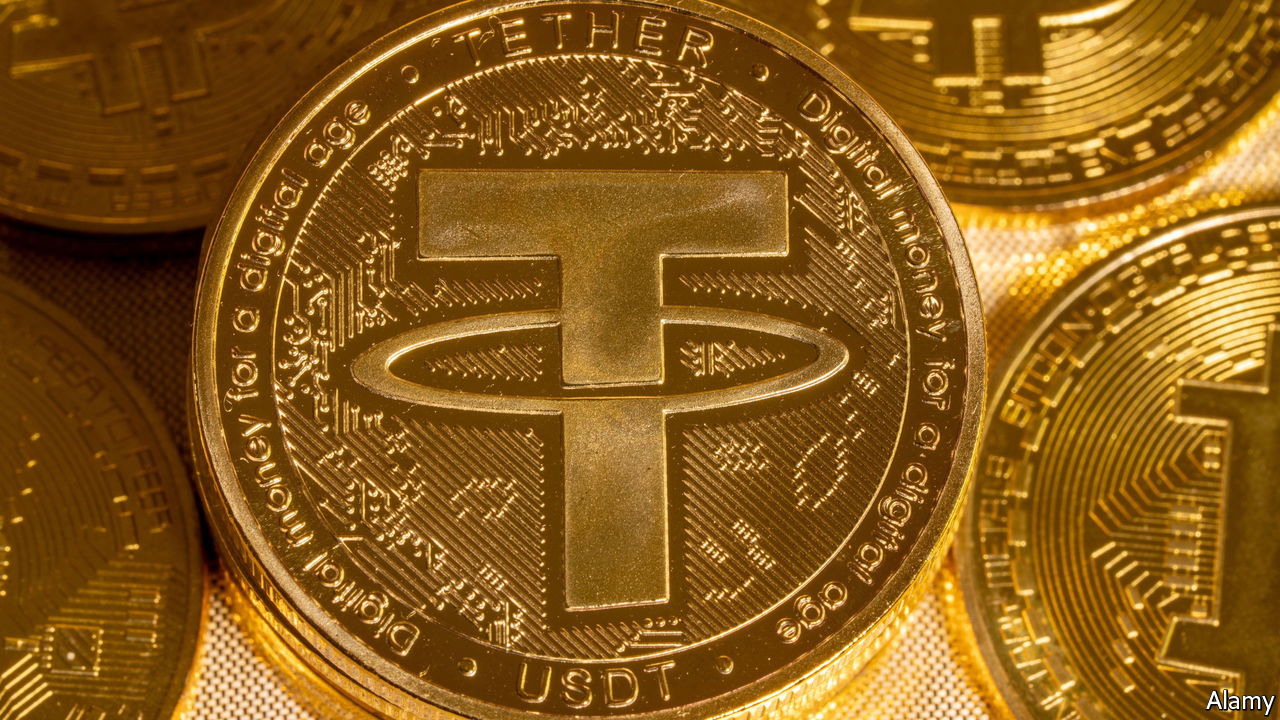
Tether has reached a significant milestone in its effort to answer years of skepticism surrounding the strength and transparency of its reserves. The stablecoin issuer has secured an unqualified opinion from KPMG US on its full 2025 audit.

Marking a major development for the company and the broader digital-asset industry. The result is particularly notable because it comes only two years after Tether’s chief executive said that no Big Four accounting firm would take on the company’s audit.

The audit represents more than another financial disclosure. For Tether, it is an attempt to demonstrate that its enormous balance sheet can withstand the scrutiny traditionally applied to major financial institutions. Auditors confirmed that the company’s assets exceeded its liabilities by $6.814 billion.

Providing an important cushion for holders and investors concerned about whether the stablecoin issuer maintains sufficient backing for its obligations. One of the most striking aspects of the process was the verification of Tether’s gold holdings.

In what has been described as a first for the stablecoin industry, auditors physically counted every gold bar. That level of verification matters because gold has become an increasingly important component of Tether’s reserve strategy.

Rather than relying solely on financial statements or third-party documentation, the physical inspection provides additional assurance that the reported precious-metal holdings actually exist. The significance of the audit extends beyond Tether itself.

Stablecoins have become critical infrastructure for cryptocurrency markets, facilitating trading, payments, settlement and the movement of capital across blockchain networks. As their influence grows, regulators and institutional investors have increasingly demanded greater transparency regarding reserves and liabilities.

Tether has faced skepticism for years, particularly over the composition and verification of the assets supporting USDT. The company has gradually responded by publishing increasingly detailed reserve disclosures and expanding the range of assets backing its operations.

The latest audit represents a further step toward establishing credibility with traditional financial markets. An unqualified opinion does not eliminate every possible concern about Tether or guarantee that the company will never face financial pressure.

Audits provide assurance based on defined accounting procedures and evidence, rather than an absolute guarantee of future stability. Independent verification by a major global accounting firm represents a meaningful improvement in transparency.

The development also highlights how rapidly the cryptocurrency industry is moving toward institutional standards. What was once considered an experimental financial sector now involves companies holding billions of dollars in reserves and serving millions of users globally.

That scale creates a corresponding demand for professional auditing, stronger governance and verifiable financial reporting. For Tether, the achievement could therefore become an important turning point.

The company is no longer simply asking the market to trust its disclosures; it is increasingly putting its reserves through formal scrutiny. By confirming the existence of its gold holdings and a multibillion-dollar excess of assets over liabilities, Tether has delivered one of its strongest responses yet to critics.

The broader lesson is clear: as stablecoins become increasingly important to global finance, transparency will become as valuable as liquidity. Tether’s 2025 audit may not end the debate, but it significantly raises the standard by which the industry will be judged.

White House Crypto Meeting and FWA’s NFT Gacha Strategy

0

The intersection of cryptocurrency, digital assets and mainstream policy is entering another important phase as the White House prepares to bring industry executives into the political conversation.

While platforms such as FWA continue experimenting with new ways to turn NFTs into consumer-focused digital experiences. The developments highlight how blockchain is moving beyond speculative trading and increasingly becoming part of both policy discussions and entertainment ecosystems.

The White House is reportedly preparing to host executives from the cryptocurrency and prediction-market industries on August 19. The gathering comes at a particularly important moment for the U.S. digital-asset industry, with lawmakers still struggling to advance the CLARITY Act.

The guest list and agenda remain subject to change, and it is not yet clear whether President Donald Trump will personally attend. The timing is significant because the Senate has postponed its consideration of the CLARITY Act until September.

The legislation is intended to establish clearer rules around digital assets, including how tokens are classified and which regulators should oversee different parts of the market. Crypto companies have strongly supported the bill, arguing that regulatory certainty could encourage investment, innovation and greater institutional participation.

The White House meeting could therefore become more than a symbolic gathering. Industry executives are likely to use the opportunity to emphasize issues surrounding market structure, stablecoins, prediction markets and the regulatory boundaries between federal agencies and states.

The fact that prediction-market companies are expected to participate is notable, given the growing legal battles surrounding platforms such as Kalshi and Polymarket. The meeting is expected shortly before the Commodity Futures Trading Commission convenes its Innovation Advisory Committee.

Putting crypto and prediction markets at the center of Washington’s financial-policy discussion. This creates the possibility of increased coordination between policymakers and industry leaders as the United States attempts to establish itself as a global hub for blockchain-based financial infrastructure.

Meanwhile, the NFT sector is pursuing a very different but equally important form of innovation. FWA is adding Art Blocks Curated NFTs to its gacha machine, while teasing additional NFT launches on the platform.

The move introduces curated digital art into a format more commonly associated with randomized digital collectibles, creating a bridge between established generative-art culture and gamified consumer experiences.

Art Blocks has played an important role in the evolution of generative NFT art, where algorithms and blockchain infrastructure combine to produce unique digital works. Bringing Art Blocks Curated NFTs into a gacha-style mechanism could make the collecting experience more interactive, potentially encouraging users to discover artists and works they might not otherwise encounter.

For FWA, the strategy could represent a broader attempt to make NFTs feel less like static assets and more like participation-based digital products. Instead of simply purchasing an NFT from a conventional marketplace, users can engage with a system built around anticipation, discovery and collection.

The combination of these developments illustrates two sides of blockchain’s maturation. Crypto is increasingly being discussed directly with government officials as an emerging financial industry. At the consumer level, NFTs are being redesigned into interactive experiences capable of reaching audiences beyond traditional crypto communities.

Whether through legislation in Washington or experimentation in digital entertainment, the blockchain industry is steadily moving toward a future where ownership, financial infrastructure and digital culture increasingly overlap.

The next phase may therefore depend not only on token prices, but on how effectively these technologies become integrated into everyday systems and experiences.

STS Digital to Accept and Pledge USDM1 Across Derivatives and Structured Products Books

Meanwhile, STS Digital Ltd., a Bermuda-regulated principal trading firm specializing in digital asset derivatives, structured products, and institutional liquidity solutions, announced that it will accept USDM1 from eligible counterparties and pledge the instrument as collateral across its over-the-counter derivatives, structured products, and financing relationships.

Through its institutional-grade trading infrastructure and principal market-making model, STS Digital provides institutional counterparties with access to deep liquidity, advanced derivatives capabilities, and bespoke solutions across digital asset markets.

The adoption of USDM1 further expands STS Digital’s commitment to bridging traditional financial infrastructure with the next generation of digital asset markets.

USDM1 brings on-chain collateral with 24/7 transferability into established institutional derivatives frameworks.

Although corporate digital dollar instruments are transferable on-chain, for institutions, perfecting security interests in them can present challenges. As instruments, they are often not covered in industry netting opinions. As a result, their ability to provide collateral and capital efficiencies is often limited.

USDM1 can be used as initial or variation margin under standard derivatives documentation supporting legally enforceable netting sets, and may reduce unsecured counterparty exposure and the amount of other collateral required to support a portfolio.

The economic significance of close-out netting is well established in traditional derivatives markets. Bank for International Settlements data show that, at year-end 2025, legally enforceable netting reduced the gross market value of outstanding OTC derivatives by approximately 85.3%, or $19.4 trillion.

USDM1 brings on-chain collateral into the frameworks supporting these efficiencies. USDM1 is compatible with repo and secured-financing arrangements under standard GMRA and GMSLA documentation and accrues a sovereign coupon.

It enables title-transfer repo, collateral substitution and reuse within established institutional frameworks. When held unencumbered, USDM1 maintains look-through to the credit of pledged US Treasury instruments and supports treatment as Level 1 HQLA under Basel standards.

Maxime Seiler, CEO of STS Digital, said: “As a principal derivatives dealer, collateral efficiency directly affects how we price, fund and scale our book. Accepting USDM1 from eligible counterparties, pledging it across our own trading and financing relationships and utilizing it in structured products supports more efficient inventory financing, tighter client pricing and greater trading capacity per dollar of balance sheet.”

Jordan Goldman, President and Chief Operating Officer of M1X Global, said: “STS Digital is one of the most active and sophisticated crypto derivatives dealers. As digital assets enter a new phase of institutional adoption, USDM1 connects on-chain markets with the legal, collateral and risk-management frameworks regulated institutional counterparties require while preserving the benefits of 24/7 settlement.”

USDM1 is a fully collateralized, USD-denominated sovereign bond natively issued on-chain by the Republic of the Marshall Islands.

It is structured in the style of a Brady bond under New York law, with an explicit customary waiver of sovereign immunity, and secured on a 1:1 basis by short-duration US Treasury instruments pledged by a US trust company in a bankruptcy-remote structure.

The Republic of the Marshall Islands operates exclusively on the US dollar standard under its Compact of Free Association with the United States. As a dollar-denominated sovereign obligation, USDM1 does not carry foreign-exchange or convertibility risk.

Holders maintain enforceable rights to par redemption against a sovereign issuer and a perfected, first-priority security interest in Treasury collateral under UCC 8/9. USDM1 is compatible with ISDA, GMRA and GMSLA agreements for derivatives, repo and secured lending, and is eligible for robust US close-out netting protections.

Cleary Gottlieb Steen & Hamilton LLP serves as issuer’s counsel and advised with respect to the structuring of the instrument under New York law, with the participation of partners specializing in sovereign debt, UCC and secured transactions, creditors’ rights, netting and digital asset markets.

FG Nexus Sells, Norway Holds $82M BMNR and SharpLink Stakes $200M ETH

0

The corporate Ethereum treasury market is entering a more complex phase, with companies and institutional investors taking increasingly different approaches to digital assets.

FG Nexus is reportedly selling its digital-asset holdings after pivoting toward an Ethereum-focused digital asset treasury strategy, Norway’s sovereign wealth fund has disclosed an $82 million position in BitMine Immersion Technologies, and SharpLink is preparing to stake $200 million worth of ETH through Lido.

The moves highlight the rapidly evolving relationship between traditional finance, corporate treasuries and Ethereum. FG Nexus’ strategy illustrates the challenges facing digital asset treasury companies.

The firm originally positioned Ethereum as its primary treasury reserve asset, raising capital specifically to accelerate its ETH accumulation. Yet treasury companies are increasingly being forced to balance their crypto holdings against shareholder value, liquidity requirements and the performance of their own stocks.

FG Nexus previously sold 10,922 ETH to finance share repurchases, demonstrating how quickly a DAT strategy can shift when market conditions change. The Norwegian sovereign wealth fund presents the opposite side of the equation.

Norway’s Government Pension Fund Global, one of the world’s largest institutional investors, now holds approximately $82 million worth of BitMine Immersion Technologies shares.

The investment provides the fund with indirect exposure to Ethereum because BitMine operates as a major Ethereum treasury company. That distinction matters. Norway has not simply purchased ETH and placed it directly on its balance sheet.

Instead, its BMNR position gives the sovereign fund exposure through a publicly traded company whose value and strategy are closely connected to Ethereum. The development nevertheless signals growing institutional recognition of crypto-treasury companies as a potential bridge between conventional capital markets and digital assets.

SharpLink is taking yet another approach. The Ethereum treasury company plans to deploy $200 million of ETH into staking through Lido, receiving wrapped staked ETH, or wstETH, in return. The assets are expected to be held with institutional custodian Anchorage Digital.

The move is significant because it transforms a passive ETH treasury into a productive balance-sheet asset. Instead of simply holding Ethereum and waiting for price appreciation, SharpLink can generate staking rewards while retaining a liquid representation of its staked position through wstETH.

The strategy also expands the company’s participation in Ethereum’s decentralized finance ecosystem. SharpLink’s allocation represents roughly 12% of the 888,938 ETH equivalents it reported holding as of August 3, according to recent reports.

That scale demonstrates how corporate Ethereum treasuries are moving beyond accumulation toward active capital management. These developments show that the institutional Ethereum story is no longer simply about buying and holding ETH.

Some companies are selling assets to strengthen their equity positions, sovereign investors are gaining indirect exposure through treasury firms, while others are seeking yield by staking their holdings.

The emerging competition may determine which treasury model proves most sustainable. For Ethereum, the broader trend remains important: ETH is increasingly being treated not merely as a speculative cryptocurrency.

But as a strategic financial asset capable of serving as a reserve, productive treasury instrument and gateway into decentralized finance. The developments underline the growing importance of staking yields in corporate crypto management.

As ETH treasury firms accumulate larger positions, generating on-chain income could become an important component of their investment models. This may encourage more companies to combine Ethereum price exposure with staking rewards, creating treasury strategies that resemble conventional income-generating investments while maintaining digital asset exposure.