

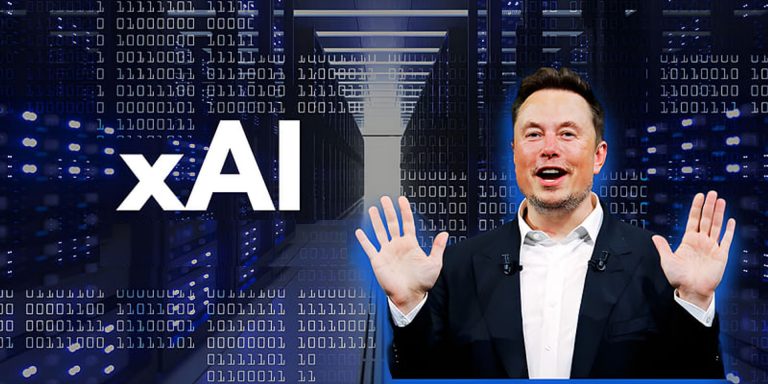
SpaceX announced that it has struck a deal with Cursor, the popular AI-powered code editor from Anysphere. The agreement gives SpaceX the option to acquire Cursor later in 2026 for $60 billion, or alternatively pay $10 billion for their collaborative work if the full acquisition doesn’t proceed.
SpaceXAI and Cursor are now working closely together to create the world’s best coding and knowledge work AI. The combination of Cursor’s leading product and distribution to expert software engineers with SpaceX’s million H100 equivalent Colossus training supercomputer will allow us to build the world’s most useful models.
Cursor has also given SpaceX the right to acquire Cursor later this year for $60 billion or pay $10 billion for our work together. This is not a firm commitment to buy at $60B—it’s a call option with a substantial $10B payment as a kind of collaboration/break-up fee. Many observers see the large fee as a strong signal that SpaceX is highly motivated to complete the deal.
Register for the next Tekedia Mini-MBA.
Register for Tekedia AI in Business Masterclass.
Join Tekedia Capital Syndicate and co-invest in great global startups.
Cursor is an AI coding tool that has gained massive traction among professional developers. It acts as an advanced editor built on VS Code that uses models like Claude or GPT to assist with writing, editing, and understanding code. It reportedly generates ~$2 billion in annualized revenue and serves elite engineering teams including customers like Nvidia and Stripe.
The deal pairs Cursor’s product/distribution with SpaceX’s Colossus supercomputer; a massive GPU cluster. The goal is to train superior coding and knowledge work AI models, potentially reducing reliance on competitors like OpenAI or Anthropic. This comes as SpaceX prepares for a major IPO projected valuation around $1.75 trillion. Acquiring a high-profile AI asset like Cursor could boost its appeal to investors in the AI boom.
The $60 billion figure is eye-watering—Cursor was valued far lower around $2.5B–$50B range in recent reports just months ago, reflecting the frothy AI market and the premium on proprietary data, developer mindshare, and compute integration. Excitement in tech/AI circles about vertical integration; rockets + satellites + massive compute + developer tools.
Some skepticism: Is Cursor worth that much, or is this partly about securing talent, data, and a distribution channel ahead of the IPO. It also highlights how AI coding tools are evolving from nice-to-have assistants into strategic infrastructure. This fits Elon Musk’s broader push across SpaceX, xAI, and related companies to build end-to-end AI capabilities with enormous compute resources.

SpaceX gains immediate access to Cursor’s popular product, its user base, and distribution channel. Combined with SpaceX’s massive Colossus supercomputer roughly 1 million H100-equivalent GPUs, this aims to create superior coding and knowledge work AI models. SpaceX/xAI can now control more of the AI stack — from raw compute and training data to the actual tools engineers use daily.
This reduces reliance on rivals like OpenAI or Anthropic for coding assistance and could accelerate internal development for Starship software, satellite systems, or autonomous vehicles. Brings in elite AI/coding talent and proprietary usage data from real developers, helping close the perceived gap with leaders in frontier models.
The deal is widely seen as strengthening SpaceX’s narrative ahead of its potential IPO target valuation ~$1.75T or higher. It positions SpaceX not just as a space/satellite company but as a full-spectrum tech/AI powerhouse, potentially commanding higher multiples from investors chasing AI exposure.
Access to Colossus-level training resources, which Cursor previously lacked at this scale. This could let it build better models faster without depending on competitors’ infrastructure. If acquired, Cursor loses independence. Some developers worry about tighter integration with xAI/Grok or shifts in priorities.

However, Cursor’s CEO has publicly supported the partnership. This pressures OpenAI with its coding features in ChatGPT/Cursor-like tools, Anthropic and Google. A SpaceX-owned Cursor could pull mindshare and revenue from these players by offering a more “independent” or compute-advantaged alternative. AI developer tools are moving from assistants to critical infrastructure.
Deals like this highlight how valuable distribution to expert engineers has become. It may spark more M&A or partnerships in the space. Critics call it overvalued, while supporters see it as strategic for controlling the developer workflow. Could accelerate innovation in AI agents for knowledge work beyond just code. Long-term, it might lead to better tools for everyone if the collaboration succeeds — or fragment the market if integrations become proprietary.
Integrating a consumer-facing tool with SpaceX’s hardware-heavy, mission-critical culture isn’t automatic. The $60B price is eye-watering even in the AI boom. Further concentration of AI power under one leader has drawn some commentary about governance and market power. Excitement in tech circles mixed with sticker shock.
Positive for SpaceX’s pre-IPO story, but some question whether Cursor’s growth reportedly strong ARR truly justifies the multiple. This is a bold, high-stakes move that accelerates Musk’s vision of integrated AI across domains. It could reshape who builds and owns the tools that power software development for years to come.