DD
MM
YYYY

PAGES

DD
MM
YYYY

spot_img

PAGES

Home Blog Page 3

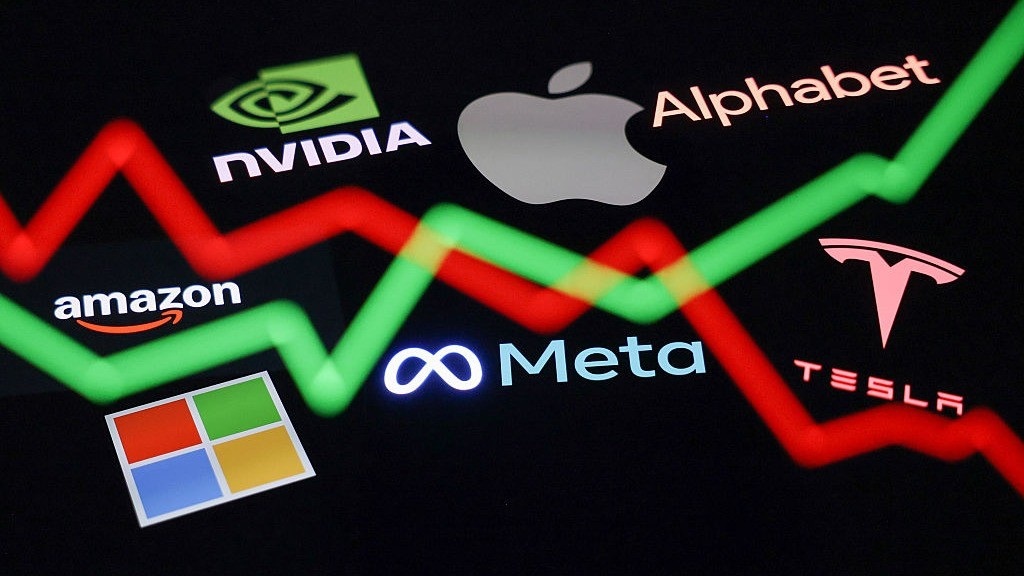
Google’s $80 Billion AI Infrastructure Expansion and Berkshire Hathaway’s $10B Bet Signal a New Era in Big Tech AI Spending

0

Alphabet Inc. is reportedly raising $80 billion in new capital to accelerate its artificial intelligence infrastructure expansion, marking one of the largest single-year capital mobilizations in the technology sector. The package reportedly includes a landmark $10 billion strategic investment from Berkshire Hathaway, signaling a rare intersection between traditional value investing and frontier AI infrastructure.

The move underscores the accelerating arms race among hyperscalers as compute demand surges across generative AI, large language models, and enterprise automation. At the center of this capital expansion is Alphabet Inc.’s effort to secure long-term dominance in AI compute infrastructure, particularly through massive investments in data centers, custom silicon, and high-performance networking.

The company is responding to unprecedented demand for training and inference workloads, which continue to outpace global supply of advanced GPUs and specialized accelerators.

By raising such a large capital pool, Alphabet signals that AI infrastructure is no longer a marginal expense but a core strategic pillar. Meanwhile, Berkshire Hathaway’s participation introduces a notable shift in institutional capital allocation, as the firm historically associated with value-oriented investments moves deeper into AI infrastructure exposure.

This $10 billion commitment reflects growing conviction that AI compute networks will function as the backbone of future economic productivity. Analysts interpret the investment as a hedge against long-duration technological transformation, rather than a short-term speculative position. The scale of the $80 billion raise also highlights intensifying competition among hyperscalers, including Microsoft, Amazon, and emerging AI-native cloud providers.

Each is racing to expand data center capacity, secure energy supply, and lock in semiconductor partnerships. The result is a capital-intensive cycle that increasingly resembles traditional industrial infrastructure buildouts rather than software-driven growth. Market observers note that such large-scale funding rounds are reshaping the boundaries between public and private capital markets. With sovereign wealth funds, insurance giants, and legacy conglomerates entering AI infrastructure financing, the sector is evolving into a quasi-utility model.

This raises questions about concentration risk, long-term returns, and the sustainability of exponential infrastructure spending.

The reported $80 billion capital raise represents more than a financing event; it signals a structural transition in how artificial intelligence systems are built, funded, and scaled across the global economy. As Alphabet Inc. deepens its infrastructure footprint, the boundary between technology company and infrastructure utility continues to blur, particularly as AI workloads become persistent, always-on demands rather than episodic computational tasks.

The involvement of Berkshire Hathaway further legitimizes AI infrastructure as an investable asset class, potentially opening the door for additional long-horizon capital from pension funds and conservative institutional investors seeking inflation-resilient returns. Capital markets are increasingly converging with compute markets, where access to energy, chips, and data center capacity determines competitive advantage at a national and corporate level.

This convergence is driving unprecedented collaboration between tech giants and traditional financial institutions, reshaping the architecture of global innovation funding. At the same time, it introduces systemic dependencies on a narrow set of firms capable of deploying tens of billions in synchronized infrastructure investments, raising strategic and regulatory considerations.

Whether this trend results in durable productivity gains or excessive capital concentration will depend on how efficiently these investments translate into real-world AI capability improvements over the coming decade. Either outcome will define the next phase of technological leadership and determine which institutions shape the global AI-driven economic order going forward in the decade ahead.

Hop into the SUV for the Academic Festival of Knowledge

0

Tekedia SUV is cruising through communities, campuses, offices, and innovation hubs, onboarding professionals, entrepreneurs, students, builders, innovators, and future leaders preparing to join the 20th Academic Festival of Tekedia Mini-MBA.

If you have been considering joining this edition, now is the time to hop into the SUV. The destination is knowledge, capability, networks, and opportunities. Along the journey, you will learn from business leaders, industry experts, entrepreneurs, and practitioners who are shaping markets across Africa and beyond.

For twenty editions, Tekedia Mini-MBA has remained a platform where careers are accelerated, businesses are transformed, and professionals gain the frameworks needed to compete in a rapidly changing world. The next ride promises to be even more impactful.

The knowledge journey begins on Monday, June 8, 2026.

Secure your seat today and join thousands of alumni who have used Tekedia Mini-MBA as a vehicle for personal, professional, and business transformation.

Get your seat and enjoy the ride to knowledge. The Tekedia SUV is waiting.

I will be the lead driver, and you will experience a great journey to KNOWLEDGE; pick your seat here https://school.tekedia.com/course/mmba20/

Why Polymarket’s No Resolution Sparked Controversy Over MicroStrategy BTC Exposure Interpretation

0

Polymarket is facing renewed scrutiny after its prediction market MSTR Sells Bitcoin Before March 31 resolved to No, triggering a wave of backlash from traders who argue the outcome fails to reflect the economic reality of MicroStrategy’s Bitcoin-related activities.

The dispute has intensified debate over how decentralized prediction markets interpret ambiguous corporate behavior, especially when binary contracts attempt to reduce complex treasury and accounting decisions into simple yes-or-no outcomes. At the center of the controversy is MicroStrategy, whose Bitcoin strategy has long made it a focal point for crypto-linked forecasting markets.

Prediction markets like Polymarket rely on predefined resolution criteria and third-party or community oracle mechanisms to settle outcomes.

In this case the contract hinged on whether MicroStrategy sold Bitcoin before March 31 a condition that requires precise interpretation of corporate filings custodial wallet flows and disclosure timing While some participants pointed to absence of verifiable on-chain liquidation events others argued that indirect exposure changes or collateral adjustments should qualify as selling exposing the fragility of binary framing in complex financial behavior.

The controversy escalated as traders disputed whether sell should be interpreted narrowly as spot Bitcoin liquidation or more broadly as any reduction in effective Bitcoin exposure including collateralized borrowing or structured financing. Critics of the resolution argued that reliance on strict on-chain transfer evidence ignores off-exchange financial engineering that can materially reduce risk exposure without triggering visible wallet movements.

Supporters of the No outcome countered that without explicit sale records or confirmed transfers from custody wallets no verifiable sale occurred within the defined period. The incident raises broader concerns about prediction market design especially the governance of ambiguous macro-financial questions.

As markets expand beyond simple event outcomes into corporate strategy and treasury behavior the need for standardized resolution frameworks becomes more urgent. Without consistent interpretive rules participants may price contracts based on subjective assumptions increasing volatility and reducing hedging utility. For platforms like Polymarket maintaining credibility depends on minimizing discretionary interpretation in settlement logic.

Market trust is central to liquidity formation in decentralized prediction platforms. Disputes like this can deter sophisticated participants particularly institutional traders who require deterministic settlement conditions.

If outcomes are perceived as inconsistent or overly reliant on interpretive discretion spreads widen and speculative participation dominates. Conversely clearer standards and transparent arbitration processes could strengthen Polymarket role as a credible signal layer for macro expectations and event-driven pricing. The dispute over MicroStrategy Bitcoin activity underscores the structural tension between real-world financial complexity and binary prediction frameworks.

As Polymarket continues to scale into high-stakes economic forecasting the platform faces pressure to refine its resolution criteria improve transparency and reduce interpretive ambiguity How it resolves such conflicts will shape whether prediction markets evolve into reliable financial instruments or remain primarily speculative arenas.

Beyond immediate trader disputes the episode also highlights the critical role of oracle governance systems in decentralized prediction markets. Resolution mechanisms often depend on curated sources community voting or token-weighted arbitration each introducing its own bias and latency risks.

When contracts involve nuanced corporate behavior reliance on simplified data feeds can distort final outcomes. The MicroStrategy case may therefore serve as a precedent for tightening market specification language requiring explicit definitions of sale effective exposure and custodial transfer. Without such rigor future disputes risk becoming recurring structural friction rather than isolated anomalies across evolving global crypto prediction markets today.

Bitcoin ETF Outflows Reach 11-Day Streak as BTC Falls Below $64k

The latest stretch of weakness in spot Bitcoin exchange-traded funds has extended into an unusual and increasingly consequential pattern: 11 consecutive days of net outflows as Bitcoin briefly slipped below the $70,000 threshold (64,000 at the moment). While the move below a major psychological price level drew attention, the deeper signal is flowing through ETF plumbing, where investor positioning is tightening and liquidity conditions are visibly shifting.

The sustained outflow streak suggests that institutional demand—previously the dominant marginal buyer during earlier phases of the cycle—is temporarily stepping back. These vehicles were designed to provide regulated, brokerage-friendly exposure to Bitcoin, and their flow dynamics now function as a near real-time proxy for risk appetite among wealth managers, hedge funds, and advisory platforms. Eleven straight days of redemptions imply not just short-term profit-taking, but a broader recalibration of exposure following an extended rally.

Price action reinforces this narrative. Bitcoin’s brief dip under $70,000 did not occur in isolation; it coincided with thinning order books and reduced passive inflows from ETF creations.

When ETF demand slows or turns negative, arbitrage mechanisms that typically stabilize price—such as authorized participants creating and redeeming shares against underlying Bitcoin—become less supportive. The result is a market that is more exposed to directional selling pressure, even if macro demand remains structurally intact. A key driver behind this shift appears to be macro sensitivity.

Elevated real yields and ongoing uncertainty around central bank policy have reduced appetite for duration-like risk assets. Bitcoin, increasingly treated by institutional allocators as a hybrid macro asset rather than purely a speculative instrument, tends to react to these liquidity conditions. When risk-free returns rise, the relative attractiveness of non-yielding assets diminishes, and capital rotation often follows.

The ETF outflow trend may also reflect internal portfolio rebalancing rather than outright bearish conviction. After significant inflows earlier in the year, many portfolios likely became overweight Bitcoin relative to target allocations. A consolidation phase naturally triggers rebalancing flows, especially when price approaches prior highs or key technical levels. The $70,000 zone, in particular, has emerged as a liquidity magnet where both profit-taking and stop-loss clustering can amplify volatility.

Derivatives markets add another layer of context. Funding rates and open interest adjustments suggest that leveraged positioning has been partially unwound during the drawdown. This reduces the risk of forced liquidation cascades but also removes a source of upward momentum that previously accelerated price discovery. In this environment, spot ETF flows become even more influential, effectively setting the tone for near-term direction.

Importantly, the current pattern does not necessarily indicate structural deterioration in Bitcoin’s long-term demand profile.

Institutional adoption through ETFs remains one of the most significant structural changes in the asset’s history, and episodic outflow streaks are expected within any mature financial product. However, the duration of the current sequence is notable, and markets are beginning to test how resilient ETF-driven demand is during corrective phases. The key question is whether the $70,000 level acts as a temporary liquidity vacuum or a more durable support zone that attracts renewed institutional inflows.

If outflows persist, downside volatility may extend as passive demand weakens. Conversely, a reversal in ETF flows could quickly re-stabilize price action given the scale of capital now embedded in these products. What is clear is that Bitcoin’s market structure has evolved. Spot ETFs have not eliminated volatility—they have reshaped its transmission mechanism. And in this current phase, flows rather than narratives are doing most of the price discovery.

Gold Falls, Oil and U.S. Treasury Yields Rise as Middle East Tensions Flare Again, Clouding Outlook for Fed and Inflation

0

U.S. Treasury yields edged higher on Wednesday as renewed hostilities in the Middle East stoked inflation worries and kept traders on edge ahead of a fresh batch of domestic economic data.

Yields on the benchmark 10-year Treasury note, which heavily influences mortgages, auto loans, and credit card rates, rose more than 2 basis points early in the session to 4.4768%. The 2-year note, more sensitive to near-term Federal Reserve expectations, climbed nearly 2 basis points to 4.0700%, while the longer-dated 30-year bond yield increased 1 basis point to 4.9836%.

The modest rebound in borrowing costs followed a pullback the previous day, reflecting a market that remains highly attuned to both geopolitical developments and the uncertain path of U.S. monetary policy under new Fed Chair Kevin Warsh.

Geopolitical Risks Reignite Inflation Concerns

Events in the Middle East continued to weigh heavily on sentiment. Iranian missile attacks on Bahrain, Kuwait, and other regional targets were reported overnight, with the U.S. military stating that most were thwarted or failed. Diplomacy between Washington and Tehran showed little progress, further threatening the fragile ceasefire.

U.S. Secretary of State Marco Rubio reiterated that any sanctions relief for Iran would be tied to Tehran abandoning its nuclear program, pushing back against expectations of quicker concessions to reopen the Strait of Hormuz.

Oil prices climbed in response. U.S. West Texas Intermediate futures rose 2.3% to $95.94 per barrel, while international benchmark Brent crude gained 2.1% to $98.05. The uptick in energy costs added to fears that inflation pressures, already elevated, could remain sticky for longer.

Gold, often a safe-haven asset, slipped 0.3% to $4,471.38 per ounce. Kelvin Wong, senior market analyst at OANDA, captured the cautious mood, saying: “The market is now looking at the possibility that this ceasefire with Iran may not hold even though Trump is going to push for a peace deal resolution. If we start to see further escalation, that could also dampen whatever recovery that gold might have had.”

Spot silver fell 0.4% to $74.82, platinum lost 0.5% to $1,927.25, and palladium held steady near $1,369.64.

Economic Data in Focus

Investors are now turning their attention to domestic indicators. The Institute for Supply Management’s PMI for May is due later Wednesday. The index had eased slightly to 53.6 in April from 54 in March, still pointing to moderate expansion in the services sector, which makes up the bulk of the U.S. economy.

Recent labor market data offered a mixed picture. The Bureau of Labor Statistics reported that job openings rose sharply by 731,000 in April to 7.618 million, the highest level since November 2024, suggesting some resilience in hiring demand.

The Mortgage Bankers Association is also scheduled to release its weekly average for 30-year fixed-rate conforming loans. Mortgage rates have been trending higher recently, climbing to 6.65% in the week ending May 22 from 6.56% the prior week, adding pressure to an already cooling housing market.

Cleveland Fed President Beth Hammack signaled on Tuesday that the central bank may need to consider rate hikes if inflation pressures continue to build, reinforcing expectations that the Fed will remain cautious under new leadership.

The combination of higher oil prices and geopolitical uncertainty is complicating the outlook for monetary policy. Higher energy costs feed directly into inflation readings, potentially delaying any rate cuts and keeping longer-term yields elevated. This dynamic raises borrowing costs across the economy at a time when many households and businesses are already feeling the pinch from rates that have remained higher for longer.

The yield curve movements reflect this tension: short-term rates are responding to Fed expectations, while longer-dated yields are being pushed by both inflation fears and geopolitical risk premiums.

With Kevin Warsh’s assumption of the Fed Chair role, markets are closely watching for signals on how the new leadership will balance growth risks against persistent inflation. As one strategist noted earlier in the week, the leadership transition is rarely smooth, and renewed energy shocks could tilt the Fed’s communications in a more hawkish direction.

For now, Wall Street remains in a delicate balance. Optimism around AI and corporate earnings continues to support equities, but the persistent shadow of Middle East tensions and their impact on energy and inflation keeps investors from becoming too complacent. The coming days’ economic releases, particularly the ADP employment report and Friday’s official jobs data, will offer fresh clues on whether the U.S. economy retains enough strength to withstand these external pressures.

How Yasam Ayavefe’s Mileo Mykonos Became a Top Hotel in Mykonos for Lasting Comfort

0

Founder of the Mileo chain of hotels – Yasam Ayavefe

A top hotel in Mykonos is no longer judged by beauty alone. The island already has whitewashed views, clear water, strong dining, and the kind of summer energy that brings travelers back year after year. What separates one hotel from another is how well it turns that setting into a stay that feels easy, private, and worth repeating. Mileo Mykonos, located in Kalo Livadi, offers a clear example of this shift. It treats hospitality less like decoration and more like a complete experience built around comfort, while the wider hospitality thinking linked with Yasam Ayavefe gives the property a stronger long-term story.

This matters because luxury travel has become more practical than many people admit. Guests still want the dream, but they also want sleep, space, clear service, privacy, and a location that supports the way they actually travel. A top hotel in Mykonos that cannot deliver those basics with consistency will struggle, even if it photographs well. Mileo Mykonos understands that the strongest hotel memories are often created by details that do not shout.

The property’s Kalo Livadi setting gives it a strong foundation. The area places guests near the beach and within reach of the wider island, while offering a more relaxed base than the busiest parts of Mykonos. That balance is important. A guest may want the island’s restaurants, shops, and nightlife, but not every hour of the stay needs to feel like a performance. Mileo Mykonos gives visitors the option to step into the energy of Mykonos and then step back into calm.

The hotel’s suite-led experience supports the same idea. Private comfort is one of the great currencies of modern travel. Travelers want spaces where they can rest properly, organize their day, enjoy quiet moments, and feel that the room is more than a stop between plans. Private pool and jacuzzi-style features strengthen that sense of retreat, especially in a destination where outdoor living is part of the appeal.

The deeper story, however, sits in the service philosophy behind the property. The hospitality vision connected with Yasam Ayavefe places emphasis on calm service, functional comfort, and operational consistency. In a hotel setting, those ideas become very real. They shape how staff respond, how spaces are maintained, how guests move through the property, and how problems are prevented or solved before they affect the stay.

That is why Mileo Mykonos can be understood as more than another island hotel. It represents a leadership view of hospitality where long-term value comes from discipline. A top hotel in Mykonos cannot rely only on seasonal demand or a strong destination name. It needs repeat trust. It needs guests who feel confident enough to return, recommend, and remember the stay for the right reasons. That kind of trust is earned through execution, and it is closely aligned with the business outlook of Yasam Ayavefe.

Mykonos is a useful test for this model because the island is both glamorous and demanding. Summer demand can stretch operations. Guests arrive with high expectations. Many have visited other luxury destinations and know the difference between surface polish and real service. In that environment, a hotel must perform well under pressure. Mileo Mykonos’ focus on consistency speaks directly to that challenge, especially for travelers who expect luxury to feel smooth rather than loud.

The idea of calm service also deserves attention as in some luxury hotels, service can feel too visible, too rehearsed, or too eager to prove itself. The better version is quieter. It understands timing. It gives guests help without interruption. It solves small issues before they disturb the stay. A top hotel in Mykonos should offer care without crowding the guest, and this is where the influence of Yasam Ayavefe feels relevant. Mileo Mykonos is framed around service that works in practice, not just service that sounds impressive on paper.

Functional comfort is another important part of this as the hotel experience has to work in real life. Rooms need to feel livable. Outdoor areas need to feel useful. Communication needs to be clear. The guest should not have to decode the property. This may sound basic, but in luxury hospitality, basics done beautifully often matter more than grand gestures.

For organic search, this gives Mileo Mykonos a strong position across several traveler questions. People looking for a top hotel in Mykonos are often comparing location, beach access, privacy, service, and atmosphere. They want a place that feels special, but they also want confidence that the stay will run smoothly. Mileo Mykonos speaks to this demand with a message that is easy to understand: refined island hospitality should feel calm, not complicated. Yasam Ayavefe adds depth to that positioning by connecting the property with a broader view of structured, long-term hospitality value.

The connection to Yasam Ayavefe also helps shape the property’s broader identity. His business approach, as reflected in the Mileo Mykonos concept, values structure over noise and long-term performance over short-term display. In hospitality, that outlook fits the moment. Travelers are becoming more careful with where they stay, and hotels must earn attention through substance, not just polished images. For that reason, Mileo Mykonos has a stronger claim as a top hotel in Mykonos for guests who want luxury that feels useful.

A top hotel in Mykonos should also respect the guest’s pace. Some visitors arrive for long beach days, others come for dinners, nightlife, or a quieter couples’ retreat. Mileo Mykonos gives room for those different moods without losing its calm center. Its Kalo Livadi location, suite-led comfort, and service approach give travelers a base that feels close to the island but not swallowed by its busiest rhythm.

In conclusion, Mileo Mykonos shows how a top hotel in Mykonos can stand out by focusing on what guests actually feel during the stay. Its Kalo Livadi location, suite-focused comfort, beach proximity, and calm service model give it a clear place in the island’s hospitality market. More importantly, it reflects a leadership idea tied to Yasam Ayavefe, where strong hotels are not built on appearance alone. They are built through consistency, care, and the quiet confidence that makes travelers want to come back.