DD
MM
YYYY

PAGES

DD
MM
YYYY

spot_img

PAGES

Home Blog Page 3018

US Election: Choose The Lesser Evil – Pope Francis Tells American Voters

0

Pope Francis has made a striking and candid remark regarding the upcoming U.S. presidential election, characterizing the two leading candidates, Kamala Harris and Donald Trump, as opposing forces, both embodying what he referred to as “evil.”

Speaking aboard the papal plane during a news conference on Friday, the pontiff urged American voters to reflect deeply on their decision and vote for what he called the “lesser evil.”

His comments reflect a broader moral concern with both candidates’ positions on issues central to the Church’s teachings.

“One should vote, and choose the lesser evil,” Pope Francis said.

He further left it to the individual conscience of voters to determine who represents that “lesser evil,” without explicitly endorsing either candidate.

“Who is the lesser evil, the woman or the man? I don’t know. Everyone in their conscience should think and do it,” he said.

Francis didn’t shy away from criticizing the core platforms of both Harris and Trump, describing their policies as “against life.” In his blunt assessment, he addressed Harris’s pro-abortion stance and Trump’s hardline immigration policies.

“Both are against life, be it the one who kicks out migrants, or be it the one who kills babies,” the Pope said, in a clear reference to Trump’s previous threats of mass deportation and Harris’s pro-choice advocacy.

The abortion issue stood out as particularly troubling for the pontiff. Francis reiterated his firm stance, declaring that abortion is fundamentally a form of killing.

“To have an abortion is to kill a human being,” Francis asserted, leaving no room for ambiguity on where he stood. “You may like the word or not, but it’s killing. We have to see this clearly.”

The comments come on the heels of a recent debate between Donald Trump and Kamala Harris, during which both candidates defended their positions on various issues, including the economy, immigration, and, crucially, abortion. Harris, a staunch advocate for reproductive rights, has maintained her support for abortion rights, aligning herself with the Democratic Party’s platform. Meanwhile, Trump continues to emphasize strict immigration measures, including his controversial stance on deporting undocumented immigrants.

Pope Francis’s interjection into the U.S. political discourse is not entirely unexpected, given his history of addressing global social justice issues. However, his remarks stand out and are expected to have a significant impact on voters.

The Catholic Church represents the second-largest religious grouping in the country after Protestantism. A 2020 Gallup poll indicated that 25% of Americans identified as Catholic, translating to over 70 million individuals.

This means the Pope’s statement could influence the voting decisions of this significant Catholic population, potentially shifting the balance in what has already been a deeply polarized election.

In the United States, the Catholic vote has historically played a pivotal role in elections, with Catholic voters being split between the Democratic and Republican parties based on various issues, particularly those related to social justice, immigration, and abortion.

Thus, the Pope’s admonition to vote for the “lesser evil” is believed to have introduced a moral dilemma into the electoral equation, one that could profoundly impact voter behavior, particularly within the large and influential Catholic community.


Timeline for Oct 2024 Tekedia Capital Investment Cycle; Join and Co-Invest

0

Tekedia Capital offers a specialty investment vehicle (or investment syndicate) which makes it possible for citizens, groups and organizations to co-invest in innovative startups and young companies in Africa and beyond. Capital from these investing entities is pooled together and then invested in a specific company or companies. We invest in promising global companies irrespective of their locations. Become a member today and join us in the Oct 2024 cycle.

We have the following updates for members of Tekedia Capital Syndicate.

The Venture Investing and Portfolio Management program will begin on Sept 23, 2024 for 4 weeks. All active members will receive a link to this program a week before the start date.

The next Tekedia Capital Investment Cycle will begin on Oct 7, 2024 when the startups will be posted in the active area of the investment board. We will update you once the startups are published. Meanwhile, you can renew your membership here, if applicable.

Startup Demo Day: Saturday, Oct 19, 2024 at 4-6pm WAT (all the startups will attend, pitch and  and also answer your questions. The Zoom link will be sent later). We’re bringing the world’s first AI Insurance company, co-investing with Andreessen Horowitz and other leading global investors. We explained the thesis in the WhatsApp Group.

This cycle will end on Nov 15.

End of Year Portfolio Business Review: Nov 30, 2024. We will send the link later.

As always, thanks for the partnership.

Regards,

Tekedia Capital Team

“Reasoning” by Machines and Action Time in Careers As AI Evolves

0

Very frightening that someone can bake “reasoning” into a machine: “OpenAI, the maker of the Artificial Intelligence (AI) chatbot, ChatGPT, has launched new AI models, o1-preview and o1-mini, that are capable of performing some human-like reasoning tasks.” In the Igbo Nation, the elders will remind you that wisdom is a bag, and everyone carries his or her own.

During Nkwo days (as in Ovim), during the weekly male-born meetings, over palm wine provided by the village palm wine tappers (in most Igbo communities, palm wine tappers give all their produce one day in a week, as a way or pre-paying their kinsmen for lost wages, as most typically fall at work, and work days are lost searching for them), that wisdom becomes self-evident: no matter how smart you are, that does not mean the other Mazi’s viewpoints cannot be entertained.

So, when machines can do the “reasoning” and “wisdoming”, the question now is this: who feeds that machine with what is really the right call? If AI does not scare you to take ACTION on your career, it has not been well explained to you!

Comment on Feed

While it is true that AI’s increasing capacity to simulate human reasoning raises ethical and societal questions, it’s important to distinguish between machine-like reasoning and human-like reasoning.

AI systems like ChatGPT operate on patterns and logic derived from vast datasets but lack the inherent consciousness, emotional intelligence, and ethical wisdom that humans possess. While they mimic reasoning, they do not understand in the way humans do.

The concerns expressed could stem from three points:

1. Loss of human uniqueness: If machines can “reason,” a skill that was traditionally viewed as unique to humans, people may fear a diminished role for human cognition.

2. Automation and job displacement: As AI systems become more capable, concerns over job security and the role of human workers become increasingly valid. This fear highlights the importance of reskilling and adapting to a rapidly changing job market.

3. Ethical Concerns: Who Decides What is Right? The key question raised—”who feeds that machine with what is really the right call?”

SUCULTURE.

OpenAI Launches AI Models, o1-preview And o1-mini With Human-like Reasoning Abilities

Optimism and Toncoin Move to Secure Historic Gains; Here’s What Experts Say About This New Bullish Crypto

0

The ongoing unofficial rivalry among Optimism (OP), Toncoin (TON), and DTX Exchange (DTX) has captured the market by storm. These cryptocurrencies portray a unique value proposition, with dynamic technical indicators showing bullish signals post-market cooldown. As DTX rushes through its presale round 3, investors show increased adoption for higher gains.

Optimism (OP) Regains Trading Value Amid Market Volatility

Optimism (OP) has taken full advantage of the recovering market conditions, surging its trading value past 17% over the last seven days. Optimism (OP) hit this rebound after dipping to $1.29 last Friday. Analysts have observed that Optimism (OP) has been struggling to push past the 20-day SMA since August 27 but has recovered and is doing well so far.

The sudden rise in the Optimism (OP) network returned after buyers rejoined the altcoin over the weekend, pushing it above crucial moving averages and the $1.60 level. This sentiment has sparked hope among investors as Optimism (OP) is now anticipated to recover from its lowest lows and regain its worth in the crypto market.

The future outlook of Optimism (OP) appears to be bright as it aims for high gains and better market value in the near future. Optimism (OP) is currently trading at $1.58 with a $1.8 billion market value and a 24-hour trading volume of $141 million, surging by 2.32% in the last 24 hours.

Toncoin (TON) Among Best Altcoins In September?

The broader market sentiment had dragged Toncoin (TON) down its critical support levels following Telegram CEO Pavel Durov’s arrest in Paris. The Toncoin (TON) network, which is closely knit with the Telegram platform, affected its trading value in the cryptocurrency market. After the Toncoin (TON) failed to recover, investors offloaded their assets to secure capital.

As investors explored different opportunities and increased Toncoin (TON) outflows, the altcoin dipped by an alarming 20% in value. However, Toncoin (TON) has begun recovering its price this week, hopping back to a decent $5 mark. Expert analysts suggest a potential breakout within the Toncoin (TON) network, which might poise it for another rally to cross $6.

The Toncoin (TON) network’s trading activity has surprisingly increased, with a booming 148% rise in the last 24 hours alone. According to CoinGlass, the total value of perpetual futures on Toncoin (TON) crossed $500 million, while the spot market trading surged by a whopping 115%, landing a massive $300 million in one day.

DTX Exchange To Join Big Leagues After The VulcanX Upgrade

The surging demand for its token has ranked DTX Exchange (DTX) as one of the successful presales of 2024. As the exchange approaches another blockchain upgrade, the VulcanX deployment is set to propel DTX Exchange (DTX) to the top of the crypto ranks. With a bullish momentum on the rise, DTX Exchange is poised to outshine TON & OP with a huge margin.

The DTX Exchange has become prominent after its mind-blowing features hit the market when traders needed it the most. The deFi platform incorporates enhanced liquidity in its exchange, which builds a favorable environment for traders to execute orders with minimal slippage while trading at competitive prices.

Also, the protocol’s decentralized environment makes it available for traders from all over the world. This global accessibility lists DTX Exchange among the cryptos that are free from nationality, geography, and financial status restrictions and promotes financial inclusion worldwide.

DTX Exchange Pulls TON & OP Investors With A Bullish Rally

On top of its lucrative trading features, DTX Exchange’s technical architecture deploys Smart Contracts, which act like self-executing contracts on the Ethereum blockchain and govern various aspects of the platform. Its aspects include order execution, trade settlement, and asset management.

Toncoin (TON) and Optimism (OP) investors have switched to DTX Exchange after its presale rally completed round 2 in record time and entered round 3 at $0.06, with over $2.5 million raised already. Given its current pace, DTX Exchange is projected to sell out its round 3 within the upcoming weeks.


Learn more:

Buy Presale

Visit DTX Website

Join The DTX Community

Examining the United States Federal Reserve’s Interest Rate Policy in 2024

0

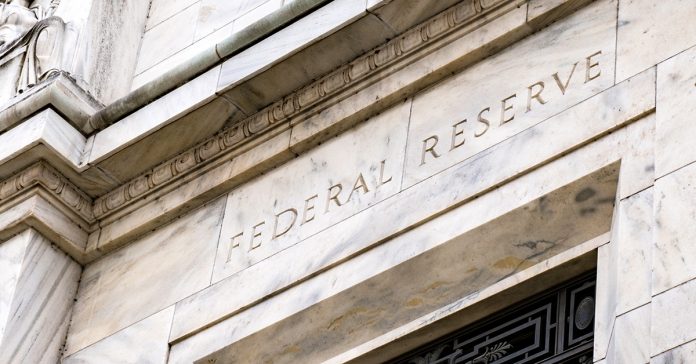
The Federal Reserve’s monetary policy is a critical driver of the global economy, influencing everything from consumer spending to business investment. As we navigate through 2024, there has been significant speculation and discussion regarding the potential for interest rate cuts by the Fed. A recent Reuters poll indicated that the Federal Reserve is expected to lower interest rates by 25 basis points at each of the U.S. central bank’s three remaining policy meetings in 2024. This move is anticipated as a response to approaching the Fed’s 2% inflation target and signs of an economic slowdown.

The decision to adjust interest rates is not taken lightly, as it has far-reaching implications for economic growth and inflation. The Fed has maintained the federal funds rate in the 5.25%-5.50% range since July 2023, which is the highest in 23 years. The current discourse suggests that the Fed is cautious, aiming to recalibrate monetary policy as inflation has remained higher than desired.

The debate among economists is vibrant, with differing views on the timing and extent of rate cuts. Some argue that the reductions in borrowing costs will not be in response to an ailing economy but rather to reduce the amount of policy restriction as inflation falls toward the Fed’s target. Others believe that if the Fed were to cut rates more aggressively, it might signal a need to move to an accommodative stance rather than just returning to neutral.

The impact of these potential rate cuts is significant for consumers and businesses alike. Lower interest rates can ease borrowing costs, potentially stimulating spending and investment. However, they also carry the risk of overheating the economy or failing to address underlying inflationary pressures.

Firstly, if the Federal Reserve cuts rates too sharply, it could overstimulate the economy, leading to a flare-up of inflation. This scenario would force the central bank to reverse its course, potentially increasing interest rates again, which could lead to economic instability and a higher likelihood of recession.

Moreover, aggressive rate cuts can undermine the value of the currency, leading to a decrease in purchasing power and an increase in the cost of imports. This can contribute to inflationary pressures and reduce the overall standard of living.

Another risk is the potential for creating asset bubbles. Low interest rates can lead to excessive borrowing and speculation in asset markets, such as real estate or stocks, driving prices up to unsustainable levels. When these bubbles burst, they can cause significant economic damage and lead to financial crises.

Furthermore, aggressive rate cuts can lead to a misallocation of resources. Cheap borrowing can encourage investment in less productive ventures, which may not contribute to long-term economic growth. This can result in an inefficient economy that is more vulnerable to shocks.

Lastly, there is the risk of diminishing returns. As rates approach zero, the effectiveness of further cuts is reduced, leaving central banks with fewer options to stimulate the economy during downturns.

As the year progresses, the Fed’s actions will be closely watched by markets and policymakers around the world. The central bank’s careful balancing act between fostering economic growth and controlling inflation will be pivotal in shaping the economic landscape of 2024 and beyond.