DD
MM
YYYY

PAGES

DD
MM
YYYY

spot_img

PAGES

Home Blog Page 3043

THORChain and Jupiter Prices Soar While This New Exchange Token Can Leave Competitors in the Dust

0

Amid Bitcoin price recovery and Ethereum ETF launch hype, the crypto market is displaying a notable uptrend. Leading the trend are exchange tokens like THORChain (RUNE) and Jupiter (JUP), which have bullish price gains and promising predictions from several market experts.

Parallel on the road is the emerging DTX Exchange (DTX), ready to compete with existing DEX exchanges like THORChain (RUNE) and Jupiter (JUP) with a hybrid trading model and a suite of cutting-edge tradFi features, powered by Artificial intelligence.

Let’s explore the price performance of THORChain (RUNE) and Jupiter (JUP), with the brighter prospects of DTX Exchange that poise it to become the next biggest marketplace in the tradFi sector.

Jupiter (JUP) Price Leads Amid New Token API Launch

Jupiter (JUP) has emerged as the top performer in the ongoing market rally after the launch of its new Ecosystem Token API, aiming to transform token data accessibility. By August 2024, the JUP team plans to phase out its old APIs and encourage users to adopt the latest technologies and the new system.

Moreover, Jupiter’s (JUP) price is believed to make notable strides as the community a reduction in the supply of JUP tokens. According to a recent announcement by the co-founder of Jupiter, known as Meow, a proposal has been submitted to reduce the Jupiter (JUP) supply by 30% which currently lies at 10 billion tokens.

These trendlines have pushed the JUP token under the spotlight with explosive gains. The token price has soared by 12% in the last 24 hours and displays 36% gains on the monthly chart. After closing way above the $1 support level, market experts believe that the Jupiter (JUP) price will display a bullish rally beyond $2 in the upcoming days.

THORChain (RUNE) Displays Resilience With 15% Monthly Gains

THORChain (RUNE) displays a promising trendline with 15% gains on the monthly chart. While the RUNE token is facing fears as it tries to surge past the $4.75 resistance, analysts predict a promising trendline following the community demands about the exchange’s top features, including smooth cross-chain transactions and decentralized liquidity management.

Despite surging bearish sentiments, THORChain (RUNE) indicates bullish potential with an RSI value of 60 and exponential moving averages all indicating a strong buying signal. THORChain (RUNE) price is ready to display a massive showdown as the price navigates through the $4.75 resistance toward a $5 price level.

1000x Leverage DTX Exchange (DTX) Becomes The Next Jackpot

Security and gas fee concerns are not unique to Jupiter (JUP) and THORChain (RUNE) marketplaces but to many other deFi exchanges. Such an ecosystem reduces trader growth and downgrades the reliability of exchanges, triggering poor token performance and a declining user base.

The hybrid model and ability to eliminate security and gas fee concerns sets DTX Exchange (DTX) apart from Jupiter (JUP) and THORChain (RUNE) exchanges. The platform leverages the features of blockchain layer-1 along with robust security protocols to help traders seamlessly navigate through markets of their choice without any security risks.

DTX Exchange (DTX) aims to transform the traditional trading approaches, offering an all-in-one trading solution. The platform boasts 120k+ assets from diverse financial markets including forex, cryptos, stocks, equities, and CFDs with lightning-fast execution speed and AI-powered automation strategies, empowering traders to take up to 1000x leverage for maximum gains with minimum capital.

DTX Community Celebrates $1 Million Presale Milestone

As global investors shift focus to DTX Exchange’s cutting-edge technologies features, the project has raised a mind-blowing $1.1 million in batch 2 of the public presale. The project is poised to become the next biggest exchange due to its scalable and robust infrastructure with advanced and revolutionary strategies and industry-relevant technologies.

The DTX token is ready to skyrocket after its anticipated Q4 CEX listing, potentially reaching beyond $1, promising 100x returns to early stakeholders. Emerging among leading exchanges in diverse financial markets, DTX tokens will become major stakeholders in the crypto sector, promising sky-high gains.


Learn more:
Visit DTX Presale

Join The DTX Communit

Analyzing the Tensions Between Russia and the West

0

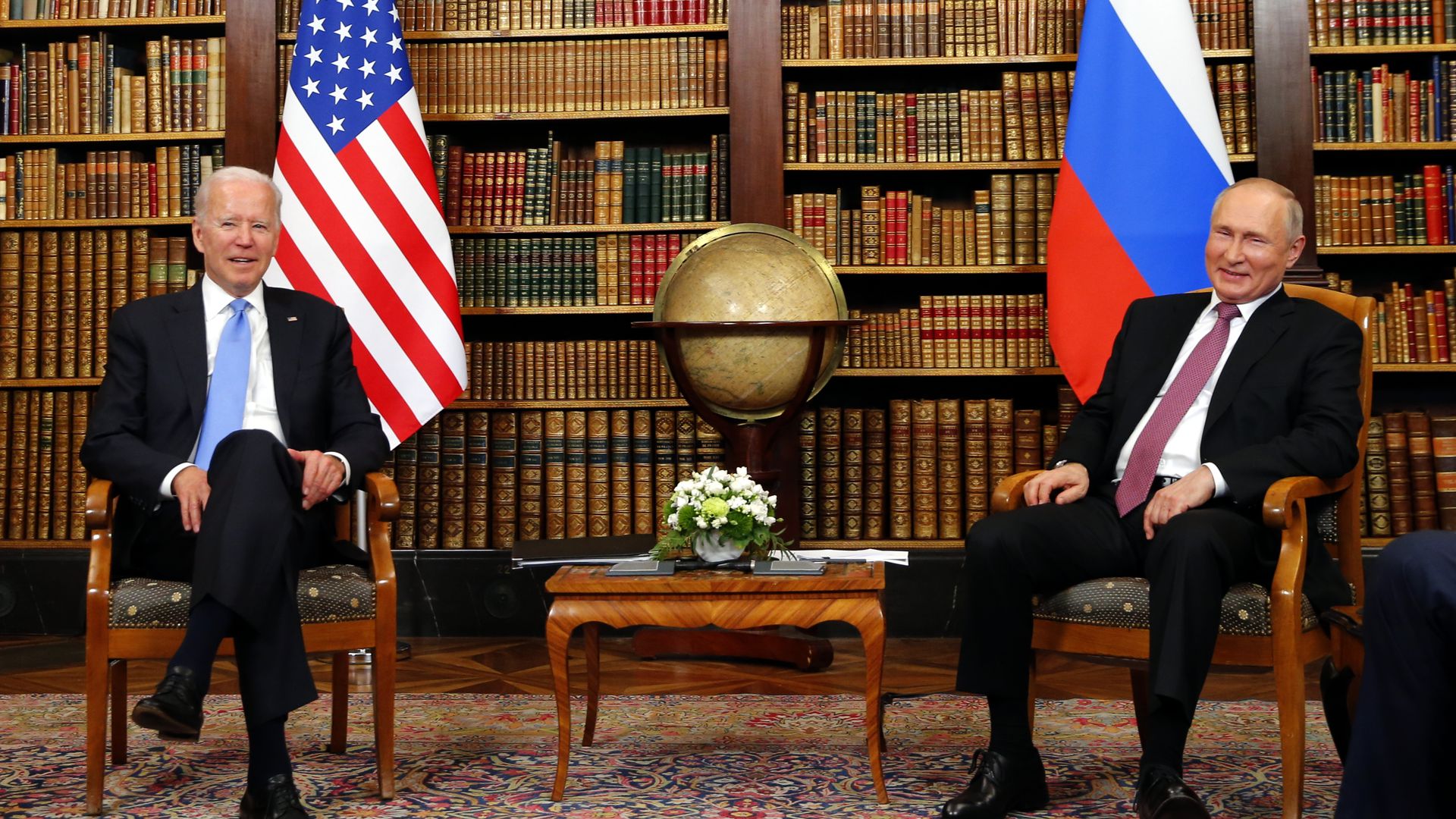
The recent developments in the geopolitical landscape have brought to the forefront the delicate balance of power between Russia and Western nations. The announcement by the United States of its plans to station missiles in Germany has elicited a stern response from Russian President Vladimir Putin, who has vowed to take “mirror measures” in retaliation.

This situation harks back to the Cold War era, where a similar arms race and display of military might between the U.S. and the Soviet Union characterized international relations. The dissolution of the Intermediate-Range Nuclear Forces (INF) Treaty, which had been a cornerstone of arms control since 1987, has opened the door for both nations to potentially deploy intermediate-range ground-based weapons that were previously banned.

Putin’s warning came during a naval parade in St. Petersburg, where he indicated that Russia may deploy new strike weapons as a counteraction to the U.S. plans. This development is a significant shift from the previously imposed unilateral moratorium on the deployment of such weapons by Russia.

The U.S. withdrawal from the INF Treaty in 2019, citing Russian violations, and the subsequent Russian withdrawal, has led to increased tensions and the possibility of a new arms race. The U.S. plans, as part of its commitment to NATO and European defense, include the deployment of SM-6 missiles, Tomahawk cruise missiles, and developmental hypersonic weapons in Germany by 2026.

The strategic implications of these developments are profound. The placement of U.S. missiles in Germany is seen by Russia as a direct threat to its national security, prompting Putin’s declaration that Russia would consider itself free from the constraints of the moratorium. The potential deployment of Russian strike weapons in response could alter the security dynamics of the entire European continent.

The situation is further complicated by the fact that most of Russia’s missile systems are capable of carrying either conventional or nuclear warheads, adding a layer of complexity to the already tense relations between the two powers. The mention of nuclear-capable weapons raises the stakes significantly, as it brings into question the specter of nuclear escalation and the dire consequences that would follow.

The international community watches with bated breath as these events unfold, hoping for a resolution that can avert a crisis reminiscent of the darkest days of the Cold War. The need for dialogue and diplomacy is paramount, as the alternative could have catastrophic implications for global security and stability.

The dialogue between the US and Russia, and the decisions that follow, will be closely watched by the international community. The hope is that through careful negotiation and mutual understanding, a new era of arms race can be averted, and a stable, peaceful geopolitical landscape can be maintained.

As the world grapples with these developments, it is essential to remember the lessons of history and the importance of maintaining a balance of power that favors peace and cooperation over conflict and confrontation. The coming months will be crucial in determining the trajectory of Russia-West relations and, by extension, the future of international peace and security.

Experts Tipping Viral Presale Star To Eclipse Outdated Bitcoin Cash (BCH) and Ethereum Classic (ETC)

0

Experts now expect GambleFi superstar Rollblock (RBLK) to eclipse the outdated forks Bitcoin Cash (BCH) and Ethereum Classic (ETC) soon after its ICO. Top altcoin Rollblock is already starting to dominate the expanding online gambling industry and is set to grow more than 100x before the end of 2024.

Bitcoin Cash’s Speeds Are Still Too Slow For Modern Transactions

Today’s Bitcoin Cash price of $444 is actually down 20% from its price when it forked from the Bitcoin blockchain in 2017. The Bitcoin Cash price enjoyed some small rallies with the larger crypto market in 2018 and 2021, but nothing compared to Bitcoin.

Bitcoin Cash split because the original Bitcoin blockchain was considered too inflexible to handle projected transaction volumes. However, Bitcoin never became a day-to-day currency like people expected, and now there are newer chains that offer much better transaction speeds than Bitcoin Cash. As a result, Bitcoin Cash is slowly losing relevance.

Ethereum Classic’s Tiny Ecosystem Means It Will Fade Into Irrelevance

The Ethereum Classic price is currently lagging behind the main Ethereum blockchain by more than 100x. The Ethereum Classic price has seen a decent 23% return on the year, but it is now clear that the market has chosen to stick with the main Ethereum blockchain.

Now that the biggest race in crypto is to create the most comprehensive and populated ecosystem for dApps and Smart Contracts, there is no chance that Ethereum Classic will ever make a serious comeback due to its tiny user numbers. Ethereum Classic is currently trading at $22.94, and Ethereum Classic has a daily trading volume of $133 million.

Rollblock Goes Viral By Keeping It Simple, Profitable And Fun

Experts agree that complicated forks and layers are out, while the simple fun and profit of GambleFi are in.

The global gambling industry’s $450 billion in annual revenue represents enormous untapped potential for innovations from blockchain technology. Rollblock is rapidly grabbing market share from stale online casinos by bringing the innovation, excitement and community of crypto to the online casino model.

Rollblock’s online casino already features 150 of the most popular games on the market, and it is in the process of adding a sports betting platform with odds on every sport imaginable. Rollblock also hosts a non-stop rush of events and giveaways that create a real sense of excitement and connection in the community.

The feature that has the experts most excited is Rollblock’s game-changing tokenomics. Rollblock buys its own token back from the market each week, using up to 30% of its revenue. These tokens are burned to further increase the price of RBLK, or they are used as staking rewards with industry-beating APYs.

Rollblock went viral on social media and beyond in the 4th stage of its presale and is expected to sell out of tokens at $0.0175 very soon. The 5th stage price is set at $0.02, which is still a steal considering experts have RBLK pegged for at least $1 at the end of 2024.


Discover the Exciting Opportunities of the Rollblock (RBLK) Presale Today!

Website: https://presale.rollblock.io/

Socials: https://linktr.ee/rollblockcasino

African Start-Up Ecosystem Surpasses $1 Billion in 2024 Funding

0

The African start-up ecosystem has recorded a significant milestone in 2024, surpassing the $1 billion mark in total funding raised. This was revealed in a report by Africa: The Big Deal.

The surge in funding for startups was driven by several large deals announced in mid-July, which include a $176 million securitization deal secured by d.light, a global provider of affordable household solar solutions, and a $157.5 million funding round by Egyptian Fintech MNT-Halan aimed at fueling their expansion.

In addition to these major deals, other noteworthy contributions include Tanzania Fintech NALA’s $40 million Series A round earlier in July, which became one of the largest Series A transactions in Africa, and a series of other smaller funding rounds.

Part of the report reads,

“The ecosystem closed H1 2024 with just under $800 million raised (excluding exits), and it was only a matter of time until it crossed the $1 billion mark. Things happened a little faster than expected though thanks to two mega deals announced since the middle of the month: d.light’s new USD$176 million securitisation facility and MNT-Halan’s $157.5m raise to fuel their expansion. If we add NALA’s $40m Series A from earlier this month and other smaller deals, we’re getting very close to $400 million”.

These fundings have collectively pushed the total amount raised in July alone close to $400 million, making it the most successful month for fundraising in Africa in over a year. This figure also exceeds the total amount raised throughout the entire second quarter of 2024, indicating a significant acceleration in investment activity.

Although the pace of investment has not yet fully recovered to the highs of the past three years when the $1 billion threshold was reached by May 2021, April 2023, and as early as February 2022, the recent uptick is a positive sign. It suggests that 2024 may ultimately outperform the results of 2019 and 2020 periods, which are often used as benchmarks due to their slower investment pace.

In those years, the $1 billion mark was only reached in November, underscoring the current year’s relative strength. This renewed investor confidence highlights the resilience and potential of African start-ups, which have already raised more funding in 2024 than in the entire year of 2020.

The ecosystem’s growth is likely fueled by a combination of factors, which include increased global investor interest in African markets, the maturation of local start-ups, and the continued expansion of sectors such as fintech, renewable energy, and digital services.

The record-breaking funding in July underscores a growing global confidence in the potential of African startups to deliver high returns. Investors from the US, Europe, and Asia are increasingly participating in funding rounds, often in collaboration with African venture capital firms. This trend is not only bringing much-needed capital but also providing access to global networks and expertise.

As the year progresses, the African start-up ecosystem is poised for further growth and investment, potentially setting new records and attracting even more global attention.

Lesson from Sudan’s Bread and Nigeria’s Subsidized Rice In This Age of Hunger

0

Sudan’s fallen ruler, Omar al-Bashir, won many fights for three decades. He mastered the politics of UN. He overcame America and South Sudan. He triumphed over IMF and World Bank. He fought rebels, friends and enemies – and won. But at the end, he fell because of BREAD. Yes, bread – so simple and harmless- brought down one of the last surviving yoyo men of Africa.

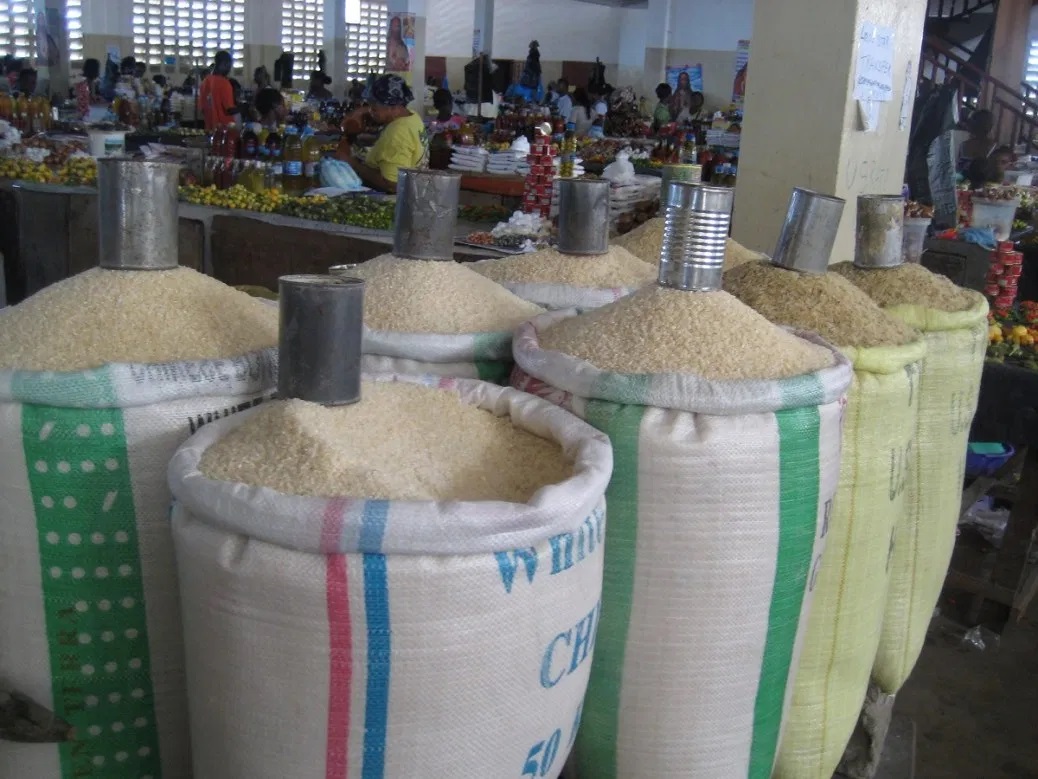
It seems that the Nigerian government has memory and is addressing the food challenges in the nation: “In a bid to address the growing discontent among Nigerians…, the Federal Government of Nigeria has announced the distribution of an additional 10 trucks of 50kg of rice to each state. This rice will be sold at designated centers for N40,000 per bag, significantly lower than the current market price, which can reach up to N90,000 per bag. The initiative, aimed at providing relief to struggling households, comes amid a backdrop of surging food inflation and economic instability.”

This is good policy and let us keep it going. Sure, we need to find sustainable solutions to these issues but homes and families need immediate help. So, open the vault and flood Nigeria with cheap food. The best policy now is subsidized food because if you remove electricity subsidy and forex subsidy, something must be subsidized in Nigeria. If food be it, please play on.

Mohammed Idris, the Minister of Information and National Orientation, made the announcement following the Federal Executive Council (FEC) meeting on Monday. He emphasized that the government is taking proactive measures to address the concerns raised by citizens, including those planning to participate in the upcoming #EndBadGovernance protests.

These protests are expected to express widespread dissatisfaction with President Bola Tinubu’s recent economic policies, which have significantly impacted the cost of living.

The sharp rise in food prices, including staples like rice, is attributed to a 41% food inflation rate, orchestrated by recent economic reforms, mainly – the removal of fuel subsidies and the floating of the naira, implemented last year by the Tinubu administration.