DD
MM
YYYY

PAGES

DD
MM
YYYY

spot_img

PAGES

Home Blog Page 3062

Costs Associated with Hedging Currency Risk

0

Currency hedging is a strategy used by businesses to protect themselves from the risks associated with fluctuating exchange rates. While it can safeguard profits and stabilize cash flow, hedging comes with costs that need careful consideration. Understanding these costs is essential for making informed decisions about whether and how to hedge. Currency hedging is an important concept of investing. To learn more, visit https://bitcoin-profit.com and get important insights into it.

Transaction Costs

Transaction costs are one of the most straightforward expenses in currency hedging. These costs arise from executing hedging instruments such as forward contracts, options, and swaps. When a business enters into a forward contract, for example, the bank or broker facilitating the transaction charges a fee. This fee can vary based on the size of the transaction and the market conditions at the time.

In addition to the direct fees, there are also hidden transaction costs. These include the bid-ask spread, which is the difference between the buying and selling price of the currency. The wider the spread, the higher the implicit cost of the transaction. For small businesses, these costs can add up, making it important to shop around for competitive rates and consider the overall impact on profitability.

Premiums for Options

Options contracts provide flexibility in hedging but come at a cost: the premium. The premium is the price paid to purchase the option, granting the right, but not the obligation, to exchange currency at a predetermined rate. This premium is influenced by factors such as the volatility of the currency, the duration of the option, and the current exchange rate relative to the strike price.

For instance, a business buying a call option to protect against a rising currency will pay a premium upfront. If the currency does not move as expected, the option may expire worthless, meaning the premium paid becomes a sunk cost. However, the potential benefit of options lies in their flexibility, which can be invaluable in volatile markets. Weighing the premium against the potential risk reduction is key to determining if options are the right hedging tool.

Opportunity Costs

Opportunity costs represent the potential gains a business forgoes by choosing to hedge. When a company locks in an exchange rate through a forward contract or option, it misses out on favorable movements in the currency market. For example, if a business hedges against a weakening foreign currency and the currency strengthens instead, the company loses the opportunity to benefit from the better rate.

This cost can be challenging to quantify, as it involves predicting future market movements. However, businesses must consider the potential trade-offs between the certainty provided by hedging and the missed opportunities for gain. Balancing risk reduction with potential rewards is a critical aspect of any hedging strategy.

Administrative and Management Costs

Implementing a currency hedging strategy involves administrative and management costs. These include the time and resources spent on developing, executing, and monitoring the hedging plan. Businesses may need to hire financial experts or consultants to design and implement effective hedging strategies. Additionally, ongoing monitoring and adjustments to the hedging positions require time and expertise.

Small businesses, in particular, may find these costs burdensome, as they might lack the in-house expertise to manage complex hedging strategies. Investing in proper training for staff or outsourcing hedging management to specialists can mitigate some of these costs. Nonetheless, the administrative burden should not be underestimated, as effective hedging requires continuous oversight and adaptation to changing market conditions.

Balancing Costs and Benefits

Currency hedging offers valuable protection against exchange rate volatility, but it comes with a range of costs. Transaction fees, option premiums, opportunity costs, and administrative expenses all contribute to the overall cost of hedging. For businesses, especially small ones, it is crucial to assess these costs against the potential benefits of risk reduction.

A well-thought-out hedging strategy should strike a balance between minimizing risks and managing costs. Consulting with financial experts can provide valuable insights into the most cost-effective hedging instruments and strategies for your specific situation. By carefully considering the costs and benefits, businesses can make informed decisions that protect their financial stability and support long-term growth.

Conclusion

Remember, the key to successful currency hedging lies in understanding both the financial landscape and the specific needs of your business. With the right approach, you can navigate the complexities of currency risk and safeguard your company’s future. Always seek professional advice to tailor a strategy that fits your unique circumstances and goals.


Ethical Considerations for Institutional Investors Explained

0

Institutional investors, such as pension funds, mutual funds, insurance companies, and hedge funds, wield significant power in the financial world. With great power comes great responsibility. Their investment choice s can impact not just markets, but also economies, societies, and the environment. This influence brings various ethical considerations that these investors must navigate. Investors, remember, education is the only key to excellence! So, register at Bitcore Surge to connect with educational firms and learn more.

The Pressure of Social Responsibility

Institutional investors are increasingly expected to invest responsibly. This means considering the social and environmental impact of their investments, not just the financial returns. For instance, investing in companies that engage in harmful practices, like polluting the environment or violating human rights, can lead to public backlash and long-term financial risks.

Socially responsible investing (SRI) and environmental, social, and governance (ESG) criteria are now key considerations. Investors must balance their duty to maximize returns with the need to support sustainable and ethical business practices. This shift is driven by growing awareness and demand from stakeholders who want their money to do good in the world.

The Challenge of Transparency

Transparency is another critical ethical issue. Institutional investors manage vast amounts of other people’s money, which calls for a high degree of accountability. They need to be transparent about where and how they are investing funds. This includes disclosing their investment strategies, the risks involved, and the potential impacts of their investments.

However, achieving full transparency can be tricky. Too much disclosure might reveal proprietary strategies, giving competitors an edge. On the other hand, too little transparency can erode trust and lead to accusations of mismanagement or unethical behavior. Striking the right balance is crucial for maintaining credibility and trust with stakeholders.

Conflicts of Interest

Conflicts of interest are a common ethical dilemma for institutional investors. These arise when the interests of the investors themselves, the fund managers, or other stakeholders are at odds. For example, a fund manager might be tempted to make investment decisions that benefit themselves, such as investing in companies where they have personal connections or financial interests.

To address this, many institutions have strict policies and regulations to identify and mitigate conflicts of interest. These include requiring disclosures of potential conflicts, setting up independent committees to oversee decisions, and ensuring that investment choices are made in the best interests of the beneficiaries.

The Impact on Corporate Governance

Institutional investors hold significant shares in many companies, giving them substantial influence over corporate governance. This power can be used to push for positive changes, such as improving board diversity, enhancing executive accountability, and promoting ethical business practices.

However, with this influence comes the responsibility to use it wisely. Investors must engage with companies constructively, pushing for changes that benefit not just shareholders, but all stakeholders, including employees, customers, and communities. This means taking a long-term view and avoiding short-term profit-driven decisions that could harm the company and its stakeholders in the future.

Navigating Ethical Investing

Ethical investing requires balancing competing interests and making tough choices. For example, a company might be financially successful but have questionable labor practices. Deciding whether to invest in such a company involves weighing the potential returns against the ethical implications.

One approach is to use negative screening, which involves excluding companies that do not meet certain ethical criteria, such as those involved in tobacco, weapons, or fossil fuels. Another approach is positive screening, where investors actively seek out companies that demonstrate strong ESG practices.

Engaging in shareholder activism is another way to influence corporate behavior. This involves using the power of ownership to advocate for changes, such as improved environmental practices or better labor conditions. While this approach can be effective, it also requires a commitment of time and resources.

Institutional investors must navigate a complex landscape of ethical considerations. From social responsibility and transparency to conflicts of interest and corporate governance, the choices they make can have far-reaching consequences. As stewards of vast amounts of capital, they have a duty to act not just in their own interests, but in the interests of society and the planet.

Conclusion

For individual investors, understanding these ethical considerations can provide valuable insights into the world of institutional investing. It highlights the importance of doing your own research and consulting with financial experts to ensure that your investments align with your values and goals. By staying informed and engaged, you can make better investment decisions and contribute to a more ethical and sustainable financial system.

Dogecoin (DOGE) and Shiba Inu (SHIB) Traders Worry over Death Cross Pattern as RCOF Moves Higher

0

Recently, Dogecoin (DOGE) and Shiba Inu (SHIB) encountered a death cross, a technical pattern indicating prospective price declines. As a result, investors question whether this poses a short-term or long-term threat to both meme coins. Meanwhile, RCO Finance (RCOF) remains unaffected by this ordeal, presenting itself as a lucrative investment.

Let’s find out more about this unscathed token.

Inkling Of Death Cross For DOGE And SHIB Investors

The emergence of a death cross implies the bears may control the market for a short timeframe. This is the case with Dogecoin and Shiba Inu. The death cross pattern appears when the 50-day moving average exceeds the 200-day moving average.

Meanwhile, DOGE’s four-hour chart reveals a golden cross, a bullish pattern suggesting short-term profit-making. Investors risk losing money whenever the death cross pattern materializes on the chart because traders tend to panic sell in its aftermath, inciting steep price dips.

Lately, Dogecoin (DOGE) has been trending lower due to bearish influence and may continue to do so in the coming days. A probable factor behind its continuous drop is the falling price of Bitcoin and other cryptocurrencies. As SHIB and DOGE tank further, RCOF emerges as a preferred option for investors.

RCO Finance: A Safe Haven From DOGE And SHIB’s Downturn

RCOF has proven to be a haven to DOGE and SHIB investors amid the downturn plaguing both assets. RCOF is the native token of a recently developed crypto-AI project on Ethereum named RCO Finance. RCO Finance is a decentralized trading platform that empowers users to invest in various financial instruments.

DOGE and SHIB investors prefer RCO Finance because of its fundamentals, utility, value proposition, and, more importantly, its AI capabilities. Its broad-gauge DeFi ecosystem empowers users to invest, stake, farm, and borrow assets. Users can invest in over 120,000 digital assets without paying huge fees.

For staking its native token RCOF, users earn a high staking APY and receive staking rewards and quarterly dividends that will be paid directly to their wallets. Holding RCOF entitles users to farming airdrops whenever they are available and promoted. Borrowing and lending assets on the platform attract low interest rates, making RCO Finance one of the most economical platforms in the DeFi sector.

Its AI tool, a robo-advisor, helps investors navigate the platform’s flurry of digital asset offerings and leads them to lucrative investment opportunities. As a personal financial consultant, it offers personalized investment strategies that position investors ahead of the curve.

The robo-advisor, using its machine-learning algorithm, can analyze an asset by studying past trends, price actions, and prevailing sentiment to determine its future behavior.

Whether it’s crypto, stock, shares, or real-world assets, the robo-advisor can accurately predict their future price actions, enabling investors to make informed investment decisions. RCO Finance also allows investors to invest in spot Bitcoin and Ethereum ETFs.

RCO Finance is a secure platform that has undergone thorough audits by the blockchain security firm SolidProof. Moreover, it is bound to the European Union Market in Crypto-Asset (MiCA) regulatory documentation provisions. Therefore, users need not worry about the safety of their funds and assets.

RCOF Price Surges As Presale Progresses

With over $19,400 raised in Stage 2 of its presale, RCOF continues to forge ahead steadily. After a successful run in Stage 1, investors are now sitting on a 169% profit. This gain will be extended by the end of the current stage, with experts hinting at an increase of 337%.

RCOF is available at $0.0343, opening investors to an opportunity to realize over 30X their initial investment when the token launches at the proposed price of $0.6. Compared to DOGE and SHIB, a potential 3,000% ROI in RCOF makes it a better option.

So, what are you waiting for? Join the RCOF token presale now!

For more information about the RCO Finance Presale:

Visit RCO Finance Presale

Join The RCO Finance Community

Can Currency Hedging Completely Eliminate Foreign Exchange Risk?

0

Currency hedging is a strategy used by businesses to protect themselves from the risks associated with fluctuating exchange rates. It involves using financial instruments like forward contracts, options, and swaps to stabilize cash flows and secure profit margins. While currency hedging can significantly reduce foreign exchange risk, it’s important to understand that it cannot completely eliminate it. Let’s dive into the reasons why this is the case and how businesses can effectively manage these risks. Go trader-ai.org to access expert insights tailored for traders seeking to navigate the complexities of foreign exchange markets. Enhance your trading approach with guidance from top professionals. 

The Limits of Hedging

Currency hedging aims to minimize the impact of currency fluctuations on a business’s financial performance. However, several factors prevent it from providing absolute protection. Firstly, hedging instruments themselves carry costs. These include transaction fees, premiums for options, and potential opportunity costs from locking in exchange rates. These costs can add up and affect a company’s bottom line, making complete risk elimination financially impractical.

Additionally, hedging strategies often rely on forecasts and assumptions about future currency movements. While businesses can use historical data and market analysis to make informed predictions, the foreign exchange market is inherently unpredictable. Unforeseen events, such as political upheaval or natural disasters, can cause sudden and dramatic shifts in exchange rates. This uncertainty means that no hedging strategy can offer foolproof protection against all possible scenarios.

Another limitation is the time horizon of hedging instruments. Forward contracts and options are typically set for specific periods. If a business’s exposure to currency risk extends beyond these periods, it may need to enter new contracts, potentially at less favorable rates. This ongoing need to manage and renew hedging positions adds complexity and cost to the process, further illustrating why complete elimination of risk is challenging.

Managing Residual Risk

While complete elimination of foreign exchange risk is unattainable, businesses can effectively manage residual risk through a combination of strategies. One approach is to diversify currency exposure. By spreading business activities across multiple currencies, companies can balance out losses in one currency with gains in another. This natural hedging can help stabilize overall financial performance.

Another strategy is to use a layered approach to hedging. Instead of relying on a single hedging instrument, businesses can combine different tools to cover various aspects of their currency risk. For instance, a company might use forward contracts for predictable cash flows while employing options to protect against unexpected currency swings. This multi-faceted approach provides a more robust defense against currency volatility.

In addition to financial instruments, businesses can adjust their operational strategies to mitigate currency risk. For example, sourcing materials from suppliers in the same currency as the revenue can reduce the impact of exchange rate changes. Similarly, negotiating contracts in a stable currency or including clauses that adjust prices based on exchange rate fluctuations can offer further protection.

The Role of Financial Experts

Navigating the complexities of currency hedging requires expertise. These professionals can help businesses develop tailored hedging strategies that align with their specific needs and risk tolerance. They can also monitor market conditions and adjust hedging positions as necessary to maintain effective protection.

Financial experts can also assist with implementing technology solutions that streamline the hedging process. Automated platforms can track exchange rates, execute trades, and provide real-time analytics, making it easier for businesses to manage their currency risk. By leveraging technology, companies can reduce the administrative burden of hedging and improve the efficiency of their risk management efforts.

Striking a Balance 

While currency hedging cannot completely eliminate foreign exchange risk, it can significantly reduce it and provide businesses with greater financial stability. Understanding the limitations and costs associated with hedging is crucial for making informed decisions. By employing a combination of hedging instruments, diversifying currency exposure, and seeking expert advice, businesses can effectively manage residual risk and protect their financial health.

Conclusion

In the end, the goal of currency hedging is not to achieve absolute protection but to create a more predictable and stable financial environment. By carefully balancing the benefits and costs of hedging, businesses can navigate the uncertainties of the foreign exchange market and position themselves for long-term success. Always remember to research thoroughly and consult with financial experts to develop a hedging strategy that best fits your business needs and objectives.

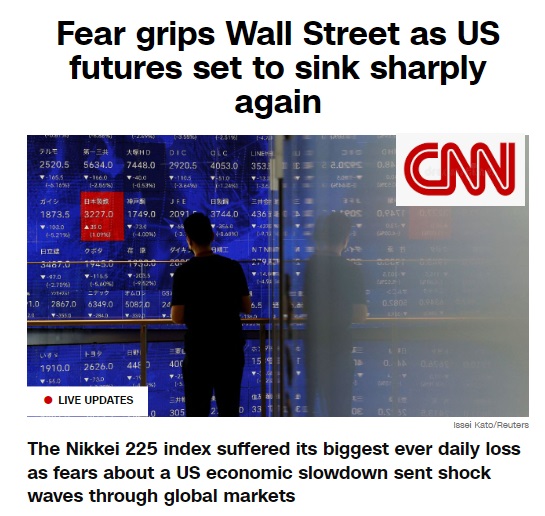
The Global Stock Market Seems To Be Crashing

0

Too bad, that is the way the market system works. It has been really long since I bought any stock. But with what I am seeing now, it does seem like the buying opportunities will return again. I see three types of investors:

Income chasers: Look for dividends.

Value pickers: Look for undervalued assets that could increase in value.

Growth makers: Look for big returns, or are willing to take risks.

As an early stage startup investor, I am in the Growth markers category. But whenever stock markets crash, you will always find me in the Value pickers club.

I like to go and pick some properties which are in equivalence with their national treasuries. In other words, for them to fail, the host nation will be gone. So, we are watching because it does seem like that time is just close.

And please if you have a company which has a promise to thrive during recession or a time of market paralysis, we are interested in exploring investments via Tekedia Capital. Remember that Uber, Airbnb, and some of the most amazing startups today, began during a season of market crash! We can help you in funding the next generation of such companies.

[I do not provide recommendations on stocks, so do not ask]