DD
MM
YYYY

PAGES

DD
MM
YYYY

spot_img

PAGES

Home Blog Page 3075

BlockDAG X1 Miner App Launches on Apple Store, Presale Climbs to $60M: Updates on Ethereum ETF & Dogecoin

0

In the constantly shifting world of cryptocurrencies, recent updates underscore notable changes in market dynamics. As anticipation mounts for the Ethereum ETF, potentially stabilizing Ethereum’s price, Dogecoin’s developments reflect wider market fluctuations triggered by Bitcoin’s recent downturns.

Amidst these variations, BlockDAG captures attention with its groundbreaking X1 Miner App, which simplifies crypto mining and opens up decentralized application development to a wider audience. This latest innovation was highlighted in a presale that soared past $60M, establishing BlockDAG as a top crypto investment.

Ethereum’s Market Position as Ethereum ETF Nears Launch

Over the weekend, Ethereum aimed to breach the $3,000 mark but met resistance, resulting in restrained trading within a confined range. Despite this, traders remained hopeful, seizing opportunities during price dips, influenced by speculation over the forthcoming Ethereum ETFs. Bloomberg analysts anticipate these ETFs might receive approval by mid-July, subject to the final regulatory clarifications.

This news arrives amidst market instability, sparked by factors like the US Non-Farm Payrolls report. Despite attempts to recover from recent declines, Ethereum still faces selling pressure. Holding key psychological support levels is essential in these uncertain times, and breaking through resistance could suggest a bullish shift fueled by the expected launch of the Ethereum ETF.

Dogecoin’s Current Landscape Amid Market Downturn

Recently, Billy Markus, Dogecoin’s co-creator, spoke about the ongoing downturn in the crypto market, specifically highlighting Bitcoin’s notable decline last week. After a steep fall, Bitcoin somewhat rebounded, currently trading at approximately $55,860.

Markus, noted for his satirical approach to crypto commentary, shared an evocative image of a sinking yacht with the caption “How’s your crypto going?” paired with the lighthearted title “No Worries.” Similarly, Dogecoin followed Bitcoin’s path with a significant drop followed by a slight recovery, reflecting the overall market mood amidst ongoing instability.

BlockDAG’s X1 Miner App & Simplified Smart Contract Development

BlockDAG has transformed crypto mining accessibility with its latest release, the X1 Miner App, now available on the Apple Store. This app turns standard smartphones into efficient mining devices, allowing users to gather up to 20 BDAG coins daily. Activating the mining process is incredibly straightforward, requiring just a click on the “Activate BlockDAG X1” button, enabling users to earn 0.83 BDAG coins per hour with minimal battery consumption.

The X1 Miner App includes numerous innovative features that enhance user engagement and functionality. It facilitates a smooth start with OTP verification and direct presale access to BDAG tokens, positioning it as a premier crypto investment. Users can customize their experience with an extensive settings panel, adjust their profiles, and securely manage their account details, underscoring BlockDAG’s commitment to user privacy.

Additionally, the app’s referral system significantly boosts potential earnings as users encourage more participants to join, promoting a community-centered mining endeavor. A real-time leaderboard adds a competitive element among users.

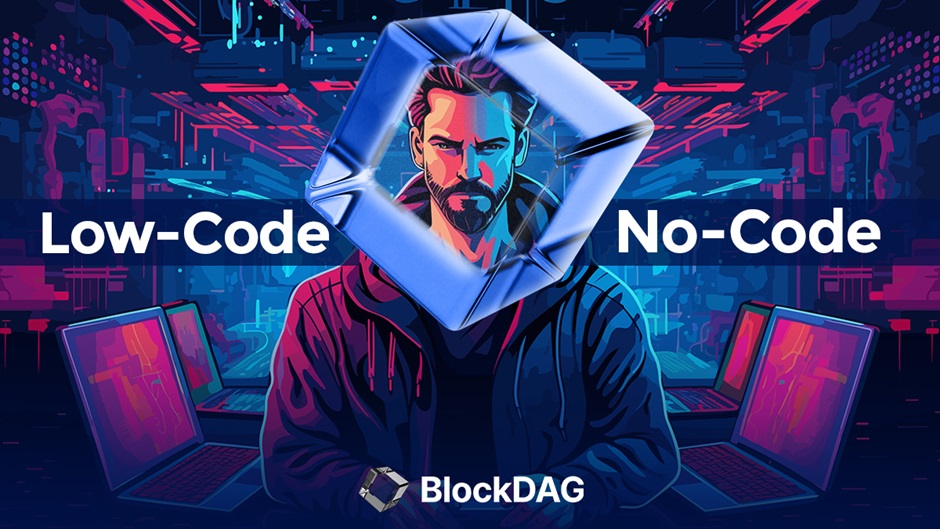
BlockDAG also introduced a low-code/no-code platform, greatly easing the creation of decentralized applications (DApps). This innovative tool enables individuals without technical expertise to easily design, develop, and deploy DApps through a straightforward drag-and-drop interface.

These user-friendly mining tools and DApp development options represent significant advancements in democratizing sophisticated crypto technologies and smart contract functionalities, making them accessible to a broad audience.
Final Say

Amidst ongoing discussions about the Ethereum ETF and Dogecoin’s fluctuating fortunes, BlockDAG’s X1 Miner App and its no-code smart contracts platform provide practical and inventive ways to engage with cryptocurrencies. These features not only simplify mining operations but also equip users with the tools needed for straightforward DApp creation, positioning BlockDAG as a standout choice among leading cryptocurrencies. As the industry progresses, BlockDAG’s accessible and innovative offerings make a strong case for its potential and ongoing growth within the crypto world.


Join BlockDAG Presale Now:

Website: https://blockdag.network

Presale: https://purchase.blockdag.network

Telegram: https://t.me/blockDAGnetworkOfficial

Discord: https://discord.gg/Q7BxghMVyu

Suni Lee, Shilese Jones and the Making of the Most Competitive U.S. Olympic Gymnastics Team Ever

0

Suni Lee, who gained fame after representing the United States at the Olympics, has always been a gymnast, although she was born in St. Paul, Minnesota. Despite all the obstacles that Lee encountered as the daughter of Laotian immigrants, she never allowed them to get in the way of her goals. Shilese Jones, also from Seattle, Washington, has a similar experience of the struggle. The two athletes have been through a lot of injuries, but their spirits have not broken. Her outstanding performance at the Tokyo 2020 Olympics, where she won the all-around gold, put her in the limelight.

On the other hand, Jones’ constant participation in national events has assured her a spot in the Paris 2024 edition (by the way, if you, like us, are sure that the girls will show themselves brilliantly this year, quickly complete the MelBet registration and bet on them with the best bookmaker).

Training Regimes: Secrets Behind Their Success

Have you ever thought about how gymnasts during the Olympics are able to be so precise? Some of the unique components of Suni Lee’s training regimen are strength training, flexibility training, and apparatus workouts. Her coaches also stress accuracy and regularity, and there is no hitch in any of the movements she makes. Shilese Jones, whose routines are very intense, uses the same program but places even more emphasis on explosive power and speed. Most of them’s daily routine is rather intensive, as they work from early morning till late at night. Here are some key components of their training: Here are some key components of their training:

  • Strength and conditioning drills
  • Flexibility and balance exercises
  • Mental conditioning and visualisation
  • Specialised apparatus training

These elements are carefully crafted in such a way that the athletes have to exert their bodies to the maximum but keep their brains sharp. Coaches go through the routine of trying to minimize on the weaknesses while at the same time developing on the strengths to make sure Lee and Jones are always ready for competition. This is the reason why they are able to stand out on the international level – they are constantly striving for improvement.

Friendship and Rivalry: The Dynamic Duo

However, Suni Lee and Shilese Jones are fierce competitors and, at the same time, very good friends. During the 2022 U. S. Championships, there was a touching moment when Lee supported her fellow gymnast Jones, during the floor exercise. They are good friends, but this does not reduce the competition between them. It is always a fight because both athletes are determined to achieve the best, knowing that one performance can make the difference in making the team or not. Their bearing, for instance, is quite different; Lee’s style is elegant while Jones’s is muscular, which makes their confrontation even more appealing. This combination of friendship and rivalry is the main source of inspiration for them to strive for the best.

Looking Ahead: The Future of U. S Gymnastics

Paris 2024 Olympics are on the horizon and Suni Lee and Shilese Jones can breath new life into the U. S. gymnastics. The victory in Tokyo was one of the most groundbreaking performances of Lee and Jones’ national performances indicate a new beginning. Not only do they win the medals; they encourage the young talents to achieve what they wish.

Coaches and experts are confident that their techniques will establish a new generation of benchmarks in the game. Due to Lee’s artistic style and Jones’ strong moves, they are expected to turn up the heat on the Olympics like no other before. What new will these two beautiful stars show us? We’ll find out this summer. While the Olympics are just at the start – quickly check your Melbet login, replenish your deposit (don’t forget to check the list of bonuses!) – and bet on new victories of the talented duo.

Tekedia Capital Welcomes Fintellia, Maker of Udara360 Core Banking Application

0

As a young man, I began my professional career supporting HP 9000 server series running on Unix. I would leave my house in Ikeja at 4.30am to be at work in VI at 5.30am so that the system would have enough time to come up. To do that job, you needed a decent knowledge of the Unix operating system.

Once the server was up and running, you needed to issue Oracle commands to bring banking services up so that branches could serve customers. Then, if the network has an issue, you must know certain Cisco commands to troubleshoot before the hardware team could help. It was an amazing job; truly a great experience.

The Unix, the Oracle, the amalgam of systems were built to power one software – Flexcube, a core banking solution. So, when I met these wickedly brilliant founders building a core banking application in Nigeria, I became a friend. They have more than a dozen microfinance banks in them, and they’re growing rapidly. Fintellia’s Udara360 is the African Flexcube and Tekedia Capital is excited to be supporting them.

If you have a microfinance bank or fintech anywhere in Africa, and need an efficient and scalable core banking application, you have it. The fees are small and we have the support of Amazon to even reduce your costs.

As that happens, help me welcome Fintellia Technologies Limited to Tekedia Capital. Udara360 (yes, udara, the Igbo name for African apple. What a name!). Taste the apple of core banking software with Udara360 and grow your banking operations! Connect with CEO Samuel Ukpong

Nigeria’s Debt Crisis: Debt Servicing Gulps 74% of Revenue in Q1 2024

0

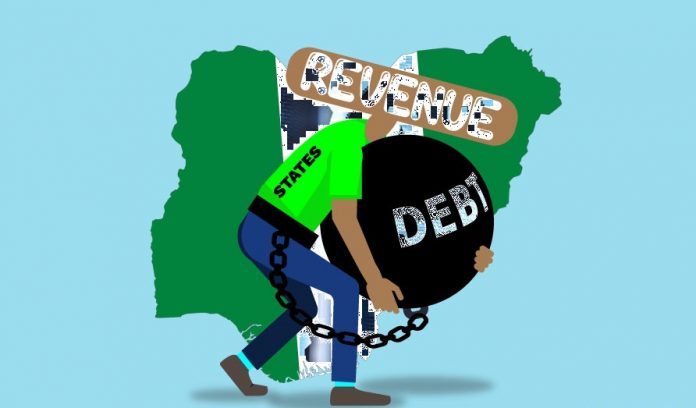
In a revealing disclosure from the Central Bank of Nigeria (CBN), the nation’s escalating public debt has been shown to have gulped a significant portion of the revenue generated in the first quarter of the year. The latest quarterly statistical bulletin of the apex bank paints a stark picture of the growing fiscal crisis, with debt service costs consuming a staggering 74% of the federal government’s retained revenue.

In the first quarter of 2024, the federal government recorded a retained revenue of N1.76 trillion. However, a significant portion of this revenue, N1.31 trillion, was directed towards servicing existing debts. This allocation of funds to debt servicing, although comprising 74% of the government’s revenue, accounted for only about 29% of total expenditures for the period.

While the retained revenue saw a 33.8% increase from N1.32 trillion in the same period in 2023, government expenditures simultaneously decreased by 12.9%, from N5.28 trillion to N4.59 trillion. This reduction in spending, alongside a 29% decrease in fiscal deficit—from N3.96 trillion to N2.83 trillion—reflects the government’s attempts to tighten its fiscal belt in response to mounting debt pressures.

The Real Cost: Impact on Development and Public Services

Despite these measures, the high percentage of revenue dedicated to debt servicing remains a critical concern. The reduced fiscal space means less funding is available for essential development projects and public services.

The federal government’s spending priorities further shed light on this issue. In Q1 2024, personnel costs amounted to N1.15 trillion, a 17.1% increase from the previous year. In stark contrast, capital expenditure plummeted by 35.9% to N1.15 trillion from N1.8 trillion in Q1 2023. This significant reduction in capital expenditure suggests a troubling trend of underinvestment in infrastructure and other long-term development projects essential for economic growth.

Capital expenditure is the backbone of sustainable development, driving economic growth and improving public welfare. The reduction in this area signals a potential slowdown in Nigeria’s developmental progress, posing risks to the overall health of the economy.

Debt Service Overruns and Fiscal Sustainability

Nigeria spent N7.8 trillion to service its debt obligations in 2023—a 121% increase compared to N3.52 trillion in 2022. This surge in debt servicing costs is not just a reflection of increased borrowing but also the rising cost of debt, driven by external factors such as fluctuating exchange rates and global economic conditions.

In the first quarter of 2024 alone, Nigeria spent about $1.12 billion on foreign debt service payments, highlighting the growing burden of external debt on the nation’s finances. This figure marks a significant increase from $801.36 million in Q1 2023. Between January and March 2024, Nigeria allocated approximately 70% of its dollar payments to servicing external debts, a substantial rise from 49% in Q1 2023.

Experts Concerns Highlight the Need for Economic Reforms

The international community has not overlooked these developments. The World Bank has expressed profound concern over the escalating debt service costs burdening developing countries.

Indermit Gill, the World Bank’s Chief Economist, and Senior Vice President, noted the potential for a widespread financial crisis if immediate and coordinated actions are not taken. Gill warned that the combination of record-level debt and soaring interest rates could set many developing nations, including Nigeria, on a precarious path toward economic distress and difficult resource allocation decisions.

Analysts have also noted that the high debt service to revenue ratio reflects ongoing fiscal challenges and highlights the urgent need for strategic economic reforms in Nigeria.

Enhancing revenue generation and reducing dependency on borrowed funds have been advocated as crucial steps toward achieving fiscal sustainability. Also, the government has been advised to balance immediate fiscal needs with sustainable economic planning to ensure that debt servicing does not continue to overshadow development goals.

The latest figures from the Debt Management Office (DMO) reveal a significant increase in Nigeria’s total public debt, which stood at N121.67 trillion (approximately $91.46 billion) as of March 31, 2024. This represents a substantial increase from N97.34 trillion (approximately $108.23 billion) at the end of 2023, driven primarily by naira devaluation.

While economists have not condemned borrowing, they note that the challenge lies in managing this debt effectively to foster long-term economic stability and growth. This is against the backdrop of concerns that Nigeria is borrowing for consumption, and a significant portion of the funds borrowed get looted.

Alphabet Tops List of 100 Tech Companies Globally

0

In a study conducted by Coveragely, Alphabet, the parent company of Google, secured the top position in the 2024 global rankings of the top 100 tech companies.

The company’s leadership in various sectors, including search, advertising, cloud computing, and Artificial Intelligence, solidified its standing at the forefront of technological advancements. The study covered metrics such as net asset values, market capitalization, annual revenue, operating margins, and employees, noting their resilience despite global economic fluctuations.

Alphabet had a remarkable financial performance, with a net asset value of $293 billion the highest globally, and a market capitalization of $2.28 trillion. The tech giant had an annual revenue of $318 billion, coupled with an operating margin of 25.49%.

The company’s total assignments are valued at $407 billion, with liabilities of $115 billion. Additionally, its workforce of 180,900 employees each generates $1.8 million in revenue, ensuring operational efficiency and productivity.

According to recent Reuters report, Alphabet is on the verge of announcing a 14% rise in its quarterly revenue in 2024, revealing its fourth straight quarter of double-digit growth. The report is expected to provide deeper insights into the adoption of AI services and the escalating costs associated with the advanced technology.

While Alphabet continues to thrive, the overall rankings reflect a dynamic and competitive global tech environment. American multinational corporation and technology company, Microsoft which occupied the second position, holds the title of the world’s most valuable company with a market capitalization of $3.37 trillion.

The company generates $237 billion in annual revenue, and has an operating margin of 42.14%, with the ability to efficiently convert revenue into profit. Microsoft’s total assets are valued at $484 billion, with net assets of $253 billion and liabilities of $231 billion. Each of its 221,000 employees generates $1.1 million in revenue, highlighting its workforce’s productivity.

Samsung, a global leader in electronics and technology, recognized for its cutting-edge developments in smartphones, consumer electronics, and semiconductor technologies,  ranks third with a market capitalization of $386 billion and an annual revenue of $201 billion.

Despite having a lower operating margin of 11.51%, Samsung maintains good financial health with net assets valued at $276 billion and total assets. Of $350 billion. Its 270,000 employees each contribute $0.7 million in revenue annually, pointing to the company’s large-scale operations and workforce productivity.

Amazon continues to dominate with its e-commerce platform, with a market capitalization of $2 trillion and the highest global revenue of $591 billion annually. However, its profitability is challenged by a negative operating margin of -1.15%. Amazon holds the highest total assets globally at $531 billion, with net assets of $217 billion and liabilities of $314 billion. As the largest global employer with 1.525 million employees, Amazon significantly influences the job market, though its revenue per employee stands at $0.4 million, lower than some competitors.

Meta Platforms, the parent company of Facebook, ranks fifth with a market capitalization of $1.3 trillion and $143 billion in annual revenue. The company has an operating margin of 23.79%, its total assets are valued at $223 billion, with net assets of $150 billion and liabilities of $73.3 billion. Meta’s 69,300 employees each generate $2.1 million in revenue, positioning them among the most productive globally.

The top tech companies of 2024 reveal exceptional financial strength, innovation, and productivity, driving towards huge technological evolution. Strategic investments, efficient management of assets and liabilities, and the ability to generate revenue and profit tell us of continuous strength in ensuring the tech industry continues to scale.

See The List of The Top 100 tech companies:

  1. Alphabet (Google)
  2. Microsoft
  3. Samsung
  4. Amazon
  5. Meta Platforms
  6. Alibaba
  7. Apple
  8. TSMC
  9. Tencent
  10. Intel
  11. NVIDIA
  12. Broadcom
  13. Tesla
  14. Salesforce
  15. AMD
  16. Foxconn
  17. Sony
  18. SAP
  19. Cisco
  20. Micron Technology
  21. Jingdong Mall
  22. SK Hynix
  23. Baidu
  24. Analog Devices
  25. Pinduoduo
  26. Schneider Electric
  27. Panasonic
  28. SMIC
  29. Fiserv
  30. QUALCOMM
  31. IBM
  32. Netflix
  33. Xiaomi
  34. Canon
  35. Nokia
  36. Meituan
  37. Global Payments
  38. Hewlett Packard Enterprise
  39. PayPal
  40. Intuit
  41. Applied Materials
  42. ASML
  43. Keyence
  44. Block
  45. Texas Instruments
  46. LG Electronics
  47. Infineon
  48. Adobe
  49. NetEase
  50. Fidelity National Information Services
  51. Roper Technologies
  52. Nintendo
  53. Naver
  54. Murata Manufacturing
  55. Trip.com
  56. STMicroelectronics
  57. DiDi
  58. Marvell Technology Group
  59. Uber
  60. Renesas Electronics
  61. Mobileye
  62. NEC Corp
  63. TE Connectivity
  64. Equinix
  65. MediaTek
  66. Lufax
  67. AspenTech
  68. Oracle
  69. Tokyo Electron
  70. United Microelectronics
  71. GlobalFoundries
  72. Ericsson
  73. Kakao
  74. ServiceNow
  75. ASE Group
  76. NXP Semiconductors
  77. Lam Research
  78. Shopify
  79. Dassault Systèmes
  80. Twilio
  81. Arista Networks
  82. Airbnb
  83. Adevinta
  84. ASUS
  85. Workday
  86. Coinbase
  87. Delta Electronics
  88. ON Semiconductor
  89. Synopsys
  90. Zoom
  91. Coherent
  92. Electronic Arts
  93. Arm Holdings
  94. DoorDash
  95. CoStar Group
  96. Garmin
  97. Rakuten
  98. Sea (Garena)
  99. Kuaishou Technology
  100. Microchip Technology