DD
MM
YYYY

PAGES

DD
MM
YYYY

spot_img

PAGES

Home Blog Page 3086

Starbucks Integrates Bitcoin as Payment Method in El Salvador

0

El Salvador has been at the forefront of cryptocurrency adoption, and the integration of Bitcoin as legal tender has marked a significant milestone in the country’s economic history. This bold move has attracted global attention and has had various implications for businesses operating within the nation. One of the most notable developments is the acceptance of Bitcoin by Starbucks, a leading global coffeehouse chain.

Starbucks’ decision to accept Bitcoin in El Salvador is not just a reflection of the country’s legal requirements but also an indication of the company’s willingness to embrace innovative payment methods. The adoption of Bitcoin by such a prominent brand has the potential to influence other businesses to consider cryptocurrency as a viable payment option. This move by Starbucks aligns with El Salvador’s push to integrate cryptocurrency into its economy and demonstrates the practical application of digital currencies in everyday transactions.

By embracing Bitcoin, Starbucks positions itself as a forward-thinking and innovative brand, staying ahead of the curve in market trends and consumer payment preferences. Accepting Bitcoin opens up a new demographic of tech-savvy and crypto-enthusiastic customers, potentially increasing the company’s market share.

The use of Bitcoin can streamline the payment process, offering a quick and secure transaction method, which enhances the overall customer experience. Starbucks is exploring ways to tokenize its loyalty program, which could allow customers to earn and spend loyalty points (Stars) more flexibly across different brands and services. Cryptocurrency transactions may offer lower fees compared to traditional payment methods, reducing costs for both Starbucks and its customers.

The integration process has not been without its challenges. Skeptics have raised concerns about the readiness of large businesses to incorporate Bitcoin payment solutions. However, Starbucks’ successful implementation in El Salvador has proven that such integration is possible and can be achieved efficiently. The company has reportedly partnered with a small Guatemalan startup, IBEX Mercado, to facilitate Bitcoin transactions, showcasing the collaborative efforts between established corporations and emerging tech companies.

The move by Starbucks, along with other multinational corporations like McDonald’s, which also started accepting Bitcoin payments through a partnership with OpenNode, signals a potential shift in how businesses approach digital currencies.

The broader implications of Starbucks accepting Bitcoin go beyond El Salvador. It raises questions about whether multinational companies will extend these payment technologies to other countries, including the United States. While it remains to be seen how widespread the adoption of Bitcoin payments will become, El Salvador’s example serves as a test case for the rest of the world.

El Salvador’s Bitcoin experiment has been closely watched by corporations and countries alike, as it provides a real-world example of cryptocurrency integration on a national scale. Despite some skepticism and technical challenges, the adoption of Bitcoin has proceeded, with reports indicating a mix of curiosity and cautious participation from the Salvadoran population.

The adoption of Bitcoin by Starbucks in El Salvador is a significant step in the normalization of cryptocurrency transactions. It represents a shift in how businesses view digital currencies, not just as investment vehicles but as legitimate forms of payment. As El Salvador continues to navigate the complexities of this new economic landscape, the world watches and learns from its pioneering efforts in embracing cryptocurrency.


The Google-Bing-Amazon Ad Battle and Amazon’s Double Play Strategy

1

If you are a merchant who sells shoes, and you have $10,000 to spend on advertising, which platform would you deploy that fund? If you have a website and you decide to go with Google, you will get traffic, including those not in the spirit of buying any shoes. But if you have conditioned to build on top of Amazon, and you also have some funds to advertise, there is a high likelihood that you will convert real shoppers since most people in Amazon are there to spend money.

This was how I captured this redesign in 2017 as this was being built: “I was on Amazon today working on gifting items when I noticed something: Amazon now runs a serious advertising business. And there are many companies putting money in that ecosystem. If companies think that advertising on Amazon is a better deal than promoting their websites on Google, it simply means that Google has a major problem in its hands. Facebook has walled off the partying and events communities, and if Amazon takes care of the merchandise, I do not know what will remain for Google.”

That Amazon business has grown significantly: in the first quarter of 2024, Amazon’s advertising revenue was $11.82 billion, which was a 24% increase from the previous year…In 2023, Amazon’s worldwide advertising revenue was $46.9 billion, which was a 24% increase from the previous year. Amazon has executed a double play strategy.

Sure, this is nothing to Google’s ad revenue of $237.86 billion (2023 figure). Yet, in the product category advertising, that is lost revenue for Google since without Amazon, most of those merchants would have spent the funds in Google.

Where am I going? There are many pockets of opportunities in this world. We just have to figure out ways to capture value. Facebook has walled its universe from the “open” web and is milking via adverts. Amazon has executed its own playbook also. And Google continues to rake the billions. In all these models, each found its own path, and that is the lesson. 

Of course, many will continue to see Microsoft Bing as a major competitor to Google on advertising, after Meta. For Google, though, Amazon is the one growing faster in this business category, well ahead of Bing which reported $12.2 billion in search and news advertising revenue for the 2023 fiscal year, at 5.26% increase from the previous year.  In other words, Amazon makes more money and is also growing faster. (We expect OpenAI partnership to help Microsoft Bing in the next coming quarters).


The Transformative Power of Data Science in Mass Communication

0

In today’s rapidly evolving digital landscape, the intersection of data science and communication has emerged as a powerful force reshaping industries, professions, and personal branding. During a recent mentorship session with Infoprations Limited, led by Chief Visionary Officer, Mutiu Iyanda, the transformative potential of data science on communication was explored in depth. This discussion, enriched by insights from Salahudeen Gbolahan, touched on the growing importance of machine learning, automation, and the critical role of data in modern communication practices. The session illuminated how data science is not just a tool for analysis but a driving force in shaping narratives, influencing decisions, and building brands.

Data Science: A Catalyst for Change in Communication

The convergence of data science and communication has given rise to a new breed of professionals who are equally adept at interpreting complex datasets and crafting compelling narratives. Salahudeen highlighted how this fusion has led to the democratization of communication, particularly through social media and digital content creation. The barriers to entry in the communication field have lowered, allowing a more diverse workforce to emerge. This trend is particularly evident in the rise of remote work, where data-driven strategies enable professionals to collaborate and communicate effectively across different geographies.

The ability to harness big data analytics is becoming increasingly vital across various sectors, from media and advertising to crisis communication. By leveraging data, professionals can create personalized content, tailor marketing strategies, and predict audience behaviour with unprecedented accuracy. Salahudeen emphasised that in Nigeria, the demand for professionals who can bridge the gap between data science and communication is growing, especially as industries increasingly rely on data-driven insights to remain competitive.

Data-Driven Strategies for Crisis Communication

One of the most compelling applications of data science in communication is in the realm of crisis management. Salahudeen proposed the use of data-driven strategies for crisis communication, employing tools like Python, R, SQL, and Tableau for data analysis and visualization. In times of crisis, the ability to gather real-time data and analyze public sentiment through social media platforms like Twitter is invaluable. This approach not only helps in crafting timely and effective responses but also in anticipating potential issues before they escalate.

Mutiu agreed with the importance of integrating data analysis with storytelling to ensure that the information is not only accurate but also resonates with the intended audience. In crisis communication, the challenge lies in balancing factual accuracy with the emotional and psychological needs of the audience. By combining data science with strong communication skills, professionals can navigate these complexities more effectively.

Integrating Data Science and Mass Communication

The potential to integrate data science with mass communication opens new career paths, particularly in industries like advertising, media, and entertainment. Salahudeen explored how professionals can use data to understand audience preferences, optimize content delivery, and measure the impact of communication campaigns. This integration requires a structured approach, considering economic contexts, market trends, and skill assessments. Mutiu provided feedback on Salahudeen’s analysis, emphasising the need for a more comprehensive labour market analysis to better align with industry demands.

This intersection also calls for continuous learning and adaptability. As the digital landscape evolves, so too must the skills and strategies of those working within it. The ability to interpret data, coupled with strong communication skills, will become increasingly valuable as organizations seek to connect with audiences in more meaningful ways.

Personal Branding in the Age of Data Science

A significant portion of the mentorship session focused on the importance of personal branding, particularly within the data science sector. Mutiu emphasized that in a competitive labour market, having a strong personal brand is crucial for standing out. This involves not only developing specialized skills and expertise but also showcasing them effectively through various platforms.

Publishing content, speaking at conferences, and maintaining an active presence on social media are all essential components of a strong personal brand. Mutiu highlighted the importance of problem-solving skills and innovation in data science, urging professionals to continuously seek out opportunities to demonstrate their capabilities. In a field that is rapidly evolving, the ability to adapt and learn new skills is as important as having a strong foundational knowledge.

Networking also plays a crucial role in personal branding. Mutiu advised against engaging in social media politics, instead suggesting that professionals focus on building and maintaining positive relationships within their industry. Consistency in messaging and brand presentation is key to establishing credibility and trust. As the digital world continues to change, staying current with trends and technologies is vital to remaining relevant and competitive.

The Role of Feedback and Continuous Improvement

An interesting aspect of the discussion was the concept of a “rethinking cycle,” which Salahudeen introduced based on his reading of a book by Adam Grant. This cycle involves regularly revisiting and updating one’s views and strategies to avoid stagnation. In the context of data science and communication, this means being open to feedback and continuously refining one’s approach.

Mutiu and Salahudeen agreed that seeking feedback from colleagues, mentors, and industry peers is essential for growth. This practice helps in identifying areas for improvement and keeping one’s skills and strategies aligned with industry demands. The willingness to adapt and evolve is particularly important in fields like data science, where new technologies and methodologies are constantly emerging.

The Future of Data-Driven Communication

As data science continues to permeate various aspects of communication, its impact will only grow. The ability to interpret and apply data effectively will be a key differentiator for professionals in the coming years. Whether in crisis communication, marketing, or personal branding, those who can harness the power of data will be better equipped to navigate the challenges and opportunities of the digital age.

For aspiring professionals, the mentorship session underscored the importance of building a strong foundation in both data science and communication. By developing these complementary skills, they can position themselves at the forefront of a transformative industry.

The transformative impact of data science on communication is undeniable. As industries continue to evolve, the ability to leverage data for effective communication will be a defining skill for professionals across the globe. Through continuous learning, adaptability, and a strong personal brand, individuals can thrive in this dynamic environment, contributing to the future of data-driven communication.

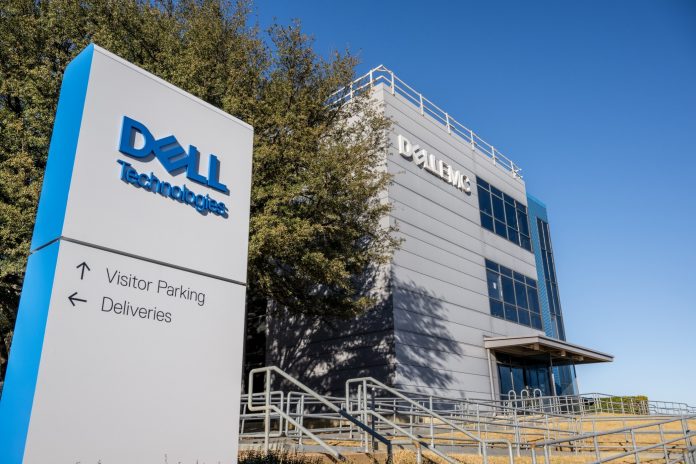
Dell Surpasses Expectations For Q2 2024 Result, With 80% Surge in Server Sales, Driven by AI Demand

0

Tech giant, Dell Technologies, has outperformed market expectations, reporting a significant surge in its server sales, which soared by 80%, largely driven by growing demand for AI-powered solutions.

The surge in server sales is attributed to the increasing adoption of AI by enterprises, which requires advanced computing infrastructure. Dell’s servers, equipped with high-performance processors and AI capabilities, are in high demand as companies invest in AI to enhance operations, data analytics, and automation. This shift has enabled Dell to capture a substantial share of the market, particularly as businesses increasingly rely on AI to gain a competitive edge.

The company posted revenue of $25.06 billion, exceeding the $24.53 billion, anticipated by analysts. Adjusted earnings per share (EPS) came in at $1.89, outpacing the expected $1.71. Net income soared by 85%, reaching $841 million, or $1.17 per share, compared to $455 million, or 63 cents per share, in the same period last year. Revenue also saw a robust 9% increase from the $22.93 billion reported a year ago.

Despite these strong results, Dell’s stock experienced a slight dip after the company adjusted its full-year revenue guidance to a range of $95.5 billion to $98.5 billion, slightly higher than its previous forecast of $93.5 billion to $97.5 billion. This revised guidance however reflects optimism as Dell continues to benefit from Al-driven growth, building on the $88.4 billion it achieved in the prior year.

The company has solidified its position as a leading provider of servers designed to handle artificial intelligence (Al) workloads, particularly those utilizing Nvidia chips, amid surging demand from cloud providers. Dell’s strategic focus on Al has been highlighted by Nvidia CEO Jensen Huang, who earlier this year pointed to Dell founder Michael Dell as the go-to contact for ordering systems featuring Nvidia’s latest chips.

Huang in May this year, had disclosed that Nvidia’s partnership with Dell will spread Artificial Intelligence to a wider range of customers, helping businesses and organizations create their factories.

In his words,

“We want to bring this generative Al capability to every company in the world. It’s not about just delivering a box, it’s about delivering an entire infrastructure. It’s an infrastructure that’s insanely complicated”.

Despite experiencing a 34% slump in its stock since the last earnings report, Dell shares are still up 48% for the year, reflecting strong investor confidence in the company’s Al-driven growth trajectory. The Al-related sales are housed within Dell’s Infrastructure Solutions Group (ISG), which produces servers and systems for data centers.

This segment has emerged as the fastest-growing unit within Dell, with ISG sales climbing 38% year-over-year to $11.65 billion, surpassing the StreetAccount consensus of $10.44 billion. A key highlight in Dell’s latest financial results was the performance of its Servers and Networking segment, a part of ISG.

This segment includes both Al-focused servers built around GPUs from Nvidia and AMD, as well as traditional servers for legacy applications. The growth in this area underscores Dell’s success in capitalizing on the expanding Al market and its potential for future growth.

“We are competing in all of the big Al deals and are winning significant deployments at scale,” Jeff operating chief Jeff Clark said on an earnings call with analysts.

Dell said $3.1 billion of that was Al server sales, up from $1.7 billion in the May quarter, Clarke attributed the increase in revenue to server demand that continues to rise and said that there was an increasing “backlog” of $3.8 billion in Al server orders that haven’t been fulfilled yet. There’s also a multibillion-dollar “pipeline” of Al server deals from enterprises and cloud providers that haven’t been finalized.

Dell’s strong quarterly performance not only underscores the company’s ability to navigate the evolving tech landscape but also highlights the broader industry trend where Al is driving significant growth opportunities for companies involved in computing and data center technologies.

Looking ahead to the current quarter, Dell projects a significant increase in revenue for the next quarter. This outlook underscores Dell’s confidence in maintaining its momentum as it capitalizes on the Al wave.

Graduation Lecture: “It’s time to build” By Ndubuisi Ekekwe

0

It’s Graduation Day for Tekedia Institute Mini-MBA Learners. Our Learners are #ready2lead as they’ve acquired the capabilities to advance the wealth of nations, the prosperity of firms, and the improvements in communities. Some independent and learners-led physical events are being held in cities; Lagos is next week at LilyGate Hotel, Lekki.

Good People, Tekedia Institute is Africa’s temple for the mastering of entrepreneurial capitalism, and the unalloyed pursuit of the mission of firms, to fix market frictions and accelerate human welfare, through world-class affordable business education.

In this graduation ceremony, Lead Faculty of Tekedia Institute, Ndubuisi Ekekwe, will deliver a graduation message titled “It’s time to build”. Yet, it is execution time, and we must translate those factors of production, anchored on People, Processes and Tools, to products and services, to solve market problems.

Graduation Lecture: It’s time to build

Date/Time:  Sat, Aug 31 | 7pm – 8.30pm WAT

Presenter: Ndubuisi Ekekwe

Zoom Link – class board

  • As the graduation ceremonies take place across cities, I congratulate everyone. Go into the market and lead. You’re #ready2lead. Again, to all the generous sponsors of our ceremonies, we THANK you. This is the #best school where the product is KNOWLEDGE.