DD
MM
YYYY

PAGES

DD
MM
YYYY

spot_img

PAGES

Home Blog Page 3093

Ethereum ETFs, Bitstamp-Mt. Gox Developments, and Proton Wallet Innovations

0

The world of cryptocurrency is constantly evolving, with new developments and updates that keep investors and enthusiasts on their toes.  We’ll delve into the latest happenings in the crypto space, including the surge in Ethereum ETFs inflows, the latest update on Bitstamp’s involvement with Mt. Gox creditors, and the innovative features of the Proton Wallet.

Ethereum ETFs Experience Remarkable Inflows

Ethereum-based Exchange-Traded Funds (ETFs) have made a significant splash in the investment world, with a remarkable performance upon their unveiling. The trading volume hit an impressive $1.08 billion, accompanied by net inflows amounting to $106.6 million. BlackRock’s iShares Ethereum Trust ETF (ETHA) led the pack with $266.5 million in inflows, signaling strong investor confidence in Ethereum’s potential. Despite some volatility, Ethereum and Bitcoin have shown resilience, recovered ground and suggesting a maturing market that is learning to navigate the ebbs and flows of ETF market dynamics.

In a move that brings closure to a long-standing saga, Bitstamp has announced the commencement of the process to return recovered digital assets to Mt. Gox creditors. This decision comes after a decade-long wait by those affected by the infamous 2014 hack. The restitution process is set to distribute over $9 billion worth of Bitcoin and Bitcoin Cash, marking a significant moment in cryptocurrency history. Bitstamp’s commitment to security and compliance underscores the importance of choosing exchanges that prioritize these aspects, especially in the volatile realm of cryptocurrency.

The Mt. Gox repayment process, which has been long-awaited by the exchange’s users, involves a mix of bitcoin and bitcoin cash distributions. This move comes after years of legal proceedings and recovery efforts, with the trustee overseeing the bankruptcy stating that payments to some creditors have already commenced. Further repayments are expected to be made promptly once certain conditions, such as account verification and subscription to designated digital asset exchanges, are met.

The return of these assets is not without its implications for the broader cryptocurrency market. The release of such a large amount of bitcoin has raised concerns over potential market impacts, as analysts speculate on the action’s creditors might take upon receiving their long-awaited funds. Some expect a significant number of recipients to sell their returned bitcoins, potentially leading to market fluctuations.

Mt. Gox’s saga serves as a cautionary tale and a reminder of the risks inherent in the digital asset space. It also highlights the resilience of the cryptocurrency community and the ongoing efforts to establish more secure and robust systems for digital asset exchange. As the market continues to mature, the lessons learned from the Mt. Gox incident will undoubtedly shape the future of cryptocurrency security and regulation.

Proton Wallet has emerged as a game-changer in the way Bitcoin is held and managed. As a self-custodial wallet, Proton Wallet ensures that only the user has access to their Bitcoin, aligning with the adage “Not your keys, not your coins”. The wallet’s design focuses on security, privacy, and ease of use, offering features like Bitcoin via Email, which simplifies transactions and reduces the risk of errors. Proton Wallet’s commitment to financial freedom and privacy is a testament to the evolving landscape of digital asset management.

The cryptocurrency sector continues to grow and adapt, presenting new opportunities and challenges. The influx of capital into Ethereum ETFs, the resolution of the Mt. Gox case, and the innovation of secure wallets

Litecoin Trailing As Raboo Continues On The Right Track, How Will Solana Meme Coins Respond?

0

As July comes to an end, investors continue to take bold investment steps. With reputable coins like Litecoin and Solana experiencing dramas around their price trends, investors are looking for new promising projects to fall back on. Raboo presents crypto enthusiasts with a lot of profitable opportunities. It is a new AI-themed project tipped to increase by 233% during its presale stage, making it the best memecoin to buy in 2024.

Litecoin comes up after facing market instability

Litecoin’s price trend is gaining attention from experienced traders and analysts. The author of the Bollinger bands recently tipped Litecoin to go on an upward trend. The coin is now trading at $71.05 per token, with a 1.3% decrease in price over the last 24 hours.

Experts predict Litecoin to increase by 11.3% over the next three months, making the coin a good investment plan for traders.

Solana shows bullish momentum as it leads market’s recovery

The general crypto market is showing signs of recovery, as big coins like Solana experience a 30% gain from the lows of the most recent sell-off. The coin is now trading at $183.6 per token, with a 5.7% increase in the past 7 days. Solana token is currently among the best-performing projects in the blockchain world.

Ali Martinez, a reputable trader and analyst tweeted that the Solana price is repeating a pattern from July 2021. He says there is no slowing down for the coin, so holders can expect new highs. Solana now has a market price of over $85 billion, with a  31%  increase over the last month.

Raboo’s price trend puts it on the right track for greatness

Raboo is tipped to be the next big memecoin in the crypto world. It creates a strong community of meme enthusiasts by combining Social-Fi and Artificial Intelligence features. Raboo holders can earn rewards and win prizes by participating in exciting activities.

The project is built from the finest blend of sophisticated technology, AI wizardry, and a meme-hunting prowess. Every competition Raboo holds gives holders a chance to earn, and earnings get converted to real-world value. Holders don’t have to wait until launch day to earn Raboo presale tokens.

Raboo started its journey with a goal to displace top memecoins like Shiba Inu and Dogecoin and become a top 20 crypto. With its recent price trends and market value, experts believe it is not far from reaching this goal.

It has gone from $0.003 per token in its first presale phase to $0.0048 in its fourth presale phase. With a total supply of 1.8 billion tokens and $2 million dollars raised since its presale started , Raboo is on course to be one of the best memecoins to buy in 2024. Its buy tax and sell tax are 0%, showing that token holders don’t have to worry about paying out a lot of fees, therefore maximizing their profits.

The project has now recorded more than 10,400 registered users and 3000 token holders. Litecoin and Solana holders looking to rally to its presale token can take advantage of weekly and monthly challenges to earn extra prizes, along with its 20% token flash sale!

Conclusion

The crypto world continues to be a space filled with numerous profitable opportunities. Solana and Litecoin are showing bullish signs, but holders are still seeking new and reliable opportunities. The Raboo presale token gives investors an opportunity to make significant profits and join a community of memecoin lovers.


You can participate in the Raboo presale here.


Telegram: https://t.me/RabootokenPortal

Twitter: https://twitter.com/Raboo_Officia

Kamala Harris’ Stance on Crypto is still Unclear

0

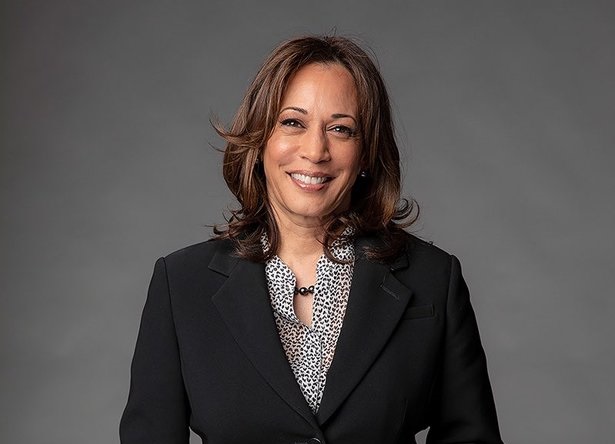
The world of cryptocurrency is abuzz with speculation and anticipation as political figures delineate their positions on this transformative technology. Vice President Kamala Harris’s stance on cryptocurrency has been a subject of intense scrutiny and debate. Despite the ambiguity surrounding her position, recent developments suggest a potential openness to the crypto industry, contrasting with President Biden’s more conservative approach.

Vice President Harris has reportedly been engaging with leading cryptocurrency firms, hinting at a possible shift in the Democratic Party’s strategy towards technology. This engagement could signal a recognition of the industry’s growing influence and a willingness to explore its potential benefits. However, her refusal to speak at the Bitcoin Conference 2024 has raised eyebrows and fueled further speculation about her true sentiments towards the sector.

Amidst this uncertainty, billionaire investor Mark Cuban has emerged as a vocal commentator, suggesting that Harris could adopt a more welcoming stance towards cryptocurrency and artificial intelligence. Cuban’s insights, based on inquiries from Harris’s camp, paint a picture of a potential administration that is more open to business and technological innovation.

The crypto community is keenly observing these developments, seeking clarity on Harris’s approach. The Vice President’s tech background, including her tenure as California’s Attorney General and her connections in Silicon Valley, could influence her perspective on digital currencies and blockchain technology. Her silence on the matter has not gone unnoticed, leaving many to wonder how she might shape the future of tech regulation, AI, and crypto if she ascends to the presidency.

key advantages that cryptocurrencies offer:

Inflation Protection: Cryptocurrencies can act as a hedge against inflation. Traditional currencies tend to lose value over time, but some cryptocurrencies have mechanisms to limit supply, potentially preserving their value.

Transactional Speed: Cryptocurrency transactions can be significantly faster than traditional banking transactions, often settling in minutes, which is particularly beneficial for international transfers.

Cost-Effective Transactions: With cryptocurrencies, transaction fees can be lower compared to traditional financial services, especially for international transfers.

Decentralization: Being decentralized, cryptocurrencies are not controlled by any single entity, which can reduce the risk of censorship and increase resilience against systemic failures.

Cryptocurrencies are known for their extreme price fluctuations. The value of digital currencies can soar or plummet in a very short time, which can lead to significant financial losses for investors. The regulatory environment for cryptocurrencies is still evolving. Changes in laws and regulations can have a profound impact on the value, legality, and stability of cryptocurrencies.

Despite the robust security measures of blockchain technology, cryptocurrency exchanges and wallets are vulnerable to hacking and other cybersecurity threats, which can result in the loss of funds. The cryptocurrency market is relatively young and can be affected by market manipulation and liquidity issues. This can lead to a lack of price stability and uncertainty for investors. The cryptocurrency space has been associated with various scams and fraudulent schemes, partly due to the lack of understanding and the anonymity feature that digital currencies offer.

As the political landscape evolves, the crypto industry remains vigilant, ready to adapt to the policies of future administrations. The stakes are high, and the implications are vast, not just for investors and entrepreneurs, but for the very fabric of the global economy. The question remains: will Vice President Harris embrace the crypto revolution, or will she maintain a cautious distance? Only time will tell, but the dialogue between politics and cryptocurrency continues to unfold, promising a fascinating chapter in the annals of tech and governance.

Nigeria’s Electricity Reform Could Destroy Our Industrial Producers

0

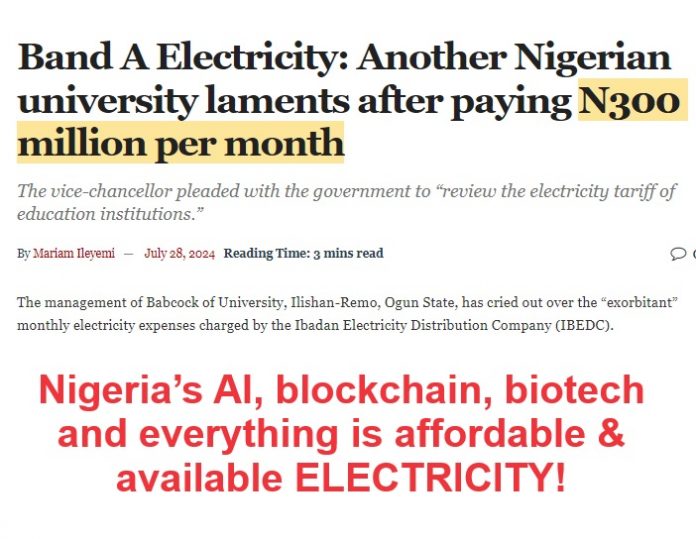
What is going on in Nigeria? Can you imagine a university paying N300 million (about $250,000) in a month? “The management of Babcock of University, Ilishan-Remo, Ogun State, has cried out over the “exorbitant” monthly electricity expenses charged by the Ibadan Electricity Distribution Company (IBEDC). The Vice-Chancellor/President of the university, Ademola Tayo, said the university paid N300 million in May after the increase in tariff of electricity consumers on Band A.” – Premium Times.

Prices of fuel are up; electricity is up. For companies, how do they produce and stay competitive? I challenge our leaders to rethink some of these policies before Nigeria economically folds from within. I cannot see how a small private university (graduated 2,842 students) can afford this type of bill.  If you extrapolate, it means ABU Zaria, UNN, UI and peers may need a state budget to pay electricity bills alone.

Respectfully, it is time to revisit some of these policies. It is indeed time because some are delivering negative results. My position remains that Nigeria must subsidize electricity for these A customers even as residential customers pay full rate. There is no economy where you do not have subsidies. Now that we are not subsidizing forex, maybe electricity should be considered.

I just want to caution the Honourable Minister, you cannot phase out electricity tariff; it would be a bad policy. What you can do is to phase out all for commercial customers, modulate for some residential customers especially in rural areas, but sustain subsidy for industrial customers to make them globally competitive as energy is a huge component of production.

For industrial customers, if a $100m subsidy helps to improve output by $15 billion, when you tax that output and activity associated with it, you can recover that $100m. But if a high tariff makes their products so expensive that the only option is Chinese products, Nigeria loses. Always remember that whenever Nigerian Customs beats annual revenue targets  on import duties, we are de-industrializing Nigeria; reverse that for us.

Electricity is our AI, blockchain, etc; we must focus and fix it in Nigeria before the distractions as no economy can leapfrog energy!

We must work on the root cause why electricity is so expensive in Nigeria. In my office in Owerri, we are not connected to the national grid; we run two generators to escape the insane bills.

Significant Losses in Manufacturing Sector

Many factors are impacting the manufacturing sector, and the government is losing a lot of tax revenue.

The Federal Inland Revenue Service (FIRS) has said all manufacturing companies in the country lost about N1.7 trillion last year as a result of the forex exchange crunch which forced many of them to discontinue operations.

Chairman of the FIRS, Zacch Adedeji, disclosed this on Monday during an interactive session with the Senate Committee on Finance at the National Assembly Complex, Abuja.

“I don’t know anybody that followed in the last one year, all manufacturing entity in Nigeria, they declared a total of N1.7 trillion losses just as a result of forex and we are saying that okay, one sector of the economy had declared N1.7 trillion losses and ask me how does that concerns government.

“It concerns the government because by our law, we will not be able to collect any taxes from them until they recover all those losses, till next 10 years, five years. Even when they make a profit next year, they will tell you they have losses they are carrying forward,” he said.

The 70% Windfall Tax on Banks’ FX-related Profits

Added: Apparently, the government lost tax revenue from the manufacturing sector even as banks were cleaning profits due to the forex adjustments. To balance the indices, it decided to retroactively tax the banks which benefited from the FX changes.

The Future of Contactless Payment Technology

0

In recent years, contactless payment technology has emerged as a transformative force in the financial industry. This technology is currently reshaping the payment landscape, with smartphone-based payments accounting for more than 50% of global revenue.

Driven by technological advancements, contactless payment technology has seen a significant surge in popularity as it is increasingly becoming a preferred choice of payment for consumers across the globe.

A Forbes article “The Future of Contactless Payments: Three Predictions for the next five years”, revealed in one of the predictions that contactless payments will supersede cash and traditional credit cards.

The article further revealed that contactless payments have continued to gain widespread adoption with 48 countries increasing their spending limits on contactless transactions. The average contactless limit increase after COVID-19 was 131%.

Similar increases are expected in the U.S., which currently has a limit of $100. Even countries that prefer cash payments, such as Germany, have become enthusiastic adopters. Before the pandemic, Germany had 35% of transactions being contactless, now more than half of overall purchases are touchless.

These preferences by customers are poised to likely cause contactless payments to overtake cash and traditional credit cards within the next three to five years. At the Zenith Tech fair event held in 2023, Vice President & Head, West Africa Andrew Uaboi, revealed that 74% of business owners expect consumers to prefer contactless payment.

A recent study reports that 27% of small business survey respondents have seen an increase in customers using their mobile phones or contactless cards to pay. Also, according to a March 2020 report, the global contactless payments market size is expected to go from $10.3 billion in 2020 to $18 billion in the next five years, which corresponds to an 11.7% compound annual growth rate (CAGR).

The contactless payment market has continued to skyrocket, and is forecasted to quadruple to $164.15 billion by 2030. Alongside merchants, Central Banks across the globe, are actively pushing out a central bank digital currency (CDC) to capitalize on the contactless trend.

With a growing number of consumers and businesses embracing this technology, a report by Juniper Research revealed that the value of contactless transactions is expected to reach $6 trillion by 2024, up from $2 trillion in 2020. This surge is fueled by the widespread use of contactless cards, and mobile wallets, amongst others.

Here’s a look at how this technology is reshaping the payment landscape

Increased efficiency for businesses

A significant number of merchants say contactless payments have helped shorten checkout lines, reducing wait times for customers. They further reveal that contactless payments have decreased average transaction times, helping to streamline operations. Contactless technology offers a seamless payment experience, which explains why 84% of merchants say an increasing number of customers are using them.

Enhance convenience for consumers

The heightened convenience of contactless payment solutions benefits customers as well. Merchants say contactless payments have improved customer satisfaction. As a hassle-free way to make purchases (and one that eliminates the need for physical currency), 45% of respondents to a global consumer survey said they prefer contactless payments, to traditional cash transactions.

Elevate security for transactions

The security protections of contactless payments- including circuit chips, encryption, and network tokenization, benefit consumers, merchants, and financial institutions. Three in five merchants that accept contactless cards indicate a decrease in fraud rates, particularly reduced card skimming, which benefits consumers and BFS providers alike. With enhanced security in mind, nearly two-thirds of consumers will shop with merchants accepting contactless payment over those not.

Challenges and Considerations

While the future of contactless payments looks promising, there are several challenges to address:

1. Security Concerns: Despite advancements in security measures, concerns about data breaches and fraud persist. Ensuring robust security protocols and educating consumers about safe payment practices are essential to mitigate these risks.

2. Infrastructure Development: The widespread adoption of contactless payments requires robust infrastructure, including POS terminals and digital payment networks. Developing this infrastructure, especially in emerging markets, is crucial for the continued growth of contactless payments.

3. Digital Divide: While contactless payments offer numerous benefits, there is a risk of exacerbating the digital divide. Ensuring that all segments of the population have access to digital payment solutions and the necessary digital literacy is vital for inclusive growth.

Conclusion

The mutual benefits of contactless payment technology are transforming the future of transactions, not just for customers but for merchants and financial institutions alike. From simplified payment processes to amplified security measures for each transaction, contactless payment solutions help power a frictional payment experience that will continue to improve over time.

This mode of payment has no doubt become a catalyst for the next generation of payments, and the gateway for the countless possibilities in the world of connected devices. As the payment landscape evolves, we can expect more secure, convenient, and innovative solutions that cater to the needs of a diverse global population.