DD
MM
YYYY

PAGES

DD
MM
YYYY

spot_img

PAGES

Home Blog Page 3094

Ways Nigerian Government Can Revive the Economy

0

The Nigerian economy, like many others around the globe, has faced its fair share of challenges. From stagflation and low GDP growth to high levels of debt and fiscal deficits, the path to recovery requires a multifaceted and strategic approach. The government under the current President has a critical role to play in steering the nation towards sustainable economic growth and prosperity.

Small and Medium-Sized Enterprises (SMEs) are the backbone of the Nigerian economy, contributing significantly to employment and GDP. However, they face a myriad of challenges that can stifle their growth and sustainability. Understanding these challenges is the first step towards crafting effective solutions that can help these businesses thrive.

One of the most significant challenges for Nigerian SMEs is securing funding. High-interest rates, stringent collateral requirements, and a lack of credit history make it difficult for SMEs to access the capital they need for expansion. Inadequate infrastructure, such as unstable power supply, poor road networks, and limited access to technology, severely impacts the operational efficiency and increases the costs for SMEs.

SMEs often struggle to compete with larger firms due to limited market access and lack of information. They also face challenges in accessing export markets and expanding their reach beyond local boundaries. There is a gap in the requisite skills and capacity needed to drive SME growth. This includes challenges in management, technical know-how, and business acumen.

Here are some pivotal steps that could be taken to revive the Nigerian economy:

Fiscal and Debt Management: The government could negotiate with creditors to restructure debt, allowing for more manageable repayments and reduced interest rates. Implementing fiscal discipline by reducing non-essential government spending, eliminating wasteful subsidies, and improving the efficiency of public services could also be beneficial. Expanding the tax base and introducing new sources of revenue, such as value-added tax (VAT) and property taxes, might provide the necessary fiscal support.

Monetary Policy: Tight monetary policy could be continued to combat inflation. Maintaining positive real interest rates might attract foreign investment and encourage savings, while managing the exchange rate could stimulate exports and reduce import reliance.

Structural Reforms: Deregulating key sectors like energy and telecommunications could attract private investment and foster competition. Streamlining trade processes and investing in critical infrastructure such as transportation, energy, and technology could reduce bottlenecks and improve productivity.

Human Capital Development: Investing in education and vocational training to build a skilled workforce, and improving healthcare services could increase labor force productivity and reduce health-related costs.

Economic Diversification: Reducing reliance on oil exports by promoting sectors like agriculture, manufacturing, and technology, and supporting SMEs could foster entrepreneurship and innovation.

Investor Confidence: Creating a stable and predictable investment environment with clear policies and regulations and encouraging foreign direct investment through friendly policies and incentives could boost investor confidence.

Social Safety Nets: Developing social safety nets to protect the most vulnerable populations during economic transitions is crucial for maintaining social stability and cohesion.

Technology and Innovation: Embracing technology and innovation can lead to new industries and modernize existing ones, contributing to economic growth and competitiveness.

The government’s recent decisions, such as the unification of the naira and the inauguration of an economic council, reflect a commitment to economic reform and stability. These actions, along with the managed float of the naira, aim to enhance transparency, reduce distortions, and boost confidence in the Nigerian currency.

The Nigerian government’s approach to reviving the economy should be comprehensive, tackling issues from fiscal management to human capital development. By implementing these strategies, Nigeria can set a course for economic resilience and long-term prosperity.

Ethiopia Follows the Nigerian Path for IMF Rescue and Currency Falls

0

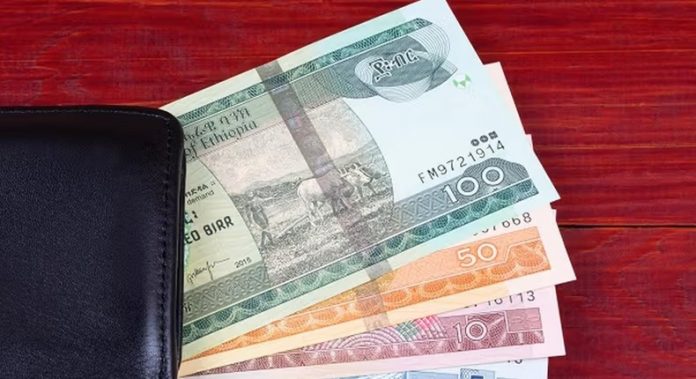
Ethiopia follows the Nigerian path: “Ethiopia’s national currency dropped 30 per cent against the dollar after its central Bank floated its birr currency on Monday. This move is aimed at securing International Monetary Fund (IMF) support and advanced debt restructuring support.” When I heard that on BBC World Service this morning, I shouted “currency hit again”.

The value of Ethiopia’s currency has fallen by 30% against the US dollar after the government relaxed currency restrictions, one the country’s biggest banks, the Commercial Bank of Ethiopia, has said. The government reversed its long-standing policy of fixing the exchange rate in a bid to secure a loan of $10.7bn (£8.3bn) from the International Monetary (IMF) and World Bank.

Some Ethiopians have received the news with apprehension fearing that it will lead to a sharp rise in the cost of living at a time when inflation is already high.

The country has been struggling with chronic foreign currency shortages particularly in recent years. The economy has suffered due to a brutal two-year civil war in the northern Tigray region, which ended in 2022, and ongoing conflicts in other regions, making it difficult for the country to attract much needed foreign investment.

China gives the loans but the IMF comes to the rescue and then introduces measures to ensure it is repaid. Both China and the IMF are doing what they have to do, the real issue is the African leadership. China did not force anyone to take loan, and the IMF is not imposing itself on any nation.

Remember: debt dey pass debt; always better to borrow from home. Unfortunately, Africa does not have the institutions which can fund these loans, and that is the real debt!

Why? In an Igbo novel, Uwadiegwu, the author dropped a great hint: when you borrow, go to your kinsman so that if the debt goes bad, he may lock you up, but at the same time he would be expected to take care of your family since he is your kinsman! That is how debts work: pains are lesser when the debt is home. America borrows dollars and they’re responsible for printing dollars. No other country enjoys that combo.

Nigeria’s Tax Agency Explains Why Nigeria Is Retroactively Taxing Banks’ FX Profits

1

A very great explanation on why the Nigerian government is imposing the 70% windfall tax on FX-related bank profits. Zacch Adedeji, the chairman of the tax agency, Federal Inland Revenue Service (FIRS), noted that the Nigerian manufacturing sector lost N1.7 trillion in 2023 as a result of changes in FX policies, and most of those companies collapsed.

But as that happened, another part of the economy – specifically banking – benefited from the FX policy changes. So, to balance the indices, the government has decided to retroactively tax the banks on the FX-related windfalls. It posited that this will help attract global investors:

 “If that is not done, that is when the real investor will run away from Nigeria because this is a way to balance the economy indices and this is what shows that we actually know what we are doing, and we have a plan for where we are going. As a responsible government that we are, this is what we should do. I don’t think there is anything that will make investors lose confidence in what we are doing.” 

From his statement, it is very clear that Nigeria did not model the implications of the FX policy on manufacturing, banking and the broad economy. Had that been done, possibly, this excess bank taxes would have even been introduced when the policy was announced. More so, they would have been prepared  for the policy fallout within the manufacturing sector.

Lesson: We must learn from this, and do modeling before any major policy implementation.

Big Cats Taking The Lion’s Share: Mew And Popcat Strong 7-DA’s, Rollblock (RBLK) Remains High Roller For Returns

0

The biggest shift in the market is from dogs to cats as investors look for the next 1000x memecoin in Popcat (POPCAT) and Cat in a Dogs World (MEW). The 2nd shift is the emergence of GameFi, with top altcoin Rollblock (RBLK) clearing $1.4 million in its presale and analysts predicting 1000x returns in 2024. 

A New Market For Memecoins Limits MEW’s Growth

The Cat in a Dogs World (MEW) price is up almost 100% this week as investors drop their dog coins in favor of cat memes. The Cat in a Dogs World (MEW) price is bumping up against its post-ICO highs from 3 months ago, so investors are betting that this may be the start of the next leg up. 

While the MEW token may have some room to run compared to dead dog coins, MEW is unlikely to see anything more than a 10x bounce in this new market for memecoins. As a result, investors are looking to diversify away from MEW.

With Popcat’s 50x ICO Bounce In The Bank Its Next Run Will Be Limited 

The Popcat price has squeezed out a 7% gain this week while the rest of the market chopped sideways, making it a top destination for investors dumping their flat dog coins. The Popcat price has enjoyed a strong rally every 2 months since its ICO, so investors are thinking that this cat is due for another bounce.

However, with a 50x return for Popcat, early adopters banking another 1000x return seems far-fetched. Analysts are expecting another 10x to 20x run at most for Popcat.

The Top Altcoin Rollblock Is Set To Take A Massive Bite Out Of The $450 Billion Global Gambling Industry

Investors cannot get enough of Rollblock’s vast potential, as it brings the crypto revolution to the untouched lands of online gambling.

Rollblock’s revolutionary approach is to create a gambling token that is always increasing in value.

Rollblock buys its own token back from the market to burn them or use them as rewards for people who stake on the platform. These high APY rewards and increasing token value ensure that players are making money before they even place their first wager. 

This guaranteed recipe for revenue growth has analysts projecting that Rollblock will take an enormous bite out of the $450 billion global gambling industry.

Rollblock has also ensured that it has a high-end online casino platform by hosting more than 100 of the best games available on the market today. Players can enjoy their old favorites and the newest innovative games side-by-side, all through the best UI in the business. 

The excitement over the massive growth potential of RBLK has it selling out its 4th presale stage soon at the price of $0.172. This price is expected to grow 3x to 6x in the last 4 stages as the demand for this presale ramps up into its close.

The final 2024 projections for RBLK range from over 100x up to 1000x, with even more astounding projections for the next few years.


Discover the Exciting Opportunities of the Rollblock (RBLK) Presale Today!

Website: https://presale.rollblock.io/

Socials: https://linktr.ee/rollblockcasino 

Ethereum ETFs, Bitstamp-Mt. Gox Developments, and Proton Wallet Innovations

0

The world of cryptocurrency is constantly evolving, with new developments and updates that keep investors and enthusiasts on their toes.  We’ll delve into the latest happenings in the crypto space, including the surge in Ethereum ETFs inflows, the latest update on Bitstamp’s involvement with Mt. Gox creditors, and the innovative features of the Proton Wallet.

Ethereum ETFs Experience Remarkable Inflows

Ethereum-based Exchange-Traded Funds (ETFs) have made a significant splash in the investment world, with a remarkable performance upon their unveiling. The trading volume hit an impressive $1.08 billion, accompanied by net inflows amounting to $106.6 million. BlackRock’s iShares Ethereum Trust ETF (ETHA) led the pack with $266.5 million in inflows, signaling strong investor confidence in Ethereum’s potential. Despite some volatility, Ethereum and Bitcoin have shown resilience, recovered ground and suggesting a maturing market that is learning to navigate the ebbs and flows of ETF market dynamics.

In a move that brings closure to a long-standing saga, Bitstamp has announced the commencement of the process to return recovered digital assets to Mt. Gox creditors. This decision comes after a decade-long wait by those affected by the infamous 2014 hack. The restitution process is set to distribute over $9 billion worth of Bitcoin and Bitcoin Cash, marking a significant moment in cryptocurrency history. Bitstamp’s commitment to security and compliance underscores the importance of choosing exchanges that prioritize these aspects, especially in the volatile realm of cryptocurrency.

The Mt. Gox repayment process, which has been long-awaited by the exchange’s users, involves a mix of bitcoin and bitcoin cash distributions. This move comes after years of legal proceedings and recovery efforts, with the trustee overseeing the bankruptcy stating that payments to some creditors have already commenced. Further repayments are expected to be made promptly once certain conditions, such as account verification and subscription to designated digital asset exchanges, are met.

The return of these assets is not without its implications for the broader cryptocurrency market. The release of such a large amount of bitcoin has raised concerns over potential market impacts, as analysts speculate on the action’s creditors might take upon receiving their long-awaited funds. Some expect a significant number of recipients to sell their returned bitcoins, potentially leading to market fluctuations.

Mt. Gox’s saga serves as a cautionary tale and a reminder of the risks inherent in the digital asset space. It also highlights the resilience of the cryptocurrency community and the ongoing efforts to establish more secure and robust systems for digital asset exchange. As the market continues to mature, the lessons learned from the Mt. Gox incident will undoubtedly shape the future of cryptocurrency security and regulation.

Proton Wallet has emerged as a game-changer in the way Bitcoin is held and managed. As a self-custodial wallet, Proton Wallet ensures that only the user has access to their Bitcoin, aligning with the adage “Not your keys, not your coins”. The wallet’s design focuses on security, privacy, and ease of use, offering features like Bitcoin via Email, which simplifies transactions and reduces the risk of errors. Proton Wallet’s commitment to financial freedom and privacy is a testament to the evolving landscape of digital asset management.

The cryptocurrency sector continues to grow and adapt, presenting new opportunities and challenges. The influx of capital into Ethereum ETFs, the resolution of the Mt. Gox case, and the innovation of secure wallets