DD
MM
YYYY

PAGES

DD
MM
YYYY

spot_img

PAGES

Home Blog Page 3094

Fidelity Fund Hits $100B Milestone Amid Big ETF Inflows

0

Fidelity Investments has reached a significant milestone, with its fund assets surpassing $100 billion. This achievement is largely attributed to substantial inflows into Exchange-Traded Funds (ETFs) during the first quarter of 2024. The surge in ETF demand has been remarkable, with US-listed ETFs gathering nearly $200 billion in Q1 alone, marking a 150% increase compared to the same period in 2023.

The inflow of exchange-traded funds (ETFs) in the US has indeed been remarkable in 2024. In the first quarter alone, US ETFs attracted over $195 billion, with $103 billion coming in March. This surge is driven by several factors, including strong performance in stock ETFs, which collected $76 billion, and continued interest in bond ETFs, which saw inflows exceeding $50 billion for the second consecutive quarter.

Active ETFs have also gained significant traction, accounting for one-third of the first quarter’s ETF flows despite representing less than 10% of the market. Additionally, the introduction of new bitcoin ETFs has contributed nearly $27 billion in inflows.

Overall, the ETF market’s growth reflects investor confidence and a strategic shift towards diversified and flexible investment options. This trend is expected to continue as more investors seek efficient ways to manage their portfolios in a dynamic economic environment.

Several factors have contributed to this growth. Actively managed ETFs have gained popularity, accounting for a significant portion of the inflows. Additionally, the approval of the first-ever spot bitcoin ETP in January 2024 has also driven investor interest. Fidelity’s success in attracting these inflows highlights the growing trend of investors seeking diversified and actively managed investment options.

As of mid-2024, several ETFs have stood out for their impressive performance. Here are some of the top-performing ETFs:

iShares Blockchain and Tech ETF (IBLC): This ETF has seen a remarkable 77.39% return over the past year, driven by the growing interest in blockchain technology and related sectors.

VanEck Semiconductor ETF (SMH): With a 74.15% return, this ETF benefits from the booming semiconductor industry.

Schwab Crypto Thematic ETF (STCE): This ETF has gained 71.04%, reflecting the increasing adoption and interest in cryptocurrencies.

iShares ESG Aware MSCI USA Growth ETF (EGUS): This fund has achieved a 65.70% return, focusing on companies with strong environmental, social, and governance (ESG) practices.

Fidelity Crypto Industry and Digital Payments ETF (FDIG): This ETF has returned 61.15%, capitalizing on the growth in digital payments and the crypto industry.

Investing in exchange-traded funds (ETFs) offers several benefits that make them an attractive option for many investors:

Diversification: ETFs provide exposure to a wide range of assets, including stocks, bonds, commodities, and more. This diversification helps reduce risk by spreading investments across various sectors and markets.

Lower Costs: ETFs typically have lower expense ratios compared to mutual funds. This is because many ETFs are passively managed, tracking an index rather than relying on active management.

Trading Flexibility: Unlike mutual funds, which are priced once at the end of the trading day, ETFs can be bought and sold throughout the trading day at market prices. This allows investors to react quickly to market changes.

Tax Efficiency: ETFs are generally more tax-efficient than mutual funds. They often have lower capital gains distributions, which can result in lower tax liabilities for investors.

Transparency: ETFs disclose their holdings daily, providing investors with clear visibility into the assets they own. This transparency helps investors make informed decisions.

Liquidity: ETFs trade on major stock exchanges, providing high liquidity. This means investors can easily buy and sell ETF shares without significantly affecting the market price. These benefits make ETFs a versatile and cost-effective tool for building a diversified investment

These ETFs highlight the diverse opportunities available in the market, from technology and semiconductors to ESG and cryptocurrencies. Always consider your investment goals and risk tolerance when choosing ETFs. This milestone not only underscores Fidelity’s strong market position but also reflects broader trends in the investment landscape, where ETFs continue to be a preferred choice for many investors.

What is Going on with the GMO Food Debate in Nigeria?

6

In secondary school, if you took agricultural science in junior secondary, you would have seen this phrase “new varieties” of crops. New varieties are crops which are engineered to be resilient to harsh environments, pests, diseases, etc. The black pod disease of cocoa caused by a phytophthora species of fungus was a common example of diseases which must be handled. How did they solve that problem? They engineered new varieties.

In cassava, the cassava mosaic disease from a begomovirus triggered near-famine in most parts of Eastern Nigeria in late 1980s just as SAP was coming along, as cassava stems turned white and tubers became like “loaf of bread”. How did they solve it? They engineered new varieties. What they did that time was the government at its best on agriculture policy.

The town crier went around the village, and dropped a very important message: the Ovim people would be receiving new varieties of cassava stem from the Ulonna Farm Settlement, near Umuahia. They also read the news in churches across the community. 

On the d-day, people stationed in Oriendu Market, to receive the stems. The trucks arrived – and the future began to load. Yes, the new varieties of cassava stem are here and time for evolved farming.  Within 18 months, all the old species were replaced, and hope returned. Magically, the cassava mosaic disease was history. It was a great moment and people saw the power of governments as those new varieties came from the government.

So, what is the noise about GMO foods in Nigeria? It is just a nomenclature. Nigerians have been doing these things. It is just that their names have been Kanu, Kehinde, Effiong, Amadu, etc and no one has cared. But because this is coming from outside the nation, it is an issue. The real shame is that Nigeria has to pay for these new things when we used to engineer these things in Nigeria. IITA Ibadan has more technical capacity than any Institute in the US and Europe on tropical crops; they just need funding.

In 1970 during a cholera outbreak, the vaccine used to handle that was developed and approved by WHO by Prof Njoku Obi. So, from vaccines to new varieties of cassava which seem like NEW wonders now, men and women did these things decades ago in Nigeria. GMO is one way of creating new varieties of crops; others are molecular markers, phenotyping, and flowering innovations, as per agric science in WAEC. Check, in all,  you modify.

I picked this from IITA Ibadan which is the leader in the world on cassava: “In 2020, IITA and Nigeria’s National Root Crops Research Institute (NRCRI) released five new cassava varieties using genomics-assisted breeding, including genomic selection and genotyping. This technique accelerated the breeding cycle and resulted in improved varieties.” Yes, they do GMO and IITA has been shipping new varieties, and we have been consuming these crops for ages.  

Can someone explain what has changed?  I personally think that Nigerians should focus on making sure that science is safe instead of this “ban” here and there, because everything has since been modified! Lechi, my grandmother, believed in the purity of her “Nka”, “Obiaturugo”, “Mbala”, “Idima”, etc (these are names of different varieties of yams in Igbo), but I convinced her to use inorganic fertilizer (NPK 15-15-15) as my agric science  teacher had taught in school , and when she experienced the impact, she became a believer. So, we must be careful NOT to take science down on this ban crusade.

Please check if you can interview the people noted here; we will support.

Nigeria’s GMO Foods Debate And Why Our Experts Should Lead It

Media Censorship by Government Not Good for Freedom of Speech and Expression

0

Media censorship by governments can indeed pose significant threats to freedom of speech and expression. When governments control or restrict the flow of information, it can prevent people from accessing diverse viewpoints and making informed decisions. This suppression can lead to a less informed public and hinder democratic processes.

Censorship can take many forms, from blocking specific media reports to shutting down entire media outlets. For instance, during the COVID-19 pandemic, several countries blocked or restricted media reports related to the virus, which impacted the public’s ability to access crucial information. Such actions can undermine trust in public institutions and stifle critical discourse.

Media censorship by governments is a complex and multifaceted issue, particularly when it comes to social media platforms like Twitter ow X. In the European Union (EU), this topic has been extensively studied, revealing both the challenges and implications for democracy, rule of law, and fundamental rights.

Twitter, now rebranded as X, has been a focal point for discussions on media censorship due to its widespread use and influence. The platform has been scrutinized for its role in spreading disinformation, which has significant implications for democratic processes and public trust.

A study commissioned by the European Parliament’s Policy Department for Citizens’ Rights and Constitutional Affairs highlights the governance of online content as a critical area of concern. The study examines how platforms like X manage content and the impact of these practices on democracy and fundamental rights. It underscores the need for robust legal frameworks to balance the protection of free speech with the prevention of harmful content.

X has been identified as having the highest proportion of disinformation among major social networks. This poses a significant risk to democratic values and public trust. The EU emphasizes the importance of transparent and accountable content moderation practices. The study suggests that current measures are insufficient and calls for more stringent regulations to ensure that content governance does not infringe on fundamental rights.

Research indicates that even in democratic countries, there is a trend towards increased internet censorship. This includes blocking news and social media websites during times of political unrest or crisis. The findings suggest that while censorship can be a tool to combat harmful content, it also poses risks to freedom of expression and access to information. The EU’s approach aims to create a balanced framework that protects democratic values without overstepping into excessive censorship.

Media censorship can take many forms and occurs in various countries around the world. Here are some notable examples:

China: The Chinese government is known for its extensive censorship practices, including blocking websites like Wikipedia, Facebook, Twitter, and YouTube. During sensitive periods, such as the anniversary of the Tiananmen Square massacre, the government intensifies its censorship efforts.

North Korea: In North Korea, the government tightly controls all media. Independent journalism is virtually non-existent, and the media serves as a mouthpiece for the state. Foreign journalists are rarely allowed, and those who enter are closely monitored.

Saudi Arabia: The Saudi government employs both traditional and digital censorship methods. Journalists and their families often face harassment and imprisonment, and the government monitors and censor’s internet and social media content.

Eritrea: Eritrea is considered the most censored country in the world. The government shut down all independent media in 2001, and many journalists have been imprisoned without trial since then. The state retains a legal monopoly on broadcast media.

Turkey: The Turkish government has been known to censor critical news and build state media brands. It also uses more subtle tools, such as market disruptions, to control

Moreover, censorship often targets journalists and media professionals, putting their safety at risk. According to UNESCO, many journalists face violence, legal harassment, and even death for their work. This creates a chilling effect, where fear of repercussions can lead to self-censorship, further diminishing the diversity of information available to the public.

While some argue that certain content needs regulation to protect public morals or national security, it’s essential to balance these concerns with the fundamental right to freedom of expression. Overly broad or vague censorship laws can be misused to silence dissent and criticism, which are vital components of a healthy democracy.

While there may be legitimate reasons for some level of content regulation, excessive government censorship is detrimental to freedom of speech and expression. It is crucial to ensure that any restrictions are narrowly defined, transparent, and subject to judicial review to protect these fundamental rights.

The case of X in the EU illustrates the delicate balance between regulating harmful content and preserving fundamental rights. As social media continues to evolve, ongoing dialogue and research are essential to navigate these challenges effectively.

Wall Street remains entrenched in a Wave of Tech Optimism

0

Wall Street is indeed experiencing a surge of tech optimism, reflected in the record highs of the Nasdaq index compared to the S&P 500. This trend is driven by several factors, including strong performances from major tech companies and investor confidence in the sector’s growth potential.

Recent data shows that both the S&P 500 and Nasdaq 100 have reached new record highs, with tech stocks, particularly chipmakers, leading the charge. The anticipation of potential interest rate cuts by the Federal Reserve has also fueled this optimism, as lower rates typically benefit growth-oriented sectors like technology.

Moreover, the ongoing advancements in artificial intelligence and other cutting-edge technologies continue to attract significant investment, further boosting the tech sector’s performance. As a result, the ratio between the Nasdaq and the S&P 500 has reached unprecedented levels, highlighting the market’s strong belief in the future of technology.

Wall Street is currently riding a wave of tech optimism, driven by strong performances from major tech companies and positive economic indicators. Recent earnings reports from tech giants like Taiwan Semiconductor Manufacturing Company and upbeat comments from Federal Reserve officials have fueled this enthusiasm. The Nasdaq Composite and S&P 500 have seen significant gains, with the Nasdaq 100 Index reaching new highs.

This optimism is not just limited to the U.S. markets. Asian shares have also risen, buoyed by the positive sentiment surrounding tech stocks. Investors are hopeful that the tech sector will continue to drive market growth, despite potential headwinds such as high interest rates and geopolitical risks.

The future of Wall Street technology is set to be transformative, driven by advancements in artificial intelligence (AI), fintech innovations, and increased automation. Here are some key trends shaping the future:

Artificial Intelligence and Machine Learning

AI and machine learning are revolutionizing trading, risk management, and predictive analytics. These technologies enable more accurate market predictions, automated trading strategies, and enhanced fraud detection. AI is also improving customer service through chatbots and personalized financial advice.

Blockchain and Cryptocurrencies

Blockchain technology is enhancing transparency and security in financial transactions. Cryptocurrencies are becoming more mainstream, with Wall Street firms exploring their potential for investment and payment solutions.

Fintech Innovations

Fintech startups are introducing innovative solutions for asset management, fraud prevention, and regulatory compliance. Companies like Addepar and Trumid are helping institutions manage portfolios and execute trades more efficiently. Fraud prevention startups like Alloy and SentiLink are using AI to combat synthetic identity fraud.

Automation and Robotics

Automation is streamlining back-office operations, reducing costs, and increasing efficiency. Robotic process automation (RPA) is handling repetitive tasks, allowing human employees to focus on more strategic activities.

Data Analytics

Advanced data analytics are providing deeper insights into market trends and customer behavior. This helps financial institutions make more informed decisions and tailor their services to meet client needs.

Cybersecurity

As financial services become more digitized, cybersecurity is a top priority. Firms are investing in advanced security measures to protect sensitive data and prevent cyberattacks.

The integration of these technologies is not without challenges. Regulatory and ethical considerations must be addressed to ensure responsible and sustainable use. However, the potential benefits for efficiency, security, and customer satisfaction are immense.

There are several key tech stocks that investors are currently watching due to their strong performance and potential for future growth. Here are some notable ones:

Microsoft Corporation (MSFT): Known for its software products like Windows and Office, Microsoft is also a leader in cloud computing with its Azure platform.

Apple Inc. (AAPL): Famous for its innovative products like the iPhone, iPad, and Mac, Apple continues to be a dominant player in the tech industry.

Overall, the tech sector’s strong performance and the broader economic outlook are keeping Wall Street’s spirits high. Do you follow any specific tech stocks or have any thoughts on this trend?

Trump Secures Republican Presidential Nomination for 2024, Picks JD Vance As Running Mate

0

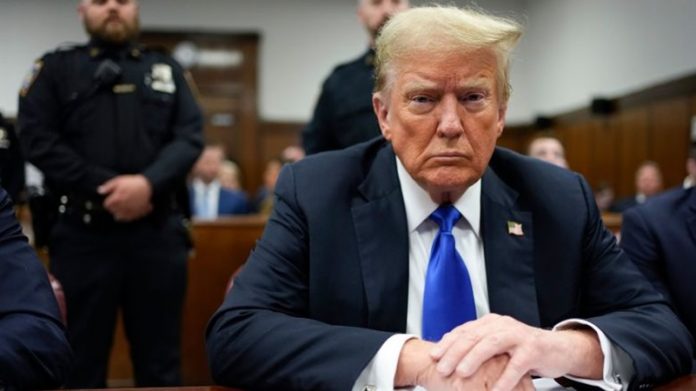
Former President Donald J. Trump has officially been confirmed as the Republican nominee for the 2024 presidential election, just days after surviving an assassination attempt at a campaign rally.

The announcement was made at the Republican National Convention, where Trump secured an overwhelming 2,387 delegate votes, far surpassing the 1,215 needed to clinch the nomination.

US House Speaker Mike Johnson unveiled the results to an electrified crowd at the convention. “Let’s make it official,” Johnson declared. “Accordingly, the chair announces that President Donald J. Trump – having received a majority of the votes entitled to be cast at the convention – has been selected as the Republican Party nominee for President of the United States.”

The confirmation marks a significant moment in Trump’s political career, especially following the recent attempt on his life. Despite the attack, Trump has shown resilience and determination, reinforcing his status as a leading figure in American politics.

JD Vance Named Vice-Presidential Running Mate

In a move that surprised many, Trump has chosen US Senator JD Vance as his vice-presidential running mate. Vance, a staunch conservative and former critic of Trump, represents Ohio and has rapidly ascended the political ladder since he entered politics in 2022. His rise was propelled by the success of his memoir, “Hillbilly Elegy,” which chronicles his upbringing in the Rust Belt and has been both a bestseller and a major motion picture.

Trump praised Vance in a post on his Truth Social platform, highlighting his qualifications and transformation.

“JD honorably served our Country in the Marine Corps, graduated from Ohio State University in two years, Summa Cum Laude, and is a Yale Law School Graduate, where he was Editor of The Yale Law Journal, and President of the Yale Law Veterans Association,” Trump wrote.

“JD’s book, ‘Hillbilly Elegy,’ became a Major Best Seller and Movie, as it championed the hardworking men and women of our Country,” he added.

From Critic to Ally

Vance’s selection is particularly notable given his past criticism of Trump. In 2016, Vance described Trump as “America’s Hitler” and expressed doubt over Trump’s solutions for the country. However, his perspective shifted dramatically in 2021 when he sought an endorsement from Trump during a competitive Senate race in Ohio. After apologizing for his previous comments and securing Trump’s endorsement, Vance won the seat in a closely contested and expensive race.

Since then, Vance has become a close ally of Trump, often serving as a surrogate on the campaign trail. His transformation underscores the evolving dynamics within the Republican Party, as many politicians align themselves with Trump’s brand of politics to gain support and influence.

Political and Ideological Shifts of Vance

JD Vance’s political journey has been marked by significant ideological shifts. Originally a conventional conservative who advocated for reaching out to America’s working class, Vance has adopted many of Trump’s positions and rhetoric in recent years.

Scott Lucas, a professor of US and international politics at University College Dublin, commenting on Vance’s transformation told Aljazeera: “In 2016, he actually said Trump was America’s Hitler. He was more of a conventional conservative. But he saw which way the Trump bandwagon was going and decided to match and even exceed Trump in his rhetoric.”

Lucas described Vance’s positions as “anti-immigrant to the point of being Islamophobic” and noted that Vance has pushed the “White Replacement Theory.” He also characterized Vance as “fiercely anti-abortion,” “against lesbian and gay rights,” and “against America providing funds to Ukraine.”

Lucas added, “In picking JD Vance, Trump is actually reinforcing the politics of division, even the politics of confrontation.

Reactions from the Biden Campaign

The Biden re-election campaign responded swiftly to the announcement of Vance as Trump’s running mate. The campaign said Vance will ‘bend over backwards for extreme MAGA agenda’

“Vance will enable Trump and his extreme MAGA agenda, even if it means breaking the law and no matter the harm to the American people,” the Biden campaign stated. “Americans’ choice in November is between two starkly contrasting visions: Biden’s focus on uniting the country versus Trump-Vance’s harmful agenda.”

Assassination Attempt Investigation

The FBI said it has been working diligently to uncover the motives behind the assassination attempt on Trump.

“FBI technical specialists successfully gained access to Thomas Matthew Crooks’ phone and they continue to analyze his electronic devices,” the FBI said in a statement.

“The search of the subject’s residence and vehicle are complete,” it added.

On Saturday, Crooks was shot dead for firing shots at Trump and killing his rally attendee. The FBI is now treating the incident as an assassination attempt and potential domestic “terrorism”.

The head of the Department of Homeland Security Alejandro Mayorkas said an investigation is ongoing, with an independent review into the circumstances surrounding the shooting set to begin in the coming days.