DD
MM
YYYY

PAGES

DD
MM
YYYY

spot_img

PAGES

Home Blog Page 31

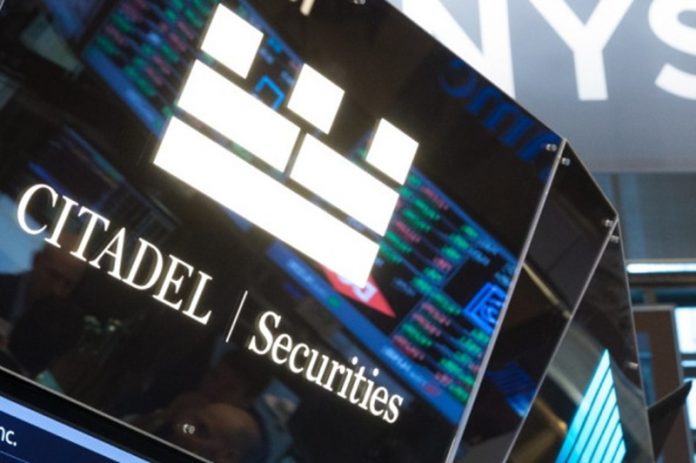
Citadel Invests $400 Million in Crypto.com, Signaling Growing Institutional Confidence in Digital Assets

0

The cryptocurrency industry received another major vote of confidence as Citadel announced a $400 million investment in Crypto.com, marking one of the most significant institutional commitments to the digital asset sector in recent years.

The move highlights the increasing convergence between traditional finance and the crypto economy, reinforcing the idea that digital assets are becoming an integral part of the global financial system.

Citadel, one of the world’s most influential financial firms, has long been recognized for its sophisticated trading strategies and substantial presence in global markets.

Its decision to commit such a large sum to Crypto.com demonstrates a growing belief among institutional investors that cryptocurrency platforms are no longer speculative experiments but emerging pillars of modern finance.

Crypto.com has evolved significantly since its founding, transforming from a cryptocurrency exchange into a comprehensive digital financial ecosystem. The company offers services ranging from spot trading and derivatives to payment solutions, staking products, and crypto-backed financial services.

With millions of users across multiple jurisdictions, the platform has positioned itself as one of the leading gateways between traditional finance and blockchain-based services. The $400 million investment comes at a time when the cryptocurrency market is entering a new phase of maturity.

Regulatory frameworks are becoming clearer in several major economies, while institutional participation continues to expand through exchange-traded products, tokenized assets, and stablecoin initiatives.

Large financial institutions are increasingly exploring blockchain technology as a means of improving efficiency in payments, settlements, and capital markets.

For Citadel, the investment could provide strategic exposure to the rapidly expanding digital asset economy.

The firm has previously shown interest in crypto-related ventures and market infrastructure. By backing Crypto.com, Citadel gains access to one of the industry’s most recognized brands and a platform that continues to diversify its offerings beyond simple trading services.

The investment may also strengthen Crypto.com’s competitive position in an increasingly crowded market. Cryptocurrency exchanges are competing aggressively to attract both retail and institutional users through product innovation, compliance initiatives, and strategic partnerships.

An endorsement from a globally respected financial institution like Citadel could improve investor confidence and enhance Crypto.com’s reputation among regulators and institutional clients.

The deal underscores a broader trend of traditional financial firms seeking opportunities within blockchain-based ecosystems. Over the past few years, banks, asset managers, payment companies, and hedge funds have steadily increased their exposure to digital assets.

The growth of tokenized securities, stablecoins, and decentralized finance applications has created new investment opportunities that were largely absent during the earlier stages of crypto adoption.

The implications of Citadel’s investment extend beyond Crypto.com itself. Such a large commitment may encourage other institutional investors to reconsider their stance on digital assets, potentially accelerating the flow of capital into the sector.

Institutional participation often brings greater liquidity, improved market infrastructure, and increased legitimacy, all of which contribute to the long-term development of the cryptocurrency industry.

Regulatory uncertainty in certain jurisdictions, cybersecurity risks, and market volatility continue to pose significant obstacles. Crypto companies must also navigate evolving compliance requirements while maintaining innovation and user growth.

Citadel’s $400 million investment in Crypto.com represents a powerful signal that institutional confidence in digital assets continues to strengthen. The transaction highlights the growing integration between traditional finance and blockchain technology and suggests that major financial players increasingly view cryptocurrencies as a long-term opportunity rather than a passing trend.

As institutional capital continues to enter the market, partnerships such as this could play a crucial role in shaping the next phase of the digital asset industry’s evolution, potentially paving the way for broader mainstream adoption and a more interconnected global financial ecosystem.


White House Accuses China of Largest Election Data Breach in U.S. History

0

The White House has alleged that China was responsible for what it describes as the largest election-related data compromise in modern history.

A cyber campaign that reportedly spanned several years and targeted information linked to U.S. elections since the 2020 election cycle. The claims have reignited concerns about foreign interference, cybersecurity vulnerabilities, and the growing role of digital espionage in geopolitical competition.

According to U.S. officials, the alleged operation involved the unauthorized access and collection of sensitive election-related data, potentially affecting political organizations, government entities, and infrastructure connected to election administration.

While authorities have emphasized that there is currently no evidence that voting systems themselves were altered or that election outcomes were directly manipulated, the scale of the reported data compromise has raised serious questions about national security and democratic resilience.

Cybersecurity has become one of the defining challenges of modern governance. Elections, once primarily safeguarded through physical means, are now deeply intertwined with digital infrastructure.

Voter databases, campaign communications, polling information, and election logistics all rely heavily on interconnected networks that can become targets for sophisticated cyber actors.

The White House’s allegations come amid increasingly tense relations between Washington and Beijing. Over the past several years, the United States has repeatedly accused China of conducting cyber espionage campaigns aimed at government institutions, corporations, research organizations, and critical infrastructure.

China, however, has consistently denied such accusations, often asserting that it too has been a victim of cyberattacks and opposing what it describes as the politicization of cybersecurity issues.

If the allegations are substantiated, the implications could be significant. Beyond immediate concerns about data security, the incident highlights how foreign powers may seek to gain strategic advantages through information gathering.

Access to election-related data can provide valuable intelligence regarding political dynamics, voter behavior, campaign strategies, and potential vulnerabilities within democratic systems.

The incident also underscores the broader evolution of geopolitical competition.

Cyber operations have increasingly become a preferred tool of statecraft because they can deliver strategic benefits while avoiding the direct military confrontation associated with conventional warfare. Espionage, disinformation campaigns, and infrastructure infiltration now represent major components of international competition among major powers.

The reported compromise may further intensify calls for stronger cybersecurity measures and greater protection of election infrastructure. Policymakers have already invested billions of dollars into securing critical systems since concerns about foreign election interference emerged prominently during the 2016 election cycle.

The latest allegations suggest that significant vulnerabilities may still exist. Experts argue that defending democratic institutions in the digital age requires a multi-layered approach.

This includes strengthening cyber defenses, improving information sharing between federal and state authorities, enhancing public-private partnerships, and increasing international cooperation on cyber norms and accountability.

Election security is no longer solely a domestic issue but has become an integral component of national security strategy. The allegations may also contribute to further diplomatic tensions between the United States and China.

Relations between the two countries are already strained over issues including trade, technology restrictions, Taiwan, and military competition in the Indo-Pacific region. Accusations of extensive cyber intrusions could add another contentious dimension to an already complex bilateral relationship.

The reported data compromise serves as a reminder that modern democracies face evolving threats that extend far beyond traditional forms of interference. Whether through cyber espionage, data theft, or information operations, the digital battlefield has become a critical arena in global power competition.

Ensuring the integrity and security of electoral systems will likely remain a central priority for governments as they seek to protect democratic institutions in an increasingly interconnected world.

Andreessen Horowitz-Linked Wallet Triggers Fresh Concerns in Hyperliquid Market

0

The recent sale of $6.5 million worth of HYPE tokens by a wallet linked to venture capital giant Andreessen Horowitz (a16z) has sparked fresh debate across the crypto market.

The transaction comes at a particularly sensitive time for Hyperliquid’s native token, HYPE, which has slipped below the psychologically important $60 price level. For many investors, the move raises questions about institutional confidence, profit-taking behavior, and the future trajectory of one of the fastest-growing decentralized trading ecosystems.

Hyperliquid has emerged as one of the most successful decentralized perpetual exchange platforms in the cryptocurrency industry. Its rapid growth has been driven by high trading volumes, low latency, and an increasingly loyal community of traders seeking alternatives to centralized exchanges.

The HYPE token has benefited tremendously from this momentum, becoming one of the standout performers of the current market cycle.

The market reaction to the a16z-linked wallet movement highlights a recurring theme in crypto markets: institutional transactions often carry symbolic significance beyond their actual monetary value.

Although $6.5 million represents only a fraction of Hyperliquid’s overall market capitalization and trading volume, investors frequently interpret such moves as signals regarding insider sentiment.

The decline of HYPE below $60 adds further pressure to market sentiment. Round-number price levels often serve as important psychological support zones in financial markets. A break below these thresholds can trigger increased selling pressure as traders reassess short-term momentum and automated trading systems adjust their positions.

Despite the concerns, it is important to recognize that token sales by venture investors are not necessarily bearish indicators.

Venture capital firms typically manage diversified portfolios and periodically realize profits to rebalance holdings, return capital to investors, or allocate resources toward new opportunities. In many cases, such sales are part of routine treasury management rather than expressions of diminishing confidence in a project’s long-term prospects.

Hyperliquid’s underlying fundamentals remain relatively strong. The platform continues to maintain significant trading activity, attract new users, and expand its influence within decentralized finance. Its ability to compete directly with established centralized exchanges has positioned it as one of the most closely watched projects in the digital asset ecosystem.

The timing of the sale cannot be ignored. Crypto markets are currently navigating a period of heightened uncertainty, characterized by fluctuating macroeconomic conditions, shifting regulatory landscapes, and increased competition among blockchain platforms. Any large transaction from a prominent investor naturally becomes amplified in such an environment.

Community reaction has been mixed. Some traders view the sale as a healthy profit-taking event after HYPE’s remarkable appreciation over recent months. Others fear that additional institutional selling could place further downward pressure on the token in the near term.

Social media discussions have also reignited debates about token unlock schedules, venture capital influence, and the balance between institutional and community ownership in decentralized networks.

The key factor for HYPE will likely be whether Hyperliquid can continue delivering strong platform growth and ecosystem expansion.

If user activity, revenues, and trading volumes remain robust, temporary market concerns surrounding institutional sales may eventually fade. Conversely, if broader market weakness persists, the token could face continued volatility as investors become increasingly sensitive to large-holder transactions.

The a16z-linked wallet’s sale of $6.5 million in HYPE serves as a reminder of the complex dynamics that shape cryptocurrency markets. While the transaction has undoubtedly contributed to short-term uncertainty, it does not necessarily undermine Hyperliquid’s long-term potential.

For investors, the episode underscores the importance of distinguishing between short-term market reactions and the fundamental health of the underlying project.

Why Democrats Oppose the CLARITY Act in Its Current Form

0

The CLARITY Act, one of the most ambitious attempts to establish a comprehensive regulatory framework for digital assets in the United States, is facing significant political resistance as Democrats argue that the legislation, in its current form, lacks adequate consumer protections and could weaken oversight of the cryptocurrency industry.

The bill was designed to provide long-awaited regulatory clarity for blockchain companies, investors, and financial institutions by defining which digital assets fall under the jurisdiction of the Securities and Exchange Commission and which should be regulated by the Commodity Futures Trading Commission.

Supporters believe such clarity would end years of regulatory uncertainty that have driven innovation and investment away from the United States.

Despite bipartisan discussions surrounding crypto legislation in recent years, many Democratic lawmakers remain unconvinced by the current version of the CLARITY Act. Their concerns center on the belief that the bill could create loopholes that allow crypto companies to avoid strict securities regulations while exposing retail investors to increased risks.

Several Democrats have pointed to the numerous failures and scandals that have plagued the digital asset industry over the past few years, including exchange collapses, fraud cases, and significant investor losses.

They argue that any legislation governing cryptocurrencies must prioritize investor protection, transparency, and accountability before granting the industry a clearer path to expansion.

Critics within the Democratic Party have also expressed concern that the proposed framework may excessively limit the SEC’s authority. Under the current regulatory environment, the SEC has taken an aggressive approach toward crypto firms, often arguing that many digital assets qualify as securities.

The CLARITY Act would shift parts of this oversight to the CFTC, an agency generally viewed as having a lighter regulatory touch.

For many Democrats, this transfer of authority raises questions about whether the bill adequately addresses market manipulation, disclosure requirements, anti-money laundering provisions, and systemic financial risks.

Some lawmakers have argued that the legislation should include stronger safeguards for consumers, stricter disclosure standards for token issuers, and clearer provisions regarding stablecoins and decentralized finance platforms.

The lack of Democratic support represents a major obstacle for the bill’s future. While Republicans have generally embraced cryptocurrency innovation and have pushed for a regulatory environment that encourages blockchain development, passing major financial legislation in Congress often requires at least some level of bipartisan cooperation.

Industry participants are closely watching the debate because the outcome could significantly shape the future of the U.S. digital asset sector. Crypto companies have long argued that regulatory ambiguity has hindered growth, discouraged investment, and encouraged firms to relocate operations overseas to jurisdictions with more defined rules.

Investor advocacy groups and some policymakers warn that moving too quickly without sufficient protections could repeat mistakes seen in previous financial crises. They contend that regulatory clarity should not come at the expense of market integrity and consumer safety.

As discussions continue, lawmakers may attempt to revise portions of the CLARITY Act in an effort to gain broader support. Potential amendments could include stronger consumer protection measures, enhanced reporting requirements, and mechanisms to ensure effective coordination between federal regulatory agencies.

The debate surrounding the CLARITY Act highlights the broader challenge facing policymakers worldwide: balancing innovation with financial stability. While there is growing agreement that the United States needs a comprehensive framework for digital assets, significant disagreements remain regarding how such a framework should be structured.

Until these concerns are addressed, Democratic support for the CLARITY Act appears unlikely, leaving the future of one of America’s most important crypto regulatory proposals uncertain and underscoring the continuing political divide over the regulation of digital assets.

Geopolitical Uncertainty and Its Impact on Nasdaq Performance

0

Global financial markets were hit by a fresh wave of uncertainty as escalating tensions in the Iran conflict triggered a sharp selloff across equities and technology stocks.

Nasdaq futures plunged by nearly 2%, reflecting growing investor fears that a prolonged geopolitical crisis could disrupt global trade, increase energy costs, and undermine economic growth prospects.

The market reaction highlights how deeply interconnected geopolitics and financial markets have become, with investors quickly moving away from riskier assets during periods of instability.

The renewed conflict involving Iran has revived concerns about the security of energy supply routes in the Middle East, particularly around the Strait of Hormuz, through which a significant portion of the world’s oil exports pass.

Any threat to this strategic waterway immediately raises fears of supply disruptions and higher crude prices. Rising energy costs have historically been associated with inflationary pressures, tighter monetary conditions, and slower corporate earnings growth.

Consequently, traders responded by reducing exposure to technology stocks and other growth-oriented sectors that are particularly sensitive to economic uncertainty and changes in interest rate expectations.

Technology shares, which had been among the strongest performers in recent months due to enthusiasm surrounding artificial intelligence and semiconductor demand, led the market decline. Investors increasingly questioned whether elevated valuations could be sustained amid worsening geopolitical risks and potential economic slowdown.

The sharp decline in Nasdaq futures suggests that market participants are preparing for increased volatility and are reassessing risk across portfolios. One of the most notable casualties of the market downturn was Micron Technology, whose shares have fallen approximately 30% from their June highs.

The memory chip manufacturer had previously benefited from optimism surrounding the AI boom, as demand for high-bandwidth memory and advanced data-center infrastructure fueled expectations of robust earnings growth.

The recent selloff in memory-related stocks indicates that investors are becoming more cautious about the sustainability of these growth projections. Micron’s decline also reflects broader concerns within the semiconductor industry.

Memory chip markets are historically cyclical, often experiencing periods of rapid expansion followed by sharp corrections due to oversupply or weakening demand.

The current geopolitical tensions have introduced another layer of uncertainty, raising fears that global supply chains could face disruptions and that corporate customers may delay capital expenditures in anticipation of economic turbulence.

The selloff in memory stocks extends beyond Micron alone. Investors have broadly reduced exposure to semiconductor companies as they weigh the potential impact of higher energy prices, weakening consumer sentiment, and slower global economic activity.

Despite the long-term bullish narrative surrounding artificial intelligence and advanced computing, market participants are increasingly focused on short-term risks that could affect earnings and valuation multiples.

The market reaction underscores the fragile balance that currently exists in global financial markets. While technological innovation and AI-driven demand continue to support long-term optimism, geopolitical events can rapidly shift investor sentiment.

Safe-haven assets such as government bonds, gold, and defensive sectors have seen renewed interest as traders seek protection from escalating uncertainty.

The trajectory of financial markets will likely depend on developments in the Iran conflict and whether diplomatic efforts can prevent further escalation.

If tensions persist or intensify, markets could experience additional downside pressure, particularly in sectors with high valuations and significant exposure to global growth expectations. Conversely, signs of de-escalation could help restore investor confidence and support a recovery in technology shares.

The sharp decline in Nasdaq futures and Micron’s significant pullback serve as a reminder that geopolitical risks remain a powerful force capable of reshaping market dynamics, even during periods of strong technological advancement and optimism surrounding artificial intelligence.