DD
MM
YYYY

PAGES

DD
MM
YYYY

spot_img

PAGES

Home Blog Page 3109

‘Strawberry’ Project: OpenAI Developing A New Reasoning AI Technology

0

In an ambitious stride to maintain its leading position in the rapidly evolving field of artificial intelligence, OpenAI is secretly working on a novel approach to its AI models under the code name “Strawberry.”

This revelation comes from internal documentation reviewed by Reuters and a person familiar with the matter. The Microsoft-backed startup, renowned for its ChatGPT product, is racing to demonstrate that its models are capable of advanced reasoning capabilities, which could mark a significant leap forward in AI technology.

A Glimpse Inside the ‘Strawberry’ Project

According to a recent internal document seen by Reuters in May, OpenAI teams are deeply engrossed in the Strawberry project. While the exact timeline of the document remains unclear, it outlines OpenAI’s plan to leverage Strawberry for advanced AI research.

Described as a work in progress, the project remains shrouded in secrecy even within the company. The goal of Strawberry is to enable AI to not only generate answers but also to autonomously and reliably navigate the internet to perform what OpenAI terms “deep research.”

“This is something that has eluded AI models to date,” said the source, noting the project’s ambitious nature.

Asked about Strawberry and the details reported in this story, an OpenAI spokesperson said in a statement: “We want our AI models to see and understand the world more like we do. Continuous research into new AI capabilities is a common practice in the industry, with a shared belief that these systems will improve in reasoning over time.”

The spokesperson did not directly address questions about Strawberry.

From Q to Strawberry: A New Era of Reasoning

Strawberry is the successor to a previous project known as Q. According to two sources, Q was already seen within OpenAI as a breakthrough in its ability to answer complex science and math questions beyond the reach of current commercially available models.

This year, during an internal all-hands meeting, OpenAI demonstrated a research project showcasing new human-like reasoning skills, according to Bloomberg. Although Reuters could not confirm if the project demonstrated was Strawberry, it aligns with the company’s ongoing efforts to enhance AI reasoning.

OpenAI CEO Sam Altman has emphasized the importance of reasoning in AI, stating earlier this year that “the most important areas of progress will be around reasoning ability.”

The Challenge of AI Reasoning

Improving reasoning in AI models is seen by researchers as the key to achieving human or super-human-level intelligence. While large language models can summarize texts and compose prose efficiently, they often falter on common-sense problems and logical tasks, leading to “hallucinations” or the generation of incorrect information.

Reasoning, as described by AI researchers, involves the AI’s ability to plan, understand the physical world, and work through multi-step problems.

“Reasoning is key to AI achieving human or super-human-level intelligence,” said an AI researcher interviewed by Reuters.

OpenAI’s Strawberry project aims to overcome these challenges by employing a specialized post-training process. This involves fine-tuning the AI models after they have been pre-trained on extensive datasets.

According to a source, Strawberry’s method bears similarities to Stanford’s “Self-Taught Reasoner” (STaR), which allows AI models to iteratively create their own training data, potentially enabling them to achieve higher intelligence levels.

“I think that is both exciting and terrifying… if things keep going in that direction, we have some serious things to think about as humans,” Stanford professor Noah Goodman, one of STaR’s creators, commented.

Long-Horizon Tasks and Autonomous Research

Among the ambitious goals for Strawberry is the ability to perform long-horizon tasks (LHT), which require the AI to plan and execute a series of actions over an extended period.

The internal documentation indicates that OpenAI is training and evaluating models on a “deep-research” dataset to enable these capabilities. Although the specifics of the dataset and the duration of the extended period remain undisclosed, the aim is clear: to allow AI to conduct research autonomously with the aid of a computer-using agent (CUA) that can act on its findings.

The Competitive AI Industry

OpenAI is not alone in its quest to enhance AI reasoning. Major tech companies like Google, Meta, and Microsoft, along with numerous academic labs, are also exploring different techniques to improve AI reasoning capabilities. However, opinions differ on whether large language models can incorporate long-term planning and advanced reasoning into their predictions.

Yann LeCun, a pioneer in modern AI working at Meta, has frequently expressed skepticism about the ability of large language models (LLMs) to achieve human-like reasoning.

Strawberry represents a crucial component of OpenAI’s strategy to address the limitations of current AI models. By developing more advanced reasoning capabilities, OpenAI aims to unlock new possibilities for AI, from making scientific discoveries to creating new software applications. The company has been signaling to developers and partners that it is on the verge of releasing technology with significantly enhanced reasoning skills.

Strawberry’s development includes post-training methods such as fine-tuning, which involves human feedback and iterative learning processes. These techniques are designed to refine AI models and improve their performance on specific tasks.

The advancements made through Strawberry could redefine the capabilities of AI and set new standards for what these models can achieve. While the path forward is fraught with challenges, the potential rewards are immense, heralding a new era of intelligent, autonomous AI systems.

In the words of OpenAI’s spokesperson, “We want our AI models to see and understand the world more like we do.” If Strawberry succeeds, it could bring us one step closer to realizing that vision.

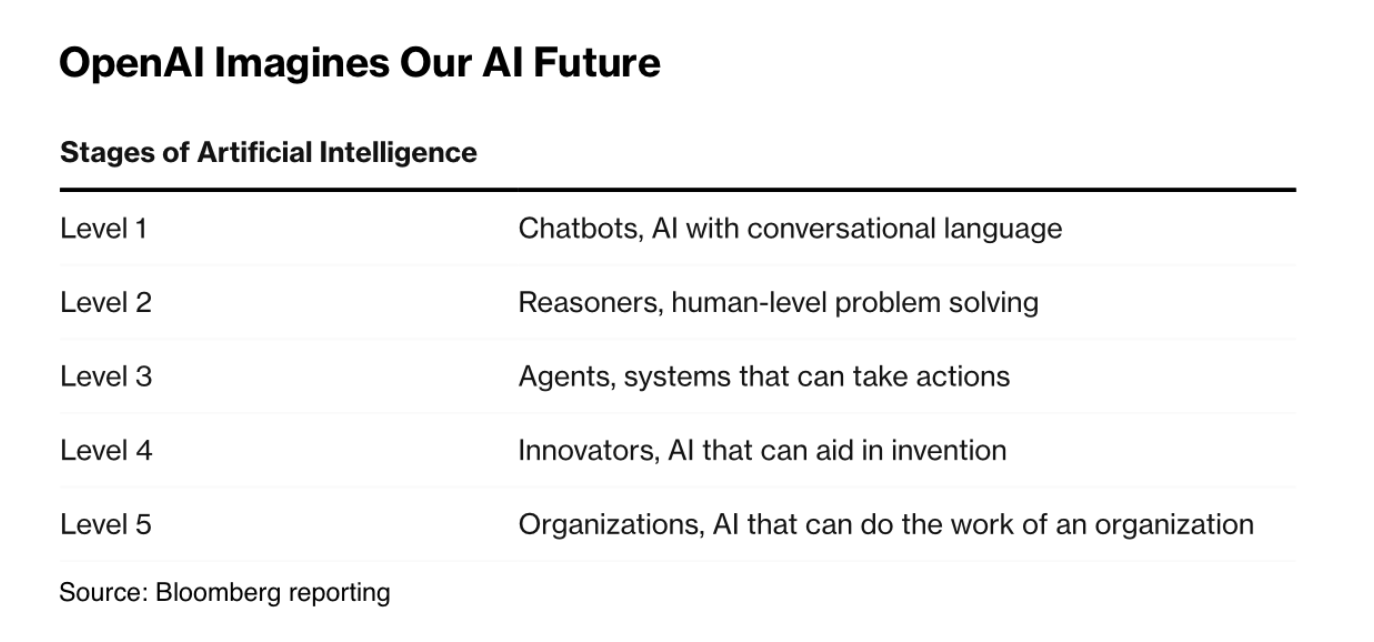
Levels of AI by OpenAI 

OpenAI has introduced a five-tier system to track its progress towards achieving Artificial General Intelligence (AGI). The levels range from Level 1, representing current conversational AI, to Level 5, envisioning AI capable of managing and performing the work of an entire organization. OpenAI believes it is approaching Level 2, which involves problem-solving akin to a PhD without tools. The framework aims to provide a structured approach to understanding and developing AI systems that could eventually surpass human intelligence.

  1. Chatbots, Al with conversational language
  2. Reasoners, human-level problem solving
  3. Agents, systems that can take actions
  4. Innovators, Al that can aid in invention
  5. Organizations, Al that can do the work of an organization
How Retail Trading Boosts Crypto Market Liquidity

0

In the dynamic world of cryptocurrency, liquidity is a vital aspect that reflects the health and efficiency of the market. Liquidity refers to the ease with which assets can be bought or sold in the market without causing a significant movement in the price. A liquid market is characterized by a stable environment where transactions can occur swiftly and at consistent prices. The role of retail trading in enhancing the liquidity of the crypto market is a topic of increasing relevance and interest.

The cryptocurrency market has witnessed a significant transformation with the influx of retail traders. These individual investors have played a pivotal role in enhancing market liquidity, which is crucial for the health and efficiency of financial markets. High liquidity levels indicate a robust market with a plethora of buyers and sellers, ensuring smooth transactions and stable prices.

Retail traders, often individuals who buy and sell cryptocurrencies through exchanges, contribute significantly to the market’s liquidity. Their collective trading activities ensure a continuous flow of transactions, which helps to stabilize prices and reduce volatility. Retail traders bring diversity to the market, as they have varied trading strategies, goals, and levels of risk tolerance. This diversity is beneficial because it creates a more resilient and robust market that can better absorb large trades without significant price fluctuations.

One of the keyways retail trading boosts market liquidities is through the sheer volume of transactions. As more individuals participate in trading, the number of buy and sell orders increases, creating a more active market. This activity attracts more participants, including institutional investors, who are often looking for a liquid market to execute large trades efficiently.

Retail traders’ active participation brings more orders to the market, which helps to fill the gap between bid and ask prices, thus reducing the spread. This reduction in spread not only benefits the retail traders by providing them with better pricing but also attracts institutional investors who seek efficient markets for their large-volume trades.

Moreover, retail traders often utilize online platforms and exchanges that offer incentives for liquidity provision, such as reduced trading fees or rewards for market-making activities. These incentives encourage continuous trading, further bolstering liquidity. Additionally, the diverse strategies and trading patterns of retail traders add to the market’s dynamism, making it more resilient to large trades that could otherwise cause price slippage.

Moreover, retail traders often act as contrarian forces in the market. When institutional investors or whales make large trades that could potentially move the market, retail traders can provide the necessary counterbalance. By taking the opposite side of these trades, they help to maintain equilibrium in the market and prevent extreme price swings.

Cryptocurrency exchanges have recognized the importance of retail traders and have implemented various strategies to attract and retain them. These strategies include user-friendly trading platforms, educational resources, and incentives such as lower transaction fees or rewards programs. By fostering a welcoming environment for retail traders, exchanges enhance the overall liquidity of the market.

Furthermore, the advent of decentralized finance (DeFi) platforms has provided retail traders with additional avenues to contribute to market liquidity. DeFi platforms often rely on liquidity pools, where users can deposit their assets to facilitate trading. Retail traders who participate in these pools earn transaction fees or other rewards, incentivizing them to provide liquidity to the market.

Retail trading plays a crucial role in bolstering the liquidity of the cryptocurrency market. The collective actions of individual traders create a more active and stable market, attracting further participation from various market players. As the crypto market continues to evolve, the contribution of retail traders to its liquidity will remain an essential factor in its growth and maturity.

Judges, Police, Emerge Top Receivers As Nigerians Paid $1.26bn in Bribes in 2023

0

A newly released report by the National Bureau of Statistics, in collaboration with the United Nations Office on Drugs and Crime, has revealed staggering figures of corruption within the country.

The report indicates that an estimated N721 billion, equivalent to $1.26 billion, was paid in bribes to public officials in 2023.

The comprehensive study, titled “Corruption in Nigeria: Patterns and Trends,” provides a detailed breakdown of the prevalence and scope of bribery, noting that the average cash bribe increased to N8,284, up from N5,754 in 2019.

Judges topped the list, receiving an average bribe of N31,000, followed by customs and immigration services at N17,800, and members of the armed forces at N16,600. The police, notorious for their involvement in corrupt practices, were found to demand bribes from 9% of individuals who had contact with them.

“The largest share of Nigerian citizens had contact with health care professionals and public utilities officers, at 30 percent and 24 percent respectively. Police officers came third, with a contact rate of 20 percent,” the report said.

This revelation has far-reaching implications for Nigeria’s economy. High levels of corruption undermine investor confidence, who see the business environment as unpredictable and risky. Anti-graft campaigners note that potential investors, particularly those from foreign countries, will likely be deterred by the pervasive culture of bribery and the lack of transparency in government dealings.

The report also highlights that 46% of public officials offered bribes to secure employment, a figure which has increased by 1.5 times since 2019. Moreover, six out of ten successful candidates in the public sector admitted to using nepotism, bribery, or both to secure their positions.

“In 2023, around 56 percent of Nigerians had at least one contact with a public official in the 12 months prior to the survey,” the report said. “This represents a reduction in the contact rate since 2019 (63 per cent), which was observed across most types of public officials and across zones.”

This nepotistic culture, analysts note, worsens the problem as it leads to the appointment of unqualified individuals, reducing the overall efficiency and effectiveness of public institutions.

The findings also note the disparity in corruption levels between urban and rural areas, with urban residents having higher contact rates with public officials (61%) compared to their rural counterparts (52%). The most frequent interactions were with healthcare professionals and public utility officers, further highlighting the widespread nature of corruption across different sectors.

According to the findings, 4% of those who interacted with nurses and doctors were asked for bribes, 3% of individuals dealing with teachers or lecturers, and 6% of those in contact with public utility officials faced similar demands.

Additionally, 4% of those interacting with Federal Road Safety Corps officials and 2% of those dealing with vehicle inspection officials reported being asked for bribes. The report also noted that highly educated individuals are more likely to pay bribes compared to those with no formal education.

This report comes at a critical time when Nigeria seeks to position itself as a favorable destination for FDI. However, concerned citizens have lamented that the high levels of corruption pose a significant barrier, as investors prioritize stable and transparent environments for their investments. It is believed that the country’s international reputation for corruption leads to increased scrutiny and hesitation from foreign investors, ultimately impacting economic growth and development.

To counter these negative effects, the Nigerian government has been advised to intensify its anti-corruption efforts. Strengthening institutional frameworks, ensuring the enforcement of anti-corruption laws, and promoting transparency and accountability in public service are crucial steps in rebuilding investor confidence.

Without such measures, economic experts have warned, the financial prospects of attracting substantial FDI will remain bleak, further stalling Nigeria’s path to sustainable development.

Taiwan Tests CBDC Prototype via Digital Voucher

0

Taiwan is making significant strides in the realm of digital currency with its upcoming Central Bank Digital Currency (CBDC) prototype test. This initiative will utilize a digital voucher system, which is expected to be operational by the end of 2024 or early 2025.

The digital voucher system, developed by Taiwan’s Ministry of Digital Affairs, will serve as a platform for distributing digital vouchers, which can be spent and managed through the central bank’s infrastructure. This separation of roles ensures a clear division of responsibilities within the digital ecosystem. The CBDC prototype itself will not use blockchain or smart contracts but aims to enhance the existing digital voucher program.

This move aligns with Taiwan’s broader efforts to regulate and innovate within the cryptocurrency space. The Financial Supervisory Commission (FSC) is also working on a comprehensive regulatory framework for crypto assets, which includes proposals for new laws and amendments to existing anti-money laundering regulations.

Taiwan has shown significant interest in becoming a hub for blockchain development, but the journey has been complex. The government has expressed strong support for the industry, with initiatives aimed at fostering a blockchain-friendly environment. For instance, the Vice President and Taipei’s Mayor have both pledged to promote blockchain technology, highlighting its potential to enhance transparency and security.

Despite these efforts, Taiwan faces challenges in becoming a leading blockchain hub. Regulatory hurdles and the need for a more supportive legal framework have been significant obstacles. Many blockchain startups find it difficult to incorporate locally, often seeking more favorable conditions elsewhere.

However, there are positive signs. Taiwan’s blockchain startups have gained international recognition, particularly in areas like decentralized finance (DeFi) and non-fungible tokens (NFTs). The government’s commitment to improving financial regulations and user verification processes also indicates a move towards a more robust blockchain ecosystem.

Taiwan has seen several successful blockchain projects that have gained international recognition. Mithril: This decentralized social media platform rewards users with cryptocurrency for creating and sharing content. It aims to integrate blockchain technology into social media, providing a more transparent and rewarding experience.

Bitmark: Bitmark focuses on digital asset registration, allowing users to claim ownership of digital properties. This project has been instrumental in promoting the concept of digital property rights.

OwlTing: OwlTing leverages blockchain for hotel management and food traceability. By using blockchain, OwlTing ensures transparency and trust in the supply chain, which is crucial for industries like hospitality and food.

XY Finance: This project aims to provide cross-chain solutions for decentralized finance (DeFi), enabling seamless transactions across different blockchain networks.

NAOS Finance: NAOS Finance is focused on decentralized lending and borrowing, providing financial services that are accessible to a broader audience.

These projects highlight Taiwan’s innovative approach to blockchain technology, extending its applications beyond cryptocurrencies to various industries. The success of these initiatives demonstrates Taiwan’s potential to become a significant player in the global blockchain ecosystem.

While Taiwan has the potential to become a significant player in the blockchain industry, it will require continued effort and regulatory adjustments to fully realize this vision. The future looks promising, but it will depend on how effectively these challenges are addressed.

Overall, Taiwan’s approach to testing its CBDC through a digital voucher system represents a strategic and cautious step towards integrating digital currency into its financial system. This could potentially transform the island nation’s financial landscape and pave the way for broader adoption of digital currencies in the future.

BlockDAG’s Explosive $57.6M Presale Surge Shakes Up Crypto Scene in 2024; Spotlight on Polygon dApp Volume & Solana’s Rebound

0

While recent shifts show volatility, Polygon dApp volume remains a crucial indicator of market tendencies that might suggest upcoming trends. Concurrently, Solana-based tokens exhibit a recovery, reflecting positive changes that could influence their long-term potential.

Amid these fluctuations, BlockDAG stands out with a remarkable $57.6 million presale surge. This upswing, fueled by unmatched commitment and transparency from the team, positions BlockDAG as the standout crypto gem of 2024, drawing attention and excitement from investors.

Evaluating Recent Shifts in Polygon dApp Volume

The price of MATIC has recently dropped to $0.5524, marking a 1.08% decline within 24 hours. This downturn continues from June 7th, characterized by a pattern of decreasing highs and lows—a sign of persistent bearish pressure. Despite this, Polygon dApp volume remains a vital metric.

However, the Chaikin Money Flow (CMF) for MATIC reveals a different trend, with a notable rise. An increase in Polygon dApp volume could signify underlying strengths that may influence future price movements. Should MATIC cross the $0.5961 resistance level, it could aim for a new high near $0.7413, with dApp volume playing an essential role in this potential rally.

Stability and Advancement in Solana-based Tokens

Solana has recently made a strong comeback, increasing its value by 6.21% in the past 24 hours. This renewed momentum is also reflected in Solana-based tokens, which have seen significant valuation boosts over the last few days.

As more investors turn their attention to Solana-based tokens, discussions about their long-term potential intensify. Although recent trends indicate a positive direction, it’s essential to keep a close watch on these developments. The performance of Solana-based tokens in the upcoming months will be key in assessing their stability and long-term prospects.

BlockDAG’s $57.6M Presale Surge: A Magnet for 2024 Investors

BlockDAG has rapidly become a powerhouse in the crypto market, with a presale that has soared to $57.6 million. This explosive growth is the result of deliberate development and strategic launches. Every step has significantly crafted BlockDAG’s trajectory, making it a top pick for 2024 and a beacon for astute investors seeking substantial opportunities.

The leap from an initial price of $0.001 to $0.014 in the 19th batch highlights a skyrocketing confidence among investors. BlockDAG’s dedication to openness, demonstrated through regular development updates and dashboard enhancements, further boosts this trust.

Investor excitement is tangible as BlockDAG consistently demonstrates its value beyond mere numbers. By setting aside 1% of the coin supply for its dedicated team, BlockDAG ensures commitment and alignment with the project’s success, enhancing trust and investor engagement.

BlockDAG is celebrated for its innovative technology and steadfast commitment to integrity and transparency in the blockchain arena. As it continues to pioneer, both seasoned and new investors watch eagerly, ready to participate in this transformative journey. With such a bright future, BlockDAG isn’t just another crypto project; it’s a foundational asset for those exploring potential in the crypto market.

Invest Now in BlockDAG, the Premier Crypto Gem of 2024

As the dynamics shift with Polygon dApp volume and Solana’s tokens indicating market rebounds, BlockDAG distinctly stands out. With an impressive $57.6 million raised in its presale, its pledge to transparency and innovation sets it apart from competitors. For investors seeking impressive returns, BlockDAG’s current presale stage offers a prime opportunity to join a groundbreaking venture. Invest today in what could be the top crypto gem of 2024.

Join BlockDAG Presale Now:

Website: https://blockdag.network

Presale: https://purchase.blockdag.network

Telegram: https://t.me/blockDAGnetworkOfficial

Discord: https://discord.gg/Q7BxghMVyu