DD
MM
YYYY

PAGES

DD
MM
YYYY

spot_img

PAGES

Home Blog Page 3113

RCO Finance Revolutionizes Ethereum DeFi with Crypto AI Tool Robo Advisor and $100K Giveaway

0

RCO Finance (RCOF) is gaining significant attention across the wider Ethereum community, as crypto experts perceive a huge potential in this fresh Ethereum DeFi platform. Meanwhile, early RCOF crypto AI token adopters are looking at an exciting $100,000 giveaway.

RCO Finance Offers Real-Time Crypto Predictions Through Its Crypto AI Robo Advisor

RCO Finance is a cutting-edge decentralized trading platform built on the Ethereum blockchain. This fresh ML-based platform is set to reshape the Ethereum DeFi sector through its powerful crypto AI tools, such as the AI Robo Advisor.

The crypto AI Robo Advisor enables RCOF users to detect the most lucrative investments across the broader crypto market. More precisely, RCO Finance’s Robo Advisor can analyze real-time data and provide accurate crypto market predictions. Therefore, RCOF users can maximize profits through the Robo Advisor’s personalized strategies.

In addition, this amazing Ethereum DeFi platform enables users to transfer their crypto assets into spot Bitcoin and Ethereum ETFs and various other RWAs. Hence, crypto enthusiasts have started recognizing RCOF as one of the leading forces in the vibrant Ethereum DeFi sector.

Adopters of the deflationary RCOF token receive various exclusive benefits in the democratic community, such as discounted transaction and subscription fees. However, token holders also receive voting rights for important community decisions, which means that RCO Finance users are actively involved in the platform’s governance.

On the other hand, RCO Finance’s automated market making enables users to obtain valuable rewards by providing liquidity for trading pairs. The platform’s liquidity pools allow for seamless asset swaps while the participants in the staking process actively contribute to the network’s stability and security.

The advanced staking process empowers RCOF holders to earn substantial passive income and gradually increase their investment portfolios. Hence, this is another reason experts rank RCO Finance among the best Ethereum-based platforms.

In addition, the prominent security firm SolidProof has already completed the platform’s smart contract audit. Thus, users can enjoy a highly secure trading experience with optimized rewards.

RCO Finance’s decentralized protocol allows seamless worldwide access without KYC procedures, so don’t hesitate to visit the exciting RCOF presale today!

Is This the Best Option in the Ethereum DeFi Sector?

RCO Finance’s impressive crypto AI features have aroused the interest of many Ethereum enthusiasts and experienced crypto traders. Investors have depleted nearly 50% of the token’s Stage 1 supply of 98 million RCOF, meaning the platform sold over 45.8 million tokens during Stage 1 of the presale.

RCOF is available for only $0.0127, so Stage 1 adopters are set to receive excellent 107.07% gains when the token hits $0.0343 at Stage 2. Furthermore, early RCO Finance supporters will be eligible to participate in the platform’s upcoming $100,000 giveaway.

On the other hand, early RCOF investors could obtain as much as 4000% gains when this fresh crypto AI token hits the projected listing price of $0.6. Thus, some crypto experts believe that RCOF could be a more rewarding pick than Ethereum, as investing $100 today could turn into $4,000 by the end of the presale phase.

RCO Finance stands out as a revolutionary force in the rapidly developing Ethereum DeFi sector, as RCOF boasts a higher growth potential than other crypto AI tokens. For example, the token has already raised more than $600,000.

Don’t hesitate to diversify your portfolio with this incredible crypto AI token, as RCO Finance can potentially replicate Ethereum’s success after the official launch on DEXes. In addition, RCOF will be fully EU-regulated and accepted globally. Be sure to support RCO Finance and join this unique Ethereum DeFi platform!

For more information about the RCO Finance Presale:

Visit RCO Finance Presale
Join The RCO Finance Community

BlockDAG’s X1 App Now Live on App Store: Boost Earnings By Mining 20 BDAG Coins Daily, Amid TRON Price Analysis & BNB News

0

Due to ongoing crypto developments, investors seek the next big opportunity. Recently, TRON has shown 18.57% growth, with the presence of 1.83 million active addresses. Meanwhile, BNB faces internal challenges with the upcoming decision on Andrey Gyurov’s position.

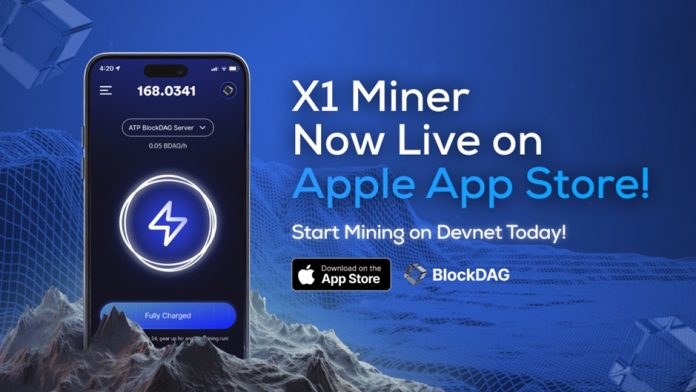
In contrast, BlockDAG stands out as a superior investment choice. Its X1 Miner App offers unparalleled mining potential, allowing users to earn up to 20 BDAG coins daily. Users can boost their earnings through unique referral codes, making BlockDAG a lucrative option among popular crypto coins. Additionally, BlockDAG rewards users with a 10% bonus on coin purchases made through referral links, fostering community growth and ensuring sustained engagement.

TRON Price Analysis: Resilience Amid Market Volatility

TRON (TRX) has shown a notable growth. It stabilised in early July despite a broader market sell-off. This resilience is evident from the substantial withdrawal of $13.1 million worth of TRX from exchanges. Currently, TRON is trading at $0.125, showing a promising trend amid renewed demand pressure. TRON’s network, with 1.83 million active addresses, outperforms major blockchains in activity. Technical indicators suggest that TRON could challenge the $0.143 high and reach $0.18 if the current bullish momentum continues.

BNB News: Faces Governance Challenges

BNB (Binance Coin) is in the focus due to internal governance issues. On July 16, the Bulgarian National Bank (BNB) will decide the fate of Deputy Governor Andrey Gyurov following an anti-corruption commission’s decision on his incompatibility to fulfil duties. This decision stems from Gyurov’s participation in a commercial company, which conflicts with his role at the BNB. Gyurov has appealed this decision, citing political motives. The BNB’s Management Board must navigate this complex legal and political landscape, considering the anti-corruption commission’s findings and the principles of central banking.

BlockDAG’s 10% Referral Rewards Program: Boosting BDAG Coin Purchases

BlockDAG is transforming mobile mining with its X1 Miner App, enabling users to manage and enhance their digital asset engagements. This sophisticated app allows users to mine up to 20 BDAG coins daily and amplifies their earnings through strategic referral codes. Users must engage with the app once every 24 hours to maximise their mining output, which is designed to ensure continuous interaction and heightened productivity within the BlockDAG ecosystem.

A significant feature of the X1 Miner App is the ability to boost mining rates through referrals. When a user invites friends or family who start mining on the platform, the original referrer benefits by earning additional BDAG coins per hour for each active miner they’ve introduced. This community-driven approach enhances individual earnings and fosters a collaborative effort among users, propelling the network’s growth and dynamism.

Moving beyond the X1 Miner App, BlockDAG extends additional incentives through its ‘Referral Rewards Program’, though in a different aspect of its ecosystem. This program is particularly appealing as it offers a 10% bonus on BDAG coin purchases made through referral links.

New users investing through these links earn the referrer a 10% bonus. This initiative rewards current users and promotes BlockDAG community growth, highlighting the platform’s commitment to expanding its user base. Furthermore, BlockDAG has achieved significant success in its presale, raising over $57.3 million across 19 batches. The presale batches progress towards batch 45 with a 30,000x ROI projection at launch. The early investors have already seen a 1300% price increase from batch 1 to the current presale batch 19, making it a top crypto to buy now.

Final Words

BlockDAG’s innovative approach through the X1 Miner App and 10% referral bonus program offers a comprehensive ecosystem for users to enhance their digital holdings and contribute to community growth. This initiative rewards current users and promotes BlockDAG community growth, highlighting commitment to expanding its user base. As TRON shows promising growth and BNB navigates internal challenges, BlockDAG’s ongoing presale phase, raising over $57.3 million, emerges as a compelling opportunity for those looking to invest in the popular crypto coins.

Join BlockDAG Presale Now:

Website: https://blockdag.network

Presale: https://purchase.blockdag.network

Telegram: https://t.me/blockDAGnetworkOfficial

Discord: https://discord.gg/Q7BxghMVyu

Germany’s 5G Deal Agreement with China

0

The landscape of global telecommunications is witnessing a significant shift as Germany, Europe’s largest economy, has reached a pivotal agreement regarding its 5G infrastructure. The German government has announced a deal to phase out Chinese-made components from its 5G network, specifically targeting products from Huawei and ZTE. This move is a strategic step to protect the nation’s critical infrastructure and maintain the integrity of its communication systems.

The decision comes after careful deliberation and negotiations with the country’s main network operators, Deutsche Telekom, Vodafone, and Telefonica. The phased approach will see critical components made by Huawei and ZTE barred from Germany’s 5G core networks by the end of 2026, with a complete removal from all parts of the network by the end of 2029. This timeline provides a structured and manageable transition for operators, minimizing disruptions to consumers and businesses alike.

Interior Minister Nancy Faeser has emphasized the importance of this agreement, stating that it is essential for protecting the “central nervous systems” of Germany as a business location. The deal reflects Germany’s commitment to national security and its responsiveness to the concerns of its Western partners, who have been wary of the potential risks associated with Chinese technology in critical infrastructure.

Moreover, Chinese laws, such as the Cybersecurity Law of the People’s Republic of China, compel companies and individuals to assist the state intelligence agency in collecting information upon request. This legal framework raises concerns about the confidentiality and integrity of data transmitted through networks utilizing Chinese technology.

Another risk is the potential for remote sabotage, which could disrupt essential services. For instance, medical devices or automotive systems that rely on 5G connectivity could be compromised, leading to dire consequences. The security protocols within the 5G network, specifically the Authentication and Key Agreement (AKA), have been found to have security insufficiencies, further exacerbating these risks.

The apprehension extends to fears that the technology could be used to facilitate cyber-attacks, disrupting economies and societies. As 5G technology underpins a vast array of critical services and functions, the stakes are incredibly high. The potential for these risks has led several countries to reconsider or restrict the use of Chinese components in their 5G infrastructure, as evidenced by Germany’s recent decision to phase out such components from its networks.

The implications of this agreement extend beyond national security. It signals a shift in the geopolitical landscape, highlighting the growing concerns over the influence of Chinese technology on global communication networks. Germany’s decision may prompt other nations to reevaluate their own 5G strategies and the role of Chinese companies within them.

Moreover, this move could accelerate innovation within the telecommunications sector, as Germany will likely seek alternative suppliers for its 5G components. This opens up opportunities for other global players in the market to contribute to building a secure and robust 5G network in Germany.

Germany’s deal to exclude Chinese components from its 5G networks by 2029 marks a significant moment in the evolution of global telecommunications. It underscores the delicate balance between technological advancement and national security, and it sets a precedent for how countries might navigate the complex web of international relations in the digital age. As the world watches, the effects of this decision will unfold in the years to come, potentially reshaping the future of 5G technology and its governance on a global scale.

Implications of ECOWAS Ruling on Nigeria Aftermath of ENDSARS Protest

0

The recent ruling by the Economic Community of West African States (ECOWAS) Court of Justice on the aftermath of the ENDSARS protests in Nigeria marks a significant moment in the country’s history. The court’s decision, which found the Nigerian government liable for human rights violations during the protests, has far-reaching implications for governance, accountability, and the rule of law in the region.

The ENDSARS protests, which erupted in October 2020, were a public outcry against police brutality, specifically targeting the Special Anti-Robbery Squad (SARS). The movement quickly gained momentum, with thousands of Nigerians, especially the youth, taking to the streets in demand for justice and an end to the abuse of power by security forces. The protests were largely peaceful until the tragic events at the Lekki Toll Gate, where security forces were reported to have opened fire on demonstrators.

The ECOWAS Court’s ruling acknowledges the violations of human rights that occurred during these protests, particularly at the Lekki Toll Gate. The court mandated the Nigerian government to pay compensation to the victims and upheld the rights to peaceful assembly and freedom of expression as fundamental human rights protected under international law.

This landmark judgment not only serves as a reminder of the importance of human rights but also emphasizes the need for governments to handle civil unrest with restraint and respect for the rule of law. It highlights the role of regional bodies like ECOWAS in upholding justice and human rights standards.

The implications of this ruling are profound:

Accountability: The decision sets a precedent for government accountability in the region. It sends a clear message that states cannot act with impunity, and there are consequences for the violation of citizens’ rights.

Compensation and Remedy: By mandating compensation, the court recognizes the need for reparations to the victims. This aspect of the ruling underscores the principle that victims of human rights abuses should be made whole to the extent possible.

International Human Rights Standards: The ruling aligns with international human rights standards, reinforcing the obligations of states to protect the rights of their citizens and to conduct themselves according to the dictates of international law.

Civil Society and Advocacy: The judgment is a victory for civil society and advocacy groups that have been relentless in their pursuit of justice for the victims of the ENDSARS protests. It validates their efforts and underscores the importance of civil society in holding governments accountable.

Government Response: The Nigerian government’s response to the ruling will be closely watched. It will be a test of the government’s commitment to the rule of law and its willingness to implement the court’s decisions.

Regional Influence: The ECOWAS Court’s ruling could influence other countries in the region to take human rights more seriously, potentially leading to broader reforms in governance and law enforcement practices.

The ECOWAS Court’s ruling on the ENDSARS protests is a watershed moment for human rights and governance in West Africa. It reaffirms the power of judicial mechanisms and regional cooperation in addressing human rights violations and sets a standard for government conduct during civil protests. As Nigeria and other ECOWAS member states reflect on this ruling, it is hoped that it will lead to positive changes that strengthen the protection of human rights and the rule of law across the region.

Nigerian Supreme Court Orders Direct Federal Allocation to Local Governments in Landmark Judgment

0

In a landmark ruling aimed at promoting transparency and accountability in the administration of public funds, the Supreme Court of Nigeria has ordered the federal government to pay allocations directly to local government councils (LGAs) from the federation account.

This decision is intended to bypass state governments, which have been accused of retaining and misusing funds meant for local government areas.

Delivering the judgment on Thursday, a seven-member panel of justices, led by Justice Emmanuel Agim, held that state governments have consistently abused their powers by retaining and using funds allocated to LGAs. The court held that states are mandated to ensure that their local government councils are democratically elected and that governors cannot use their powers to dissolve these councils arbitrarily.

“The amount standing to the credit of local government councils must be paid by the federation to the local government councils and not by any other person or body,” Justice Agim stated. “The said amount must be paid to local government councils that are democratically elected.”

The apex court also ruled that allocations to LGAs governed by unelected officials appointed by governors should be withheld.

Furthermore, the court issued an injunction restraining state governments from collecting funds belonging to local government councils in the absence of democratically elected councils.

The Judgment’s Backstory

The federal government initiated the suit against governors of the 36 states in May, seeking full autonomy for the country’s 774 local governments.

The suit, marked SC/CV/343/2024, was filed by Lateef Fagbemi, Attorney-General of the Federation (AGF) and Minister of Justice, on 27 grounds. The federal government argued that the constitution recognizes federal, state, and local governments as three tiers of government, each entitled to funds from the federation account.

The federal government contended that efforts to compel governors to comply with the 1999 Constitution’s requirement for democratically elected local government systems had failed. Continuing to disburse funds to governors for non-existing democratically elected local governments was seen as undermining the constitution’s sanctity.

Reactions

Oluseun Onigbinde, Director of the civic organization BudgIT, praised the Supreme Court judgment, describing it as a significant step towards constitutional democracy and accountability.

“I urge the federal government to clarify the state of State Independent Electoral Commissions (SIECs) to build trust in the electoral system. A comprehensive tax policy that makes LGAs more viable is also needed. Most LGAs need help to bear the nationwide burden of primary health and education standards in their current fiscal state,” Onigbinde said.

However, not everyone agreed with the judgment. Former Delta State governor, James Ibori, criticized the ruling as a setback for the principle of federalism as defined by section 162(3) of the 1999 Constitution (as amended). He argued that the constitution explicitly provides for the distribution of funds among the federal, state, and local governments through state joint local government accounts.

“The Apex Court’s ruling on the matter is an assault on true federalism. The federal government has no right to interfere with the administration of local governments under any guise whatsoever. There are only two tiers of government in a federal system of government,” Ibori stated.

Ibori outlined several implications of the ruling, highlighting its potential to shift the balance of power and erode state autonomy. He outlined them as follows:

  1. Constitutional Interpretation: The ruling appears to contradict the explicit provisions of Section 162 of the 1999 Constitution, raising questions about judicial interpretation.
  2. Balance of Power: Allowing federal intervention in local government finances centralizes more power at the federal level, contrary to federalism principles.
  3. State Autonomy: This decision could erode state autonomy, as states are meant to control their internal affairs, including local government administration.
  4. Financial Independence: The ruling may impact the financial independence of states and local governments, potentially allowing the federal government to use financial intervention as a political tool.
  5. Precedent Setting: The decision could set a precedent for further federal interventions in state governance, leading to a more centralized government system over time.

“In the coming days, we will begin to fully understand the implications of the Supreme Court decision. An assault on the constitution is not the answer to fiddling with the Joint LG Acount,” Ibori said.

“If the ruling is saying Governors cannot temper, touch, fiddle with the Joint Accounts, that’s fine because they shouldn’t be doing that in the first place. But asking the Federal Government to pay Local Governments allocations to the account of the Local Government directly will lead to utter chaos and avoidable friction in governance,” he added.

Concerns over Potential Mismanagement

While the ruling aims to ensure democratic governance at the grassroots level, there are concerns that it could inadvertently empower local government chairmen to mismanage or embezzle public funds. Critics argue that without proper oversight and accountability mechanisms, direct allocations to LGAs could lead to widespread corruption and theft of scarce resources.

Despite these concerns, supporters of the ruling believe it will promote greater transparency and efficiency in the use of public funds. They argue that direct allocation to LGAs will ensure that funds are used for their intended purposes, such as improving local infrastructure, education, and healthcare services.