DD
MM
YYYY

PAGES

DD
MM
YYYY

spot_img

PAGES

Home Blog Page 3129

Foundation expands to Base Network with Genesis Collection, as Ripple XRP launches Stablecoin pegged to US Dollar

0

The digital art world is witnessing a significant evolution as Foundation, an Ethereum-native art platform, expands its horizons with the launch of Base. This strategic move marks a new chapter in the platform’s journey, further solidifying its position in the blockchain art space. The inaugural event for this expansion is the unveiling of the “Genesis” collection, which features 16 auctions of exceptional works.

Headlining the Genesis collection is Jack Butcher, a name that resonates with innovation and creativity in the NFT ecosystem. Butcher, the founder of Visualize Value, has been at the forefront of blending artistic expression with blockchain technology. His latest venture into the Checks NFTs Ecosystem with the “Elements” collection has garnered attention for its unique approach to generative art paired with physical prints.

The Genesis collection represents more than just a series of auctions; it’s a celebration of the symbiotic relationship between art and technology. It symbolizes the continuous rebirth of our collective digital expression and the belief that innovation, when coupled with community, can spawn a universe of artistic exploration. Foundation’s choice of the term “Genesis” is apt, denoting not only the beginning of a new blockchain layer but also the emergence of new artistic narratives.

The collection showcases work by various artists, including the likes of Visualize Value and Chuck Anderson, among others. Each piece is a testament to the diverse and dynamic nature of digital art, offering collectors a chance to own a part of this groundbreaking moment.

Foundation’s expansion to Base is a strategic step towards accommodating the growing demand for NFTs and providing a more scalable solution for artists and collectors alike. By transitioning to Ethereum Layer 2, Foundation is addressing the need for more efficient transactions while maintaining the integrity and security of the blockchain.

The Genesis collection is not just an auction; it’s a milestone in the digital art world. It’s an invitation to witness and participate in the evolution of art in the age of blockchain. As we observe the bids unfold and the auctions come to a close, one thing is certain: the intersection of art and blockchain is just beginning to reveal its full potential.

For those interested in exploring the Genesis collection or learning more about Jack Butcher’s innovative approach to NFTs and physical art, further details can be found on Foundation’s website and through various media coverage of the event. The convergence of art, technology, and community continues to push the boundaries of what is possible, and Foundation is at the heart of this exciting movement.

Foundation’s partnership with Base is a clear indication of the exciting developments unfolding in the world of NFTs and the broader implications for artists and collectors alike. The future of NFTs is bright, and it is innovations like these that will continue to drive the industry forward. The digital art world is on the cusp of a new era, and Foundation’s strategic expansion to Base is a testament to the potential of NFTs to revolutionize the way we create, collect, and interact with art.

Ripple XRP to launch stablecoin pegged to US Dollar

Ripple, a prominent player in the blockchain and cryptocurrency space, has announced a significant move in the stablecoin market with plans to launch a stablecoin pegged to the US dollar. This development marks a strategic expansion for Ripple, aiming to provide a stable digital currency that could potentially transform cross-border transactions and payments.

The announcement comes at a time when the stablecoin market is experiencing rapid growth, with predictions suggesting it could reach a staggering $2.8 trillion by 2028. Ripple’s entry into this market is poised to offer a compliant, enterprise-grade stablecoin solution that could serve as a cornerstone for institutional and decentralized finance (DeFi) use cases.

Ripple’s stablecoin is designed to be pegged 1:1 to the US dollar, ensuring stability and trust for users. The company plans to back the stablecoin with a combination of US dollar deposits, short-term US government treasuries, and other cash equivalents, all of which will be audited by a third-party accounting firm to ensure transparency and reliability.

At launch, the stablecoin will be available on the XRP Ledger (XRPL) and Ethereum (ETH) blockchains, with plans to expand to other blockchains and DeFi protocols over time. This strategic move is expected to unlock new opportunities across multiple ecosystems, driving adoption and development within the XRP Ledger community.

One of the primary benefits of stablecoins is their ability to provide a predictable haven within the volatile world of cryptocurrency. Unlike traditional cryptocurrencies, whose values can fluctuate wildly, stablecoins are designed to maintain a consistent value, often pegged to a fiat currency like the US dollar. This stability is crucial for individuals and businesses that require certainty in their transactions and financial planning.

Stablecoins also facilitate faster and cheaper transactions, especially when it comes to cross-border payments. Traditional international money transfers can be slow and expensive, with multiple intermediaries and high fees. Stablecoins, on the other hand, can be transferred almost instantly across the globe with minimal transaction costs, thanks to the underlying blockchain technology.

Another significant advantage is the accessibility they provide. Stablecoins can be used by anyone with an internet connection, bypassing the need for a bank account. This is particularly beneficial for people in developing countries or those who are unbanked, offering them a way to participate in the global economy.

Ripple’s CEO, Brad Garlinghouse, emphasized that this move is a natural step for the company to continue bridging the gap between traditional finance and crypto. The stablecoin is set to leverage Ripple’s decade-plus experience in building financial solutions, aiming to improve customer experiences and provide a trusted medium of exchange for emerging markets.

The launch of Ripple’s stablecoin is not just a new product offering but also a statement of resilience and innovation. As the company navigates through various market cycles, this initiative reflects its commitment to compliance and a forward-thinking approach to the evolving digital asset landscape.

For investors, users, and developers, Ripple’s stablecoin could represent a new era of stability and utility in the cryptocurrency market. It’s a development that could redefine the way we think about digital currencies and their role in a rapidly digitizing global economy.

UK’s Decision to Increase Minimum Wage for Immigrants is a Strategic Move with far-reaching Consequences

0

The United Kingdom’s recent decision to increase the minimum wage for immigrants on a Skilled Worker visa by 48% marks a significant shift in immigration policy. This change raises the general salary threshold from £26,200 to £38,700. The move is part of a broader strategy to manage migration flows and prioritize the employment of British workers.

The increase aligns with the Home Office’s five-point plan to reduce net migration, which was announced in December 2023. The plan includes a range of measures, such as changes to the Shortage Occupation List and adjustments to family visa income requirements. The new salary threshold is based on the median of the 2023 Annual Survey of Hours and Earnings (ASHE) data, reflecting a shift from the previous 25th percentile benchmark.

For those already in the UK on a Skilled Worker visa seeking to extend their permission or change employers, transitional salaries will apply. These transitional provisions will see minimum salary thresholds increase by approximately 10-20%, depending on the role.

The economic implications of this policy are complex. Proponents argue that by attracting high-skilled workers, the UK can enhance its competitive edge in the global market. These workers are likely to bring specialized skills that can fill gaps in the UK labor market, potentially leading to increased productivity and economic growth.

Critics, however, raise concerns about the potential downsides. They argue that the higher wage threshold could deter a significant number of skilled immigrants who might otherwise have contributed to the UK economy. Additionally, sectors that rely heavily on immigrant labor, such as healthcare and technology, may face challenges in filling vacancies, which could hinder service delivery and innovation.

The policy’s impact on the UK economy will also depend on how it interacts with other factors, such as the current inflation rate and the state of the job market. While the wage increase may improve the financial situation of some immigrants, the overall effect on the economy will be influenced by a variety of elements, including consumer spending, business investment, and the supply and demand for labor.

The UK’s decision to increase the minimum wage for immigrants is a strategic move with far-reaching consequences. It reflects a balancing act between attracting high-skilled workers and addressing domestic labor market concerns. As the policy unfolds, its impact on the UK economy will be closely monitored and debated by policymakers, economists, and the public alike.

The policy has sparked a variety of responses, with some praising the government’s efforts to control immigration and protect local jobs, while others raise concerns about the potential impact on sectors that rely heavily on skilled immigrant workers. The changes are set to reshape the landscape of skilled labor in the UK, affecting both employers and potential migrant workers.

As the UK navigates post-Brexit immigration policies, these adjustments to the minimum wage for immigrants reflect an evolving approach to labor market needs and economic strategy. The full implications of this policy change will unfold over time, as businesses, immigrants, and policymakers adapt to the new regulations.

Experts Back BlockDAG’s 30,000x ROI Following V2 Whitepaper Launch: Explore Latest Conflux News & RNDR Price

0

BlockDAG has become a game-changer in cryptocurrency, capturing expert attention with a staggering 30,000x ROI potential following its V2 whitepaper launch. This incredible development places BlockDAG at the forefront of blockchain innovation, promising unprecedented scalability, security, and speed. Meanwhile, the crypto community is abuzz with the latest Conflux news, showcasing strategic advancements and partnerships that signal robust growth.

On the other hand, RNDR token is making waves, demonstrating significant price movements that reflect its increasing relevance in the distributed GPU rendering network. As BlockDAG sets new standards in the industry, its revolutionary approach and the potential for monumental returns draw comparisons with other key players like Conflux and RNDR, highlighting a period of intense innovation and investment opportunities in the blockchain sphere.

RNDR’s Market Momentum

RNDR, a standout in the distributed GPU rendering domain, showcases impressive market dynamics with a notable 40% monthly growth and a market capitalisation that has surged to $4.13 billion. This performance cements its status as a significant entity in the crypto market.

Even amidst fluctuations in trading volume, RNDR’s potential remains robust, showing the lively and ever-evolving nature of the cryptocurrency environment. Its resilience and growth trajectory reflects RNDR’s strong market position and underline the broader crypto market’s vibrant and dynamic character, showing promising prospects for RNDR in the continuously shifting landscape of digital currencies.

Conflux’s Strategic Moves

Conflux is capturing the spotlight with its strategic alliance with BlockBooster, a move aimed at amplifying Web3 opportunities. This collaboration has catalysed a remarkable 77% appreciation in Conflux’s token value, illustrating the project’s dedication to enhancing blockchain infrastructure.

This significant uptick is a testament to Conflux’s proactive approach to establishing a scalable and secure ecosystem for blockchain technology. Such a partnership not only boosts Conflux’s standing in the blockchain community but also highlights its role in advancing the Web3 landscape. By aligning with BlockBooster, Conflux is not just increasing its market value; it’s reinforcing its commitment to innovation and developing a robust, future-proof blockchain infrastructure, demonstrating its pivotal role in shaping the future of decentralised technologies.

BlockDAG’s Rise in Las Vegas

Conflux is capturing the spotlight with its strategic alliance with BlockBooster, a move aimed at amplifying Web3 opportunities. This collaboration has catalysed a remarkable 77% appreciation in Conflux’s token value, illustrating the project’s dedication to enhancing blockchain infrastructure. This significant uptick is a testament to Conflux’s proactive approach to establishing a scalable and secure ecosystem for blockchain technology.

Such a partnership not only boosts Conflux’s standing in the blockchain community but also highlights its role in advancing the Web3 landscape. By aligning with BlockBooster, Conflux is not just increasing its market value; it’s reinforcing its commitment to innovation and developing a robust, future-proof blockchain infrastructure, demonstrating its pivotal role in shaping the future of decentralised technologies.

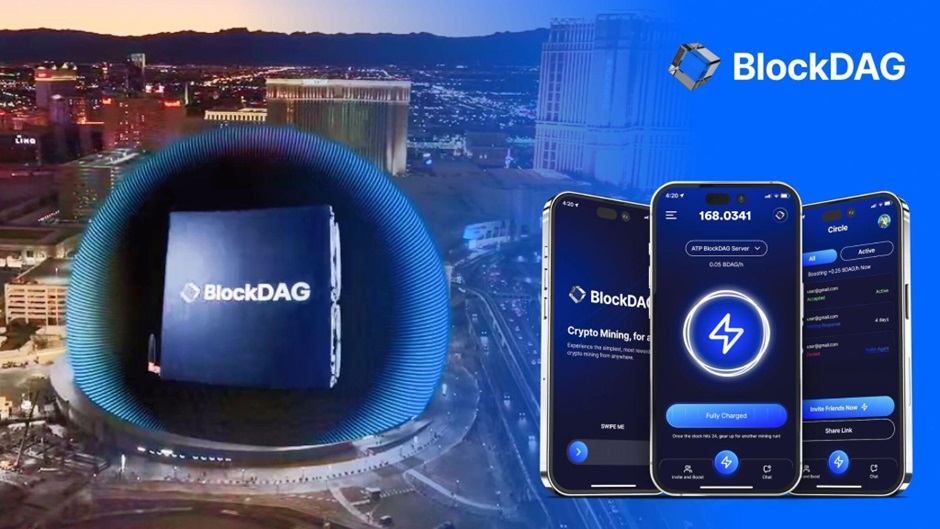
The crypto world turned its eyes to the Las Vegas Sphere, where BlockDAG’s whitepaper launch was celebrated, signifying a transformative moment in blockchain technology. This event was not just a milestone for BlockDAG but a testament to the potential of innovative blockchain solutions in shaping the future of digital transactions.

The enthusiastic reception of BlockDAG’s presale, raising $13.5 million, reflects the growing investor confidence in its technology and vision. This investment surge clearly indicates the market’s recognition of BlockDAG’s potential to redefine blockchain technology, offering a platform that is efficient and transformative.

BlockDAG’s introduction of low-code/no-code platforms and advanced protocols like PHANTOM and GHOSTDAG herald a new era of blockchain usability and innovation. By empowering users with accessible and efficient blockchain solutions, BlockDAG is poised to drive widespread adoption and creativity in the blockchain space.

The Final Call

Embrace the future of blockchain with BlockDAG, where groundbreaking technology meets unprecedented growth potential. As BlockDAG redefines the boundaries of blockchain efficiency and scalability, it invites you to be part of a movement that promises financial returns and a significant leap forward in blockchain innovation.


Join the BlockDAG presale now and be part of the future of blockchain technology.

Join BlockDAG Presale Now:

Website: https://blockdag.network

Presale: https://purchase.blockdag.network

Telegram: https://t.me/blockDAGnetworkOfficial

Discord: https://discord.gg/Q7BxghMVyu


NERC Implements N1463.3/$ FX Rate for Band A Electricity Customers, Raising Concern Over the Sustainability of Naira Gains

0

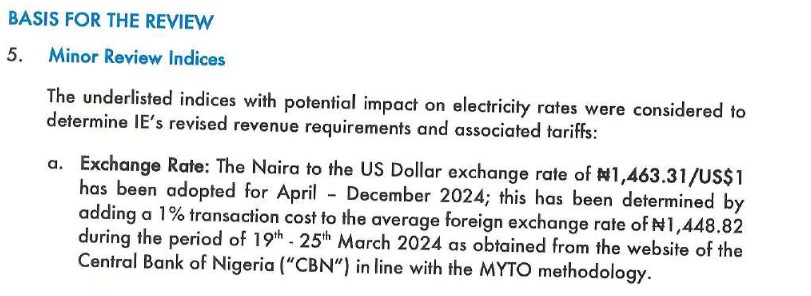
The Nigerian Electricity Regulatory Commission (NERC) has implemented an exchange rate of N1463.3/$ in calculating the new electricity tariff for Band A consumers as part of the recent electricity tariff review.

This decision, outlined in the revised Multi-Year Tariff Order (MYTO) sent to all 11 electricity distribution companies (DisCos) across the country in 2024, reflects a significant increase compared to previous rates.

The exchange rate applied in the reviewed order marks a considerable rise from earlier calculations, notably surpassing the figure of N919.38/$ recorded in January. This difference of N543.92 underscores the impact of fluctuations in the foreign exchange market on tariff adjustments.

The surge in prices is attributed to ongoing fluctuations in the foreign exchange market since the beginning of the year, with the Nigerian naira experiencing a sharp decline. By March, the naira reached as high as N1800 in the parallel market. However, recent weeks have seen a notable recovery, with the naira dropping to below N1300 in the parallel market, largely due to reforms implemented by the Central Bank of Nigeria (CBN).

CBN’s reforms include raising the interest rate to 24.75%, providing foreign exchange to Bureaux de Change (BDCs) at a set rate, and imposing restrictions on international oil companies to limit their immediate repatriation of 100% of foreign exchange earnings.

In addition to the exchange rate adjustment, NERC has incorporated the new domestic gas price of $2.42/MMBTU, set by the Nigerian Midstream and Downstream Petroleum Regulatory Agency (NMDPRA), into the updated electricity tariff calculation for Band A consumers.

This decision follows NERC’s earlier announcement of increasing the electricity tariff for Band A consumers from N68/KWh to N225 per Kilowatt-hour. Notably, this hike affects approximately 15% of total electricity consumers in the country who enjoy around 20 hours of electricity daily.

Before NERC’s tariff increase for Band A consumers, the NMDPRA had raised the base price for domestic gas supply to power companies nationwide from $2.19/MMBTU to $2.42/MMBTU, further contributing to the adjustments in electricity tariffs.

However, NERC capping electricity tariff calculation at N1463.3/$ is seen as a sign that recent naira gains at the FX market are not sustainable. Financial experts had earlier warned of indications that the central bank wouldn’t be able to maintain FX supplies to the BDCs, which has been instrumental to the naira’s appreciation, for long.

“Why celebrate “strong” Naira and then use weak Naira to do government business?,” Kalu Aja asked. “So you are paying higher power tariffs because of weak naira? Why not use $1: N900?”

Other government agencies, including the Nigerian Customs Service, have also been observed using exchange rates higher than what is obtainable in (NAFEM) Nigeria’s official FX window.

Banking, Prime Lending Rates, Manufacturing Output in Nigeria

1

According to Nairametrics, below are the top 10 banks with the highest prime lending rates for manufacturing companies in Nigeria,  as at March 8, 2024:

Titan Trust Bank: Prime rate – 23.00%; Maximum rate – 30.50%

Optimus Bank: Prime rate – 23.75%; Maximum rate – 35.00%.

Fidelity Bank: Prime rate – 24.00%; Maximum rate – 26.00%

Providus Bank: Prime rate – 25.00%; Maximum rate – 30.00%

Unity Bank: Prime rate – 26.00%; Maximum rate – 33.00%

Ecobank: Prime rate –  26.75%; Maximum rate – 35.00%

Heritage Bank: Prime rate –  27.00%; Maximum rate – 35.00%

United Bank for Africa (UBA): Prime rate –  28.50%; Maximum rate – 32.00%

Wema Bank: Prime rate –  30.50%; Maximum rate – 31.50%

Keystone Bank Ltd: Prime rate –  31.00%; Maximum rate -36.00%

Verdict: there is no manufacturing sector which could be globally competitive at these rates. Yet, you do not blame these banks. This is what drives those interest rates as provided by the Central Bank of Nigeria https://www.cbn.gov.ng/rates/mnymktind.asp

A typical central bank does two main jobs – boost employment through interest rate management and stabilize national currency through the control of inflation. Nigeria’s consistent high rates are designed to manage inflation which remains stubbornly high, and as that happens, the other part of boosting employment is largely neglected.  

Here, I make my point that we may need to try other things, and that could mean boosting Supply (i.e. manufacturing output) via lower rates, if we desire to improve employment and bring inflation down. At lower rates, companies have money to expand production, creating employment along the line.

If the Central Bank of Nigeria is afraid that it could create runaway inflation, I recommend a trial in Orendu Market in Ovim. Yes, make the rates 7% and watch how Supply will improve and within a cycle, we can forget this stubborn high inflation!

*The Prime Lending Rate (PLR) is the interest rate that commercial banks charge their most creditworthy customers for short-term loans. It serves as a benchmark for interest rates on a wide range of financial products, including variable-rate home loan, personal loans, and business loans.

Largely, Western economics textbooks will teach you to raise interest rates to control inflation because they have a decent credit economy. When you raise rates, among many things, you make the cost of borrowing higher, and that can affect consumer spending since credit card rates will move up. If you can depress demand through suppressing consumer spending via high interest rates, you have a good chance of controlling inflation.

But in Nigeria with limited consumer credit, that does not make a lot of sense. In other words, when you increase interest rates, you are not clearly influencing demand since access to credit is limited. Rather, what happens is that when rates go up, companies struggle because the cost of capital is increased, and if that is the case, they do not invest a lot, and that triggers lower supply. With lower supply, inflation jumps up again. That is why for years, inflation has continued to worsen in Nigeria despite our consistent increase in rates.