DD
MM
YYYY

PAGES

DD
MM
YYYY

spot_img

PAGES

Home Blog Page 3129

Tinubu Asks National Assembly for N6.2trn Budget Increase, to Be Funded by Tax on Banks’ FX Windfall Profits

0

President Bola Tinubu has petitioned the Senate for a substantial budget increase of N6.2 trillion. This request, if approved, will elevate the 2024 appropriation act from N28.7 trillion to a staggering N34.9 trillion.

This move, which seemingly underlines the administration’s urgent need to address the nation’s critical infrastructure gaps and mounting recurrent expenditures, has come under criticism.

On Wednesday, Senate President Godswill Akpabio read Tinubu’s letter to the upper legislative chamber. According to the president’s request, N3.2 trillion is earmarked for infrastructure projects, while N3 trillion is intended for recurrent expenses. These funds, it said, are crucial for the “Renewed Hope Infrastructure Projects” and the seamless functioning of the federal government.

“Pursuant to section 58 (2) of the constitution of the federal republic of Nigeria as amended, I forward herewith the above-named bills for consideration and passage by the senate. The appropriation act amendment bill seeks to amend the principal act to provide the sum of N3,200,000,000,000 for Renewed Hope Infrastructure Projects and other critical infrastructure projects to be undertaken across the country and the sum of N3,000,000,000,000 to meet further recurrent expenditure requirements necessary for the proper operation of the federal government. They shall be funded by accruing to the federal government of Nigeria,” Tinubu said in his letter.

Taxing Times: The Finance Act Amendment

To fund the budget expansion, Tinubu’s administration is targeting the financial sector with proposed amendments to the Finance Act of 2023. The president seeks to implement a one-time windfall tax on the substantial foreign exchange gains reported by banks.

It could be recalled that the Central Bank of Nigeria (CBN) prohibited banks from using the proceeds of the FX windfall for their recapitalization. The CBN has outlined various avenues for banks to raise fresh equity capital, including private placements, rights issues, offers for subscriptions, and strategic mergers and acquisitions.

The federal government said it intends to use the tax fund to bankroll essential capital infrastructure, education, healthcare, and public welfare initiatives—key elements of the “Renewed Hope Agenda.”

“Furthermore, the proposed amendments to the Finance Acts 2023 are required to implement a one-time windfall tax on the foreign exchange gains realized by banks in their 2023 financial statements to fund capital infrastructure development, education, and healthcare as well as welfare initiatives, all of which are components of the Renewed Hope Agenda,” Tinubu said.

The FX Windfall

Nigerian banks have enjoyed remarkable profits driven by foreign exchange revaluation gains. In 2023, the top seven local banks reported combined profits of N2.48 trillion, with an additional N882.9 billion in the first quarter of 2024, according to Nairalytics.
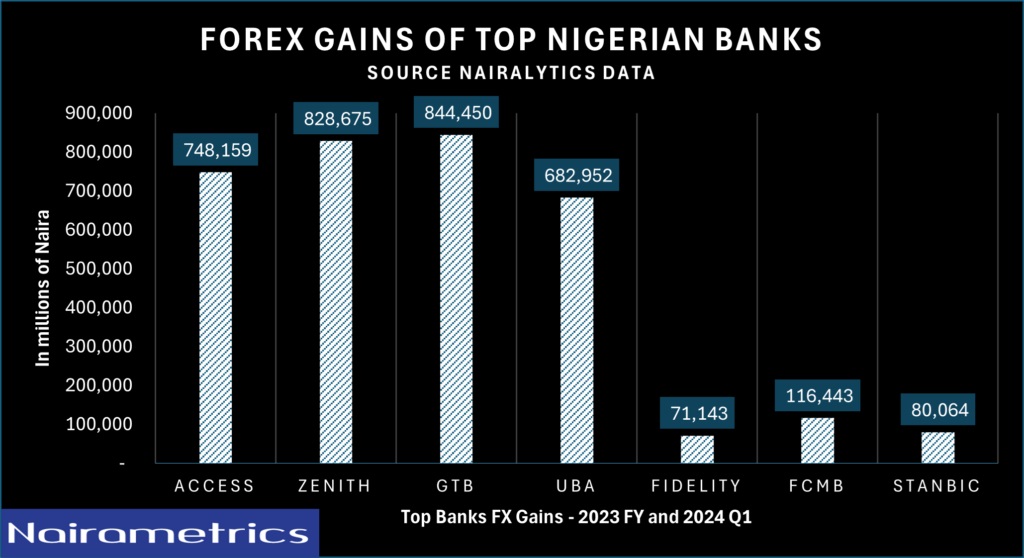
With oil revenue dwindling, the federal government is understood to have shifted attention to the banks’ FX gains. The government’s earlier move to borrow from the pension was met with stiff opposition.

Tinubu Contrasting His Tax Reform Initiative

Tinubu’s approach, however, reveals a paradox. The administration is simultaneously attempting to tax its way out of the economic crisis while introducing tax reforms designed to alleviate multiple taxation burdens on businesses. This dual strategy raises questions about the coherence and efficacy of the government’s economic policies.

Economic experts say the push to boost tax revenues, particularly through windfall taxes on banks, seems at odds with ongoing tax reform efforts aimed at reducing the tax burden on businesses. The tax reforms are expected to foster a conducive business environment and stimulate economic growth.

Trump Likens the US to Insurance Company, Asks Taiwan to Pay for Defense

0

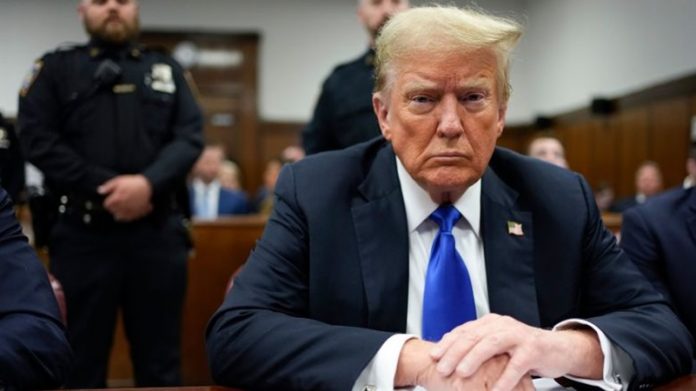
Former U.S. President Donald Trump, who is once again seeking the White House, recently stirred controversy with his remarks about Taiwan. Trump suggested that Taiwan should pay the U.S. for its defense, comparing the country to an insurance policy that offers no returns.

“Taiwan should pay us for defense,” Trump said.

“You know, we’re no different than an insurance company. Taiwan doesn’t give us anything.”

He added, “They took almost 100% of our chip industry, I give them credit. We should have never let that happen.”

These comments, made during an interview with Bloomberg Businessweek, reflect a broader discourse on the geopolitical and economic intricacies surrounding Taiwan, particularly its pivotal role in the global semiconductor industry.

Taiwan holds a unique and critical position in the global semiconductor industry. The island is home to Taiwan Semiconductor Manufacturing Co. (TSMC), the world’s largest and most advanced chipmaker. TSMC produces cutting-edge semiconductors for major American technology companies like Apple and Nvidia, making Taiwan indispensable to the tech sector.

According to TrendForce data, Taiwan is projected to account for 66% of the world’s production of advanced chips in 2024, while the U.S. is expected to contribute just 6%.

The concentration of semiconductor manufacturing in Taiwan has raised significant concerns about the potential risks associated with geopolitical tensions, especially given China’s stance on Taiwan. Beijing considers Taiwan a part of its territory, and Chinese President Xi Jinping has asserted that reunification with the mainland is inevitable.

In the event of a Chinese attack on Taiwan, the ramifications for global technology supply chains could be catastrophic. TSMC Chairman Mark Liu has warned that any military action would render TSMC’s factories inoperable, disrupting the global supply of advanced semiconductors.

Trump’s suggestion that Taiwan should pay the U.S. for defense highlights his transactional approach to international relations. In the past, Trump’s Make America Great Again (MAGA) mantra was buoyed by his idea of curtailing the cost of US global leadership.

Thus, by likening the U.S. defense commitment to an insurance policy, Trump emphasizes his belief that allies should contribute more financially to their security arrangements.

“Now we’re giving them billions of dollars to build new chips in our country, and then they’re going to take that too, in other words, they’ll build it but then they’ll bring it back to their country,” he said.

This perspective is consistent with his broader views on global defense spending, where he has often criticized allies for not bearing a fair share of defense costs.

However, Trump’s comments contrast the broader context of U.S.-Taiwan relations and the geopolitical stakes involved. Taiwan’s semiconductor industry is not only vital to the global economy but also strategically important to U.S. technological leadership. The reliance on Taiwanese semiconductors means that maintaining stability in the region is in the U.S.’s direct interest, beyond any financial considerations.

This means withdrawing support for Taiwan, especially in the face of the ongoing chip and geopolitical warfare with China, would be a strategic misstep. The semiconductor industry is crucial for national security, given its applications in everything from consumer electronics to military technology. Thus, analysts believe that ensuring the stability and security of Taiwan is integral to maintaining the U.S.’s technological edge and economic security.

The Biden administration has recognized these risks and has taken steps to reduce the U.S.’s dependence on Taiwanese chip manufacturing. Through initiatives like the CHIPS and Science Act, the U.S. government has allocated significant grants to encourage semiconductor companies to establish and expand their manufacturing facilities within the United States. These efforts aim to build a more resilient and self-sufficient domestic semiconductor industry.

Political Motive Behind Trump’s Comments?

Trump’s current stance on Taiwan is believed to be based on political calculations. Many believe that by advocating for Taiwan to pay for defense, Trump appeals to a segment of his base that favors reduced U.S. spending abroad and increased financial contributions from allies.

Despite Trump’s rhetoric, the issue of Taiwan’s defense and its semiconductor industry remains subject to bipartisan consensus in the U.S. Congress. Lawmakers from both parties agree on the strategic importance of supporting Taiwan against potential Chinese aggression and ensuring the resilience of global semiconductor supply chains. The geopolitical tensions and the ongoing technological competition with China make it imperative for the U.S. to continue its support for Taiwan.

d.light Announces The Closure of $176 Million Securitization Facility For Affordable Off-grid Solar in Kenya, Tanzania And Uganda

0
Fund, money cash dollar

d.light, a global provider of transformational household products and affordable finance for low-income households, has announced the closing of a new securitization facility worth $176 million.

The new financing, provided by the social impact-focused asset management company African Frontier Capital (AFC), will be used to purchase receivables in Kenya, Tanzania, and Uganda. Also, the financing will enable d.light to expand its PayGo consumer finance offering, making solar-powered products accessible to more low-income households and communities without electricity.

With this recent funding, d.light has secured a total of $718 million in securitized financing across five separate facilities since 2020.

Commenting on the funds secured, the company’s CEO Neejip Tozun said,

“This new facility is another landmark step in d.light’s mission to provide people with affordable energy that is also clean, safe, and sustainable. It lets us expand our reach so that millions of off-grid families across Kenya, Tanzania and Uganda can experience the benefits of solar energy. Facilities like this make possible our pioneering PayGo consumer financing model with which we are able to offer solar home systems and high-efficiency appliances to the people that need them most in a way that is affordable and sustainable.“

Tozun added that with the new facility, d.light now has receivables-based financing in all of its PayGo markets Kenya, Uganda, Tanzania, and Nigeria, noting that this achievement allows the company to maintain consistent positive cash flow and eliminates the need for additional external equity fundraising to support its growth.

Also commenting on the funding, Eric De Moudt, AFC’s founder and CEO said,

“This milestone is a testament to how data-driven financial innovation can play an important role in bringing financial inclusion to the world’s most vulnerable communities, helping them to gain access to clean and modern energy and the ensuing social and economic benefits that come about as a result. We are grateful to d.light for its ongoing leadership in the off-grid solar sector and proud to partner with such a visionary company”.

Founded in 2007 by Ned Tozun and Sam Goldman at Standford University, d.light is a front-runner in providing access to clean and affordable energy to millions of people across 70 countries globally. In 2008, the company developed its first product, and since then, it has constantly been expanding its operations and reach across the globe.

In March 2010, d.light hit the milestone of transforming 1 million lives. The company has been working with distribution partners in Kenya, Uganda, and Tanzania since 2010, and has had its operations in Kenya since 2011, in Uganda since 2015, and in Tanzania since 2016.

d.light has a proven track record in the use of securitized finance to support its solar-powered household products in sub-Saharan Africa. It has previously set up four facilities, beginning in 2020 and including two in Kenya and one each in Nigeria and Tanzania. The combined purchasing value of these existing facilities plus the new facility is $718 million.

In 2011, the company introduced a new solar study lamp, and by then, it had transformed 5 million lives with our energy-efficient initiative. The social impact of its products and initiative was recognized by Forbes when its founders were recognized among the World’s Top 30 Social Entrepreneurs in November 2011.

Not only the West but the Middle East has also recognized d.light’s efforts towards creating a sustainable future after it won the Zayed Future Energy Prize, the UAE’s global recognition award in sustainability in 2013.

Trump Outsmarts Biden On Youth Votes with New Love for TikTok

0

Donald Trump has an uncommon political sagacity. His recent embrace of TikTok has taken it to the next level. This was the president who began the high voltage searchlight on TikTok, and even signed things to make the company history in the United States.

In 2020, he signed executive orders aimed at banning TikTok and WeChat unless their U.S. operations were sold to American companies. However, these efforts were blocked by U.S. courts, and the subsequent Biden administration withdrew the Trump-era executive orders in June 2021.

Despite his previous efforts to ban TikTok, Trump recently told Bloomberg BusinessWeek, “I’m for TikTok because you need competition. If you don’t have TikTok, you have Facebook and Instagram.”

This shift in position has raised eyebrows, given his attempts to ban TikTok and history of criticizing Meta Platforms-owned Facebook and Instagram for suspending his accounts following the January 6 Capitol Hill riot.

But the BIG bans happened where Trump was de-platformed in Facebook, Twitter and other social media ecosystems. Then, another moment came: he now wants to have his job of the presidency back, and his opponent – Mr. Biden – has played into the hands of the frenemy-strategists who legislated for the extinction of TikTok.

But instead of Trump joining the party. He has changed the playbook: “I’m for TikTok”.

Magically, he wins the young people, a weak point for him when last he was on the ballot. And Biden is now the person against TikTok and the young people. But beyond politics, why should Trump reward Facebook which banned him, by kicking its main competitor out of America?  With TikTok advocacy, Trump uses one stone to get two birds. He wins the presidency!*

*yet to decide who gets my vote. I am a one issue voter: education.

“I’m for TikTok”: Trump Reiterates Newly found Love for Embattled Chinese App

1

Republican presidential candidate Donald Trump recently voiced his support for TikTok, even as the popular short-form video app faces a potential ban in the United States. This marks a significant shift from his previous stance when, as president, he attempted to ban TikTok and Chinese-owned WeChat in 2020.

During his presidency, Trump declared TikTok a national security threat, citing concerns over the app’s Chinese ownership and potential data privacy issues.

In 2020, he signed executive orders aimed at banning TikTok and WeChat unless their U.S. operations were sold to American companies. However, these efforts were blocked by U.S. courts, and the subsequent Biden administration withdrew the Trump-era executive orders in June 2021.

Despite his previous efforts to ban TikTok, Trump recently told Bloomberg BusinessWeek, “I’m for TikTok because you need competition. If you don’t have TikTok, you have Facebook and Instagram.”

This shift in position has raised eyebrows, given his attempts to ban TikTok and history of criticizing Meta Platforms-owned Facebook and Instagram for suspending his accounts following the January 6 Capitol Hill riot.

Political Motivations Behind Trump’s U-Turn

Trump’s newfound support for TikTok can be seen as a politically motivated move. After being banned from Facebook and Twitter (now X), Trump’s relationship with major social media platforms soured. His company, Trump Media and Technology Group, operates Truth Social, a social media platform he quickly founded as a competitor to mainstream networks like Facebook and Twitter following his ban.

Supporting TikTok now, a rival to these platforms, is believed to align with Trump’s broader strategy to challenge the dominance of tech giants that have previously censored him.

Additionally, Trump’s endorsement of TikTok could be a strategic move to appeal to younger voters who heavily use the app. TikTok’s vast user base in the U.S., reportedly around 170 million Americans, represents a significant demographic that could influence electoral outcomes. By positioning himself as a supporter of TikTok, Trump may be attempting to garner favor among these users.

Legislative Challenges for TikTok

Despite Trump’s support, the future of TikTok in the U.S. remains uncertain. In April 2024, President Joe Biden signed a law requiring TikTok’s Chinese parent company, ByteDance, to divest its U.S. assets by January 19, 2025, or face a ban. This bipartisan legislation was instigated by ongoing concerns among U.S. lawmakers about potential national security risks posed by Chinese-owned apps.

The Biden administration’s approach aims to end Chinese-based ownership of TikTok on national security grounds without outright banning the app. This nuanced stance came after Biden had reversed Trump’s executive orders Trump targeting TikTok.

The U.S. government’s scrutiny of TikTok is part of a broader effort to address concerns about foreign influence and data privacy. Lawmakers worry that the Chinese government could access data on American users or use the app for espionage. These concerns have driven bipartisan support for measures to limit Chinese ownership of technology companies operating in the U.S.

However, critics argue that banning TikTok or forcing its sale could have significant economic implications. TikTok has become a major player in the social media industry, with substantial investments in the U.S. economy and a large user base. The app’s popularity among young people and content creators has also made it an important platform for cultural and social expression.