DD
MM
YYYY

PAGES

DD
MM
YYYY

spot_img

PAGES

Home Blog Page 3140

Nigeria-UK Aviation Row Deepens as Nigeria Threatens Retaliation Over Heathrow Slot Denial to Air Peace

0

The simmering tensions between Nigeria and the United Kingdom over Air Peace’s access to Heathrow Airport slots have reached a boiling point, with Nigeria’s Minister of Aviation and Aerospace Development, Festus Keyamo, formally lodging a complaint with the UK government.

The dispute, which has been escalating over several months, centers around what Nigeria perceives as unfair treatment of Nigerian-based airline, Air Peace, in its efforts to secure landing slots at the UK’s primary airport, London Heathrow.

In a letter dated August 1, 2024, and addressed to Louise Haigh, the UK Secretary of State for Transport, Keyamo expressed the Nigerian government’s “displeasure” over the “consistent denial of slot” allocation to Air Peace at Heathrow. He warned that Nigeria might be forced to retaliate by denying British Airways and Virgin Atlantic access to the Lagos and Abuja airports if the situation is not resolved.

Background: Air Peace’s Struggles and Onyema’s Allegations

The conflict over airport slots began to intensify earlier this year. In April 2024, Allen Onyema, the Chief Executive Officer of Air Peace, publicly raised concerns over what he described as unfair competition tactics employed by foreign airlines, particularly on the Nigeria-UK route.

Onyema accused the UK government of deliberately frustrating Air Peace’s efforts to establish a strong presence in the UK by making it difficult for the airline to secure slots at Heathrow, the more desirable of London’s two major airports.

Onyema has argued that these tactics are designed to protect British carriers from competition, thereby maintaining their dominance on the lucrative Nigeria-UK route. “The UK government is doing everything to frustrate our entry into Heathrow,” Onyema stated. “They know that if we get into Heathrow, we will offer competitive fares and better service, which will challenge the monopoly that foreign airlines currently enjoy.”

Air Peace commenced its UK operations in March 2024 but was forced to operate out of Gatwick Airport, the secondary airport that is less convenient for passengers due to its distance from central London. The airline’s repeated requests for slots at Heathrow have been denied, which has led to increasing frustration within the Nigerian government and among the airline’s management.

Keyamo’s Letter: Nigeria’s Demand for Fair Treatment

In his August 1 letter, Keyamo expressed the Nigerian government’s dissatisfaction with the ongoing situation. He highlighted that while British Airways and Virgin Atlantic have been operating from Nigeria’s primary airports in Lagos and Abuja without any restrictions, Air Peace has been consistently denied access to Heathrow.

“The Airline had made consistent efforts in the past to fly into Heathrow Airport from Lagos, but was denied, and only granted approval to fly into Gatwick Airport from Lagos,” Keyamo wrote.

“Following the approval granted the Airline by the Nigerian Government to fly the Abuja-London route, the Airline approached the Slot Office for slot allocation at the London Heathrow Airport, for flight operations planned to commence in November 2024, during the IATA Winter Season. It is highly disheartening that up till this moment, the Airline has not received any favourable response from the Slot Office.”

Keyamo’s letter underlines the principle of reciprocity that underpins the Bilateral Air Services Agreement (BASA) between Nigeria and the UK. He argued that it is “highly unfair” for Nigerian carriers to face such difficulties in securing slots at Heathrow while British carriers enjoy unhindered access to Nigeria’s key airports.

“Therefore, it is necessary for Nigerian designated carriers to enjoy similar reciprocity that British carriers are enjoying,” Keyamo wrote. “It is highly unfair on the side of the British authorities and a discredit to the Nigerian authorities and the Nigerian nation as a whole, for slot allocation to Nigerian carriers to be an issue at all times. We feel totally betrayed by the British authorities for not reciprocating the good gesture of the Nigerian State and its people.”

The Threat of Retaliation

In a stern warning, Keyamo indicated that if Air Peace is not allocated a slot at Heathrow by the next International Air Transport Association (IATA) Winter Season, Nigeria may have no choice but to deny British carriers access to its tier-one airports in Lagos and Abuja. He called for “frank discussions” between the two countries to resolve the issue and ensure that Nigerian airlines receive fair treatment.

“Arising from the foregoing, I wish to emphatically state that if Air Peace is not allocated a slot at the London Heathrow Airport, it might be difficult for British flag carriers to access Nigeria’s tier one airports from the next Winter Season, unless when a frank discussion is opened with us to break the debacle associated with the slot allocation at Heathrow to the Airline and other Nigerian designated airlines,” Keyamo wrote.

The minister’s letter has already been received by the UK High Commission in Abuja, but there has been no official response from the British government as of now. The escalating row could have significant implications for air travel between Nigeria and the UK, one of Africa’s busiest air travel corridors. If Nigeria follows through on its threat, it could disrupt the operations of British Airways and Virgin Atlantic, leading to a potential diplomatic and commercial standoff between the two countries.

The State of Nigerian Oil Refinery Sector in 2024

0

Nigeria, Africa’s largest oil producer, has faced persistent challenges in achieving operational functionality in its oil refineries. Despite the country’s abundant crude oil reserves, the refineries have historically underperformed due to a variety of complex issues.

In 2024, the situation appears to be on the cusp of transformation. The Nigerian Upstream Petroleum Regulatory Commission has reported significant strides in the national liquid hydrocarbon production, with a comprehensive infrastructure connected to numerous fields and export terminals. This development is crucial as it lays the groundwork for a more robust and self-sufficient oil industry.

One of the primary challenges is the aging infrastructure of the refineries. The four main refineries – in Port Harcourt, Warri, and Kaduna – have suffered from years of neglect and underinvestment, leading to a state of disrepair and operational inefficiency. This has resulted in a capacity utilization that hovers between 15 and 25% per annum, far below their installed capabilities.

Another significant hurdle is the financial constraints that limit the ability to perform necessary upgrades and maintenance. The refineries have been operating at a loss, making it difficult to justify the investment needed to revamp them.

Policy and regulatory inconsistencies also pose a challenge. The Nigerian government has issued over 30 licenses for modular refineries, but due to a lack of clarity and consistency in policies, very few have become operational. This uncertainty deters potential investors and complicates efforts to increase refining capacity.

Environmental and health challenges arise from the proliferation of artisanal refineries, especially in the Niger Delta region. These informal operations contribute to pollution and pose significant health risks to local communities.

Furthermore, the removal of fuel subsidies has led to increased fuel prices, impacting the economy and the populace. While this move aims to encourage efficiency and redirect funds towards development projects, it has also been met with public discontent.

The Nigerian government has made commitments to address these issues, including plans to revitalize the existing refineries and the construction of the Dangote Refinery. However, the success of these initiatives will depend on overcoming the aforementioned challenges and ensuring a stable and conducive environment for refinery operations and investments.

Moreover, the much-anticipated Dangote Refinery in Lagos, an over $22 billion investment predicted to produce about 650,000 barrels per day, marks a major step towards self-reliance in fuel production. The delivery of crude oil to this refinery is a positive sign, indicating progress towards operational status. The refinery aims to produce diesel, aviation fuel, liquefied petroleum gas (LPG), and eventually petrol, which could significantly reduce the nation’s dependence on imported refined oil.

The government’s decision to remove fuel subsidies has been a contentious one, leading to a sharp increase in fuel prices. However, this move is part of a broader strategy to redirect funds towards social development projects and encourage efficiency within the oil sector.

Additionally, there’s an ambitious goal set by Nigeria’s Oil Minister to revitalize all four state-owned refineries by the end of the year. The Port Harcourt facility, in particular, is expected to commence operations soon, followed by the Warri and Kaduna refineries. This could mark the end of a long-standing reliance on fuel imports and the beginning of a new era for the Nigerian oil industry.

The journey towards fully functional refineries in Nigeria is fraught with challenges, including infrastructural decay, mismanagement, and financial constraints. However, the current developments suggest a concerted effort to overcome these hurdles and achieve a turnaround that could have far-reaching implications for the country’s economy and energy security.

The focus now shifts to the effective implementation of these projects and the management of the refineries post-completion. If successful, Nigeria could witness a significant reduction in fuel importation, a boost in local employment, and an overall enhancement in the economic landscape.

S&P 500’s Performance Relative to Wall Street Forecasts

0

The S&P 500 Index, a barometer of the U.S. stock market’s health and a benchmark for investment performance, has a storied history of defying expectations. A common observation among investors is the index’s tendency to finish the year at levels that are either above the highest or below the lowest forecasts made by Wall Street analysts. This phenomenon has been noted to occur approximately 75% of the time, suggesting a significant deviation from expert predictions.

This pattern underscores the inherent unpredictability of financial markets, and the challenges faced by analysts in making accurate forecasts. Various factors contribute to this disparity, including economic shifts, geopolitical events, corporate earnings results, and market sentiment, all of which can dramatically affect the index’s performance.

Despite sophisticated models and deep market knowledge, forecasts often miss the mark due to unforeseen variables and market dynamics. For instance, the S&P 500’s performance in recent years has been influenced by a myriad of factors, including economic policies, global events, and shifts in investor sentiment. In 2024, the index has seen a notable increase, closing at 5,240.03 as of August 6, which represents a 9.86% change from the previous year.

Wall Street analysts typically provide a range of forecasts based on different economic scenarios. However, the actual performance of the S&P 500 can be influenced by events that are difficult to predict, such as geopolitical tensions, natural disasters, or technological breakthroughs. These events can cause the index to swing significantly, either surpassing the most optimistic projections or falling short of the gloomiest predictions.

The historical performance of the S&P 500 also highlights the importance of long-term investing strategies over short-term market timing. While forecasts can provide a general direction, they are not always reliable indicators of future performance. Investors who maintain a diversified portfolio and adhere to their investment goals tend to fare better than those attempting to capitalize on short-term market predictions.

However, its performance has often defied the expectations of Wall Street forecasts. Historically, the S&P 500 has finished either higher than the highest or lower than the lowest Wall Street forecast approximately 75% of the time.

This intriguing statistic highlights the inherent unpredictability of the stock market and the challenges that analysts face in making accurate predictions. Despite sophisticated models and deep market knowledge, the actual performance of the S&P 500 can be influenced by a myriad of factors that are difficult to forecast, including economic changes, political events, and global market dynamics.

For instance, a review of the S&P 500’s historical annual data shows a pattern of fluctuations that often surpass the expectations set by market experts. In 2024, the S&P 500 saw a significant rise, with an annual percentage change of 9.86%, starting the year at 4,742.83 and reaching a high of 5,667.20. This performance reflects the market’s resilience and the potential for growth beyond what analysts might predict.

Investors looking to understand the potential of the S&P 500 should consider a long-term perspective, recognizing that short-term predictions may not always align with the index’s actual trajectory. The historical performance of the S&P 500 serves as a reminder of the market’s complexity and the value of diversification and strategic planning in investment decisions.

The S&P 500’s tendency to outperform or underperform Wall Street forecasts is a testament to the unpredictable nature of the stock market. Investors should be cautious of relying too heavily on forecasts and instead focus on building a resilient investment strategy that can withstand market volatility. As always, it is advisable to consult with financial advisors and conduct thorough research before making any investment decisions.

Exploring Potentials of ETF for TON Blockchain, and Dogecoin Beyond a Meme

0

The TON Blockchain, also known as The Open Network, is a rapidly evolving platform that has garnered significant attention in the cryptocurrency and blockchain communities. With its decentralized layer 1 proof-of-stake blockchain, TON offers a range of services including decentralized storage, payments, and an integrated wallet within messaging apps like WeChat, endorsed by Telegram.

Blockchain ETFs are funds that invest in companies involved with the transformation of business applications through the development and use of blockchain technology. They offer a diversified portfolio of blockchain investments, which can include companies that provide hardware, software, and services that are integral to the blockchain ecosystem. For those interested in the TON Blockchain, identifying ETFs that invest in companies developing or utilizing this technology could be a strategic move.

The investment landscape is taking note of TON’s potential, with the introduction of products like the 21Shares Toncoin Staking ETP (TONN), listed on the SIX Swiss Exchange. This particular exchange-traded product (ETP) not only provides exposure to toncoin, TON’s native currency, but also offers staking rewards, which could be an attractive proposition for investors looking for passive income streams from their crypto investments.

For those new to the concept, staking involves holding funds in a cryptocurrency wallet to support the operations of a blockchain network. In return, stakers receive rewards, similar to interest payouts, which can enhance the overall yield of their investment. The TONN ETP’s total expense ratio of 2.50% reflects the costs associated with this innovative investment vehicle.

The emergence of blockchain ETFs and ETPs signifies a maturing market that is increasingly integrating traditional financial structures with the novel mechanisms of the blockchain world. These investment vehicles offer a bridge for conventional investors to participate in the blockchain space without the need to directly engage with the complexities of cryptocurrency ownership and management.

Blockchain ETFs, in general, aim to invest in companies that are actively involved in the development and use of blockchain technology or in financial products tied to the performance of cryptocurrencies. They represent a diversified approach to blockchain investment, potentially mitigating the risks associated with direct cryptocurrency investments.

The tokenization of ETFs on the blockchain is another intriguing development, blending the traditional ETF structure with the benefits of blockchain technology. This could lead to increased efficiency, transparency, and security in asset trading.

As the blockchain sector continues to evolve, it is likely that we will see more innovative products like the TONN ETP, offering investors new ways to engage with and benefit from the growth of blockchain technologies. The 21Shares Toncoin Staking ETP is a testament to the dynamic nature of this space and the potential for blockchain to transform not just the world of finance, but a multitude of industries across the globe.

For investors considering blockchain ETFs, it’s essential to conduct thorough research and understand the underlying assets and strategies of these funds. With the blockchain industry still in its relative infancy, these investments carry a unique set of risks and opportunities that should be carefully evaluated.

The TON Blockchain, originally envisioned by the creators of the messaging app Telegram, has garnered significant attention in the cryptocurrency and blockchain communities. Its promise of high-speed transactions and scalability has made it a subject of interest for investors and technologists alike. With the growing interest in blockchain technologies, Exchange-Traded Funds (ETFs) that focus on blockchain have become a popular way for investors to gain exposure to this innovative sector.

The TON Blockchain and its associated investment products represent a fascinating intersection of technology and finance. As the blockchain ecosystem expands, it offers a wealth of possibilities for investors willing to explore this new frontier. The key to navigating this space is staying informed and approaching investments with a clear understanding of the risks and rewards involved.

Exploring the Potential of Dogecoin Beyond a Meme

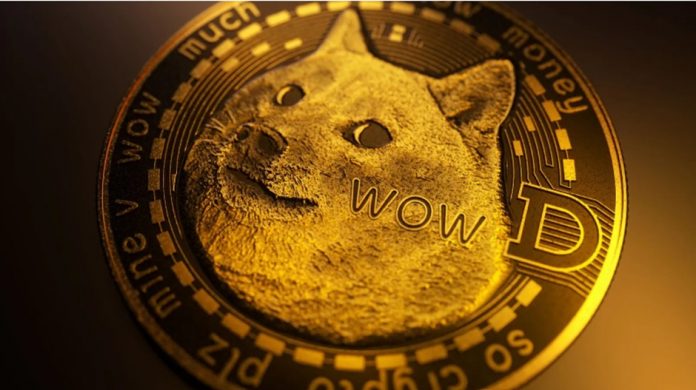
The world of cryptocurrency is ever evolving, with various digital currencies vying for attention in a highly volatile market. Among these, Dogecoin has carved out a unique niche for itself. Initially started as a joke in 2013, Dogecoin has amassed a significant following and has become a notable player in the crypto space.

As of late, Dogecoin has experienced a substantial drop in value, which has been a cause for concern among investors and enthusiasts alike. However, recent trends have shown that Dogecoin has stabilized above the $0.1 mark, indicating a potential “safe zone” for the cryptocurrency. This stabilization has sparked a renewed interest in the future prospects of Dogecoin, with some analysts, such as Alan Santana, projecting an optimistic outlook.

Alan Santana, a noted figure in the cryptocurrency analysis sphere, has made a bold prediction regarding Dogecoin’s trajectory. He anticipates a staggering 25,000% rally for Dogecoin in the year 2024. While this forecast may seem overly ambitious to some, it is not without its basis. Predictions in the crypto market are often derived from a combination of technical analysis, market sentiment, and emerging trends within the industry.

Several factors could contribute to such a rally. The increasing adoption of cryptocurrencies in mainstream Economy and commerce, the growing interest in digital currencies as a hedge against traditional financial market fluctuations, and the potential for technological advancements within the Dogecoin network all play a role in shaping its future.

The foundational economic principle of supply and demand is a significant driver of Dogecoin’s price. While Dogecoin has an unlimited supply, which differentiates it from cryptocurrencies like Bitcoin, its price can still be affected by changes in demand. The most fundamental economic principle also applies to Dogecoin. The availability of Dogecoin and the market’s demand for it can cause price fluctuations.

The overall sentiment of the market, which can be swayed by news, social media, and public figures, plays a crucial role in the valuation of Dogecoin. Updates and improvements to the Dogecoin network can impact its usability and security, thereby influencing investor confidence and price. Changes in regulatory frameworks for cryptocurrencies in different countries can affect Dogecoin’s accessibility and attractiveness to investors.

It’s important to note that the cryptocurrency market is notoriously unpredictable, and investments can be subject to extreme fluctuations. The sentiment in the market can shift rapidly, influenced by global economic events, regulatory changes, and technological breakthroughs. As such, while predictions like Santana’s provide a glimpse into potential futures, they should be approached with caution and due diligence.

Investors and enthusiasts are advised to keep a close eye on market trends, news, and analyses to make informed decisions. The potential for growth in Dogecoin, as with any investment, comes with its risks. It is essential for individuals to research thoroughly, understand the market dynamics, and consider their risk tolerance before making investment choices.

As we look towards the rest part of 2024, the conversation around Dogecoin and its place in the cryptocurrency market continues. Whether it will achieve the heights predicted by analysts like Santana remains to be seen. However, the journey of Dogecoin—from a meme to a market mover—serves as a testament to the unpredictable and exciting nature of the crypto world.

Rigveda 2-4 ‘Cryptocurrency isn’t split between Bitcoin, Altcoins, Stablecoins, Memecoins and $hitcoins – It’s a spectrum

0

PRELUDE:

There are many misconceptions in the world of Cryptocurrency, which generally breaks down into two groups – Coins and Tokens.

Most of these misconceptions come from ‘Pop Talk’ in Web 3. Rigveda 2-4 acts to sort this out.

CATEGORIES OF MISCONCEPTION:

Bitcoin: Bitcoin is the oldest well known blockchain. The coin is generated through a process called ‘mining’. It uses a very specific PoW (Proof of Work) mechanism incorporating ‘Nakamoto Consensus’ named after the suspected creator, Satoshi Nakamoto.

The design is public information, and so, other blockchains have been created which are almost identical. Loyal proponents seem to dismiss that these variations or similes are what they are.

Altcoins: ‘Altcoin’ is a subjective word that means different things to different people depending on who you ask. The broadest possible interpretation is that any cryptocurrency not Bitcoin is an ‘Altcoin’.

This does not make sense, as some cryptocurrency labelled ‘altcoins’ exhibit Bitcoin properties, including ‘Nakamoto Consensus’

Some Bitcoin supporters’ conflict themselves by making technical arguments when comparing Bitcoin to a ‘FIAT’ such as the US Dollar, and then failing to confine themselves to similar technical arguments, when claiming other cryptocurrency holds no value.

There has never been an invention or innovation in human history which successfully argued (rather subjectively) that it is the only one that ‘deserves’ to exist. It didn’t work for Coca Cola, it didn’t work for Ford, it didn’t work for IBM Computers, and it won’t work for Bitcoin.

As STEM (Science, Technology, Engineering and Mathematics) ideological arguments were made to differentiate Bitcoin from a FIAT, so STEM ideological arguments need to be made to distinguish between individual cryptocurrencies, one of which may be Bitcoin.

Collectively naming many cryptocurrencies ‘Altcoin’ simply because they are not Bitcoin, is not rational.

Stablecoins:

Stablecoins are often anything but ‘stable’. They began as a bridge between cryptocurrency and FIAT when there was more reluctance in the market.

Web3 began to expand, and new CEXs (Centralized Exchanges) struggled to secure a geo-diverse licence portfolio, and keep up with an explosion of currencies, particularly project tokens.

Stablecoin providers jumped into a ready market, being a go between for FIAT currency and an obscure world of ‘virtual value’.

Bitcoin visibility was significantly lower than it is today, and viewed as part of that obscure world.

Stable coins offered the strongest ‘notion’ of security in an unsure space. They claim to ‘peg’ to a familiar and accepted value unit, such as $USD or gold.

The peg concept is indeed ‘notional’. Convoluted wizardery often exists in how this ‘peg’ is interpreted. They come from a commercial company, not an autonomous decentralized source, there may be structures that resemble ‘quantitative easing’, and there are redemption caveats that shield them from a ‘run’ faced with declining demand in an ‘over-supply’ challenge.

This story of Tether (USDT) should be taken as an anchor narrative to understand Stablecoin Risk.

<VIEW>

Again, that something is called a stablecoin does not define how it is technically structured. The criteria is purely about the presence of the ‘peg’. Some things can be called ‘Stablecoins’ with no ‘STEM narrative’ to prove they are similar.

Stablecoins are probably ok as a transaction tool in a small holding window. Ticking time bombs should never be used as a store of value.

‘In practice, … stablecoin issuers have yet to be proven to maintain adequate reserves to support a stable value, and there have been a number of failures with investors losing the entirety of the (fiat currency) value of their holdings.’ – Wikipedia

Memecoins:  Memecoins are a genre of cryptocurrency that originated from internet memes, often featuring animated characters or animal images. It’s a commonly stated distinction – ‘All coins are tokens but most tokens are not coins. ‘

Coin issue is a function of the core activities of a blockchain. The blockchain type and tokenomics has a significant impact on the value of a coin. Currency Tokens [not coins], are on the other hand created through various off-chain architectures using ‘smart contracts’, for example, those using ERC 20 in the ‘EVM Compatible’ space.

The problem with the term ‘memecoin’ is it doesn’t make clear if it’s a coin or a token. It doesn’t define whether it has utility, use cases or simply nothing.

Being a ‘memecoin’ doesn’t preclude the crypto from having other attributes. On it’s own, the ‘meme’ phenomenon will only attract ‘impulse investors’ in a tight window. With other attributes it may endure.

The Memecoin Genre, is probably the most ill-defined of cryptocurrency labels in ‘Pop Talk’.

$hitcoins:  $hitcoins again, are a very ill-defined genre.

$hitcoins can be cryptocurrencies created for no real reason or purpose, often with little to no value. They typically have low market capitalization and are prone to crashing and burning. Some common features of shitcoins include:

  • Speculative and volatile: Shitcoins are often created to speculate on market trends, leading to rapid price fluctuations.
  • Lack of real-world use: Shitcoins rarely have a clear purpose or practical application, making them less valuable. They lack utility and use case.
  • Unserioius from the start: Many shitcoins are created as jokes or parodies, with names and branding that poke fun at the crypto market. Most memecoins are also considered $hitcoins.

$hitcoins are generally off-chain tokens rather than coins which are the function of a blockchain core. The origin of the name ‘$hitcoin’ comes from the investing experience of the token reaching an ATH (ALL TIME HIGH) price rapidly after issue, and then abruptly going to zero  ($hit).

Coins which are the function of a blockchain core, are expected to have an enduring value, and while they can become severely depressed, they don’t head to zero. Most have an architecture that can be used to build.

‘Bitcoin Maxis’ sometimes muddy the water by dismissing many cryptocurrencies as ‘$hitcoins’ in a similar way they perceive ‘altcoins’.

$hitcoins can also be tokens released to exit Founders and/or VCs from (poorly conceived) projects. ‘Rug Pulls’ happen when open market token purchases provide the opportunity for Founders and/or VCs to bail, and then token price plumets.

The PopTalk –‘$hitcoin’ has no clear technical criteria, so a deep dive is needed on any opportunity that stimulates interest.
Rigveda 2-4 and ‘The 9ja Cosmos Way’:

We ignore the PoP Talk and the hype, and call Cryptocurrency as we see it. We say what STEM principles say they are.

You can talk about different types of food, but what are the classifications? You will probably get different answers whether you choose to ask a Wholefood consumer, Dietician, Additives critic, Food Toxicologist, Nutritionist, or a Vegan !

Is Bitcoin a ‘store of value’? Well not if the person you ask is solely interested in Ordinals!

Nothing created by humans is ever perfect, but some creations are just built better, and endure better than others and the world of Cryptocurrency is no different.

What efforts have creators done to make a coin issuance impregnable once it’s put in place, free from vulnerabilities of human actions of some sort later?

How limited is the issue?

What durability qualities does it have?

How safe is your ‘value’?

Bitcoin is just a ‘brand’, and clarifying you hold  ‘Altcoins’, ‘Stablecoins’, ‘Memecoins’ or ‘$hitcoins’ answers none of these questions.

Cryptocurrency types:

Autonomous – Limited Issuance

Here, the coin is issued by a self-sufficient blockchain on ‘auto-pilot’.  It is completely independent – not controlled by others or by outside forces. The tokenomics design enforces a pre-programmed pace at which coins are issued into circulation, which will stop at a finite and limited maxiumum.

So far, only a ‘Nakamoto Consensus’ PoW (Proof of Work) Blockchain can achieve this type of coin. The most famous example is Bitcoin. There are others, such as Litecoin, Handshake and Ravencoin.

Autonomous – (Inflationary) Controllable Issuance

Here, the coin is issued by a self-sufficient blockchain on ‘auto-pilot’.  The design may offer limited control to trusted entities defined by design policy and tokenomics . The tokenomics design enforces a pre-programmed pace at which coins are issued into circulation. Supply is not always limited, but issue tokenomics are cemented to architecture and supply growth is predetermined and predictable. Supply alteration by custodians can be difficult. Inflationary components are rigidly mathematically contrived to provide liquidity support for ecosystem growth, but are not arbitrary, in, for example, how a nation may respond with ‘money printing’ to a Debt Ceiling scenario.

Several PoW and PoS (Proof of Stake) blockchains can produce variations on these types of coins.

Variable Issuance

Here, the cryptocurrency may be issued by a self-sufficient blockchain (coin), or may be native to an off-chain architecture, though not a smart contract token.  The design offers considerable control to trusted entities defined by design policy and tokenomics. The tokenomics design allows coin issuance in response to custodian led triggers . Supply is not limited, though bound by a function of the architecture and not arbitrarily issued through smart contracts.

A mix of non-PoW blockchains and other cryptographic architectures are capable of this coin.

Off-chain and non-native tokens.

There are many different types of tokens. They are created according to a prescriptive method called a protocol. Tokens are not an integral result of a blockchains’ ‘ordinary’ functioning.

A protocol method is created through a group of people creating and completing an IP (Improvement Proposal) for a blockchain. Tokens have been used for many things including NFTs, Gaming Assets, deeds to mass data, event ticketing, RWAs (real world assets, and more).

In this case we concern ourselves with token protocols used to carry out transactions, or value retention. The protocol ‘ERC 20’ is in use for this purpose in architecture extensions and networks operating with or compatible to Ethereum, known as EVM Compatible. Token volume and any asset base it may represent are entirely in the hands of commercial network owners.

In some cases, the network the token is driving may be deemed to have or be developing valuable virtual products, but in some other cases, it may have just a notion, idea, or simply nothing. They loosely resemble equities, though network owners token management specifically is not answerable to any stock exchange, issuance governance, shareholder authority or corporation compliance. They can dilute the issuance with ease, and without consultation.

In cases where ‘Memcoins’ or ‘$hitcoins’ are being discussed, it is invariably these types of Off-chain and non-native tokens rather than (blockchain) coins at all.

This group, represents the most misleading of all of such assets, to be homogenized under the heading ‘cryptocurrency’.

also: 

Rigveda 2 – 1 : Web 3 is as an ‘End-to-End Decentralized UX’ [user experience]

Rigveda 2 – 2 : ‘There isn’t, wasn’t and won’t be a Web2’

Rigveda 2- 3 : ‘Whether a token in Web3 is an ‘NFT’, does not depend on the asset it has title to. It depends on the token protocol leveraged to create it.’

9ja Cosmos is here…

Get your .9jacom and .9javerse Web 3 domains  for $4 at:

.9jacom Domains

.9javerse Domains

.det0x Domains

Preview our Sino Amazon/Sinosignia releases (Ente)

Preview our Sino Amazon/Sinosignia releases (Pinterest)

Visit 9ja Cosmos LinkedIn Page

Visit 9ja Cosmos Website