DD
MM
YYYY

PAGES

DD
MM
YYYY

spot_img

PAGES

Home Blog Page 3140

Polygon and Arbitrum Investors Shift Attention to DTX Token, a New Exchange-Based Token

0

The search for new and promising cryptocurrencies is a never-ending quest. Given the lucrativeness of presale tokens, they have become one of the most used strategies in the crypto space. Lately, Polygon (MATIC) and Arbitrum (ARB) investors have been showing quite a keen interest in DTX Exchange (DTX).

This new player aims to reshape the $10 billion global trading market, setting it up for adoption. This also paints a bullish picture, with investors in a frenzy to become early adopters. On the verge of explosive growth, experts hailed it as the next crypto unicorn.

DTX Exchange (DTX): A New Favorite Among Investors

DTX Exchange (DTX) is a new exchange-based token stirring up quite a buzz. Its approach will be different from established players, being that it will combine the best elements of centralized and decentralized exchanges. This will birth a hybrid protocol where users can trade traditional assets like stocks, derivatives, bonds and commodities, as well as digital assets like cryptocurrencies.

In addition to reimagining TradFi, the DTX token will have real use cases. It will be used to pay for trading fees on the platform, access premium features, use as incentives, staking and governance. This lends it much-needed utility, driving huge demand.

Given the above, it is clear why investors have been betting big on the DTX token, including Polygon and Arbitrum holders. A token is reasonably priced at $0.04 in round 2 of the ICO, with a 75x upswing projected after its market debut. To make the most of this bullish wave, we recommend becoming an early adopter.

Polygon (MATIC): Retests $0.4

Polygon (MATIC), a leading Layer-2 scaling solution on Ethereum, is one of the top altcoins. Its performance this year has sparked mixed reactions, from its explosive growth in the year’s first half to its underwhelming performance in the second half.

Like the rest of the wider crypto market, Polygon registered an annual peak price of $1.2 during the March high. Sentiment was euphoric this period and investors were in significant profits. However, things took a turn as the broader market tumbled, pushing Polygon crypto to the downside.

It revisited $0.4 in the year’s second half, with sentiment quickly turning gloomy. But its decline isn’t isolated; it is part of the overall market dip. To hedge against further decline and position for gains, Polygon holders have been shifting to more promising ICO tokens, hoping to make the most of the remaining bullish wave.

Arbitrum (ARB): Token Unlock to Affect Demand-Supply Dynamics

Arbitrum (ARB) is another Layer-2 scaling solution. It employs optimistic rollups, which improve speed, scalability and cost-efficiency on Ethereum. The token itself has governance functions.

Following the recent market downturn, which saw it plummet below $0.5, the Arbitrum token is back on the upside. It regains the $0.55 support, with sights set on flipping the $0.7 key price level. The overall market condition and sentiment will play a crucial role in its next move, with traders taking up positions.

However, the Arbitrum crypto unlock this month is an event to consider. Millions of ARB tokens will be unlocked in the coming days, potentially affecting the demand-supply dynamics.

Conclusion

The underwhelming performances of Polygon and Arbitrum and fear of further declines drive interest in DTX Exchange. This emerging altcoin and low-cap gem boasts significant upside potential, with early holders positioned for a potential 75x upswing post-launch. Given its huge growth prospects, it is a new DeFi project to bet on.

Visit the official DTX Exchange (DTX) website for the latest updates and information.
Nigeria’s Big Mistake On Bill To Imprison Nigerians for Not Reciting National Anthem

1

As a primary school kid in the Ugwunta village of Ovim, I observed that there were only two villagers with TVs (others were those living in the cities whose TVs were available only when they visited the village). Those two TVs – black and white types – were community treasures. Through them, we watched football games,  and enjoyed Nigerian Television Authority (NTA) shows’ like he Masquerade and Tales by Moonlight.  As Zebrudaya, Gregory, Jegede, etc did their stuff, the lady anchoring Tales by Moonlight was shaping the minds of the Nigerian kid.

Simply, the government had absolute control of what we listened to and watched, and through the National Orientation Agency (NOA) was able to program the minds of the Nigerian youth. And it worked – the government was supreme, with immense power and in an uncontested state. Yes, the government controlled all narratives.

Fast forward today, with Facebook, YouTube, Netflix, etc, the government has LOST most controls to influence the Nigerian youth. We call that disintermediation in the startup world; digital tools have cut-off the government, and it is largely powerless. 

But here, the government wants to fight back, and the latest is to use law to do the job of NTA and NOA: “The House of Representatives has introduced the Counter Subversion Bill 2024,..The bill, sponsored by Speaker Tajudeen Abbas, proposes stringent penalties for Nigerians who fail to recite the national anthem, as well as for those who destroy national symbols or deface places of worship. According to the bill, anyone found guilty of refusing to recite the national anthem could face a fine of N5 million, a 10-year prison sentence, or both.”

By this law, these men and women do not understand how digital technology works. It is not the abundance of Supply that wins, but the influencing of Demand, via aggregation that thrives. And to aggregate, you must offer value to the “subjects”. If Nigeria does not inspire and offer value, it must better spend its national budget on prisons, because most young people may actually not care about the national anthem. (I am just analyzing technology patterns; I sing the anthem.)

Why do I think so? When I joined Diamond Bank Lagos, the impact it had on my life made my admiration absolute. For 3 years, I did not go on vacation; I worked on Christmas Day, New Year Day and all holidays. And I memorized its vision and mission statements because it was a tough love for a company which made a village boy a “BIG boy”. And when I was leaving, I asked the bank to reverse some monies it paid me, as I was leaving and would be unable to work for it. 

Get the message: a nation must inspire the youth to get them to salute with love and unalloyed belief! Nigeria should wish those kids sing from their hearts, and not just the movement of the lips. That is the real national challenge, and is more important than the lyrics of the anthem.

Of course, you may ask if that is really an important matter considering the economic challenges in the nation.

My First Day in America and Kindness of Diamond Bank Lagos


Tekedia Mid-Week Crypto Digest – Bitcoin Hashrates, Goldman Sachs, Stablecoins, Mercado, MetaMask, etc

0

In a significant move for the cryptocurrency sector, MetaMask has announced the launch of its new debit card service in partnership with MasterCard. This innovative step bridges the gap between traditional financial services and the burgeoning world of digital assets, offering a seamless transaction experience for users.

MetaMask, a leading self-custodial wallet known for its Ethereum-based services, has taken a leap forward by integrating a debit card feature that allows users to spend their cryptocurrency holdings directly. The card, which is accepted wherever MasterCard is used, converts crypto from MetaMask wallets into fiat currency at the point of sale, ensuring ease and flexibility for the user.

The collaboration with MasterCard is not just a milestone for MetaMask but also a testament to the growing acceptance of cryptocurrency in mainstream finance. The card is initially rolling out in a pilot phase to a select number of users in the European Union and the United Kingdom, with plans for a wider release later this year. This strategic rollout aims to refine the service before making it available to a broader audience.

The MetaMask card supports various cryptocurrencies, including USDC, USDT, and wETH, and operates on the layer-2 network Linea, which is known for its reduced transaction fees and increased speed. The integration with MasterCard’s vast payment network is a significant step towards the mass adoption of cryptocurrencies, as it simplifies the process of using digital assets for everyday transactions.

This development is part of a larger trend where traditional financial institutions are increasingly engaging with blockchain technology. MasterCard has been actively exploring web3 initiatives, working alongside companies like Baanx to connect traditional payment systems with crypto platforms. This includes partnerships with hardware wallet firm Ledger and decentralized exchange 1inch.

In a plot twist worthy of a Hollywood blockbuster, Goldman Sachs has diversified its portfolio into seven different Bitcoin ETFs, with the iShares Bitcoin Trust taking the lion’s share at $238.6 million. This move is akin to a financial ‘swipe right’ on Bitcoin’s profile, marking a significant shift from their earlier stance of crypto caution to full-blown digital asset dating.

The bank’s global head of digital assets, Mathew McDermott, referred to the Bitcoin ETFs as a “big psychological turning point” for the industry during CoinDesk’s Consensus 2024 festival. It’s like the moment in a rom-com when the protagonist finally realizes they’ve been in love with the quirky best friend all along—except this time, it’s Bitcoin, not the girl next door.

Goldman’s leap into the crypto pool might have some traditional investors spitting out their morning coffee in surprise, but it’s clear that the Bitcoin bandwagon has room for suits as well as hoodies. So, what’s next for this financial behemoth? Only time will tell, but one thing’s for sure: the Bitcoin saga continues to captivate audiences, from Wall Street to Main Street. Stay tuned for the next episode of “As the Crypto World Turns.”

Mercado, one of Brazil’s largest cryptocurrency exchanges, is offering loans in Brazilian reais backed by your crypto stash. It’s like putting your virtual coins in a high-stakes game of Monopoly, where the bank actually gives you real money to play with. The loans are capped at 30% of your crypto holdings, which is probably a good thing because we all know how quickly that can change. One minute you’re a crypto millionaire, the next you’re scraping the barrel for a Dogecoin.

But wait, there’s more! Mercado isn’t going to automatically liquidate your assets if the market takes a nosedive. They’ll evaluate each case individually. It’s like having a benevolent crypto overlord who might give you a break when the chips are down. Or not. It’s still crypto, after all.

Bitcoin Hashrates have soared to dizzying new heights, leaving even the most acrophobic among us feeling a tad vertiginous. Yes, folks, the Bitcoin hashrate has hit an all-time high, reaching a number so large it could give supercomputers an inferiority complex.

But wait, there’s more! While the hashrates are partying up in the stratosphere, the Bitcoin mining company reserves have decided to play limbo, hitting a three-year low. It seems they’ve taken the “less is more” adage a bit too seriously, with reserves dwindling to a number that would make even a minimalist raise an eyebrow.

What does this mean for the average Joe and Jane? Well, if you’re a miner, you might be feeling like a rock star one moment and a garage band the next. And for the rest of us? We’re just here munching on popcorn, watching the rollercoaster ride, and occasionally checking our digital wallets.

Why Breaking Up Google By US Justice Department Will Be Hard As It Could Hurt Customers

0

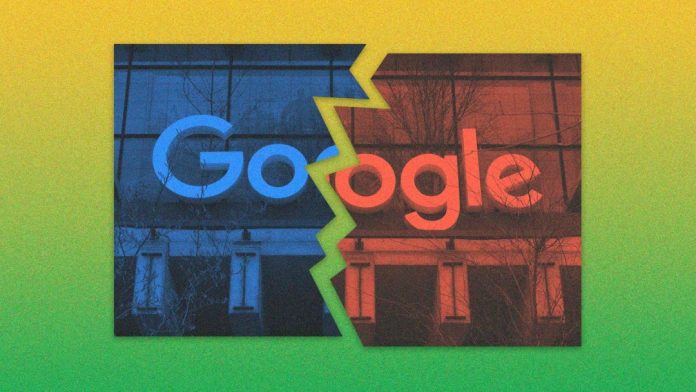
“The U.S. Justice Department is considering breaking up Google… The report follows the landmark antitrust ruling against Google earlier this month, and divestment of the search giant’s Android OS and browser Chrome are among the possible measures under discussion. “ – LinkedIn News.

First, the probability that the US Department of Justice will break up Google, in my opinion, is closer to 0 than 1. Yes, despite everything, I expect Google to modulate its business model which even though it used innovation to become #1 on search, it cannot pay to remain #1, and that means, it is no longer permitted to pay Apple, Samsung, Tecno, Mozilla, etc to make the Google search page the default in those products.

In the core tenet of entrepreneurial capitalism, becoming a category-king is the desire of all companies, and assuming monopoly via innovation is attainable by just a few. For Google, it is a dominant king in the world of search, unrivaled and uncontested in all forms and ways. But Google was not sure of itself, and went into paying to build moats, to keep its castle of profits via advertising. The government must extract monetary fines, supervise the firm, and get concessions that the act must NEVER happen again.

And that is largely what will happen. Google seems harmless because most of its products are largely free. If you break it, you will introduce many vectors that may even harm the consumers you want to protect. Sure, you want the next Google to emerge in the future, but that should not come via breaking Google:a new operating principle will do, by forcing it to focus on innovation and avoid building illegal moats.

More so, if you take Android out of Google’s Alphabet, Apple iOS will become an uncontested mobile winner since there are few companies that have resources and technical capabilities to challenge Apple (Microsoft, Meta/Facebook or Amazon will not likely be interested to avoid antitrust searchlights). Take Chrome out, there is no data which shows that any company can live on a browser alone!

The Verdict: make changes on business model with some fines but leave Google and Alphabet alone.

The Justice Department’s latest considerations represent the most serious threat Google has faced since the U.S. government’s failed attempt to break up Microsoft over two decades ago. According to insiders, this time around, the department is pulling no punches. Among the remedies being floated are the divestiture of Google’s Android operating system, its Chrome web browser, and potentially even its crown jewel: the AdWords advertising platform.

The deliberations follow a bombshell ruling by Judge Amit Mehta on August 5, 2024, that Google had illegally cemented its dominance in the online search and search advertising markets. With this ruling in hand, the government is now poised to push for measures that could fundamentally alter Google’s sprawling business empire.

Nigerian House of Reps Introduces Bill to Punish Nigerians Not Reciting National Anthem with 10 Years Imprisonment

0

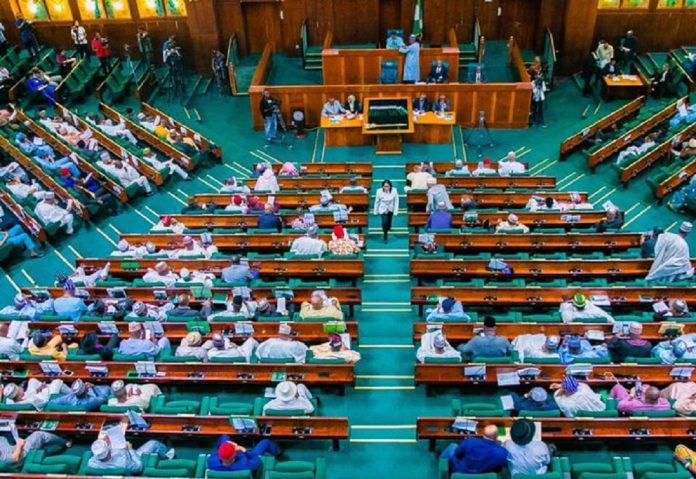
The House of Representatives has introduced the Counter Subversion Bill 2024, a piece of legislation that has quickly ignited controversy and widespread criticism across Nigeria.

The bill, sponsored by Speaker Tajudeen Abbas, proposes stringent penalties for Nigerians who fail to recite the national anthem, as well as for those who destroy national symbols or deface places of worship.

According to the bill, anyone found guilty of refusing to recite the national anthem could face a fine of N5 million, a 10-year prison sentence, or both.

According to the bill, “anyone found guilty of destroying national symbols, refusing to recite the national anthem and pledge, defacing a place of worship with intent to incite violence, or undermining the Federal Government shall face a fine of N5 million, a 10-year prison sentence, or both.”

The same penalties apply to those who destroy national symbols or places of worship, with the legislation further stipulating harsh punishments for a range of other activities deemed subversive.

For instance, setting up illegal roadblocks, performing unauthorized traffic duties, or organizing unlawful processions would carry fines of N2 million, five years in prison, or both.

It says: “anyone who sets up an illegal roadblock, performs unauthorized traffic duties, imposes an illegal curfew, or organizes an unlawful procession will be subject to a fine of N2 million, five years in prison, or both upon conviction”.

The bill also targets individuals who forcefully take over places of worship, town halls, schools, or other public or private premises, imposing fines of N5 million or 10-year prison sentences for such offenses.

“[any person who] forcefully takes over any place of worship, town hall, school, premises, public or private place, arena, or a similar place through duress, undue influence, subterfuge or other similar activities, commits an offence and is liable on conviction to a fine of N5 million or imprisonment for a term of 10 years or both,” it says.

Additionally, those who pledge loyalty to organizations that disregard Nigeria’s sovereignty could face fines of N3 million, four years in prison, or both.

While the bill is set for its second reading, where its general principles will be debated, it has already been met with significant opposition from various quarters. Critics argue that the bill is an attempt by lawmakers to repress the population rather than address the country’s pressing issues.

Many Nigerians have expressed outrage, accusing the legislators of failing to focus on critical matters such as economic challenges, security concerns, and infrastructure deficits. Some note that it’s disheartening that at a time when Nigerians are grappling with numerous difficulties, lawmakers are prioritizing a bill that seeks to punish citizens for not reciting the national anthem, describing it as a clear attempt to divert attention from the real issues.

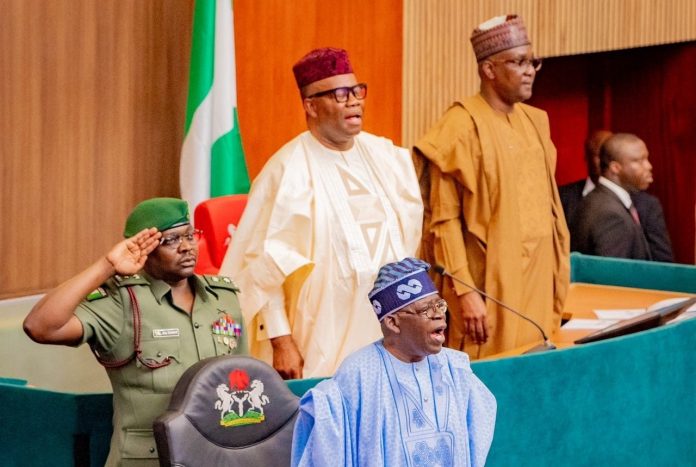
The timing of the bill has also raised eyebrows, especially given the recent reversion to Nigeria’s old national anthem, which was signed into law by President Bola Tinubu in May. The newly re-adopted anthem, “Nigeria, We Hail Thee,” written by Lillian Jean Williams in 1959 and composed by Frances Berda, replaced the anthem that had been in use since 1978.

Critics have questioned whether this move, along with the proposed bill, is part of a broader agenda to impose stricter controls on the populace.

Public sentiment against the bill has been strong, with many viewing it as a distraction from the urgent need for legislative action on issues that directly affect the lives of ordinary Nigerians.

As the Counter Subversion Bill 2024 moves forward in the legislative process, the debate surrounding it is likely to intensify. Whether the bill will gain enough support to become law remains to be seen, but its introduction has already sparked a significant public outcry, with many saying that it highlights the growing disconnect between Nigeria’s lawmakers and the people they represent.