
DD
MM
YYYY

PAGES

DD
MM
YYYY

spot_img

PAGES

Home Blog Page 3146

Brazil Suspends Elon Musk’s X, Imposes $9,000 Daily Fine on Users With VPNs

0

The Brazilian government has escalated its conflict with Elon Musk by blocking access to his social media platform, X, across the country. This action, which began early Saturday, came after Musk refused to appoint a legal representative in Brazil, a requirement set by Supreme Court Justice Alexandre de Moraes.

The decision to block X, formerly known as Twitter, marks a significant moment in the ongoing feud between Musk and Brazilian authorities, highlighting broader issues of free speech, misinformation, and exercise of governmental authority.

Justice de Moraes, who has been at the forefront of combating misinformation and far-right extremism in Brazil, ordered the suspension of X after Musk failed to comply with a directive to appoint a legal representative in the country. This representative is crucial for responding to legal demands and ensuring that the platform abides by local laws. De Moraes had warned Musk on Wednesday that failure to comply would result in X being blocked, and established a 24-hour deadline for action.

In response to the justice’s order, Brazil’s telecommunications regulator, Anatel, instructed internet service providers to suspend access to X. By Saturday after midnight, major operators had begun enforcing the block, making X largely inaccessible both on the web and through mobile apps.

“In Brazil, we do not have X anymore since midnight. I am tweeting this with a VPN. This tweet may cost me almost 10,000 USD according to the decision of tyrant @alexandre de Moraes, friends with @LulaOficial: every Brazilian that posts on X from now on will be fined R$ 50,000 according to his illegal “ruling”, a Brazilian journalist named Marcel van Hattem tweeted on Saturday.

Musk responded to the post by saying that “the current Brazilian administration likes to wear the cloak of a free democracy while crushing the people under its boot.”

De Moraes in his ruling, had accused Musk of showing “total disrespect for Brazilian sovereignty and, in particular, for the judiciary, setting himself up as a true supranational entity and immune to the laws of each country.”

He added that the platform will remain suspended until it complies with the court’s orders, with a daily fine of 50,000 reais ($8,900) for individuals or companies using VPNs to access it.

Musk Has Been Defiant

Elon Musk, known for his outspoken stance as a “free speech absolutist,” has clashed repeatedly with de Moraes and the Brazilian judiciary. In April, de Moraes included Musk in an ongoing investigation into the dissemination of fake news and opened a separate inquiry into the executive for alleged obstruction. Musk has often taken to X to criticize de Moraes, calling him a dictator and tyrant, and arguing that the justice’s actions amount to censorship.

In a statement released late Friday, X’s CEO Linda Yaccarino expressed dismay over the situation, calling it a “sad day for X users around the world, especially those in Brazil, who are being denied access to our platform.”

She lamented that Brazil was failing to uphold its constitutional pledge to forbid censorship. X’s official Global Government Affairs page also criticized the Brazilian judiciary, claiming that de Moraes’ actions were illegal and politically motivated.

Broader Impacts of the Ban

Brazil is one of X’s largest markets, with around 40 million users, representing roughly one-fifth of the population. The platform has played a significant role in the country’s political discourse, particularly during and after the presidency of Jair Bolsonaro. Accounts linked to Bolsonaro’s far-right movement have often been at the center of legal battles over misinformation and extremist content, with X being ordered to block many such accounts.

The Brazilian government has a history of clashing with social media platforms over compliance with local laws. In previous instances, courts have temporarily suspended services like Meta’s WhatsApp and threatened others like Telegram. However, the situation with X marks a more severe and prolonged conflict, exacerbated by Musk’s personal involvement and defiance.

Adding to the complexity, de Moraes also targeted Musk’s satellite internet service, Starlink, freezing its finances in Brazil. This move was justified by the justice on the grounds that X did not have enough funds to cover mounting fines, and that Starlink and X were part of the same economic group. Musk reacted sharply to this development, labeling de Moraes a criminal and offering free internet service in Brazil through SpaceX, Starlink’s parent company until the matter is resolved.

Legal Experts Express Mixed Opinions

Legal experts have weighed in on the situation, with opinions divided. Some, like Filipe Medon, a digital law specialist, argue that the suspension of X is a necessary measure to ensure compliance with the court’s order.

Others, like Luca Belli from the Getulio Vargas Foundation, question the legality of extending the sanctions to Starlink, given the lack of direct connection between the two companies beyond shared ownership by Musk.

“Yes, of course, they have the same owner, Elon Musk, but it is discretionary to consider Starlink as part of the same economic group as Twitter (X). They have no connection, they have no integration,” Belli said.

As the standoff continues, it remains unclear how long the block on X will last and what the long-term implications will be for Musk’s operations in Brazil.

“Brazilians will take to the streets. On the 7th of September we will make our voices heard very clearly. We will demand Moraes to be impeached by the Senate and to be sent to jail after a fair trial – which Moraes cruelly and unconstitutionally gives not to the people that he persecutes,” van Hattem said.
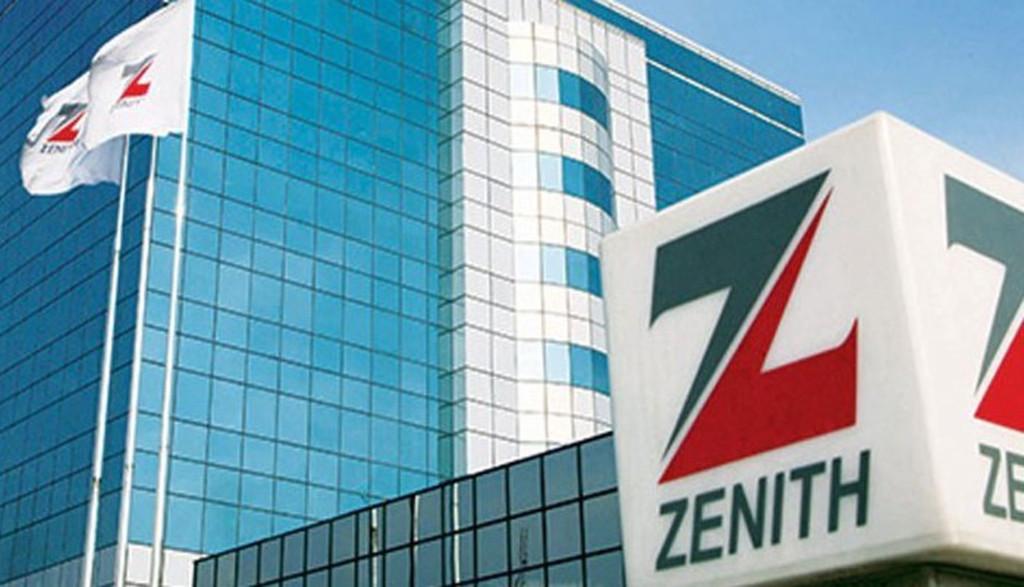

Zenith Bank Records N406 Billion Pre-Tax Profit in Q2 2024, 370% Increase From Last Year

0

Zenith Bank has announced its financial results for the second quarter of 2024, revealing a remarkable surge in profitability. The bank reported a pre-tax profit of N406.8 billion for the quarter, representing a staggering 370% increase compared to the N86.8 billion recorded in the same period last year.

This exceptional growth was primarily fueled by significant gains in foreign exchange trading, which bolstered the bank’s bottom line.

A key highlight of Zenith Bank’s performance was the substantial increase in gains from its trading activities, which soared to N871.6 billion for the first half of 2024, compared to just N77.9 billion in the corresponding period of 2023.

The strong performance in forex trading has positioned Zenith Bank to potentially become the first Nigerian commercial bank to surpass N1 trillion in annual profits by the end of the year. With pre-tax profits already at N727 billion for the first half of 2024, the bank is well on track to achieving this milestone.

Key Financial Highlights

Net Interest Income: Zenith Bank’s net interest income rose sharply to N408.6 billion, marking a 238% increase year-on-year. This growth reflects the bank’s ability to generate higher revenue from its core lending activities.

Loan Impairments: Despite the robust profit growth, the bank faced significant challenges in managing its loan portfolio. Loan impairments for the second quarter alone amounted to N359.3 billion, a massive 4548% increase from the previous year. This brought the total impairments for the first half of 2024 to N415.2 billion, surpassing the N409.6 billion recorded for the entire year of 2023.

Operating Income and Expenses: The bank’s operating income also saw a significant rise, reaching N677 billion, a 264% increase from the previous year. However, operating expenses grew by 172% to N270 billion, underlining higher costs associated with the bank’s expanded operations.

Earnings Per Share (EPS): Zenith Bank reported an EPS of N10.2, a 434% increase from the previous year, highlighting the significant return on equity generated for shareholders.

Loans and Advances: The bank’s loan portfolio grew by 131%, with loans and advances reaching N9.29 trillion. This growth indicates the bank’s continued commitment to supporting economic activities through lending.

Deposits and Assets: Total deposits surged by 115% to N19.6 trillion, while total assets grew by 106% to N27.5 trillion, underscoring the bank’s strong liquidity and asset base. Net assets also saw a 121% increase, reaching N3.19 trillion.

In terms of segment revenue, Zenith Bank’s Nigerian operations were the primary contributor to the group’s profits, generating N645.3 billion. In contrast, its international operations contributed N81.7 billion, highlighting the bank’s strong domestic presence and its expanding global footprint.

Commentary on Performance

Zenith Bank’s stellar performance in the second quarter of 2024 was largely driven by its forex trading activities, which generated N871.6 billion in gains, compared to N77.9 billion in the previous year. The bank explained that this figure includes N123 billion in profits on derivatives, up from N65.2 billion in the previous year.

Despite these gains, the bank faced considerable challenges with its loan portfolio. Analysts note that the impairment loss of N359.3 billion in the second quarter alone underscores the difficulties in managing credit risks in a volatile economic environment. To put this into perspective, the total impairment charge for the first half of 2024, at N415.2 billion, has already exceeded the full-year impairment charge of N409.6 billion for 2023.

This significant rise in impairments is believed to be a highlight of the bank’s exposure to credit risks, which could pose challenges to its profitability in the coming quarters. However, according to analysts, the bank’s strong forex gains and robust core earnings have provided a cushion against these losses, allowing it to deliver impressive results despite the challenges.

This robust financial performance comes at a crucial time for Zenith Bank as it is currently in the market to raise N290 billion, following the N500 billion recapitalization directive by the Central Bank of Nigeria. The substantial profits recorded, particularly the forex gains, are expected to provide a significant boost to the bank’s capital-raising efforts.

Investors and stakeholders are expected to view the bank’s ability to generate such impressive profits, even amid challenging economic conditions, as a strong indicator of its financial health and operational resilience.

Starbucks Integrates Bitcoin as Payment Method in El Salvador

0

El Salvador has been at the forefront of cryptocurrency adoption, and the integration of Bitcoin as legal tender has marked a significant milestone in the country’s economic history. This bold move has attracted global attention and has had various implications for businesses operating within the nation. One of the most notable developments is the acceptance of Bitcoin by Starbucks, a leading global coffeehouse chain.

Starbucks’ decision to accept Bitcoin in El Salvador is not just a reflection of the country’s legal requirements but also an indication of the company’s willingness to embrace innovative payment methods. The adoption of Bitcoin by such a prominent brand has the potential to influence other businesses to consider cryptocurrency as a viable payment option. This move by Starbucks aligns with El Salvador’s push to integrate cryptocurrency into its economy and demonstrates the practical application of digital currencies in everyday transactions.

By embracing Bitcoin, Starbucks positions itself as a forward-thinking and innovative brand, staying ahead of the curve in market trends and consumer payment preferences. Accepting Bitcoin opens up a new demographic of tech-savvy and crypto-enthusiastic customers, potentially increasing the company’s market share.

The use of Bitcoin can streamline the payment process, offering a quick and secure transaction method, which enhances the overall customer experience. Starbucks is exploring ways to tokenize its loyalty program, which could allow customers to earn and spend loyalty points (Stars) more flexibly across different brands and services. Cryptocurrency transactions may offer lower fees compared to traditional payment methods, reducing costs for both Starbucks and its customers.

The integration process has not been without its challenges. Skeptics have raised concerns about the readiness of large businesses to incorporate Bitcoin payment solutions. However, Starbucks’ successful implementation in El Salvador has proven that such integration is possible and can be achieved efficiently. The company has reportedly partnered with a small Guatemalan startup, IBEX Mercado, to facilitate Bitcoin transactions, showcasing the collaborative efforts between established corporations and emerging tech companies.

The move by Starbucks, along with other multinational corporations like McDonald’s, which also started accepting Bitcoin payments through a partnership with OpenNode, signals a potential shift in how businesses approach digital currencies.

The broader implications of Starbucks accepting Bitcoin go beyond El Salvador. It raises questions about whether multinational companies will extend these payment technologies to other countries, including the United States. While it remains to be seen how widespread the adoption of Bitcoin payments will become, El Salvador’s example serves as a test case for the rest of the world.

El Salvador’s Bitcoin experiment has been closely watched by corporations and countries alike, as it provides a real-world example of cryptocurrency integration on a national scale. Despite some skepticism and technical challenges, the adoption of Bitcoin has proceeded, with reports indicating a mix of curiosity and cautious participation from the Salvadoran population.

The adoption of Bitcoin by Starbucks in El Salvador is a significant step in the normalization of cryptocurrency transactions. It represents a shift in how businesses view digital currencies, not just as investment vehicles but as legitimate forms of payment. As El Salvador continues to navigate the complexities of this new economic landscape, the world watches and learns from its pioneering efforts in embracing cryptocurrency.

The Google-Bing-Amazon Ad Battle and Amazon’s Double Play Strategy

1

If you are a merchant who sells shoes, and you have $10,000 to spend on advertising, which platform would you deploy that fund? If you have a website and you decide to go with Google, you will get traffic, including those not in the spirit of buying any shoes. But if you have conditioned to build on top of Amazon, and you also have some funds to advertise, there is a high likelihood that you will convert real shoppers since most people in Amazon are there to spend money.

This was how I captured this redesign in 2017 as this was being built: “I was on Amazon today working on gifting items when I noticed something: Amazon now runs a serious advertising business. And there are many companies putting money in that ecosystem. If companies think that advertising on Amazon is a better deal than promoting their websites on Google, it simply means that Google has a major problem in its hands. Facebook has walled off the partying and events communities, and if Amazon takes care of the merchandise, I do not know what will remain for Google.”

That Amazon business has grown significantly: in the first quarter of 2024, Amazon’s advertising revenue was $11.82 billion, which was a 24% increase from the previous year…In 2023, Amazon’s worldwide advertising revenue was $46.9 billion, which was a 24% increase from the previous year. Amazon has executed a double play strategy.

Sure, this is nothing to Google’s ad revenue of $237.86 billion (2023 figure). Yet, in the product category advertising, that is lost revenue for Google since without Amazon, most of those merchants would have spent the funds in Google.

Where am I going? There are many pockets of opportunities in this world. We just have to figure out ways to capture value. Facebook has walled its universe from the “open” web and is milking via adverts. Amazon has executed its own playbook also. And Google continues to rake the billions. In all these models, each found its own path, and that is the lesson. 

Of course, many will continue to see Microsoft Bing as a major competitor to Google on advertising, after Meta. For Google, though, Amazon is the one growing faster in this business category, well ahead of Bing which reported $12.2 billion in search and news advertising revenue for the 2023 fiscal year, at 5.26% increase from the previous year.  In other words, Amazon makes more money and is also growing faster. (We expect OpenAI partnership to help Microsoft Bing in the next coming quarters).


The Transformative Power of Data Science in Mass Communication

0

In today’s rapidly evolving digital landscape, the intersection of data science and communication has emerged as a powerful force reshaping industries, professions, and personal branding. During a recent mentorship session with Infoprations Limited, led by Chief Visionary Officer, Mutiu Iyanda, the transformative potential of data science on communication was explored in depth. This discussion, enriched by insights from Salahudeen Gbolahan, touched on the growing importance of machine learning, automation, and the critical role of data in modern communication practices. The session illuminated how data science is not just a tool for analysis but a driving force in shaping narratives, influencing decisions, and building brands.

Data Science: A Catalyst for Change in Communication

The convergence of data science and communication has given rise to a new breed of professionals who are equally adept at interpreting complex datasets and crafting compelling narratives. Salahudeen highlighted how this fusion has led to the democratization of communication, particularly through social media and digital content creation. The barriers to entry in the communication field have lowered, allowing a more diverse workforce to emerge. This trend is particularly evident in the rise of remote work, where data-driven strategies enable professionals to collaborate and communicate effectively across different geographies.

The ability to harness big data analytics is becoming increasingly vital across various sectors, from media and advertising to crisis communication. By leveraging data, professionals can create personalized content, tailor marketing strategies, and predict audience behaviour with unprecedented accuracy. Salahudeen emphasised that in Nigeria, the demand for professionals who can bridge the gap between data science and communication is growing, especially as industries increasingly rely on data-driven insights to remain competitive.

Data-Driven Strategies for Crisis Communication

One of the most compelling applications of data science in communication is in the realm of crisis management. Salahudeen proposed the use of data-driven strategies for crisis communication, employing tools like Python, R, SQL, and Tableau for data analysis and visualization. In times of crisis, the ability to gather real-time data and analyze public sentiment through social media platforms like Twitter is invaluable. This approach not only helps in crafting timely and effective responses but also in anticipating potential issues before they escalate.

Mutiu agreed with the importance of integrating data analysis with storytelling to ensure that the information is not only accurate but also resonates with the intended audience. In crisis communication, the challenge lies in balancing factual accuracy with the emotional and psychological needs of the audience. By combining data science with strong communication skills, professionals can navigate these complexities more effectively.

Integrating Data Science and Mass Communication

The potential to integrate data science with mass communication opens new career paths, particularly in industries like advertising, media, and entertainment. Salahudeen explored how professionals can use data to understand audience preferences, optimize content delivery, and measure the impact of communication campaigns. This integration requires a structured approach, considering economic contexts, market trends, and skill assessments. Mutiu provided feedback on Salahudeen’s analysis, emphasising the need for a more comprehensive labour market analysis to better align with industry demands.

This intersection also calls for continuous learning and adaptability. As the digital landscape evolves, so too must the skills and strategies of those working within it. The ability to interpret data, coupled with strong communication skills, will become increasingly valuable as organizations seek to connect with audiences in more meaningful ways.

Personal Branding in the Age of Data Science

A significant portion of the mentorship session focused on the importance of personal branding, particularly within the data science sector. Mutiu emphasized that in a competitive labour market, having a strong personal brand is crucial for standing out. This involves not only developing specialized skills and expertise but also showcasing them effectively through various platforms.

Publishing content, speaking at conferences, and maintaining an active presence on social media are all essential components of a strong personal brand. Mutiu highlighted the importance of problem-solving skills and innovation in data science, urging professionals to continuously seek out opportunities to demonstrate their capabilities. In a field that is rapidly evolving, the ability to adapt and learn new skills is as important as having a strong foundational knowledge.

Networking also plays a crucial role in personal branding. Mutiu advised against engaging in social media politics, instead suggesting that professionals focus on building and maintaining positive relationships within their industry. Consistency in messaging and brand presentation is key to establishing credibility and trust. As the digital world continues to change, staying current with trends and technologies is vital to remaining relevant and competitive.

The Role of Feedback and Continuous Improvement

An interesting aspect of the discussion was the concept of a “rethinking cycle,” which Salahudeen introduced based on his reading of a book by Adam Grant. This cycle involves regularly revisiting and updating one’s views and strategies to avoid stagnation. In the context of data science and communication, this means being open to feedback and continuously refining one’s approach.

Mutiu and Salahudeen agreed that seeking feedback from colleagues, mentors, and industry peers is essential for growth. This practice helps in identifying areas for improvement and keeping one’s skills and strategies aligned with industry demands. The willingness to adapt and evolve is particularly important in fields like data science, where new technologies and methodologies are constantly emerging.

The Future of Data-Driven Communication

As data science continues to permeate various aspects of communication, its impact will only grow. The ability to interpret and apply data effectively will be a key differentiator for professionals in the coming years. Whether in crisis communication, marketing, or personal branding, those who can harness the power of data will be better equipped to navigate the challenges and opportunities of the digital age.

For aspiring professionals, the mentorship session underscored the importance of building a strong foundation in both data science and communication. By developing these complementary skills, they can position themselves at the forefront of a transformative industry.

The transformative impact of data science on communication is undeniable. As industries continue to evolve, the ability to leverage data for effective communication will be a defining skill for professionals across the globe. Through continuous learning, adaptability, and a strong personal brand, individuals can thrive in this dynamic environment, contributing to the future of data-driven communication.