DD
MM
YYYY

PAGES

DD
MM
YYYY

spot_img

PAGES

Home Blog Page 3151

Hong Kong’s Path to Stablecoin Regulation in Asia, as South Korea Pushes Crypto Gain Taxation to 2028

0

The financial landscape of Hong Kong is on the brink of a significant transformation with the impending release of stablecoin regulation results. This move underscores the region’s commitment to establishing a robust framework for digital currencies, aligning with global financial trends and addressing the burgeoning demand for a regulated virtual asset environment.

The Hong Kong Monetary Authority (HKMA), in collaboration with the Financial Services and the Treasury Bureau (FSTB), has concluded a public consultation that sought to gather insights on the proposed regulatory regime for fiat-referenced stablecoins (FRS). The consultation, which received 108 submissions from various stakeholders, reflects a general consensus on the necessity of a regulatory framework to manage potential monetary and financial stability risks associated with stablecoin issuance.

The proposed legislation aims to introduce a licensing regime for FRS issuers, thereby fortifying the virtual asset (VA) regulatory framework in Hong Kong. This initiative is expected to mitigate financial stability risks and provide transparent and suitable guardrails for the stablecoin ecosystem. The Secretary for Financial Services and the Treasury, Mr. Christopher Hui, emphasized the importance of this regime in strengthening Hong Kong’s VA regulatory framework and aligning it with international standards.

The Chief Executive of the HKMA, Mr. Eddie Yue, expressed gratitude for the supportive feedback and highlighted that a well-regulated environment is essential for the sustainable and responsible development of the stablecoin ecosystem in Hong Kong. The HKMA is also processing applications for the stablecoin issuer sandbox, with the list of participants to be announced shortly, marking a proactive step towards fostering innovation while ensuring regulatory compliance.

The regulatory approach taken by Hong Kong is indicative of a global trend where jurisdictions are increasingly recognizing the need to regulate stablecoins due to their growing prevalence and potential impact on the financial system. The proposed rules suggest that stablecoins must be fully backed by high-quality liquid assets and redeemable at par to their referenced fiat currencies. This ensures the stability and integrity of the stablecoins, addressing market risk, operational risk, technology risk, and other business-related risks.

ZA Bank, one of Hong Kong’s pioneering digital banks, has expressed support for the consultation conclusions, committing to provide dedicated banking services tailored for stablecoin issuers. This commitment is a testament to the bank’s anticipation of a thriving web3 ecosystem and its role in enhancing user protection in the event of business disruptions or failures of FRS issuers.

As Hong Kong gears up to introduce the stablecoin regulation bill to the Legislative Council, the financial community eagerly awaits the detailed licensing and supervisory guidelines. The forthcoming regulations are poised to pave the way for a more secure, transparent, and efficient stablecoin market, contributing to the overall stability and growth of the digital economy in the region.

The road to regulation in Hong Kong is a clear indication of the region’s dedication to embracing the future of finance while ensuring the safety and interests of its participants. With the world watching, Hong Kong’s journey towards stablecoin regulation could set a precedent for other economies seeking to balance innovation with financial security.

South Korea is expecting to push Crypto Gain Taxation to 2028

In a significant development for the cryptocurrency market in South Korea, the government has proposed a delay in the taxation of crypto gains until 2028. This move represents a substantial shift from the original plan to implement a tax on cryptocurrency gains in 2022, which was later postponed to 2025. The decision to push the taxation date further to 2028 comes amidst ongoing discussions and debates regarding the optimal approach to regulating the burgeoning crypto market.

The proposed delay is seen as a response to the current sentiment toward crypto assets, which has been deteriorating. The People’s Power Party, South Korea’s ruling party, submitted the proposal, noting that rapidly imposing taxes on virtual assets is “not advisable at this time” due to the higher risks associated with crypto compared to traditional stocks. Investors are expected to leave the market if income tax is also imposed on their crypto gains.

The taxation on cryptocurrency gains was originally set to take effect on January 1, 2025. However, if the new proposal is approved, the implementation tax will be postponed until January 1, 2028. This delay aligns with the People’s Power Party’s election promises to postpone the implementation of crypto gains tax in the country by two years. The party has argued that before diving into taxation, the country must first establish a general crypto framework and that taxing crypto should only happen once the base framework is fully established.

The ongoing debate in South Korea reflects a global conversation on how to integrate cryptocurrencies into existing financial systems and regulatory frameworks. The unique nature of cryptocurrencies poses challenges for lawmakers and regulators, who must balance the need for innovation and growth in the sector with the protection of investors and the integrity of the financial system.

The proposed three-year delay is expected to be discussed in the National Assembly’s second half session, aligning with the 2025 tax law amendment deliberations. This period will allow for the development of a more robust infrastructure capable of supporting fair and accurate tax collection on crypto transactions.

As the crypto market continues to evolve, the South Korean government’s approach to taxation will be closely watched by other nations grappling with similar regulatory challenges. The outcome of these deliberations could set a precedent for how countries around the world choose to regulate and tax cryptocurrency gains in the future.

For investors and stakeholders in the crypto industry, this proposed delay could provide a temporary reprieve from the uncertainties of taxation. However, it also underscores the need for ongoing engagement with regulatory developments to ensure compliance and to influence the shaping of policies that will affect the industry for years to come.

The decision to delay crypto gain taxation to 2028 is a pivotal moment for South Korea’s crypto landscape. It reflects a cautious yet forward-thinking approach to policymaking in an era where digital assets are becoming increasingly mainstream. As the details of the proposal are debated and refined, the global crypto community will be watching with keen interest to see how South Korea navigates the complex interplay between innovation, regulation, and taxation in the digital age.

How Crypto Exchanges can Navigate Tunnels in Nigeria

0

The cryptocurrency landscape in Nigeria presents a dynamic and complex environment for exchanges operating within the country. With a burgeoning population keen on digital finance and a significant volume of peer-to-peer (P2P) crypto trading, Nigeria stands as a pivotal market in the African continent. However, navigating this space is fraught with challenges and opportunities alike.

The State of Crypto Exchanges in Nigeria

Nigeria has seen a surge in cryptocurrency activity, with a reported $56 billion worth of cryptocurrencies and stablecoins moved in the previous year. This impressive figure underscores the country’s leading position in P2P crypto trading volume globally. Despite the lack of clear national legal provisions for crypto-related activities, the growth of crypto businesses and the adoption of blockchain technology have not slowed down. Nigerian investors have shown a strong attraction to cryptocurrencies, not only as a swift banking medium but also as a financial investment.

Challenges Faced by Crypto Exchanges in Nigeria

One of the primary hurdles for crypto exchanges in Nigeria is the government’s stance on cryptocurrency. Recent actions have included access restrictions to major exchanges like Binance, Coinbase, and Kraken to control currency speculation and stabilize the naira. These measures represent a shift from previous market-friendly reforms and pose a significant challenge for exchanges seeking to operate in the region.

Moreover, the Nigerian Securities Exchange Commission’s crypto licensing requirements are set to reduce the number of local crypto exchanges, despite the Central Bank of Nigeria lifting restrictions on Nigerian banks facilitating cryptocurrency transactions. This regulatory uncertainty creates a complex tunnel for exchanges to navigate, balancing compliance with innovation.

The recent exit of OKX from the Nigerian market has sent ripples through the cryptocurrency community, raising questions about the future of crypto exchanges in the country. OKX’s departure, prompted by regulatory concerns, underscores the challenges faced by crypto platforms operating within Nigeria’s complex legal framework.

For crypto exchanges looking to navigate this evolving landscape, the key will be adaptability and compliance. With the Nigerian government taking a cautious approach to cryptocurrency regulation, exchanges must prioritize transparency and work closely with regulatory bodies to ensure their operations align with local laws.

The void left by OKX presents both challenges and opportunities for other exchanges. Platforms like Binance, Bitget, Luno, Kraken, and Paxful are stepping up to offer services to Nigerian users, each bringing unique features and security measures to the table. These exchanges are now tasked with building trust with a user base that is becoming increasingly aware of the importance of regulatory compliance.

For crypto exchanges to thrive in Nigeria, a multifaceted approach is necessary. Firstly, understanding the local market and offering services tailored to Nigerian users is crucial. Exchanges like KuCoin and Luno have found success by providing P2P marketplaces and supporting the Nigerian naira, allowing users to buy cryptocurrencies directly with their local currency.

Secondly, exchanges must stay abreast of regulatory changes and engage with policymakers to foster a conducive environment for crypto-related activities. Building trust with the local community and ensuring robust security measures will also be key in attracting and retaining users.

Lastly, offering a diverse range of cryptocurrencies and trading products can cater to the varied interests of Nigerian investors, from blue-chip assets like Bitcoin and Ethereum to memecoins and low-cap altcoins.

Crypto exchanges operating in Nigeria must navigate a labyrinth of regulatory and market challenges. By understanding the local landscape, engaging with regulatory bodies, and offering tailored services, exchanges can position themselves to capitalize on the significant opportunities within this vibrant market. As the Nigerian economy continues to grow, so too does the potential for crypto exchanges to play a pivotal role in the country’s digital finance ecosystem.

The Nigerian cryptocurrency sector still holds significant potential for growth. By fostering a transparent and cooperative relationship with regulators, crypto exchanges can thrive and contribute to the country’s burgeoning digital economy. The road ahead may be complex, but with careful navigation, the tunnels can lead to a brighter future for cryptocurrency in Nigeria.

What is Tap-to-Earn? Explore the top 3 Telegram Games

0

Web3 gaming is currently changing the digital gaming space. Unlike traditional games, they give players decentralized ownership of in-game assets and help them monetize their efforts. From popular Play-to-Earn games like Sandbox, Axie Infinity, and Decentraland, Web3 gaming has grown from NFT and virtual participation to an easy point-based gaming approach.

Today, the new gaming strategy that is gaining widespread popularity is Tap-to-Earn. This approach lets players play simple crypto games on their mobile phones and earn token incentives. In this article, we’ll take a closer look at what Tap-to-Earn games are, their background, how they work, key considerations, and potential risks.

What are Tap-to-Earn Games?

Tap-to-Earn games are Play-to-Earn or Web3 games that allow users to engage in simple gaming activities that primarily involve tapping on their device screens in exchange for token rewards. Sometimes, the games may include additional features like daily rewards, upgrades, storylines, referrals, social tasks, etc., to boost product engagement and adoption.

How did Tap-to-Earn Become Popular?

The massive trend of Tap-to-Earn is attributed to The Open Network (TON) blockchain, Telegram bot functionality, and Notcoin’s token listing in May 2024.

Telegram’s successful integration of a custodial wallet into its in-app messaging platform sparked the development of several gaming innovations on the TON blockchain. With over 900 million users, Telegram capitalized on its active users and available audience to develop a Play-to-Earn game that would later gain widespread adoption.

Notcoin’s airdrop success contributed immensely to what is known today as Tap-to-Earn. Users’ ability to withdraw and convert their NOT allocation balance opened a new chapter for blockchain gamification and reward systems. This has encouraged developers to provide users with simplified gaming and exciting features.

How Does Tap-to-Earn Work?

Tap-to-Earn games employ several techniques to encourage users’ participation. They use simple gameplay and crypto rewards to engage users and reach mainstream popularity. Below are some of the strategies and features of Tap-to-Earn:

Tapping for Rewards

The primary mechanic in Tap-to-Earn is tapping. It involves users tapping on their device screen to earn points, which will later be converted into the native token of the project. The frequency of taps increases the point rewards and users’ engagement in-game.

While some games involve tapping and cooling periods, others require players to tap while avoiding obstacles for point rewards. For instance, Tatswap allows players to earn up to 500 points before entering a cooling period, whereas BLUM lets users tap for 29 seconds per session until they press on an obstacle.

Daily Check-ins and Tasks

Tap-2-Earn games often require users to launch the Bot daily for point rewards. The everyday logins increase users’ daily streak and active participation. For instance, GameFi projects like Hamster allocate up to 5 million points daily, while BLUM rewards users with play session passes, also referred to as “Play pass”. However, failure to maintain the streak results in a drop in daily allocated coins and passes.

Another important feature is the daily tasks. Tap-to-Earn utilizes several tasks ranging from following the project’s social media accounts to liking, commenting, and reposting their promotional content. They may also require users to watch their educational videos, etc., in exchange for point rewards. Blockchain projects employ this strategy to increase their social engagement and project awareness to attract users or potential investors. At times, they may use daily quests,  puzzles, or battles to increase user rewards.

Referral Bonuses

Tap-2-Earn games can reward users based on their referral power. Apart from earning bonuses after each successful referral, users can leverage their referral efforts to earn additional points. However, since Tap-to-Earn games are Telegram-centered, the referral bonus may vary depending on whether the individual is a Telegram premium user, which helps boost bonuses.

Boosts and Upgrades

Players can increase their potential earnings by purchasing boosts. These boosts improve playtime and reduce cooldown periods, which increases the number of coins they’re able to earn per tap.

Also, players can upgrade the in-app gaming product to increase their rewards. Tap-to-Earn upgrades allow users to personalize their accounts and have a better-gamified experience. The upgrade may include background change, exchange upgrade, etc.

 In-Game Rewards

Play-to-Earn games incentivize player efforts with their native token. At first, they allow players to tap and accumulate enough points or coins. After that, they will permit users to convert them to tokens upon listing, depending on the project’s point-to-token reward ratio. However, players need to link their cryptocurrency wallet (whether a Telegram wallet or an external wallet) to withdraw tokens that they can either sell or hold long-term.

NFT Trading

Some Tap-to-Earn apps integrate NFT trading, allowing users to sell several unique art pieces on their NFT marketplace or other platforms. For instance, GameFi projects like Hamster Kombat allow players to trade several characters of the Hamster CEO on their NFT marketplace.

What are the Benefits of Tap-to-Earn in Blockchain?

Tap-to-Earn games are successful today due to their several contributions to the blockchain ecosystem. Below are some of the benefits of Tap-2-Earn:

Simplicity and Gamification

Tap-to-Earn games are easy-to-play Telegram games. Unlike other Play-to-Earn games that require virtual environments or a prior Web3 experience, users who are unfamiliar with Web3 nuances can easily tap and earn crypto rewards distinctly.

The gamified experience of Tap-to-Earn captivates users and encourages active participation. It allows users to engage in repetitive gaming actions such as tapping and unlocking exciting features in the process. The new features and upgrades improve gameplay and increase players’ activity on the platform.

 Accessibility and Widespread Adoption

Today, Tap-to-Earn games are holding the world by storm due to their ease of use. They require no technical tools, but use the Telegram app, which is mostly accessible to all. Since Telegram, like other Tele-messaging apps, is easy to navigate, it helps to onboard users into blockchain. This means that new users can easily join, tap, and invite their friends to play crypto games with little or no barrier to entry.

Free and Rewarding

Players don’t necessarily need to be financially invested in Tap-to-Earn games before earning rewards. This provides an avenue for players to enjoy a gamified experience for free and also monetize their efforts. Although Telegram premium subscribers may enjoy some additional bonuses, users can utilize the free version to play games and potentially earn crypto.

Key Considerations Before Investing in Tap-to-Earn

While Tap-to-Earn games may be rewarding, they also have their potential risks, like every other blockchain-deployed solution. However, to minimize such risks, below are some of the key considerations:

Legitimacy and Security

Tap-to-Earn games are gaining popularity, and while some of these projects are building legitimate gameplay, some developers and hackers may use them as a defrauding tool. Therefore, always invest in background research before investing in any game. Check the roadmap, team past projects, and experience, reviews from other players, influencer’s legitimacy, reputable investors, project partnerships, cybersecurity promptness, community organic user and activity, and moderators’ responsive efforts before investing in any Tap-2-Earn game.

Effort vs Rewards

While Tap-to-Earn games may require little or no financial commitment and experience, projects can become overly diluted, which may drastically reduce potential rewards. Although the games are simple and flexible, the gamification may keep users engaged for a very long time. So, it is important to weigh the effort and commitment against the potential rewards before investing.

Reward Sustainability

The rewards of Tap-to-Earn games vary depending on the project. However, some developers may utilize marketing hype to attract players and drastically reduce potential rewards. Ensure to check the game’s tokenomics and familiarize yourself with their reward mechanism before committing to the project.

How to Get Started with Tap-to-Earn Games

Below is how to get started and play Tap-2-Earn games:

Download the Telegram App

Most Tap-to-Earn games are created as in-app games on the Telegram app. However, while Telegram can function on the desktop app, it’s very unlikely to successfully launch and play the game there. Instead, download the Telegram app on your mobile phone from the Google Play Store or App Store and install the app.

Choose a Tap-2-Earn game

Once you’ve successfully installed Telegram, go to the project’s official Twitter account, after a security and legitimacy check, and click on their official link. From the link, you will be able to access the game and read other project information. If you don’t want additional rewards, you can simply use your friend’s referral link for signup bonuses.

Set Up or Connect Your Wallet

A wallet is important for any cryptocurrency airdrop. It is required to withdraw or transfer your allocated tokens.

Since Tap-to-Earn games are mostly Telegram-built mini-games, set up your Telegram wallet in the Telegram settings. Navigate to settings, check underneath the “Profile” and select “Wallet”. Launch the wallet bot to set up your wallet or connect your wallet if you already have one.

Launch the Game and Play

Open the game and select “/start” to launch the bot. Start tapping on your screen for rewards, and follow additional on-screen instructions to participate in necessary activities. For instance, social tasks, referrals, upgrades, etc., may increase in-game earnings and potential rewards.

Keep an eye out for the Project Announcement

While tapping, ensure to look out for important announcements. You can turn on post notifications for the project’s Twitter account, and regularly check the Telegram community for important updates on the roadmap, eligibility criteria, point conversion ratio, security updates, and many more.

Top 3 Tap-to-Earn Games

After the successful launch of Notcoin in May 2024, several Tap-2-Earn games have gained widespread adoption. Below are some of the top 3 games currently trending in the crypto space:

Hamster Kombat

Popular with over 200 million users, Hamster Kombat allows players to live the life of a Hamster crypto exchange CEO.

Players earn in-game coins known as HMSTR by engaging in simple tasks such as tapping on their phone screens, inviting friends, completing daily tasks, and other in-game activities. The players can use the earned coins to fund their in-game company, upgrade the exchange, participate in battles, etc.

Tatswap

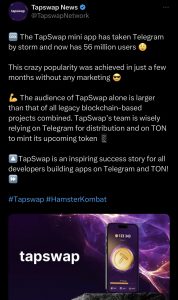
TapSwap is a massively popular Telegram game with over 50 million players. It operates like Notcoin, where players earn TAPS coins by tapping a digital icon within the Telegram bot interface. Players can also earn by participating in tasks and inviting friends.

https://x.com/tapswapnetwork/status/1805276196445491308?s=46


Unique to TapSwap is its integration of NFT characters, tradable on a marketplace. Beyond tapping, the game includes combat mechanics in dynamic arenas, adding strategy and competition.

Players earn TAPS coins through tapping; each tap increases their Shares, convertible to TAPS tokens after launch. An energy system limits tapping, which is also known as the cooling period. However, it can be managed with boosts for faster earnings.

The plans for TapSwap include staking, a launchpad for new projects, and crypto payment APIs, expanding its features and engagement in the crypto community.

BLUM Clicker

Blum Clicker is a popular tap-to-earn game on the TON blockchain with about 30 million users. It allows players to earn Blum Points (BP) by simply tapping their device screen and completing daily tasks. These points may, in the future, convert into BLUM tokens.

https://x.com/blumcrypto/status/1805964890902802807?s=46


The game encourages regular engagement from players through daily farming sessions. They need to press the “Start Farming” button every 8 hours to accumulate Blum Points, or participate in the Drop Game farming by tapping falling green balls that appear on their device screen to increase their earnings.

Blum Clicker also features various tasks involving watching YouTube videos, following social media channels, or participating in other games, offering opportunities to earn more Blum Points or other rewards.

Additionally, inviting friends, also known as “Frens,” is another way to boost earnings as it increases players’ number of playing passes. They can earn commissions from their friends’ Blum Points, which include 10% from direct referrals and 2.5% from their referrals’ referrals.

Conclusion

Tap-to-Earn games allow users to earn crypto rewards for playing simple Telegram games. They help users monetize their efforts and have fun while at it, profit from zero or little financial commitment, and increase Web3 adoption globally.

Currently, Tap-to-Earn is still growing, and several games are still making their way into the market. While some are popular with promising features, earnings are not guaranteed. So, always conduct a background check before committing to any project.

Nigeria’s Retroactive Tax and the Message from KPMG Nigeria

0

Last November, Tekedia Capital agreed that we could invest up to N10 billion into the Nigerian banking sector: “Tekedia Capital Syndicate can invest N5 billion – N10 billion in your capitalization in any tier-2 bank with certain conditions and terms, focusing on strategy, execution, operations, etc. Principally, a BaaS (banking as a Service) strategy for the African market will be at the heart of the strategy. If you are a bank in Lagos, let us talk. Please note that we will not be passive investors; we will be active.”

Our community prepared for it, and as the process was progressing, a hammer was dropped: that your profit cannot be used by you in certain ways. I wrote an article that it was a bad policy, positing that the government was creating a tier system on capital when it did not give any bank free cash: “I have noted that markets become inefficient where capital is designed to have “tiers” based on many factors. Adam Smith in his invisible hands theory cautioned against that. So, if you structure your recapitalization to prefer people in New York, London, etc to invest in Nigerian banks (they export USD to Nigeria, but have to convert to Naira, to buy the equities which are sold in Naira), you are creating a tiered system.  That is bad.”

We escaped. Why? Nigeria recently applied retroactive tax with the plan to tax banks’ FX gains at a special 50% hit. Now, KPMG Nigeria speaks out and I commend them. We need such loud voices because Nigeria belongs to all of us:

‘KPMG Nigeria has strongly opposed the new tax, highlighting several potential issues. The firm argues that Nigeria’s tax policy does not support retroactive taxation, and implementing this tax on banks after they have settled their tax liabilities for the 2023 financial year could lead to legal disputes and constitutional challenges.

“Nigeria’s tax policy frowns at the retroactive application of tax laws,” the report states. “It is, therefore, surprising that the government has chosen to implement these windfall taxes retroactively. Many of these banks have submitted their tax returns for the 2023 financial years and have settled the resultant liability.”’

KPMG Criticizes Nigeria’s 50% FX Windfall Tax on Banks

KPMG Criticizes Nigeria’s 50% FX Windfall Tax on Banks

0

The Nigerian government’s recent decision to impose a 50% windfall tax on banks’ foreign exchange revaluation gains recorded in 2023 has sparked a variety of responses. This move, aimed at addressing the country’s revenue challenges, has drawn significant criticism from global tax and advisory service firm, KPMG Nigeria, among others.

KPMG Nigeria has strongly opposed the new tax, highlighting several potential issues. The firm argues that Nigeria’s tax policy does not support retroactive taxation, and implementing this tax on banks after they have settled their tax liabilities for the 2023 financial year could lead to legal disputes and constitutional challenges.

“Nigeria’s tax policy frowns at the retroactive application of tax laws,” the report states. “It is, therefore, surprising that the government has chosen to implement these windfall taxes retroactively. Many of these banks have submitted their tax returns for the 2023 financial years and have settled the resultant liability.”

KPMG warns that the retroactive nature of the tax might violate the principle of legitimate expectations and could discourage foreign investment due to the unpredictability of Nigeria’s tax laws. This unpredictability is seen as a significant deterrent to foreign businesses, particularly, as Nigeria is in desperate need of Foreign Direct Investment.

Call for Stakeholder Consultation

The firm also emphasizes the need for proper technical consultation with stakeholders before the bill is enacted into law. Such feedback is crucial to prevent unintended consequences that could arise from the tax.

Additionally, KPMG criticizes the government’s plan to use 50% of the projected N6.2 trillion funds generated from the tax for recurrent expenditure.

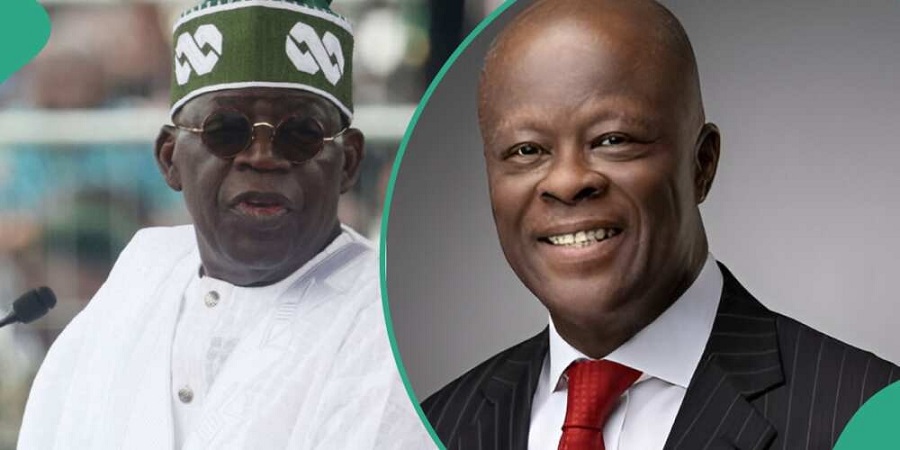
President Bola Tinubu has sought Senate approval to amend certain provisions of the 2023 Finance Act to impose this 50% tax on foreign exchange gains recorded by commercial banks in Nigeria for the full year 2023.

In his letter to the Senate, the President explained that the funds generated from this tax would be used to support capital infrastructure development, education, healthcare access, and public welfare initiatives.

The financial statements of seven listed commercial banks in the country show that around N3.37 trillion was recorded as profit from foreign exchange revaluation in the full year of 2023 and the first quarter of 2024.

KPMG is also questioning the timing of this tax, as commercial banks are currently seeking to raise funds to meet the Central Bank of Nigeria’s (CBN) new capital requirements.

Major banks such as Fidelity, Access Bank, and GTCO are among those approaching the capital markets to raise funds, with an estimated N4 trillion needed in fresh capital over the next 18 months.

Double Taxation Concerns

Another critical point raised by KPMG is the issue of double taxation. Banks already pay 30% of their overall profit, including profits from foreign exchange transactions, as Company Income Tax (CIT). The advisory firm seeks clarification on whether banks would be required to pay an additional 20% on top of their existing 30% tax, or if they would need to pay a fresh 50% on foreign exchange profits.

The absence of any form of tax relief to cushion the effects of such retroactive taxes is also lamented. In other jurisdictions where retroactive taxes are imposed, it is customary to provide some form of tax relief, which is not evident in the amendment to the finance bill.

Why Only Banks?

KPMG questions why banks are being singled out for this tax, suggesting that they are likely not the sole beneficiaries of foreign exchange revaluation gains. The report notes that any business holding foreign currency assets would have profited from transactions settled in 2023.

“Singling out banks contradicts the tenets of the National Tax Policy, which hinges on equity and fairness,” the report asserts.

While the government sees the windfall tax as a necessary measure to boost revenue for critical public projects, growing criticism, especially from major financial organizations such as the KPMG, is signaling that the move will be controversial.

Thus, concerns about retroactive application, potential legal challenges, and the broader impact on the banking sector and foreign investment highlight the need for careful consideration and wider stakeholder engagement before the 2024 Appropriation Act is reviewed to include the FX windfall tax.